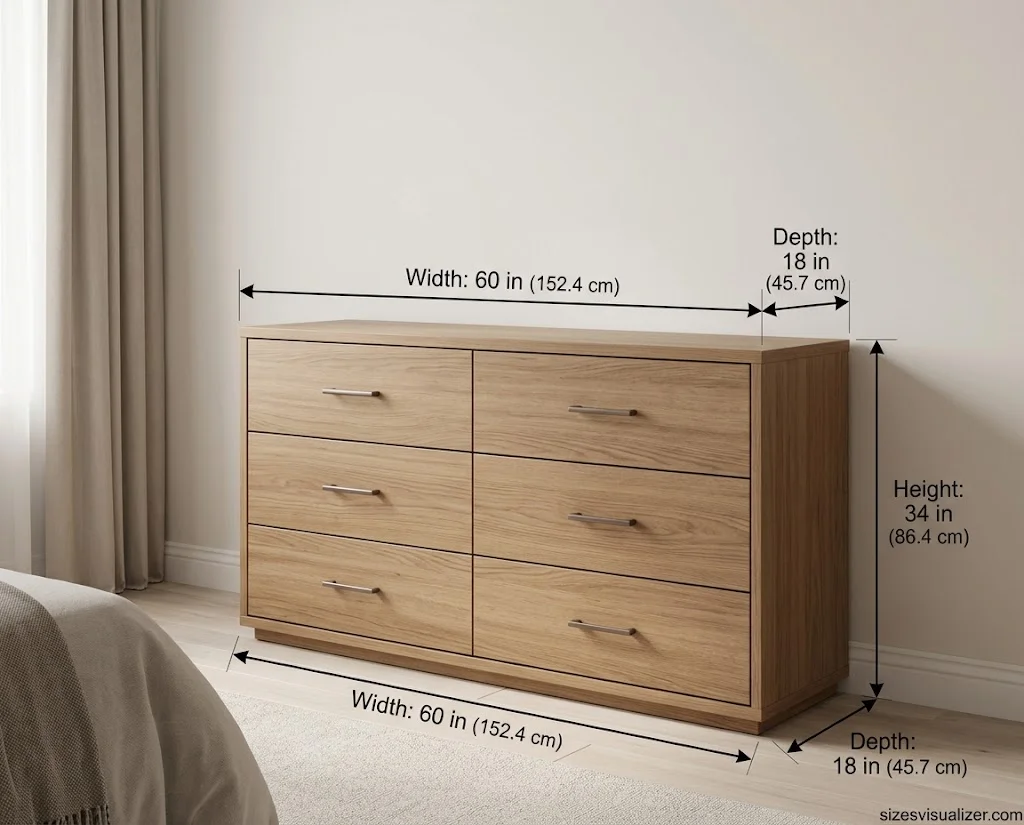
A standard dresser is about 50–70 inches wide, 30–36 inches tall, and 18–22 inches deep (127–178 × 76–91 × 46–56 cm). Those three numbers decide how much storage you get and how much floor you lose.
This dresser dimensions guide covers sizes by type, how to measure, and how to make a dresser fit your room. It also answers the most common size questions.
Table of Contents
Standard Dresser Dimensions by Type
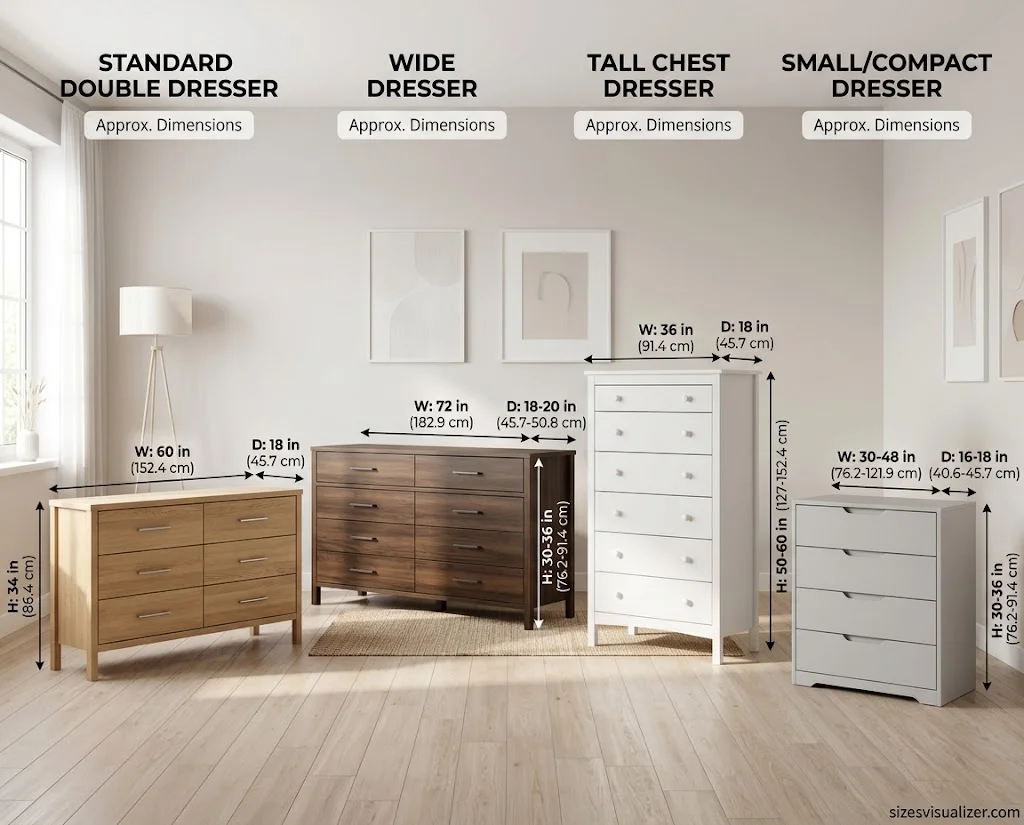
Dresser sizes change with the style. Wide dressers spread storage across the wall. Tall ones stack it upward.
| Dresser type | Width | Height | Depth |
|---|---|---|---|
| Horizontal (standard) | 50–70″ | 30–36″ | 18–22″ |
| Double dresser | 60–72″ | 30–38″ | 18–24″ |
| Combination (drawers + doors) | 50–70″ | 36–40″ | 18–24″ |
| Tallboy (vertical chest) | 24–40″ | 40–65″ | 16–22″ |
The drawer count also shapes the size. These are typical ranges:
| Drawers | Typical width | Typical height |
|---|---|---|
| 3–4 drawers | 30–40″ | 30–36″ |
| 5 drawers (tall) | 30–38″ | 50–60″ |
| 6 drawers | 54–66″ | 30–36″ |
| 7 drawers | 56–68″ | 32–40″ |
| 9 drawers | 60–72″ | 34–42″ |
A 6-drawer dresser is the most common pick for a shared or primary bedroom. A tall chest of drawers suits a narrow wall, since it trades floor space for height.
When planning your bedroom or furniture layout, dimensions matter for more than just dressers—you may also need to consider the right album cover dimensions for displaying or organizing your music collection. Understanding standard sizes in pixels, inches, and millimeters can help you choose the right format for any project.
Dresser Measurements: Width, Height & Depth Explained
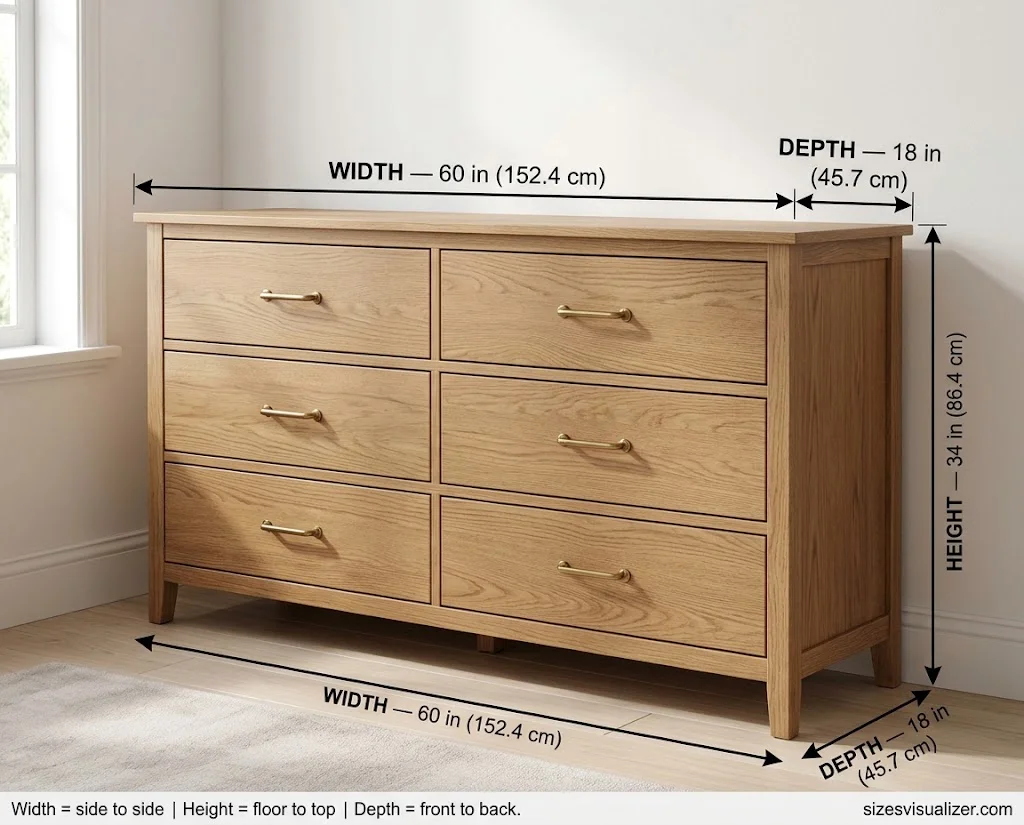
Each number does a different job. Here is what to watch for.
Dresser width sets how much wall you need. The full range runs from about 24″ to 72″ or more. Most standard units fall between 35″ and 66″.
Dresser height sets what fits on top. At 30–36″, a mirror or lamp sits at an easy reach. Above 36″, the piece starts acting like a tall chest.
Dresser depth sets how far it sticks into the room. Most run 18–22″. Depth also decides if the piece fits through a door. A dresser turned on its side only needs to clear its depth, not its width.
A few details often get missed:
- Legs and feet can add 2–5 inches to the listed height.
- Pulls and back panels add an inch or two to depth.
- Inside drawer depth is smaller than the outside size, so check the drawer box, not just the frame.
Different sources list slightly different ranges. That is normal. Brands build to their own designs, so always read the product dimensions on the listing.
Dresser Fit Tips for Every Bedroom
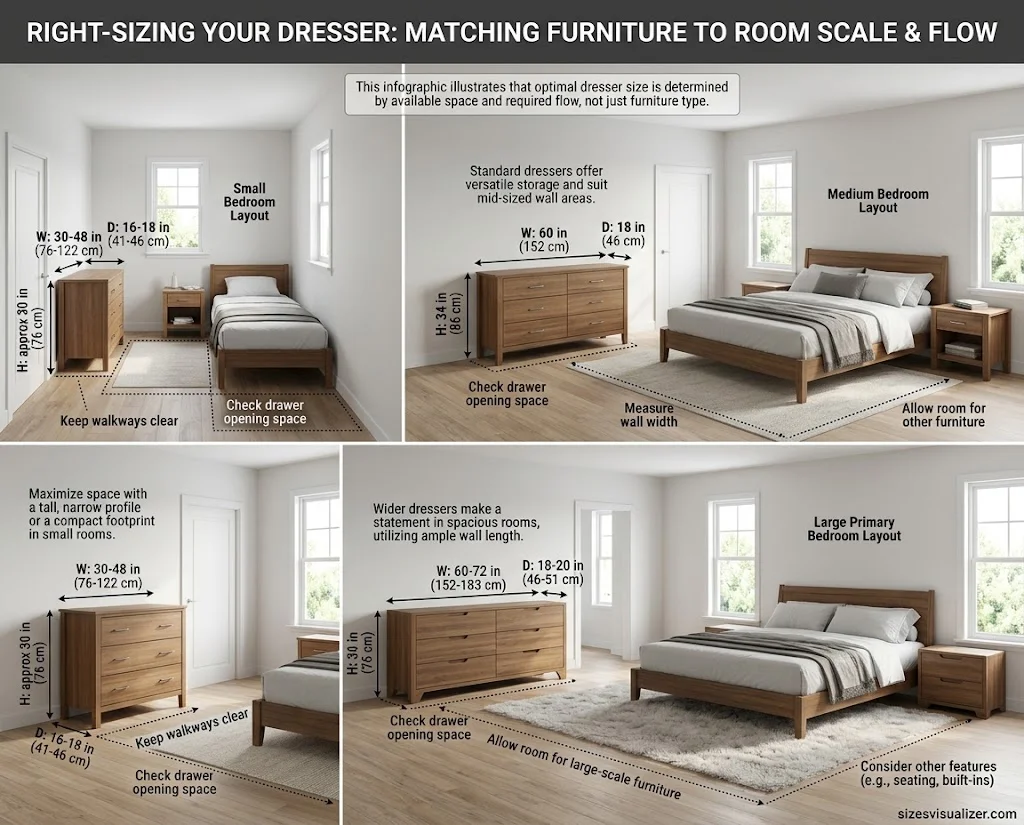
A dresser can match the numbers and still feel wrong. Use these rules.
How much clearance does a dresser need? Leave about 36 inches in front. A pulled-out drawer takes up most of the dresser’s depth, and you need room to stand. Never go below 30 inches.
How big should a dresser be on a wall? Aim to fill about 65–75% of the wall width. That leaves breathing room on both sides.
Match the size to the room:
- Small bedroom (around 10′ × 10′): pick a narrow dresser or tall chest, 24–40″ wide.
- Medium bedroom: a 5–6 drawer horizontal dresser works well.
- Large bedroom (12′ × 14′ or bigger): a double dresser, 60–70″ or more, can anchor the wall.
Also check these:
- Doorways and stairs: a typical interior door is about 32″ wide, and a dresser’s depth is far smaller. The real trouble spots are stair turns and tight hallway corners.
- Windows, vents, and outlets: don’t block them.
- TV use: pick a dresser wider than the TV, with a few inches of surface on each side.
Tip-over safety matters most. The U.S. Consumer Product Safety Commission counted 234 deaths from clothing storage unit tip-overs between January 2000 and April 2022, including 199 children. A federal rule now requires stability testing for units 27 inches and taller. Still, always anchor a dresser to the wall. Never set a heavy TV on a dresser that isn’t built for one.
How to Measure for a Dresser
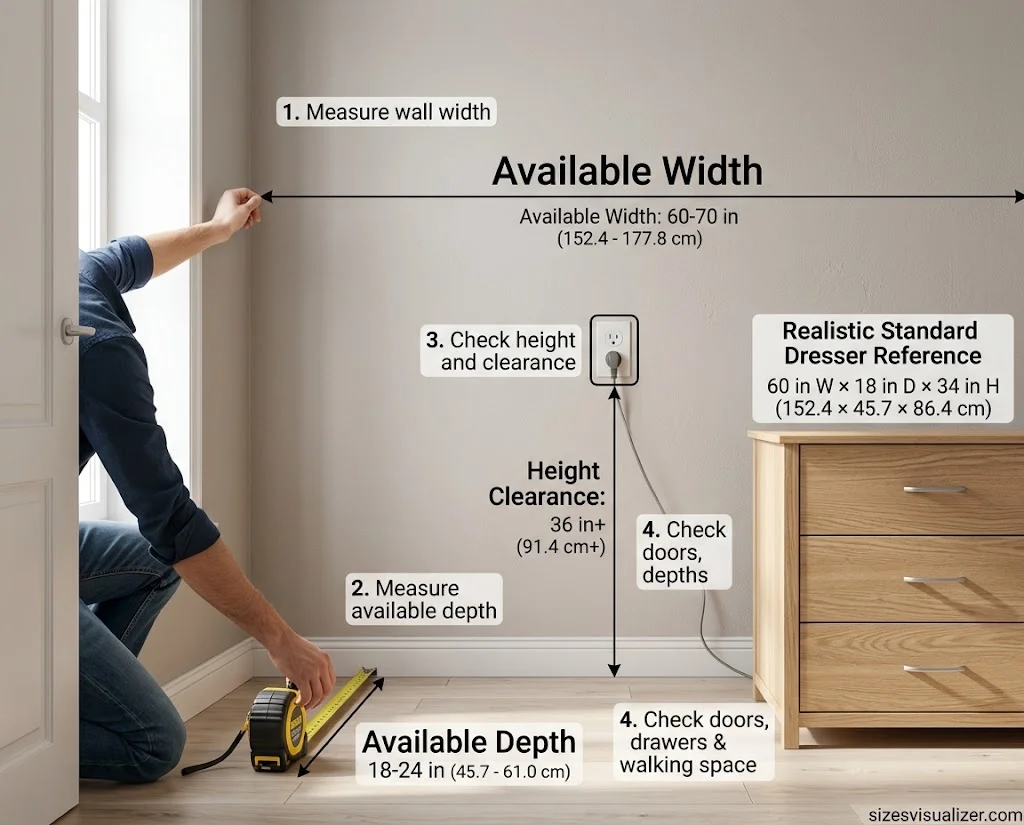
Measure before you shop. It takes ten minutes.
- Measure the wall. Note the width, and mark any outlets, vents, or switches.
- Subtract a buffer. Leave at least 1 inch on each side.
- Measure the height. Check the space under windows, shelves, or sloped ceilings. Add the height of any mirror or décor.
- Check the depth. Confirm you will still have 36″ of clearance in front.
- Map the delivery path. Measure doors, hallways, and stair turns.
- Tape it out. Use painter’s tape on the floor to mark the footprint. Add a second outline for the open-drawer zone.
Walk around the tape. If it feels tight, go narrower or switch to a vertical dresser.
FAQs
What is the standard size of a dresser?
A standard horizontal dresser is about 50–70″ wide, 30–36″ tall, and 18–22″ deep. Across all types, widths run 24–72″ and heights run 30–65″.
What is a 24 inch wide dresser?
It is a narrow chest, about 2 feet (61 cm) across. It usually has 3–5 drawers. It fits corners, nurseries, small bedrooms, and entryways.
What is a 45-inch wide dresser?
It is a mid-size dresser, about 3.75 feet (114 cm) wide. It often has 4–6 drawers. It suits guest rooms and medium bedrooms, and sits between a small chest and a full dresser.
Is a 30 inch dresser too small?
It depends on which side you mean. A 30″ height is standard, so it is fine. A 30″ width is compact. It works for a kids’ room, a guest room, or extra storage. It is usually too small as the main storage in a primary bedroom.
What is a 40 inch tall dresser?
It is a mid-height piece, taller than a standard dresser (30–36″) but shorter than a tall chest (50–65″). It often has 4–5 drawers. It adds storage without eating much floor space. Because it is over 27″, it falls under the federal tip-over rule, so anchor it.
Is 31 inches too short for a dresser?
No. It sits inside the standard 30–36″ height range. It works well under a mirror, a window, or a sloped ceiling.
Conclusion:
In short, measure the wall, leave 36 inches in front, and check the depth, not just the width of dresser. Anchor anything tall. Get those steps right and your dresser will fit the room and the way you live.

Measurement Researcher, Size Comparison Writer & Content Specialist
Timmy Ahad is a dedicated content writer and research specialist at SizesVisualizer.com, where he focuses on creating accurate, easy-to-understand content about measurements, dimensions, size comparisons, and real-world object visualization.