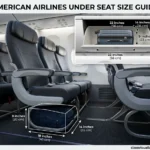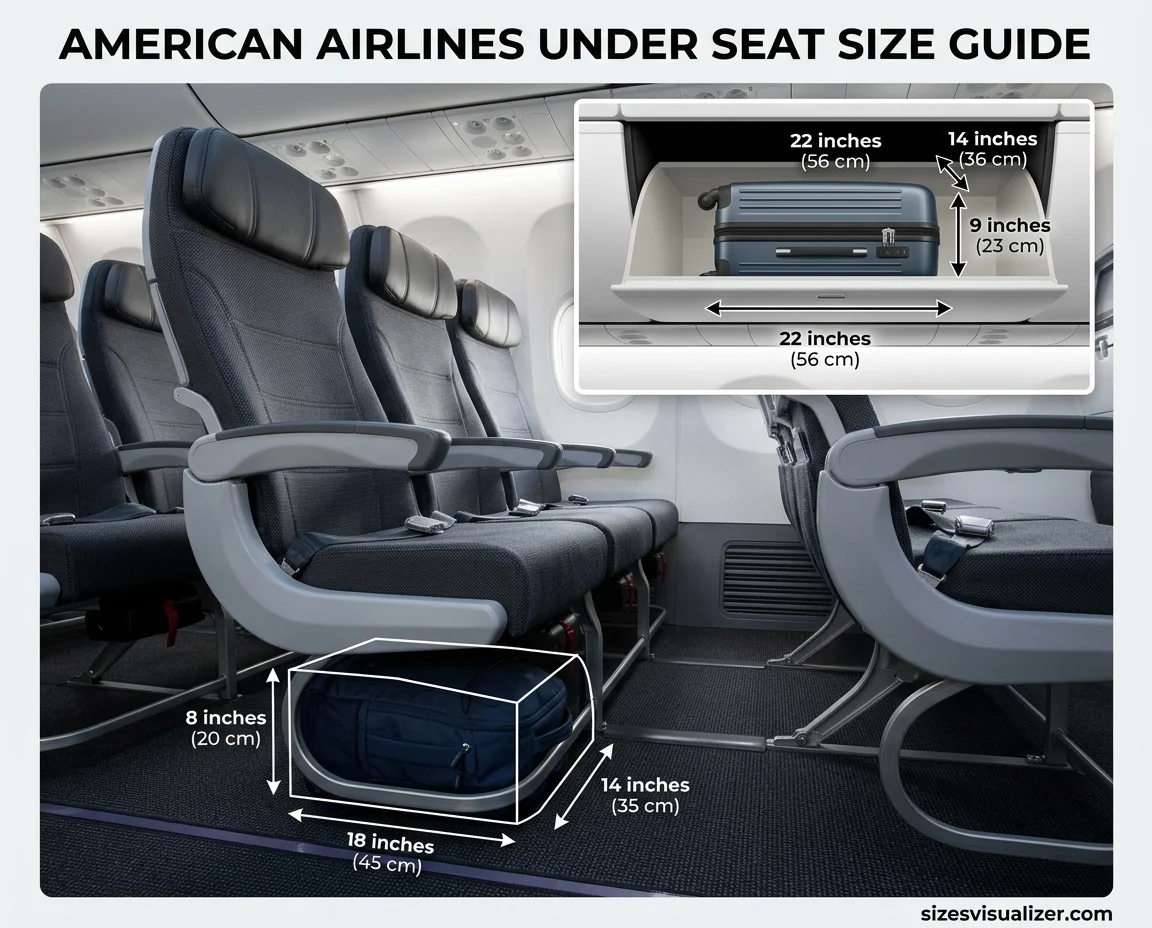
The American Airlines under seat size is 18 x 14 x 8 inches (45 x 35 x 20 cm). That is the biggest personal item you can bring. It must slide fully under the seat in front of you.
A bag that is too big can be gate-checked, and fees may apply. This guide covers exact AA under seat bag sizes, bags that fit, and easy ways to avoid trouble. Rules were checked in November 2026.
Quick facts:
- Personal item: 18 x 14 x 8 in (45 x 35 x 20 cm)
- Carry-on bag: 22 x 14 x 9 in (56 x 36 x 23 cm), with wheels and handles included
- Allowance: 1 personal item and 1 carry-on bag
Table of Contents
American Airlines Under Seat Size: Official Measurements
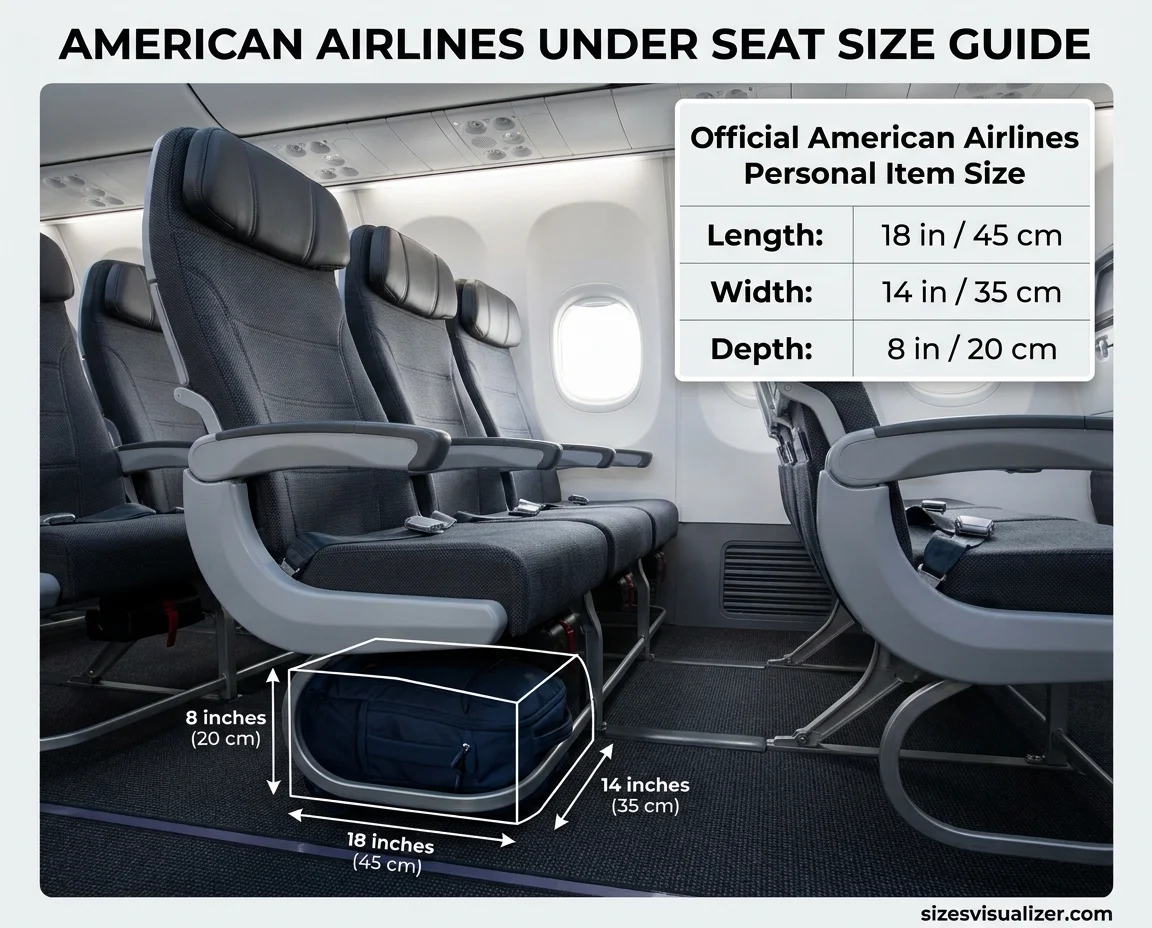
What is the American Airlines under seat size? According to American Airlines, a personal item must fit under the seat and cannot exceed 18 x 14 x 8 inches. Measure the whole bag, including pockets, straps and feet.
Here is what those numbers mean in space:
| Bag type | Inches | Centimeters | Approx. volume |
|---|---|---|---|
| Personal item (under seat) | 18 x 14 x 8 | 45 x 35 x 20 | about 33 liters |
| Carry-on bag (overhead bin) | 22 x 14 x 9 | 56 x 36 x 23 | about 45 liters |
| Soft-sided garment bag | 51 total (L + W + H) | 130 total | n/a |
AA’s carry-on page lists size limits only. It does not list a weight limit for carry-on bags. Still, you must be able to lift your bag into the bin yourself.
Why is there a limit at all? Space under a seat is shared with wiring, seat supports and safety gear. The FAA also expects carry-on items to be stowed safely, so they never block an aisle or exit.
How does it compare with other US airlines? Limits differ, so a bag that works on one airline may not work on another. These are the published sizes at the time of writing:
| Airline | Personal item size (in) |
|---|---|
| American Airlines | 18 x 14 x 8 |
| Spirit Airlines | 18 x 14 x 8 |
| Allegiant Air | 18 x 14 x 8 |
| JetBlue | 17 x 13 x 8 |
| United Airlines | 17 x 10 x 9 |
Always check your airline’s own page before you pack.
Bag Sizes That Fit Under an American Airlines Seat
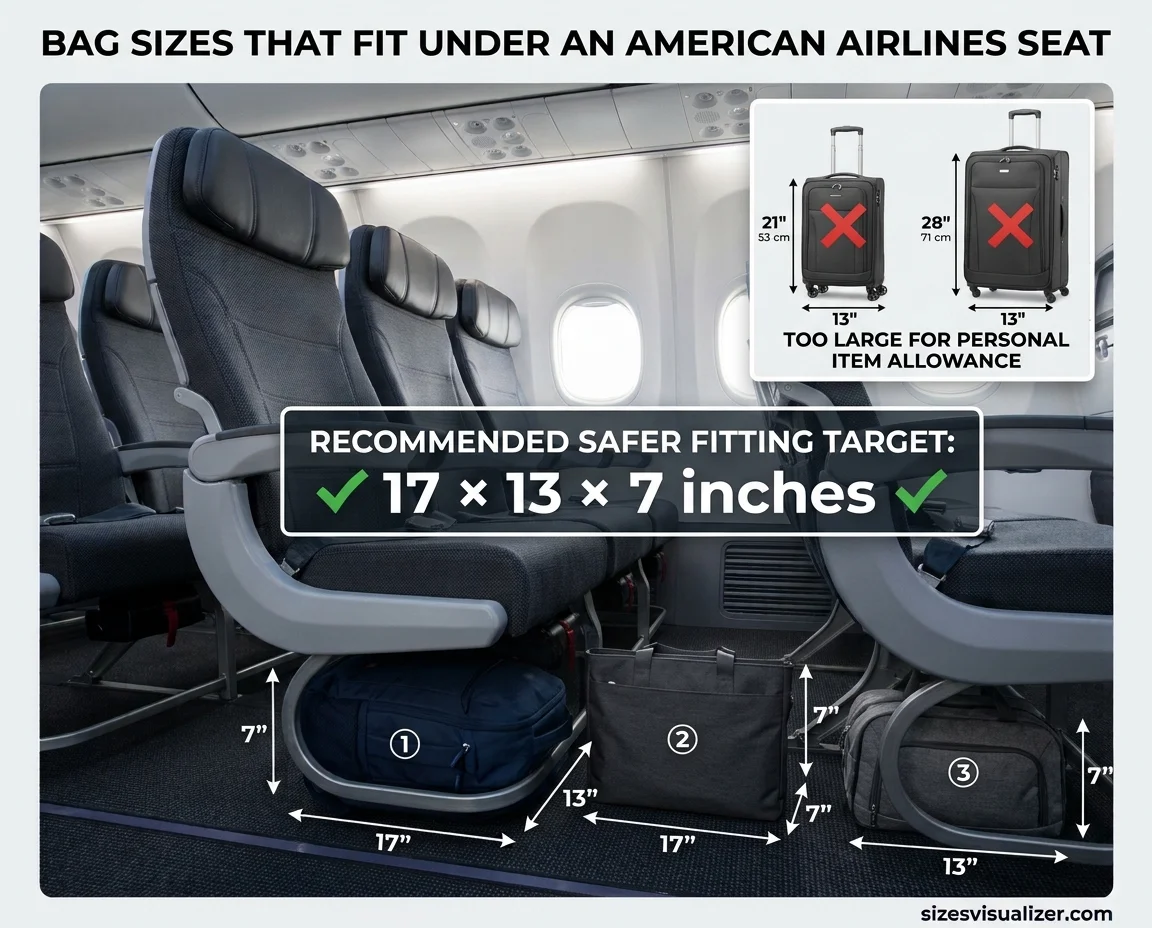
| Longest side of bag | Fits under an AA seat? |
|---|---|
| 15 to 16 in | Yes, with room to spare |
| 17 in | Yes, if depth is 8 in or less |
| 18 in | Only if width is 14 in or less, depth is 8 in or less, and nothing bulges |
| 21 in | No. This is carry-on size |
| 28 in | No. Far too big |
A smart target is about 17 x 13 x 7 inches. That small gap gives your bag room to squeeze under the seat. Most seats are not perfect rectangles.
Pick a bag style that suits the space:
- Soft backpacks bend and squish. They are the easiest to fit.
- Totes and briefcases slide in flat and stay easy to reach.
- Small duffels work well when they are not overfilled.
- Hard-shell or wheeled bags lose inside space to the frame and wheels.
Does a 28-liter backpack fit? Often, yes. Twenty-eight liters is below the roughly 33-liter volume of the limit. But AA checks inches, not liters, so shape matters. A tall, slim pack can still fail.
What does not count toward your allowance? Per AA, these items travel free of the count:
- Child safety seats and strollers
- Medical or mobility devices
- Diaper bags (one per child)
- Breast pumps and small soft coolers of breast milk
What should go under the seat? Keep what you need in flight within reach. That means your laptop, phone charger, headphones, passport, snacks and medicine. Put clothes in the overhead bin
American Airlines Personal Item vs. Carry-On Size
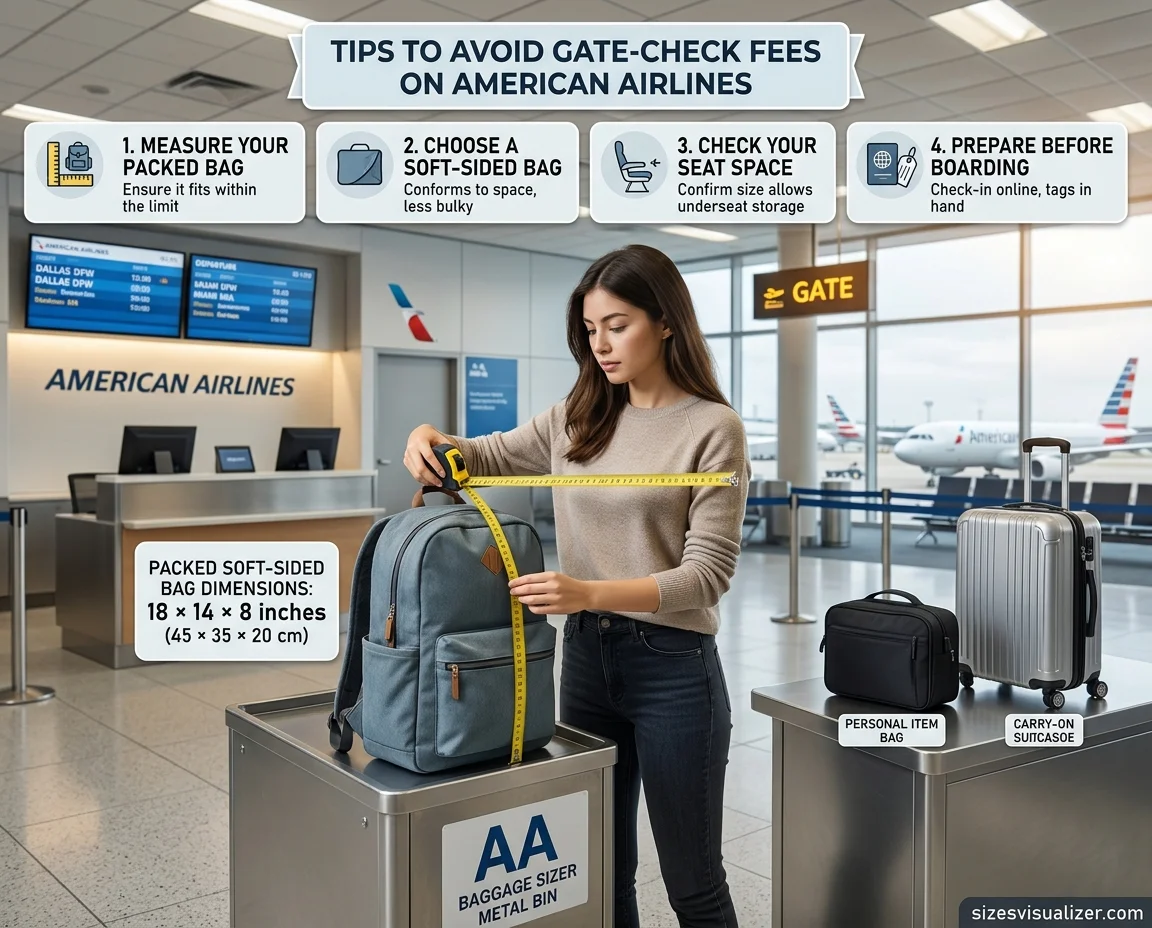
What is the difference? A personal item is the smaller bag that stays at your feet. A carry-on is the bigger bag that goes in the overhead bin. You can bring one of each.
| Personal item | Carry-on bag | |
|---|---|---|
| Max size | 18 x 14 x 8 in | 22 x 14 x 9 in |
| Where it goes | Under the seat ahead | Overhead bin (or under the seat if it fits) |
| Examples | Purse, small backpack, laptop bag | Roller bag, large duffel |
Some airports have a metal sizer at the gate. If your carry-on will not fit inside, you may have to check it. AA also asks you to label your carry-on in case it must be checked.
Does Basic Economy include a carry-on? On most US flights, yes. AA says you can bring 1 personal item and 1 carry-on bag, though some routes may have other limits. Check your ticket.
What about regional flights? Some trips use smaller American Eagle planes with tight bins. AA may ask you to valet your bag. That means staff tag it at the gate, check it for free, and return it on the jet bridge. The Embraer ERJ-175 is an exception. It allows carry-ons and has no valet service.
What about instruments and pets? A musical instrument must fit in the bin or under the seat. A carry-on pet needs a carrier that fits under the seat. See AA’s pet rules before you fly.
If you’re planning travel or outdoor recreational spaces for youth groups, sports camps, or school facilities alongside your trip prep, choosing the right equipment layout like a properly sized outdoor Gaga ball pit requires careful space planning just like measuring carry-on dimensions. Keeping these exact measurements in mind ensures everything fits seamlessly without any last-minute surprises.
Tips to Avoid Gate-Check Fees on American Airlines
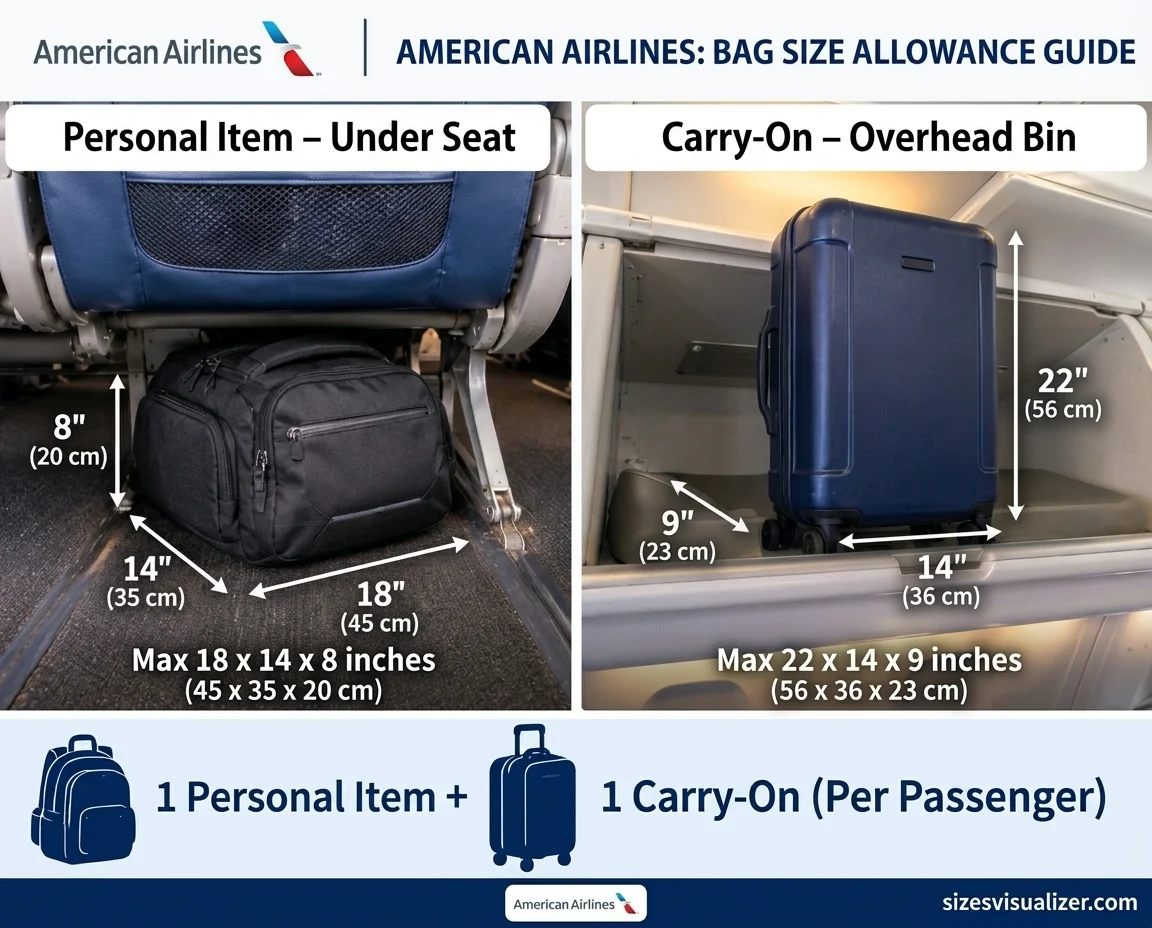
A few habits can save you money and stress:
- Measure your bag when it is full. An empty bag lies. A packed bag bulges.
- Know your seat. Bulkhead rows have no under-seat space in front. Exit rows need all items stowed in the bin for takeoff and landing. Plan for that.
- Expect tighter space on small jets. Regional planes have lower seats and smaller bins.
- Check partner flights. On a codeshare, the airline flying the plane may enforce its own rules.
- Board in your group. Bin space fills fast, especially on full flights.
- Use a soft bag. It can flex a little when the seat is tight.
- Pack liquids the TSA way. The TSA 3-1-1 rule allows 3.4 oz (100 ml) containers in one quart-size bag.
- Keep batteries and e-cigarettes in your carry-on. AA does not allow them in checked bags. If your carry-on gets checked, take them out first.
What if your bag is too big? You may need to check it at the gate and pay a fee. See AA’s and optional fees page for the current price. A cheap fix is to move small items into your jacket or a pocket before you reach the sizer.
FAQs
What size bag fits under an American Airlines seat?
Up to 18 x 14 x 8 inches (45 x 35 x 20 cm). For a safer fit, aim for about 17 x 13 x 7 inches.
What size will fit under an airplane seat?
It depends on the airline and the plane. Most US limits fall between 16 and 18 inches long and about 8 to 9 inches deep. Regional jets often have less room.
What if my carry-on is 1 inch too big on American Airlines?
One inch over can fail the sizer. A soft bag may squeeze in if you remove items. If it will not fit, you will likely have to check it at the gate, and fees may apply.
Does a 17 inch backpack fit under an airplane seat?
Usually yes, if the depth is 8 inches or less and it is not overstuffed. Note that a “17-inch laptop backpack” is often taller than 17 inches. Measure the bag, not the laptop size.
Will a 21 inch bag fit under an airplane seat?
No. At 21 inches, it is over the 18-inch under-seat limit. It counts as a carry-on and belongs in the overhead bin. The carry-on limit is 22 inches tall.
Can a 28″ L backpack fit under an airplane seat?
If you mean 28 inches long, no. That is over both the personal item and carry-on limits. If you mean 28 liters, it often fits, as long as the shape stays within 18 x 14 x 8 inches.
Conclusion
The rule is simple. Keep your personal item within 18 x 14 x 8 inches, and aim a little smaller. Measure it packed, and check aa.com before you fly, because policies can change. Knowing the American Airlines under seat size can help you pack smarter and avoid unexpected gate-check fees. Keep your personal item within 18 x 14 x 8 inches (45 x 35 x 20 cm), and consider choosing a slightly smaller bag for an easier fit.

Measurement Researcher, Size Comparison Writer & Content Specialist
Timmy Ahad is a dedicated content writer and research specialist at SizesVisualizer.com, where he focuses on creating accurate, easy-to-understand content about measurements, dimensions, size comparisons, and real-world object visualization.