A bocce court looks simple. It is a long, flat strip with a border. But the right bocce court dimensions and design decide how true the ball rolls and how long the court lasts.
This guide covers the standard bocce ball court dimensions & size, layout, surfaces, build steps and cost. You will also find backyard bocce court ideas for tight spaces.
Table of Contents
Standard Bocce Ball Court Dimensions and Layout
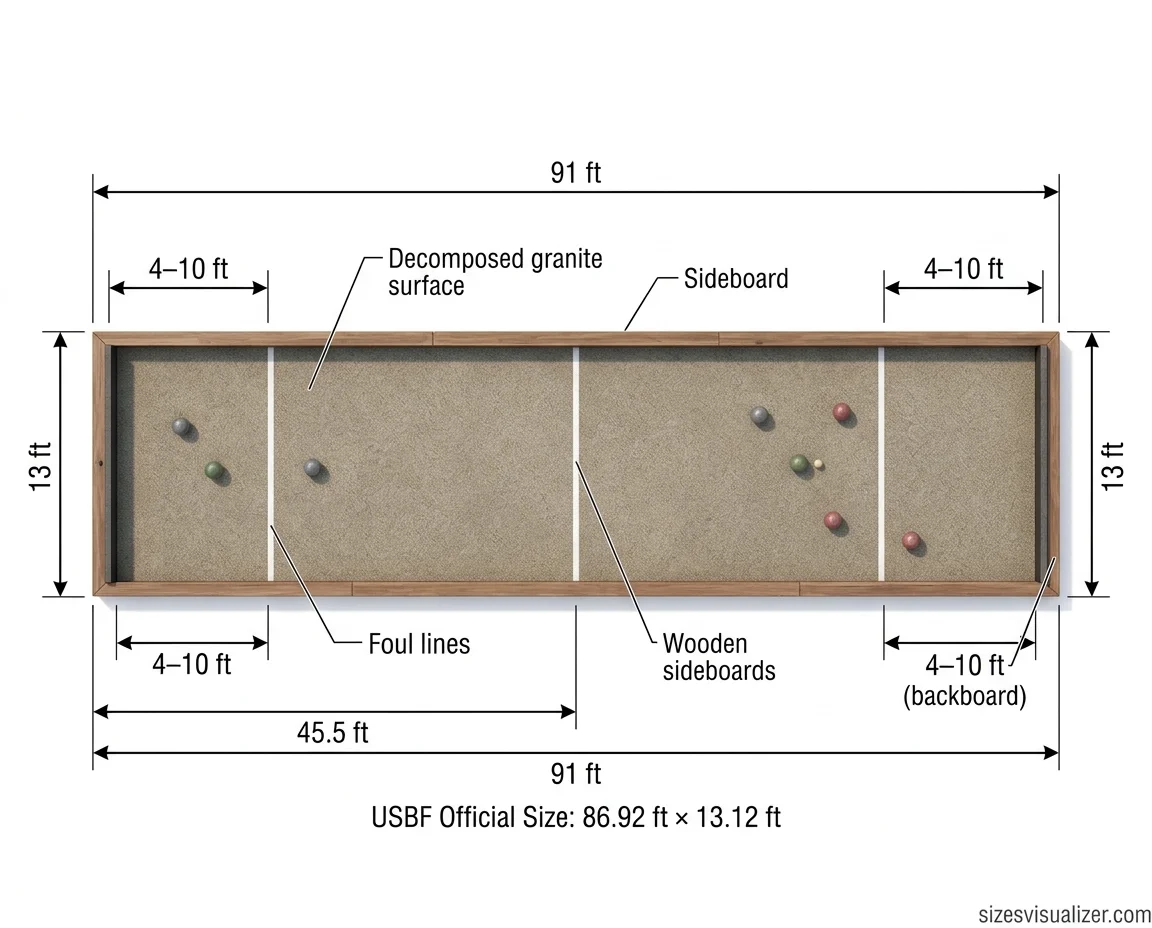
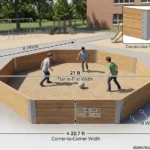
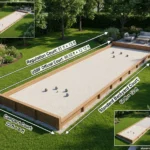
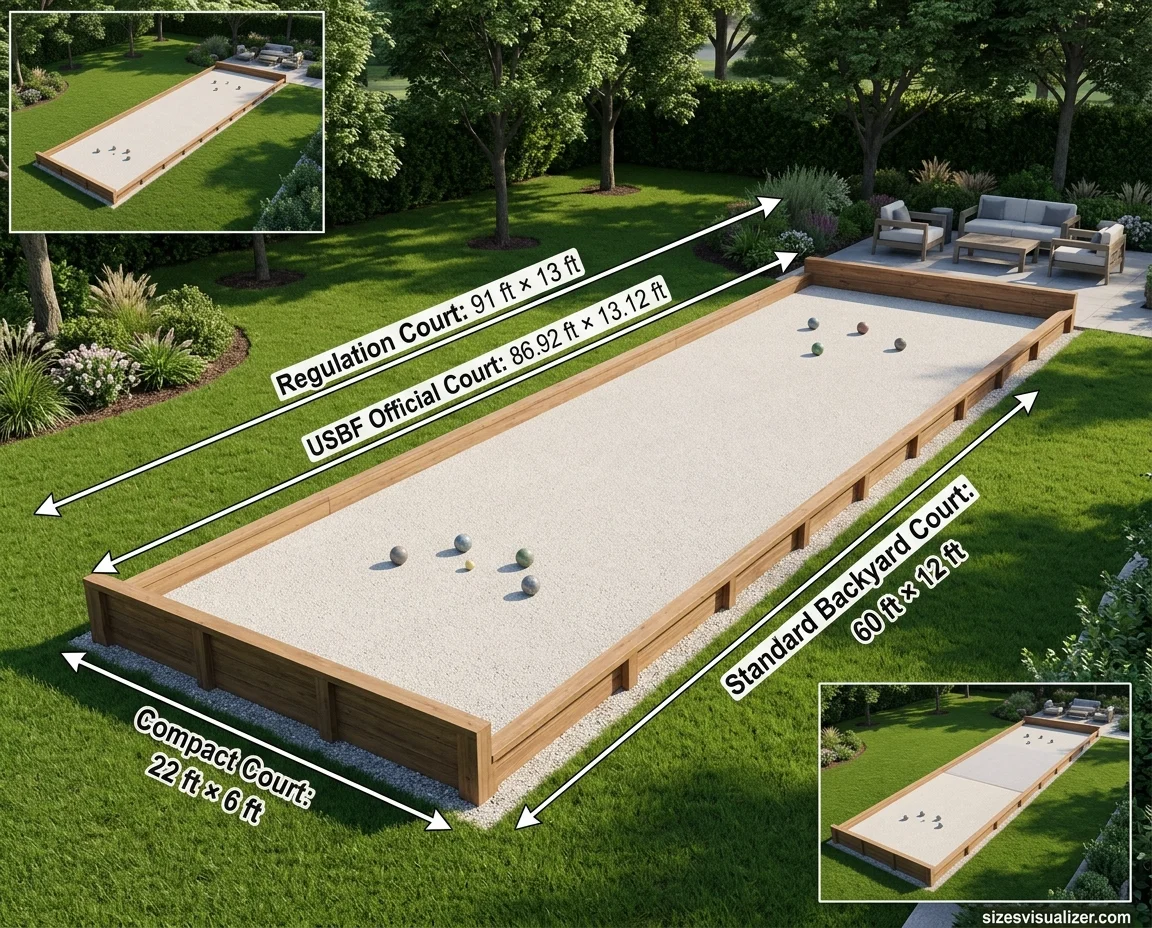
A regulation court is 91 feet long and 13 feet wide. The United States Bocce Federation (USBF) lists official courts at 86.92 by 13.12 feet (about 26.5 by 4 meters). Sources round these numbers differently, so check your league’s rulebook.
Here are the bocce court sizes you will see most often:
| Court type | Typical size |
|---|---|
| Regulation (tournament) | 91 × 13 ft |
| USBF official | 86.92 × 13.12 ft |
| Special Olympics | 60 × 12 ft |
| Standard backyard | 60 × 12 ft |
| Recommended minimum | 60 × 10 ft |
| Social or bar league | about 30 × 8 ft |
| Compact home court | about 22 × 6 ft |
Now the bocce court layout. Every court has these parts:
- Foul line: the line players cannot step fully over when they throw. On backyard courts it often sits 4 to 10 feet from each end.
- Centerline: splits the court in half (30 feet on a 60-foot court).
- Side boards and backboard: they keep balls in play and allow bank shots. Under USBF rules, a ball that hits the backboard without touching another ball or the pallino is a dead ball.
Place the court so players do not face the low sun. Pick an open spot with natural drainage.
Best Bocce Court Surface and Materials
| Surface | What to expect |
|---|---|
| Oyster shell | Fast, bright, classic. Shells break down, so plan to top up. |
| Clay (Har-Tru) | Smooth and fast. Needs watering, rolling and patching. |
| Decomposed granite / stone dust | Drains well and costs less. Needs raking and tamping. |
| Synthetic turf | Low upkeep. Costs more upfront and can hold heat. |
| Poured-in-place rubber | Cushioned and accessible. Needs a specialist install. |
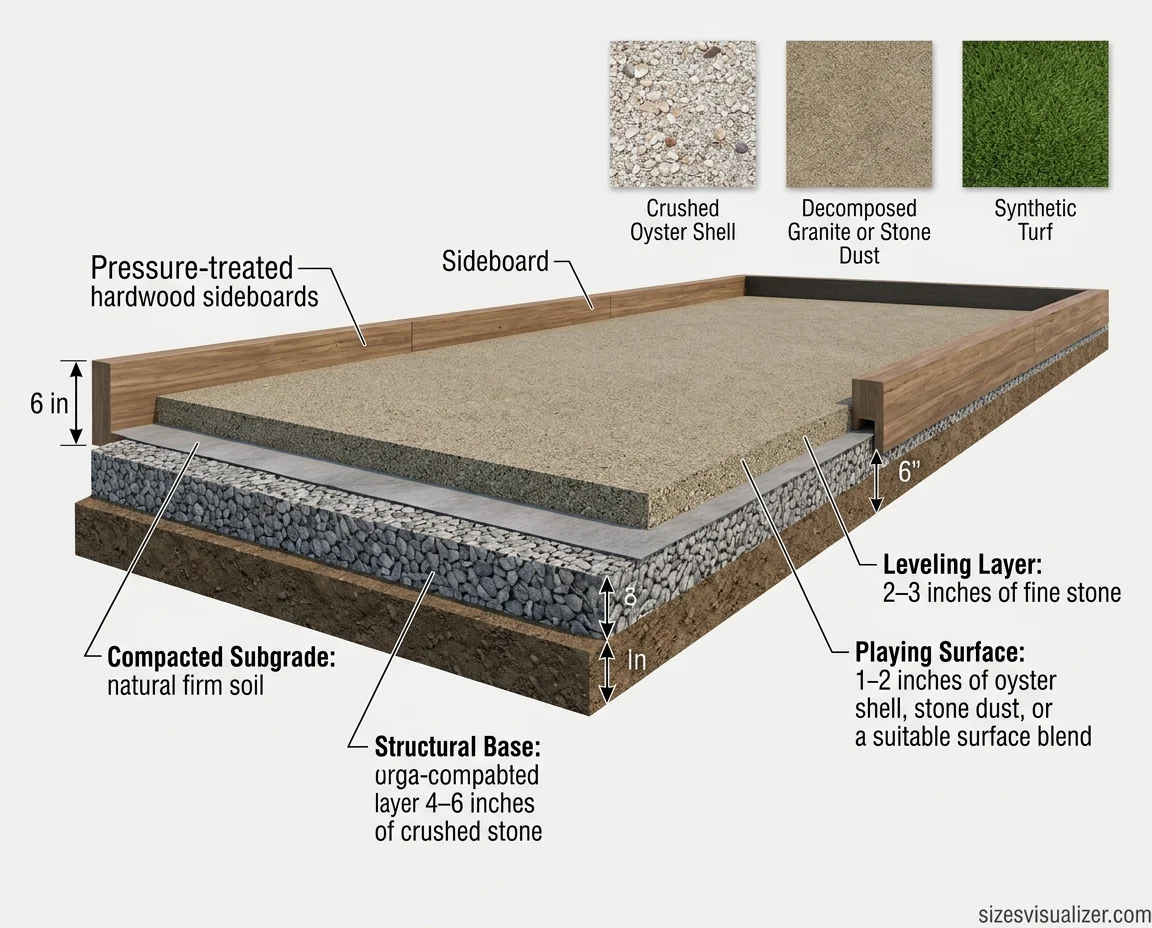
Think in layers. A typical court has four:
- Compacted subgrade: the native soil, firm and free of soft spots.
- Structural base: about 4 to 6 inches of crushed stone for strength and drainage.
- Leveling layer: 2 to 3 inches of fine stone that smooths the bed.
- Playing surface: 1 to 2 inches of shell, granite or blend.
Add filtration fabric to block weeds. Choose hardwood, composite or pressure-treated boards. Raise the border at least 6 inches above the playing surface. Leave a small gap under the boards so water can escape.
Pro tip: In cold states, anchor boards below the frost line to fight frost heave.
While setting up a 55-gallon aquarium involves careful planning of space, equipment, and dimensions, you can take a break from practical measurements with a fun online puzzle. Explore free 3D Mahjong games to challenge your matching skills and enjoy a refreshing change of pace.
How to Build a Bocce Court and What It Costs
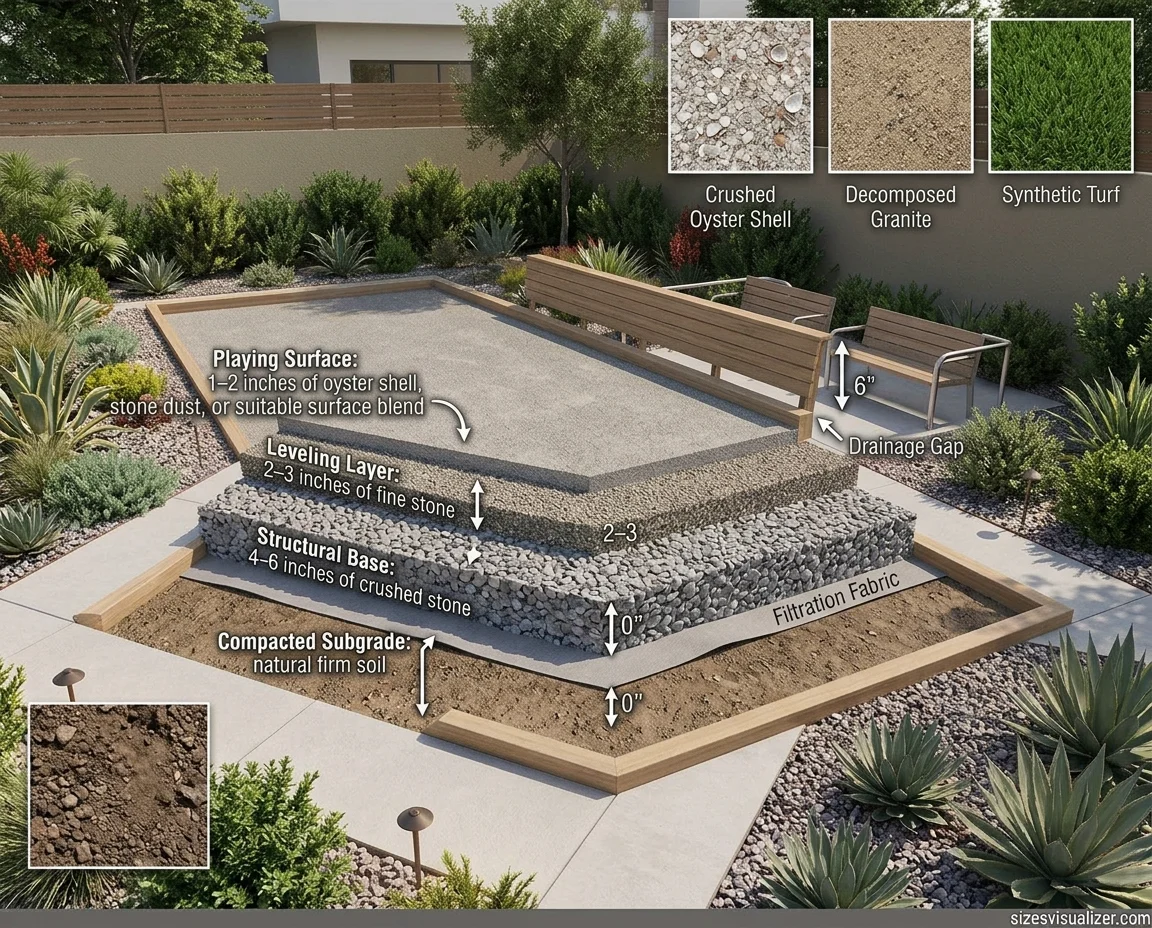
How do I build a bocce court? Follow these steps:
- Mark the outline. Call 811 before you dig, and check HOA rules.
- Dig down 4 to 6 inches and clear the turf.
- Compact the subgrade. Add a gentle slope (about 1%) and a perforated drain pipe if the soil holds water.
- Spread and compact the stone base, then the leveling layer.
- Set the borders. Lay fabric and spread the surface.
- Mark the lines, then brush, water lightly and tamp before play.
Compaction matters most. Skip it and low spots appear within months.
How much does it cost to build a bocce ball court? One 2026 cost guide puts a professional backyard court at $8,000 to $25,000, with about $15,000 as the average. A DIY 10 by 60 foot court runs roughly $2,500 to $8,000.
Add-ons raise the total:
- French drain: $800 to $3,500
- Low-voltage lighting: $1,500 to $5,000
- Benches, scoreboard or gate: $200 to $2,000
Prices shift by region and site. Get three quotes and compare them line by line.
Upkeep is light. Brush the surface before play. Water it lightly. Roll it now and then. Patch dips as they appear. Treated-wood borders can last up to 30 years.
Backyard Bocce Court Ideas and Design Tips
Use the side yard
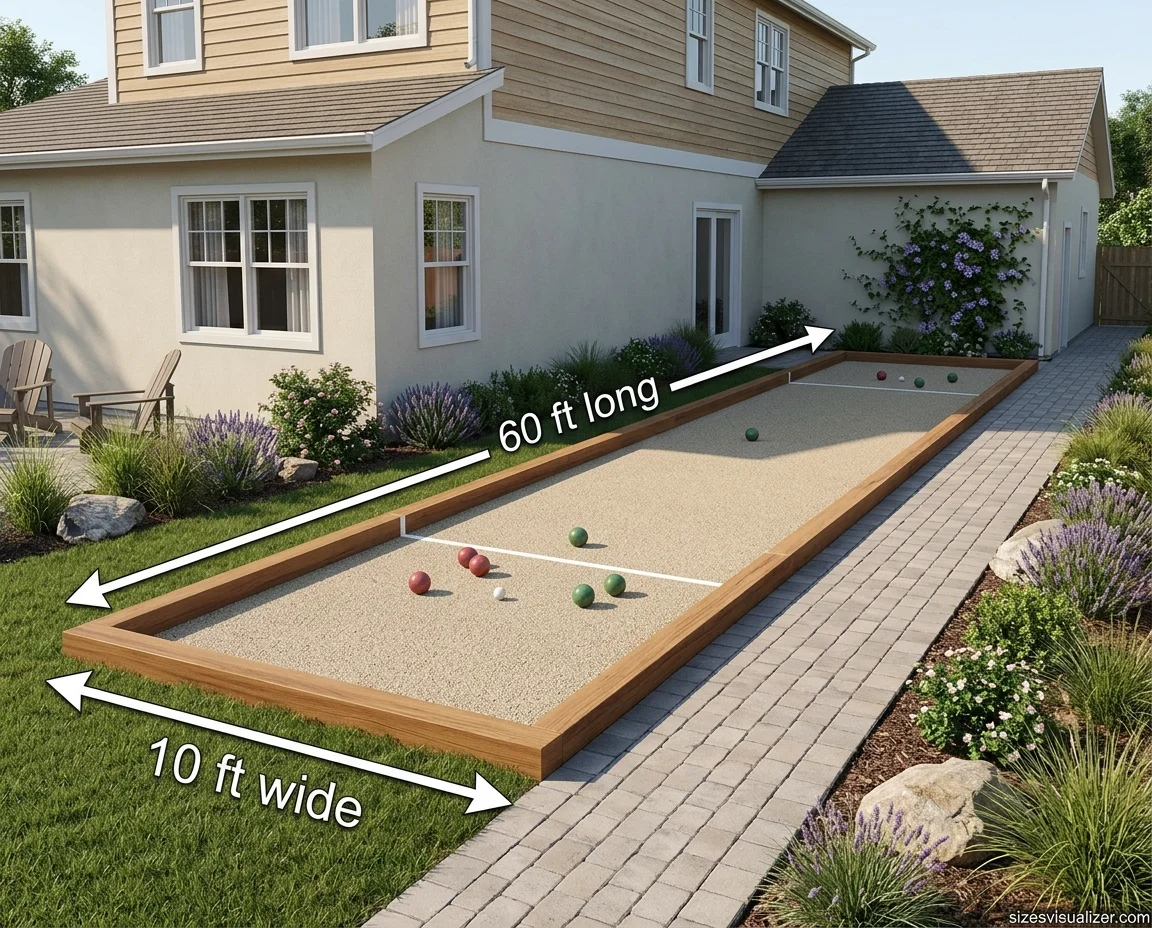
A long, narrow strip beside the house suits a backyard bocce court well. The house wall also gives you a straight guide for layout.
Go compact
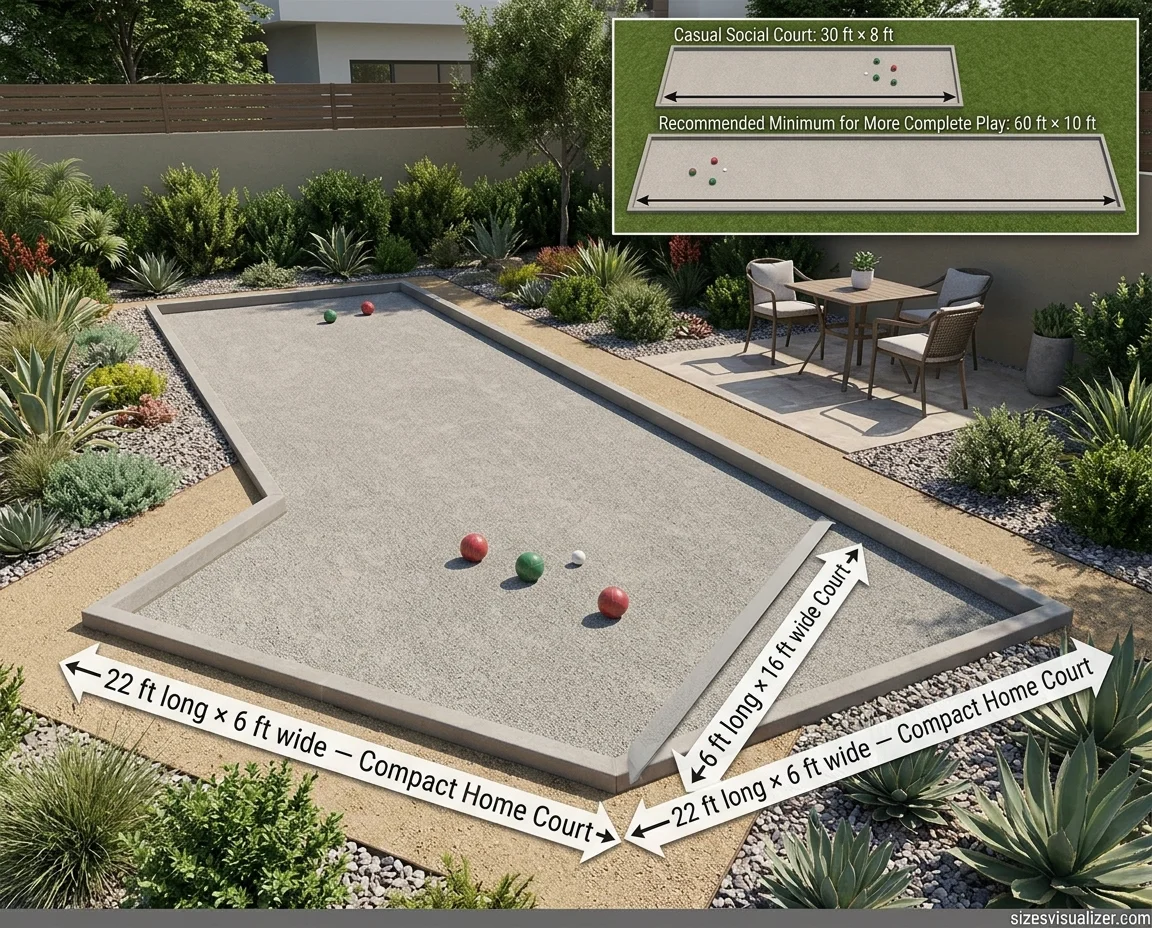
Short on space? A 22 by 6 foot court still delivers a fun, putting-style game. Portable courts are another option for rented or sloped yards.
Match your style

Pair the court with a patio, pergola or fire pit. Hardwood boards give a rustic look. Clean concrete edges feel modern. Think of an Italian courtyard for classic charm.
Plan for comfort
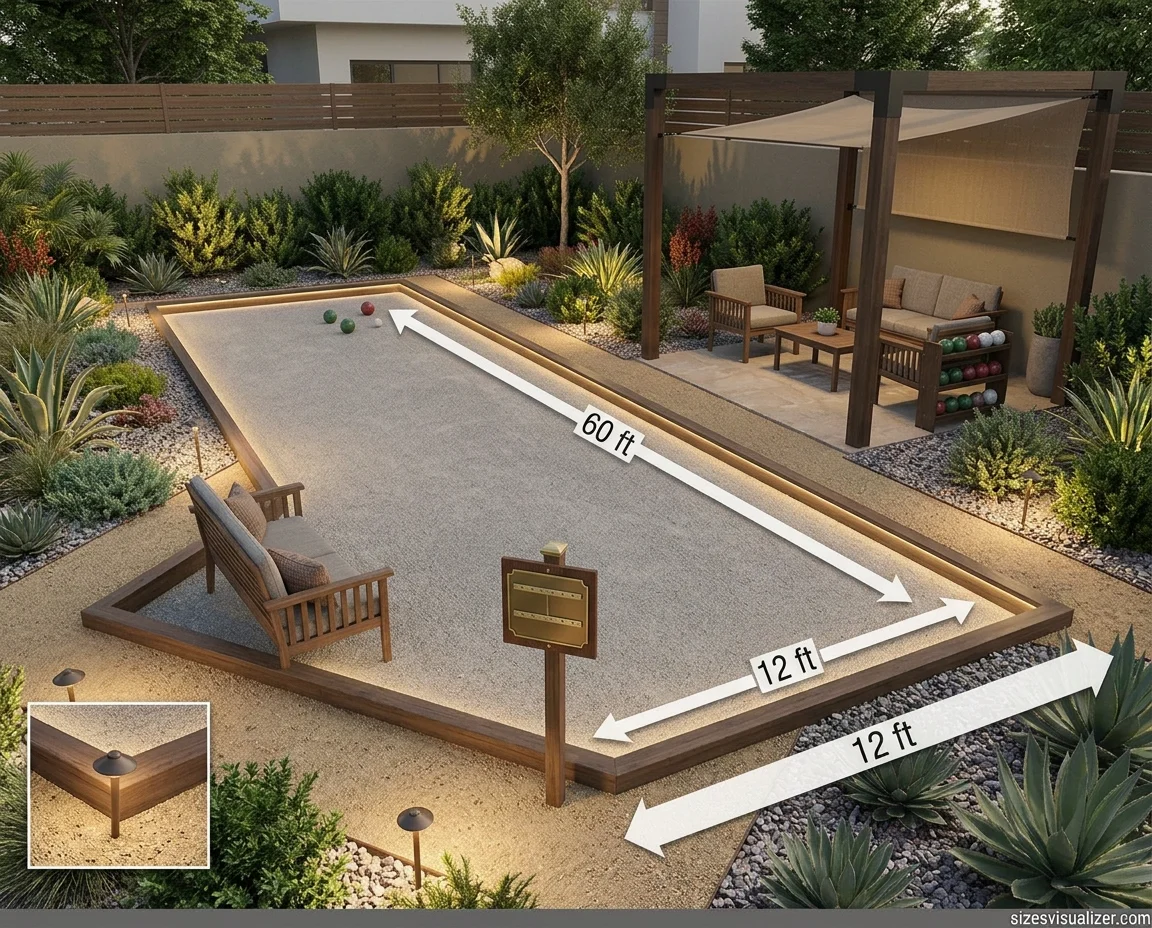
Low-voltage lights extend play into the evening. Shade sails or a cover cut glare and heat. Add benches, a scoreboard and a ball rack.
Keep it accessible
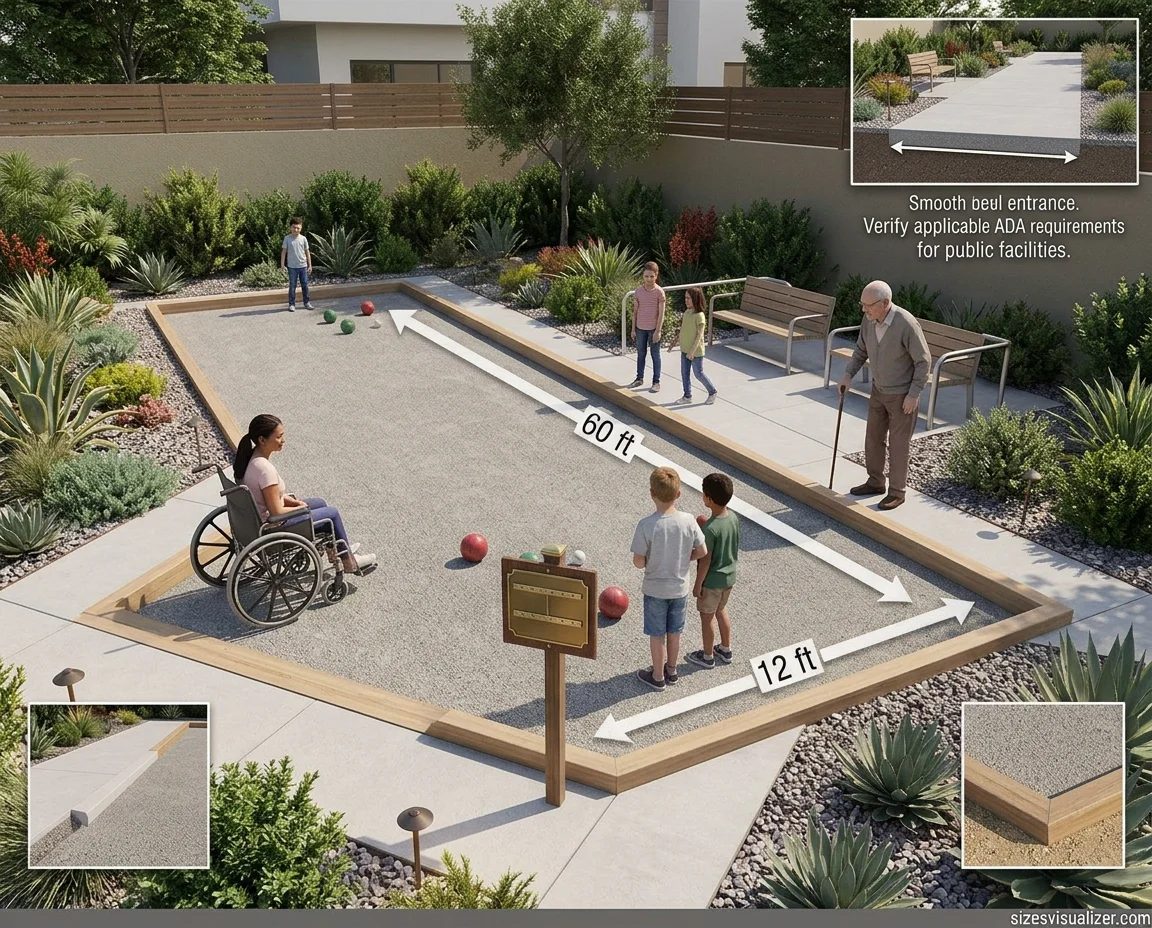
Use smooth paths and wide access points. Follow the ADA design standards on public courts. Bocce is also the third most played sport in Special Olympics, so inclusive design pays off.
FAQs
What is the standard size of a bocce court?
A regulation court measures 91 by 13 feet. The USBF lists official courts at 86.92 by 13.12 feet. Backyard and Special Olympics courts are usually 60 by 12 feet.
What is the best surface for a bocce court?
Crushed oyster shell or stone dust over a compacted stone base is a top choice for most US yards. Both roll fast and drain well. Synthetic turf suits owners who want less upkeep.
How much does it cost to build a bocce ball court?
A professional backyard court typically costs $8,000 to $25,000, with an average near $15,000. DIY builds of a 10 by 60 foot court run about $2,500 to $8,000. Drainage and lighting add extra.
How do I build a bocce court?
Mark the site, dig 4 to 6 inches, and compact the soil. Add drainage, a crushed stone base and a leveling layer. Set the borders, lay fabric, spread the surface, then mark lines and roll.
How small can you make a bocce court?
For real play, aim for 60 by 10 feet. Courts of 30 by 8 feet work for casual games. A 22 by 6 foot court fits tight spaces, though shots feel limited.
What is the official size and weight of a bocce ball?
The USBF sets tournament balls at 106 to 107 mm (about 4.2 inches) and 900 to 920 grams (about 2 pounds). The pallino is smaller, around 50 mm.
Conclusion
Size the court to your space, but keep the width near 10 to 13 feet. Spend your effort below the surface on compaction and drainage. Do that, and your bocce court design will roll true for decades.

Measurement Researcher, Size Comparison Writer & Content Specialist
Timmy Ahad is a dedicated content writer and research specialist at SizesVisualizer.com, where he focuses on creating accurate, easy-to-understand content about measurements, dimensions, size comparisons, and real-world object visualization.