
Standard bathtub dimensions are 60 inches long, 30 inches wide, and 14 to 16 inches high (152 × 76 × 36-41 cm). This is the alcove tub, the one most US bathrooms were built around.
Other tub types vary a lot. This guide gives you the full bathtub size chart, the details most guides skip, and a simple way to pick the right size.
Quick takeaways
- The standard tub size is 60 × 30 inches.
- Most tubs are 30 or 32 inches wide.
- A tub’s rim height is not its water depth.
- A filled tub is heavy, so check your floor.
- Measure the opening, not the old tub.
Table of Contents
Standard Bathtub Dimensions Chart by Tub Type
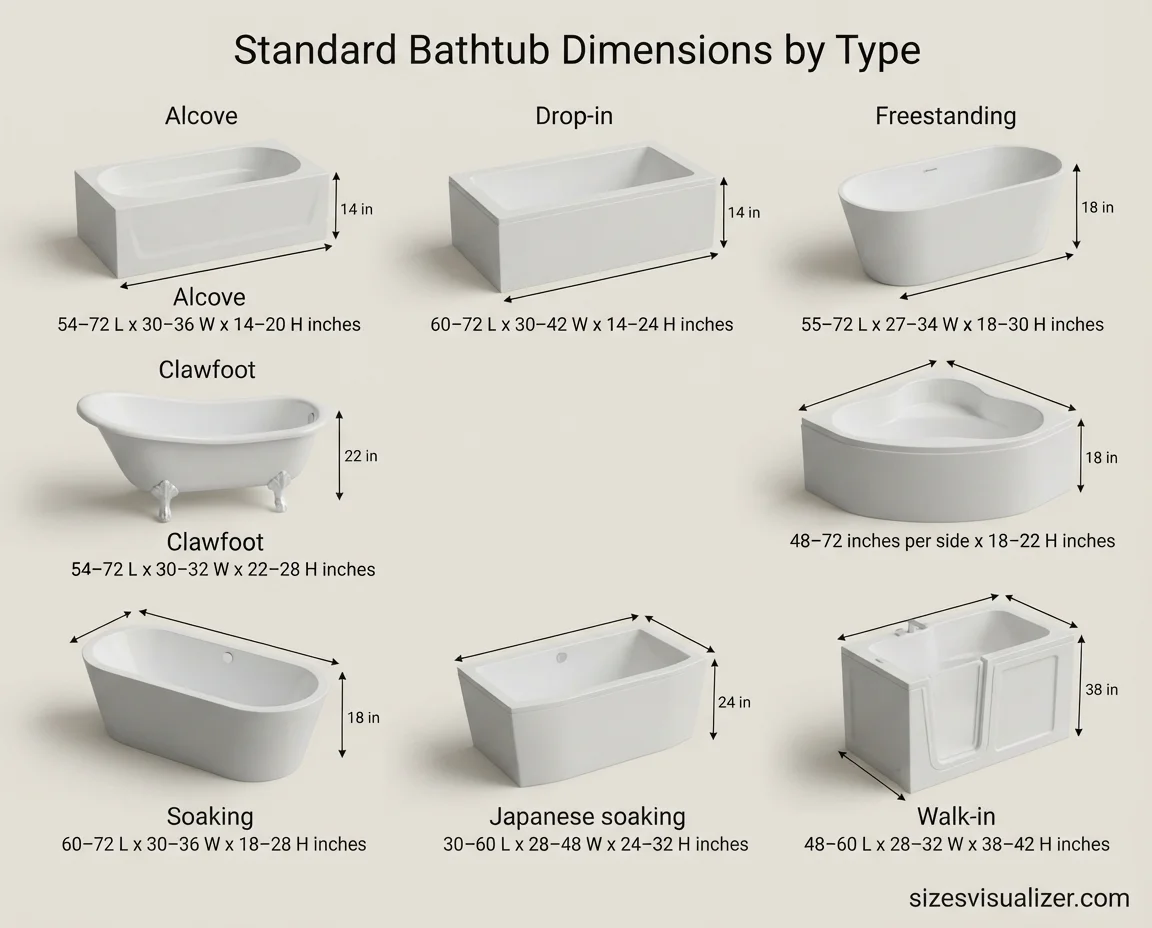
This bathtub dimensions chart shows common US sizes. Each brand sets its own, so always check the spec sheet before you buy.
| Tub type | Length | Width | Height or depth | Best for |
|---|---|---|---|---|
| Alcove | 54-72 in (137-183 cm) | 30-36 in (76-91 cm) | 14-20 in (36-51 cm) | Tub-shower combos |
| Drop-in / undermount | 60-72 in | 30-42 in | 14-24 in | Built-in decks |
| Freestanding | 55-72 in | 27-34 in | 18-30 in | Larger bathrooms |
| Clawfoot | 54-72 in | 30-32 in | 22-28 in | Classic style |
| Corner | 48-72 in per side | 48-72 in per side | 18-22 in | Unused corners |
| Soaking | 60-72 in | 30-36 in | 18-28 in | Deep baths |
| Japanese soaking | 30-60 in | 28-48 in | 24-32 in | Small floor space |
| Walk-in | 48-60 in | 28-32 in | 38-42 in | Easy entry, seniors |
Here is how standard bathtub sizes by length compare:
| Length | Metric | Who it fits |
|---|---|---|
| 48 in | 122 cm | Small spaces, seated bathing |
| 54 in | 137 cm | Small bathrooms, older homes |
| 60 in | 152 cm | Most adults (the standard) |
| 66 in | 168 cm | Taller adults |
| 72 in | 183 cm | Tall adults, extra legroom |
Standard Bathtub Length, Width and Height Explained
Length
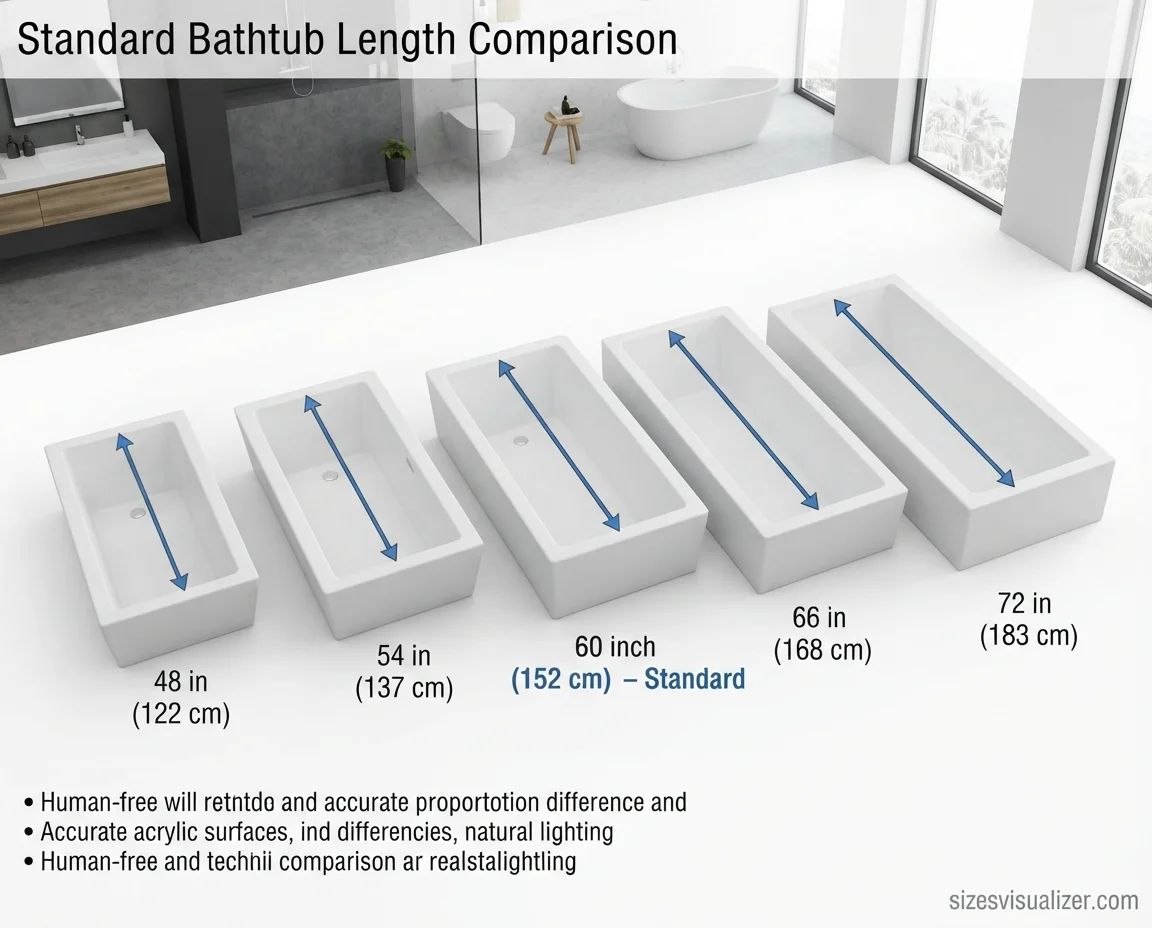
Sixty inches is the number that matters. A 60-inch tub is easy to swap because the wall opening was framed for it. A 54-inch tub saves space. A 66 or 72-inch tub gives taller people room to stretch out.
Width
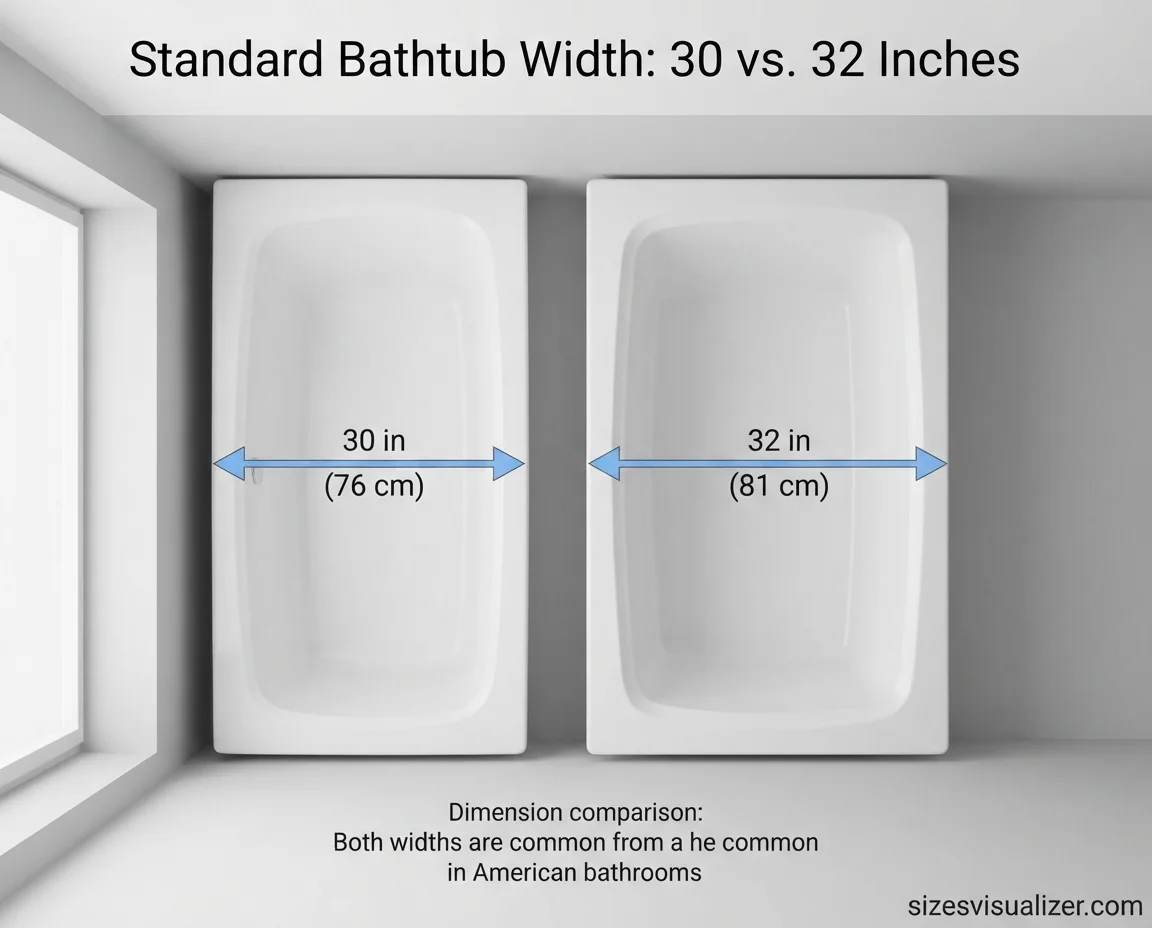
The standard tub width is 30 inches. Many models are 32 inches. Two extra inches can turn a simple swap into a tile repair, so check before you order.
Height
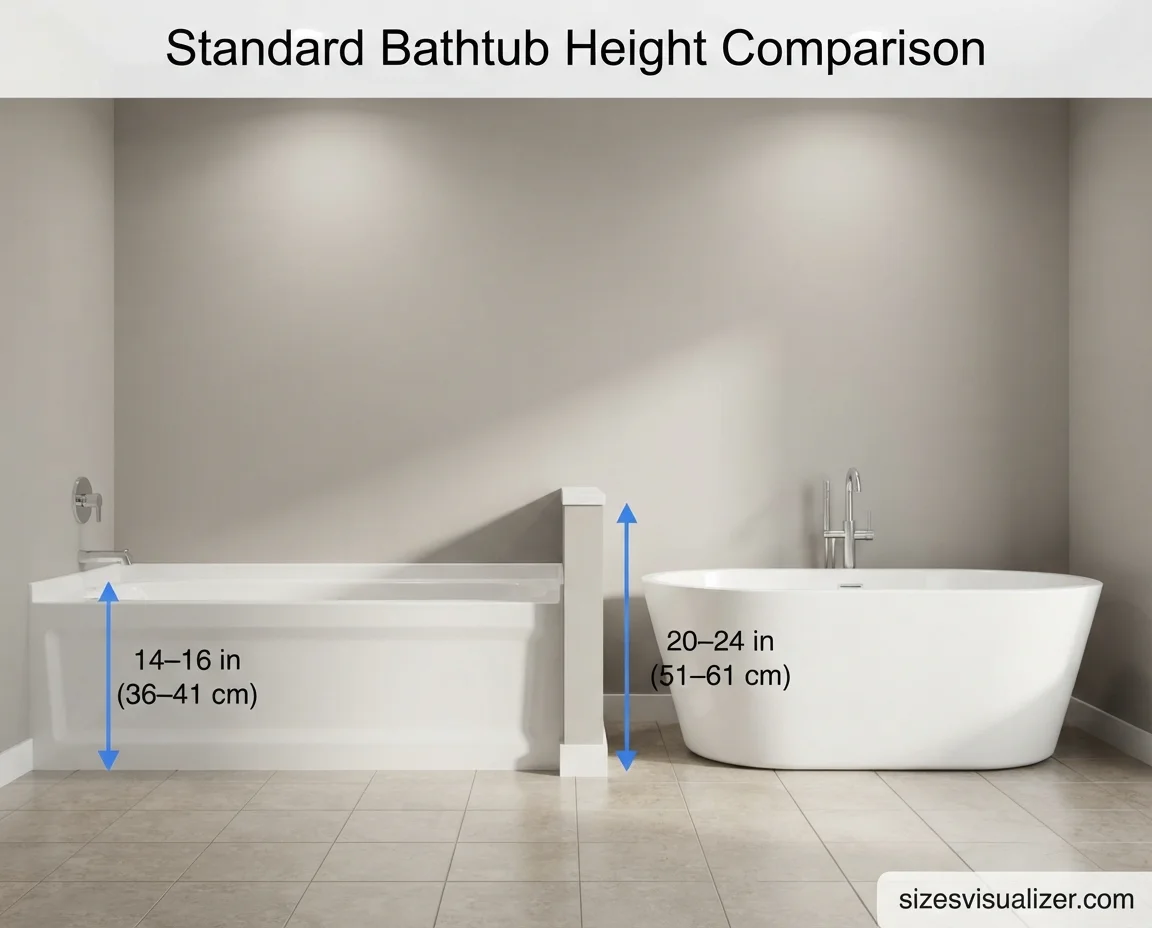
A standard bathtub height is 14 to 16 inches at the rim. Freestanding tubs often stand 20 to 24 inches tall. Taller rims are harder to step over.
Water depth
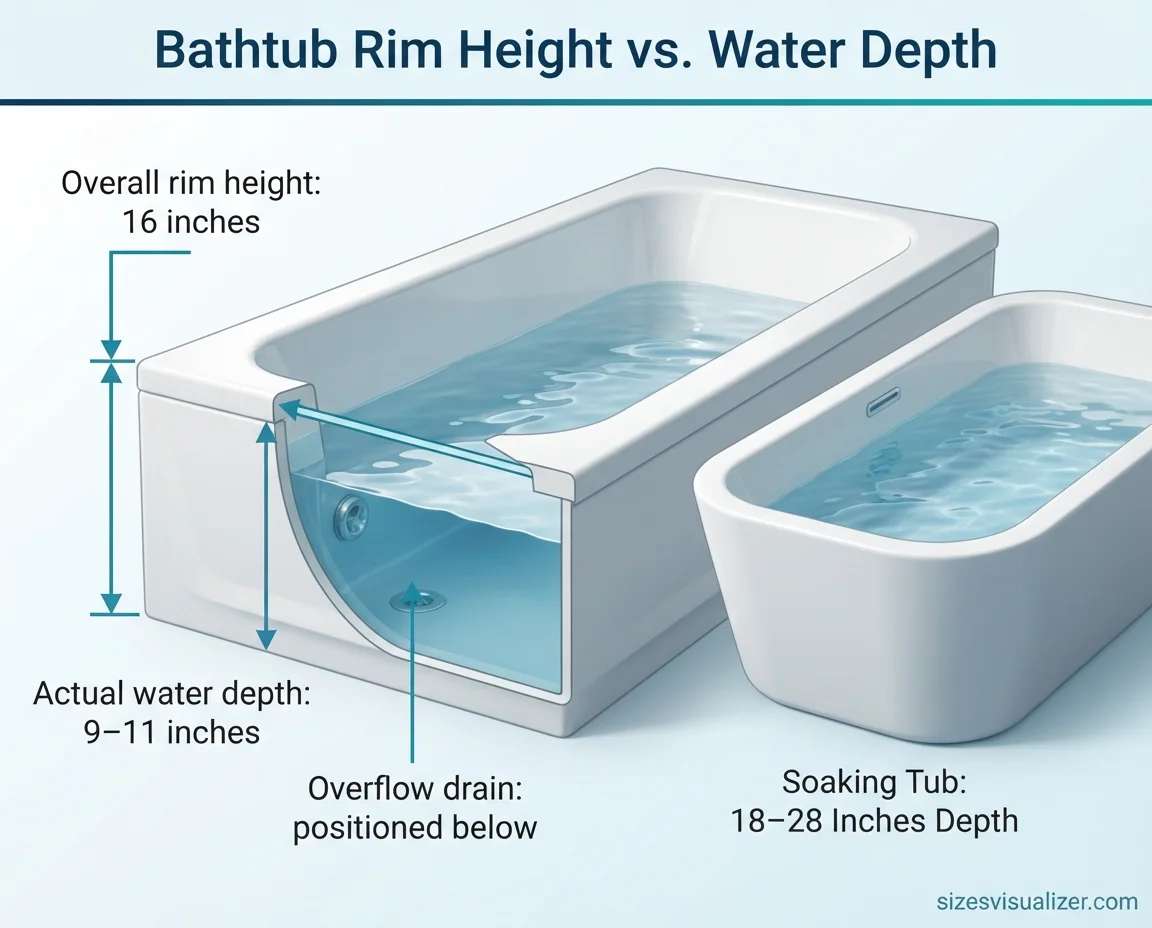
This is the detail many buyers miss. The overflow drain sits below the rim. So a 16-inch tub holds only about 9 to 11 inches of water. If you want to be covered, pick a soaking tub with 18 to 28 inches of depth.
Capacity
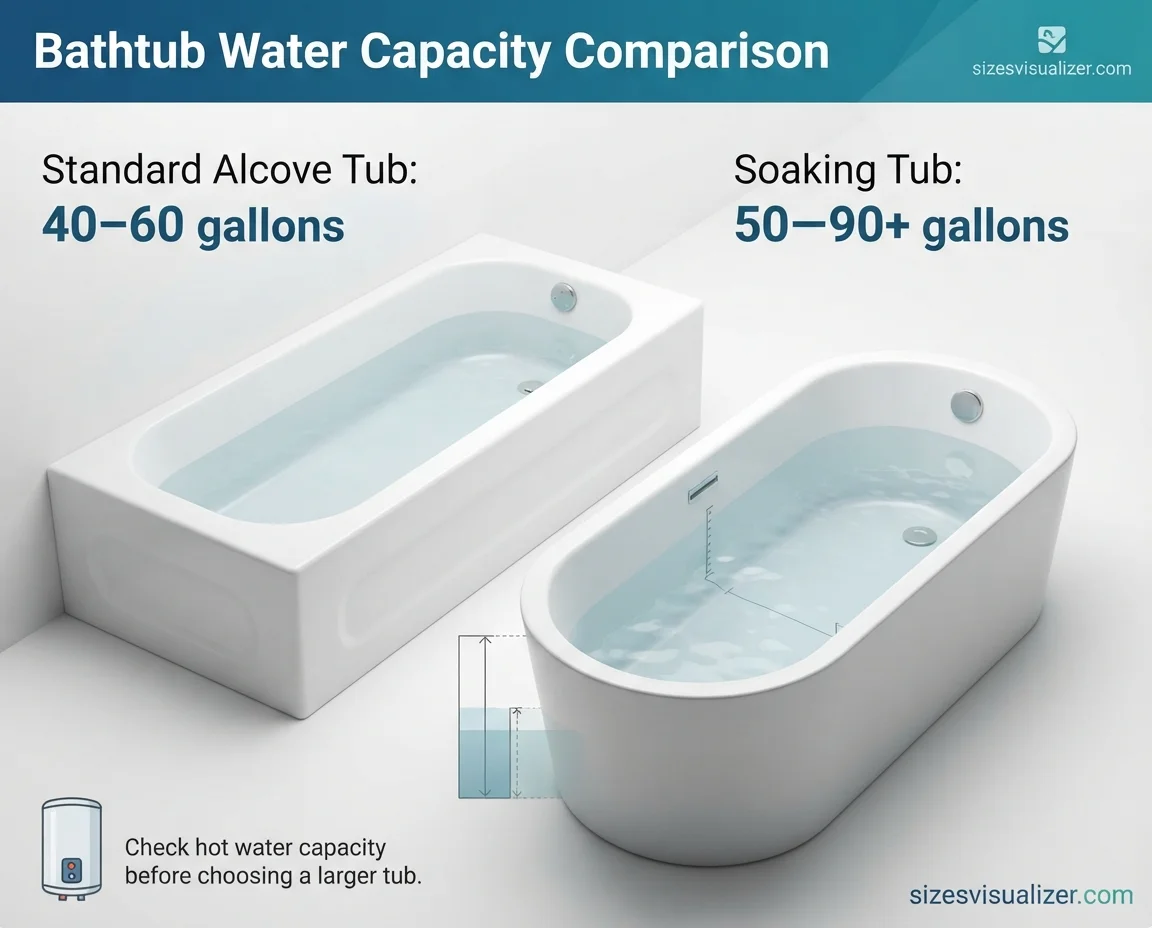
A standard alcove tub holds about 40 to 60 gallons to the overflow. Soaking tubs can hold 50 to 90 gallons or more. Check this against your water heater first. A big soaker and a small tank make a poor pair.
Inside vs outside size
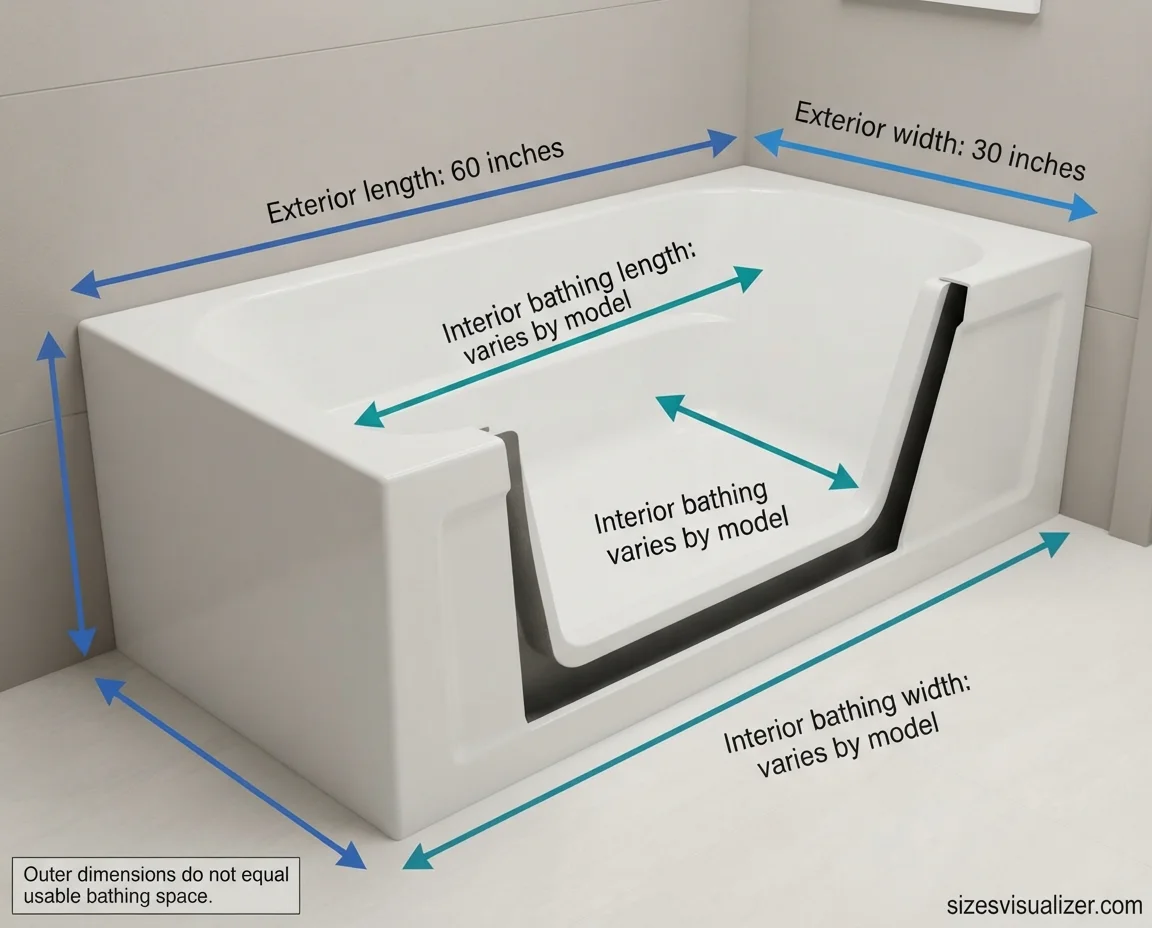
Outer length does not equal bathing length. Thick rims and sloped backs shrink the inside. Two 60-inch tubs can feel very different.
While bathtub dimensions are important for choosing the right fit, accurate measurements matter for many everyday items, including collectible trading cards. Understanding standard Pokémon card dimensions helps collectors choose properly sized sleeves, protectors, and storage solutions while keeping their cards safe.
Standard Bathtub Sizes for Different Bathrooms
Small bathroom
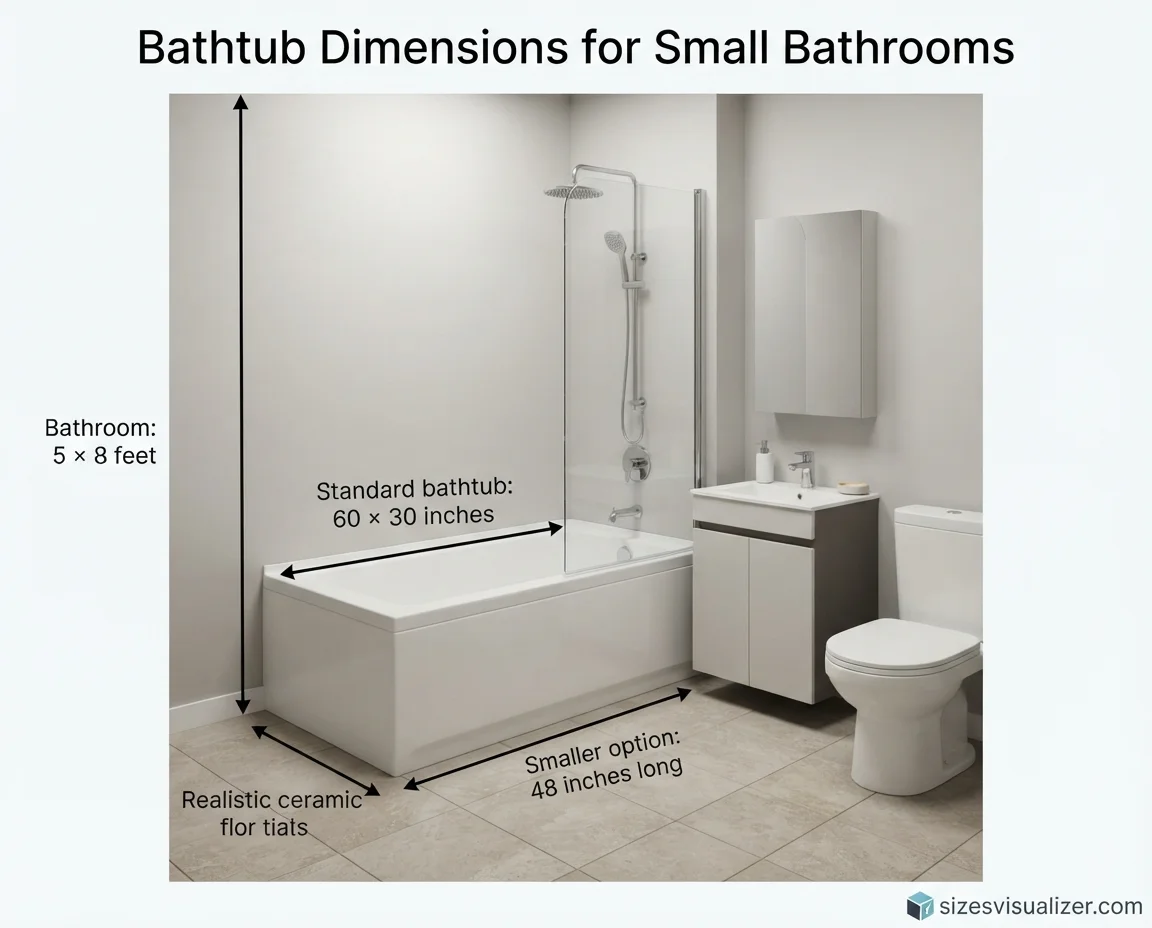
Many US bathrooms are about 5 × 8 feet. Five feet is 60 inches, so a standard alcove tub fits wall to wall. For tighter rooms, choose a 54 or 48-inch tub, or a deep Japanese soaking tub.
Master bath
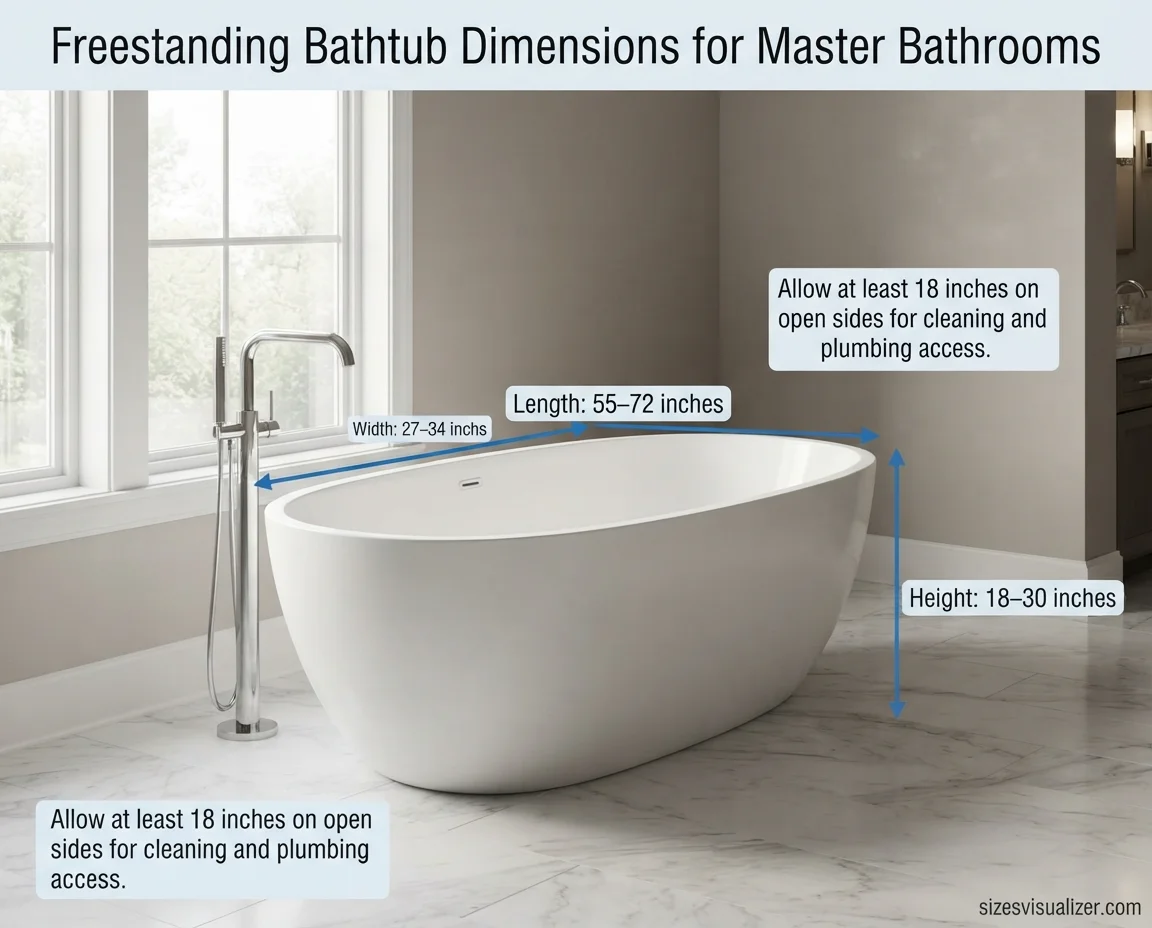
A freestanding tub works well here. Plan for the tub plus the filler and cleaning space. In a cramped room, a freestanding tub adds cost without the payoff.
Awkward corner
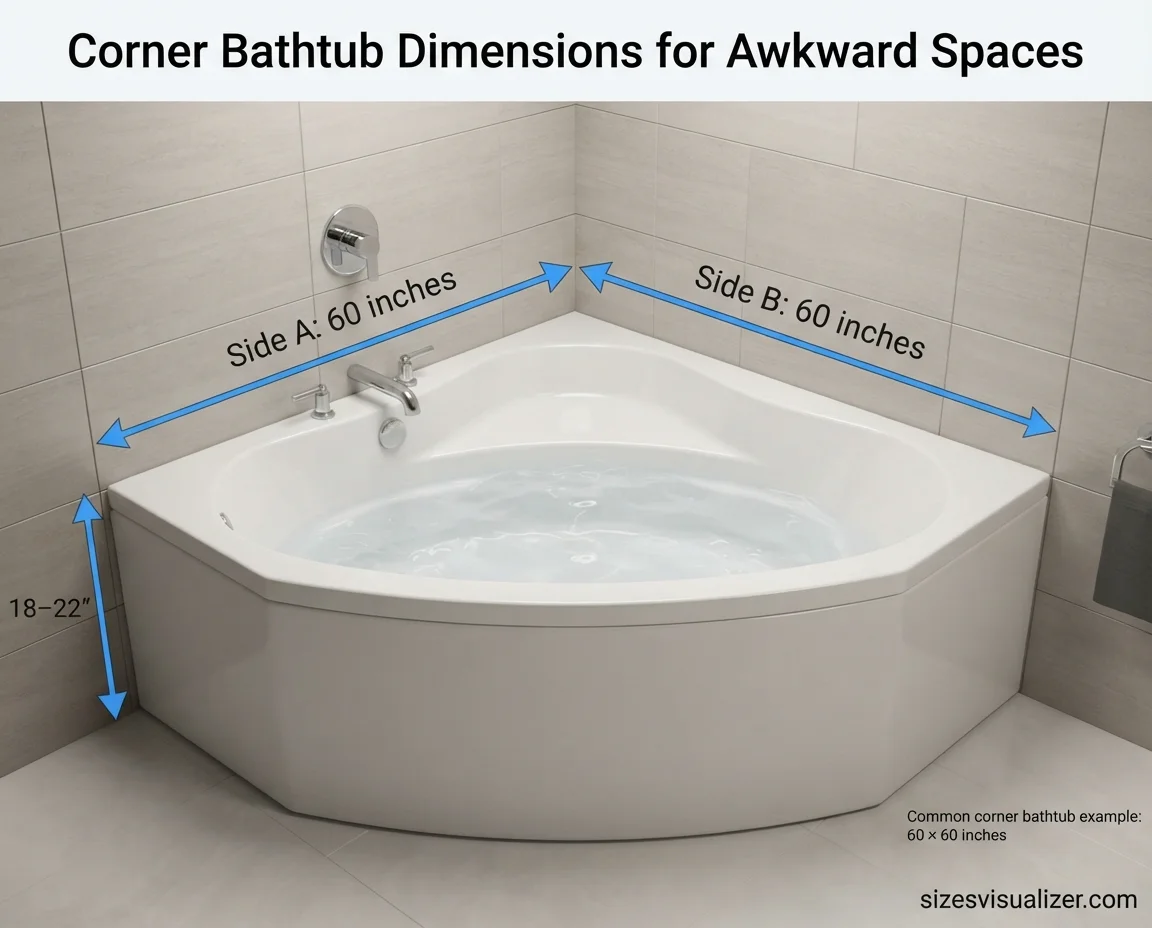
A corner tub, often 60 × 60 inches, uses space nothing else would.
Accessibility
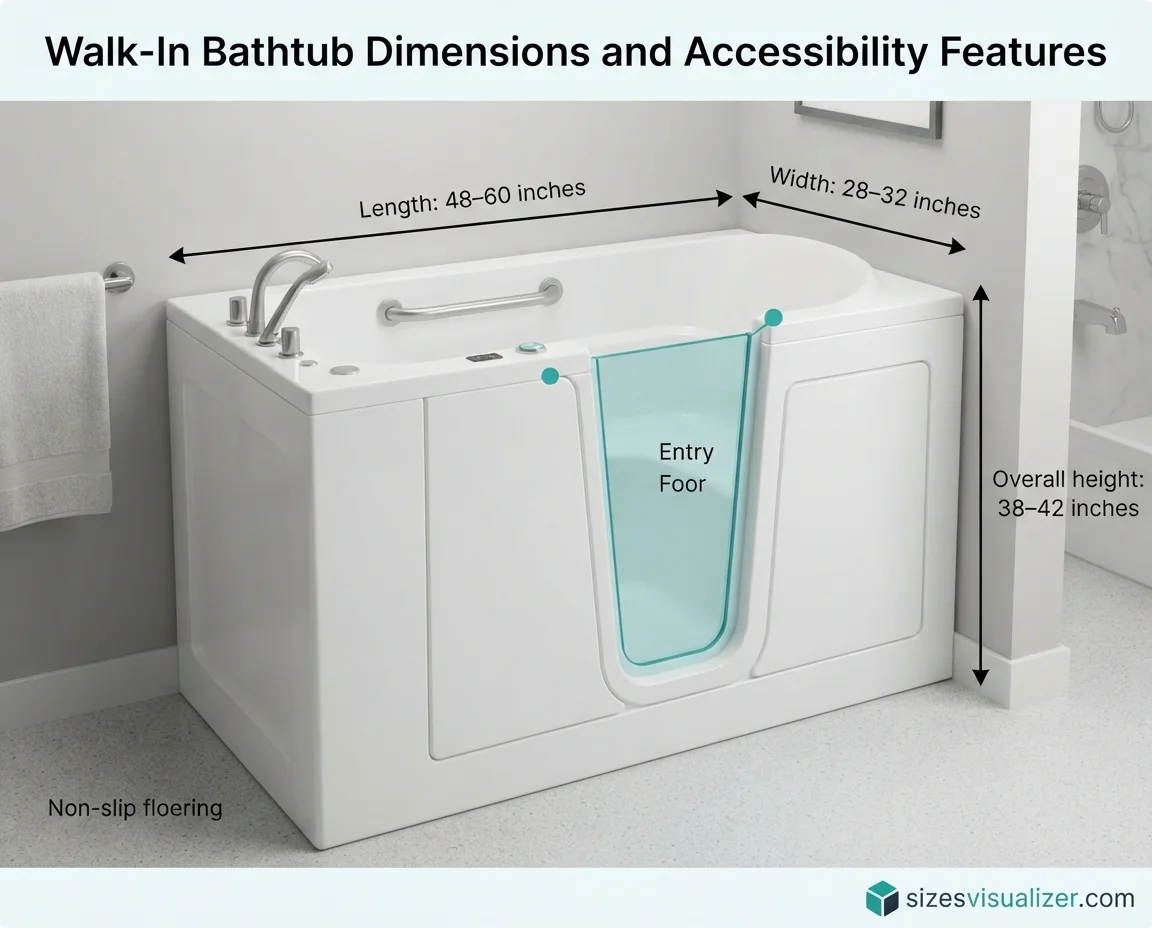
A walk-in tub has a door and a seat. Its walls stand 38 to 42 inches tall.
Material and weight
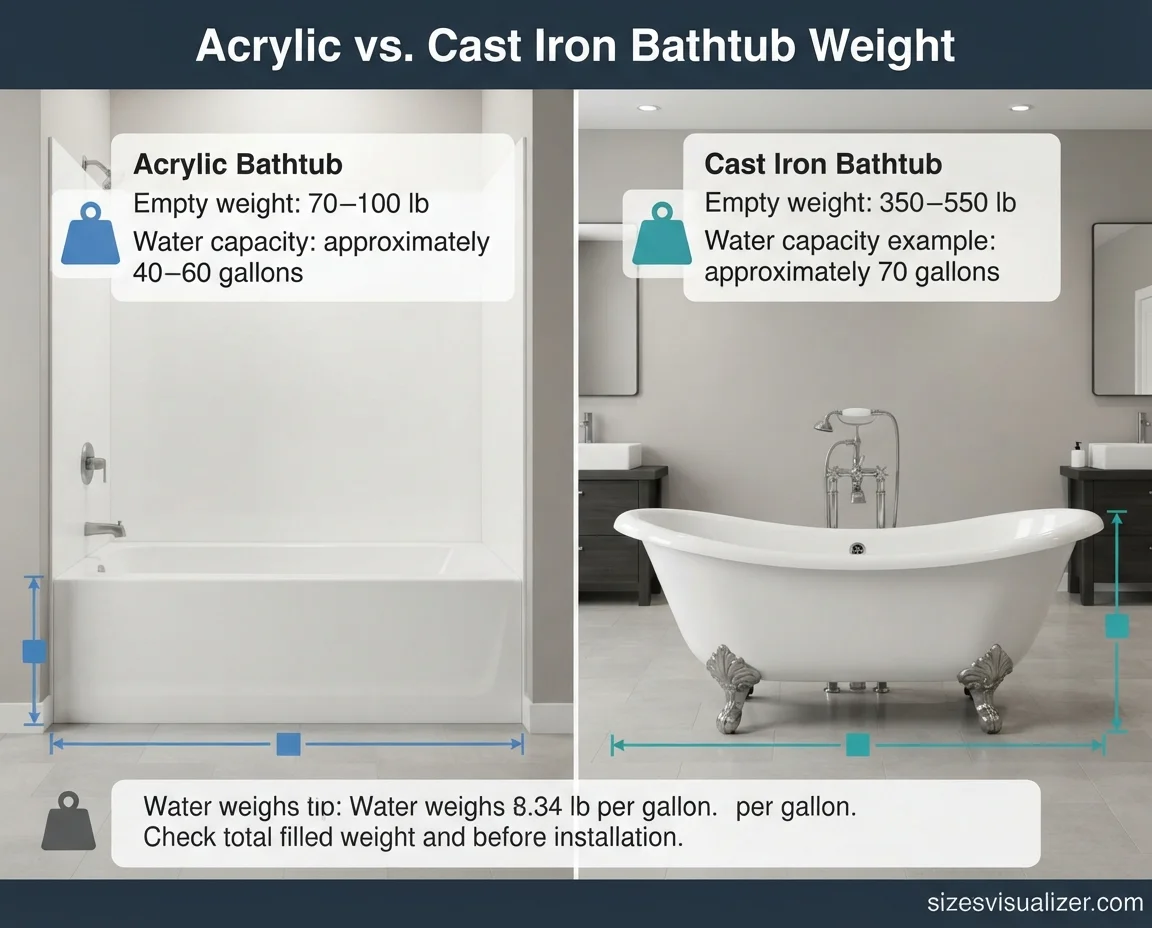
Acrylic tubs are light, around 70 to 100 pounds. Cast iron tubs run 350 to 550 pounds and hold heat longer. Weight matters on upper floors and on stairs.
How to Measure and Choose the Right Bathtub Size

How much space does a bathtub need? The footprint of a standard tub is about 12.5 square feet. Then add clear floor space around it.
- In front of the tub: The International Residential Code asks for at least 21 inches of clear space. The National Kitchen & Bath Association suggests 30 inches for comfort.
- Freestanding tubs: Leave at least 18 inches on every open side for cleaning and plumbing access.
Follow these steps before you buy:
- Measure the rough opening wall to wall. The old tub may have been packed in with shims.
- Allow for finishes. Tile, backer board, and waterproofing shrink the finished space.
- Pick the drain hand. Stand facing the tub. A left or right drain must match your plumbing.
- Measure the delivery route. The tightest spot is often a hallway turn, not the bathroom door. Measure the diagonals.
- Plan the filler early. A floor-mounted filler needs its supply lines set at rough-in.
Check the floor load. Water weighs 8.34 pounds per gallon. Here is what that means in practice:
| Acrylic alcove | Cast iron freestanding | |
|---|---|---|
| Empty tub | 70-100 lb | 350-550 lb |
| Water to overflow | about 375 lb | about 585 lb |
| One bather | 180 lb | 180 lb |
| Total | about 635 lb | about 1,210 lb |
| Load per sq ft | about 51 psf | about 82 psf |
The IRC sets a 40 psf design live load for most rooms. A higher number is not an automatic failure, because joists share the load. Still, ask a structural pro before putting a heavy tub on an upper floor.
Avoid these common mistakes:
- Judging depth by rim height instead of water depth.
- Ordering the wrong drain hand.
- Assuming any 60-inch tub fits any 60-inch opening.
- Skipping the delivery route check.
- Pairing a large soaker with a small water heater.
FAQs
What is the size of a standard bathtub?
A standard bathtub is 60 inches long, 30 inches wide, and 14 to 16 inches high (152 × 76 × 36-41 cm). Standard lengths run from 54 to 72 inches.
How much space is needed for a standard bathtub?
A standard tub takes about 60 × 30 inches, or 12.5 square feet. Leave at least 21 inches of clear floor space in front, per the IRC. Thirty inches is more comfortable. Freestanding tubs need more room on all sides.
Is a 54 inch tub too small?
Not for most small bathrooms. A 54-inch tub suits average-height adults who sit upright. Taller people may find it tight for lying back. In that case, a 60-inch tub is the better fit.
Is a standard tub 30 or 32 inches wide?
Both sizes are common. 30 inches is the base standard, and 32 inches is widely sold. Measure your opening before you order.
What is the standard size bath tub for adults?
The 60 × 30 inch alcove tub is the standard for adults. Taller adults may prefer 66 or 72 inches. For deeper water, choose a soaking tub.
What is the smallest bathtub size?
The smallest standard bathtub is about 48 inches long. A Japanese soaking tub can be smaller, around 30 to 48 inches per side, with much deeper water.
Conclusion
The standard bathtub size is 60 × 30 inches, with a rim height of 14 to 16 inches. Other types vary, so match the tub to your room, your body, and your floor. Measure the opening, check the water depth, and confirm the delivery route before you buy.

Measurement Researcher, Size Comparison Writer & Content Specialist
Timmy Ahad is a dedicated content writer and research specialist at SizesVisualizer.com, where he focuses on creating accurate, easy-to-understand content about measurements, dimensions, size comparisons, and real-world object visualization.


