
50 kg equals 110.23 lbs. That single figure is easy to state, but it means little without real-world context. This guide translates 50 kilograms into 15 concrete, familiar objects, explains the exact kg to lbs conversion, and clarifies how heavy is 50 kg and what means for human body weight and health.
Whether you’re packing luggage, loading a barbell, or simply curious what 50 kg looks like, the comparisons below are grounded in verified weight ranges rather than rough guesses.
Table of Contents
What Is 50 kg in Pounds? (Quick Conversion Answer)
50 kg in pounds is 110.23 lbs. This figure is derived from the international avoirdupois pound, a unit legally fixed at 0.45359237 kilograms under a 1959 international agreement signed by the United States, the United Kingdom, and four other nations. Inverting that relationship, 1 kilogram equals 2.20462 pounds.
| Unit | Value |
|---|---|
| Kilograms | 50 kg |
| Pounds | 110.23 lbs |
| Grams | 50,000 g |
| Ounces | 1,763.7 oz |
| Stones | 7.87 st |
Because the imperial system remains the default in the United States, most readers find it easier to picture 50 kg once it’s expressed in pounds. As a working rule, multiplying any kilogram figure by 2.2 gets you close enough for everyday purposes.
Compare dimensions with confidence using our Size Visualizer & Comparison Tool, featuring realistic visual references for better understanding.
15 Everyday Things That Weigh About 50 Kilograms
Abstract numbers become meaningful once they’re tied to objects people actually encounter. Each of the 15 examples below includes its typical weight range and the context that makes the comparison useful.
Adult Siberian Husky

An adult Siberian Husky generally weighs between 45 and 60 kg, with many individuals landing close to the 50 kg benchmark. This breed was developed for endurance sled-pulling across long, frozen distances, which explains the dense muscle mass packed into a mid-sized frame.
Unlike heavier working breeds, Huskies carry their weight efficiently. Their build favors stamina over bulk, so 50 kg of Husky moves very differently than 50 kg of static cargo.
Adult Female Chimpanzee

A mature female chimpanzee typically weighs 27 to 50 kg, with larger individuals reaching the upper end of that range. Despite a body size smaller than the average human male, chimpanzees possess muscle fiber composition that produces exceptional strength relative to body weight.
Wildlife researchers and zookeepers treat this strength differential with serious caution. A 50 kg chimpanzee can generate force disproportionate to its size, which is a well-documented distinction between primate and human musculature.
Newborn Dairy Calf

A newborn calf from a large dairy breed, such as a Holstein, can weigh 45 to 50 kg at birth. That places some calves at roughly the same weight as a small adult human on their very first day of life.
This comparison is particularly useful in agricultural contexts, where birth weight is a routine metric tracked for herd health and breeding management.
Must Visit: What Weighs 3 Pounds? 18 Everyday Things That Weigh Around 3 lbs
Adult Female Red Kangaroo

An adult female red kangaroo averages close to 50 kg, considerably lighter than males of the same species, which can exceed 85 kg. Most of this weight is concentrated in the hind legs and tail, the anatomical features responsible for the kangaroo’s powerful hopping locomotion.
The weight distribution here differs sharply from the other animals on this list, since kangaroos carry proportionally more mass below the waist than above it.
Loaded Olympic Barbell
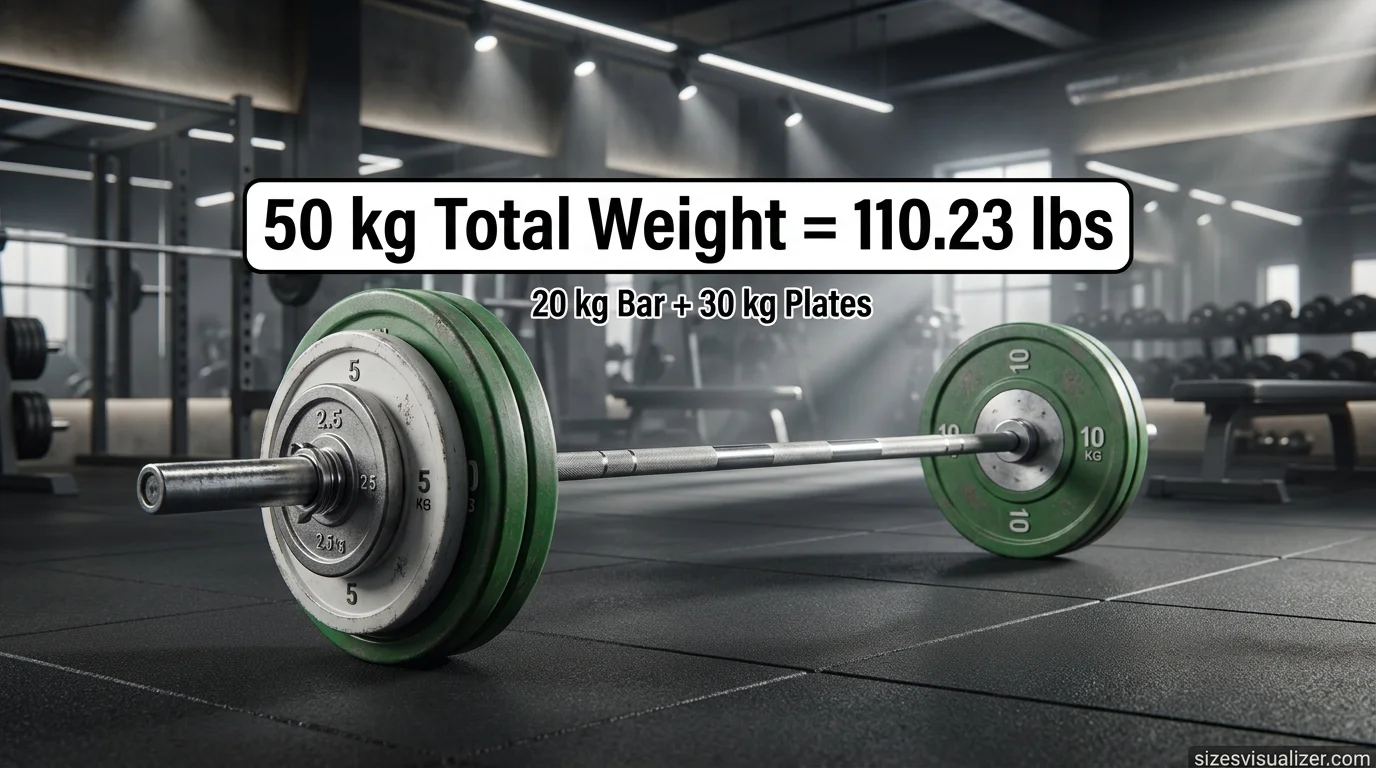
A standard Olympic barbell weighs 20 kg on its own. Once a beginner lifter adds modest plates for a squat, deadlift, or bench press session, the total load frequently reaches 50 kg. Strength coaches often cite this figure as an early training milestone for new lifters building foundational form.
Because barbell weight is standardized and easy to verify, this comparison is one of the more precise entries on this list.
Five 10 kg Kettlebells
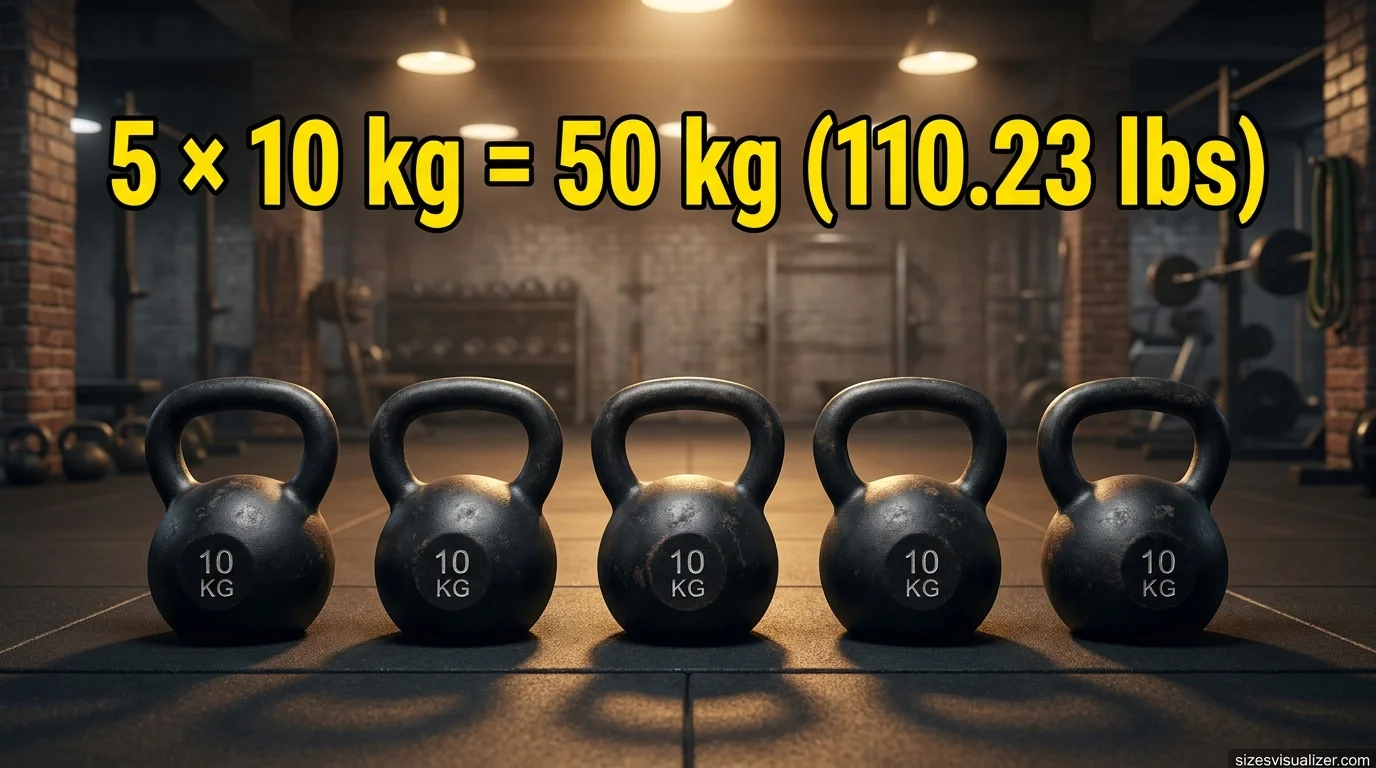
Stacking five kettlebells at 10 kg each produces an exact total of 50 kg. Kettlebells are manufactured in standardized weight increments, which makes this comparison mathematically precise rather than approximate.
Gyms frequently use kettlebell math like this to help members visualize cumulative weight, since most people have handled at least one kettlebell before.
Compact Dorm-Room Refrigerator
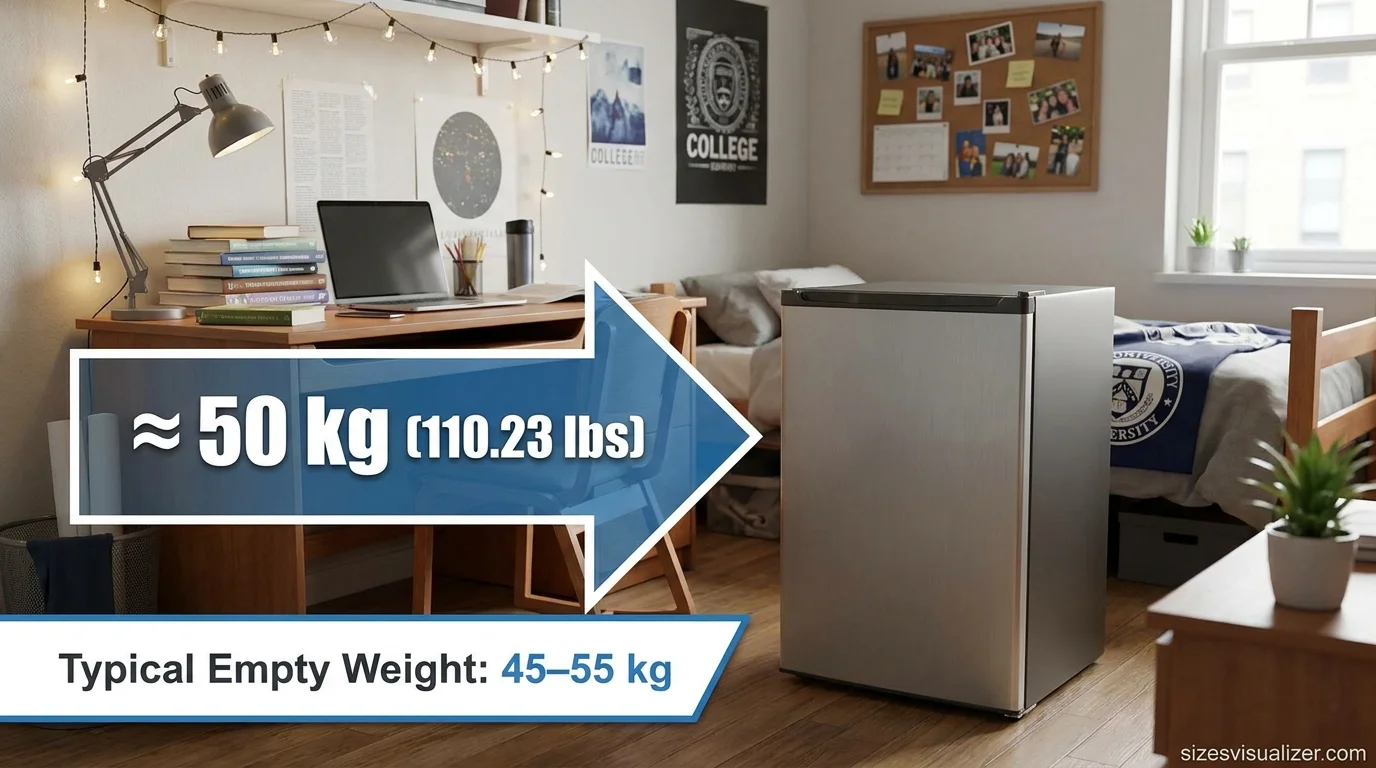
A compact refrigerator, the kind commonly used in dorm rooms and small offices, typically weighs 45 to 55 kg when empty. The weight comes primarily from the metal casing, compressor, and cooling components packed into a small footprint.
Movers and delivery services often flag appliances in this weight class for team lifting, since the awkward shape adds difficulty beyond the raw weight itself.
Queen-Size Mattress and Box Spring

A queen-size mattress paired with a box spring commonly weighs close to 50 kg combined, though the exact figure varies by material. Memory foam models tend to weigh less than traditional innerspring construction, while hybrid designs fall somewhere in between.
This comparison is especially relatable for anyone who has moved a mattress up a narrow staircase and immediately understood what 50 kilograms of awkward, bulky weight feels like.
Full Propane Tank

A large propane tank, sized for patio heaters or industrial-grade grills, weighs 48 to 52 kg when completely filled. This figure includes both the steel tank itself and the fuel inside it, since propane adds meaningful mass to the empty container.
Safety guidelines around propane tanks exist partly because of this weight. A dropped, fully loaded tank presents both a physical hazard and a fire risk, which is why gas suppliers handle exchanges with dedicated equipment.
Small Outboard Boat Motor

A small outboard motor, the type mounted on fishing boats and dinghies, commonly weighs around 50 kg. Motor weight scales with horsepower, so this figure applies specifically to lower-output models used for smaller vessels rather than larger marine engines.
Boat owners frequently cite outboard motor weight when planning solo transport and installation, since lifting 50 kg at an awkward angle over a transom requires deliberate technique.
Two Checked Airline Suitcases

Two checked suitcases, each packed to the standard 50-lb domestic airline weight limit, come in just under 50 kg combined. This is a practical, frequently experienced benchmark for anyone who travels by air within the United States.
Airlines enforce this limit strictly, and overweight baggage fees are one of the most common ways travelers unexpectedly encounter the 50 kg threshold in daily life.
Thirteen Gallons of Water

Roughly 13 gallons of water weighs close to 50 kg, since one liter of water weighs almost exactly one kilogram at standard conditions. A large insulated cooler filled with ice and beverages typically falls within this same range once fully loaded.
This comparison is useful precisely because water’s weight-to-volume ratio is fixed and universally understood, making it one of the more scientifically grounded entries on this list.
Two Bags of Cement
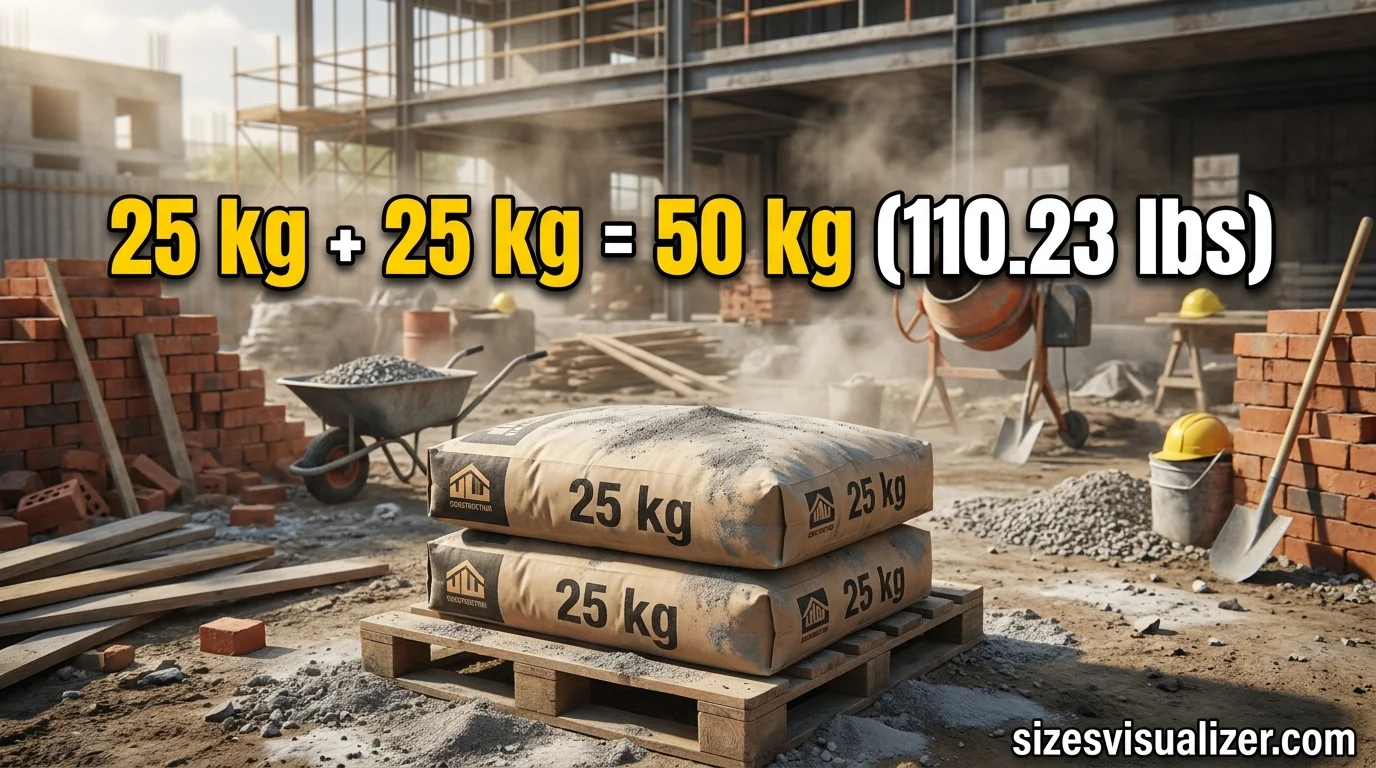
Two standard 25 kg bags of cement, stacked together, equal exactly 50 kg. Construction crews handle this exact combination routinely, since 25 kg is the most common retail bag size sold at hardware and building supply stores.
Cement’s density concentrates significant mass into a compact bag, which is why proper lifting technique, bending at the knees rather than the waist, is emphasized on nearly every job site.
Bulk Bag of Dog Food

A bulk bag of dog food, often sold at 110 lbs for large-breed or working dogs, matches 50 kg almost precisely. Pet supply retailers size these bags specifically for owners managing multiple dogs or larger breeds with higher caloric needs.
This comparison resonates particularly well with pet owners, who have direct, repeated experience lifting and transporting bags in this exact weight range.
Full Beer Keg

A full beer keg, the standard half-barrel size used at bars and large events, weighs approximately 50 to 58 kg once completely filled. The total includes both the steel container and the liquid inside, since the keg itself accounts for a meaningful portion of the overall weight.
Bar and event staff who handle kegs regularly develop specific lifting routines for this weight class, given how frequently full kegs need to be moved during setup and breakdown.
Is 50 kg a Healthy Weight for a Person?
Whether 50 kg represents a healthy weight depends on height, age, and body composition. No single number applies universally across all body types.
Body mass index (BMI) remains the standard clinical tool for evaluating weight relative to height. It is calculated as weight in kilograms divided by height in meters squared. According to the CDC’s National Center for Health Statistics, a BMI between 18.5 and 24.9 falls within the normal, healthy range for adults, while a BMI below 18.5 is classified as underweight.
The table below shows how 50 kg translates across common US heights:
| Height | BMI at 50 kg | Classification |
|---|---|---|
| 5’0″ (152 cm) | 21.6 | Normal |
| 5’3″ (160 cm) | 19.5 | Normal |
| 5’6″ (168 cm) | 17.7 | Underweight |
| 5’9″ (175 cm) | 16.3 | Underweight |
For reference, the average American woman stands about 5’4″ and weighs roughly 170 lbs (approximately 77 kg), based on CDC survey data. A person weighing 50 kg sits well below that national average, which underscores why height and frame size matter more than any single weight figure taken in isolation.
How to Convert Kilograms to Pounds (Formula & Quick Math)
The standard kg to lbs formula is straightforward:
Pounds = Kilograms × 2.20462
Applied to 50 kg: 50 × 2.20462 = 110.23 lbs.
For faster mental math, double the kilogram figure and add 10 percent. Using 50 kg as an example: 50 × 2 = 100, plus 10 percent (5) equals 110, which lands within a fraction of a pound of the precise answer.
It’s worth noting that kilograms measure mass, not weight, in strict scientific terms. Mass remains constant regardless of location, while weight changes with gravitational pull. An object with 50 kg of mass retains that mass on the Moon, even though it would weigh far less there than it does on Earth. In everyday US conversation, however, kilograms and pounds are used interchangeably without this distinction.
FAQ’s
Is 50kg skinny for a woman?
It depends on height. At 5’3″ or shorter, 50 kg falls within the normal BMI range and is not classified as skinny. At taller heights, such as 5’6″ and above, the same weight drops into the underweight BMI category. Since the average American woman weighs closer to 170 lbs, 50 kg sits meaningfully below the national average.
How much is 1 kg to 1 lb?
1 kilogram equals 2.20462 pounds. Conversely, 1 pound equals 0.45359237 kilograms, a figure standardized internationally since 1959.
How much does a 50kg person weigh?
A person weighing 50 kg weighs 110.23 lbs, the equivalent figure in the imperial system used throughout the United States.
Is 50kg weight good?
There is no universal answer, since a “good” weight depends on height, age, muscle mass, and overall health rather than the number alone. BMI offers a general guideline, but clinicians also evaluate body composition and activity level before drawing conclusions about any individual weight.
Is 50 kg chubby?
No. 50 kg sits toward the lower end of the adult weight spectrum in the United States, below the national average for both men and women. “Chubby” is not a medical classification, but by BMI standards, 50 kg is far more likely to fall within the normal or underweight range than the overweight range.
Is 50kg 5’3″ skinny?
At 5’3″ (160 cm), 50 kg produces a BMI of approximately 19.5, comfortably within the normal, healthy range of 18.5 to 24.9. This combination does not meet the clinical threshold for underweight or skinny classification.
Conclusion
50 kilograms equals 110.23 pounds, a figure best understood through concrete comparisons rather than abstract math. Whether it’s a Siberian Husky, two bags of cement, or a stack of kettlebells, each example above reflects a verified weight range rather than a rounded estimate.
The next time 50 kg appears on a label, scale, or shipping form, these 15 comparisons offer an immediate, accurate sense of what that weight actually represents.

Measurement Researcher, Size Comparison Writer & Content Specialist
Timmy Ahad is a dedicated content writer and research specialist at SizesVisualizer.com, where he focuses on creating accurate, easy-to-understand content about measurements, dimensions, size comparisons, and real-world object visualization.