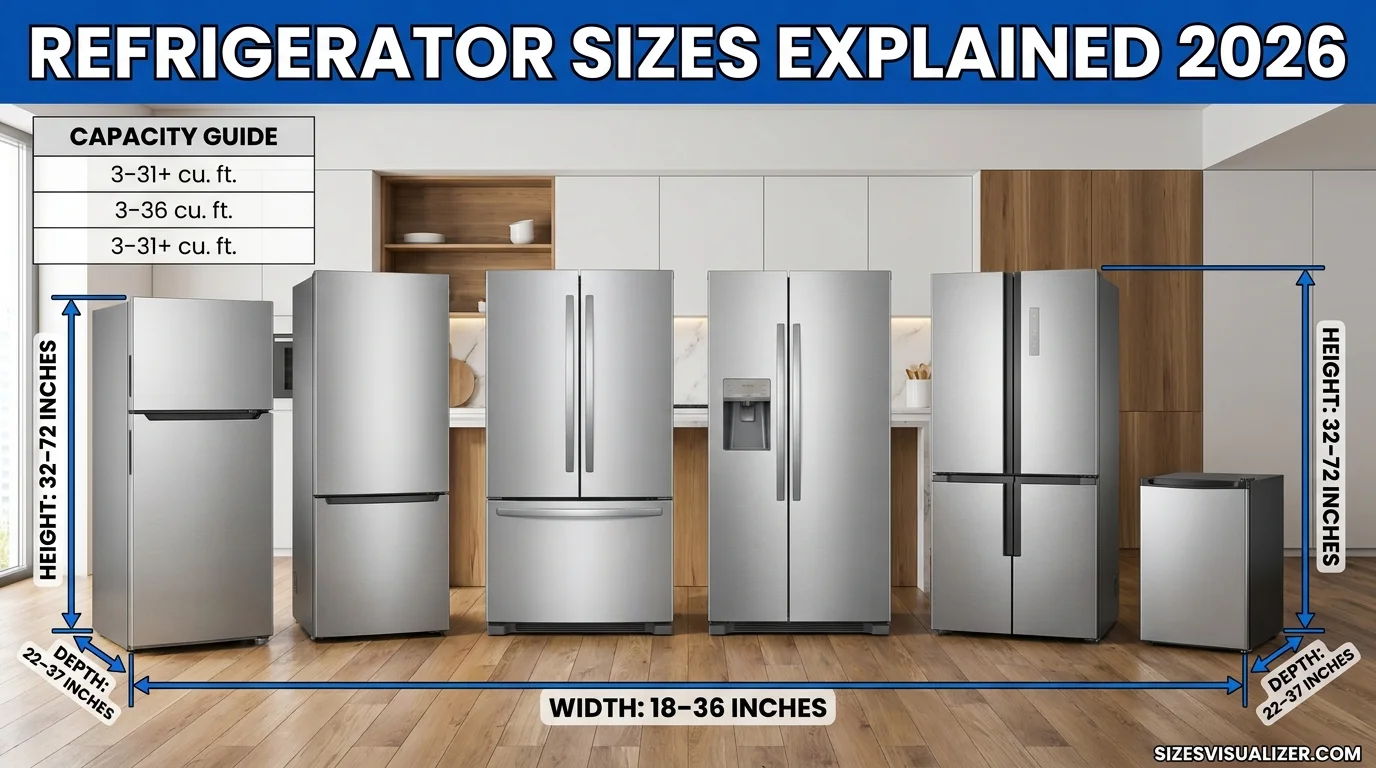
You measure your kitchen twice, order a fridge online, and it still does not fit through the door. This happens more than people admit. Refrigerator sizes explained because refrigerator sizes vary so much by type and brand that guessing is risky business.
This guide breaks down every standard fridge dimension, shows you how to measure correctly, and helps you pick the right refrigerator size for your home in 2026.
Table of Contents
Standard Refrigerator Sizes and Dimensions
A standard refrigerator size falls between 24 and 36 inches wide, 61 to 72 inches tall, and 28 to 37 inches deep. That range covers nearly every full-size model sold in the United States today.
Depth changes a lot depending on whether the doors are open. Closed, most fridges sit at 28 to 35 inches deep. Swing the doors open to 90 degrees, and that depth can stretch to 45 or even 50 inches, according to appliance manufacturer specs.
Capacity, measured in cubic feet, scales with the exterior size. A 30-inch wide model typically holds 18 to 20 cubic feet. A 36-inch model can reach 25 to 31+ cubic feet.
| Refrigerator Size Category | Width | Height | Depth | Capacity |
|---|---|---|---|---|
| Compact | 18-24 in | 32-34 in | 22-25 in | 3-5 cu. ft. |
| Small/Apartment | 24 in | 66-70 in | 28-30 in | 11-13 cu. ft. |
| Medium | 24-32 in | 66-70 in | 29-36 in | 14-21 cu. ft. |
| Large | 36 in | 70-72 in | 33-35 in | 22-31+ cu. ft. |
The U.S. Department of Energy’s ENERGY STAR program notes that the most energy-efficient refrigerator models are typically 16 to 20 cubic feet. Bigger is not always better once you factor in your monthly electric bill.
Visualize refrigerator dimensions with our Size Visualizer Tool to compare different fridge sizes in realistic scale and confidently choose the perfect fit for your kitchen, garage, or storage space.
Refrigerator Sizes by Type
Each fridge type carries its own typical footprint. Knowing these ranges up front narrows your search fast.
Top-freezer refrigerators
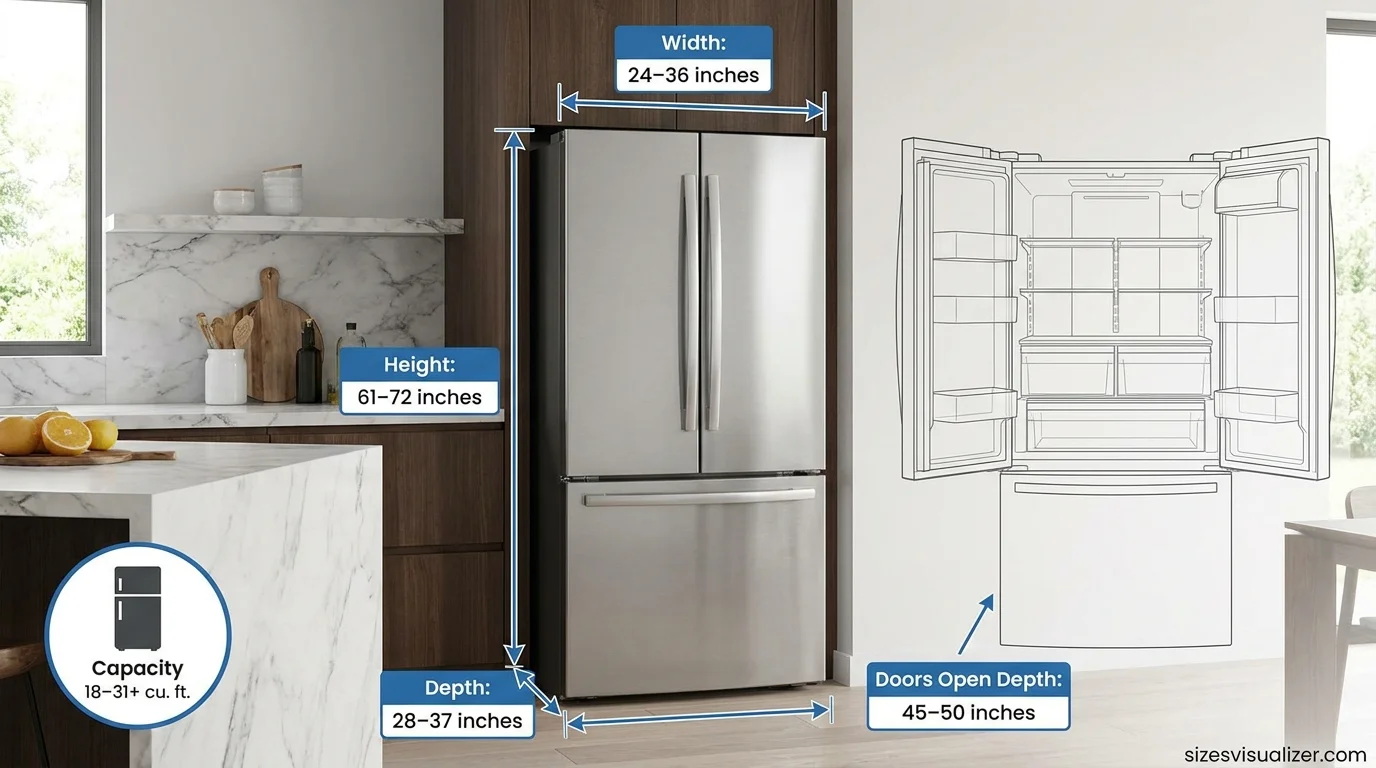
Top-freezer refrigerators are the most compact style. They run 24 to 33 inches wide, 61 to 69 inches tall, and 28 to 35 inches deep, with capacity between 10 and 21 cubic feet. ENERGY STAR specifically flags top-freezer models as the lowest energy users among full-size refrigerators, since fewer doors mean less cold air escapes.
Bottom-freezer refrigerators
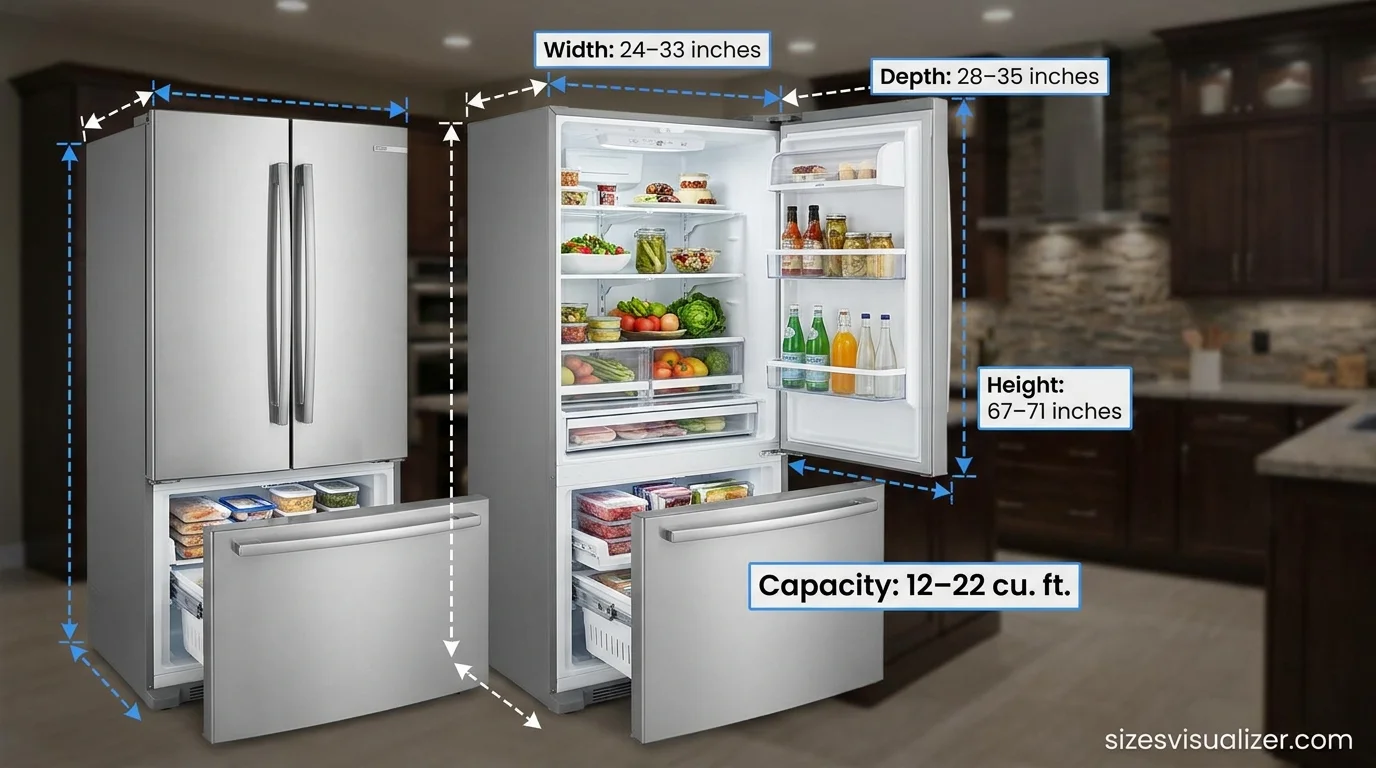
Bottom-freezer refrigerators sit close in size to top-freezer models but trend slightly taller, at 67 to 71 inches. Width stays in the 24 to 33 inch range, and capacity runs 12 to 22 cubic feet.
French door refrigerators
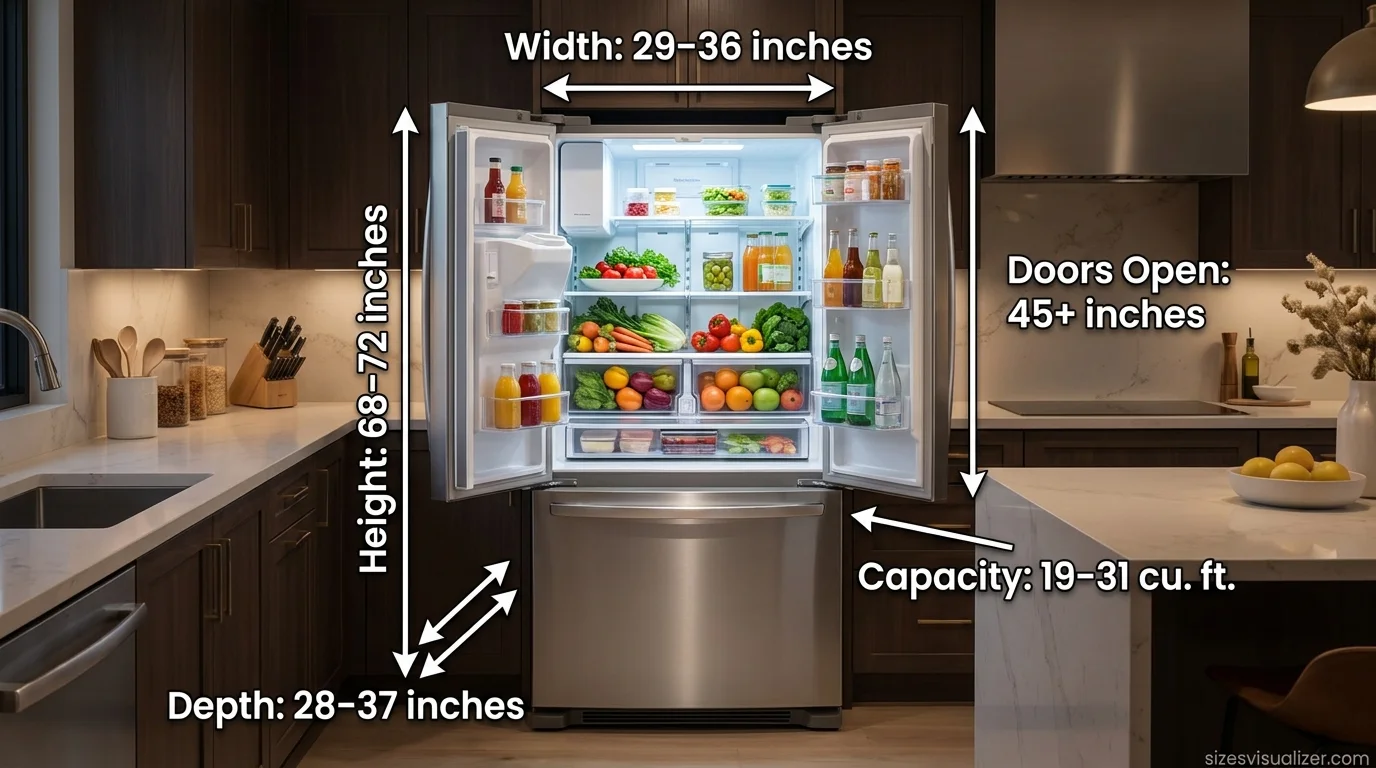
French door refrigerators widen out to 29 to 36 inches and stand taller, from 68 to 72 inches. Depth reaches 28 to 37 inches, extending past 45 inches with the doors open. Capacity ranges from 19 to 31 cubic feet, making this the most popular style for larger households.
Side-by-side refrigerators
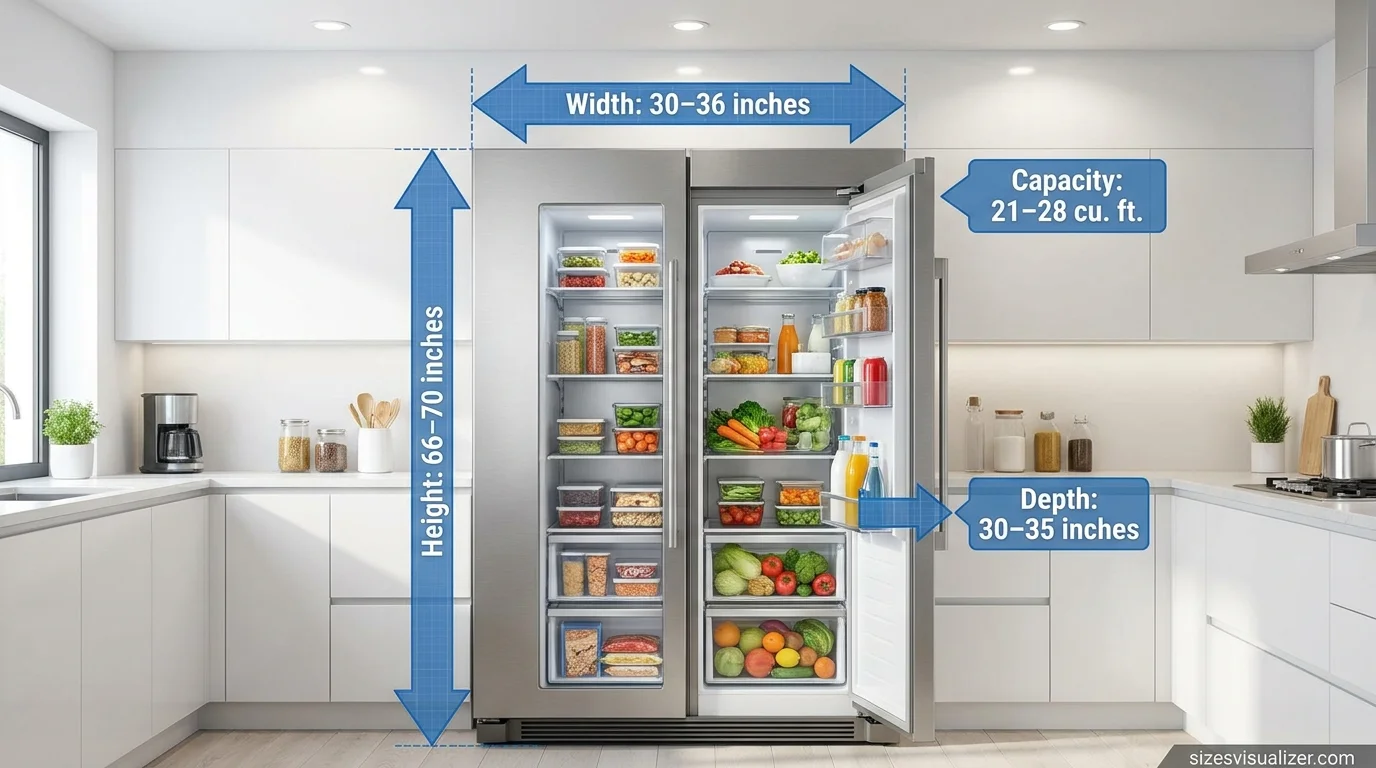
Side-by-side refrigerators measure 30 to 36 inches wide and 66 to 70 inches tall, with 21 to 28 cubic feet of storage. The narrow vertical compartments make wide platters and sheet pans tricky to store.
4-door and multi-door refrigerators
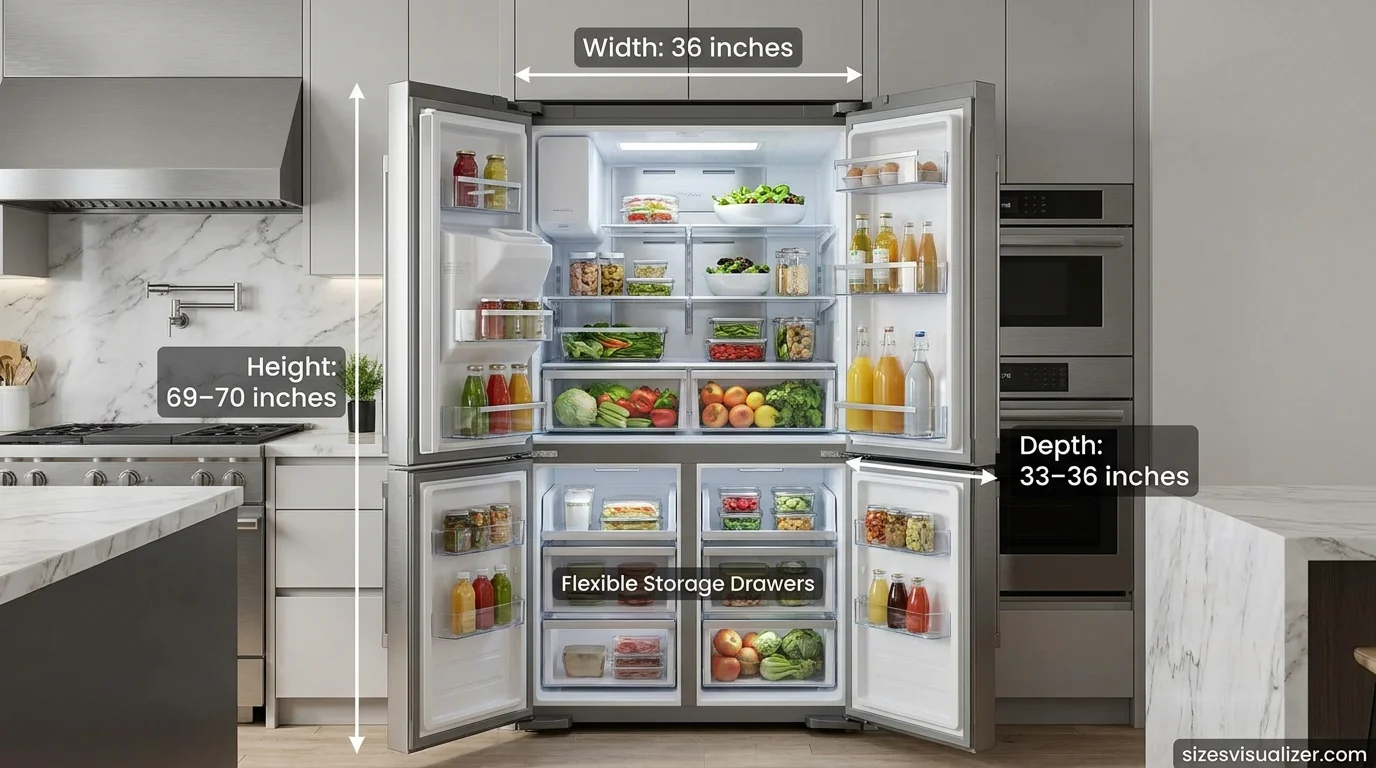
4-door and multi-door refrigerators typically hold at 36 inches wide and 69 to 70 inches tall, offering flexible drawer-based storage on top of standard fridge and freezer sections.
Compact and mini refrigerators
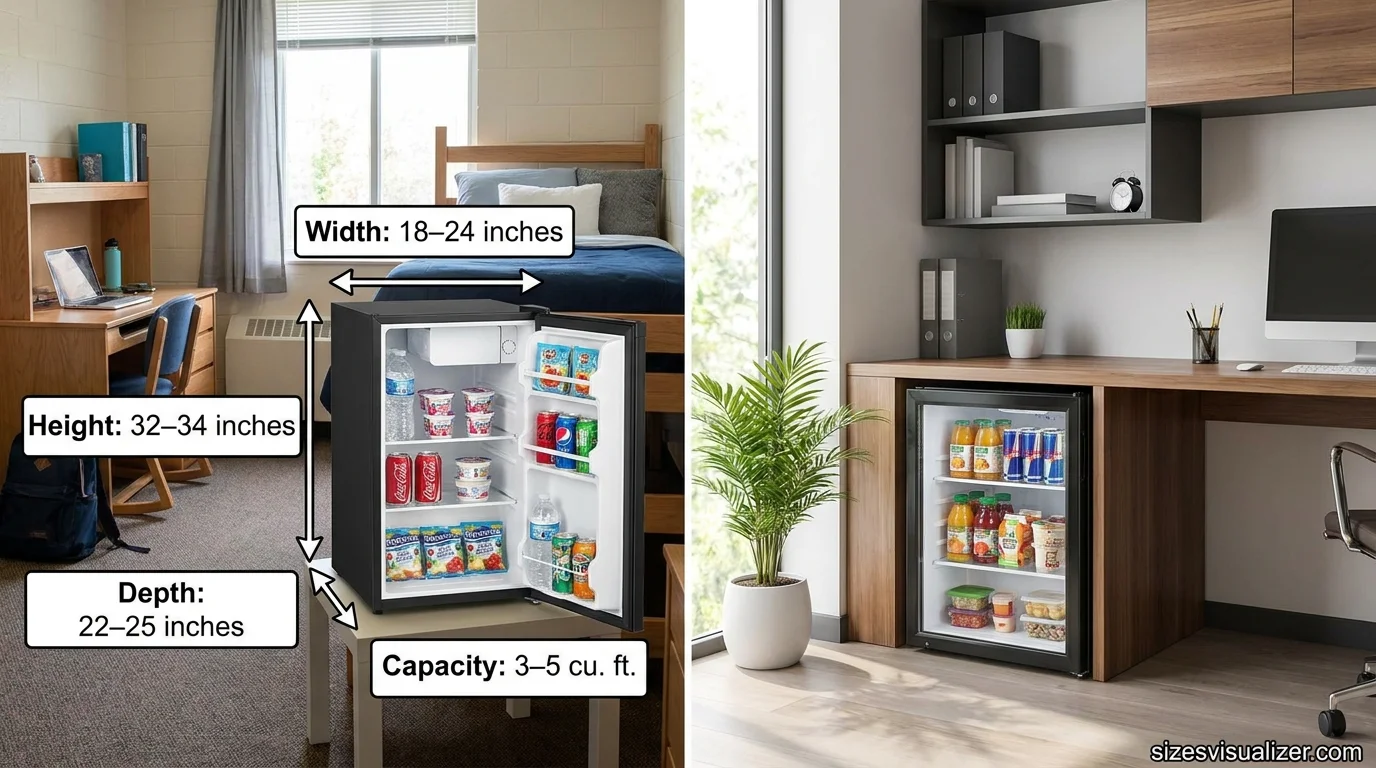
Compact and mini refrigerators shrink down to 18 to 24 inches wide and 32 to 34 inches tall, ideal for dorms, offices, or a wet bar.
Counter-depth refrigerators
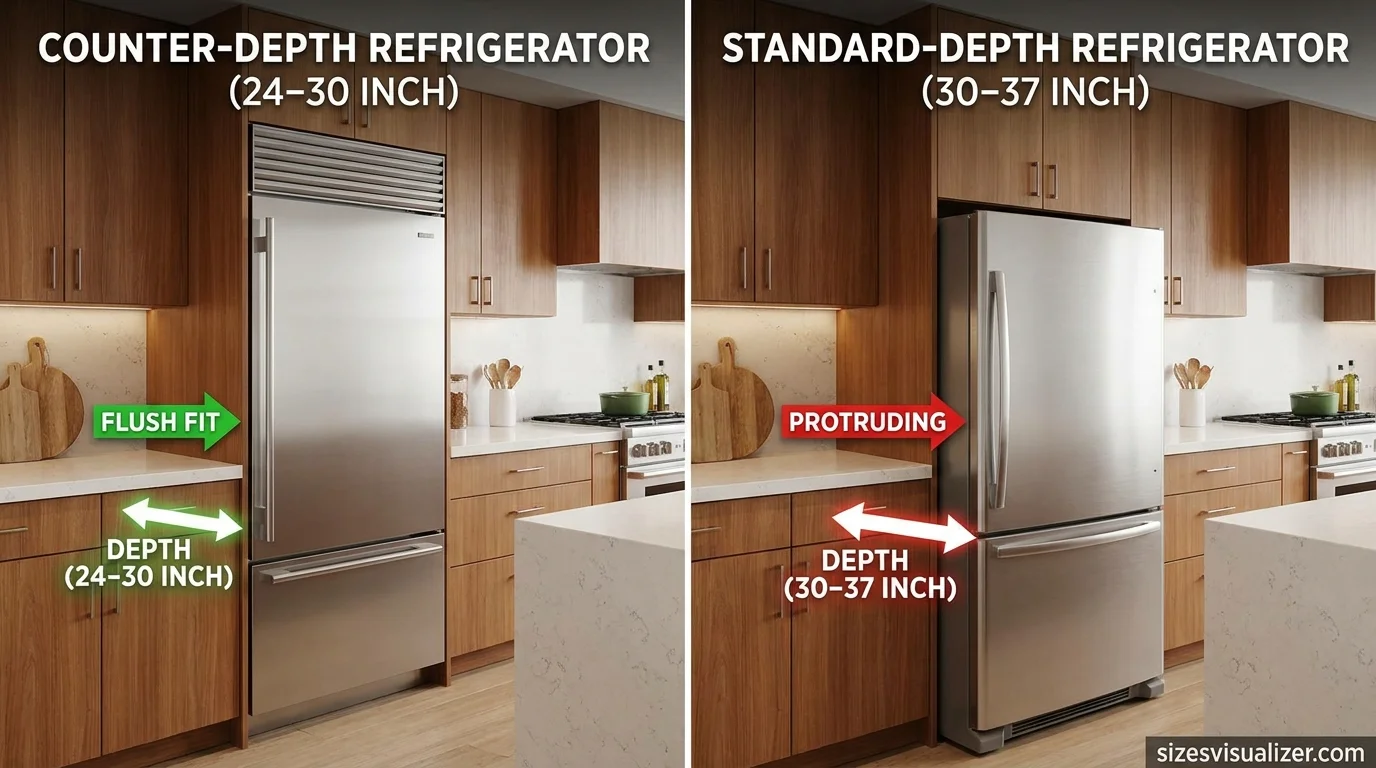
Counter-depth refrigerators are not a separate type so much as a depth spec. They measure 24 to 30 inches deep, versus 30 to 37 inches for standard-depth units, so the fridge front sits flush with your countertops instead of jutting out.
How to Measure a Refrigerator
Getting the refrigerator dimensions right before you buy saves you a return fee and a headache. You need three numbers, plus clearance space.
Measure width
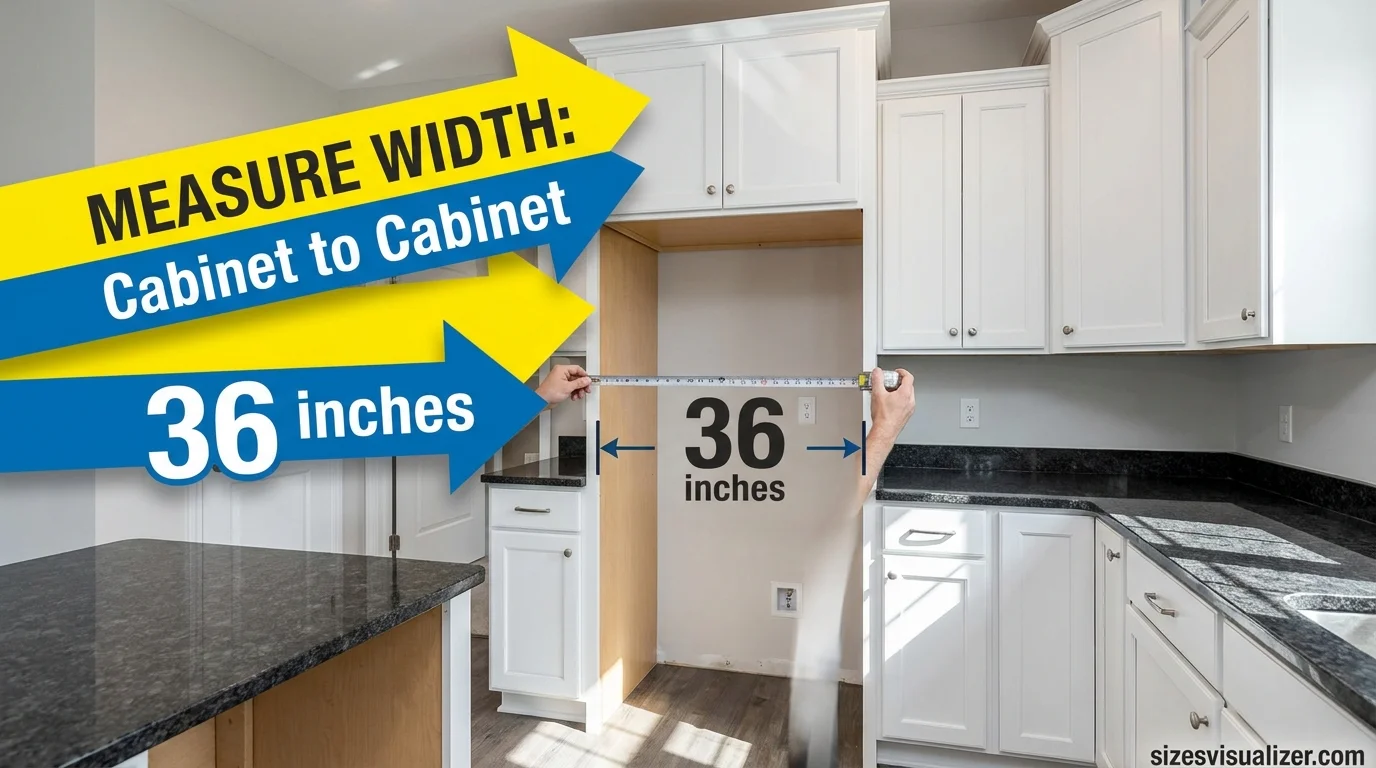
Measure the width first. Run a tape measure from wall to cabinet, or cabinet to cabinet, across the full opening where the fridge will sit.
Measure height
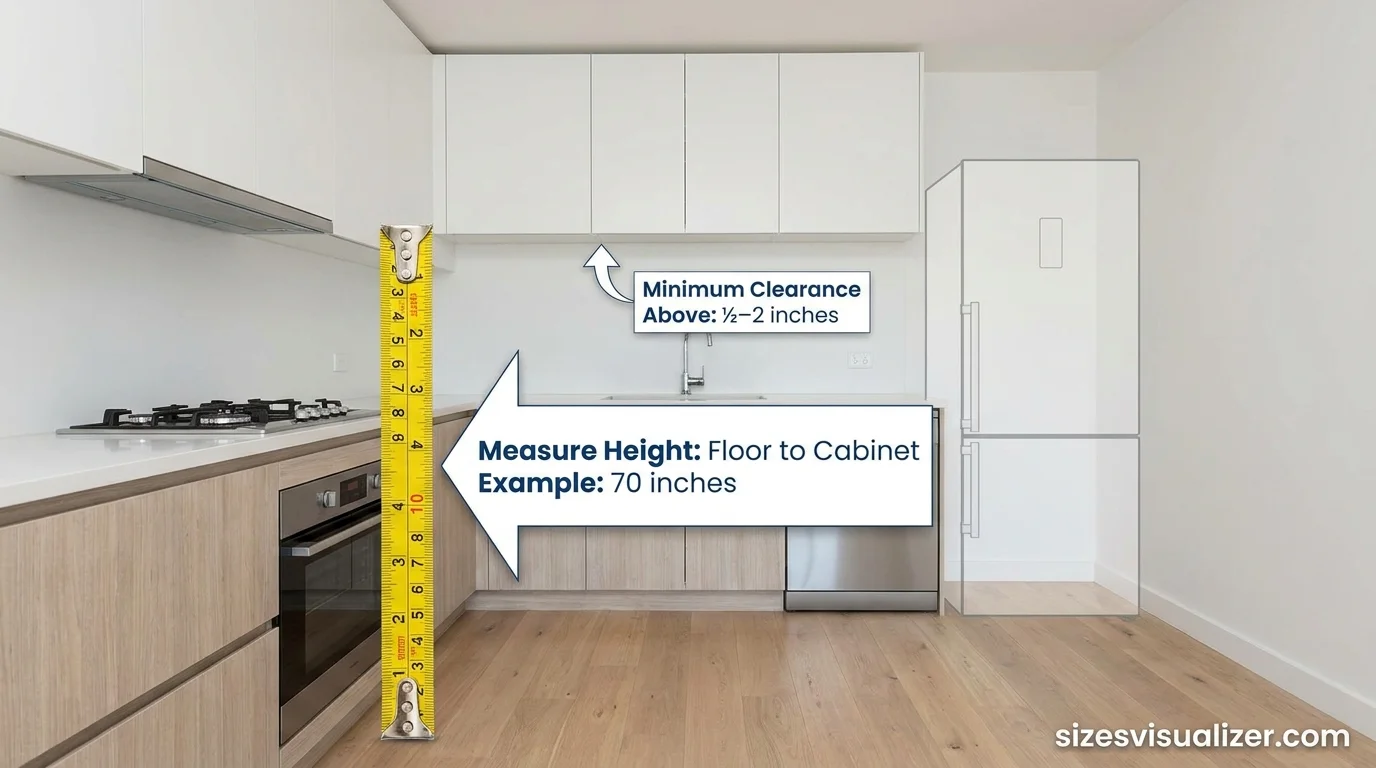
Measure the height next. Start at the floor and go straight up to the bottom of any overhead cabinet. If there is no cabinet, measure to your ceiling and subtract a few inches for clearance.
Measure depth
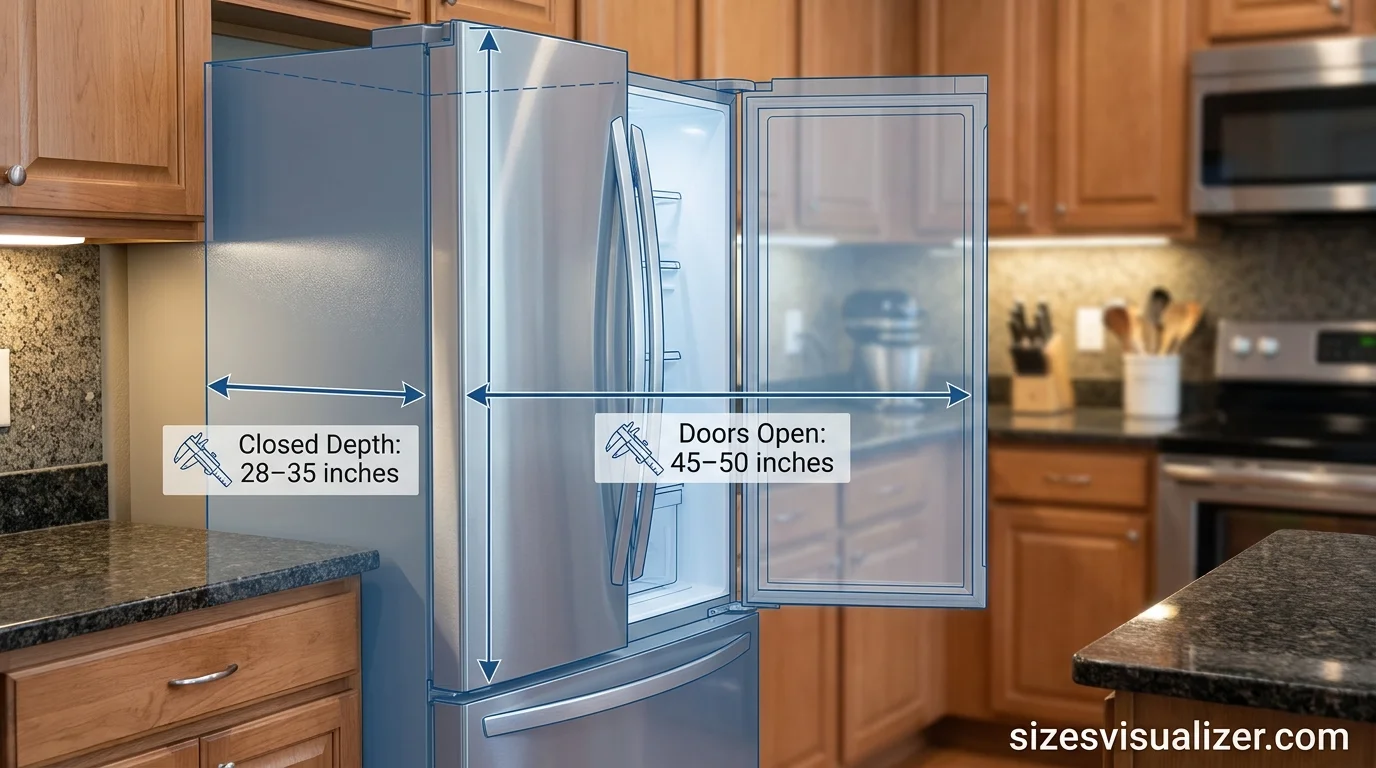
Measure the depth twice: once with the doors closed, and once with them open at 90 degrees. Depth with doors open matters just as much as the closed measurement, since you need room to actually use the fridge.
Clearance space
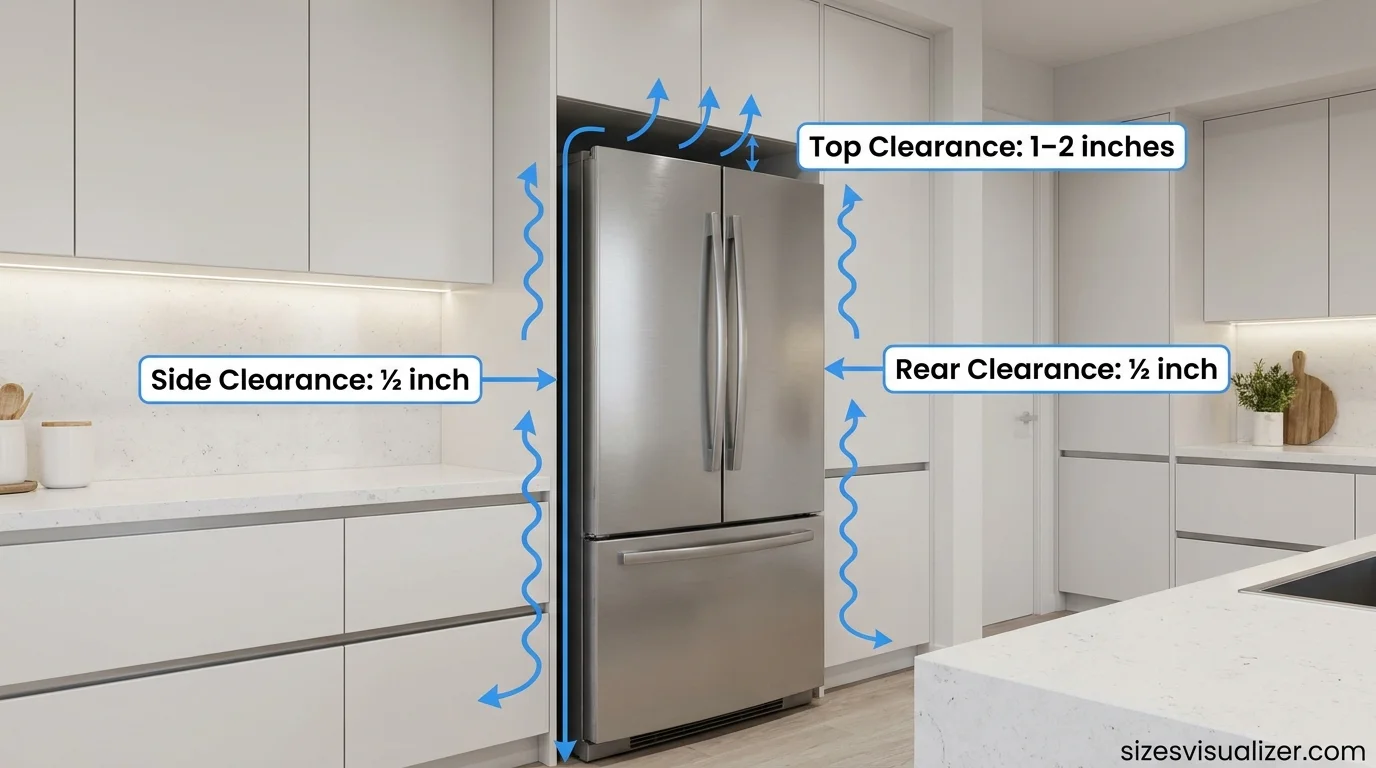
Add clearance space on every side. Most manufacturers recommend at least half an inch on each side and the back for airflow, plus more room above for heat to vent. Skipping this step forces the compressor to work harder and can shorten the appliance’s life.
Delivery path
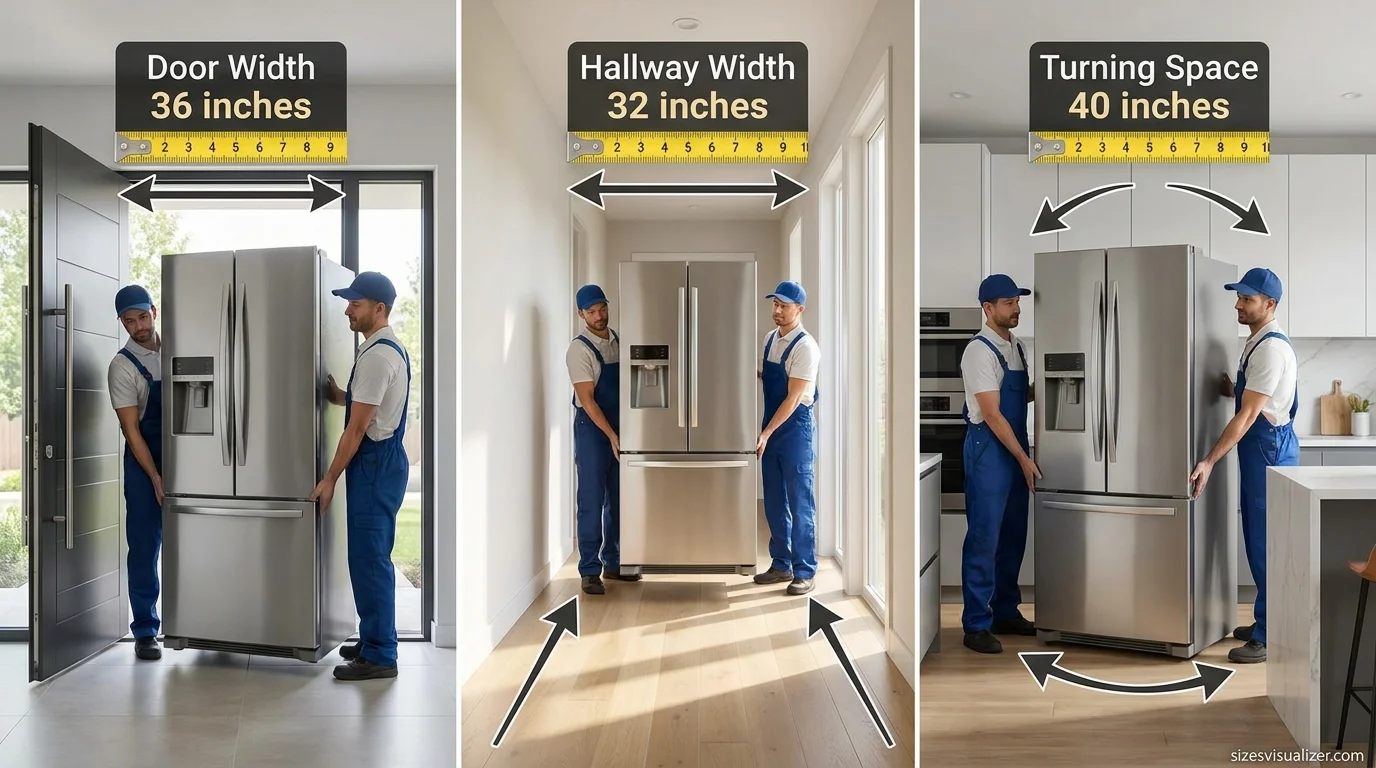
Measure your delivery path last. Walk the route from your front door to the kitchen and measure every doorway and hallway width along the way. A fridge that fits your kitchen space is worthless if it cannot get there.
Must Visit: Twin Size Mattress Dimensions: Standard Twin Bed Size Guide 2026
What Refrigerator Size Do You Need?
The right fridge size depends on how many people you are feeding, not just how big your kitchen is.
A widely used rule of thumb is 4 to 6 cubic feet of capacity per person in the household. A single person can get by with 10 to 13 cubic feet. A family of four typically needs 18 to 22 cubic feet. Larger households of five or more often benefit from 25 cubic feet or above.
Kitchen space still matters. A 36-inch French door model will not squeeze into a galley kitchen built for a 30-inch unit, regardless of your family size.
Energy cost ties directly to size. ENERGY STAR reports that oversized refrigerators consume noticeably more electricity per year, and a fridge that runs mostly empty loses cold air every time the door opens, forcing the compressor to cycle more often. Buying a size that matches your actual usage, not your biggest hypothetical grocery run, keeps both your kitchen and your utility bill in check.
Refrigerator Size Buying Tips for 2026
A few sizing details get overlooked until installation day.
Smart refrigerators with touchscreens or cameras sometimes add an inch or two to standard depth. Check the spec sheet, not just the box dimensions, before you finalize a cutout.
Door swing direction changes how much clearance you need. French door and side-by-side models swing outward less than a single-door top-freezer, which matters in narrow kitchens or next to an island.
Built-in and panel-ready refrigerators are sized to sit flush with cabinetry, usually 24 inches deep, and require a precise cabinet cutout planned months in advance with your kitchen designer.
Fewer doors mean better efficiency. ENERGY STAR points out that each additional door adds a seal, and every seal is a place cold air can leak out. If energy use matters to you, a two-door top-freezer beats a four-door model of the same capacity.
Confirm delivery access before you buy, not after. Measure stairwells, elevators, and tight turns, especially in apartments or older homes with narrow doorframes.
Frequently Asked Questions About Refrigerator Height and Sizes
How tall is the average fridge in height?
The average refrigerator height falls between 61 and 72 inches, depending on the type. French door and side-by-side models trend taller, near 68 to 72 inches, while top-freezer units run shorter, around 61 to 69 inches.
Are all refrigerators 70 inches high?
No. Refrigerator height varies by type and model. Many full-size fridges land close to 70 inches, but top-freezer and bottom-freezer models often measure shorter, in the 61 to 69 inch range, while some large French door units exceed 72 inches.
How tall is a full height fridge?
A full-height, full-size refrigerator typically measures 66 to 72 inches tall. This excludes compact, undercounter, and mini refrigerator styles, which max out around 34 inches.
What is the height of a 30 inch refrigerator?
A 30-inch wide refrigerator usually stands 66 to 70 inches tall, though exact height depends on the model and type, such as French door versus top-freezer.
How much fridge height do you need for clearance?
Add at least half an inch above the refrigerator for ventilation, plus extra room if cabinets sit directly overhead. Total height clearance, including the appliance and airflow space, often reaches 1 to 2 inches beyond the fridge’s listed height.
How do you measure the height of a fridge?
Place a tape measure at the floor and extend it straight up to the highest point of the refrigerator, including the hinge or top edge. Measure to the underside of any cabinet above for your available space, not just the appliance itself.
Conclusion
Refrigerator sizes range from compact 18-inch mini fridges to 36-inch French door giants, and matching the right one to your kitchen comes down to accurate measurements and honest capacity needs. Measure twice, check your doorway path, and pick the size your household will actually use, not just the biggest one on the showroom floor.

Measurement Researcher, Size Comparison Writer & Content Specialist
Timmy Ahad is a dedicated content writer and research specialist at SizesVisualizer.com, where he focuses on creating accurate, easy-to-understand content about measurements, dimensions, size comparisons, and real-world object visualization.