Most residential elevator dimensions are simple. A standard home elevator cab is 36 x 48 inches inside, and the shaft around it is about 5 x 5 feet.
This guide covers elevator cab size, weight capacity, shaft, pit, and height. It also answers what the 5-person and 20-person sizes look like.
Table of Contents
Standard Residential Elevator Dimensions and Cab Sizes

The standard residential elevator size is a cab about 36 inches wide and 48 inches deep. That is 12 square feet, enough for one or two riders. A tight compact cab can shrink to 36 x 36 inches, but a wheelchair will not fit.
For wheelchair users, plan on 48 x 60 inches. In homes, the cab should be at least 51 inches deep.
Here is a quick home elevator size chart:
| Cab type | Inches | Feet | Centimeters |
|---|---|---|---|
| Compact | 36 x 36 | 3 x 3 | 91 x 91 |
| Standard | 36 x 48 | 3 x 4 | 91 x 122 |
| Wheelchair-friendly | 48 x 60 | 4 x 5 | 122 x 152 |
| Commercial (ADA minimum) | 68 x 51 | 5.7 x 4.25 | 173 x 130 |
Door width matters as much as cab size. Home elevator doors run 32 to 36 inches. A 36-inch door is the safest pick for a wheelchair or walker.
Is a home elevator covered by ADA rules? Not usually. Private homes are exempt from the ADA Standards. Home lifts follow ASME A17.1 and local building codes instead.
Think of it this way. A residential elevator is built for a household. A commercial lift is built for a crowd, so its cab and doors are larger.
Residential Elevator Capacity by Size (Lbs and Persons)
Most home elevators carry 750 to 1,000 pounds. That equals about two to three adults, or one wheelchair user plus a helper.

Weight capacity and cab size move together. A bigger cab means a higher rating. It also means a bigger shaft and a higher price tag.
- Compact cab: about 1 rider
- Standard 36 x 48 cab: 2 riders, around 750 lbs
- Wheelchair cab: 2 to 3 riders, up to 1,000 lbs
Many home cabs stay near 15 square feet. Some codes allow up to 18. Always confirm with your local building office.
A simple tip: count riders, then add gear. A stretcher, a walker, or a few suitcases can eat space fast.
Elevator Shaft, Pit, and Height Requirements
The elevator shaft (also called the hoistway) is always bigger than the cab. It holds the guide rails, doors, and safety gear.
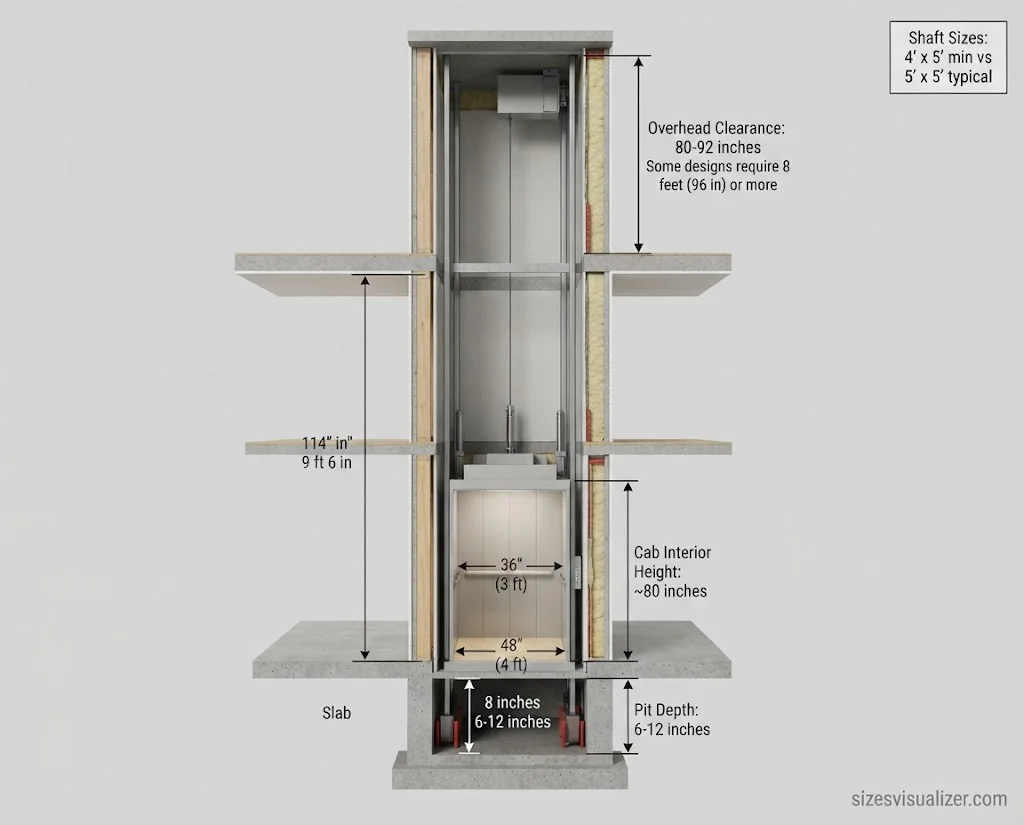
Use these rules of thumb:
- Minimum shaft size: 4 x 5 feet
- Typical shaft size: 5 x 5 feet
- Extra room: about 8 to 12 inches added to the cab width and depth
- Pit depth: 6 to 12 inches, with 8 inches the usual minimum
- Overhead clearance: about 80 to 92 inches above the top floor, and some designs need 8 feet or more
- Maximum travel: about 50 feet
Inside, a home cab is about 80 inches tall. Commercial cabs are usually 7 to 8 feet. Doors are commonly 80 to 84 inches high.
Do not mix up cab height and overhead clearance. The cab is the room you ride in. The overhead is the free space above it for the machine and safety parts.
Before you call a dealer, measure these:
- Floor-to-floor height for each stop
- Open floor area (about 20 to 25 sq ft for traditional lifts)
- Overhead space at the top floor
- Wall type, since some walls must carry load-bearing rails
- Pit option, such as slab or crawl space
New build or retrofit? A new build is easier because the shaft can be planned early. A retrofit needs more care. Check the structure, ducts, and wiring first. Common spots include beside the stairs, inside stacked closets, or in the garage.
Once you’ve compared residential elevator dimensions and space requirements, you can explore another type of size-and-value comparison with this detailed guide to Yu-Gi-Oh! Doom of Dimensions card prices and set value.
Types of Residential Elevators and Space Needs
The three main types are hydraulic, traction, and machine-room-less (MRL) elevators.
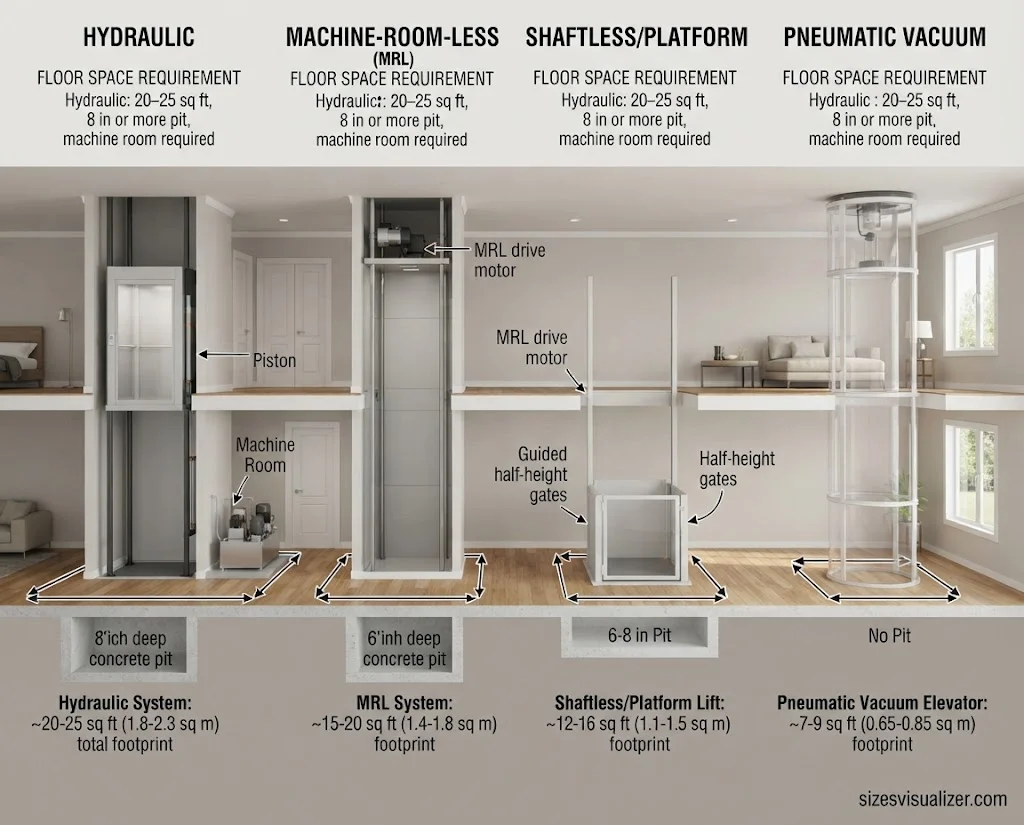
- Hydraulic: A fluid-driven piston lifts the cab. It needs a machine room and a pit, so it suits new builds.
- Traction: Cables and a counterweight move the cab. This is common in tall buildings.
- MRL: A traction type with the drive inside the shaft. It saves floor space.
Homes also use two compact options. Pneumatic vacuum elevators run on air pressure. They need no pit, no machine room, and no shaft, and fit 7 to 9 sq ft. Shaftless platform lifts suit short rides between two floors.
| Type | Floor space | Pit | Machine room |
|---|---|---|---|
| Hydraulic | 20 to 25 sq ft | 8 in or more | Yes |
| MRL | 15 to 20 sq ft | 6 to 12 in | No |
| Shaftless / platform | 12 to 16 sq ft | 6 to 8 in | No |
| Pneumatic vacuum | 7 to 9 sq ft | None | No |
Tight on space? Pneumatic or shaftless models usually fit best. Planning a big, heavy-duty cab in a new house? Hydraulic or MRL fits better.
FAQs
What is the size of a standard elevator?
A standard residential elevator cab is 36 x 48 inches. Commercial cabs are larger, often about 68 x 51 inches or more.
What are the standard dimensions of a lift?
A typical home lift has a 36 x 48 inch cab, a 5 x 5 foot shaft, an 8 inch pit, and 80 to 92 inches of overhead. The door is 32 to 36 inches wide.
What are the dimensions of a 5-person elevator?
About 4 to 5 feet wide and 4 to 5 feet deep, with a rating near 1,000 lbs. Sizes vary by maker.
What are the dimensions of a 20 person elevator?
About 7 feet wide and 6 to 8 feet deep, rated around 3,500 lbs or more. It is a commercial-size lift.
What are the three types of elevators?
Hydraulic, traction, and machine-room-less (MRL).
What is the height of a normal elevator?
A home cab is about 80 inches tall inside. Commercial cabs run 7 to 8 feet.
Conclusion
Know your numbers before you shop. Start with the cab size, then check the shaft, pit, and overhead clearance. Match the weight capacity to the people and gear you will carry. Then confirm each figure with your local building office and a licensed elevator pro.

Measurement Researcher, Size Comparison Writer & Content Specialist
Timmy Ahad is a dedicated content writer and research specialist at SizesVisualizer.com, where he focuses on creating accurate, easy-to-understand content about measurements, dimensions, size comparisons, and real-world object visualization.