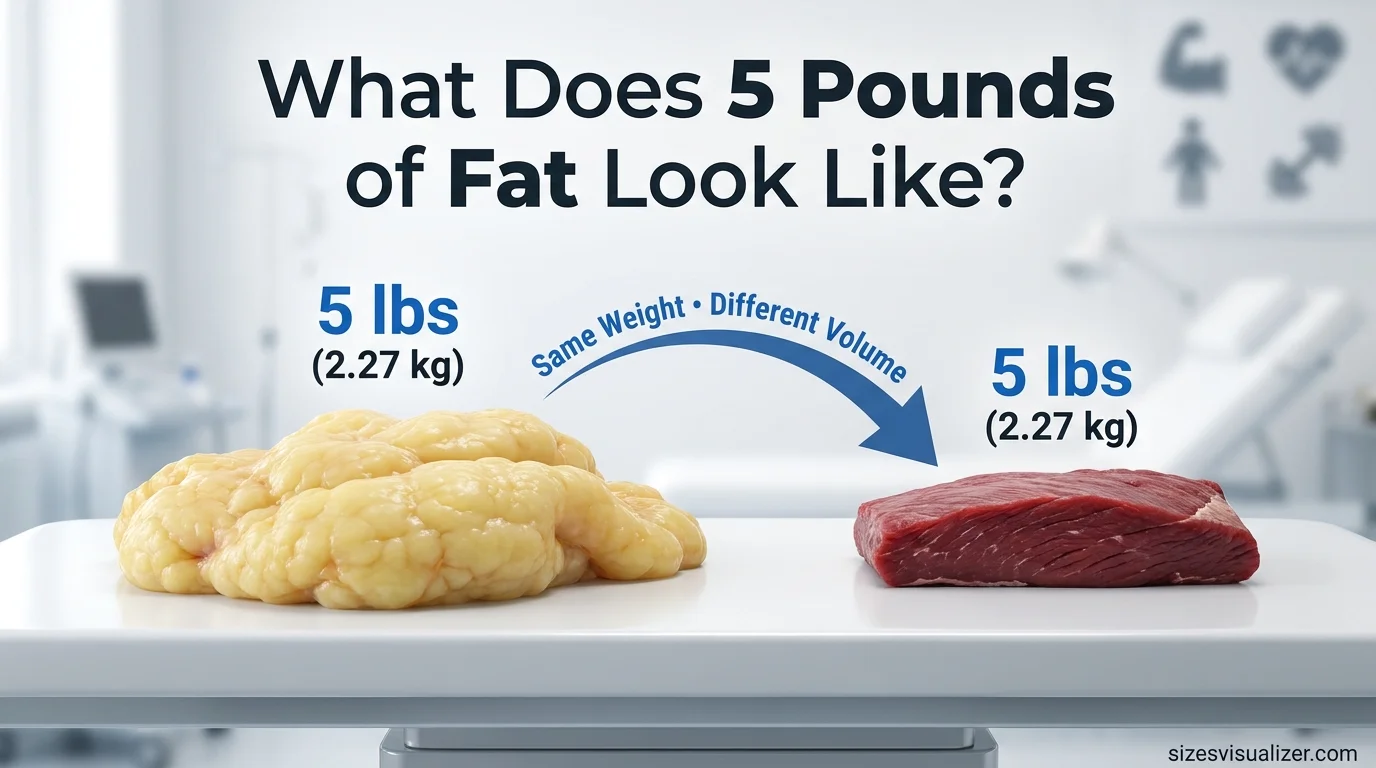
Five pounds sounds small. On a scale, it barely moves the needle. But 5 pounds of fat takes up real space in the body, and once you see it side by side with everyday objects and do easily comparison, “just 5 pounds” stops feeling small at all.
This guide breaks down exactly what 5 pounds of fat looks like, how it compares to 5 pounds of muscle, and why the number on the scale never tells the full story.
Table of Contents
What Does 5 Pounds of Fat Look Like? (Visual Comparisons)
What is an example of 5 lbs? Picture a bag of sugar, a bowling ball, or a large jar of mayonnaise. That’s roughly the size and weight of 5 pounds of body fat.
Fat is soft and low-density tissue. It spreads out, jiggles, and takes up more physical volume than most people expect for its weight. That’s why 5 lbs of fat looks bulky compared to other things that weigh the same.
Use our Size Visualizer Tool to compare dimensions with real-world objects and explore accurate, interactive scale visualizations in seconds.
What 5 Lbs of Fat Looks Like on the Body
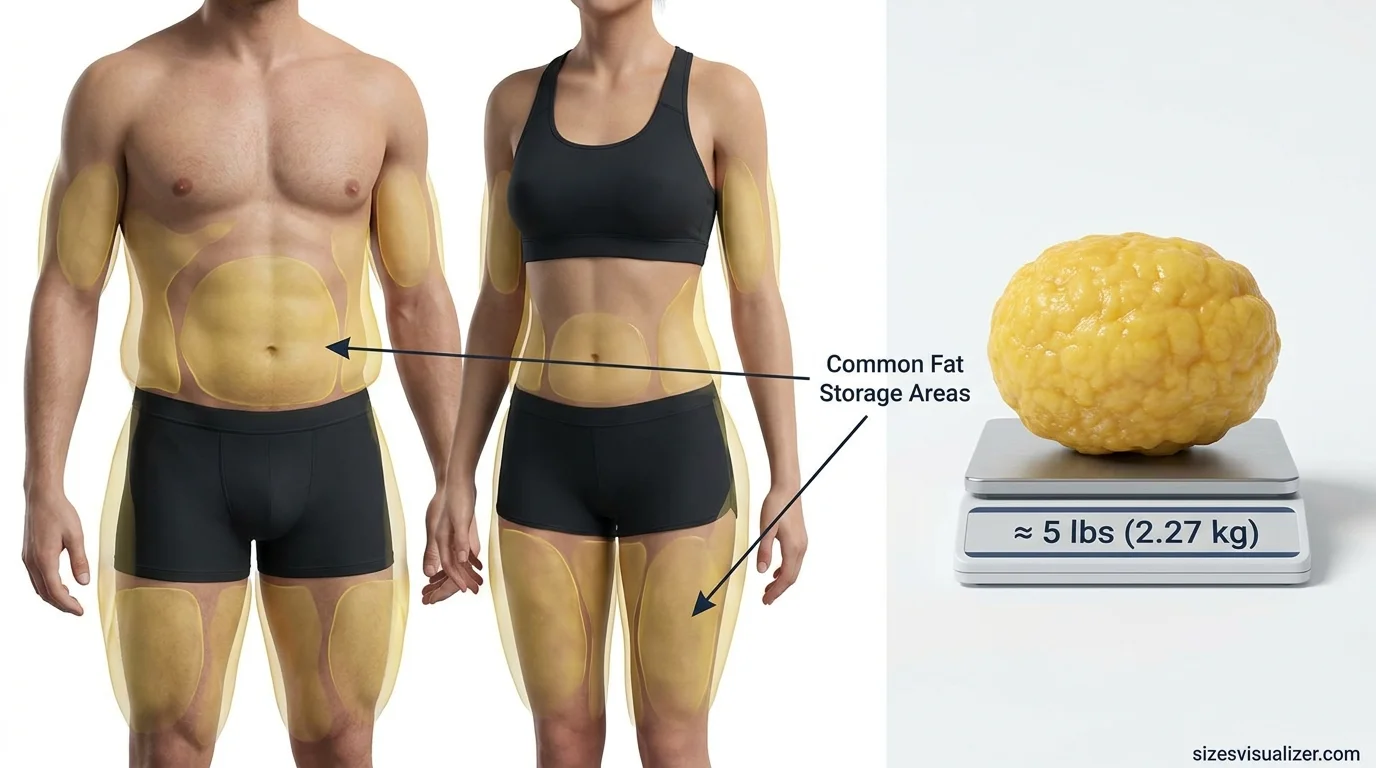
What does 5lbs of weight look like once it’s sitting on your frame? It shows up as a soft layer, usually around the belly, hips, thighs, or upper arms. It’s not one solid chunk — it spreads out in thin sheets just beneath the skin.
How big is 5 lbs of fat, really? In volume terms, it’s close to the size of a small cantaloupe or five sticks of butter stacked together. That’s a noticeable amount of tissue, even though the scale calls it “just five pounds.”
Subcutaneous Fat vs Visceral Fat — Where That 5 Lbs Actually Sits
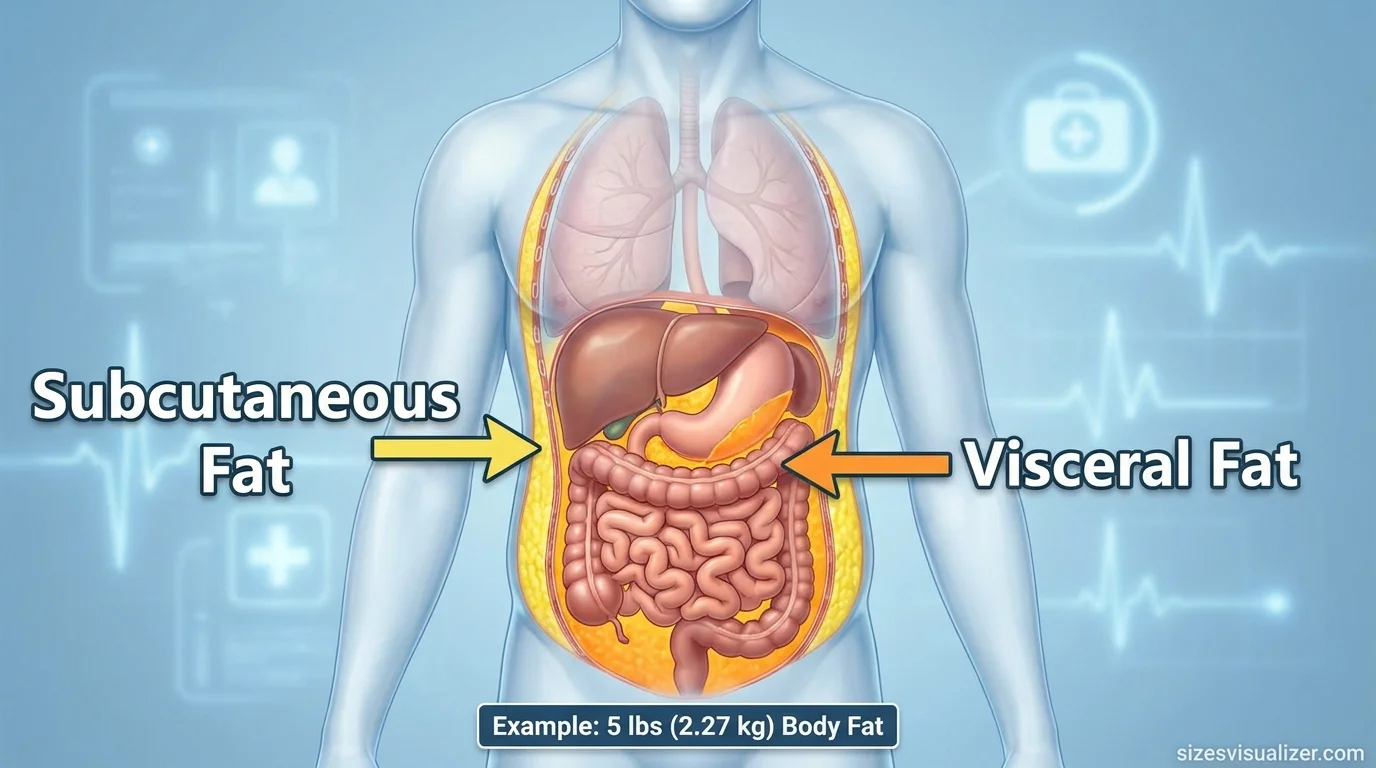
Not all body fat behaves the same way. Subcutaneous fat sits right under the skin — it’s the pinchable kind you can grab on your stomach or arms. Visceral fat, on the other hand, wraps around internal organs deep in the abdominal cavity.
Visceral fat is the more concerning type. Research published through the National Institutes of Health links higher visceral fat levels to greater risk for heart disease, type 2 diabetes, and metabolic issues (NIH). So when someone loses 5 pounds, the health benefit often depends on where that fat was stored, not just how much came off.
Muscle vs Fat: Why 5 Lbs Looks Completely Different
Muscle vs fat is a density story, not just a weight story. A pound is a pound on the scale, but muscle tissue packs tighter and takes up noticeably less room than fat.
Why Muscle Is More Compact Than Fat
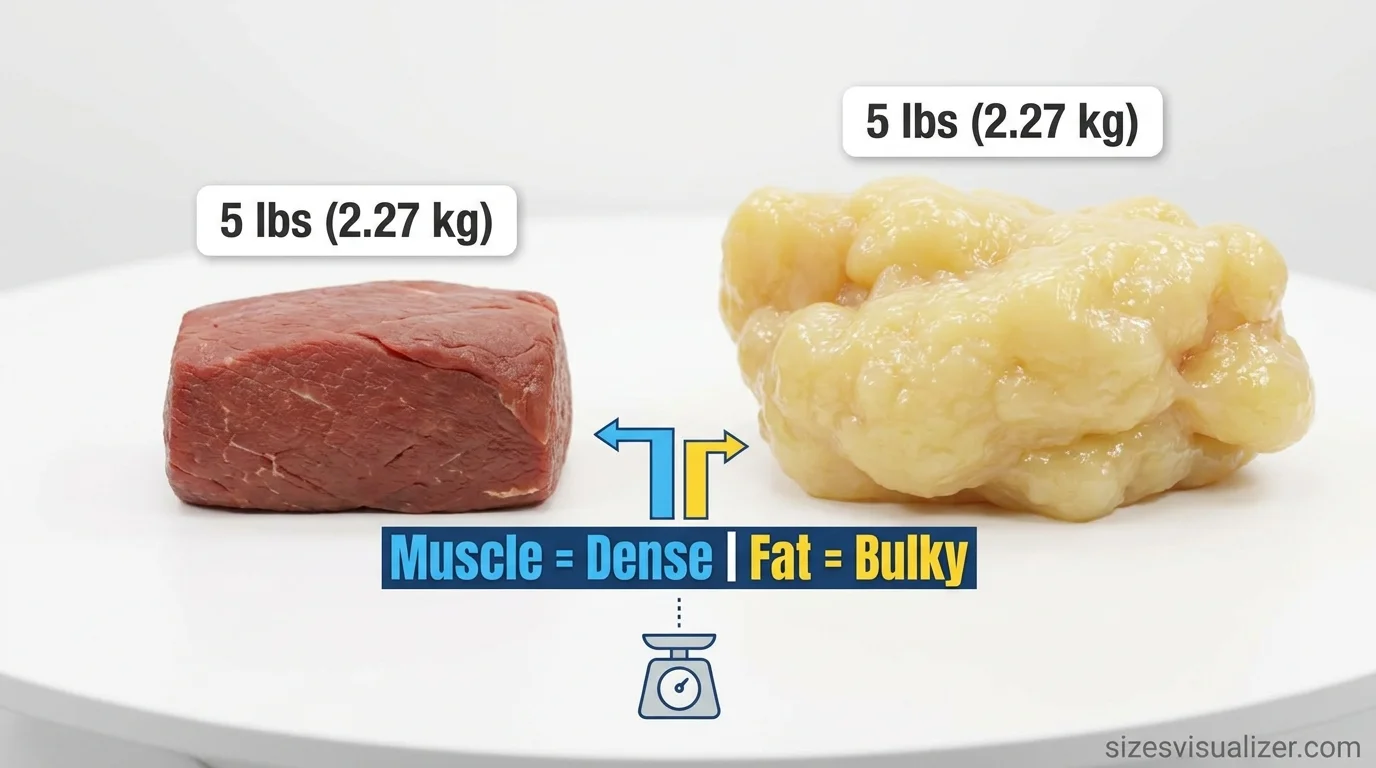
Think of a brick and a pillow that weigh exactly the same. The brick is small and dense. The pillow is bulky and loose. Muscle behaves like the brick. Fat behaves like the pillow.
This density gap is why 5 pounds of muscle looks tight and compact, while 5 pounds of fat looks soft and spread out, even though both sit on a scale at the exact same number.
Same Weight, Different Shape — Body Composition Over Scale Weight
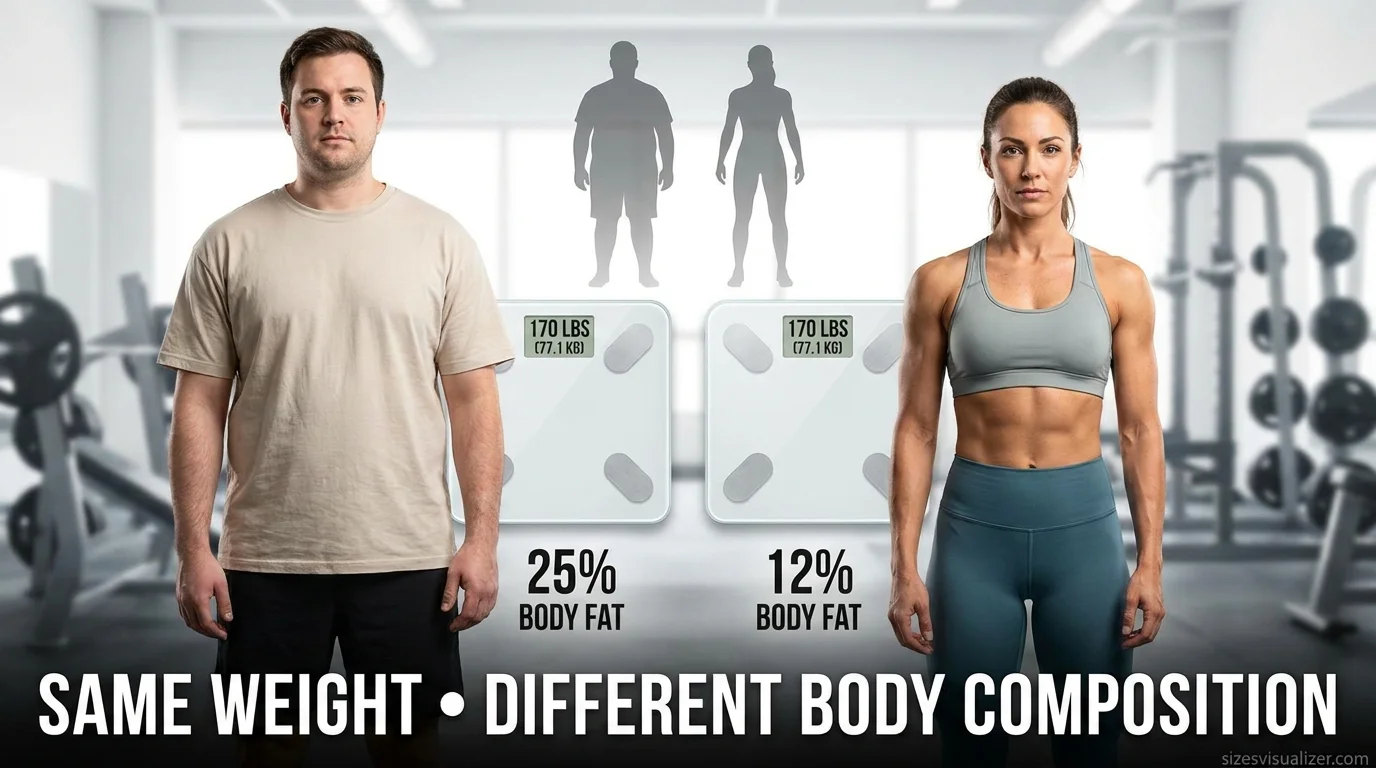
Two people can weigh the exact same amount and look completely different. This comes down to body composition — the ratio of fat mass to lean mass in the body.
Muscle tissue is metabolically active, meaning it burns calories even at rest. Fat tissue is largely inactive. This is one reason body composition, not just body weight, is considered a more accurate health marker by fitness and medical professionals alike.
Why Two People at the Same Weight Can Look Totally Different
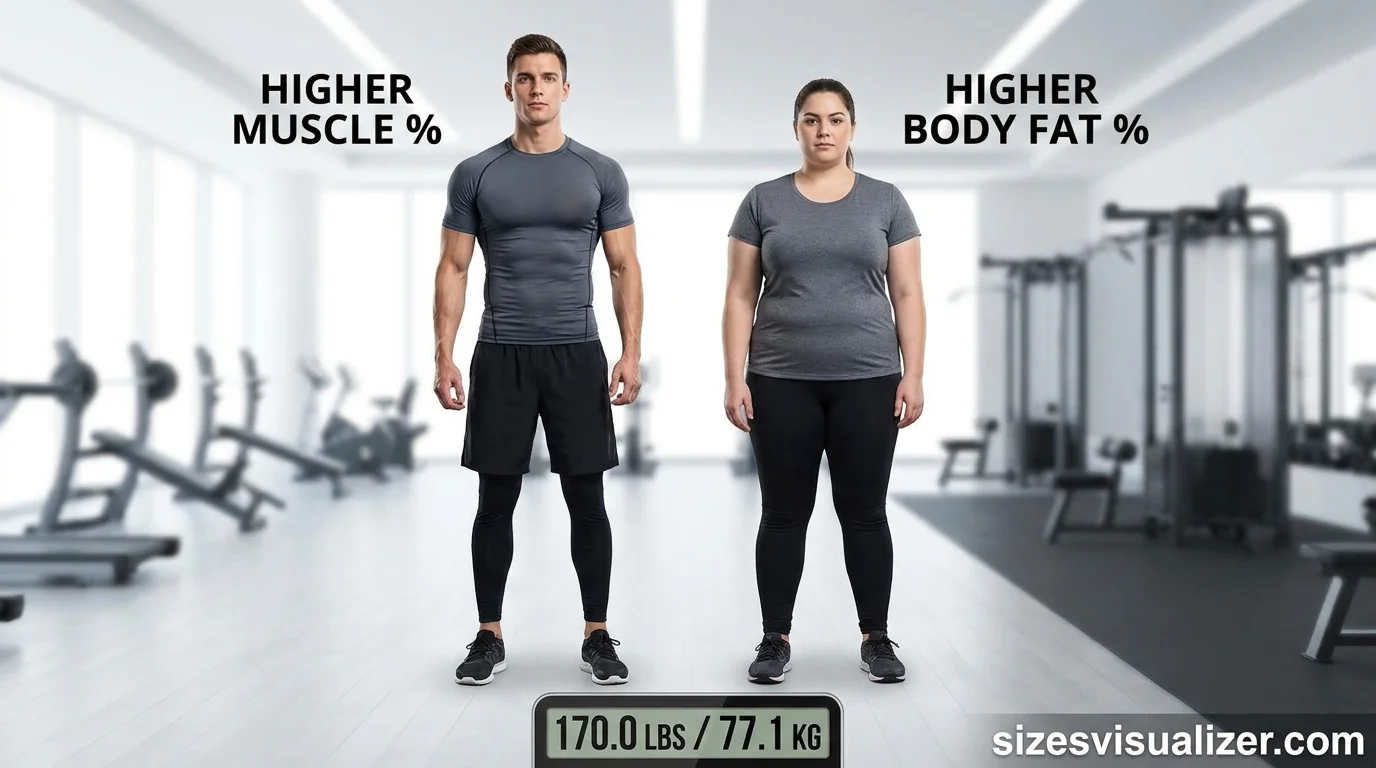
Someone with more lean muscle mass often appears leaner and more toned than someone at the same weight with a higher fat percentage. This is why relying only on a bathroom scale can be misleading.
Tools like DEXA scans measure fat, muscle, and bone density separately, giving a far clearer picture than weight alone.
Must Visit: What Does Losing 20 Pounds Look Like? Real Body Changes, Before & After Guide
Is a 5 Lb Weight Loss Noticeable? Do You Look Different After?
According to research from the University of Toronto, the answer depends on how much your BMI shifts. Study co-author Daniel Re found that a visible weight change in the face requires roughly a 1.33-point shift in BMI — for an average-height woman, that’s about 8 pounds, and for an average-height man, about 9 pounds (TODAY).
That means 5 pounds alone may sit just under the visible threshold for most people, though it can still show up in clothing fit or waist measurements before it shows on the face.
What the Research Says About Visible Weight Loss
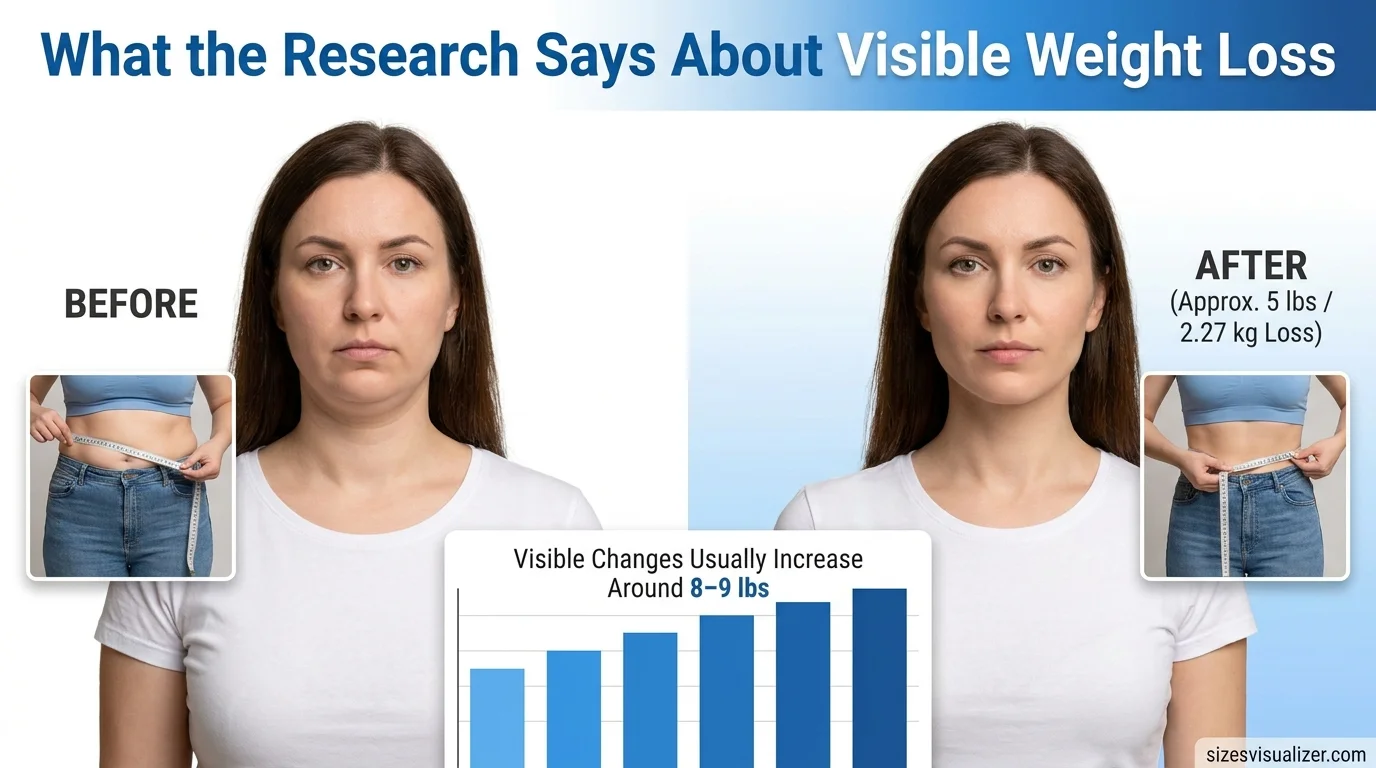
The same study found that to make a face look noticeably more attractive, participants needed roughly a 2.5-point BMI drop — about 14 pounds for women and 18 pounds for men on average (TODAY). So while 5 lbs is a solid start, bigger visible changes tend to need a larger total shift.
Where Weight Loss Shows Up First
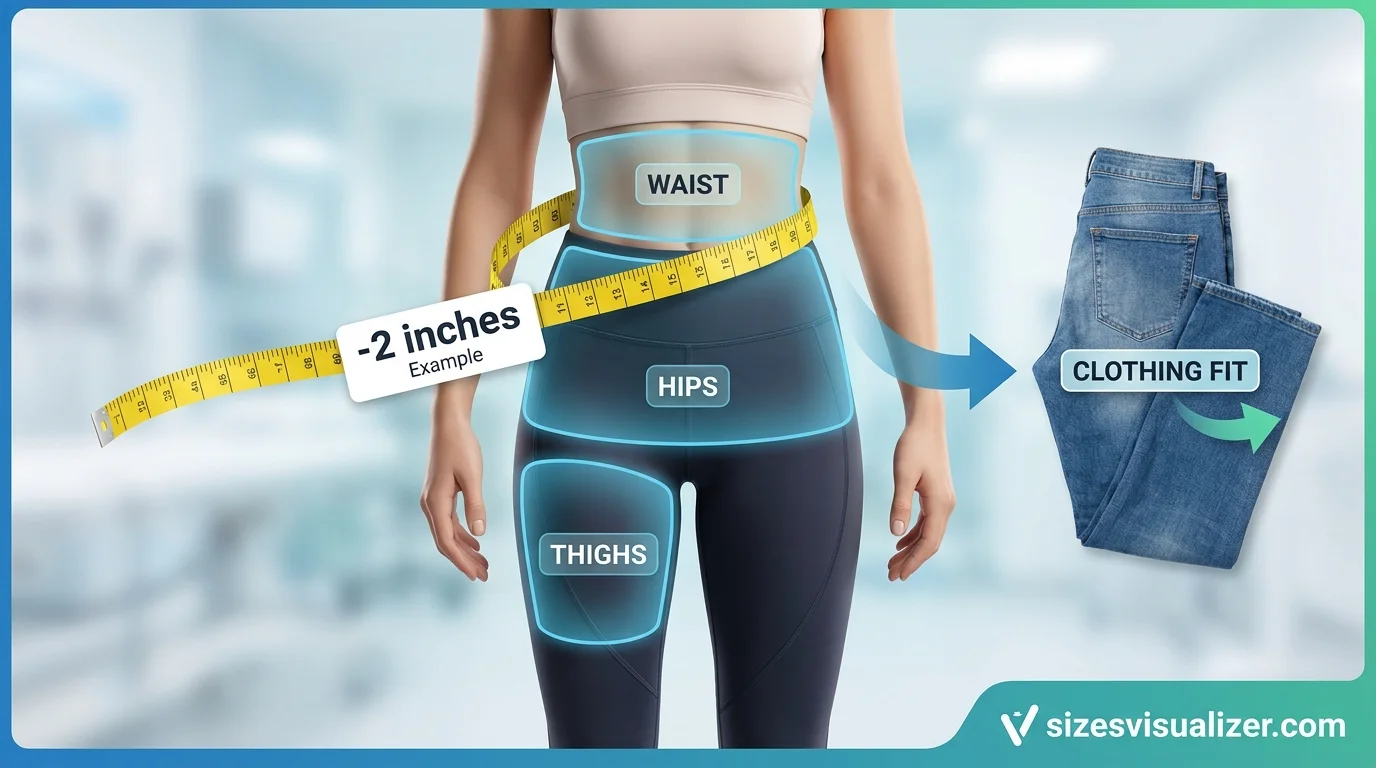
Do you look different after losing 5 pounds? Often, the first signs aren’t facial — they’re in how pants fit, how a waistband feels, or how a shirt sits across the middle. The face tends to reflect fat changes more gradually, since buccal fat pads in the cheeks shift slower than fat in the midsection.
Why Slow Weight Loss Is Less Noticeable Than Fast Weight Loss
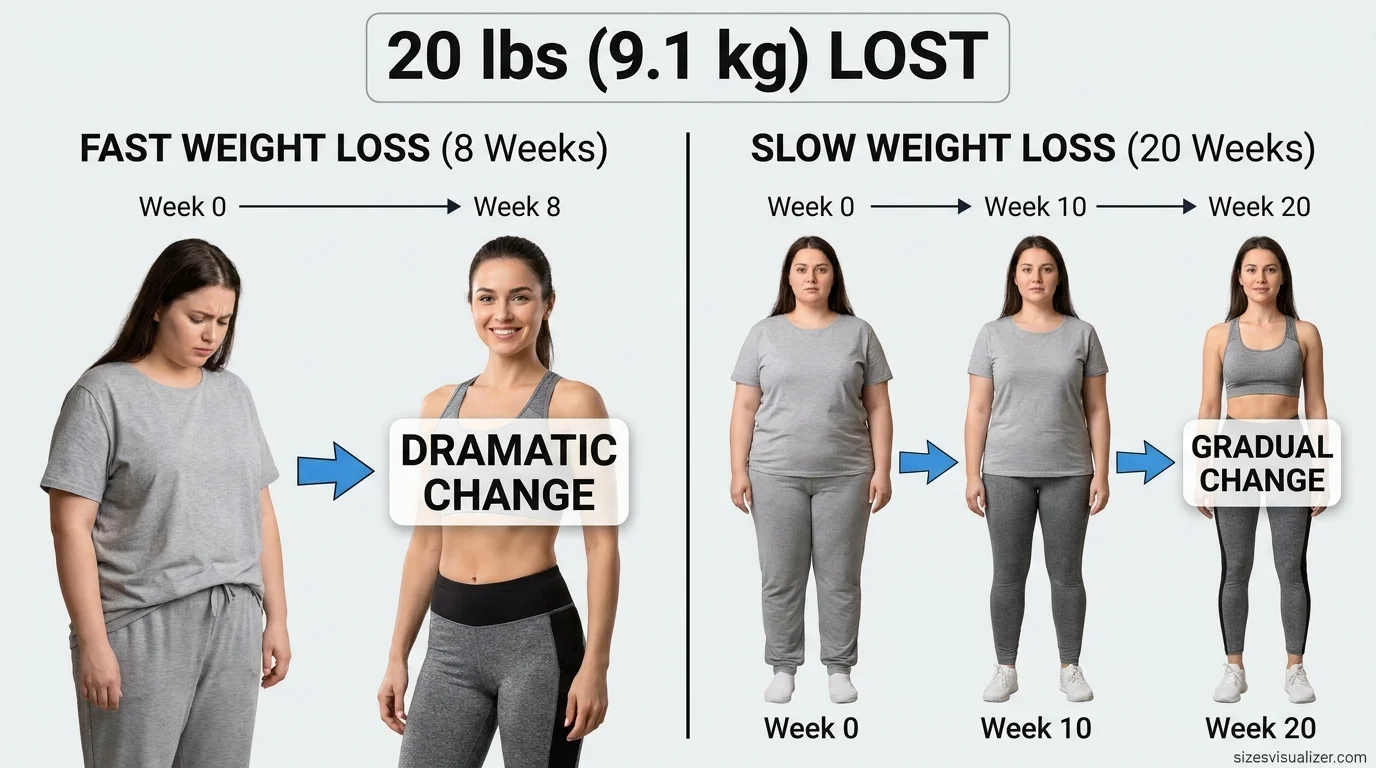
The same research noted that rapid weight loss tends to be more noticeable to other people than gradual loss. When change happens slowly, people around you adjust their perception bit by bit, so the shift feels less dramatic — even if the total pounds lost are the same.
Must Visit:
How Long Does It Take to Lose 5 Pounds?
Most people can expect to lose 5 pounds in about 2 to 5 weeks, depending on calorie deficit and activity level. This aligns with guidance from the CDC, which recommends a pace of 0.5 to 2 pounds per week for sustainable fat loss (CDC).
Average Timeline Based on Calorie Deficit
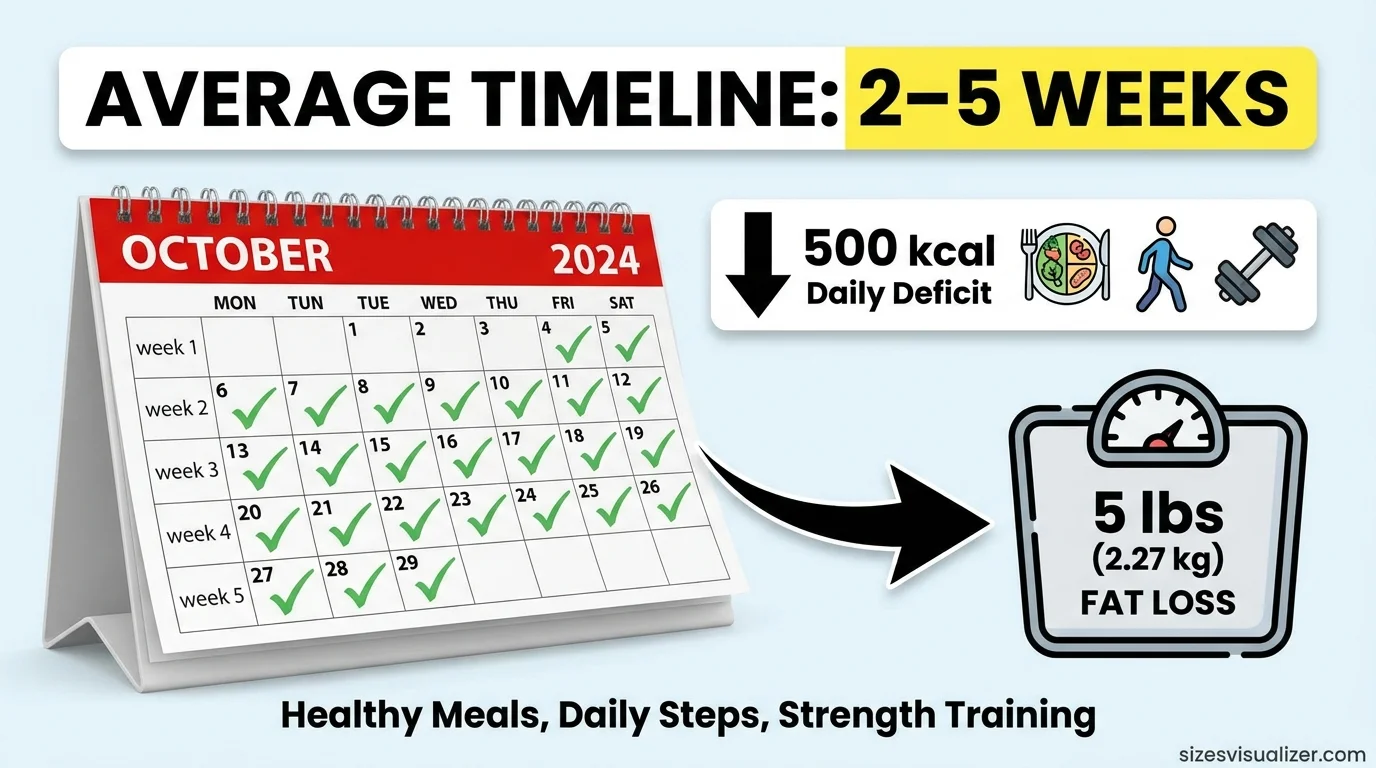
The classic rule states that 3,500 calories roughly equals 1 pound of fat. Cutting 500 calories a day creates a weekly deficit of 3,500 calories, which lines up with 1 pound lost per week. However, Mayo Clinic notes this rule is a simplification — actual results vary by body size, activity, and metabolic adaptation over time (Mayo Clinic).
Water Weight vs Real Fat Loss in Week 1
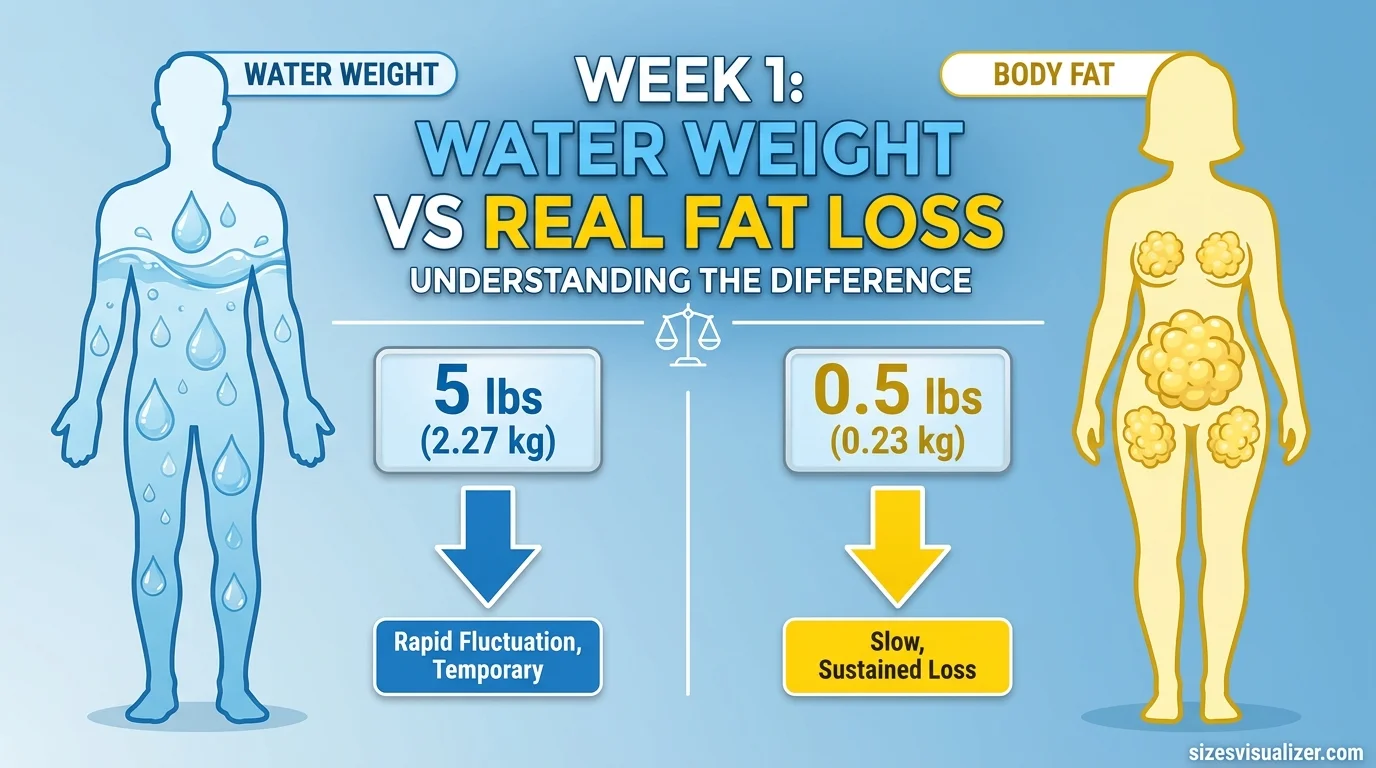
The first week of any diet often brings a bigger drop on the scale. Much of this comes from glycogen and water loss, not actual fat. True fat loss tends to settle into a steadier 0.5 to 2 pounds per week after that initial shift.
Signs You’re Losing Fat, Not Muscle
Strength training combined with adequate protein intake helps preserve muscle during a calorie deficit. Signs that fat, not muscle, is coming off include steady strength levels in the gym, looser clothing around the waist, and measurable inch loss even when scale weight moves slowly.
Why Losing 5 Pounds Gets Harder With Age
At what age is it hardest to lose weight? For most people, fat loss becomes noticeably harder starting in the 30s and accelerating through the 40s and 50s, largely due to natural drops in muscle mass and shifting hormone levels.
How Metabolism and Muscle Mass Change After 30, 40, 50+
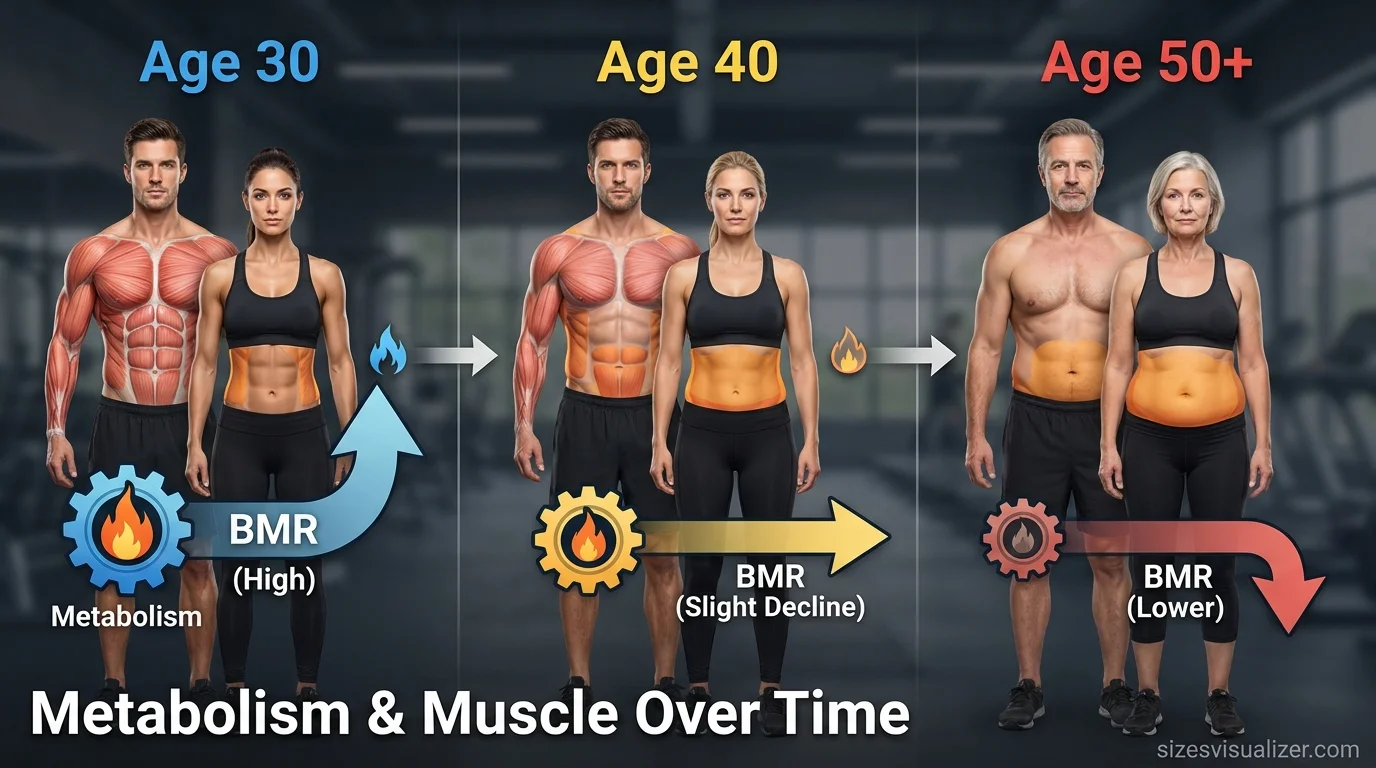
Adults typically lose muscle mass gradually with age, a process known as sarcopenia. Since muscle burns more calories at rest than fat does, this loss slows the basal metabolic rate (BMR), meaning fewer calories are burned throughout the day even without any change in habits.
Hormonal Shifts That Affect Fat Loss With Age
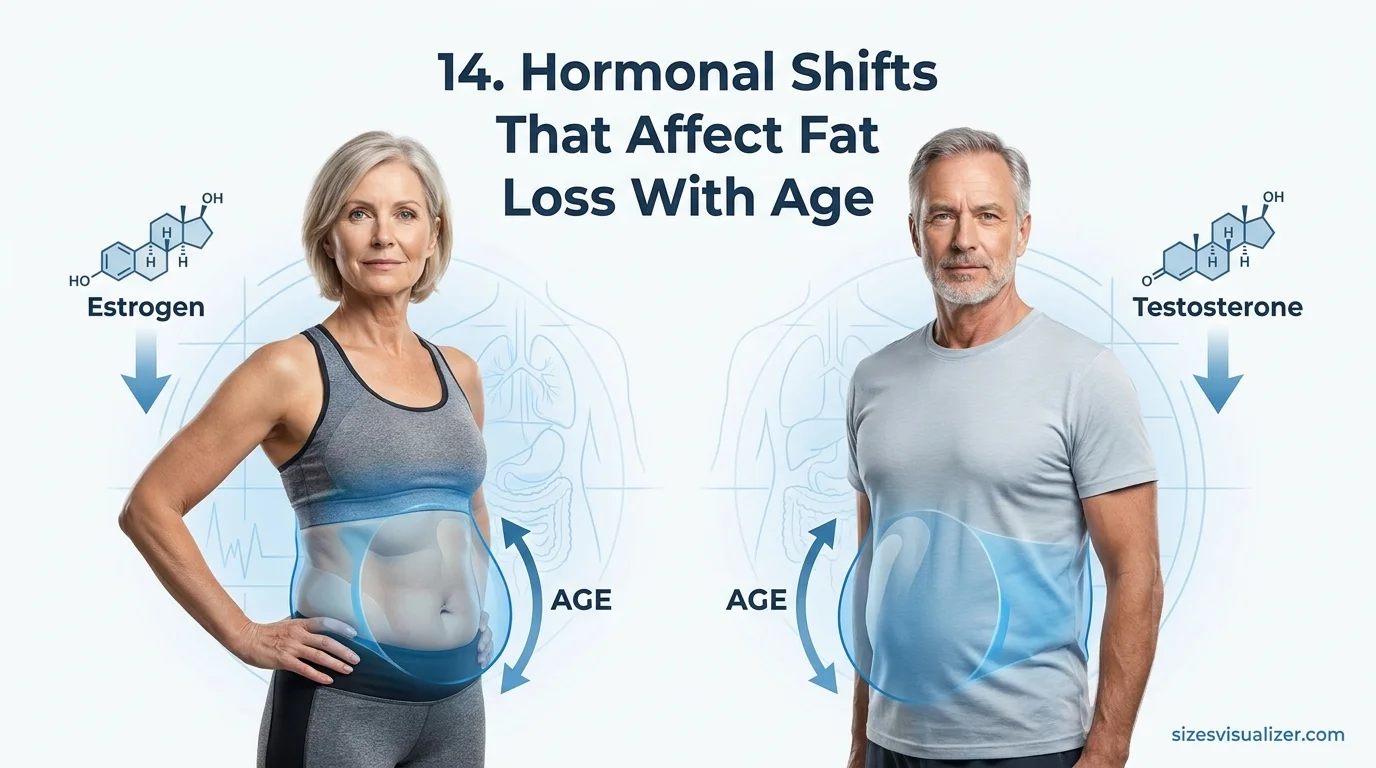
Hormone changes — including declining estrogen in women during menopause and gradually falling testosterone in men — can shift fat storage patterns, often moving more fat toward the abdominal area. These changes make the same calorie deficit less effective than it would have been a decade earlier.
How to Adjust Your Approach as You Get Older

Maintaining muscle through resistance training becomes more important with age, not less. Prioritizing protein intake, consistent strength work, and realistic calorie targets helps offset the natural metabolic slowdown that comes with getting older.
FAQs
Is a 5 lb weight loss noticeable?
It can be, especially around the waistline or in how clothes fit, though facial changes typically require a slightly bigger shift — closer to 8-9 pounds for most adults.
What is an example of 5 lbs?
A bag of sugar, a bowling ball, or five sticks of butter are close, everyday comparisons for 5 pounds of fat.
What does 5lbs of weight look like?
It looks like a soft, spread-out layer of tissue about the size of a small cantaloupe, usually settled around the belly, hips, or thighs.
How big is 5 lbs of fat?
About the size of a small melon or a five-pound bag of flour — fat takes up more visible space than the same weight in muscle.
At what age is it hardest to lose weight?
Fat loss tends to get harder starting in the 30s and continuing through the 40s and 50s, mainly due to muscle loss and hormonal shifts that slow metabolism.
Do you look different after losing 5 pounds?
Often yes, though the change usually shows up first in clothing fit and waist measurements before it becomes visible in the face.
Conclusion
Five pounds of fat is more than “just a number” — it’s a visible, physical amount of tissue that takes real effort to lose. Whether it shows up on your face, your waistline, or your jeans, that progress is worth recognizing, not dismissing.

Measurement Researcher, Size Comparison Writer & Content Specialist
Timmy Ahad is a dedicated content writer and research specialist at SizesVisualizer.com, where he focuses on creating accurate, easy-to-understand content about measurements, dimensions, size comparisons, and real-world object visualization.