Ten pounds is a deceptively simple number. On a label, it looks small. In your hands, it registers immediately.
This guide explains how heavy 10 pounds actually is, walks through 20 real-world objects at that weight, and answers the most common questions people ask about carrying, losing, and understanding this specific weight.
Table of Contents
How Heavy Is 10 Pounds, Exactly?
In standard measurements, 10 pounds equals 4.54 kilograms, 160 ounces, or 4,536 grams. In the British imperial system, it falls just under one stone.
| Unit | Equivalent |
|---|---|
| Pounds | 10 lbs |
| Kilograms | 4.54 kg |
| Ounces | 160 oz |
| Grams | 4,536 g |
On its own, this figure is abstract. Ten pounds occupies a middle ground: light enough to lift without strain, yet heavy enough that your muscles register it within seconds. Fitness professionals frequently recommend it as a starting resistance weight for beginners, according to the American Council on Exercise, since it provides enough load to build strength without overloading untrained joints or muscles.
A compact, solid object feels heavier than a bulky one of identical weight, because your muscles must work harder to stabilize concentrated mass in a smaller area.
Our interactive Size Visualizer & Comparison Tool helps you visualize real-life dimensions, making size comparisons faster, easier, and more accurate.
20 Everyday Objects That Weigh About 10 Pounds
Numbers alone rarely create understanding. Objects do. Below are 20 everyday items that weigh close to 10 pounds, each explained individually so the weight becomes tangible rather than theoretical.
A bowling ball
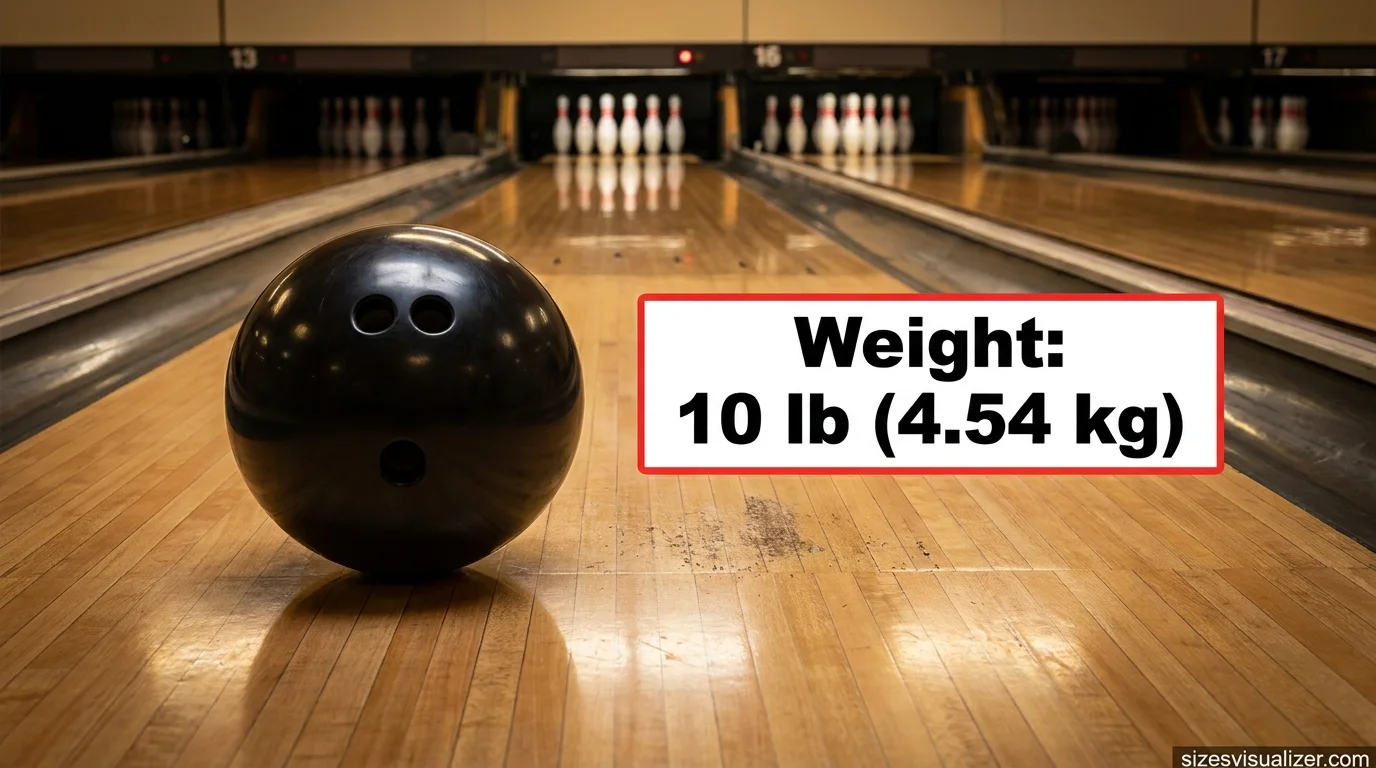
Standard bowling balls range from 6 to 16 pounds, with a medium-weight ball landing almost exactly at 10. Because the entire mass is packed into a single dense sphere, it is one of the clearest physical representations of this weight.
Lifting a bowling ball also demonstrates how concentrated mass behaves differently from distributed weight. The load doesn’t shift or move, so your grip and forearm bear the full effort the instant you pick it up.
A medium-size cat
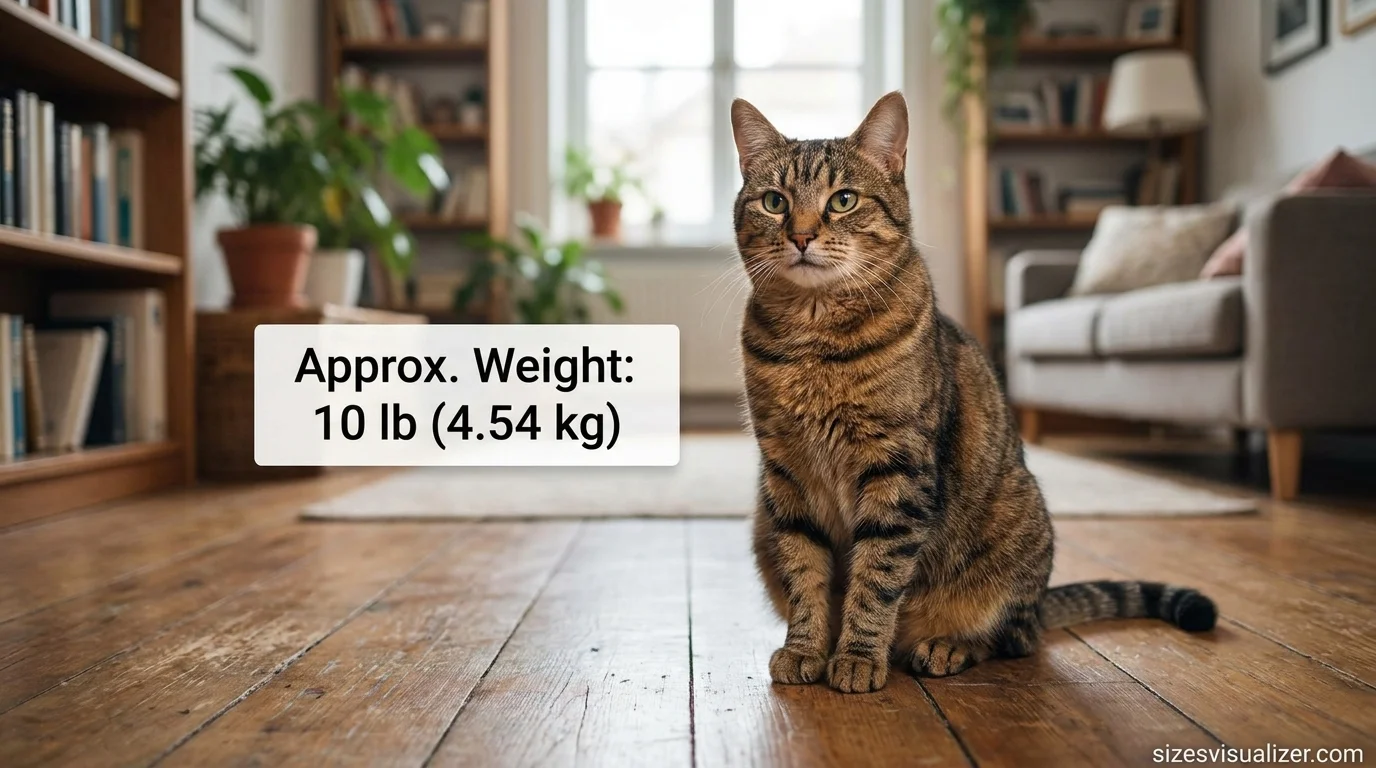
A healthy adult house cat typically weighs between 8 and 10 pounds, according to the American Veterinary Medical Association. This makes it one of the most emotionally familiar comparisons, since most pet owners have picked up a cat at some point.
Unlike a rigid object, a cat shifts its weight naturally, which changes how the load feels in your arms. This small detail illustrates how living, moving weight can feel different from static weight, even at the same number on a scale.
A large watermelon
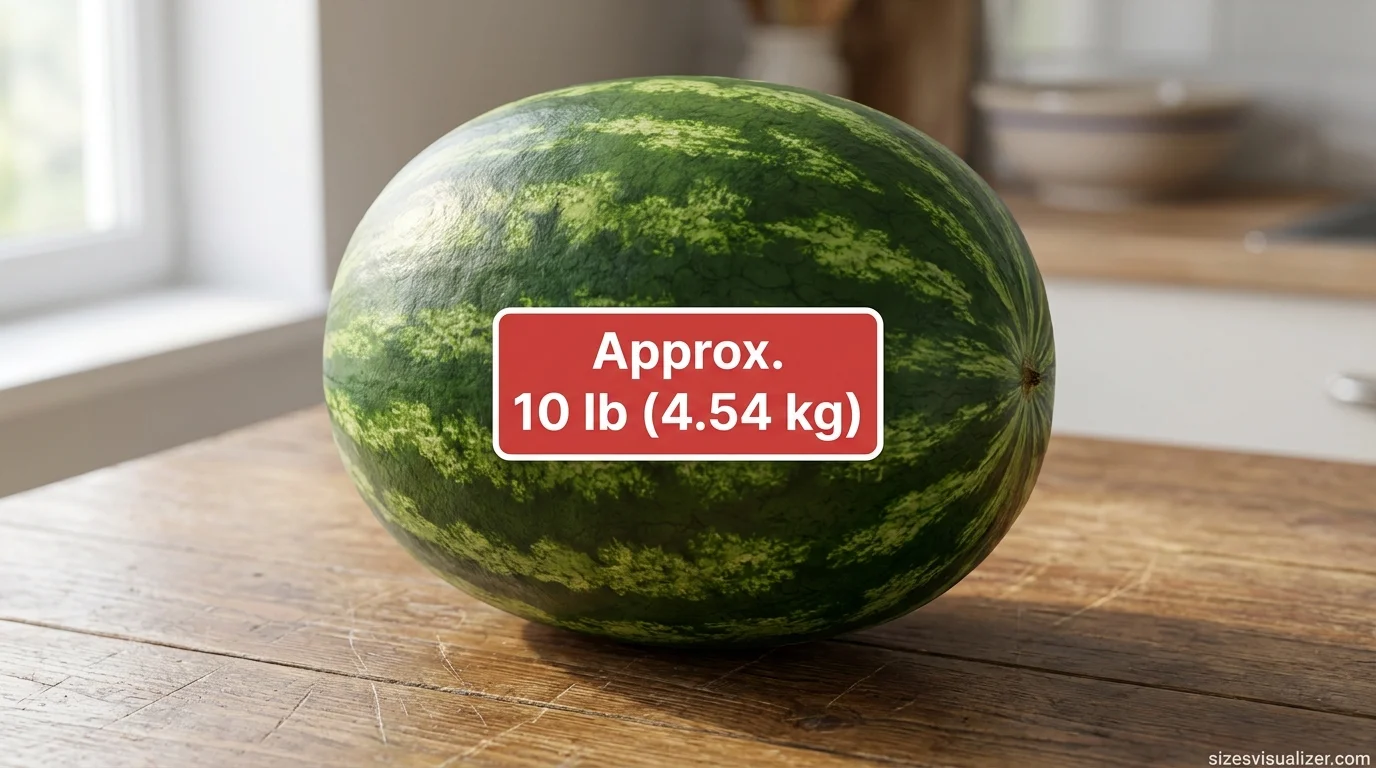
A whole watermelon commonly weighs between 9 and 11 pounds, placing it squarely in the 10-pound range. Its round shape and smooth surface make it one of the more awkward objects to carry at this weight, despite being a familiar grocery item.
Because the weight is spread evenly through a round, dense fruit, lifting a watermelon requires two-handed support for most people, offering a useful contrast to more compact objects like a dumbbell.
A 10-pound dumbbell
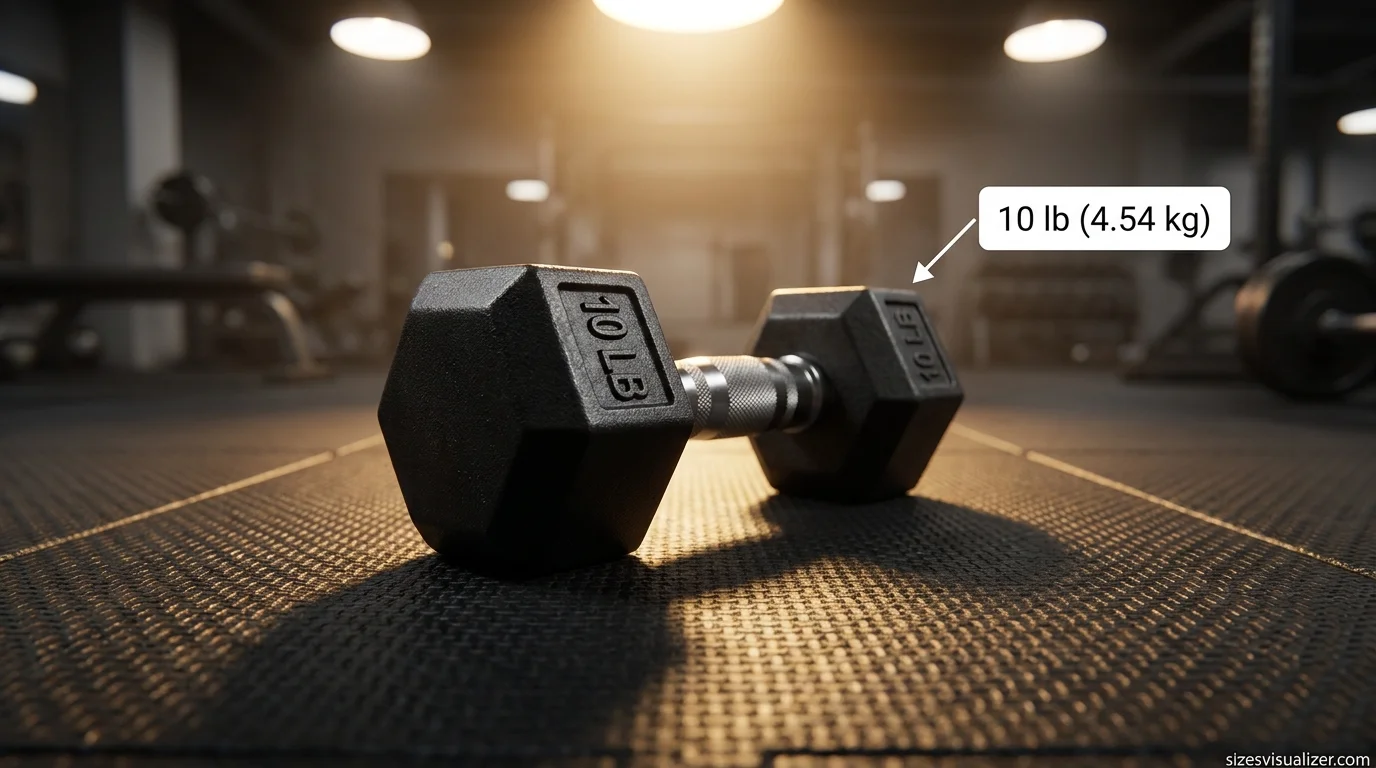
This is the most literal and precise reference on the list, since the weight is stamped directly onto the object. Dumbbells are engineered for a stable, predictable grip, which makes the sensation of lifting one a reliable baseline for understanding this weight.
Because dumbbells concentrate mass into a compact shape, they activate the hands, wrists, and forearms almost immediately. Trainers often use this exact weight to introduce new lifters to resistance training safely.
A bag of flour or sugar
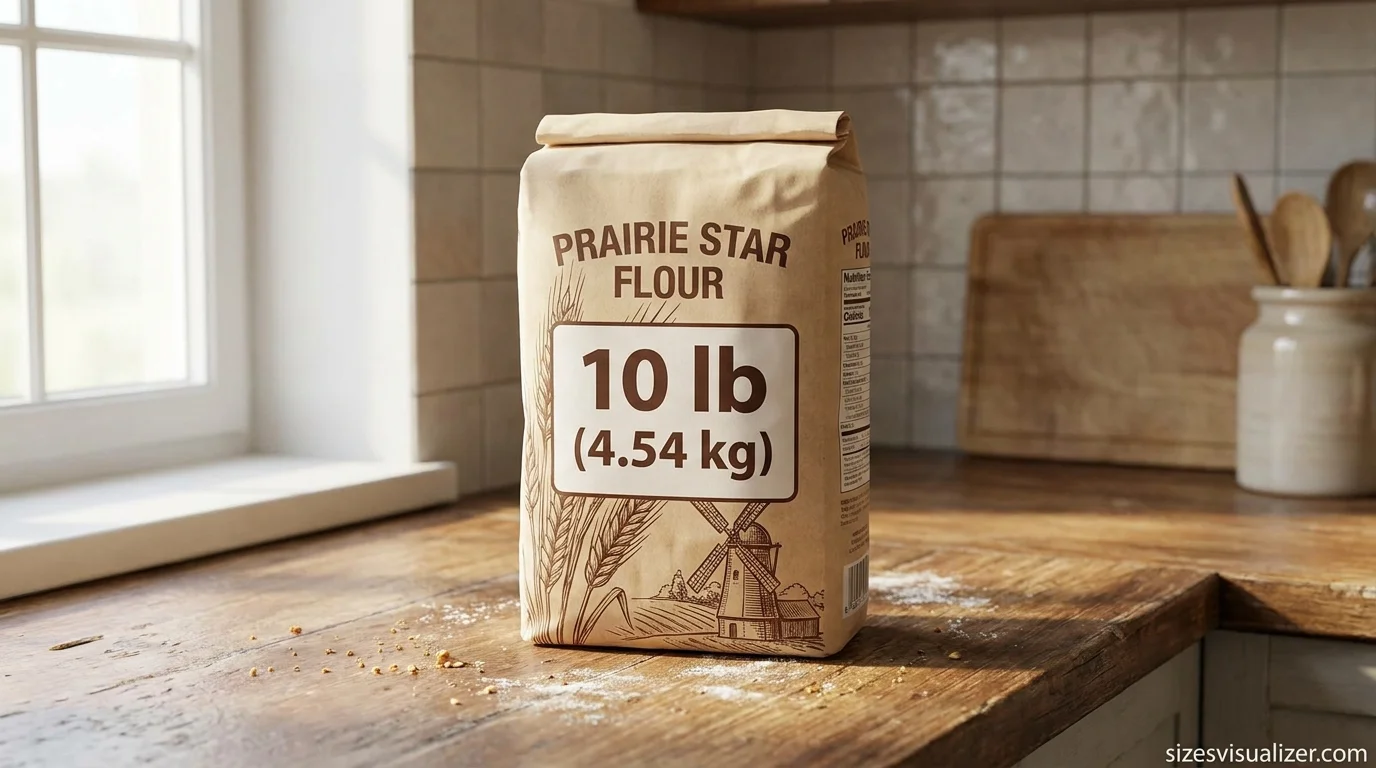
Standard grocery packaging includes 5- and 10-pound bags, making this one of the most accurate household comparisons available. The fine, shifting contents inside the bag create a subtly different feel than a solid object of the same weight.
Because the granules move slightly as you carry the bag, your grip has to adjust continuously. This makes flour or sugar a practical, low-cost way to experience the weight firsthand.
A small bag of dog food
Many trial or starter bags of dry dog food, particularly those made for smaller breeds, are packaged at 10 pounds. The kibble creates a semi-rigid load that holds its shape reasonably well during transport.
This comparison is especially relatable for pet owners, who regularly lift and carry these bags without necessarily connecting the number to other everyday references.
A cast iron skillet
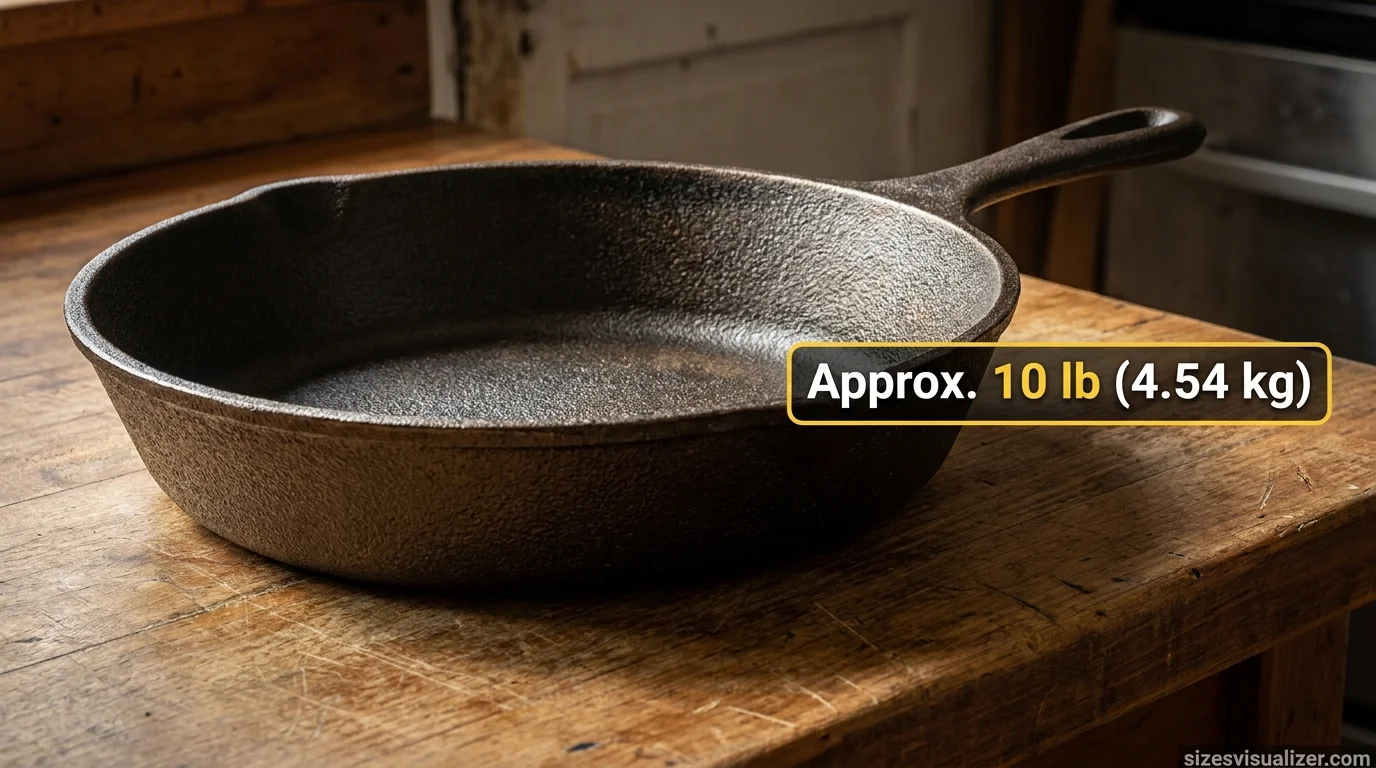
A large cast iron pan, especially a 12-inch model, frequently weighs close to 10 pounds due to the density of the metal. Its solid, single-piece construction makes it one of the most stable objects on this list.
Because cast iron does not flex or shift, lifting it delivers an immediate, unchanging sense of the full weight, making it a dependable kitchen-based reference point.
A kettlebell
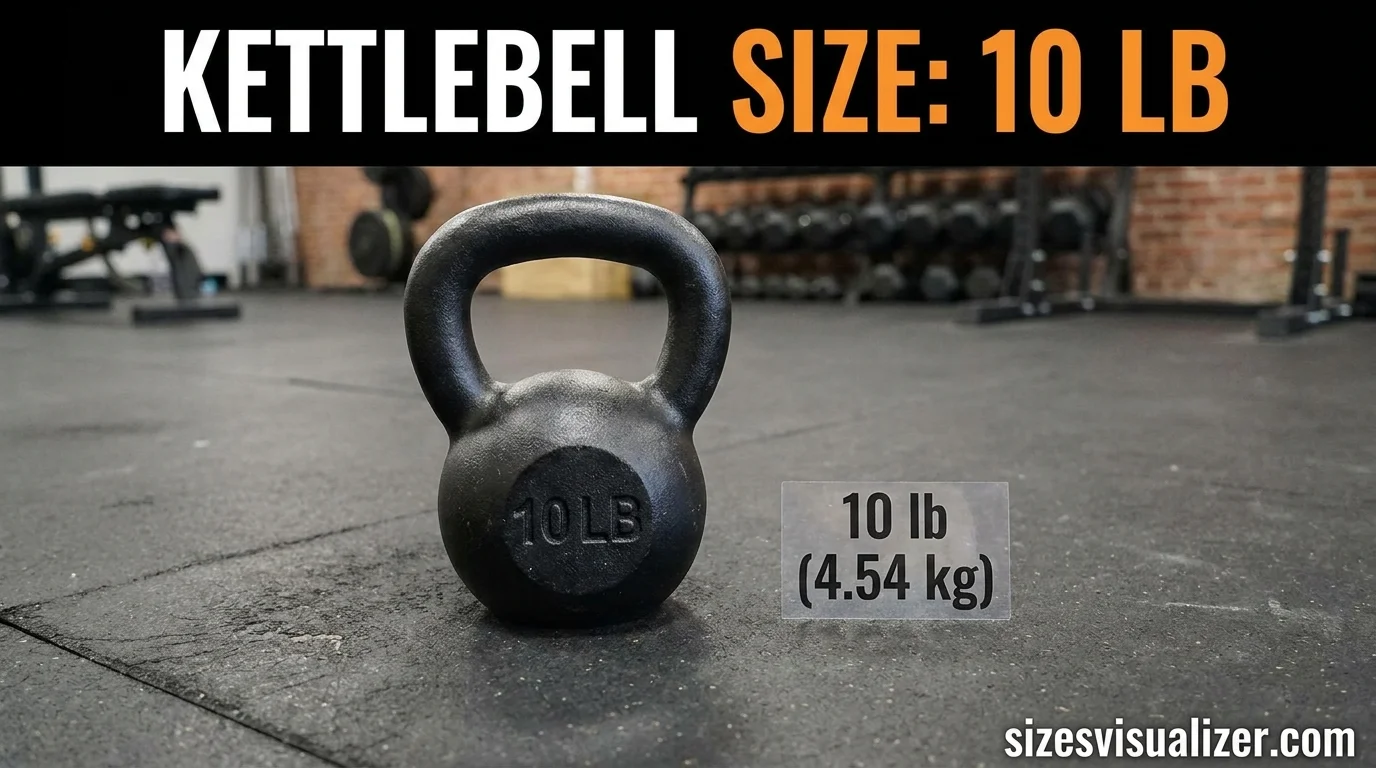
Kettlebells are manufactured in whole-number weight increments, so a 10-pound kettlebell is exact by design. Its rounded, off-center shape distributes mass differently than a dumbbell, which changes how the effort feels during lifting.
Because the handle sits above the bulk of the weight, a kettlebell requires more wrist and grip stability than a similarly weighted dumbbell, offering a slightly more demanding version of the same 10 pounds.
A filled laundry basket

A laundry basket loaded with towels or jeans easily reaches 10 pounds, particularly once damp fabric is involved. Because the contents shift with movement, the basket requires continuous small adjustments to carry steadily.
This is one of the most frequently cited comparisons in everyday life, since nearly every household repeats this exact task on a weekly basis.
A small empty carry-on suitcase
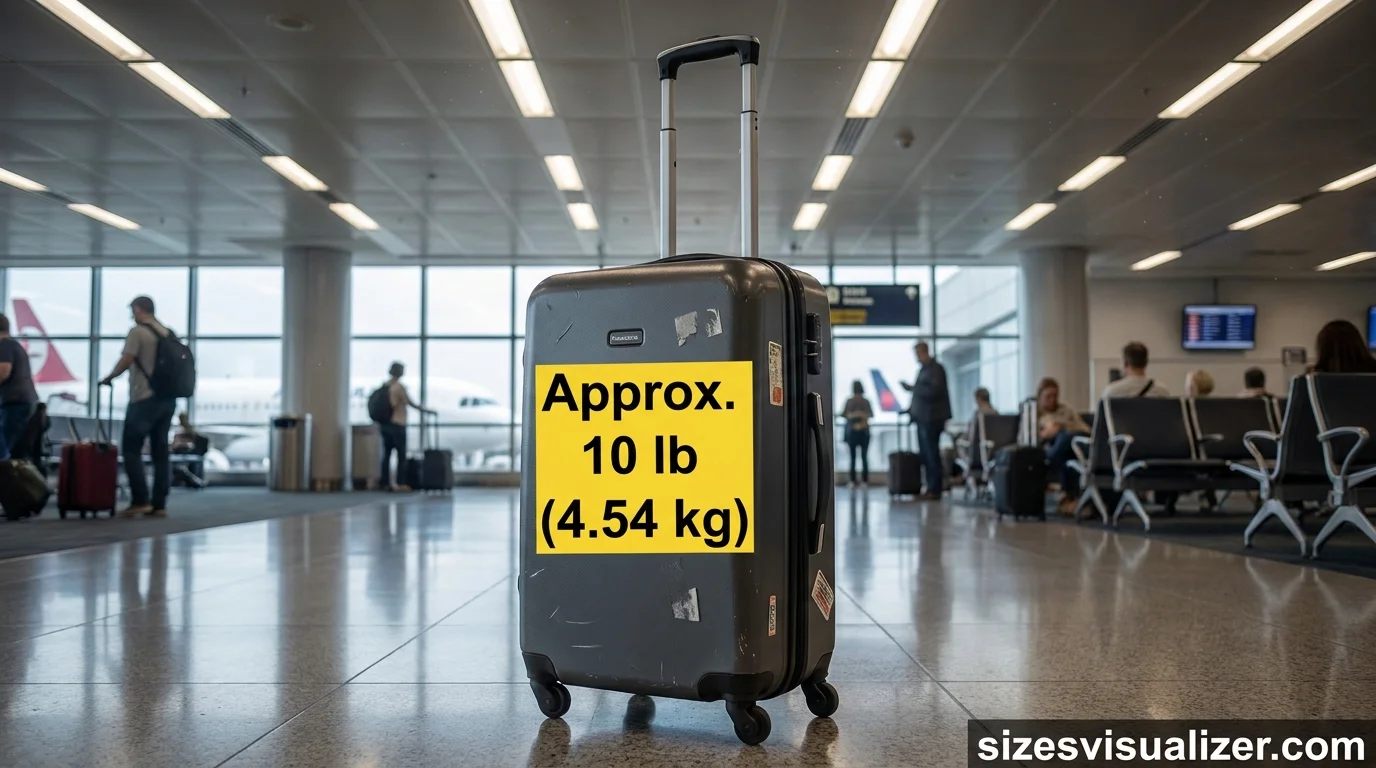
Before any packing occurs, a hard-shell carry-on frequently weighs 7 to 10 pounds due to its reinforced frame and structural materials. This makes it a useful reminder that packaging and structure alone can account for a significant portion of a bag’s total weight allowance.
Because the suitcase is hollow and rigid, its weight feels evenly distributed but slightly awkward, particularly when lifted by the top handle rather than rolled.
A boxed gaming console
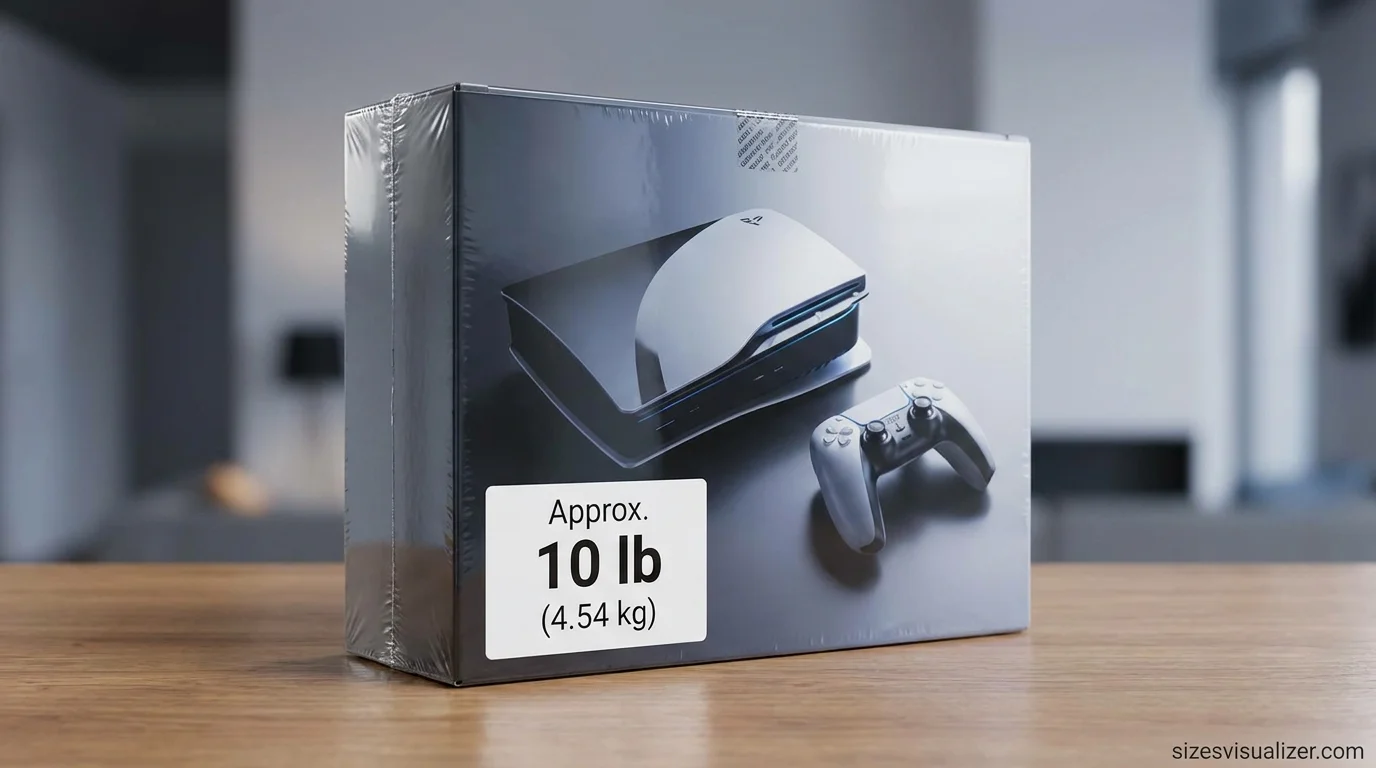
Once a console, controllers, cables, and retail packaging are combined, the total weight regularly approaches 10 pounds. The dense electronic components inside create a compact, solid load despite the box’s larger outer dimensions.
This comparison is particularly relevant for anyone who has shipped or carried a gaming console, since the packaging is specifically designed to protect delicate components without adding excessive bulk.
A car battery jump starter
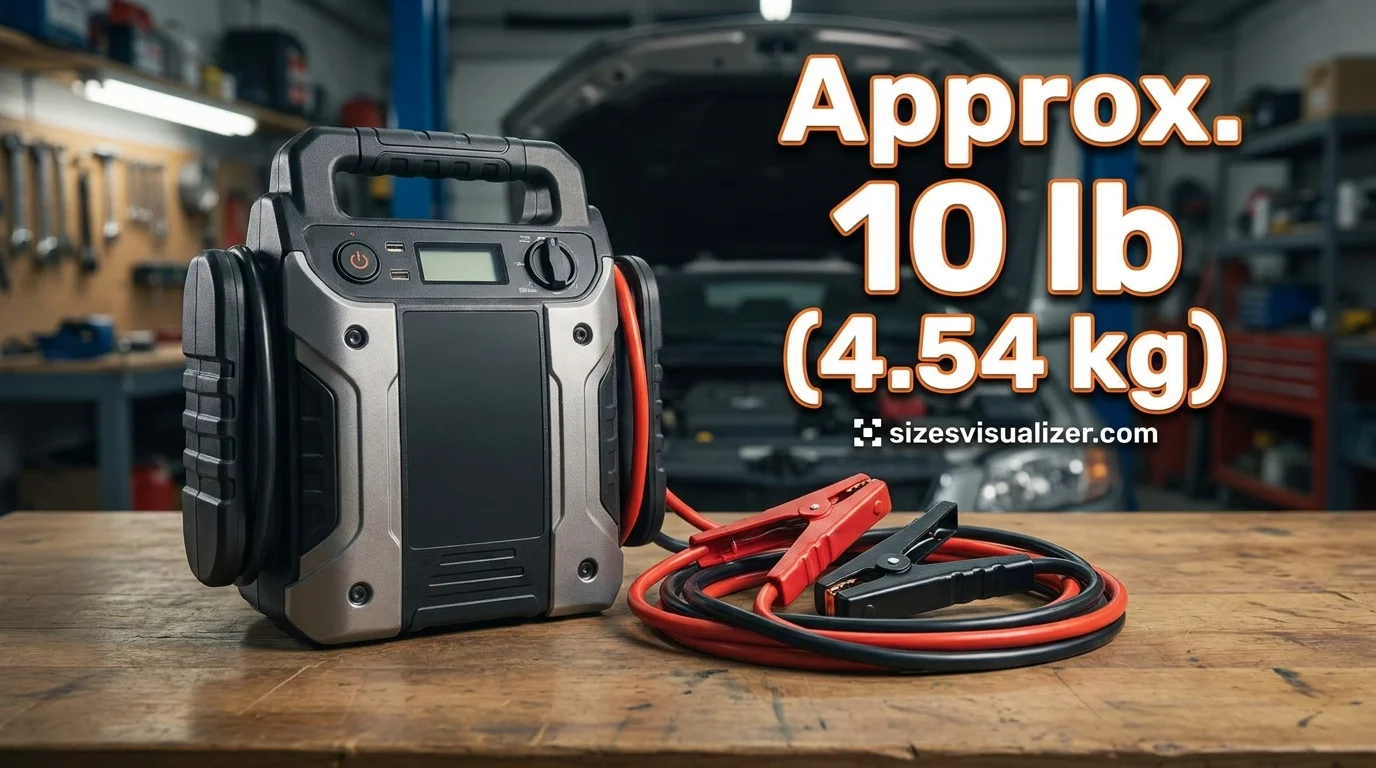
Portable jump starters pack a dense battery into a compact case, often reaching close to 10 pounds despite their relatively small footprint. The internal battery cells create concentrated weight that feels heavier than the unit’s size suggests.
Because the device is built for durability, its rigid casing keeps the weight stable and predictable, which is a useful trait for a tool regularly stored in a vehicle’s trunk.
A small whole turkey

A small, uncooked turkey, typically the size sold for gatherings of two to four people, often weighs around 10 pounds. The dense muscle tissue creates a compact but slightly awkward load, especially given the smooth, often slippery packaging.
This comparison is particularly common around the holidays in the United States, when this exact weight becomes a practical, seasonal reference point for many households.
A metal toolbox with basic tools
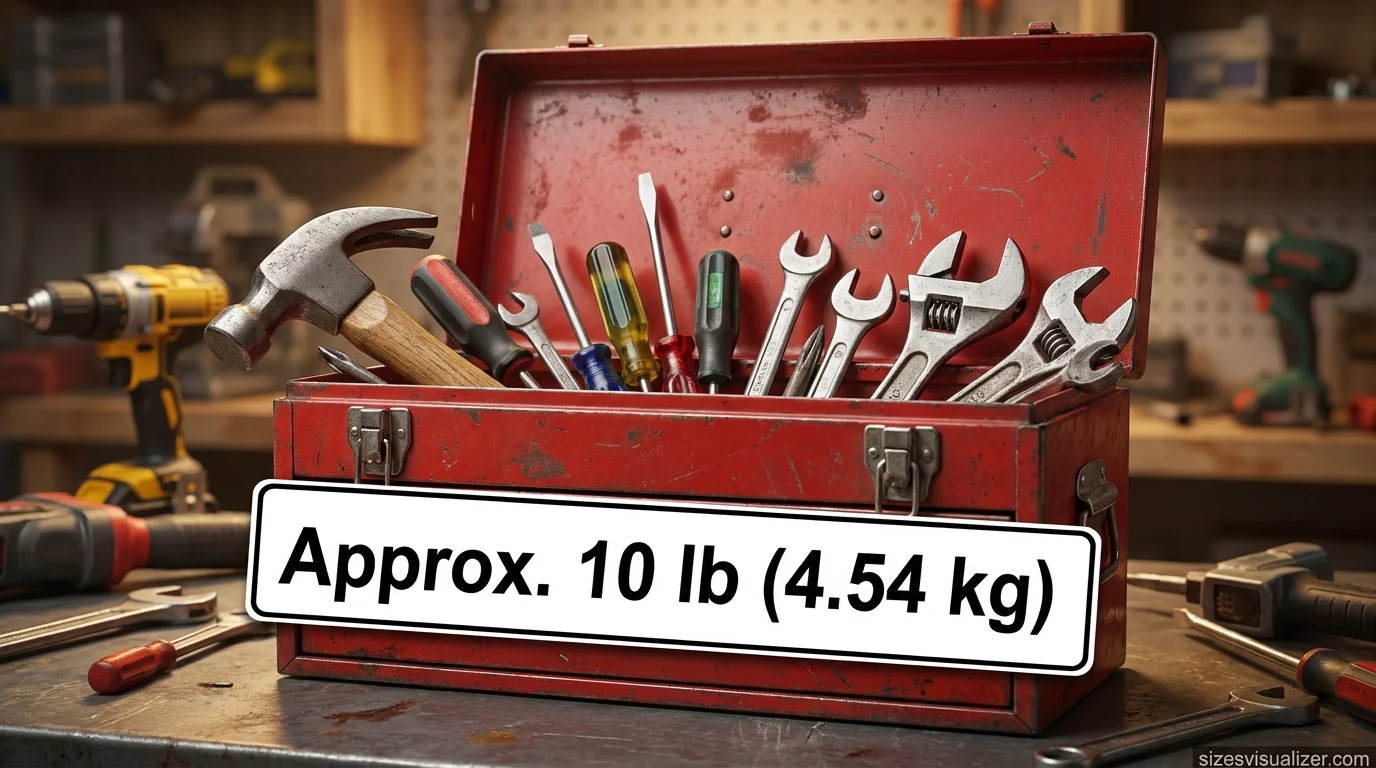
An empty steel toolbox already carries meaningful weight, and once basic tools such as a hammer, wrench, and screwdrivers are added, it commonly reaches 10 pounds. The rigid metal casing keeps the load stable during transport.
Because the tools inside are unlikely to shift significantly, a filled toolbox offers a dependable, real-world benchmark for tradespeople and homeowners alike.
1.25 gallons of milk
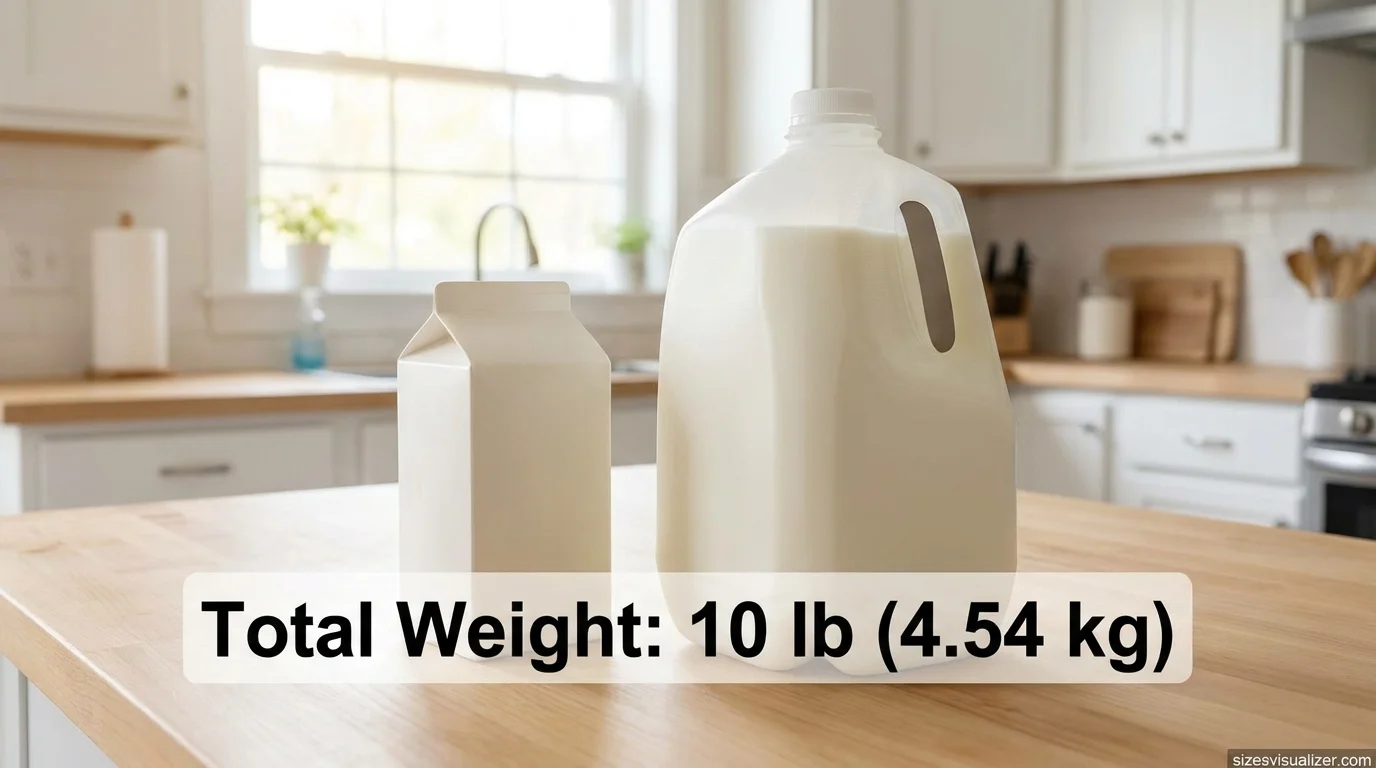
Since a single gallon of milk weighs approximately 8.6 pounds, roughly a gallon and a quarter reaches the 10-pound mark. This makes it a practical, kitchen-based way to estimate the weight without any additional tools.
Because liquid shifts inside its container, carrying this amount requires subtle balance adjustments, particularly when the container is not completely full.
A filled laptop backpack
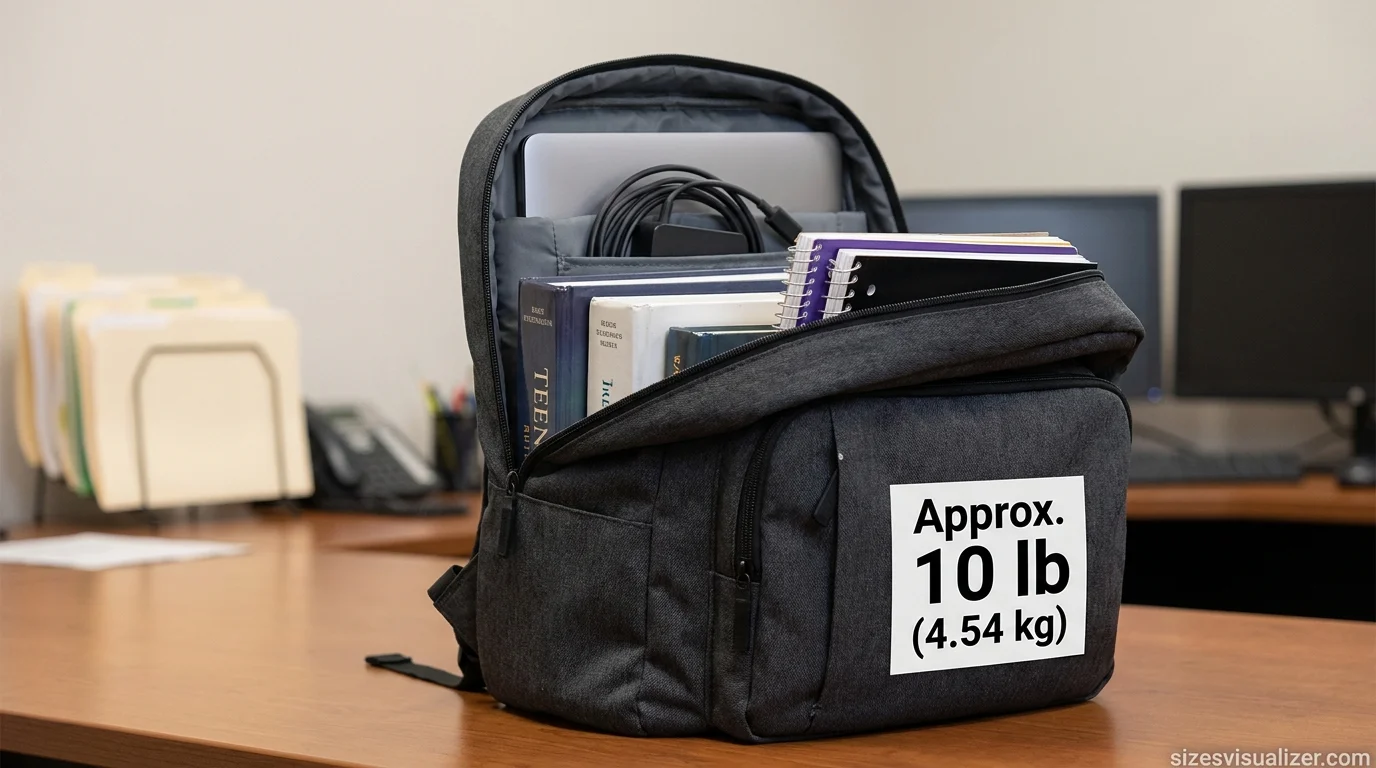
Once a laptop, charger, and several notebooks or textbooks are packed inside, a backpack frequently weighs close to 10 pounds. Because the weight is distributed across the back and shoulders rather than concentrated in the hands, it often feels lighter than its true weight suggests.
This comparison is especially familiar to students and commuters, who carry this exact weight range on a near-daily basis without necessarily registering the number.
A newborn to 3-month-old baby

According to growth data from the Centers for Disease Control and Prevention, the average baby weighs between 7 and 12 pounds during the first few months of life. This makes it one of the most emotionally resonant comparisons on the list, particularly for parents.
Because infants shift and move unpredictably, this weight often feels more dynamic and demanding than a static object of the same mass, requiring constant postural adjustment from the person carrying them.
A light weighted vest
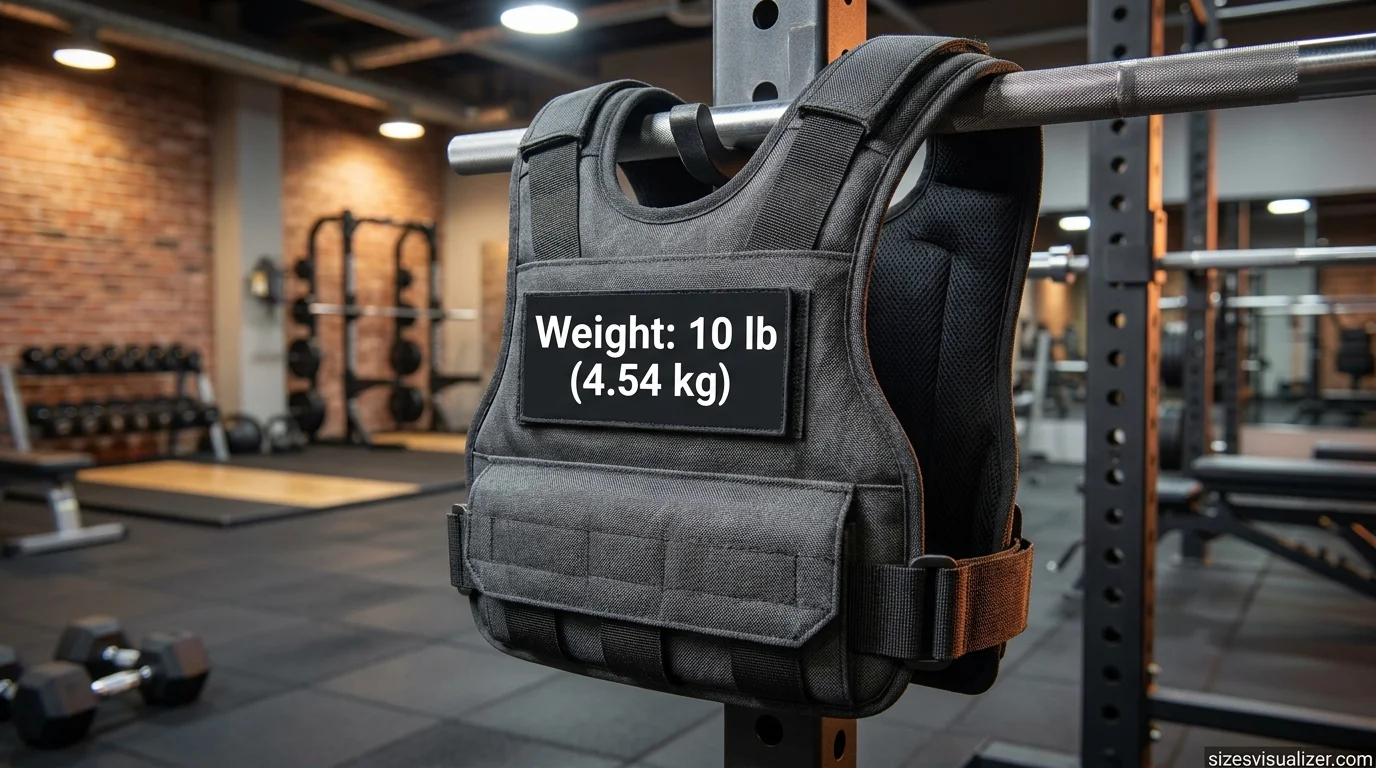
Fitness vests in the 10-pound range are widely used for walking and hiking workouts, since they add measurable resistance without significantly straining the back. The weight is typically distributed evenly across the chest and shoulders through a snug, adjustable fit.
Because the load sits close to the body’s center of gravity, a weighted vest is often considered one of the more comfortable ways to experience this exact weight over an extended period.
A portable space heater
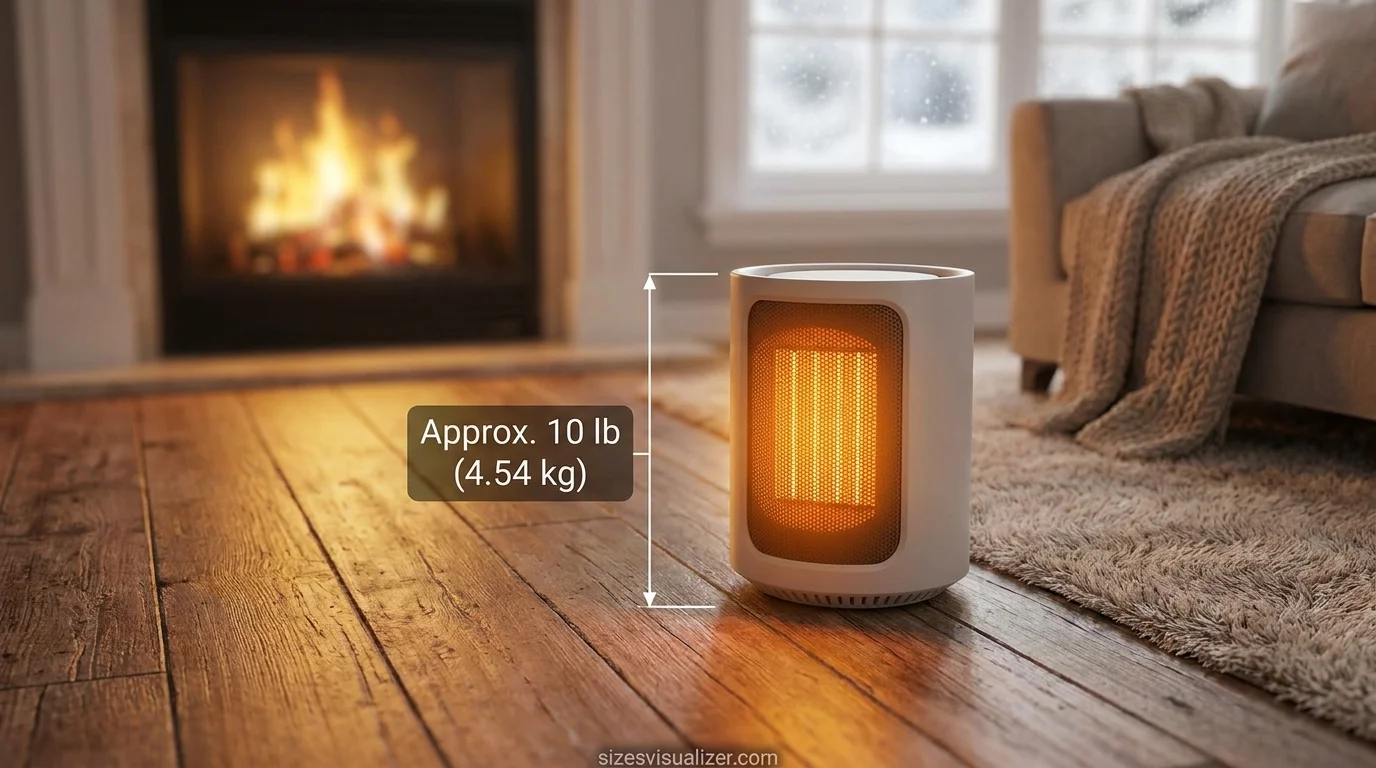
Small ceramic space heaters, due to their internal heating elements and metal housing, often weigh close to 10 pounds despite their compact size. This density makes them heavier than their appearance suggests when lifted for the first time.
Because the housing is rigid and boxy, the weight remains fixed and predictable during transport, making it a reliable seasonal household reference.
A large bag of potatoes
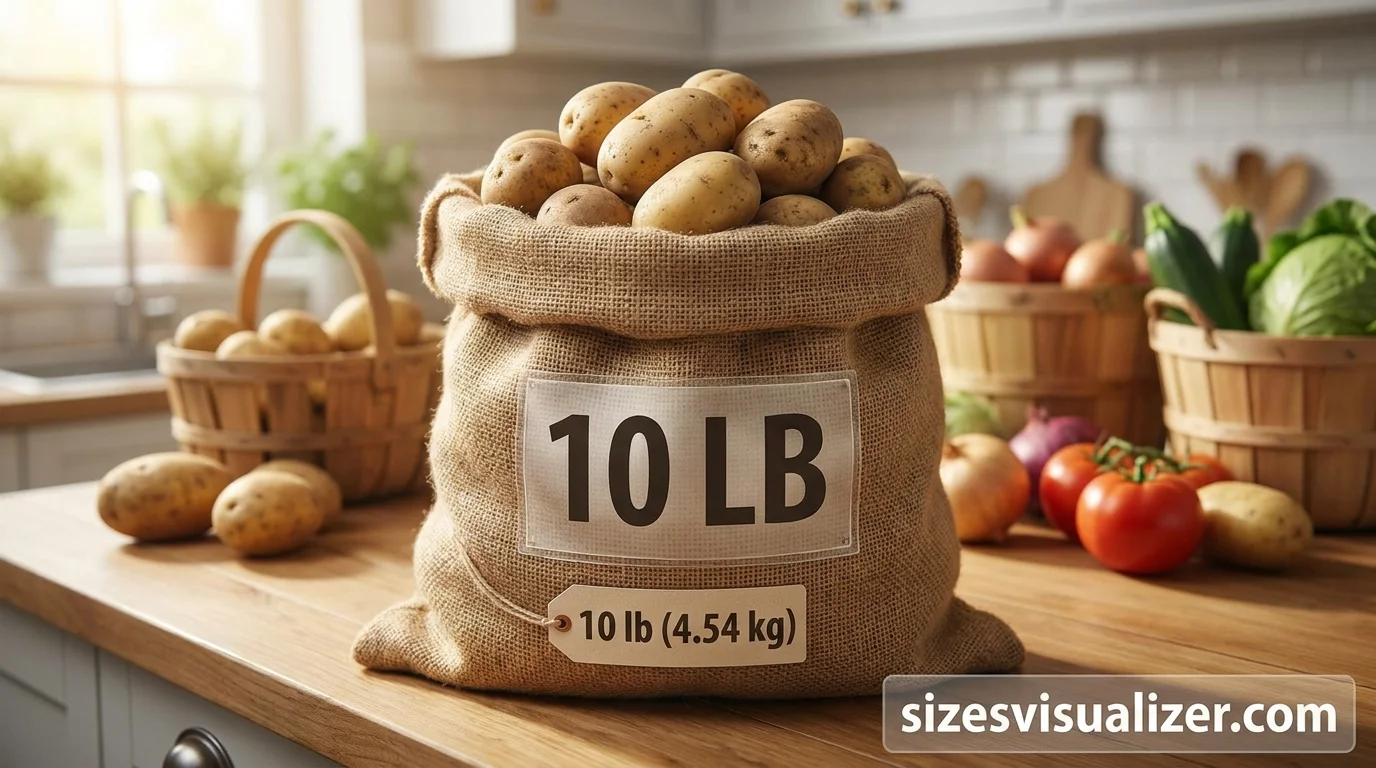
Sold in 10-pound sacks at most grocery stores throughout the United States, this is one of the most direct and literal comparisons available. The irregular shapes of individual potatoes create a slightly uneven, shifting load inside the bag.
Because this exact weight is printed directly on the packaging, it serves as one of the most immediately verifiable references on this entire list.
Must Visit: How Much Does a Gallon of Milk Weigh? Weight in Pounds, KG & Liters Explained
What Does 10 Pounds Feel Like to Carry?
Identical weight can feel entirely different depending on how it is carried. This difference comes down to weight distribution, not the number itself.
Holding a 10-pound dumbbell in one hand concentrates the entire load into the fingers, wrist, and forearm. Since the body has no way to redistribute this weight, it registers as heavier almost immediately.
Wearing the same 10 pounds in a backpack changes the experience considerably. The shoulders, back, and core share the load across larger muscle groups, a principle also used in weighted-vest training and military rucking, according to research summarized by the National Strength and Conditioning Association.
Temperature and surface texture also influence perception. Cold, smooth materials, such as a metal toolbox in winter, often feel heavier than a soft, textured bag of identical weight, since nerve endings register pressure and temperature differently.
A simple test: Fill three standard 1.5-liter water bottles completely. This produces approximately 9.9 pounds, nearly exact. Carrying them in one hand versus wearing them in a backpack demonstrates this weight-distribution effect within just a few steps.
What Does Losing 10 Pounds Look and Feel Like?
Losing 10 pounds effectively means permanently setting down one of the objects described above. This mental image often proves more motivating than a number on a scale.
Where the change becomes visible first varies by individual. Some people notice it in the face first, others in the midsection, and others in the lower body, depending on genetics, starting weight, and the pace of weight loss, according to weight-management research from Johns Hopkins Medicine.
Particularly for individuals with a lower starting body weight. Losing 10 pounds from a 150-pound frame represents roughly 6.7% of total body weight, often enough to visibly change how clothing fits. For someone starting at 250 pounds, the same 10 pounds represents a smaller percentage, meaning the visual change may be more subtle, even though the internal health benefits remain equally significant.
These benefits extend well beyond appearance. Research from the American Heart Association indicates that losing even 10 pounds can meaningfully lower blood pressure. The Arthritis Foundation notes that every pound of body weight lost relieves approximately 4 pounds of pressure on the knees, meaning a 10-pound loss reduces daily joint strain by roughly 40 pounds.
Abdominal fat generally responds well to overall weight loss, particularly when supported by improved blood sugar control and reduced calorie intake, although the exact degree of visible change varies from person to person.
FAQs About 10 Pounds
Is a 10 lb weight loss noticeable?
Yes, particularly for individuals with a smaller starting body weight, where 10 pounds represents a larger proportion of total mass. It often becomes visible first in the face and midsection.
Is it possible to eat 10 pounds of food?
Yes, though rarely in a single sitting. Ten pounds of food roughly matches a large holiday meal consumed across an entire day, especially when high-water-content foods are included, since these often weigh more than they appear to.
How much does 10 pounds look like?
Picture a bowling ball, a medium house cat, a large watermelon, or a 10-pound bag of potatoes. These remain some of the most reliable real-world stand-ins for this exact weight.
What does 10 pounds feel like?
It feels solid and noticeable, yet manageable, similar to a full laundry basket or a loaded backpack. Held in one hand, it engages the grip almost instantly; worn across the back, it feels lighter and more evenly distributed.
At what age is it hardest to lose weight?
Weight loss tends to become more difficult after age 40, largely due to a natural decline in muscle mass and a gradually slowing metabolism, according to research from the National Institute on Aging. Hormonal changes during menopause can make this especially challenging for women in their 40s and 50s.
Will my waist get smaller if I lose 10 pounds?
Usually, yes. Belly fat commonly decreases alongside overall weight loss, particularly when paired with improved blood sugar regulation and reduced intake of processed foods, though individual results vary.
Conclusion
Ten pounds stops being an abstract figure the moment it is attached to something tangible, whether that’s a watermelon, a bowling ball, or a laundry basket. This same shift in perspective makes it easier to understand what losing that weight would genuinely mean for the body.
Whether the goal is simple curiosity or a personal health target, one conclusion holds true: 10 pounds is light enough to lift, yet significant enough to matter.

Measurement Researcher, Size Comparison Writer & Content Specialist
Timmy Ahad is a dedicated content writer and research specialist at SizesVisualizer.com, where he focuses on creating accurate, easy-to-understand content about measurements, dimensions, size comparisons, and real-world object visualization.