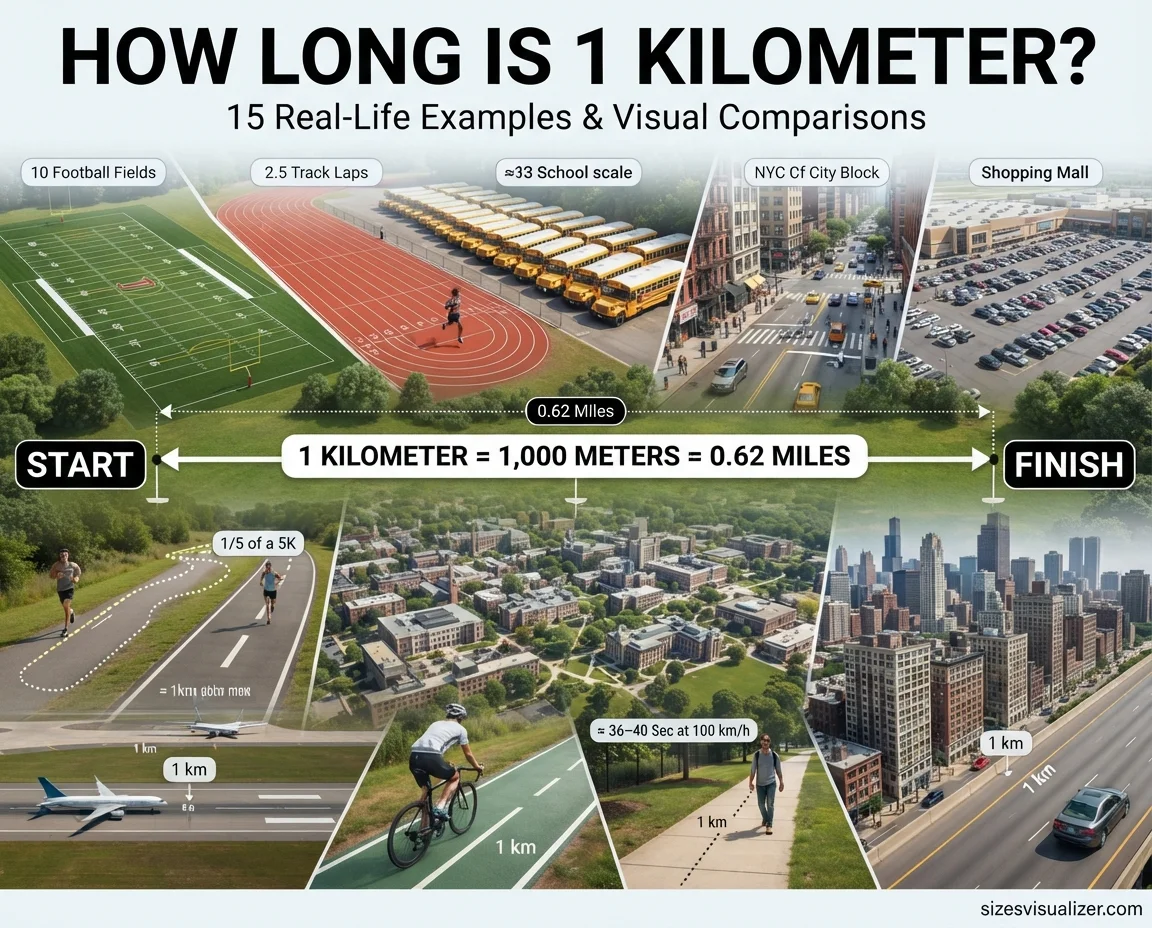
A kilometer is one of the most widely used distance units in the world, yet most Americans still can’t picture it clearly. That’s the gap this guide closes.
Here’s the short answer: 1 kilometer equals 1,000 meters, or about 0.62 miles. Below, you’ll find 15 real-life examples, quick conversions, walking and driving times, and answers to the most common questions people ask.
Table of Contents
What Is a Kilometer? (Definition, Abbreviation)
A kilometer is a unit of length in the metric system, used to measure distance between two points. The word comes from Greek: “kilo” means thousand, and “metron” means measure. Together, they form a unit equal to a thousand meters.
The metric system began in France in 1799, created to standardize measurement nationwide. Today, nearly every country uses it, except the United States, Liberia, and Myanmar.
Kilometer abbreviation: km. You’ll see it on road signs, race bibs, and weather reports instead of the full word.
Explore real-world size differences with our Size Visualizer & Comparison Tool and get a clearer perspective on measurements.
Here’s how a kilometer compares to other length units:
| Unit | Equal to 1 km |
|---|---|
| Meters | 1,000 m |
| Miles | 0.62 mi |
| Feet | 3,280.8 ft |
| Yards | 1,093.6 yd |
| Inches | 39,370 in |
| Centimeters | 100,000 cm |
The meter is the base metric unit for length. Every other metric distance unit, whether smaller like a centimeter or larger like a kilometer, is just the meter scaled by a factor of ten. That’s the real strength of the metric system: no odd conversion numbers like 12 inches per foot. Just multiply or divide by 10, 100, or 1,000.
How Long Is a Kilometer in Real Life? 15 Everyday Examples
Numbers alone don’t stick. Connecting a kilometer to something you already know makes it click instantly. Here’s how far a kilometer actually is, broken down one example at a time.
Ten football fields end to end
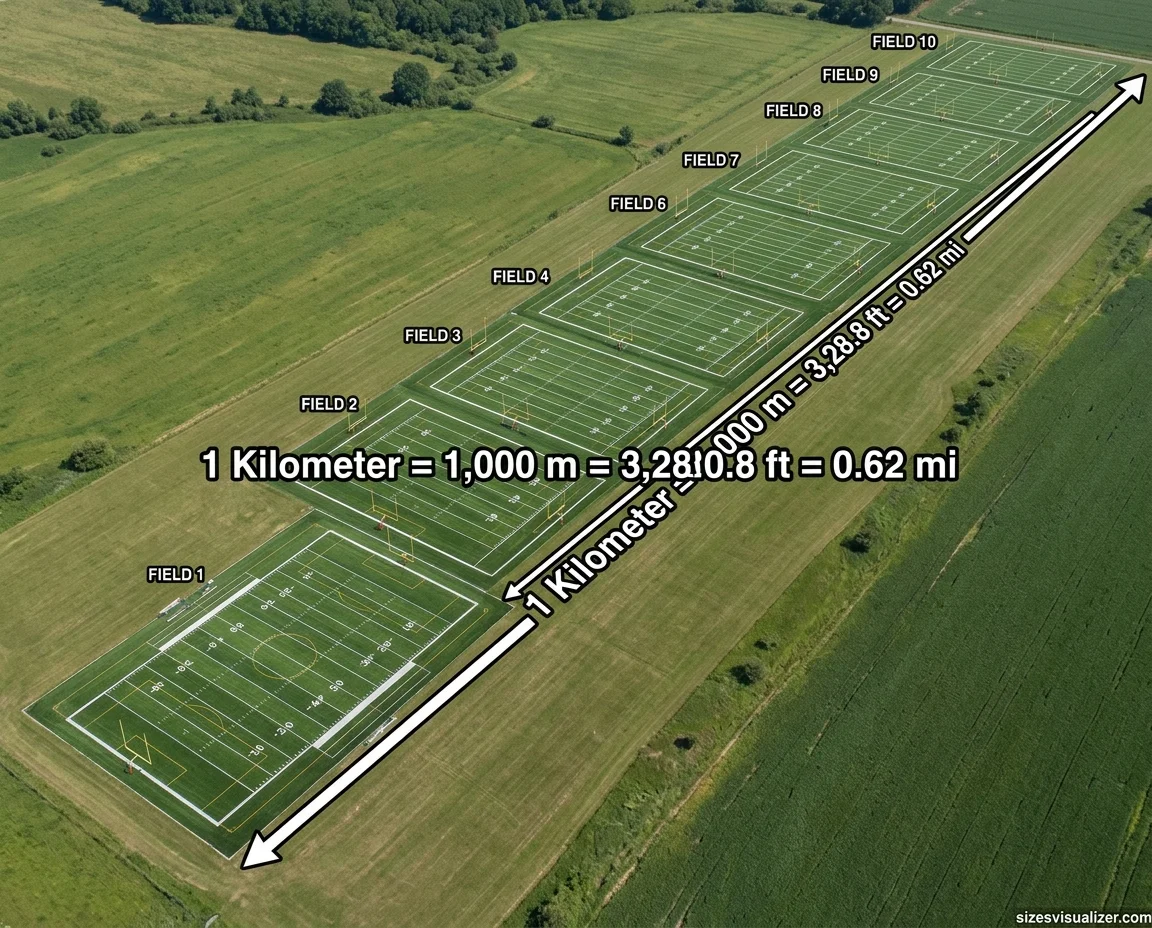
An American football field, including both end zones, measures about 109.7 meters. Line up roughly 9 to 10 of them back-to-back, and you’ve covered a kilometer. Picture standing at one goal post and looking down 10 fields’ worth of turf.
Eight to ten New York City blocks
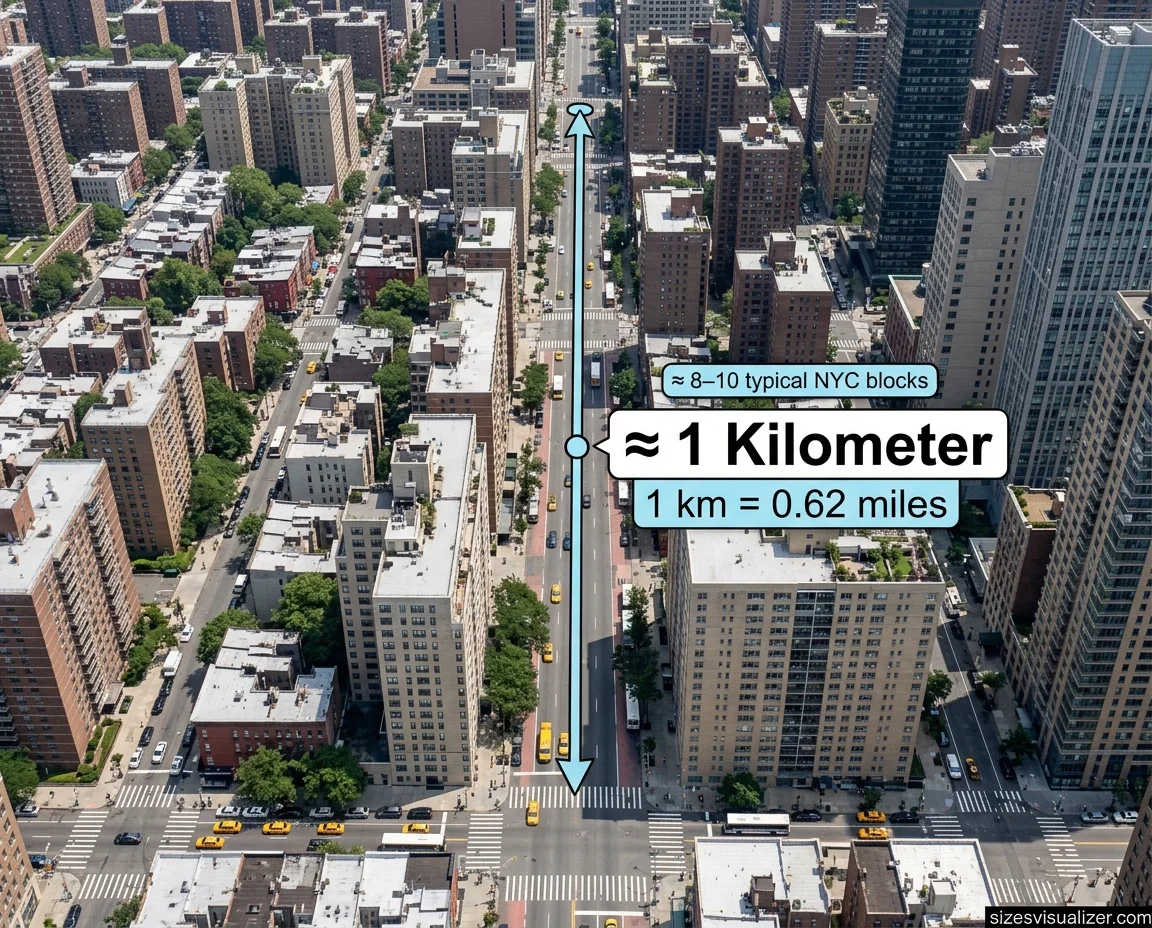
Manhattan’s north-south blocks run short, about 80 meters each, while east-west blocks stretch longer. On average, walking 8 to 10 typical city blocks covers roughly a kilometer, which is why locals often measure walking distance in blocks rather than miles.
Two and a half laps around a running track
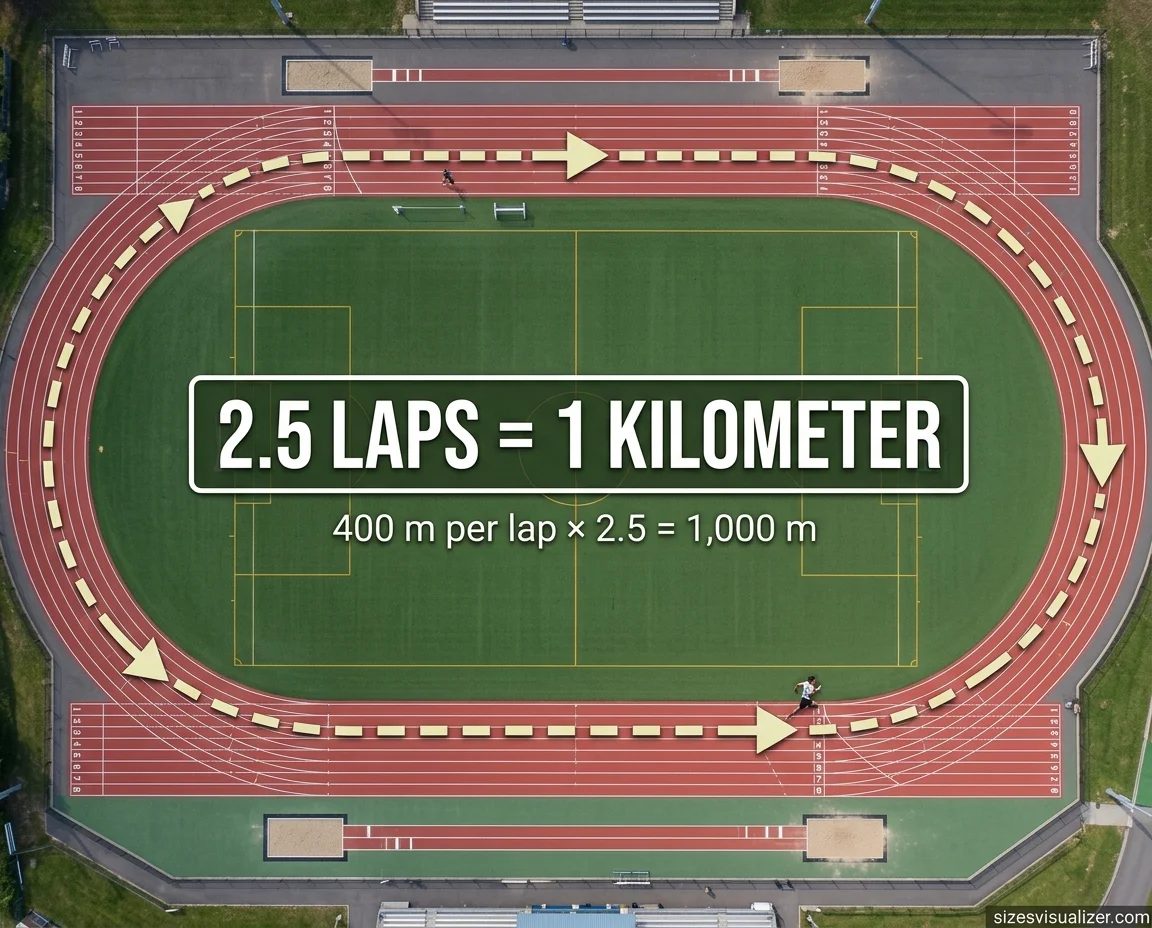
A standard outdoor track measures 400 meters per lap. Run it 2.5 times, and you’ve completed exactly 1,000 meters. This is why coaches often use lap counts to explain kilometer distances to young athletes.
Sixteen school buses parked bumper to bumper

A standard American school bus runs about 12.2 meters long. Line up 16 of them nose to tail, and the row stretches almost exactly one kilometer, a surprisingly useful visual for classroom lessons.
A 12-minute walk
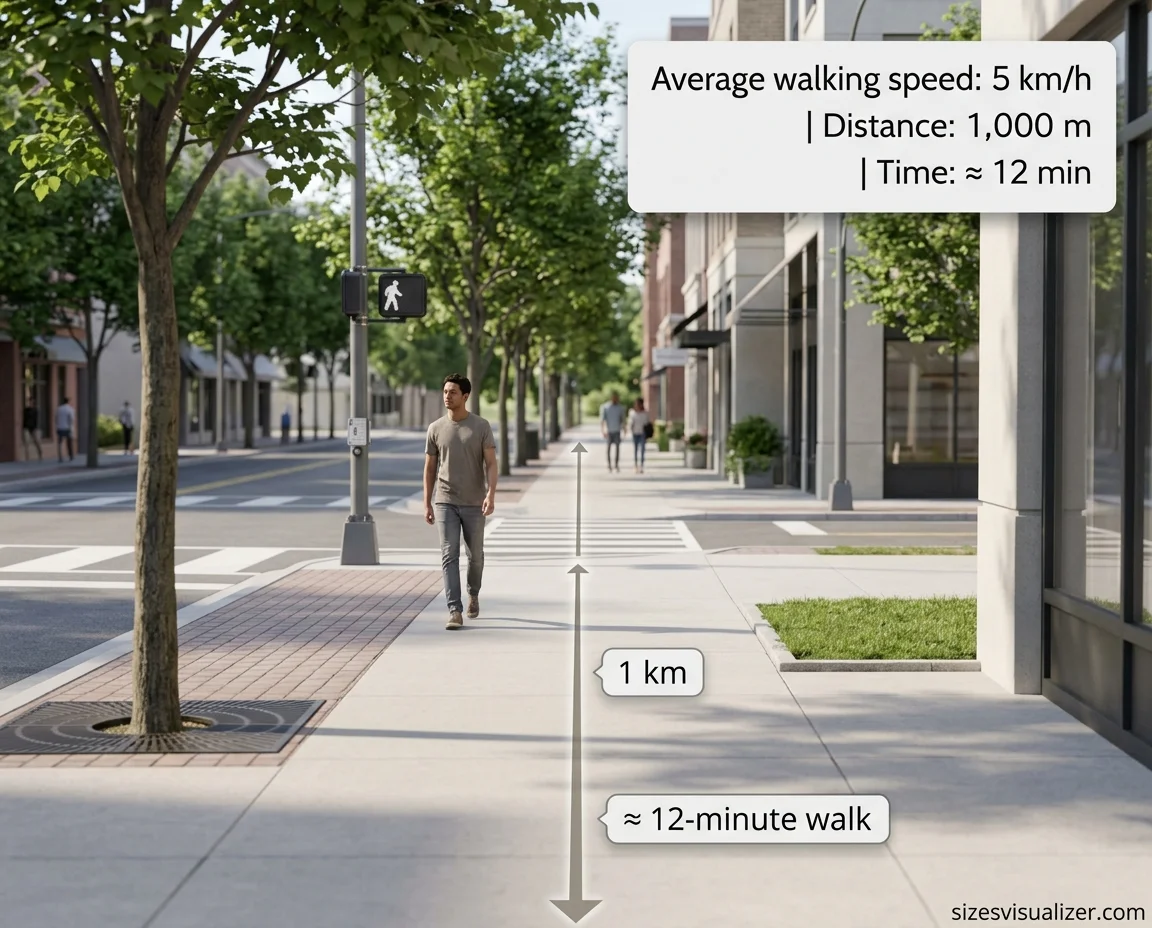
At an average walking speed of 5 km/h, most healthy adults cover a kilometer in about 12 minutes. It’s the time it takes to walk to a nearby coffee shop and not much more.
Just over half a mile

Since 1 km equals 0.62 miles, it’s slightly longer than a half-mile loop. If you’ve ever timed a half-mile jog around your neighborhood, add a short stretch more, and that’s a kilometer.
About one-third of an airport runway
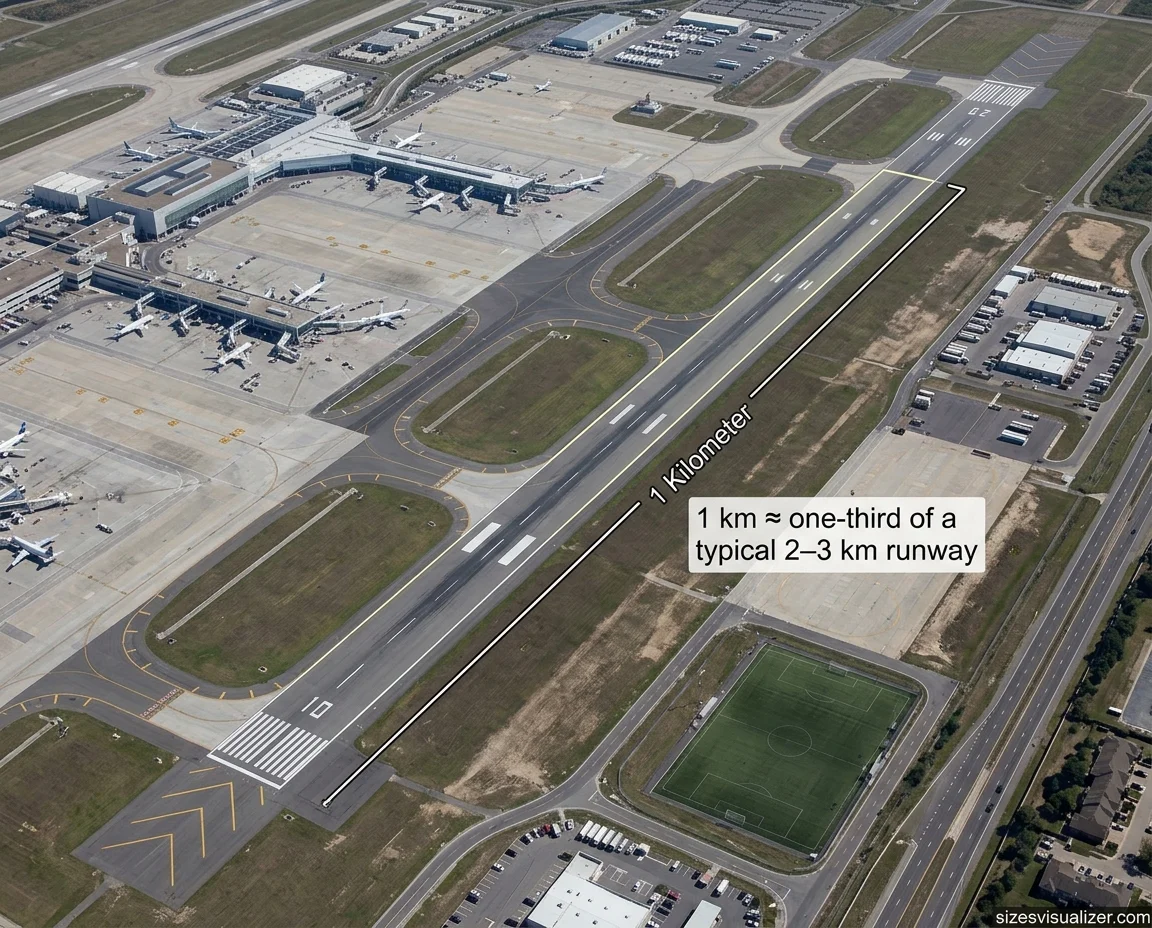
Many commercial runways in the U.S. measure between 2 and 3 kilometers long, built that way to safely handle takeoff and landing speeds. A kilometer covers roughly a third of a typical runway’s length.
Twenty smaller-town city blocks
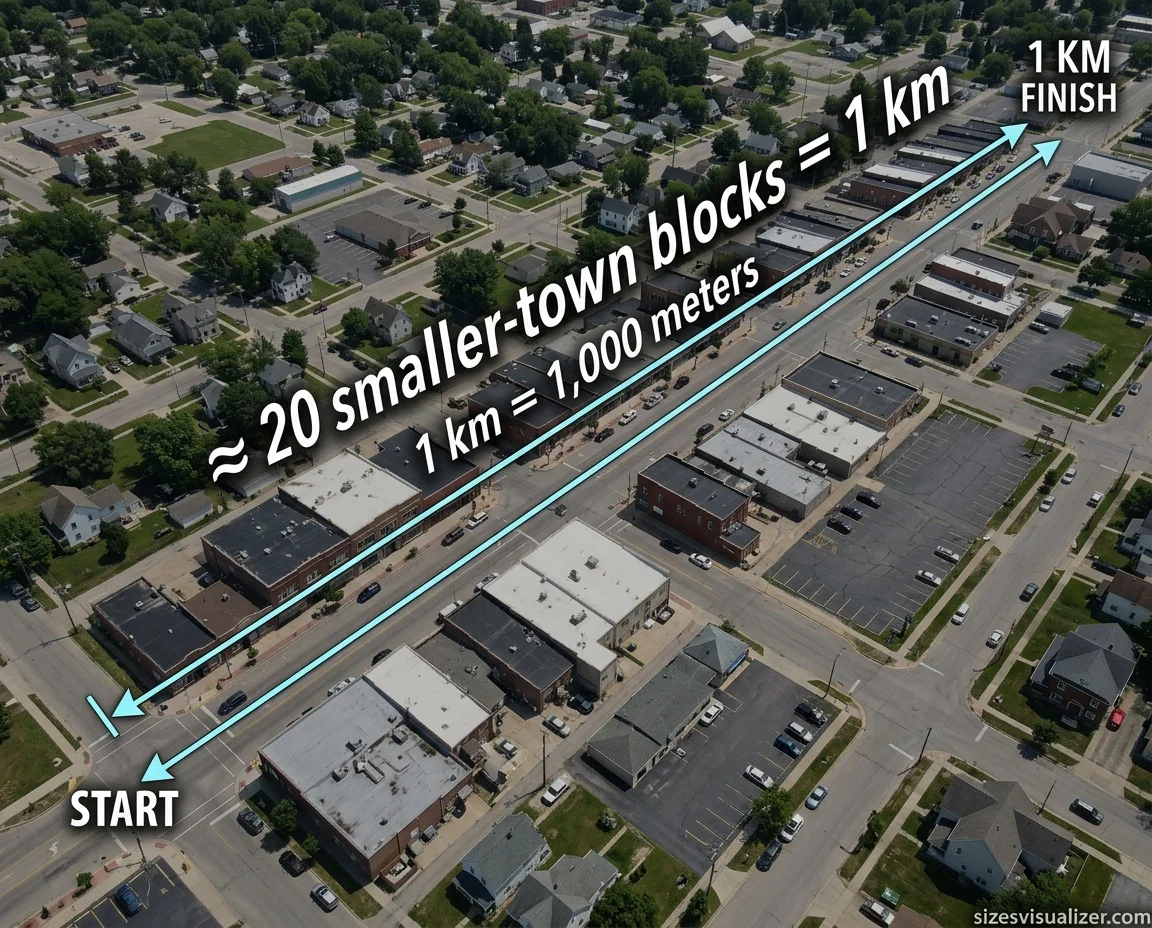
Not all blocks are equal. In towns with shorter blocks than big cities, it can take closer to 20 blocks to reach a kilometer, showing how much block length varies by city layout.
Ten trips across a large shopping mall parking lot
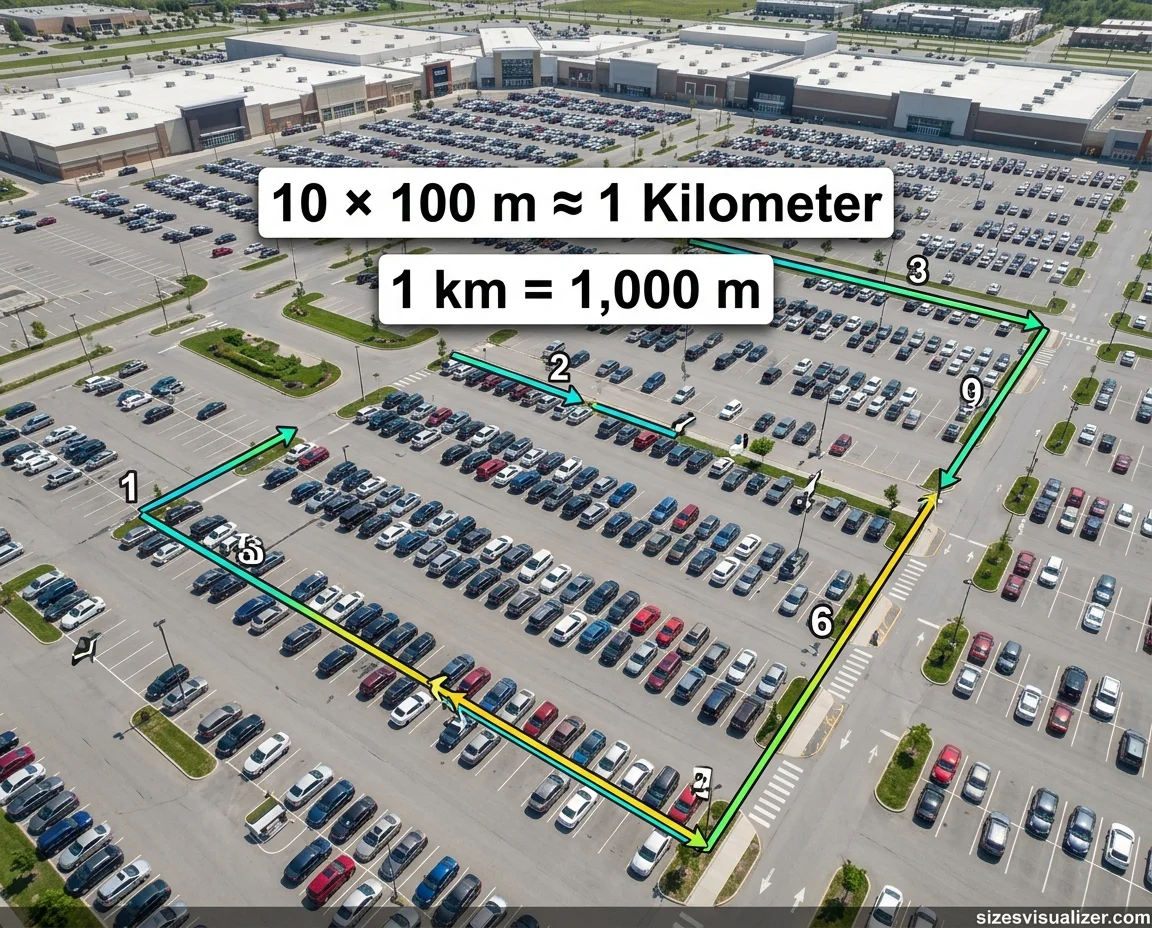
A big-box store parking lot often spans 100 meters end to end. Walking that stretch 10 times over roughly matches a kilometer, useful context next time you’re parked far from the entrance.
One-fifth of a 5K race
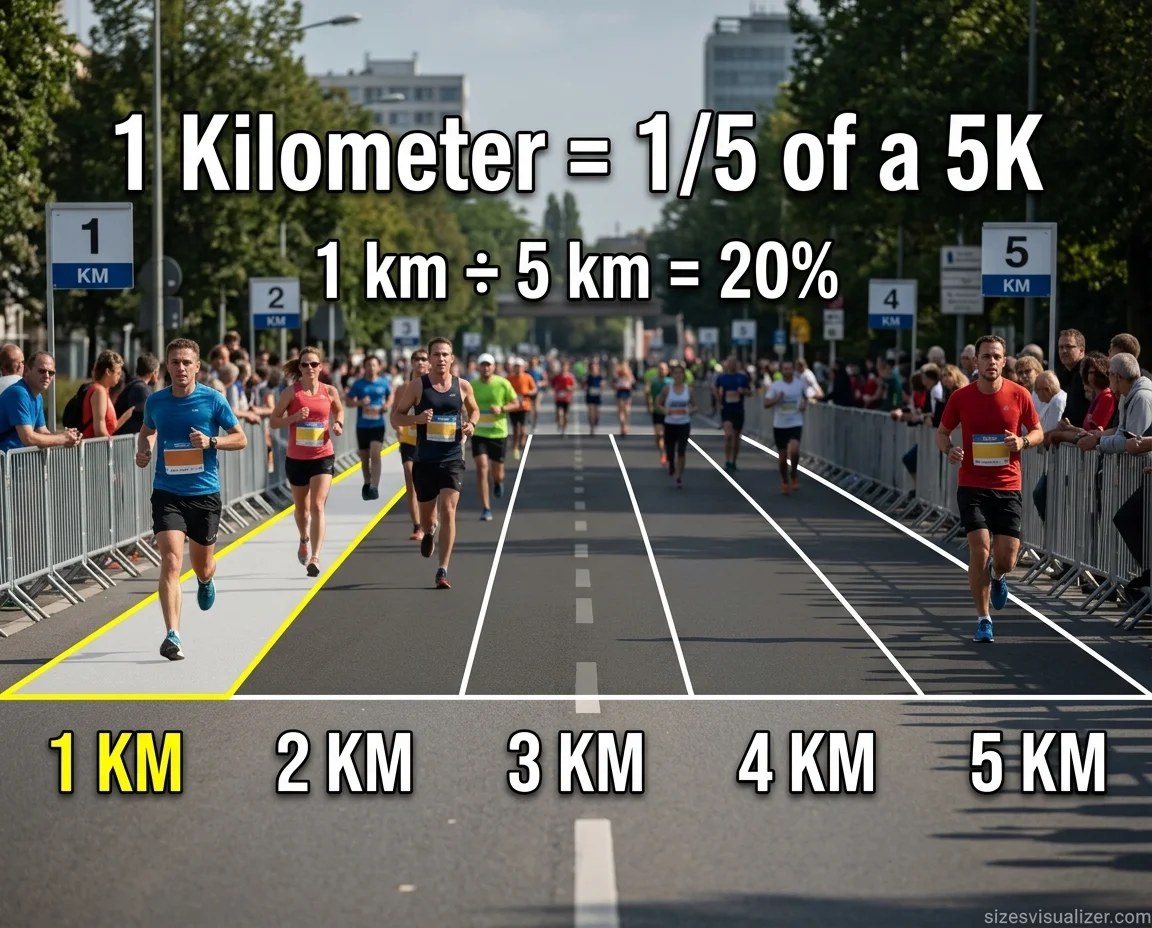
A 5K road race measures exactly 5 kilometers, one of the most common race distances in the U.S. A single kilometer is just 20% of that race, or about the first mile marker’s neighboring stretch.
Less than 1/40th of a marathon
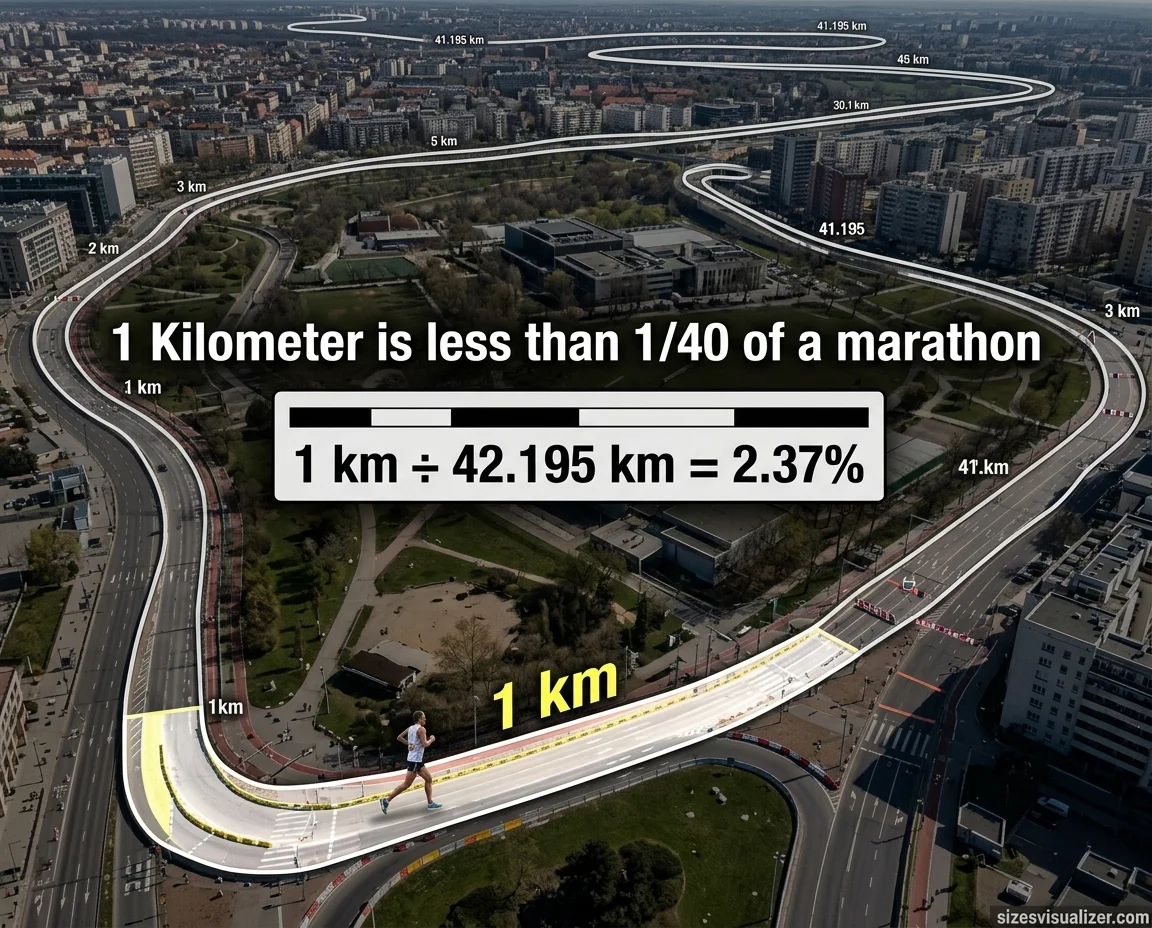
The official marathon distance is 42.195 kilometers, standardized by the International Association of Athletics Federations. One kilometer is a small slice, under 2.5%, of that full endurance distance.
The width of a mid-size college campus
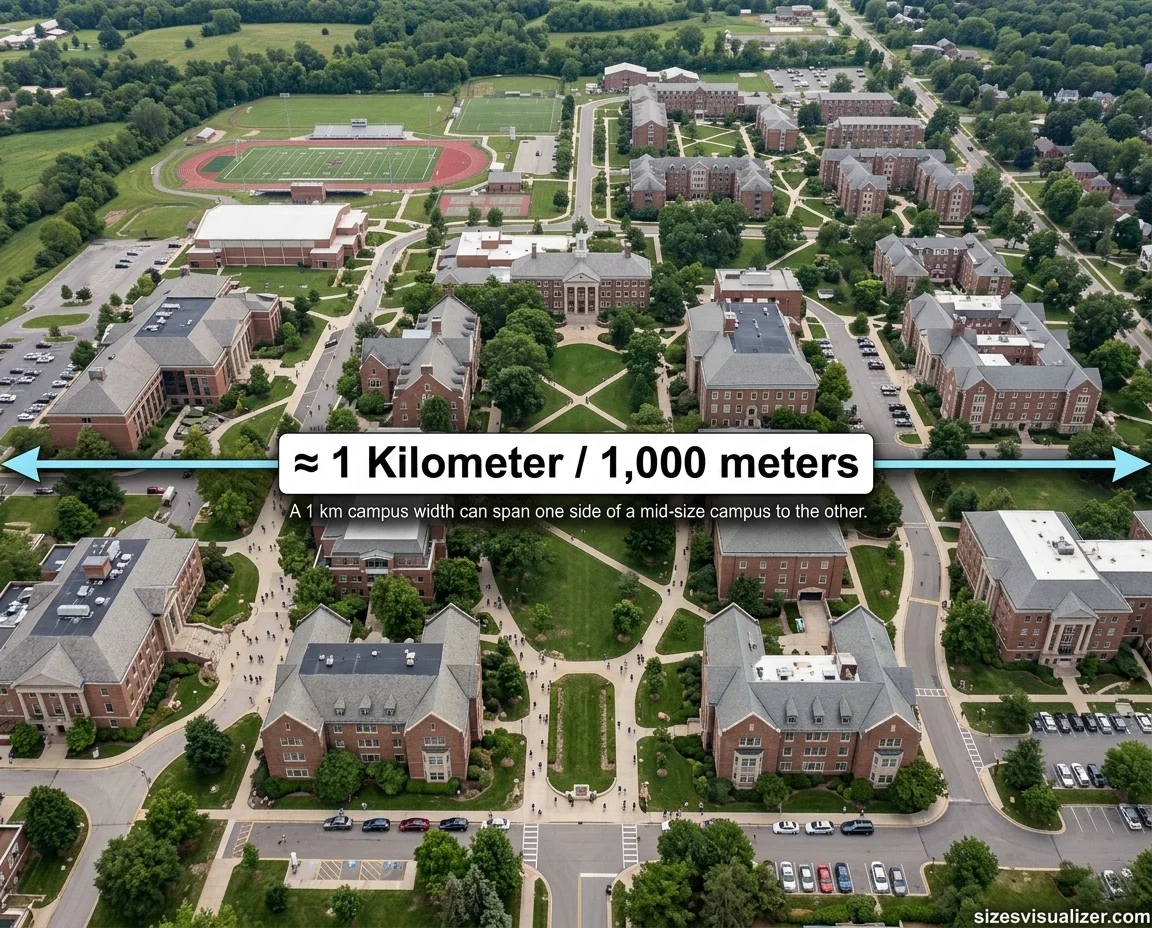
Many U.S. college campuses span roughly a kilometer from one edge to the other. Walking from a dorm on one side to a classroom on the far side often mirrors this exact distance.
About three Chicago blocks
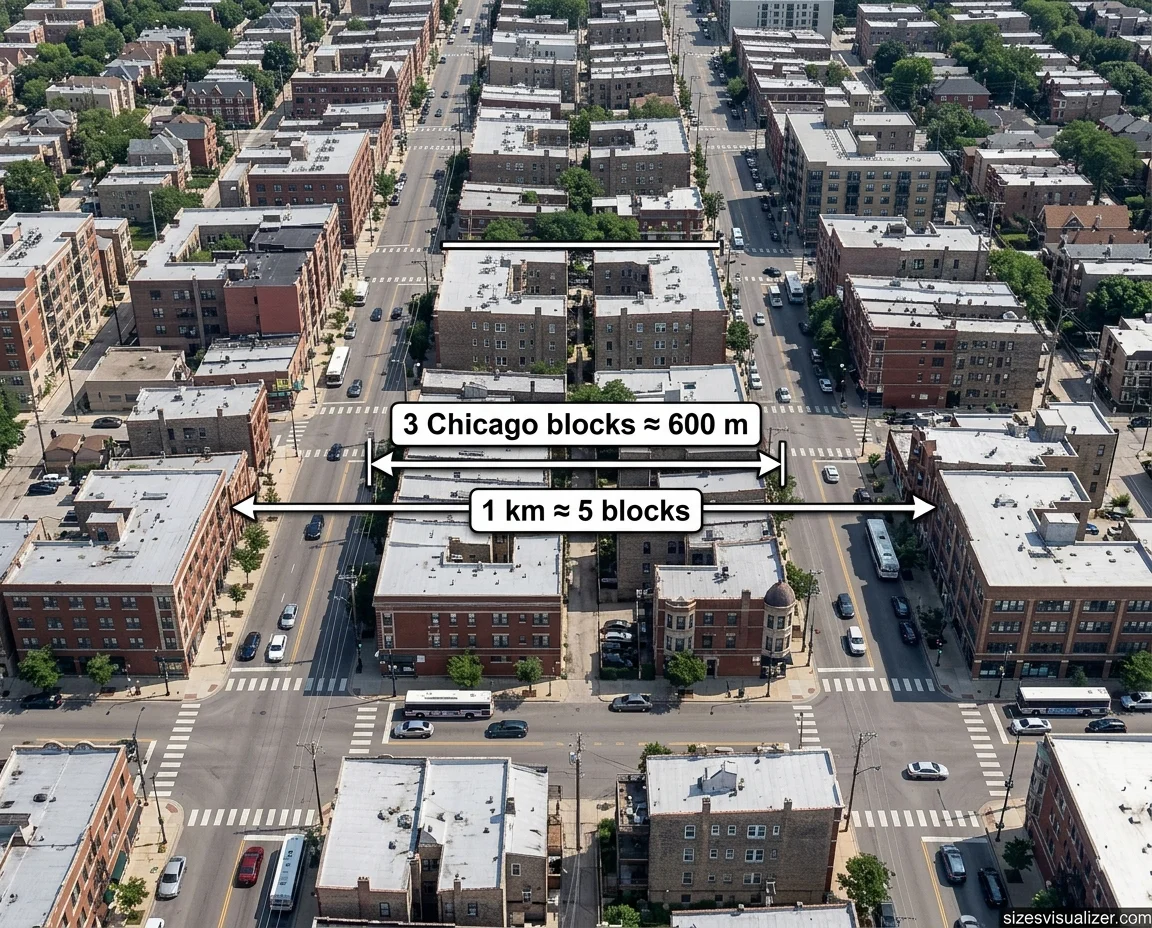
Chicago’s grid system runs eight blocks to the mile, meaning each block measures about 1/8 mile, or 201 meters. Stack three of these blocks together, and you’re close to a full kilometer.
A two to three minute casual bike ride
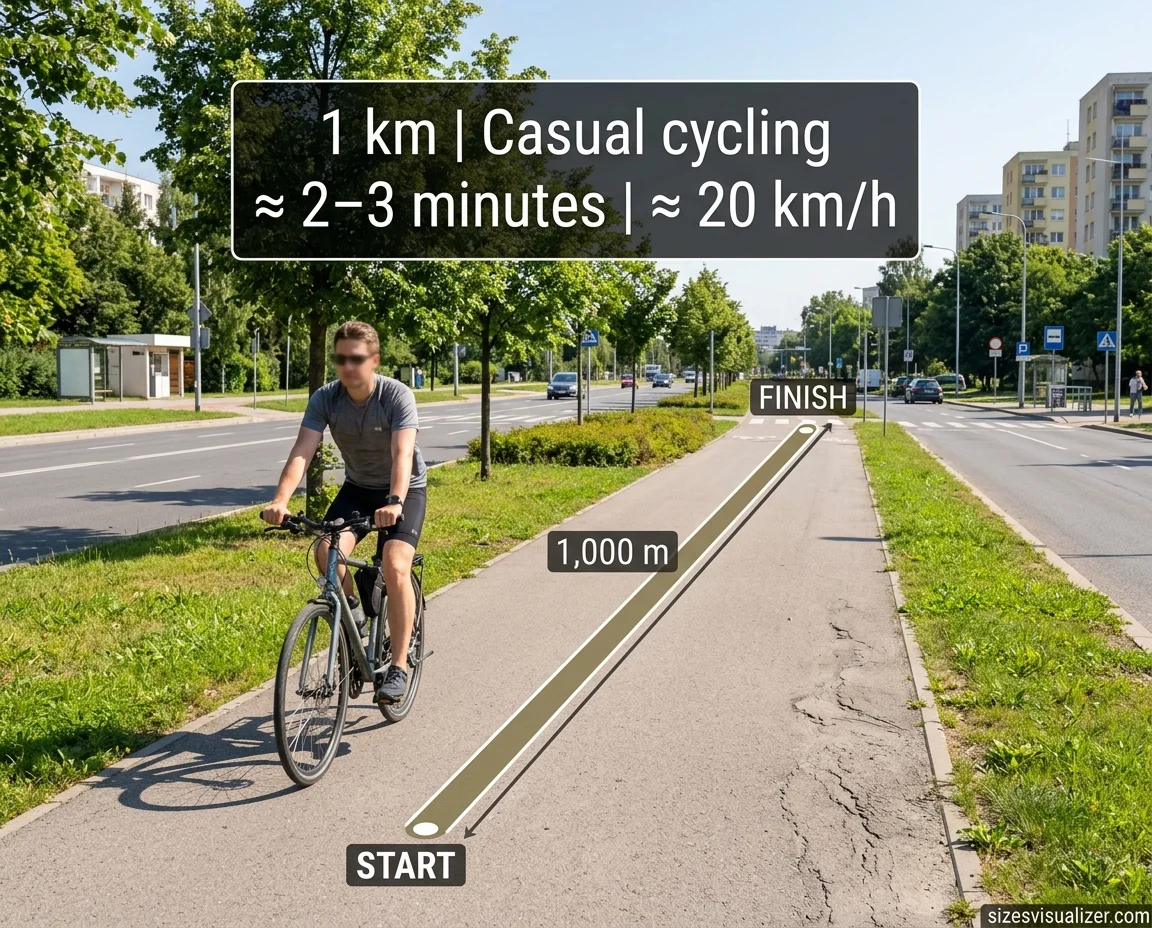
At a relaxed cycling speed of roughly 20 km/h, covering a kilometer takes about 2 to 3 minutes, far quicker than walking the same stretch.
Forty seconds of highway driving
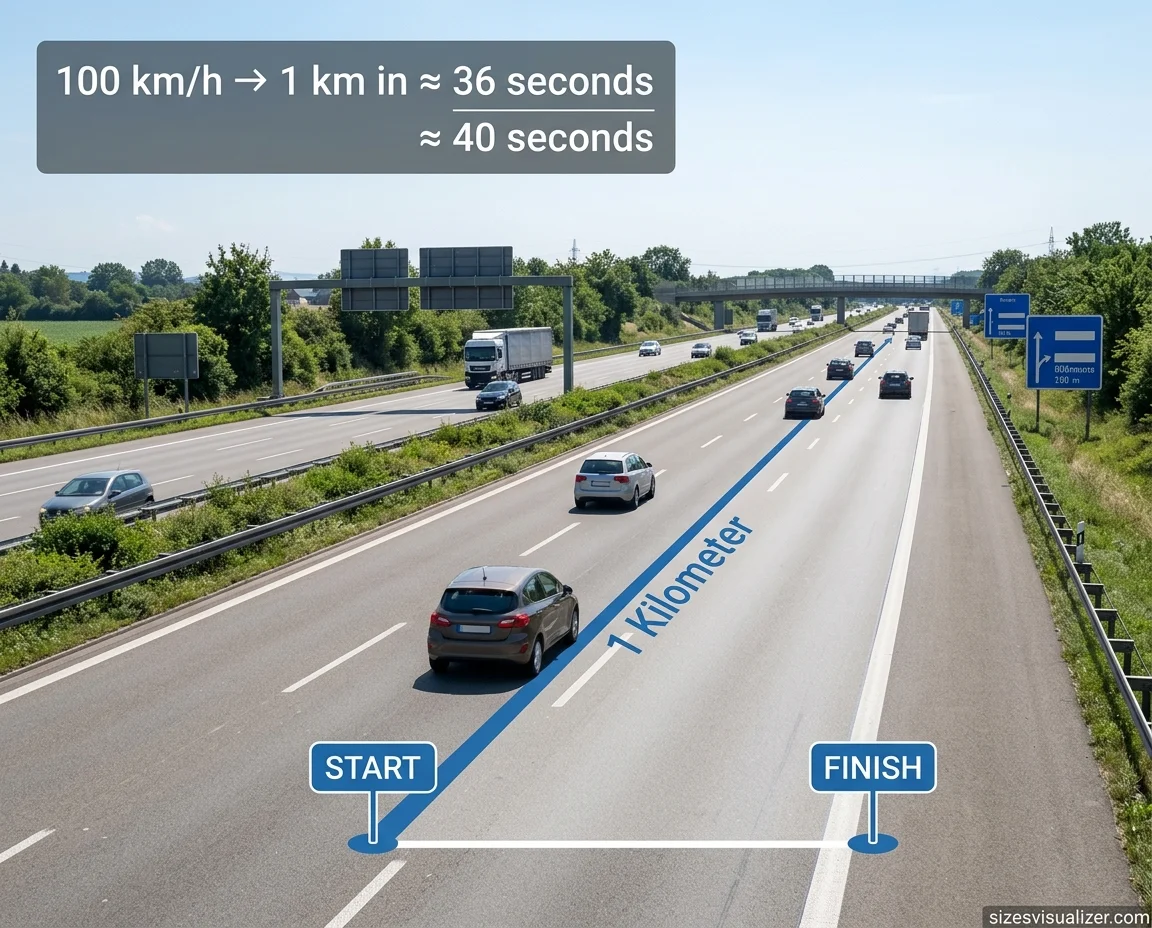
At a steady highway speed of 100 km/h, a car covers a kilometer in about 36 to 40 seconds, quicker than most red lights stay red.
These 15 references turn an abstract number into something you can actually feel. Once you’ve matched a kilometer to a place or activity you know well, the conversion chart becomes unnecessary.
Must Visit: Standard Stair Width & Dimensions: Complete Guide to Stair Measurements
Kilometer Conversion Chart: km to Miles, Feet, Yards & Meters
Converting kilometers is simple once you know the formula.
Quick formulas
- Kilometers to miles: km × 0.62
- Miles to kilometers: miles ÷ 0.62 (or miles × 1.61)
- Kilometers to meters: km × 1,000
Kilometers to miles chart
| Kilometers | Miles |
|---|---|
| 1 km | 0.62 mi |
| 5 km | 3.11 mi |
| 10 km | 6.21 mi |
| 20 km | 12.43 mi |
| 42.195 km (marathon) | 26.2 mi |
Kilometers to meters and feet chart
| Kilometers | Meters | Feet |
|---|---|---|
| 1 km | 1,000 m | 3,280.8 ft |
| 2 km | 2,000 m | 6,561.7 ft |
| 5 km | 5,000 m | 16,404 ft |
A quick mental shortcut: cut the kilometer number in half, then add back 10% of the original figure. For 10 km, that’s 5 + 1 = 6.2 miles, close enough for fast estimates on the road or trail.
How Long Does It Take to Cover 1 Kilometer? Walking, Running & Driving Times
Walking pace alone doesn’t answer everything people search for. Driving time matters too, especially for U.S. readers navigating road signs abroad.
Walking time for 1 kilometer
| Pace | Time for 1 km |
|---|---|
| Slow, casual walk (3 km/h) | 20 minutes |
| Average walking pace (5 km/h) | 12 minutes |
| Brisk walk (6-7 km/h) | 9-10 minutes |
| Fast-paced walk (7.5 km/h) | 8 minutes |
So, how long is 1 km to walk? For most healthy adults, expect 10 to 12 minutes at a comfortable pace. Terrain, fitness level, and load all shift that number slightly.
Running time for 1 kilometer
| Pace | Time for 1 km |
|---|---|
| Easy jog | 7-8 minutes |
| Moderate run | 5-6 minutes |
| Competitive runner | 3-4 minutes |
Driving time for 1 kilometer
| Speed | Time for 1 km |
|---|---|
| City driving (40 km/h) | About 1.5 minutes |
| Suburban roads (60 km/h) | About 1 minute |
| Highway speed (100 km/h) | About 36 seconds |
So how long is 1 km in minutes driving? At highway speed, it takes under a minute. In stop-and-go city traffic, plan for closer to 90 seconds.
Kilometers vs Miles: Why the U.S. Still Uses Miles
The U.S. customary system — miles, feet, inches, pounds — traces back to old British imperial units. Most of the world switched to metric decades ago, but the U.S. never fully converted, largely due to the cost of overhauling road signs, manufacturing standards, and consumer products nationwide.
Still, Americans encounter kilometers more often than they realize:
- Road races — 5K and 10K events are measured in kilometers, not miles
- Track and field — Olympic and NCAA track events use metric distances
- Science and medicine — nearly all lab work and dosing rely on metric units
- International travel — road signs across Canada, Europe, and most of the world show kilometers
- Sports broadcasts — cycling events like the Tour de France report distances in kilometers
Knowing both systems isn’t just trivia. It’s a practical skill for travel, fitness tracking, and reading global news accurately.
FAQs
How long is 1 km to walk?
At an average walking pace of 5 km/h, 1 kilometer takes about 12 minutes. A brisk walker can cover it in roughly 9 to 10 minutes.
How far away is 1 km?
One kilometer is about 0.62 miles, or roughly 10 football fields placed end to end. It’s a distance most people can see across in open terrain.
How many minutes is 1 km?
Walking, it takes 10 to 12 minutes. Running at a moderate pace, it takes about 5 to 6 minutes. Driving on the highway, it takes under a minute.
How long is 1 km in minutes driving?
At highway speed (around 100 km/h), 1 km takes about 36 seconds. In city traffic, expect closer to 1.5 minutes.
Can I walk 1 km in 10 minutes?
Yes. A pace of 10 minutes per kilometer equals 6 km/h, which is a brisk but comfortable walking speed for most healthy adults.
Can I walk 2 km a day?
Yes, and it’s a solid daily habit. Walking 2 km takes about 20 to 25 minutes and supports cardiovascular health. Health organizations like the CDC recommend at least 150 minutes of moderate physical activity per week, and a daily 2 km walk fits comfortably into that goal.
Conclusion
A kilometer isn’t as abstract as it first seems. It’s 10 football fields, a 12-minute walk, or 0.62 miles, depending on how you choose to picture it. Once you connect the unit to something familiar, converting kilometers to miles, minutes, or feet becomes second nature. Whether you’re training for a 5K, reading a foreign road sign, or just curious, you now have every number you need to make sense of it instantly.

Measurement Researcher, Size Comparison Writer & Content Specialist
Timmy Ahad is a dedicated content writer and research specialist at SizesVisualizer.com, where he focuses on creating accurate, easy-to-understand content about measurements, dimensions, size comparisons, and real-world object visualization.