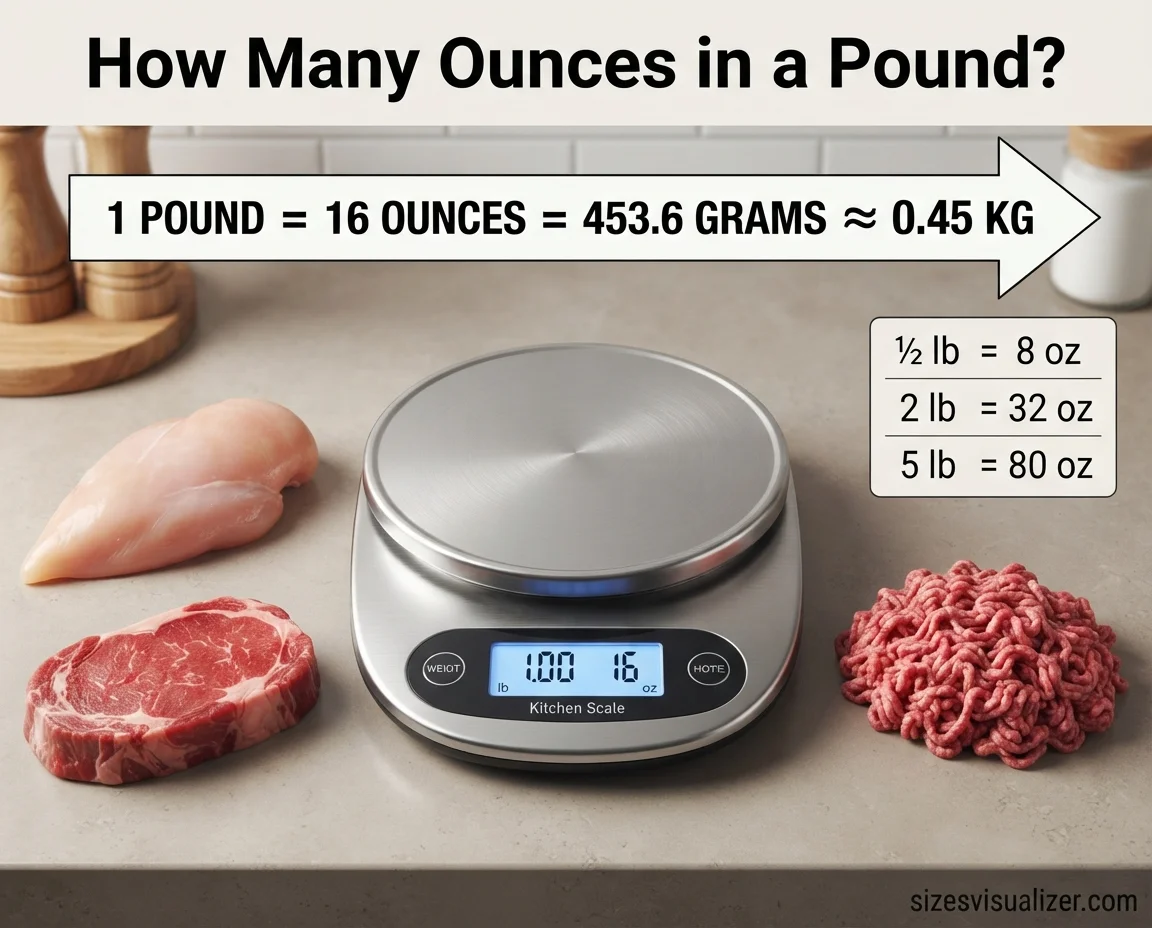
Cooking a recipe and hit a number you don’t recognize? You’re not alone. Knowing how many ounces in a pound takes the guesswork out of grocery shopping, meal prep, and portioning meat correctly.
Here’s the fast answer, the full breakdown, and exactly how it applies to chicken, beef, and pork.
Table of Contents
How Many Ounces Are in a Pound?
One pound equals 16 ounces. This is true whether you’re weighing chicken breast, ground beef, flour, or produce — as long as you’re using the U.S. Avoirdupois system, which is the standard weight system used across American kitchens and grocery stores.
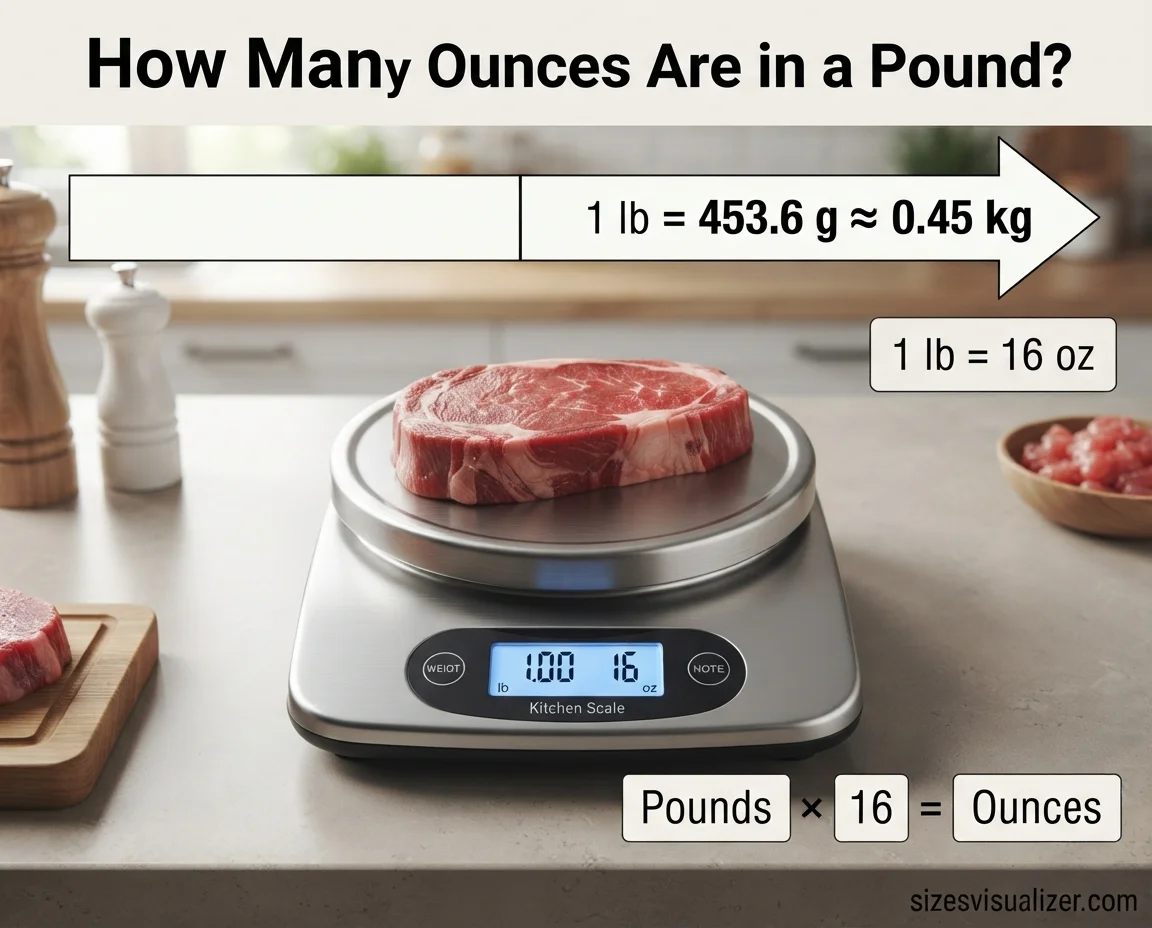
The formula is simple:
Pounds × 16 = Ounces
So 2 pounds = 32 ounces, and 5 pounds = 80 ounces. Going the other direction, divide ounces by 16 to get pounds.
A pound also converts to 453.6 grams, or about 0.45 kilograms, per the National Institute of Standards and Technology. That’s worth knowing if a recipe or food label uses metric units instead of ounces.
One lesser-known fact: not every “pound” is 16 ounces. The Troy pound, used historically for weighing precious metals like gold and silver, equals just 12 ounces. You won’t run into it in the kitchen, but it explains why jewelers and grocers use different math.
Ounces to Pounds Conversion Chart
Skip the mental math with this quick-reference chart:
| Pounds | Ounces |
|---|---|
| ¼ lb | 4 oz |
| ⅓ lb | 5.3 oz |
| ½ lb | 8 oz |
| 1 lb | 16 oz |
| 2 lb | 32 oz |
| 3 lb | 48 oz |
| 5 lb | 80 oz |
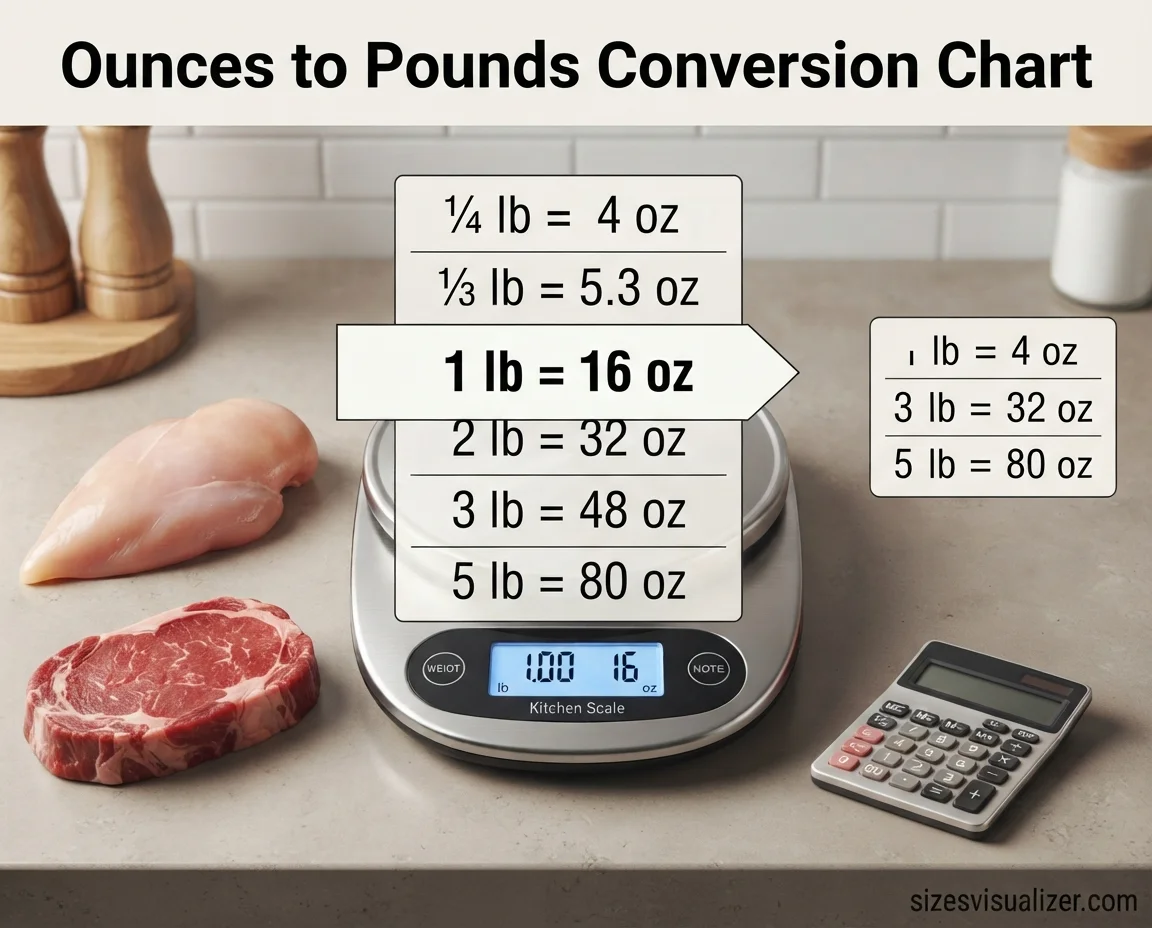
Pro Tip: For odd fractions like ⅓ or ⅔ pound, multiply the fraction directly by 16. For example, ⅔ lb × 16 = 10.6 oz. This trick works for any recipe that lists meat in fractional pounds.
Visualize any measurement in a more practical way with our Size Visualizer & Comparison Tool designed to make size comparisons simple and easy to understand.
How Many Ounces of Meat Are in a Pound?
This is where the conversion gets practical. Ground beef, ground pork, and ground turkey all follow the same rule: 16 ounces equals 1 pound, regardless of fat content or brand. Grocery stores typically sell these in 1-pound rolls, so no scale is needed if the package is unopened.
Chicken breast
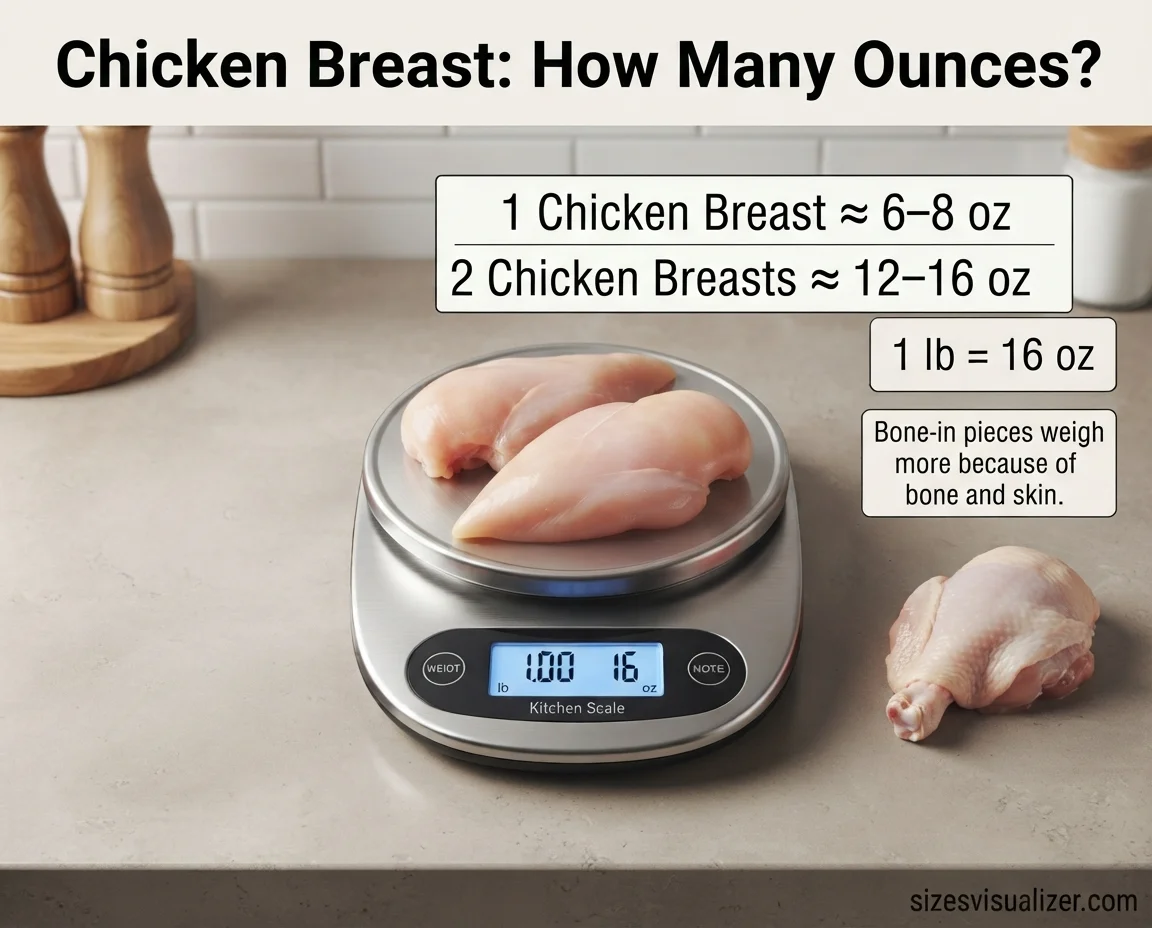
Chicken breast is trickier because it isn’t sold in fixed weights. A single boneless, skinless chicken breast usually weighs 6 to 8 ounces, meaning two average breasts come close to 1 pound. Bone-in chicken weighs noticeably more due to the bone and skin, so don’t assume the same math applies.
Beef and pork cuts
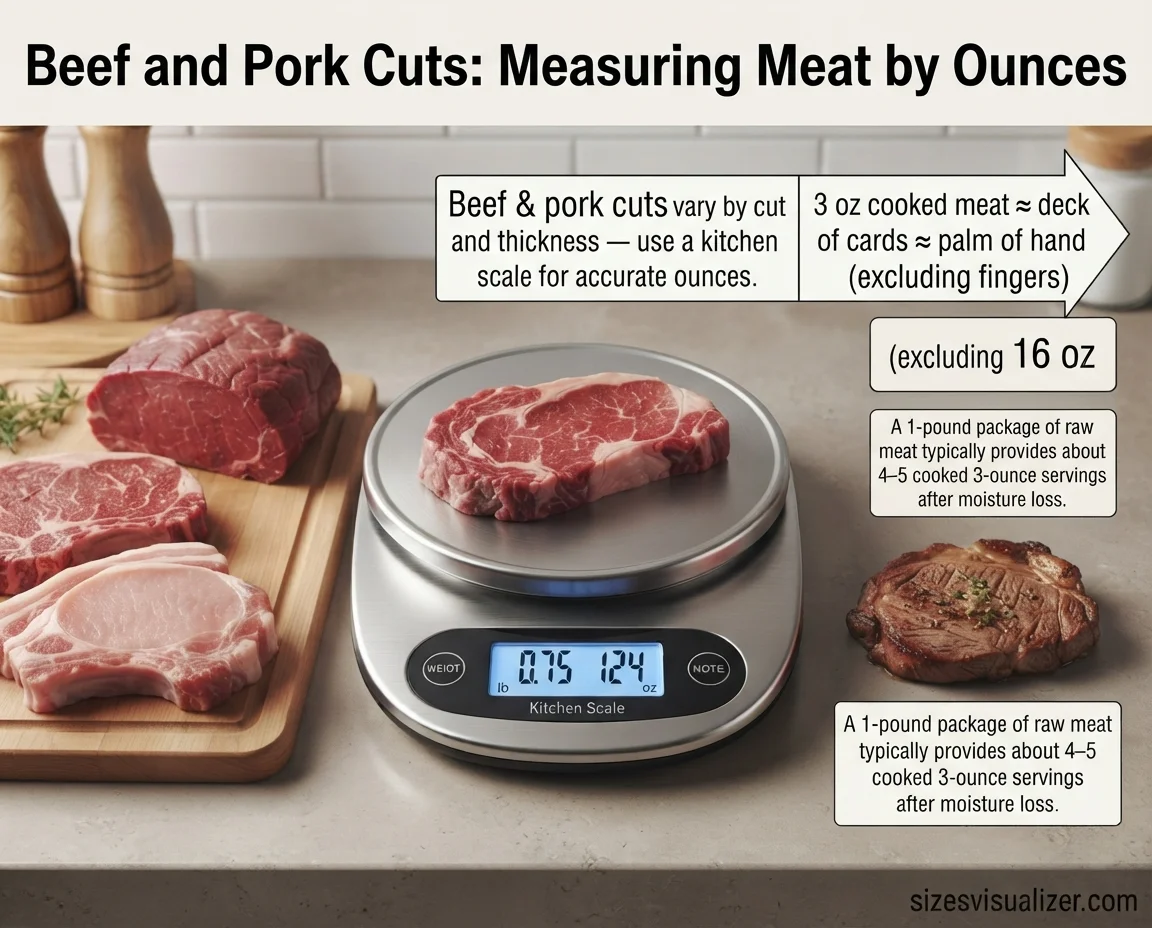
Beef and pork cuts — like steak, roasts, or chops — vary by cut and thickness, which is why a kitchen scale gives the most reliable reading for larger or irregular pieces of meat.
For portion planning, the U.S. Department of Agriculture’s MyPlate guidelines recommend a standard cooked protein serving of about 3 ounces, roughly the size of a deck of cards or the palm of your hand. That means a full 1-pound package of raw meat typically yields 4 to 5 cooked servings, once moisture loss is factored in.
Raw vs. Cooked Meat: Does the Weight Change?
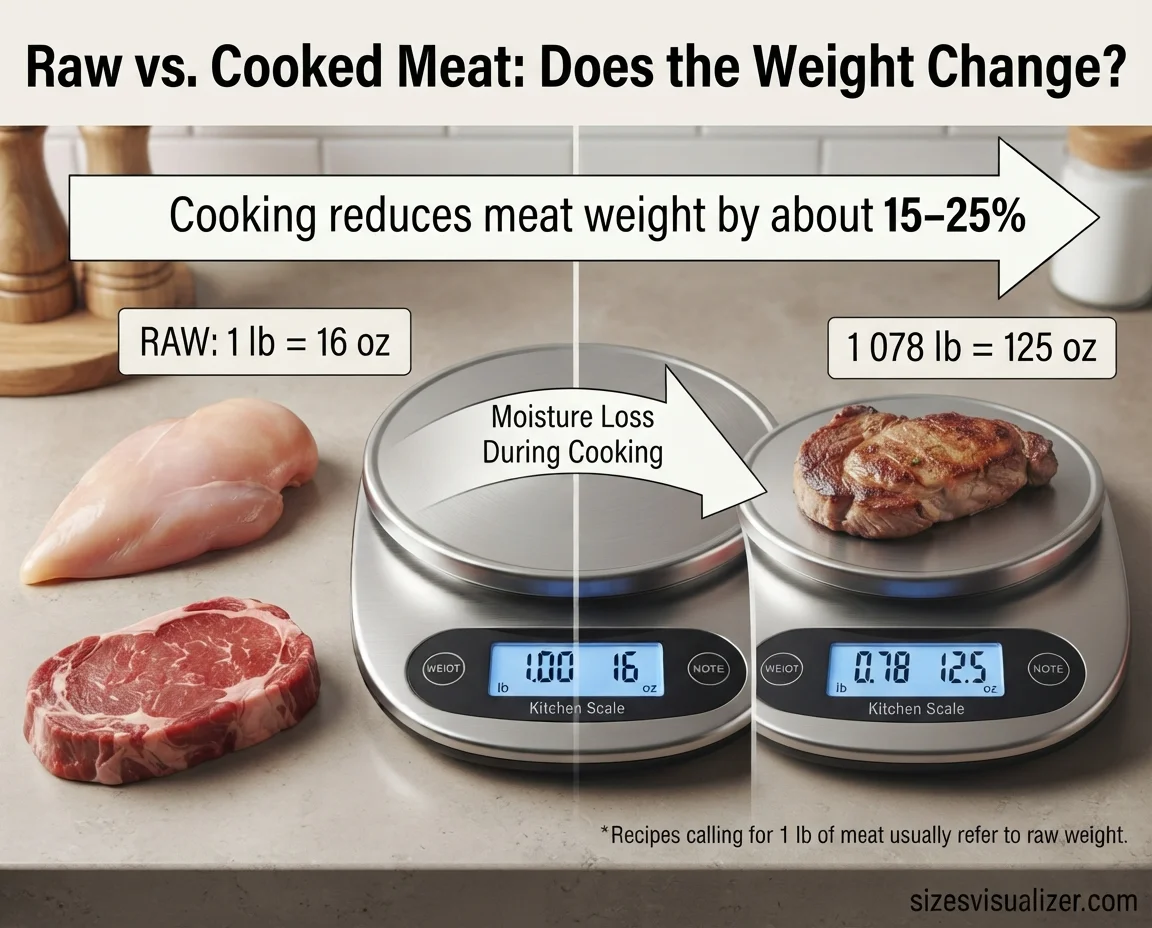
Yes — and this trips up a lot of home cooks. Meat loses moisture as it cooks, which means a 1-pound raw cut will weigh less once it comes off the heat. The shrinkage is usually modest, in the range of 15 to 25%, depending on the cooking method and fat content.
This matters most for recipes that specify weight. If a recipe calls for “1 pound of chicken,” it almost always means the raw weight, since that’s how meat is sold and measured before cooking. Leftover or meal-prep recipes are the exception — those typically reference the cooked weight, since that’s what you’re working with after the fact.
When in doubt, weigh meat before it hits the pan. That keeps your ounces-to-pounds math accurate and your portions consistent.
Must Visit: How Big Is a 16-Inch Pizza? Slices, Size, Servings & Easy Comparisons
How to Measure Meat Ounces Without a Scale
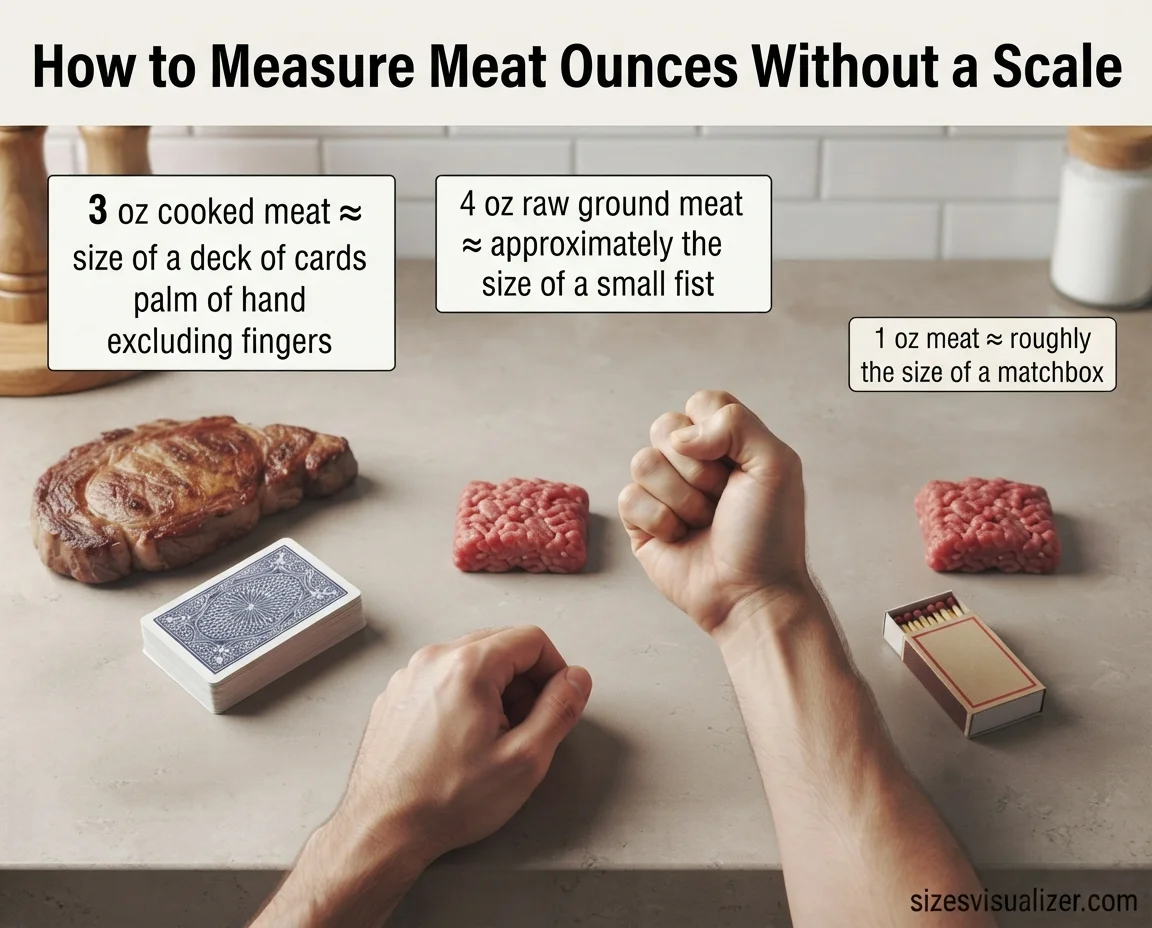
No kitchen scale on hand? A few visual comparisons make estimating ounces of meat far easier:
- 3 ounces of cooked meat ≈ a deck of cards or the palm of your hand (excluding fingers)
- 1 ounce ≈ roughly the size of a matchbox
- 4 ounces of raw ground meat ≈ about the size of a small fist
These estimates aren’t exact to the gram, but they’re close enough for everyday cooking, and they save you from digging out a scale every time a recipe calls for a specific weight.
FAQs
Is 16 ounces of meat 1 pound?
Yes. Regardless of the type of meat — beef, chicken, or pork — 16 ounces always equals exactly 1 pound.
Is 8 oz the same as 1 lb?
No. 8 ounces is half a pound. A full pound is 16 ounces.
How many ounces of meat is 1 lb?
1 pound of any meat equals 16 ounces. This applies to raw meat before it’s cooked, since cooking reduces the final weight through moisture loss.
Does 16 oz make 1 lb?
Yes. 16 ounces is the exact, standard equivalent of 1 pound in the U.S. Avoirdupois weight system.
Conclusion
Once you know that 1 pound equals 16 ounces, converting meat, produce, or pantry staples becomes second nature. Whether you’re portioning chicken breasts, weighing ground beef, or adjusting a recipe, this simple ratio keeps your cooking accurate every time.

Measurement Researcher, Size Comparison Writer & Content Specialist
Timmy Ahad is a dedicated content writer and research specialist at SizesVisualizer.com, where he focuses on creating accurate, easy-to-understand content about measurements, dimensions, size comparisons, and real-world object visualization.