Rice is a daily staple for millions of households across the USA, yet most people have no idea how much their “cup of rice” actually weighs. That single gap causes more portion mistakes than almost any other food.
This guide gives you the exact weight of 1 cup cooked rice in grams, breaks it down by type, and shows you exactly how to measure it — no guesswork, no confusion.
Table of Contents
How Many Grams Are in 1 Cup of Cooked Rice?
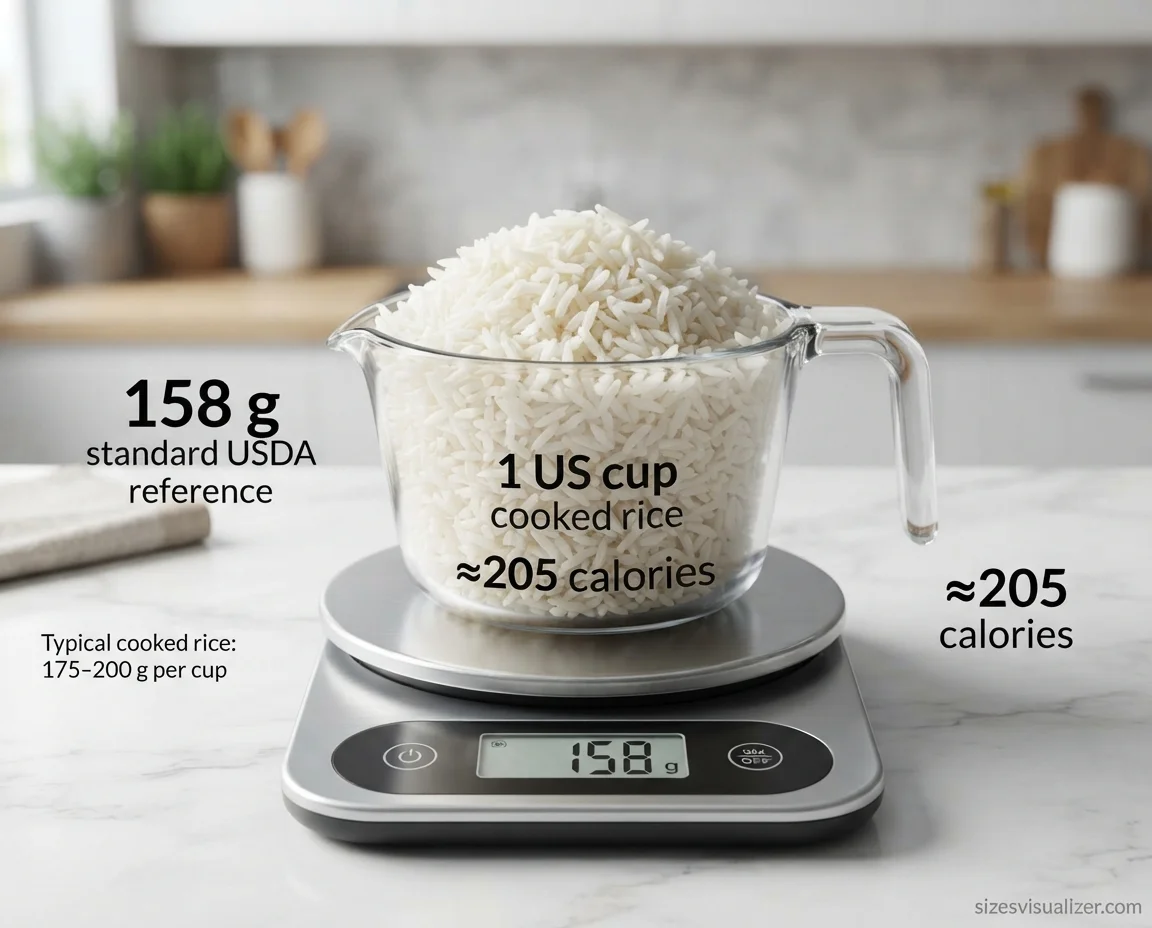
1 cup of cooked rice weighs about 175 to 200 grams, with 158 grams being the standard USDA reference weight for long-grain white rice, cooked. That serving carries roughly 205 calories, according to USDA FoodData Central.
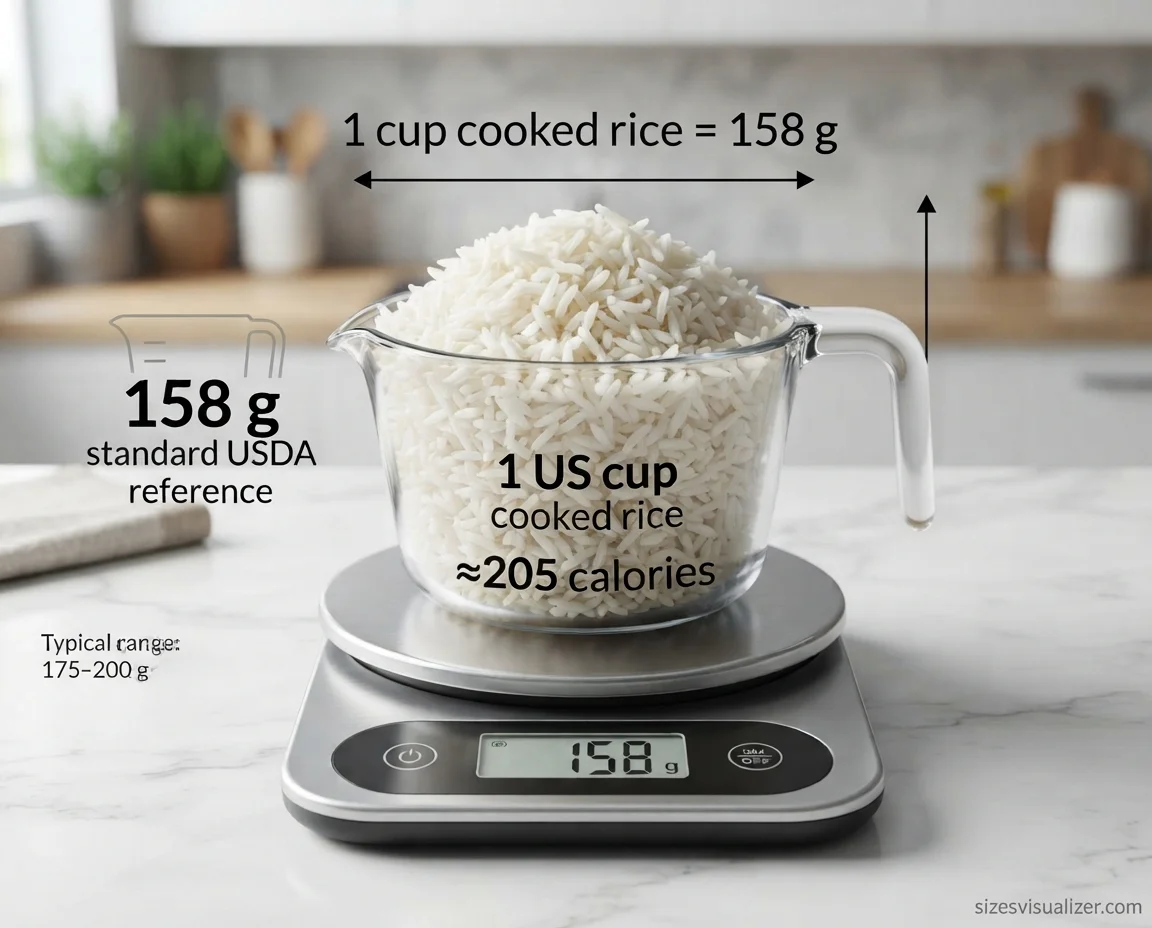
That said, “1 cup” isn’t a fixed weight. It shifts depending on a few real variables:
- Grain type — short-grain rice packs denser than long-grain
- Water absorption — the more liquid the rice soaks up, the heavier it gets
- Packing style — a spoon-packed cup weighs more than a loosely filled one
- Doneness — slightly undercooked rice weighs less than fully softened rice
So when someone asks, “is 1 cup of rice 250g,” the honest answer is no — that number is closer to what you’d get from an uncooked cup of certain grains, not a cooked one. Cooked rice is lighter per cup than most people assume, because the grains puff up and trap air pockets between them.
With the Size Visualizer & Comparison Tool, you can convert abstract measurements into clear visual comparisons, allowing you to see and compare object sizes with confidence.
Cooked Rice Weight in Grams by Type (White, Brown, Basmati, Jasmine)
Not all rice behaves the same way once it hits the pot. Grain length, starch content, and bran layer all change how much water each variety soaks up — and that directly affects the final weight.
| Rice Type | Grams per Cooked Cup |
|---|---|
| White Rice (long-grain) | 158–190g |
| Brown Rice | 195–220g |
| Basmati Rice | 175–195g |
| Jasmine Rice | 180–205g |
White rice
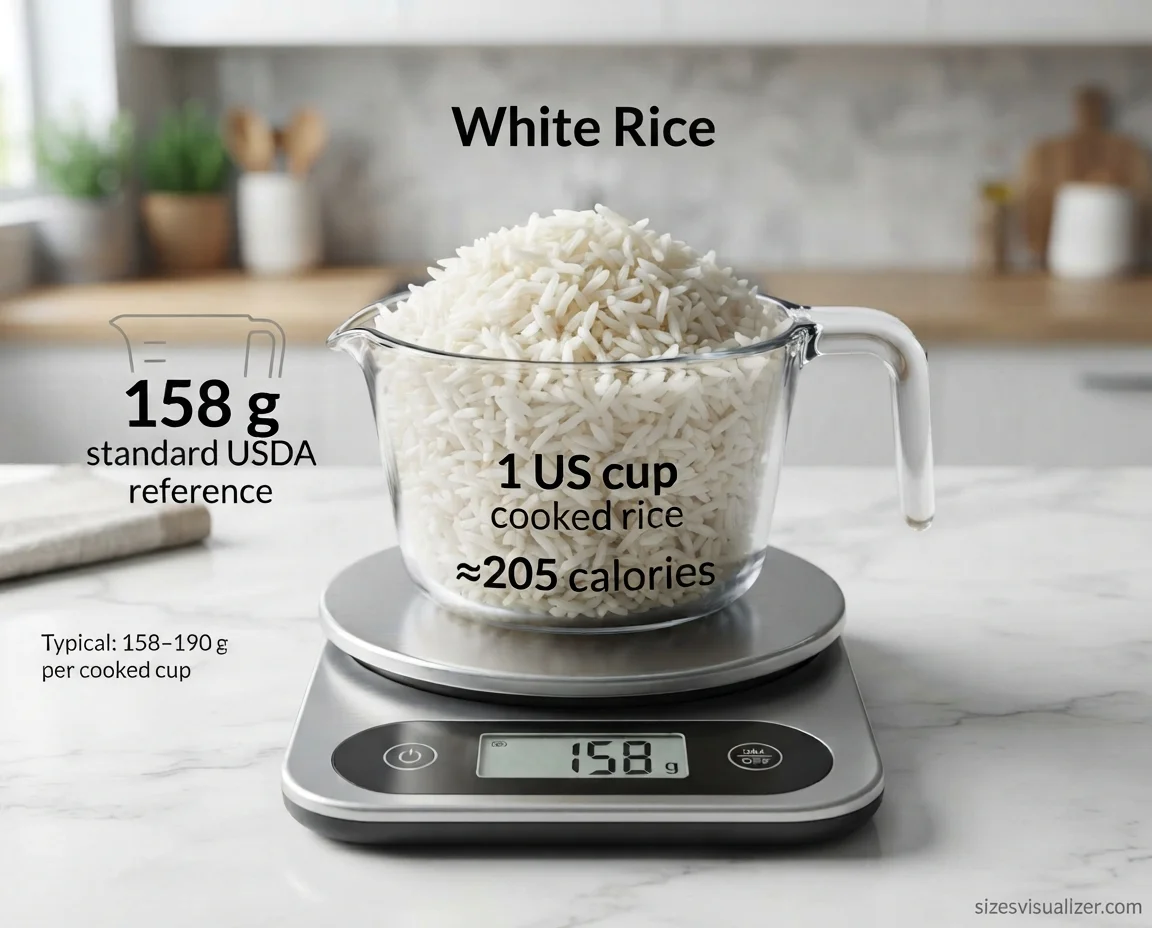
White rice is the lightest and fluffiest of the bunch. It’s been milled to remove the bran, so it cooks fast and absorbs water evenly.
Brown rice
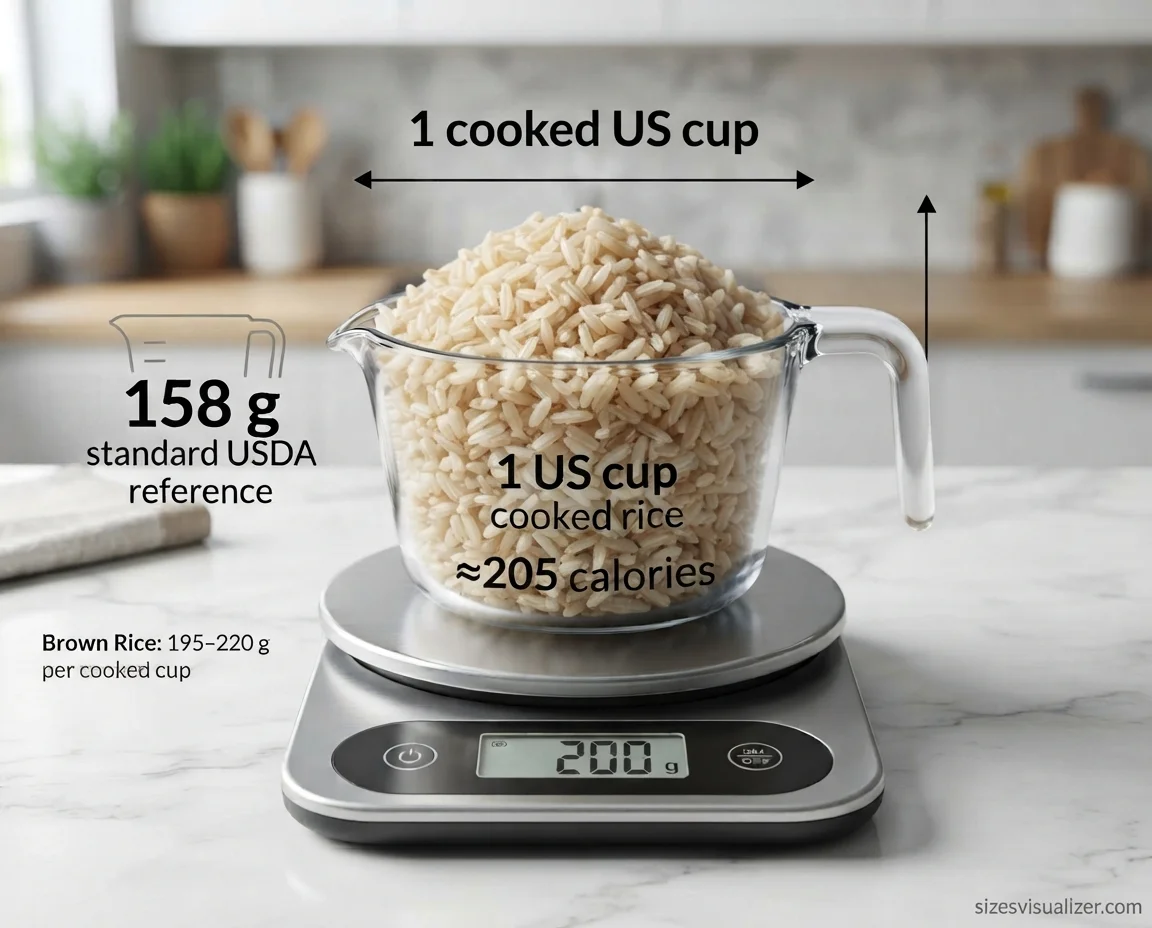
Brown rice keeps its bran and germ intact. That outer layer is fibrous and holds onto more moisture, which is why brown rice consistently weighs more per cup than white.
Basmati rice
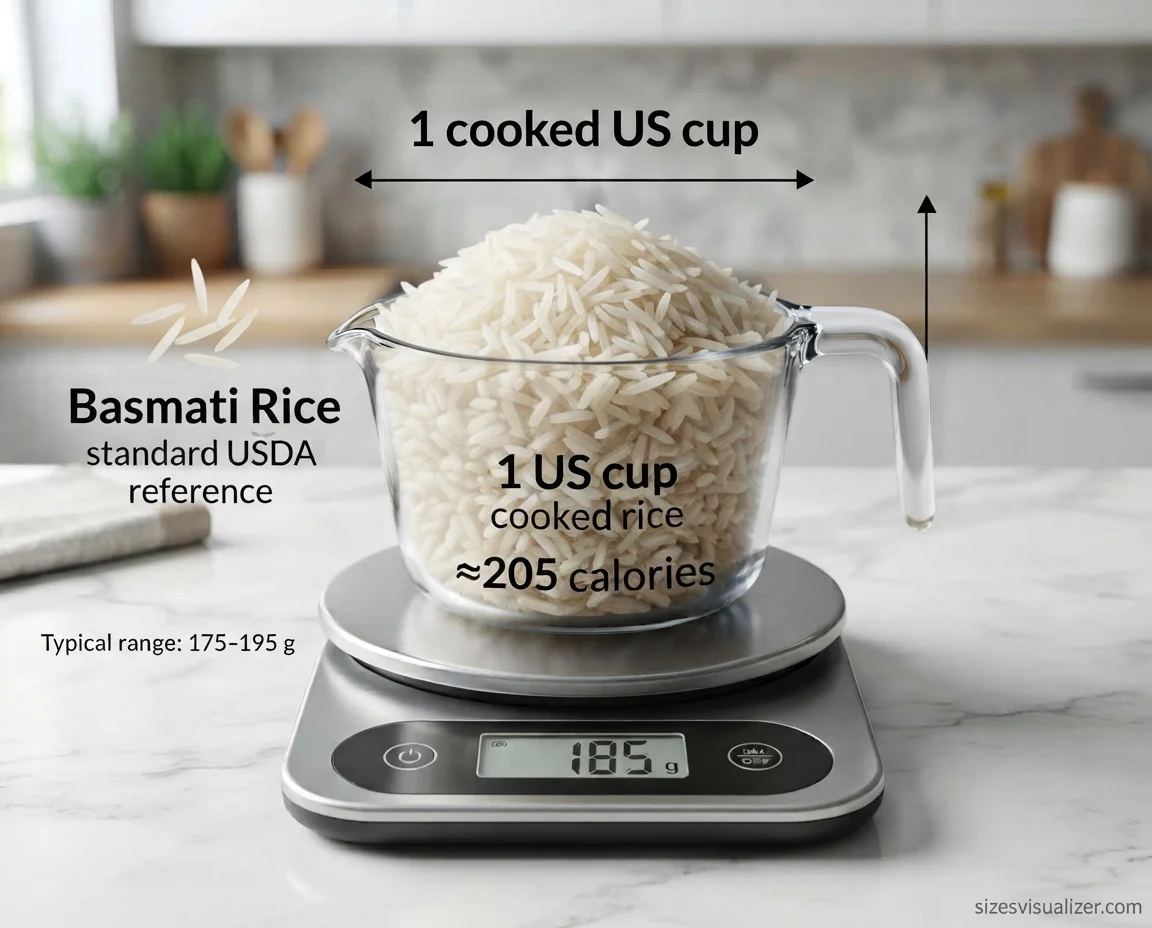
Basmati rice is a long, slender grain from the Himalayan foothills. It’s bred to stay separate rather than clump, so it holds less water and lands on the lighter end of the scale.
Jasmine rice
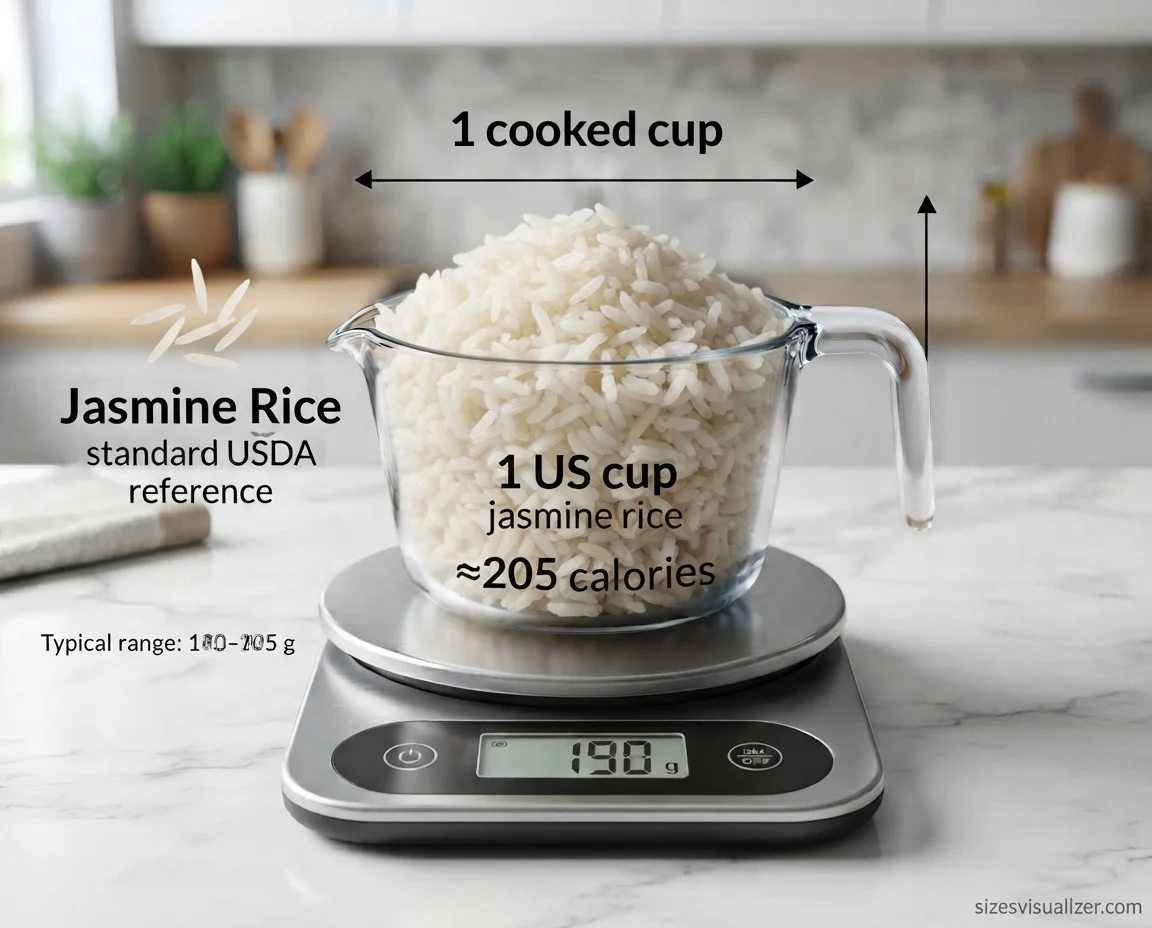
Jasmine rice, native to Thailand, has a touch more starch than basmati. That gives it a slightly stickier texture and a marginally higher gram count per cup.
Rice Cup vs. US Cup — Why Your Measurement Might Be Off
Here’s something almost nobody explains clearly: the measuring cup that comes with your rice cooker is not the same size as a standard US cup.
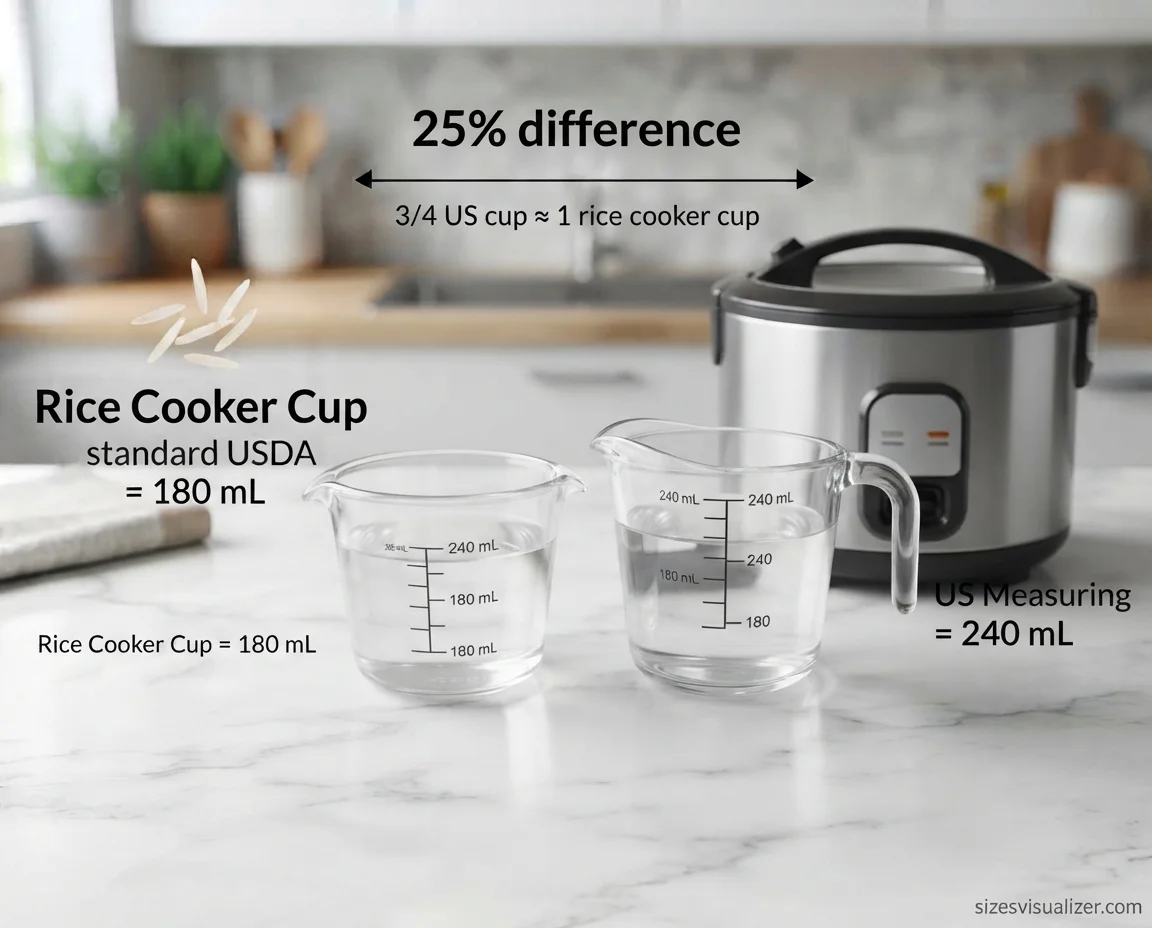
Most Asian rice cookers ship with a traditional rice cup — often called a gō (合) in Japan, a related unit in China, and Korea — and that cup holds 180 milliliters. A standard US measuring cup, by contrast, holds 240 milliliters. That’s a 25% difference, and it’s the single biggest reason home cooks end up with mushy or undercooked rice.
If your recipe was written using a rice cooker’s cup and you swap in a US measuring cup without adjusting, you’ll add roughly a quarter more rice than intended — throwing off your entire water ratio.
The fix is simple: if you’ve lost your rice cooker’s cup, use 3/4 of a US measuring cup as a substitute. It gets you close enough for consistent results.
This distinction matters even more once rice is cooked, since volume — not just weight — determines how much water your rice needs to come out fluffy instead of gummy.
Cooked Rice Calories, Grams & Visual Serving Guide
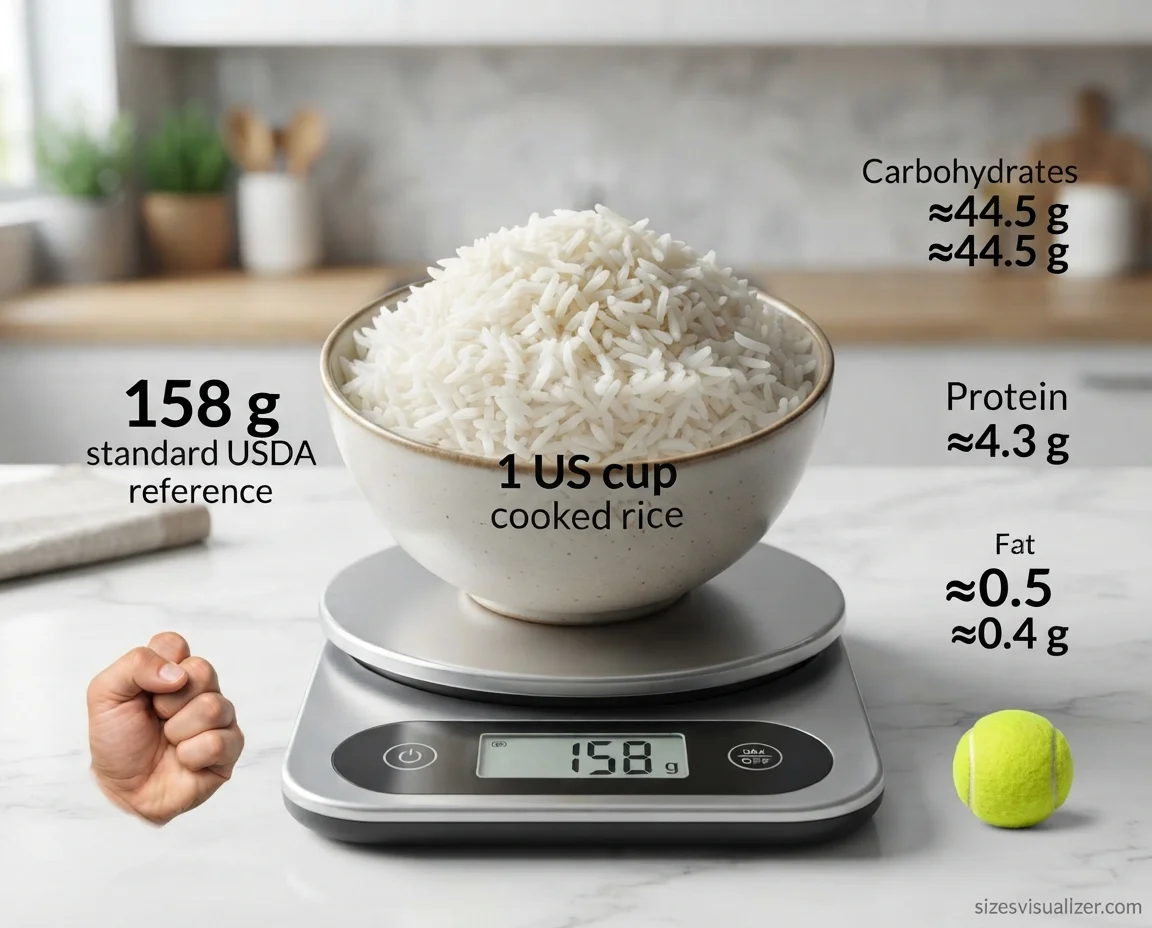
Once you know the weight, calories follow naturally. Based on USDA data, a standard 158-gram cup of cooked white rice contains:
| Nutrient | Amount |
|---|---|
| Calories | ~205 kcal |
| Carbohydrates | ~44.5g |
| Protein | ~4.3g |
| Fat | ~0.4g |
Brown rice runs slightly lower in calories per 100 grams (about 123 kcal versus white rice’s 130 kcal), but it delivers noticeably more fiber — a trade-off worth knowing if you’re watching digestion or blood sugar response.
Must Visit: How Many Ounces in a Pound? Easy Meat, Chicken & Beef Guide
How to Measure Cooked Rice Accurately
If precision matters to you — whether for meal prep, macros, or just consistent cooking — a kitchen scale beats a measuring cup every time. Cups are vulnerable to packing inconsistency; grams aren’t.
A few habits that keep your measurements honest:
- Don’t compress the rice into the cup — spoon it in loosely
- Level off the top rather than mounding it
- Let rice rest for a minute or two after cooking, since fresh-off-the-heat rice is fluffier and can under-measure
Quick conversion reference for cooked rice:
| Cups | Approx. Grams |
|---|---|
| 1/4 cup | ~45g |
| 1/2 cup | ~90g |
| 3/4 cup | ~135g |
| 1 cup | ~180g |
| 2 cups | ~360g |
These figures average across common rice types. For diet tracking, always weigh your specific rice once to calibrate — it removes the guesswork for good.
FAQs
Is 1 cup of rice enough for 2 people?
It can be, especially as a side dish alongside protein and vegetables. As a main component of the meal, most people prefer closer to 1.5–2 cups split between two servings.
Is 1 cup of rice 250g?
No. A cooked cup of rice typically weighs between 158g and 220g, depending on the type. 250g would only apply to a heavily packed or unusually dense measurement.
Is 1 cup of cooked rice a lot?
No — it’s a standard, moderate serving size that fits comfortably into a balanced plate alongside other food groups.
How much is 1 cup of cooked rice visually?
Roughly the size of a closed fist or a tennis ball. It’s a helpful gut-check when you don’t have measuring tools nearby.
How much rice is too much per day?
There’s no strict limit, but 1–2 cups of cooked rice daily is a common, reasonable range within an otherwise varied diet.
What do 2 cups of rice look like?
About two cupped hands held together — a generous, noticeably larger portion than a single cup.
Conclusion
Knowing the exact grams in 1 cup of cooked rice takes the guesswork out of cooking, portioning, and tracking. Whether you’re using a scale, a measuring cup, or just your eyes, the numbers above give you a reliable baseline you can trust every time you cook.

Measurement Researcher, Size Comparison Writer & Content Specialist
Timmy Ahad is a dedicated content writer and research specialist at SizesVisualizer.com, where he focuses on creating accurate, easy-to-understand content about measurements, dimensions, size comparisons, and real-world object visualization.