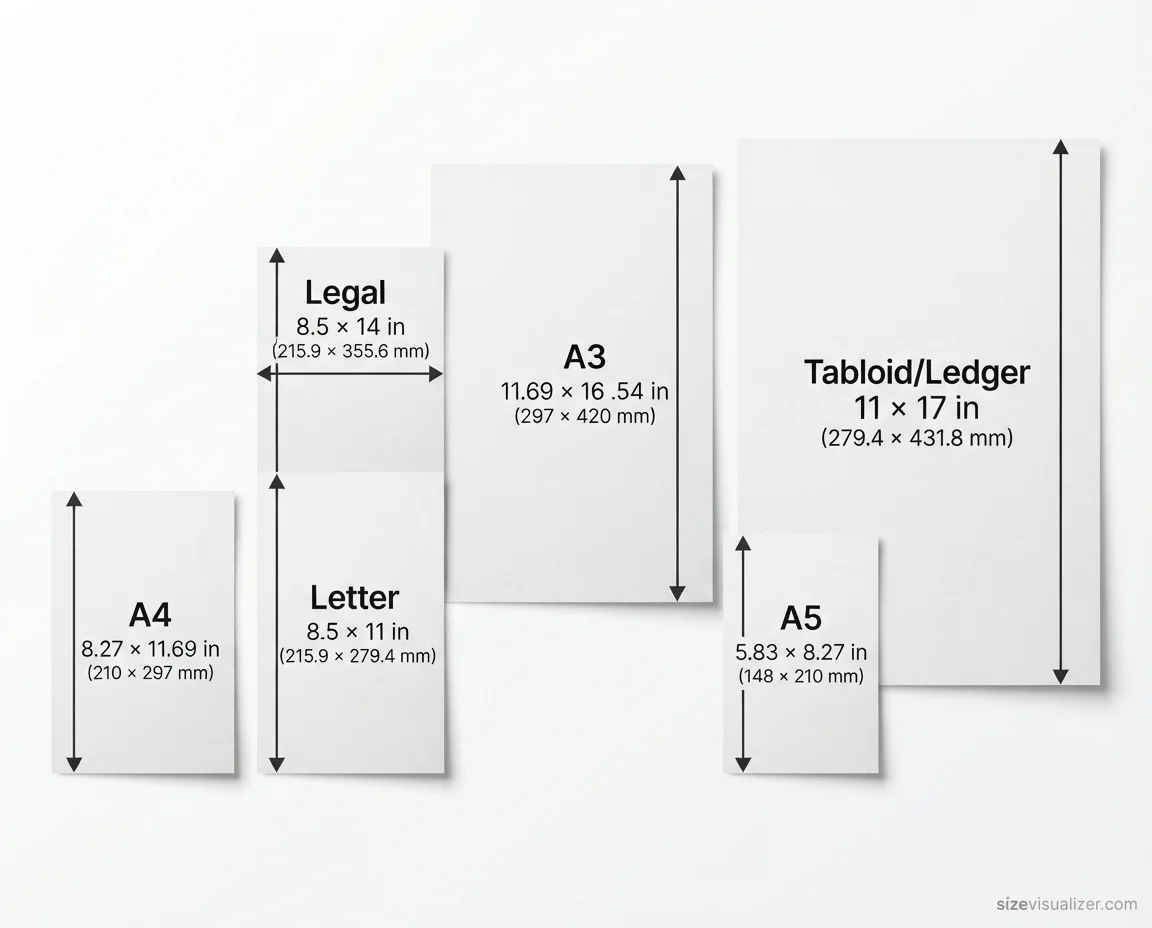
Ever printed a document and watched the layout shift or the margins cut off? That mismatch usually comes down to one thing: paper size. The world actually runs on two different systems, and knowing the difference saves you time, paper, and printer headaches.
Here is complete paper sizes explained, from A4 to Legal, with exact dimensions in inches and millimeters. You’ll also learn why the United States never adopted the international standard everyone else uses.
Table of Contents
What Are Standard Paper Sizes?
A paper size is simply a fixed set of dimensions that printers, publishers, and offices agree to use so paper works predictably across machines, printers, and countries. Without a standard, every printer, envelope, and binder would need custom sizing.
Two major systems dominate the world today.
ISO 216: The International Paper Size Standard
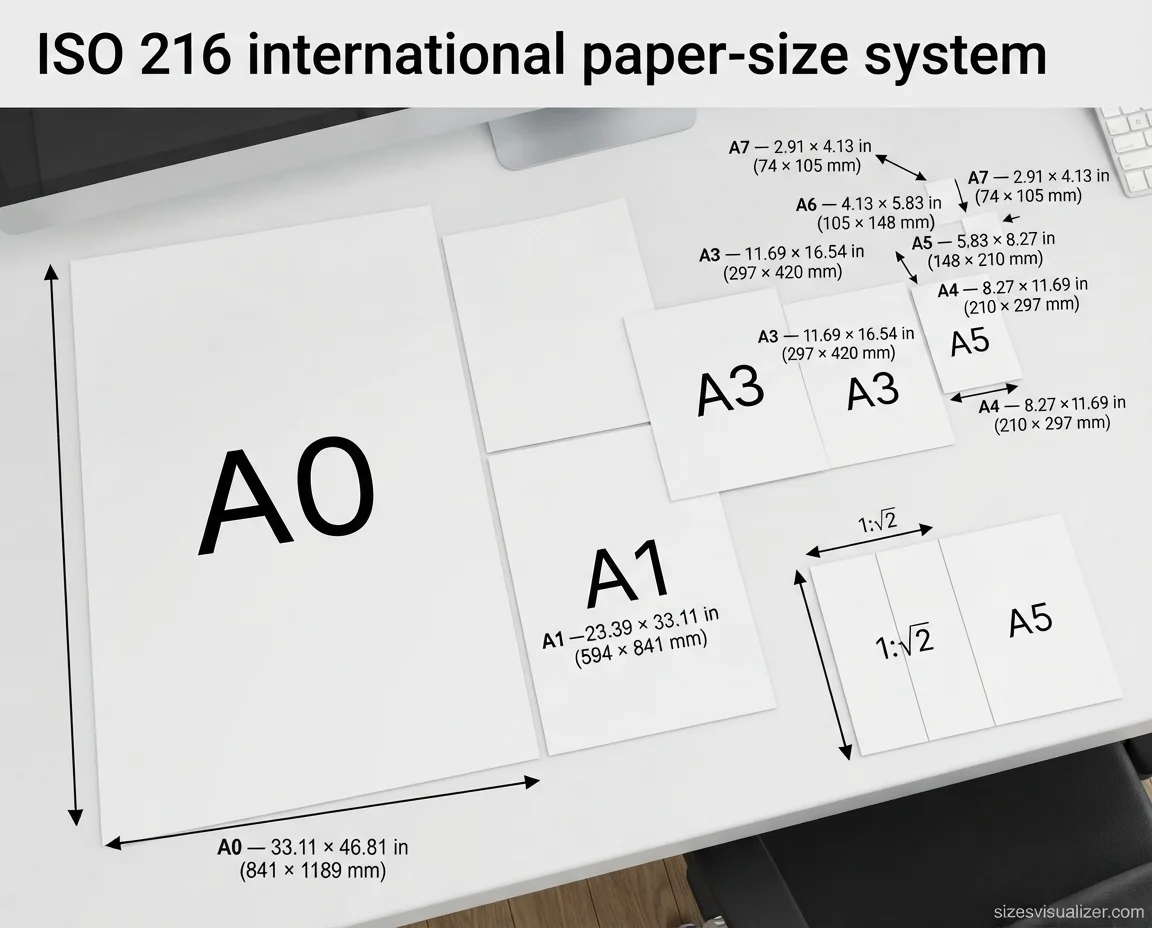
Most of the world uses the ISO 216 standard, published by the International Organization for Standardization. It defines the A series and B series of paper sizes. Germany introduced this system in the 1920s, and it spread across Europe before becoming the global norm by the 1970s, according to the International Organization for Standardization.
The clever part is the math. Every A-series sheet has an aspect ratio of 1:√2 (roughly 1:1.414). Cut any A-size sheet in half, and you get two sheets with the exact same proportions, just smaller. That’s why A4 folded in half becomes A5, and A3 folded in half becomes A4.
The ANSI Standard: Letter, Legal & U.S. Paper Sizes
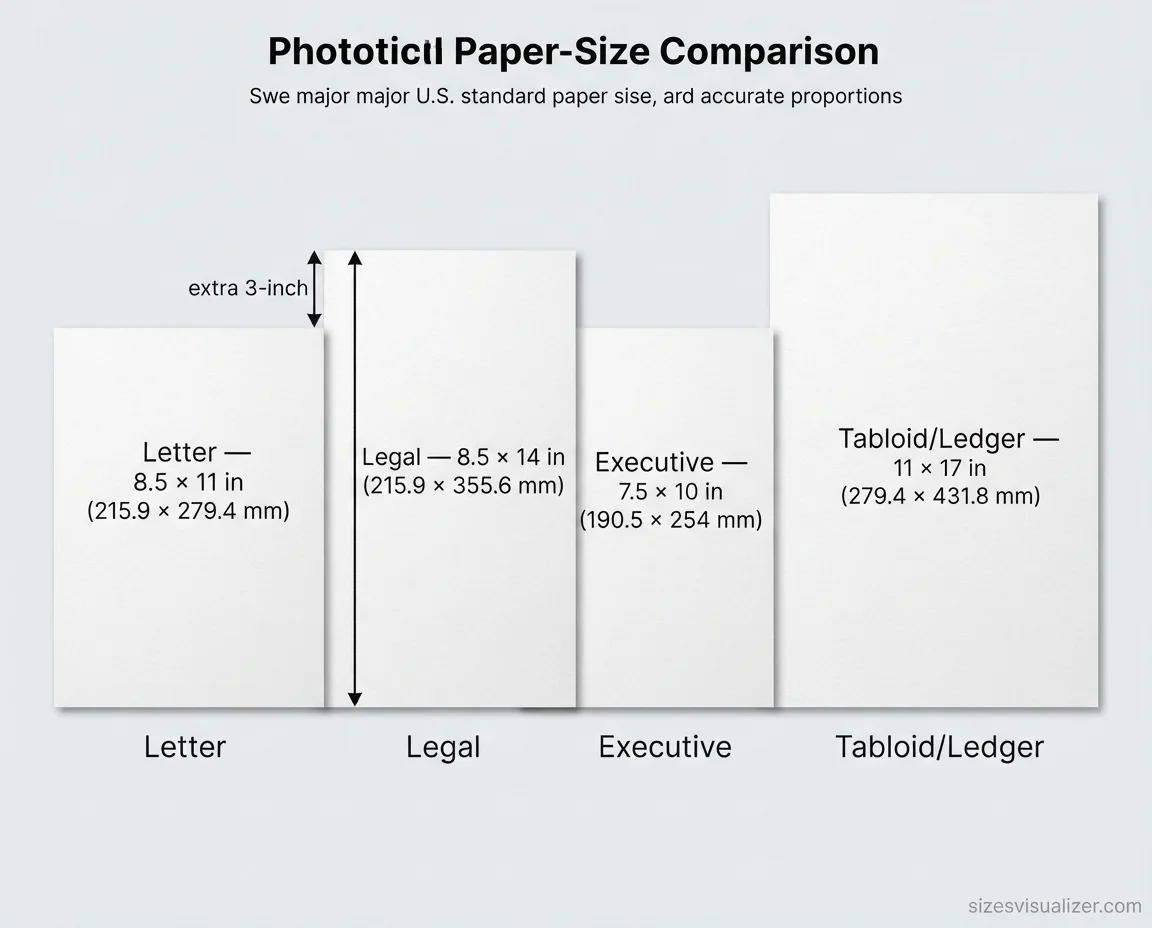
The United States, Canada, and parts of Mexico use a different system based on ANSI (American National Standards Institute) sizing. This includes familiar names like Letter, Legal, Executive, and Tabloid. Unlike the A series, these sizes don’t follow a consistent mathematical ratio between them, which is a key reason the two systems aren’t interchangeable.
Our Length Measurement Tool makes it simple to visualize, calculate, and understand the length of any object or distance.
Complete Paper Size Chart: A4, Letter, Legal & More
Here’s the full breakdown of the most-used paper dimensions, listed in both inches and millimeters for quick reference.
ISO A-Series Paper Size Chart
| Size | Inches | Millimeters |
|---|---|---|
| A0 | 33.11 x 46.81 in | 841 x 1189 mm |
| A1 | 23.39 x 33.11 in | 594 x 841 mm |
| A2 | 16.54 x 23.39 in | 420 x 594 mm |
| A3 | 11.69 x 16.54 in | 297 x 420 mm |
| A4 | 8.27 x 11.69 in | 210 x 297 mm |
| A5 | 5.83 x 8.27 in | 148 x 210 mm |
| A6 | 4.13 x 5.83 in | 105 x 148 mm |
| A7 | 2.91 x 4.13 in | 74 x 105 mm |
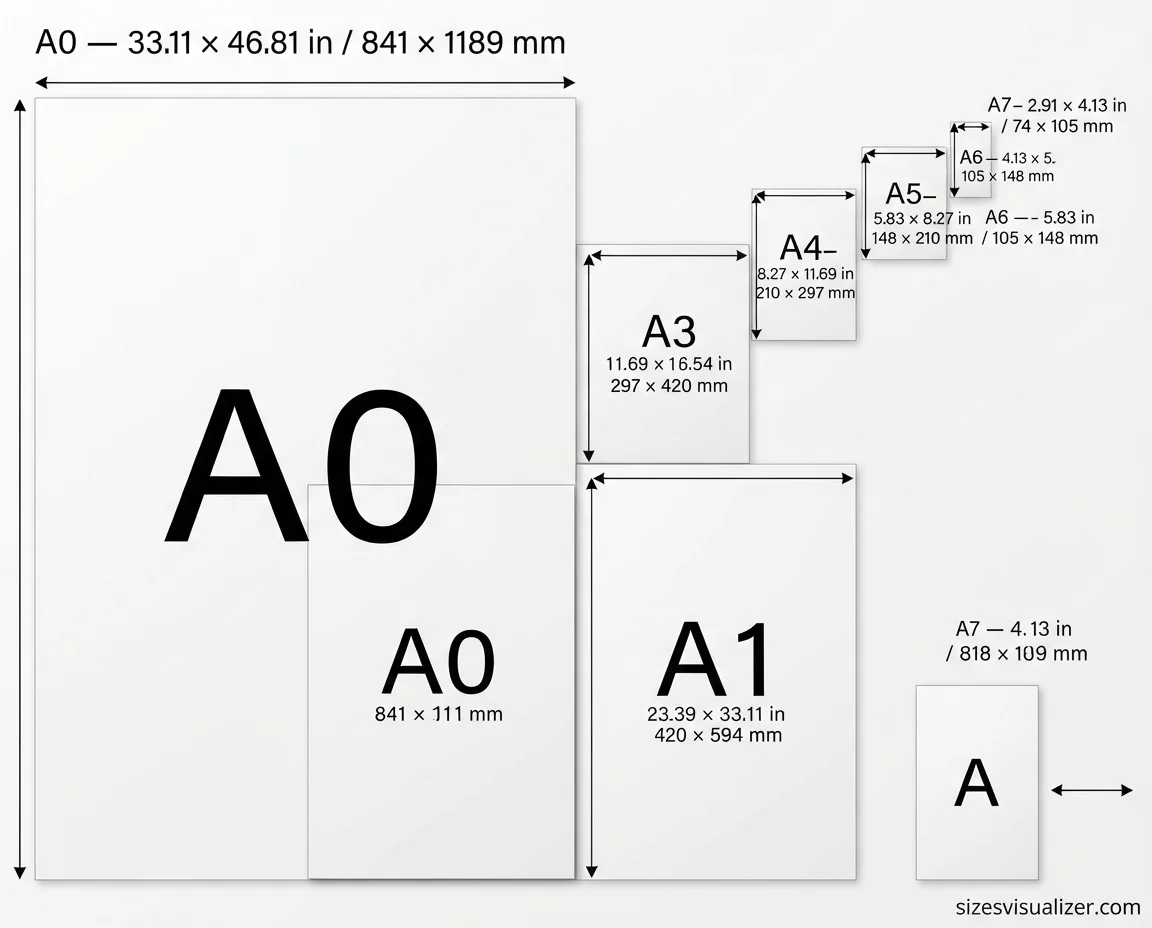
A0 is the starting point of the entire series. It measures exactly one square meter in area, and every smaller size is derived by halving it repeatedly.
U.S. Standard Paper Sizes Chart
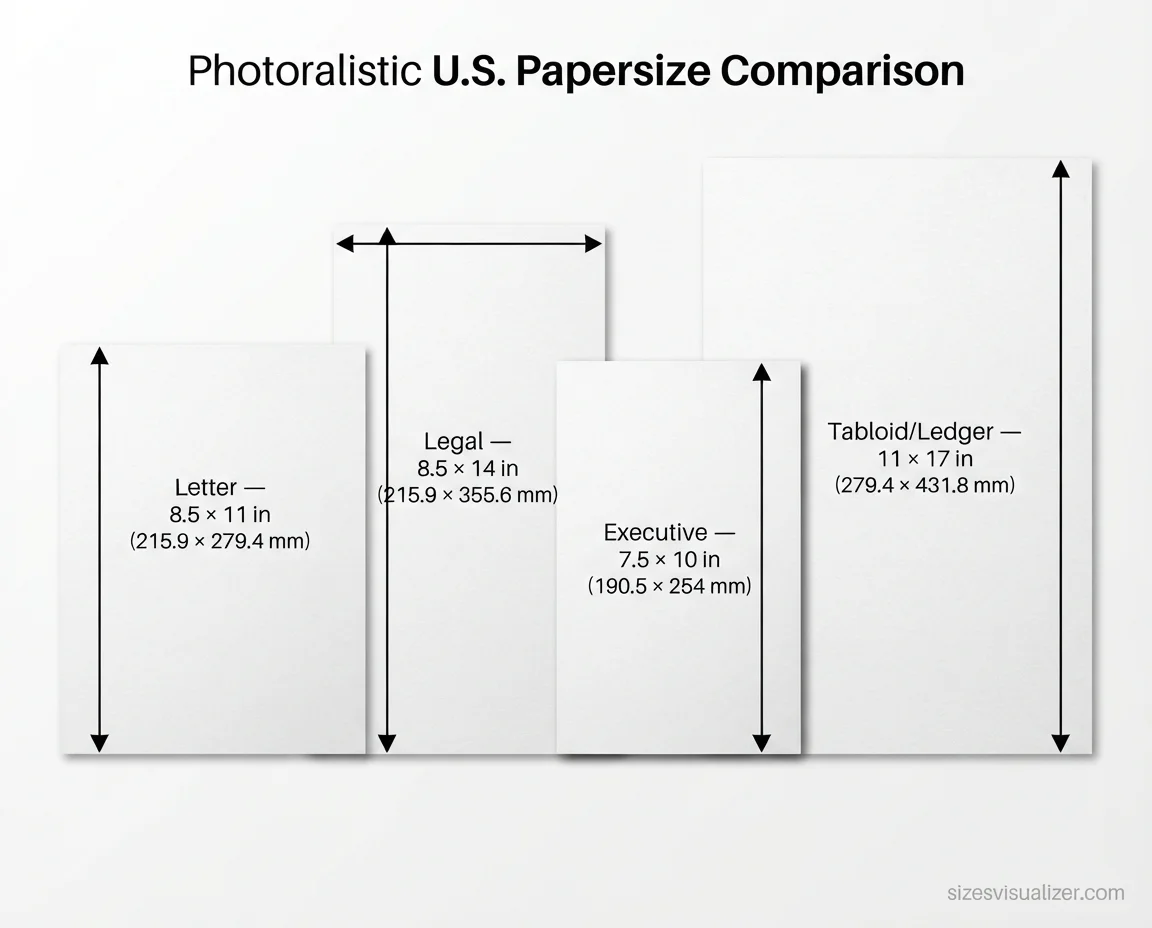
| Size | Inches | Millimeters |
|---|---|---|
| Letter | 8.5 x 11 in | 215.9 x 279.4 mm |
| Legal | 8.5 x 14 in | 215.9 x 355.6 mm |
| Executive | 7.5 x 10 in | 190.5 x 254 mm |
| Tabloid/Ledger | 11 x 17 in | 279.4 x 431.8 mm |
Letter size is the default paper size for nearly every printer, copier, and word processor in the United States. Legal size adds three extra inches of length, which is why it’s the go-to choice for contracts, court filings, and multi-page agreements that need extra room.
Architectural & Engineering Paper Sizes
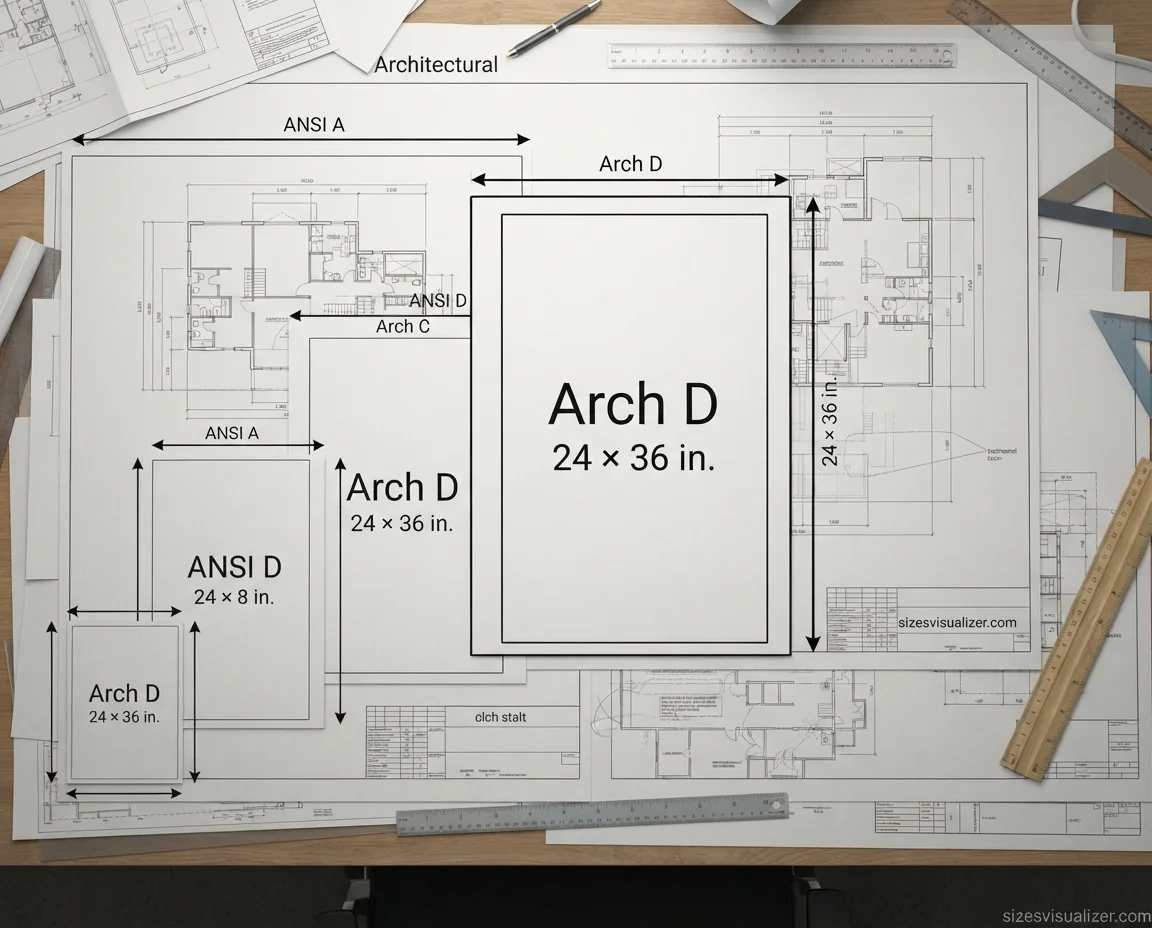
Beyond office paper, technical fields use their own sizing systems. ANSI sizes (labeled A through E) and Architectural sizes (Arch A through Arch E) are built for blueprints, engineering drawings, and large-format printing. Arch D, for example, measures 24 x 36 inches, a common size for building plans, per data referenced by the Ohio Department of Transportation.
A4 vs. Letter Size: What’s the Real Difference?
This is the comparison most people search for, so let’s settle it with hard numbers.
| A4 | Letter | |
|---|---|---|
| Width | 8.27 in | 8.5 in |
| Height | 11.69 in | 11 in |
A4 is slightly narrower and longer than Letter. Letter is slightly wider and shorter. The difference sounds tiny, but it matters a lot for anyone sharing documents internationally.
How the Difference Affects Printing and Documents
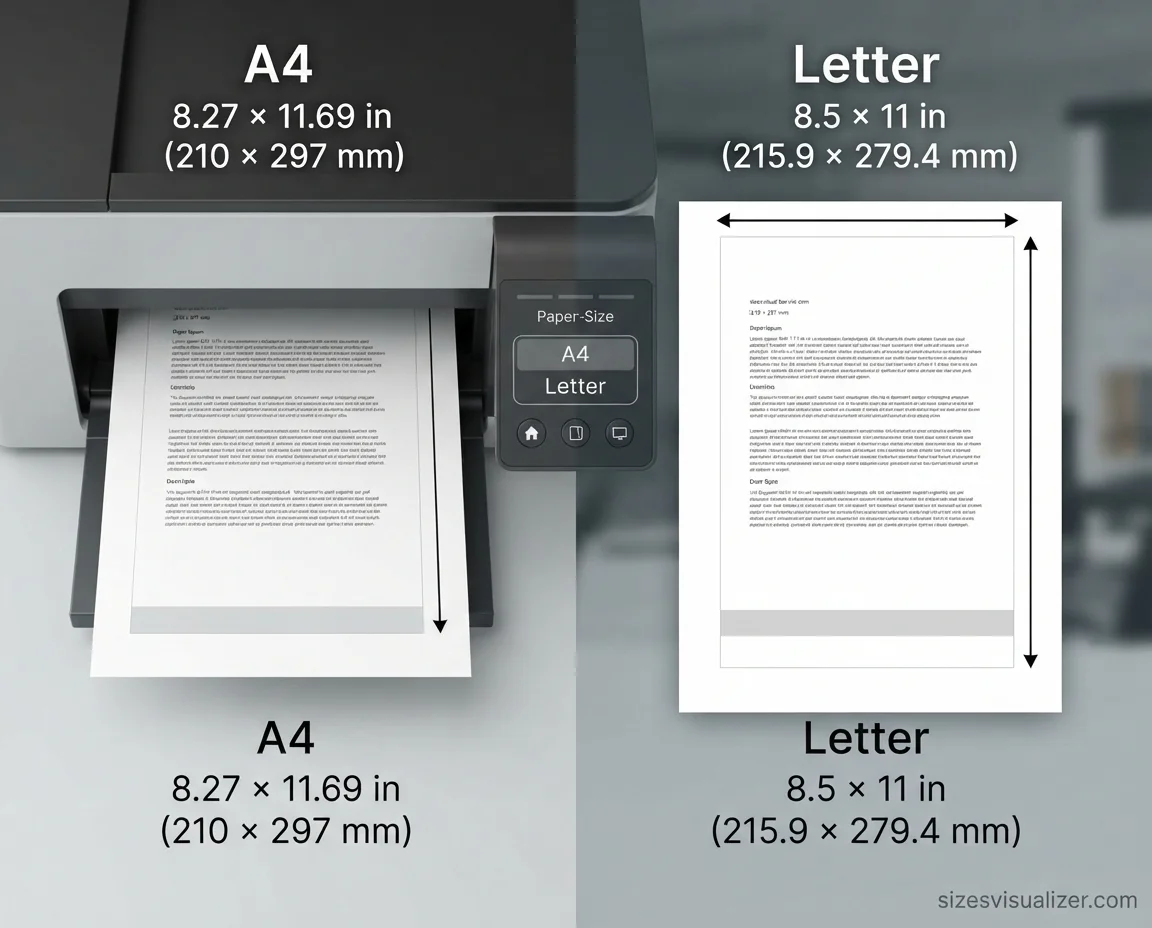
When you open an A4 document on a printer loaded with Letter paper, the content can get cut off at the bottom or shrink to fit, distorting margins. This is a common frustration for businesses that work with international clients, since a PDF formatted for A4 won’t align perfectly on Letter paper without adjustment.
Software like Microsoft Word and Adobe Acrobat usually let you rescale a document automatically when printing, but the safest fix is to format your document in the size your reader will actually print on.
Why Doesn’t the U.S. Use A4 Paper?
This is where most guides stop short, but it’s genuinely useful to understand.
The History Behind Letter Size in America
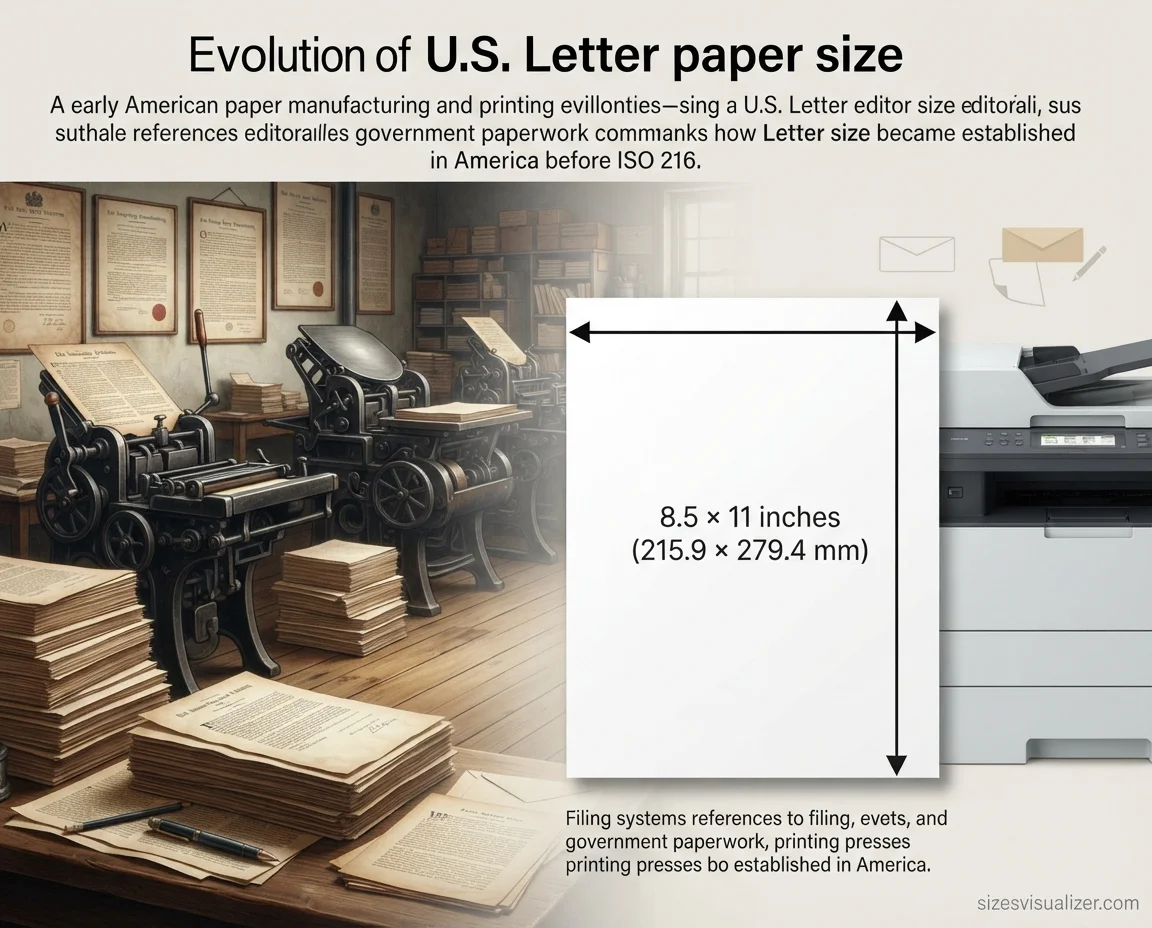
Letter size predates the ISO standard by decades. Its 8.5 x 11 inch dimensions trace back to early American paper manufacturing traditions, long before ISO 216 existed. By the time the international standard spread through Europe and Asia in the 20th century, Letter size was already deeply embedded in U.S. printing presses, filing systems, and government paperwork. Switching an entire country’s infrastructure, from binders to envelopes to legal codes, simply never happened.
Switching Between A4 and Letter in Your Printer Settings
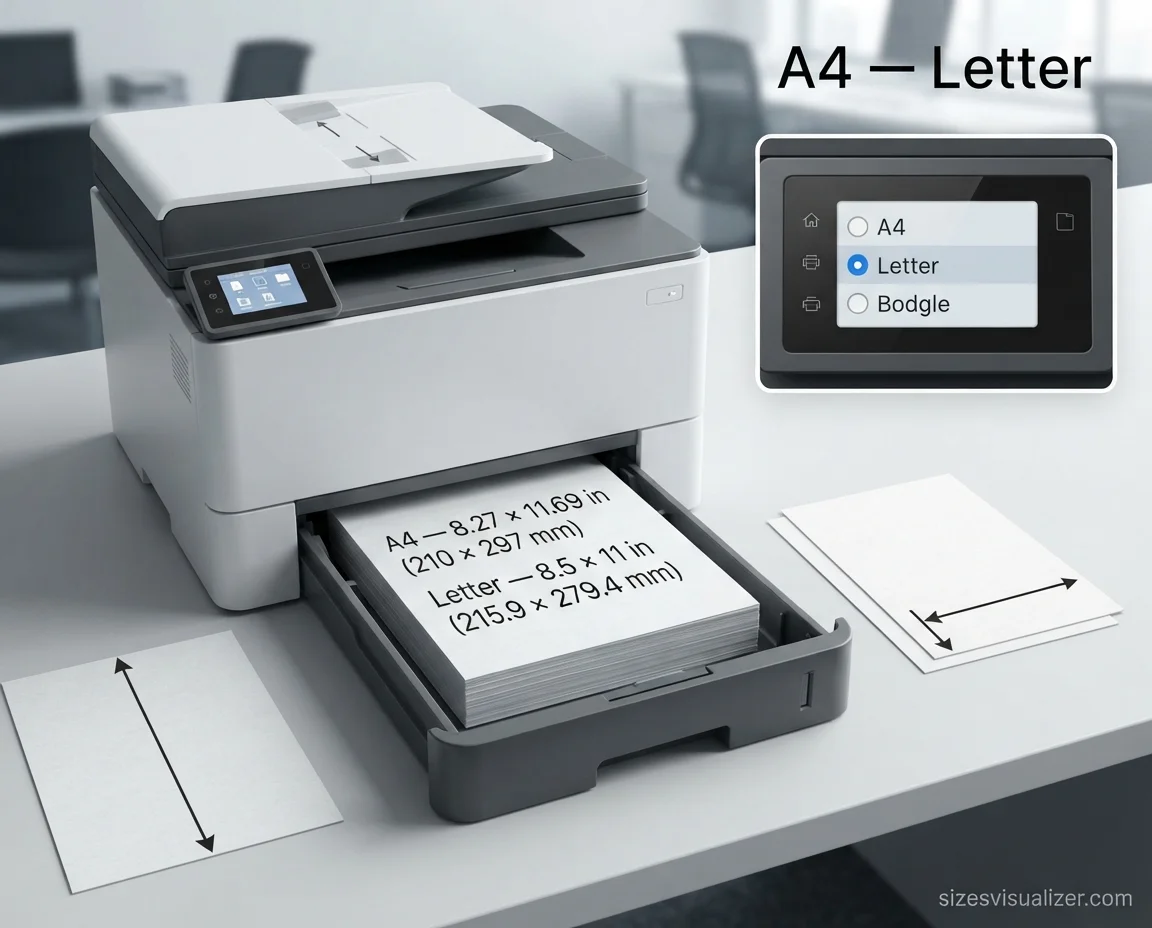
If you regularly work with international documents, you can usually change your default paper size in your printer driver or in your document software’s page setup menu. Most modern printers support both sizes; you just need to select the correct one before printing, or your output may auto-scale unexpectedly.
Must Visit: How Big Is a 75-Inch TV? Dimensions, Width, Height & Room Size Guide
How to Choose the Right Paper Size
Not every document needs the same paper dimensions. Here’s a practical breakdown.
Best Sizes for Business and Legal Documents
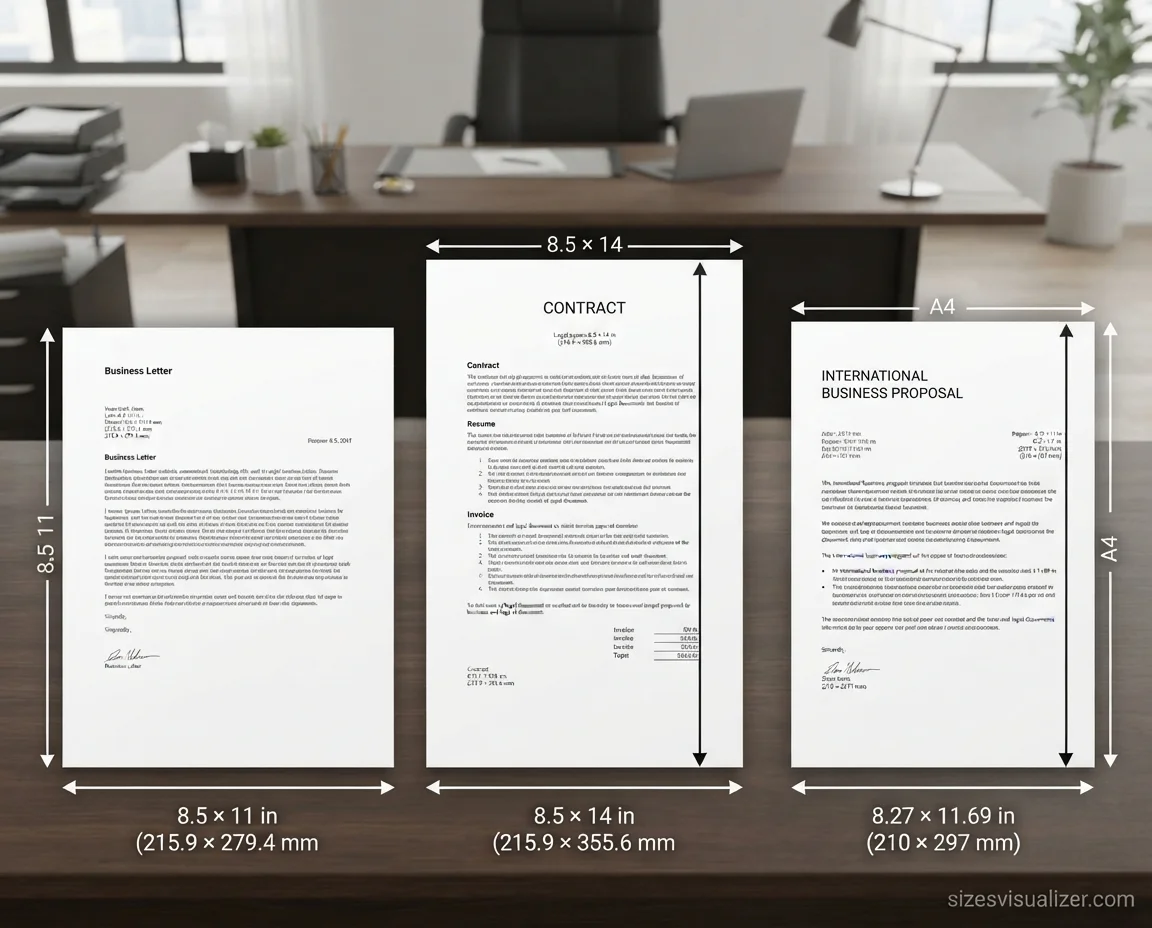
Letter size works for the vast majority of everyday business printing: resumes, letters, invoices, and reports. Legal size is better reserved for contracts, wills, and court documents that traditionally require the extra length. If you’re corresponding internationally, A4 is the safer default since it’s the global standard outside North America.
Best Sizes for Printing, Forms, and Everyday Use
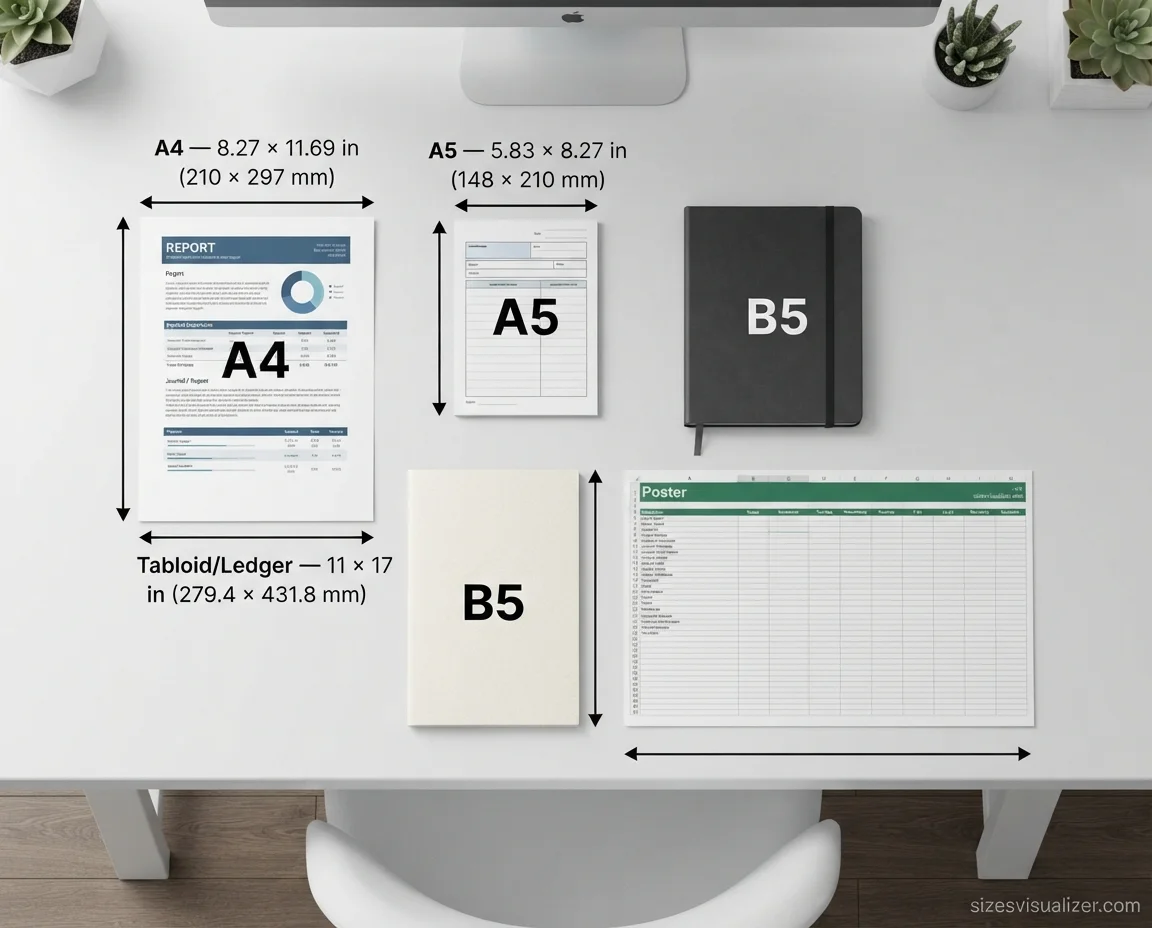
Smaller formats have their place too. A5 and B5 sizes are popular for notebooks, journals, and compact forms since they’re easier to carry and file. Tabloid/Ledger (11 x 17 in) is the standard for spreadsheets, posters, and newspaper-style layouts that need extra width.
FAQ’s
Is Letter size the same as A4?
No. Letter size is 8.5 x 11 inches, while A4 is 8.27 x 11.69 inches. A4 is narrower and longer than Letter.
What are the sizes of A1, A2, A3, and A4 paper?
A1 is 23.39 x 33.11 inches, A2 is 16.54 x 23.39 inches, A3 is 11.69 x 16.54 inches, and A4 is 8.27 x 11.69 inches. Each size is exactly half the area of the one before it.
Is Letter size paper A5?
No. Letter (8.5 x 11 in) is much larger than A5 (5.83 x 8.27 in). A5 is closer in size to a small notebook.
Is 8.5 x 11 paper A4 or Letter?
It’s Letter size. This is the standard printer paper size used across the United States, Canada, and parts of Mexico.
Why don’t Americans use A4 paper?
Because Letter size was already the established standard in U.S. printing and manufacturing before the ISO 216 system existed. The infrastructure built around Letter size made switching impractical.
What is the size of A0 paper?
A0 measures 33.11 x 46.81 inches, or 841 x 1189 mm. It’s the largest sheet in the A series and has an area of exactly one square meter.
Conclusion
Understanding paper sizes isn’t just trivia, it directly affects how your documents print, share, and look across borders. Whether you’re formatting a resume on Letter size or sending a proposal overseas on A4, knowing the exact dimensions keeps your layout intact and your printing predictable.

Measurement Researcher, Size Comparison Writer & Content Specialist
Timmy Ahad is a dedicated content writer and research specialist at SizesVisualizer.com, where he focuses on creating accurate, easy-to-understand content about measurements, dimensions, size comparisons, and real-world object visualization.