Shopping for a new TV and stuck on the size? A 43-inch TV is one of the most common screen sizes sold in the U.S. today, and for good reason — it hits a sweet spot between price, picture quality, and room fit.
This guide breaks down the exact 43-inch TV dimensions, the best viewing distance, the room size it fits, and how it stacks up against other popular sizes. No fluff, just the numbers and facts you need to buy with confidence.
What Is a 43-Inch TV? Understanding the Size & Dimensions
The “43-inch” label on a TV box always refers to the diagonal screen measurement — the distance from one corner of the visible screen to the opposite corner. It has nothing to do with the width, height, or the plastic bezel around the edge.
How TV Size Is Actually Measured
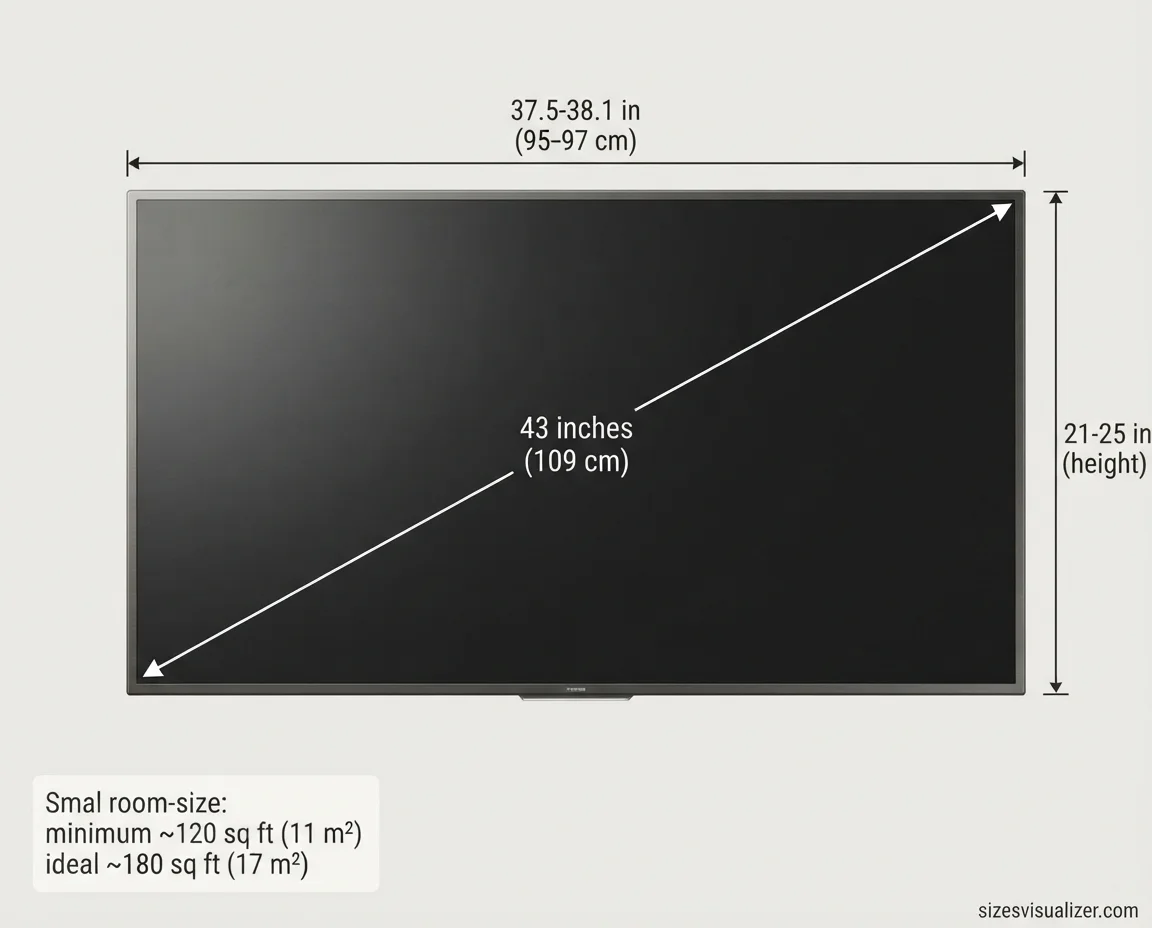
Manufacturers measure diagonally because it gives one consistent number regardless of aspect ratio. Almost all modern TVs use a 16:9 widescreen ratio, so once you know the diagonal, the width and height can be calculated using basic geometry (the Pythagorean theorem, if you want to get technical).
43-Inch TV Dimensions: Width x Height x Depth
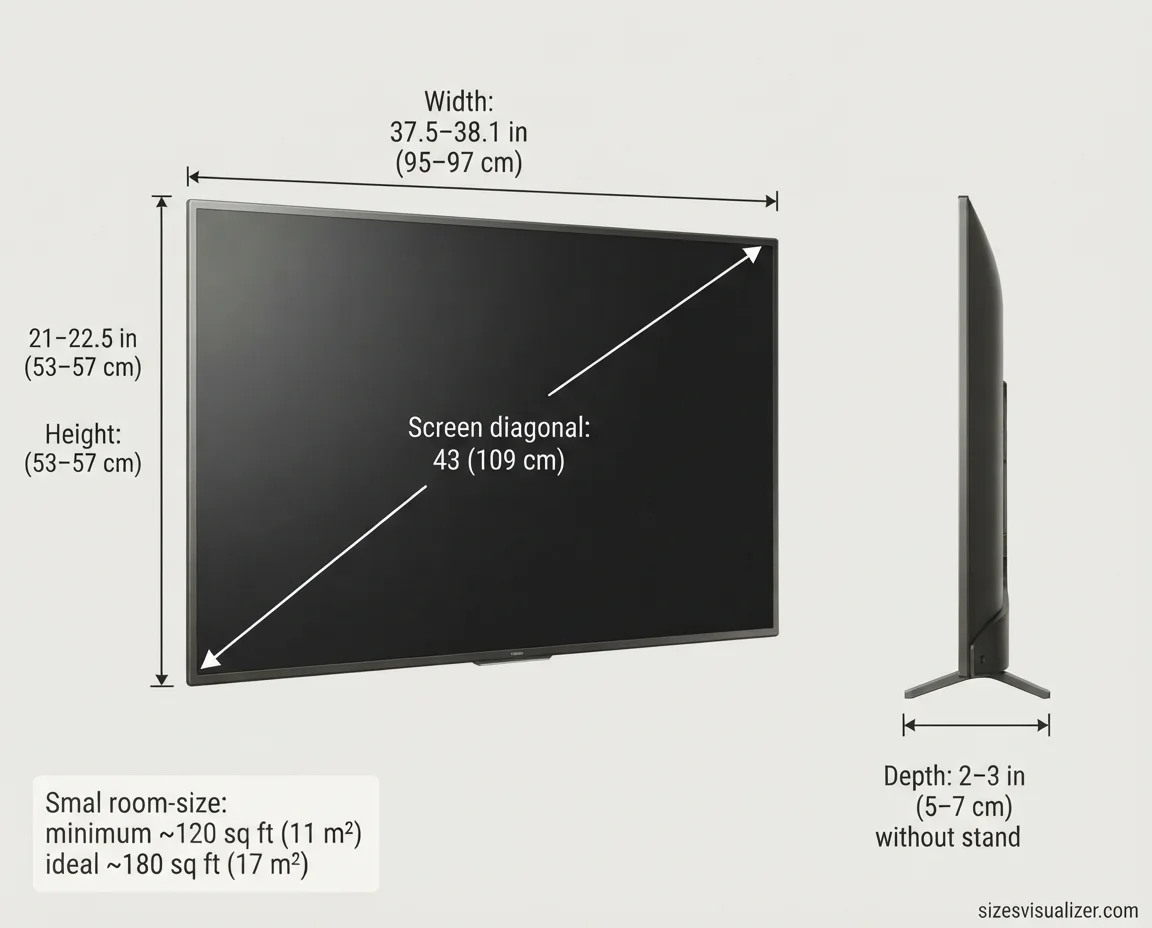
A 43-inch TV size typically measures:
- Width: approximately 37.5–38.1 inches (95–97 cm)
- Height: approximately 21–22.5 inches (53–57 cm)
- Depth: approximately 2–3 inches (5–7 cm), without a stand
- Screen diagonal: 43 inches (about 109 cm)
These numbers shift slightly between brands because of bezel thickness and panel design, so it’s smart to double-check the exact spec sheet before you buy.
Explore real-world size differences with our Size Visualizer & Comparison Tool, designed to make comparing dimensions simple, interactive, and intuitive.
43-Inch TV Viewing Distance Guide
Getting the size right isn’t just about the TV — it’s about where you sit.
Ideal Viewing Distance for 4K vs. Full HD
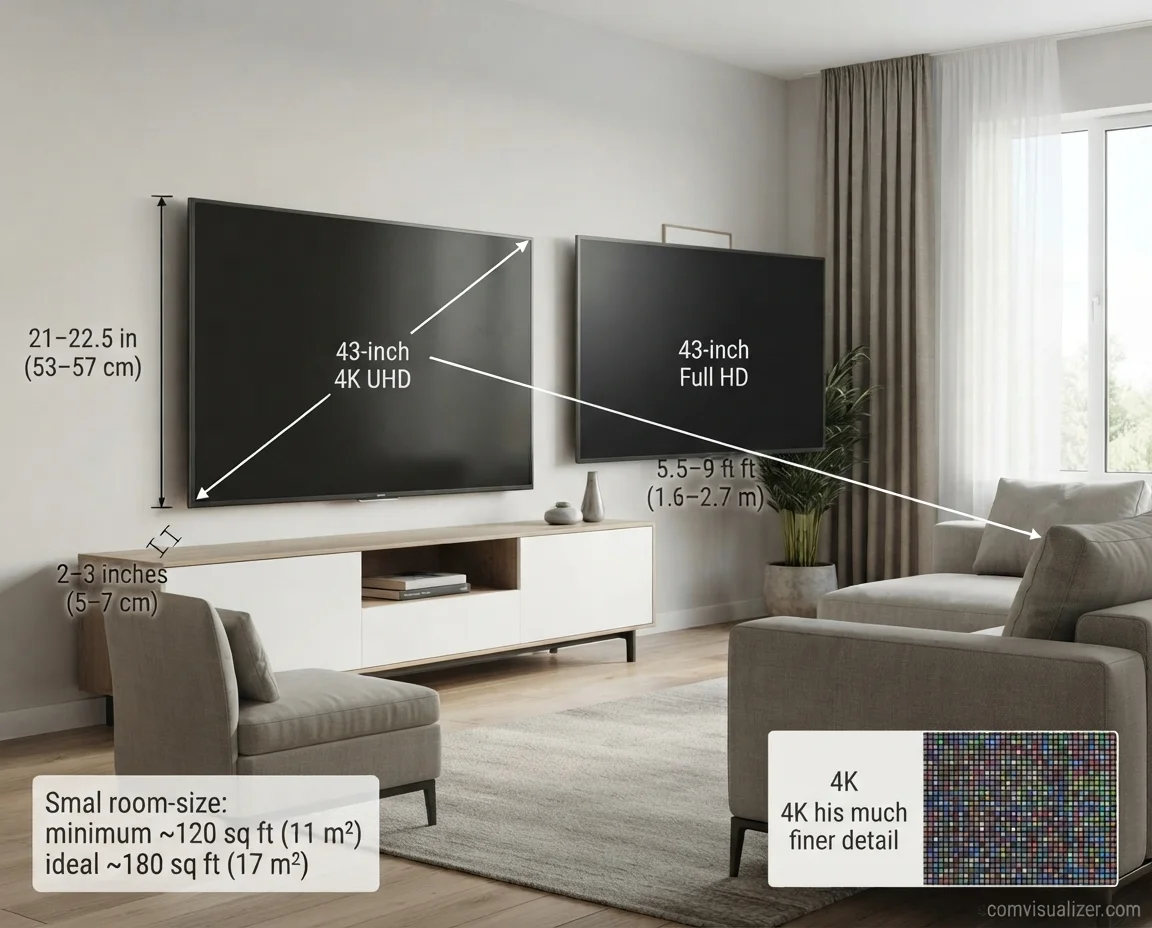
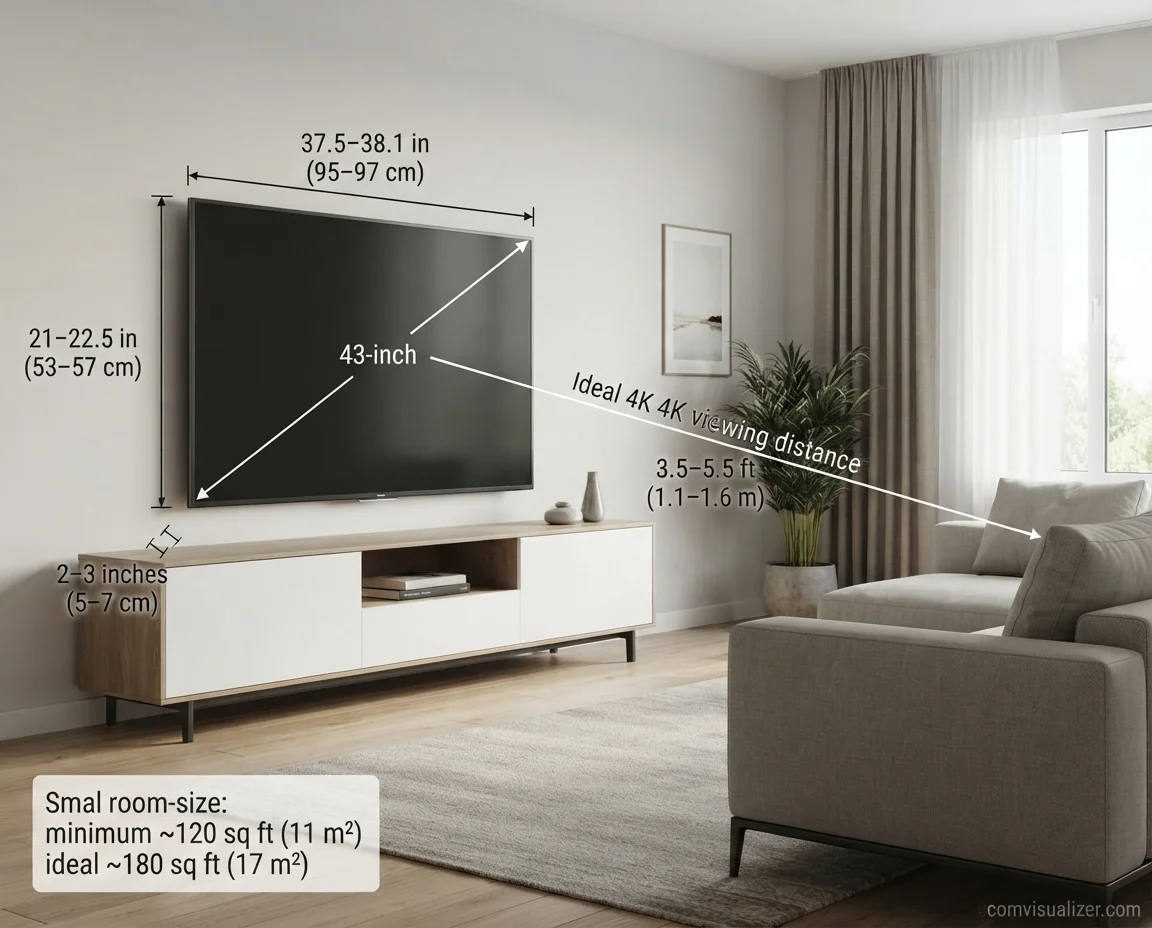
For a 43-inch 4K TV, the recommended seating distance is about 3.5 to 5.5 feet (1.1–1.6 meters). Full HD panels need a bit more breathing room, closer to 5.5 to 9 feet (1.6–2.7 meters), because lower resolution means pixels become visible sooner up close.
The Viewing Distance Formula, Explained
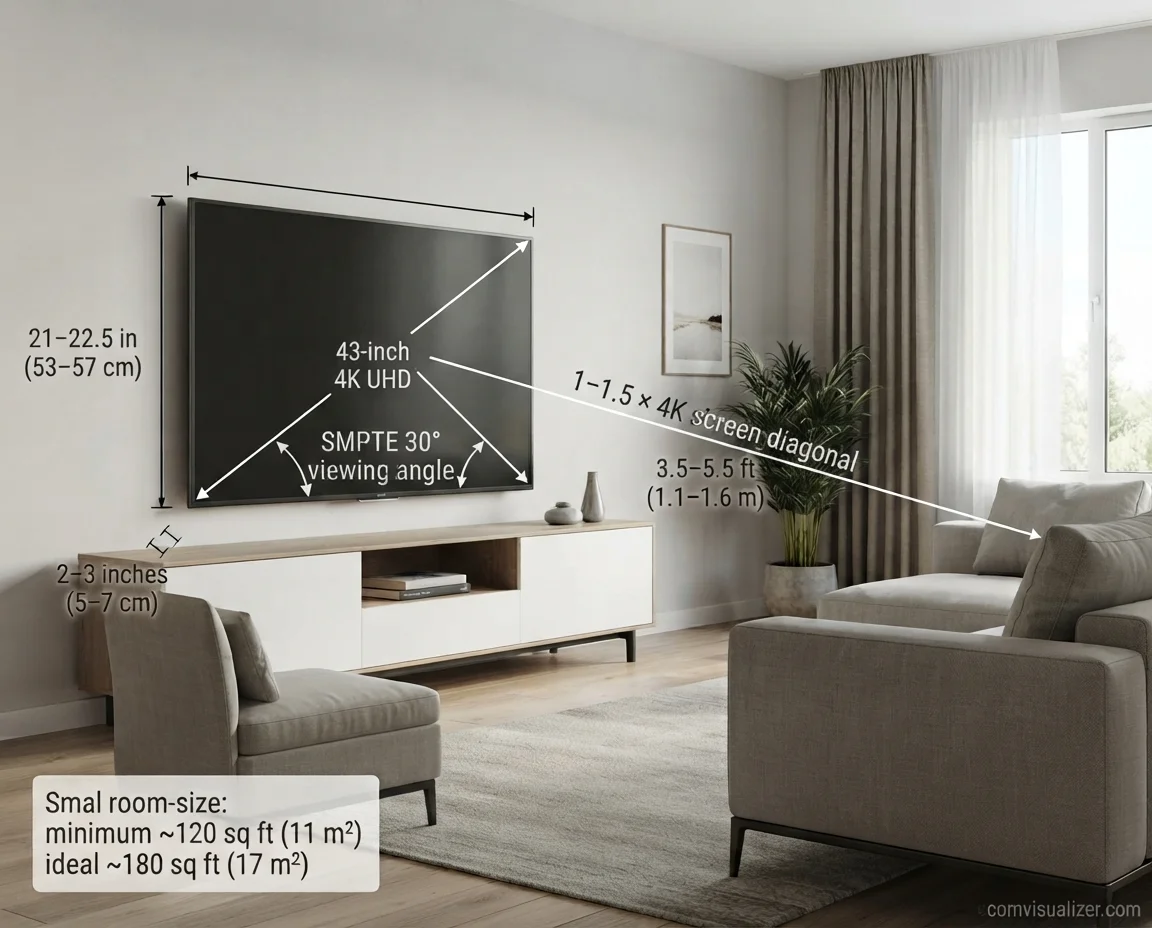
Two industry bodies set the standard here. The Society of Motion Picture and Television Engineers (SMPTE) recommends a 30-degree viewing angle for balanced, natural viewing, while THX pushes for a wider 36 to 40-degree angle for a more cinematic, immersive feel. In practical terms, most TV makers now suggest sitting 1 to 1.5 times the screen’s diagonal size away for 4K sets — for a 43-inch TV, that lands around 3.5 to 5.5 feet, matching the range above.
Field of View & Viewing Angle
Field of view simply means how much of your vision the screen fills. Sit too far, and the screen feels small and disengaging. Sit too close, and you’ll notice pixelation or need to move your eyes to take in the whole picture. The sweet spot keeps the screen filling your central vision without straining your neck or eyes.
What Room Size Fits a 43-Inch TV Best?
Minimum vs. Ideal Room Size
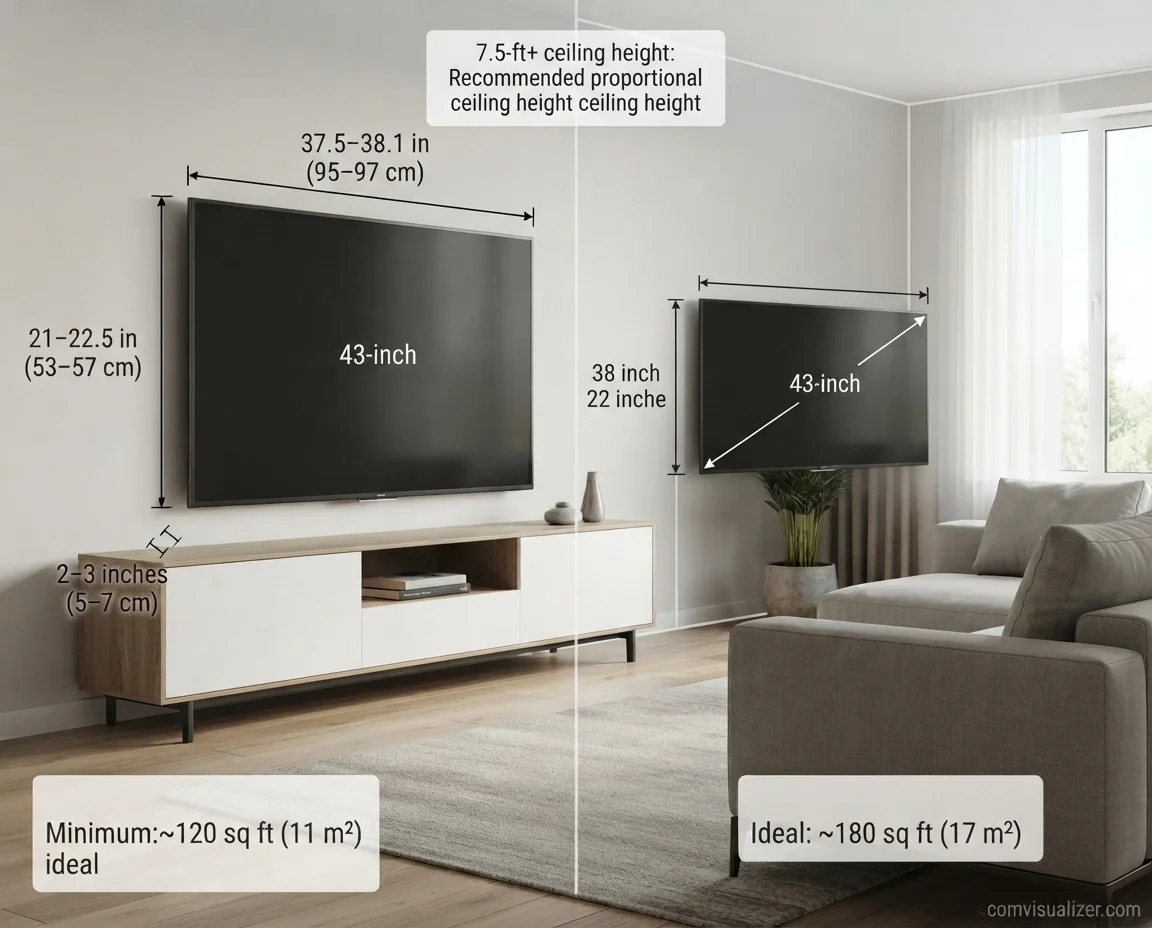
A 43-inch TV works comfortably in a room starting around 120 square feet (about 11 m²), with 180 square feet (roughly 17 m²) considered ideal for a relaxed, uncrowded setup. Ceiling height of at least 7.5 feet also helps keep proportions balanced.
Best Spaces for a 43-Inch TV
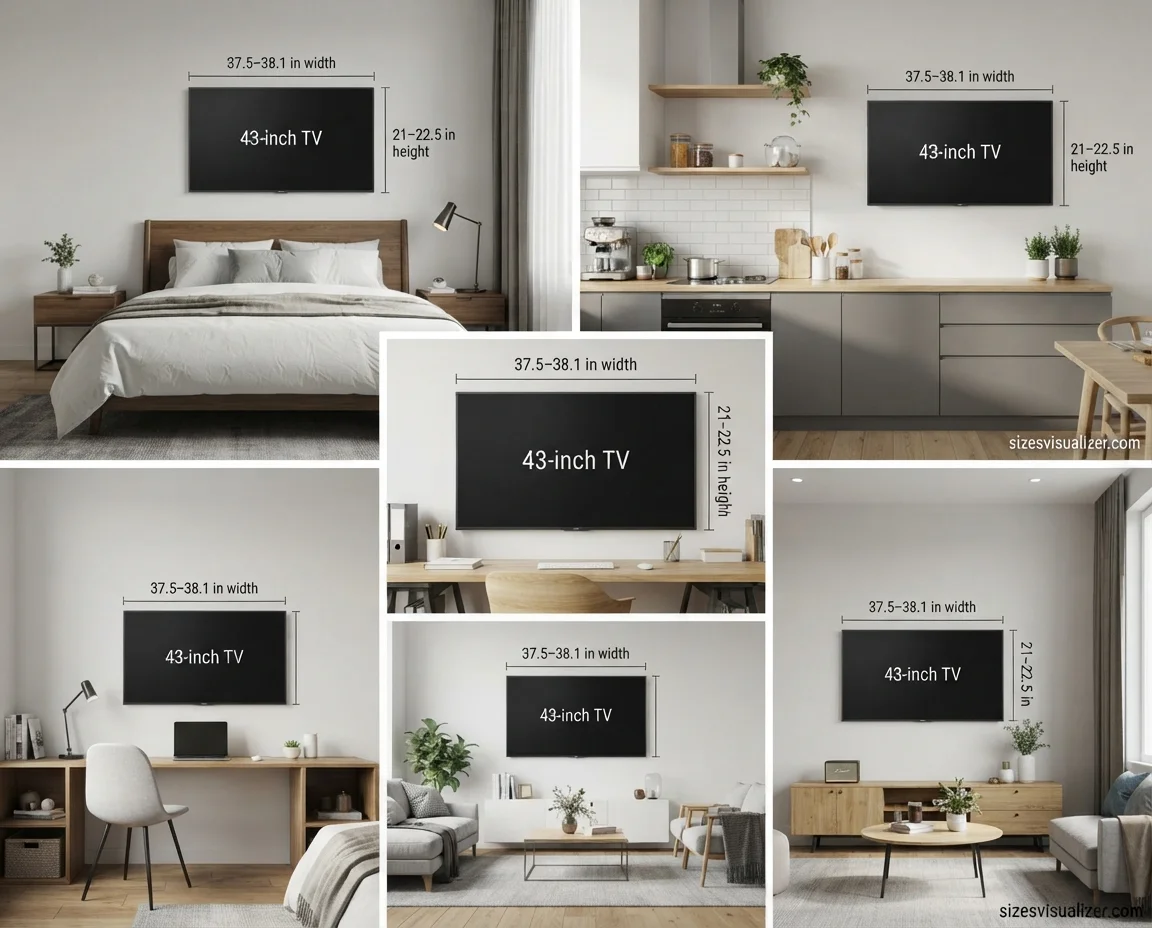
This size shines in bedrooms, kitchens, home offices, guest rooms, and compact apartments. It’s large enough for genuine binge-watching comfort but doesn’t overwhelm a smaller footprint the way a 65-inch or 75-inch screen would.
Wall-Mounted vs. TV Stand: Space Planning
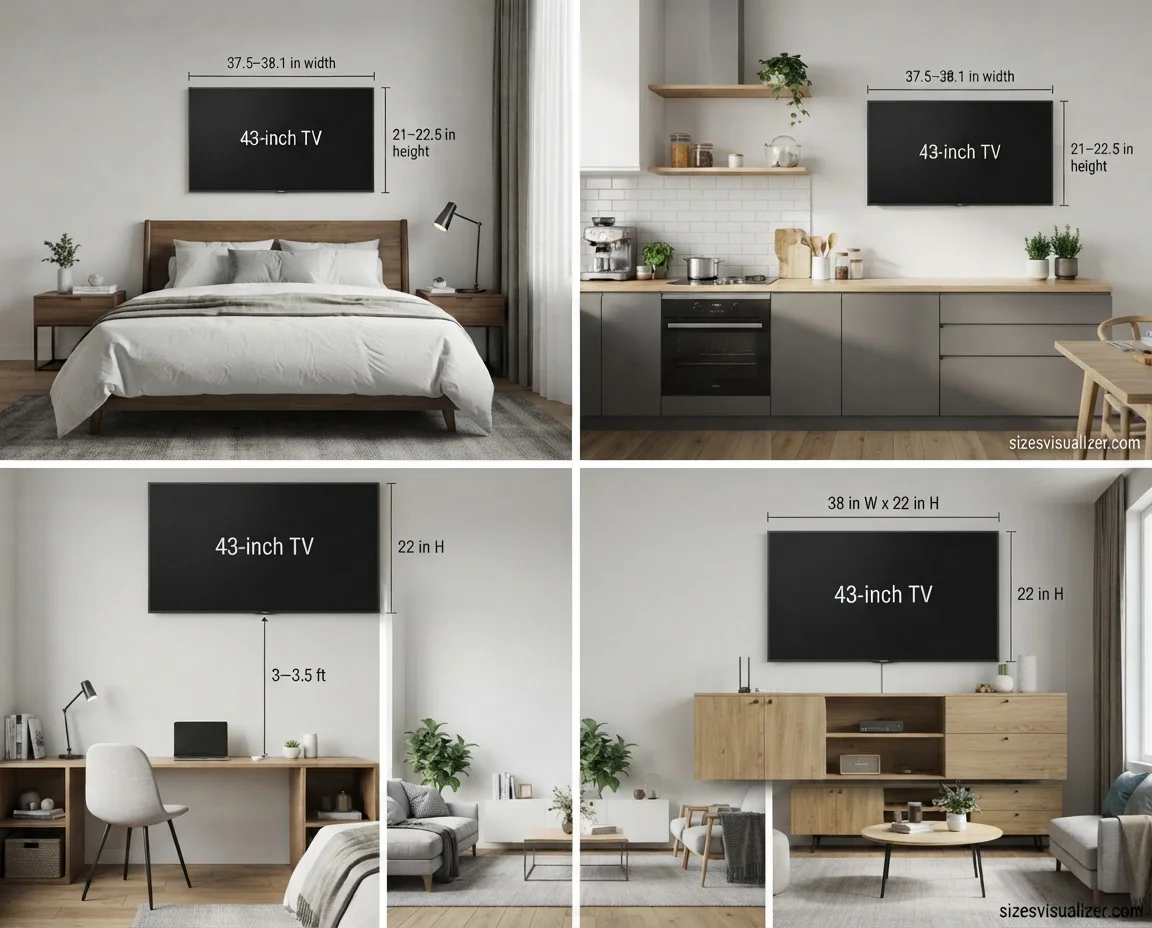
Wall-mounting a 43-inch TV frees up floor space and lets you set the screen at the correct eye-level height — ideally with the center of the screen at seated eye level, roughly 3 to 3.5 feet from the floor. A TV stand works too, but leave a few inches of clearance on each side for ventilation and cable management.
43-Inch TV vs. Other Popular TV Sizes
32-Inch vs. 43-Inch TV: Which Should You Buy?
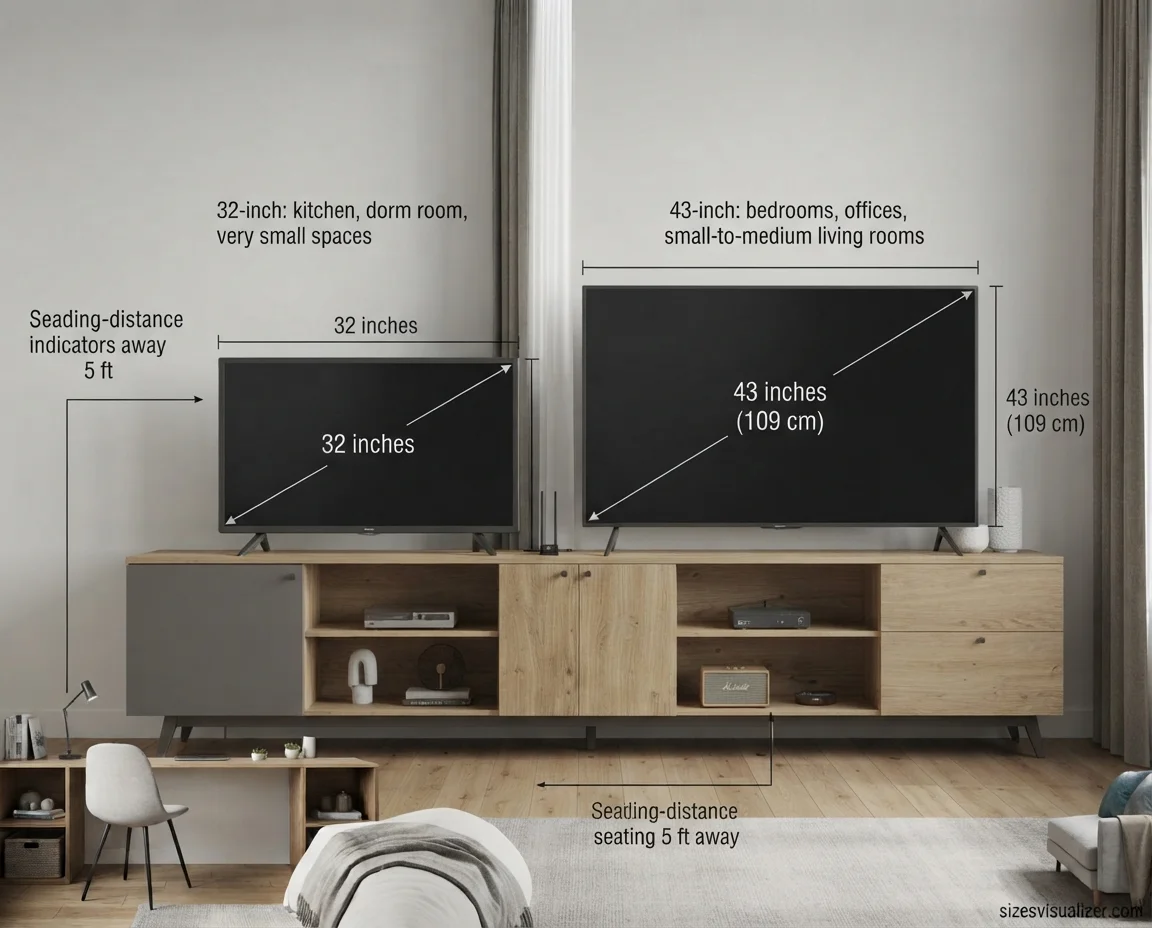
A 32-inch screen suits tight spaces like a kitchen counter or a dorm room, while a 43-inch TV gives noticeably more screen real estate for a modest jump in footprint. If your seating distance is over 5 feet, the 43-inch model will almost always deliver a better, more immersive experience.
43-Inch vs. 50-Inch or 55-Inch TV: Key Differences
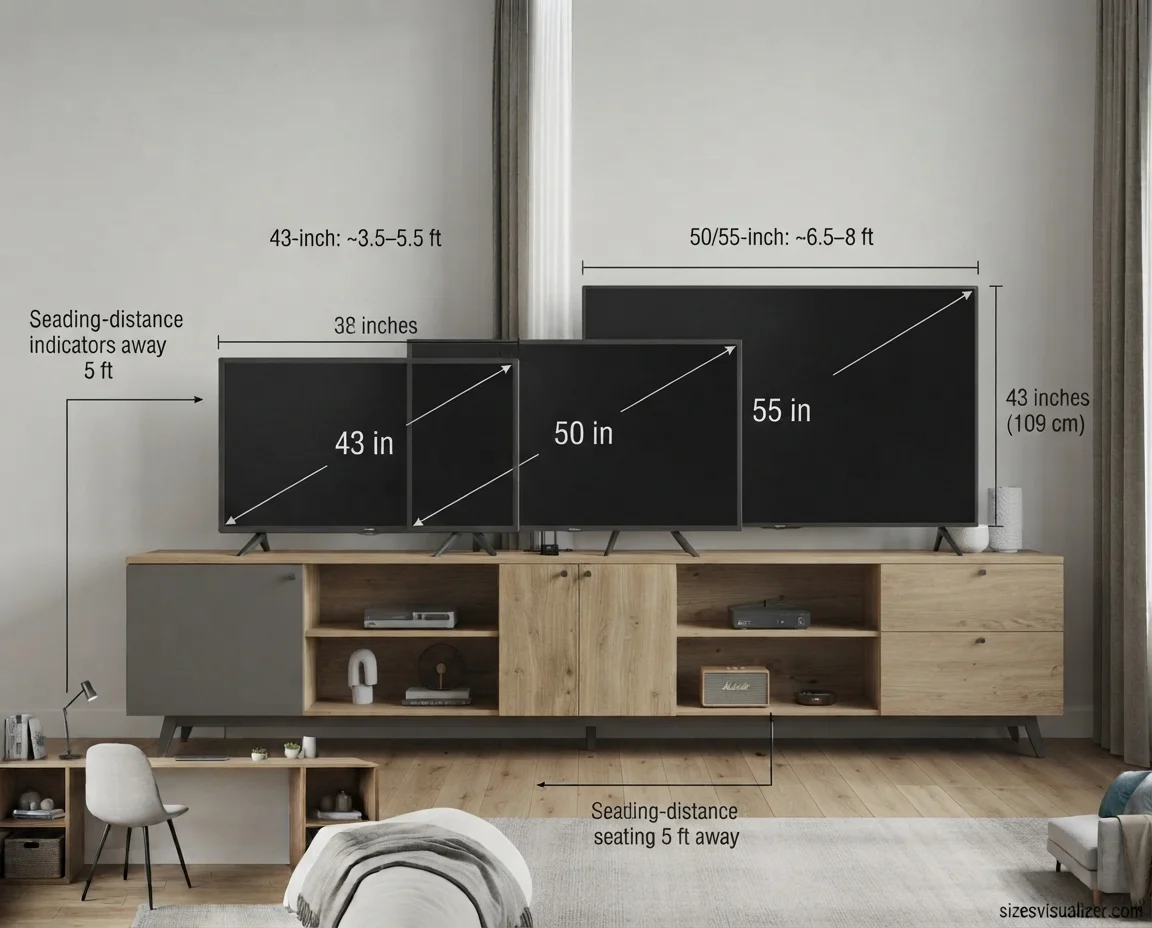
Stepping up to 50 or 55 inches adds roughly 8–12 inches of width and pushes the ideal seating distance out to 6.5–8 feet. If your room comfortably seats you that far from the wall, the larger screen is worth considering; if not, the 43-inch size keeps proportions in check.
Which TV Size Is Most Popular Right Now?
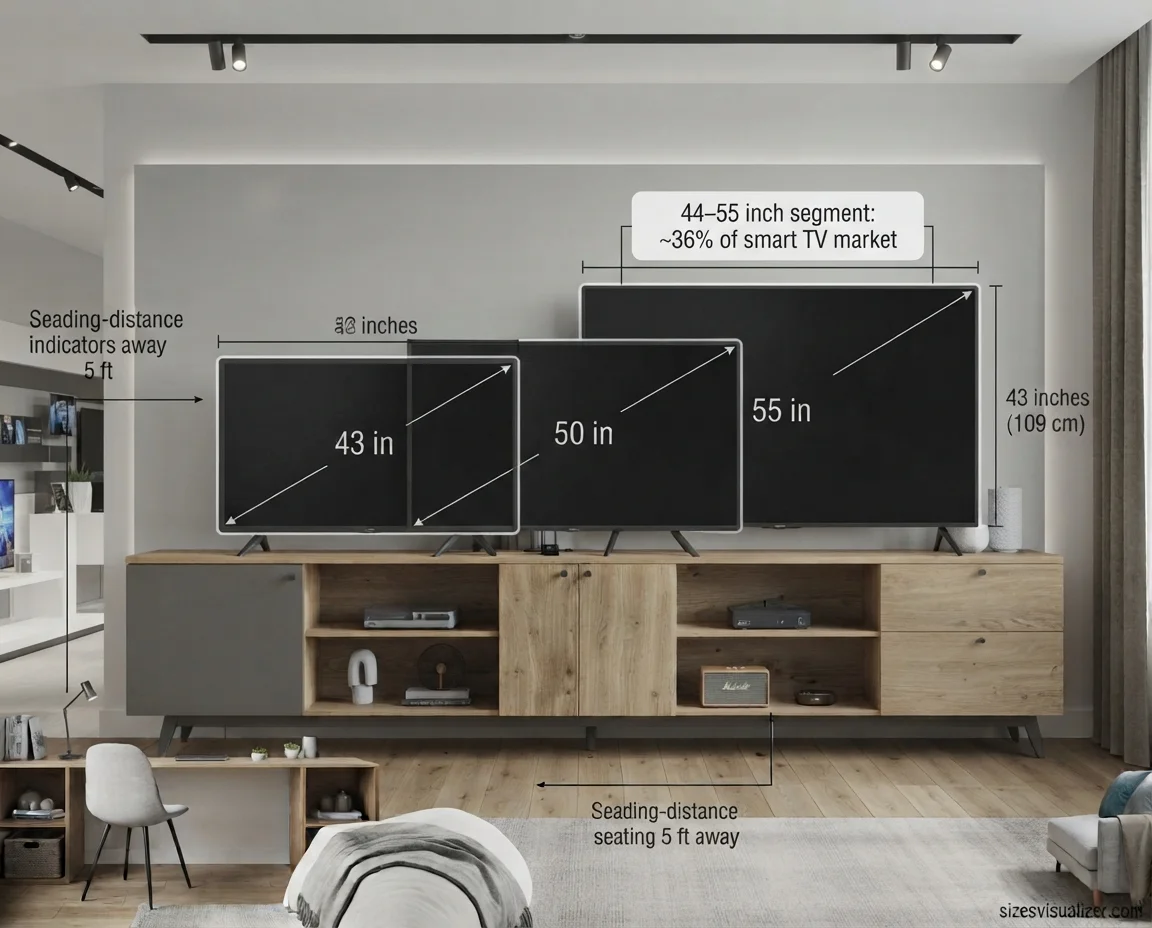
Industry data shows the 44–55 inch segment holds roughly 36% of the smart TV market as of 2025, making it the single most popular size band sold in the U.S. today, according to Persistence Market Research. A separate report from Mordor Intelligence puts the 55–64 inch range as the leading shipment category domestically, showing that mid-size screens — the 43 to 55-inch range — remain the mainstream sweet spot for American households.
Must Visit: How Big Are Dinner Plates? Standard Sizes in Inches & CM
Buying Considerations Before You Get a 43-Inch TV
Recommended Resolution: Full HD vs. 4K UHD
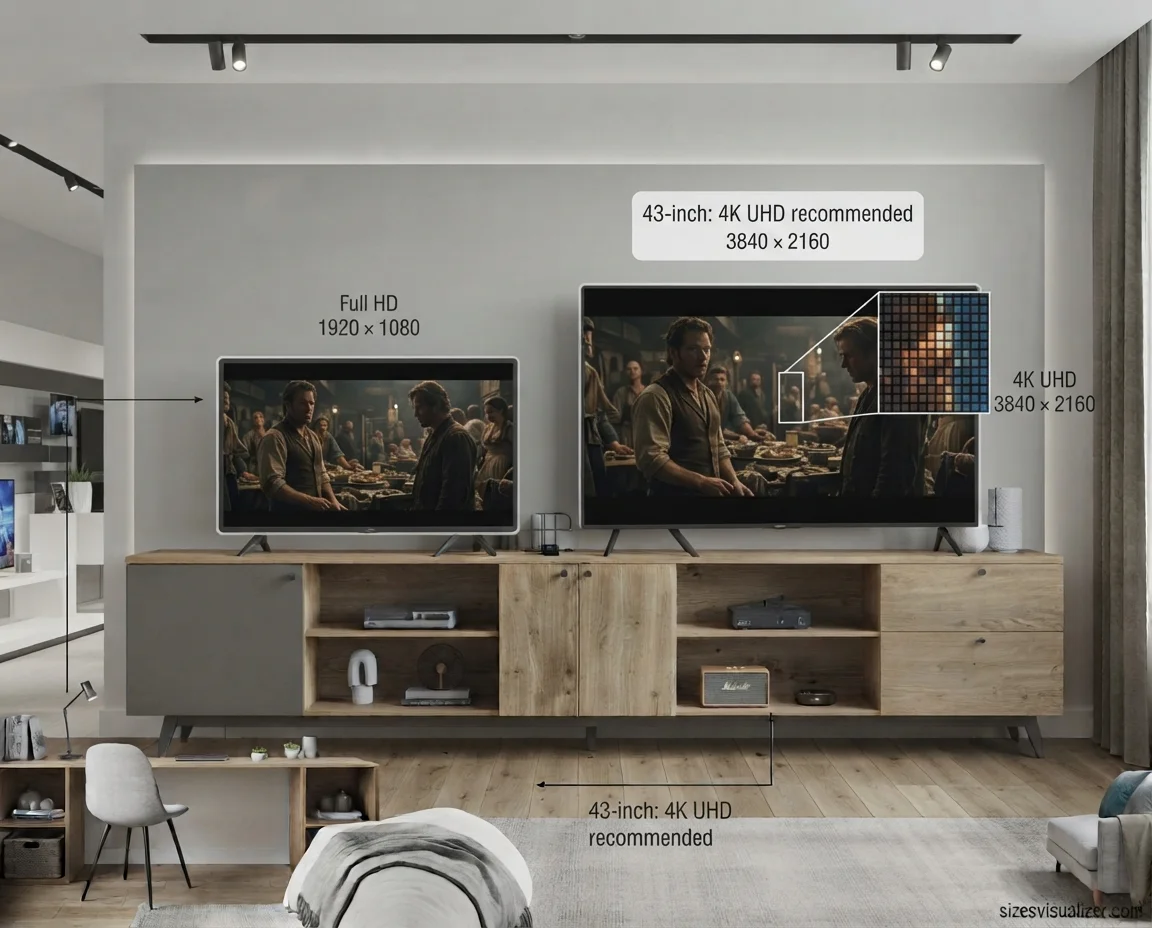
At 43 inches, resolution matters more than you’d think. 4K UHD packs four times the pixels of Full HD into the same screen, so detail stays crisp even when you sit closer than the old Full HD comfort zone allows. Nearly every 43-inch TV sold today ships in 4K as standard, and it’s worth prioritizing over Full HD for future-proofing streaming and gaming content.
Ideal Mounting Height, VESA Size & Eye-Level Placement
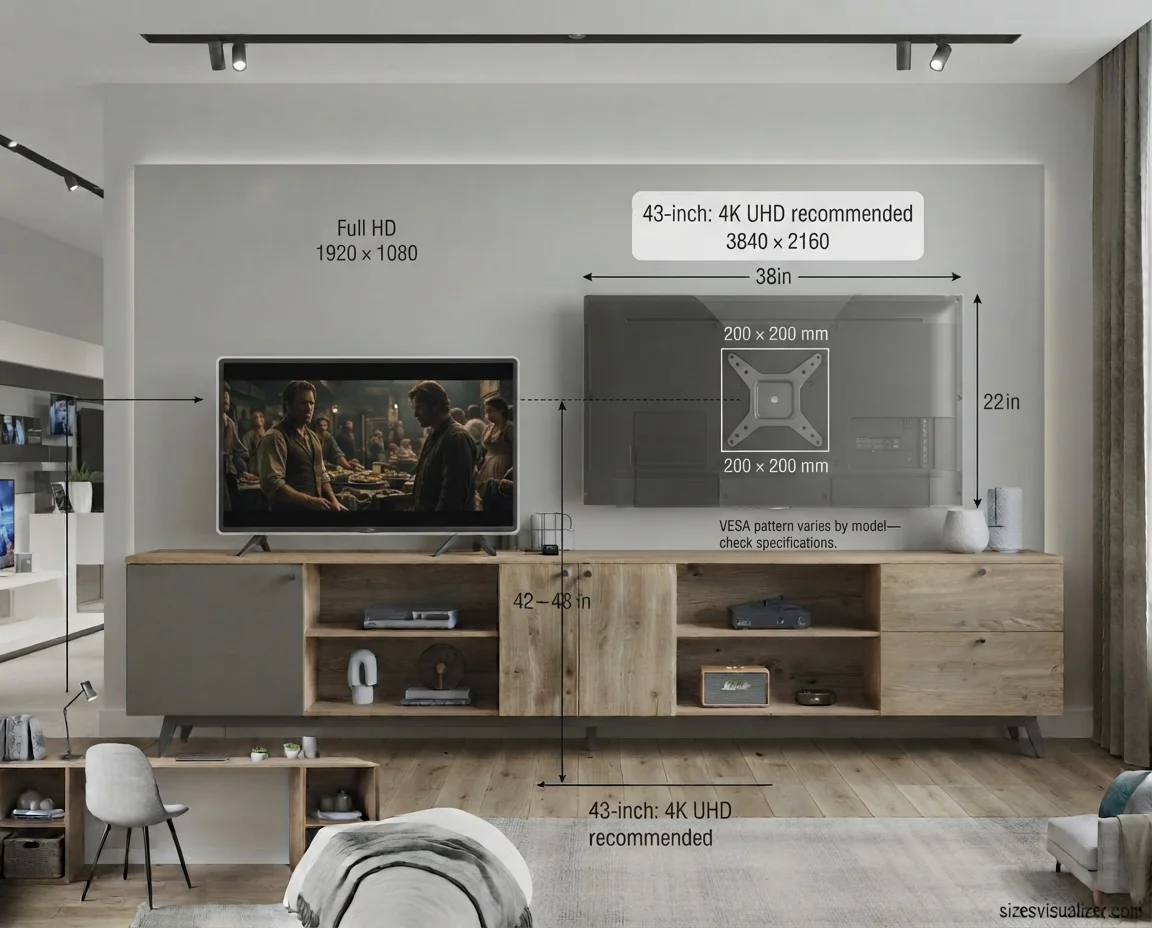
Most 43-inch TVs use a VESA mount pattern of 200x200mm, though this varies by model, so check the manual before buying a wall bracket. For eye-level comfort, aim to position the vertical center of the screen at your eye height when seated — typically 42–48 inches from the floor for a standard sofa.
FAQs
Is a 43 inch TV big enough?
Yes, for most bedrooms, kitchens, offices, and small-to-medium living rooms, a 43-inch TV is big enough — especially if your seating distance is under 6 feet. It becomes less ideal in large open-plan rooms with distant seating.
How big is 43 inches visually?
A 43-inch screen measures about 38 inches wide and 22 inches tall. Visually, it’s comparable to a large framed painting or roughly the width of a standard doorway turned sideways.
How big is a 43 inch TV actually?
Its actual footprint is around 37.5–38.1 inches wide by 21–22.5 inches tall, with a diagonal screen measurement of exactly 43 inches (about 109 cm).
How big is a 43 inch smart TV?
A 43-inch smart TV has the same physical dimensions as any standard 43-inch TV — roughly 38 x 22 inches — since “smart” refers to the built-in software and streaming apps, not the screen size.
Should I buy a 32 inch or 43-inch TV?
Choose 32 inches for very small rooms or secondary spaces like a kitchen. Choose 43 inches if you want a more immersive picture and your seating distance is 5 feet or more.
Which TV size is most popular?
The 44–55 inch size range is currently the most popular TV category in the U.S. market, holding roughly a third of total smart TV sales, with 43-inch and 55-inch models being especially common entry points.
Conclusion
A 43-inch TV delivers a genuinely immersive picture without demanding a huge room or a big budget. Match it to the right viewing distance, give it a properly sized space, and it’ll comfortably handle everything from daily streaming to movie night.

Measurement Researcher, Size Comparison Writer & Content Specialist
Timmy Ahad is a dedicated content writer and research specialist at SizesVisualizer.com, where he focuses on creating accurate, easy-to-understand content about measurements, dimensions, size comparisons, and real-world object visualization.