You’ve held one a thousand times. But ask yourself: how tall is a Coke can, really?
Most people guess wrong. The standard Coke can size is 4.83 inches tall with a 2.6-inch diameter, holding 12 oz (355 ml). This guide breaks down every Coke can dimension, from the mini to the tall boy, in inches, centimeters, and millimeters — plus the engineering reasons behind each number.
Table of Contents
Standard Coke Can Dimensions (12 oz)
The 12 oz can is the one you grab from the fridge every day. It’s also the most manufactured beverage container on Earth, according to the Aluminum Association.
Our Size Visualizer Tool makes it easy to understand measurements by transforming dimensions into simple, visual size comparisons for better perspective.
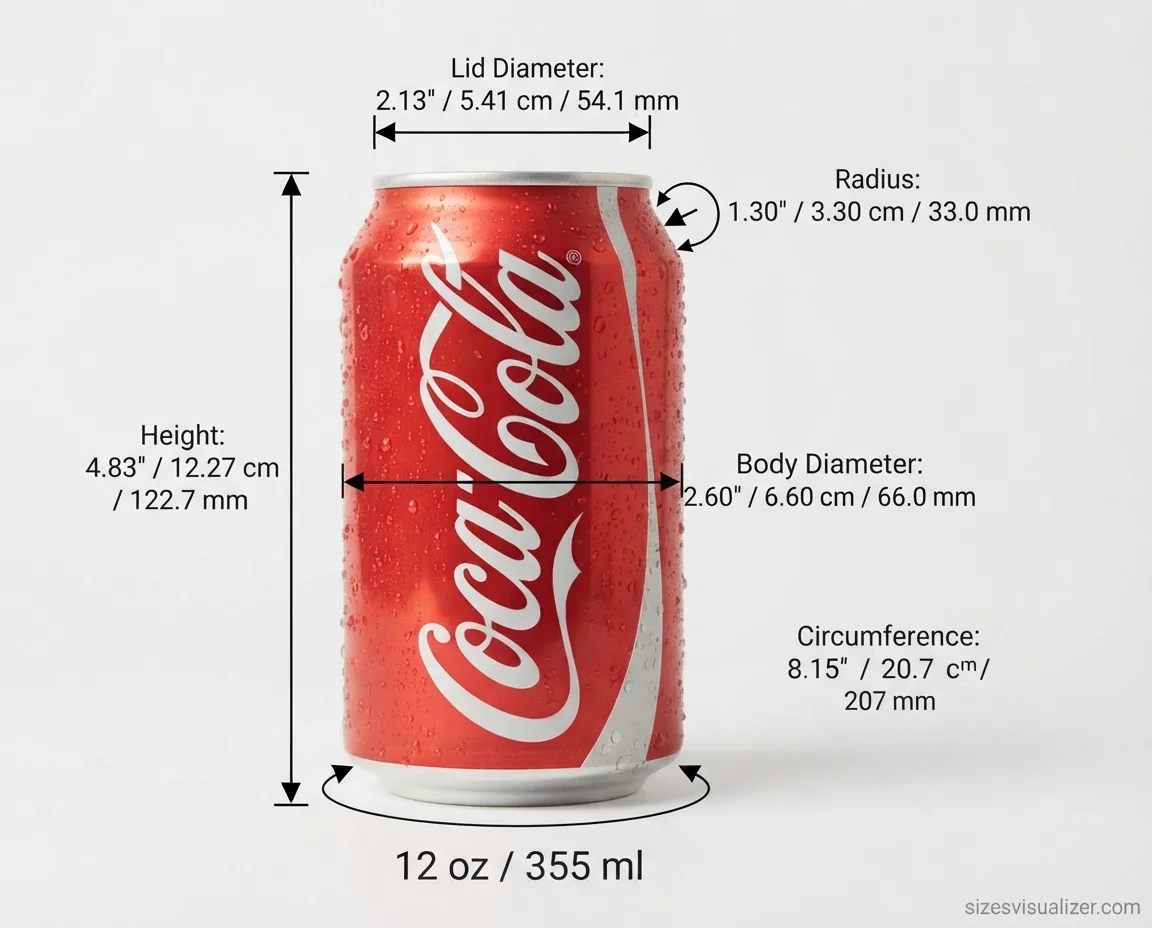
What is the dimension of a Coke can? Here’s the full spec sheet:
| Measurement | Inches | Centimeters | Millimeters |
|---|---|---|---|
| Height | 4.83″ | 12.27 cm | 122.7 mm |
| Body diameter | 2.60″ | 6.60 cm | 66.0 mm |
| Lid (202 end) diameter | 2.13″ | 5.41 cm | 54.1 mm |
| Radius | 1.30″ | 3.30 cm | 33.0 mm |
| Circumference | 8.15″ | 20.7 cm | 207 mm |
| Wall thickness | ~0.004″ | — | ~0.10 mm |
| Weight (empty) | ~0.5 oz | — | ~14 g |
| Weight (full) | ~13 oz | — | ~375 g |
Notice the lid diameter is smaller than the body diameter. That’s not an accident. It’s a manufacturing shortcut called necking, and it saves real money across billions of cans. We’ll unpack that below.
The can holds 355 milliliters, or 12 fluid ounces, and it sits under roughly 90 psi of internal pressure once carbonated. That pressure is part of what keeps the thin aluminum walls rigid.
Coke Can Sizes Chart: Every Format Compared
Coca-Cola doesn’t stop at one size. Depending on where you shop, you’ll find cans that are shorter, taller, wider, or narrower than the standard. Here’s every Coke can size sold in the U.S. today.
Mini Can (7.5 oz)
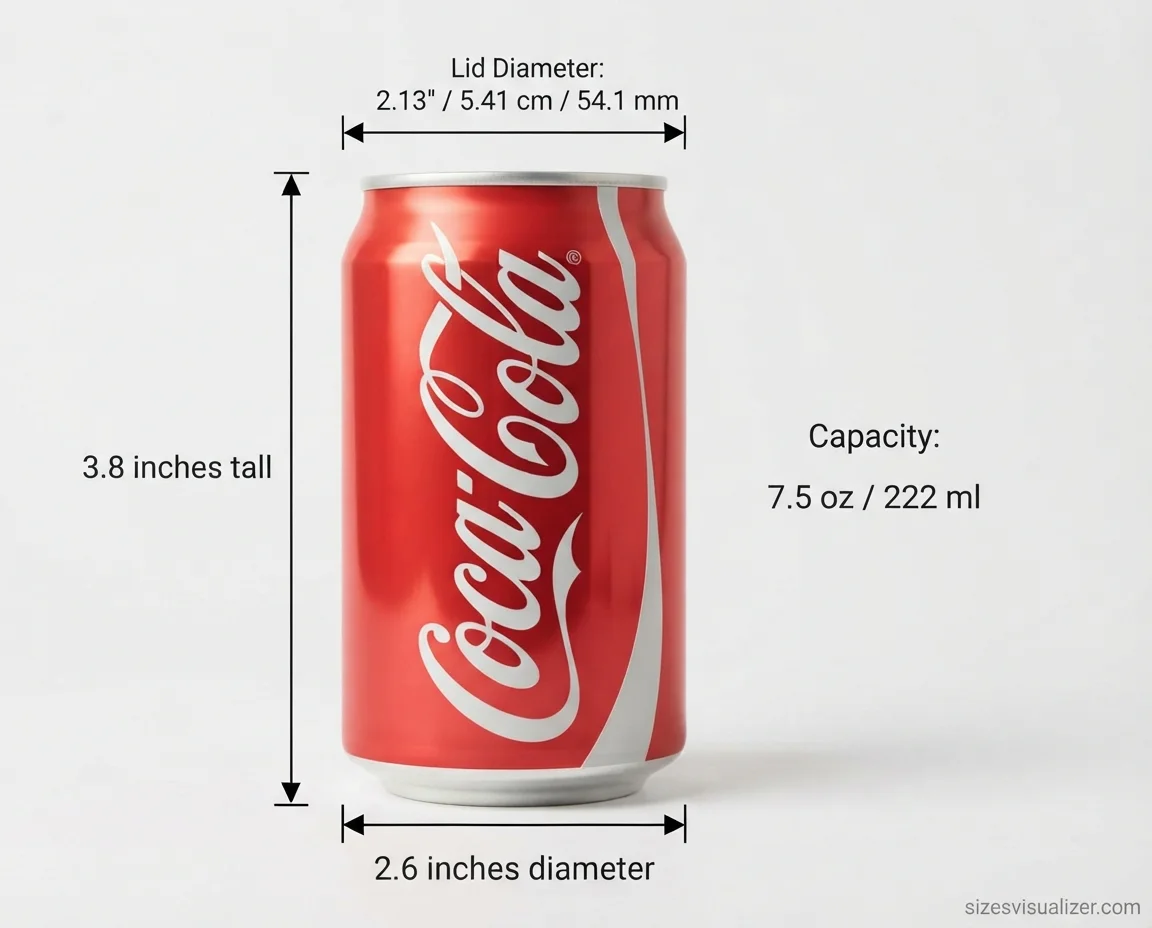
The mini Coke can stands about 3.8 inches tall with the same 2.6-inch diameter as the standard can. It holds 222 ml and runs around 90 calories. Coca-Cola launched this format in 2007 to ride the portion-control wave, and it worked — mini can sales climbed fast in the years that followed.
Standard Can (12 oz)
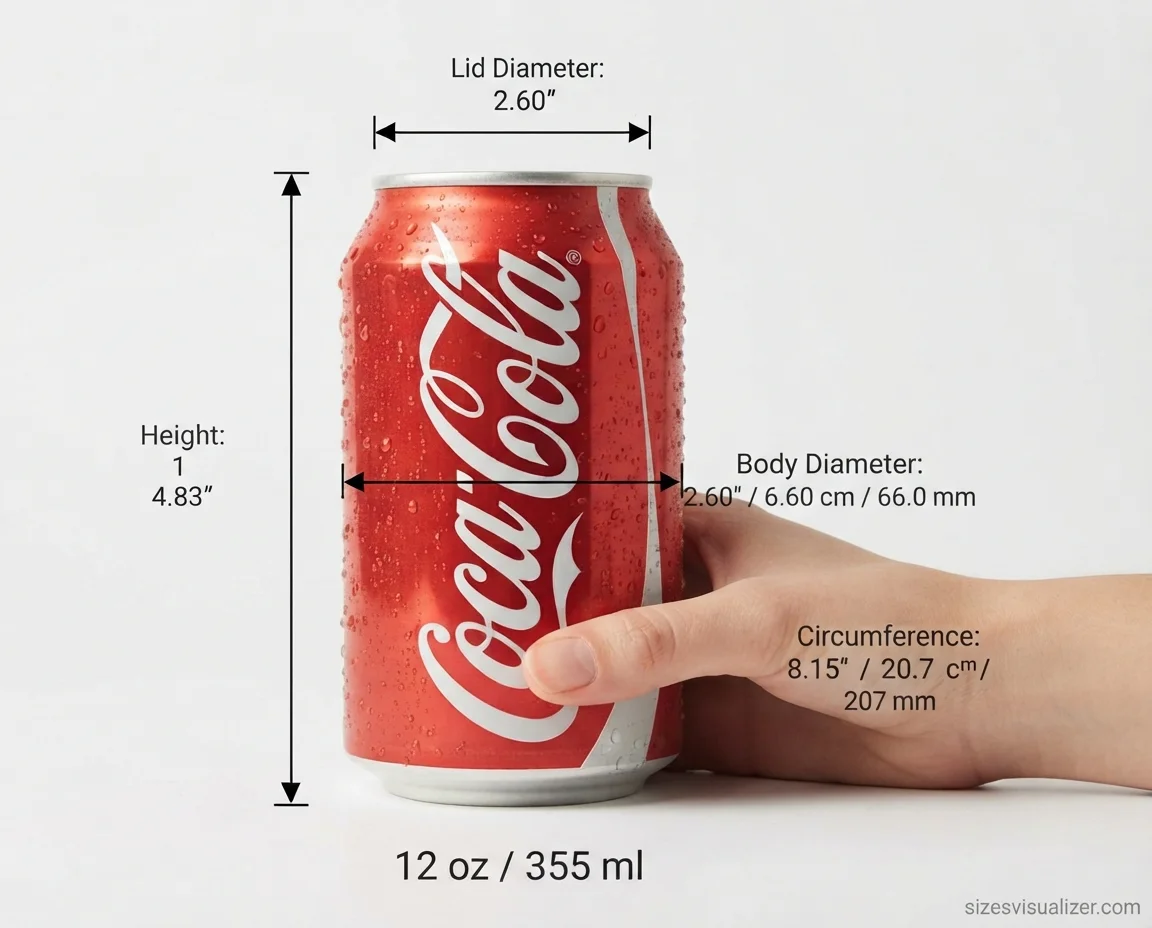
This is the benchmark. 4.83 inches tall, 2.6 inches wide, 355 ml. Every other format gets measured against this one.
Slim Can Dimensions
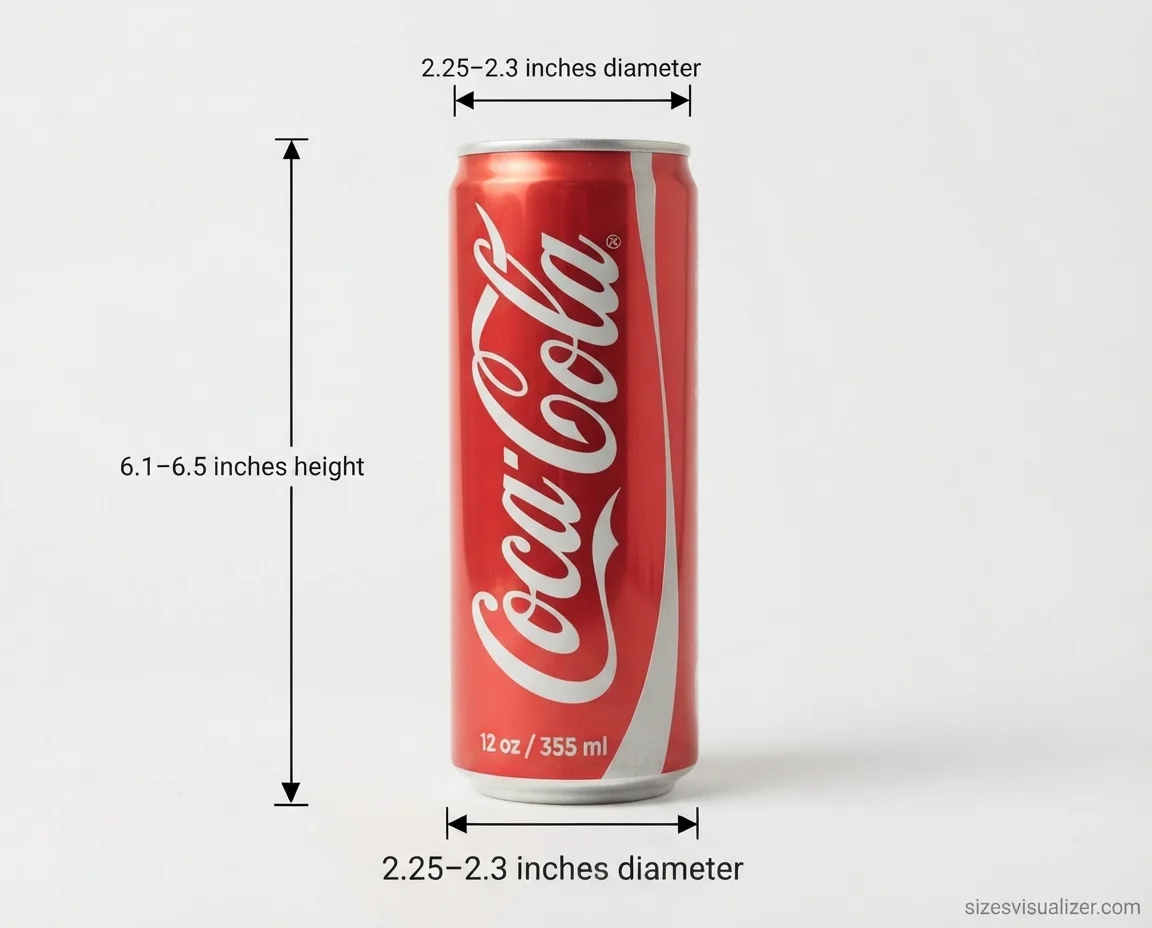
The slim Coke can keeps the same 355 ml volume but stretches taller and pinches narrower — around 6.1 to 6.5 inches tall with a 2.25 to 2.3-inch diameter. You’ll see this shape on Diet Coke and specialty flavors. It’s a packaging choice, not a recipe change. The taller, thinner silhouette signals “premium” without touching what’s inside.
Tall Boy Can (16 oz)
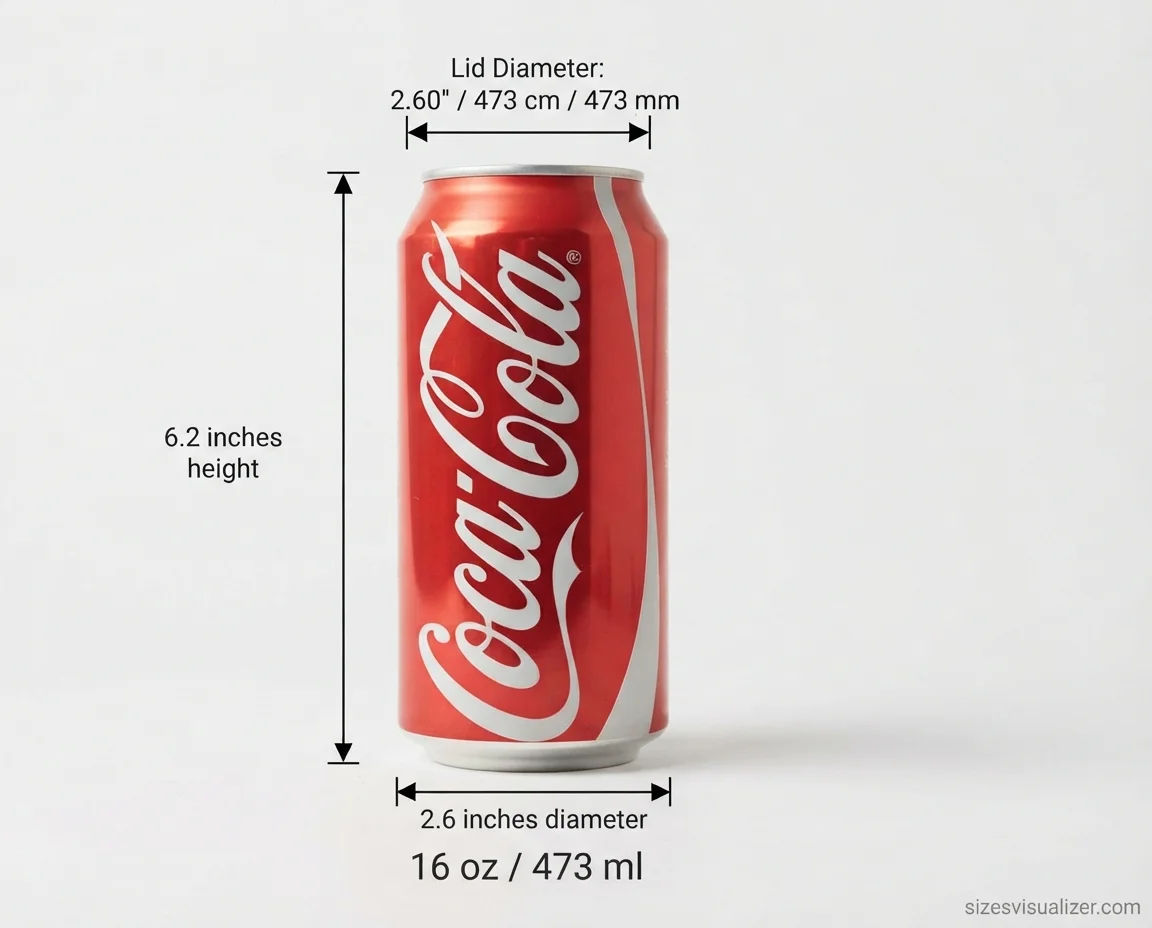
The tall boy reaches roughly 6.2 inches in height while holding onto the standard 2.6-inch diameter. It carries 473 ml, popular at sports venues and convenience stores where people want more drink without buying two cans.
King / Large Can (20–24 oz)
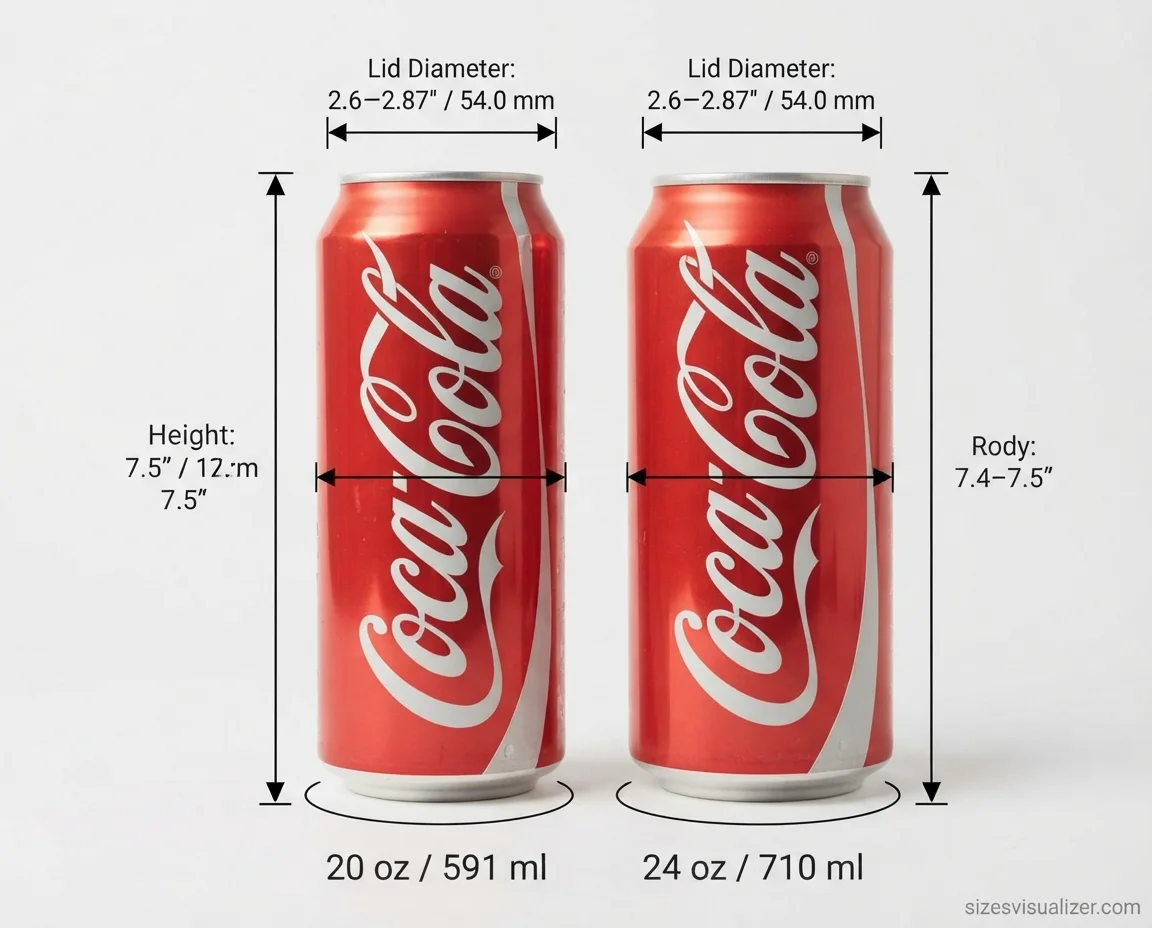
The 20 oz version hits about 7.5 inches tall and holds 591 ml. The 24 oz sibling holds 710 ml. These are the maximum single-serve formats you’ll find on U.S. shelves.
| Can Type | Volume | Height | Diameter | Best For |
|---|---|---|---|---|
| Mini | 7.5 oz / 222 ml | 3.8″ | 2.6″ | Portion control |
| Standard | 12 oz / 355 ml | 4.83″ | 2.6″ | Everyday drinking |
| Slim | 12 oz / 355 ml | 6.1–6.5″ | 2.25–2.3″ | Cup holders, sleek look |
| Tall Boy | 16 oz / 473 ml | 6.2″ | 2.6″ | Sports, outdoor events |
| Large/King | 20–24 oz / 591–710 ml | 7.4–7.5″ | 2.6–2.87″ | Extended drinking |
Coke Can Dimensions by Country
Coke can size isn’t universal. Step outside the U.S. and the numbers shift, mostly because of the metric system and local taste.
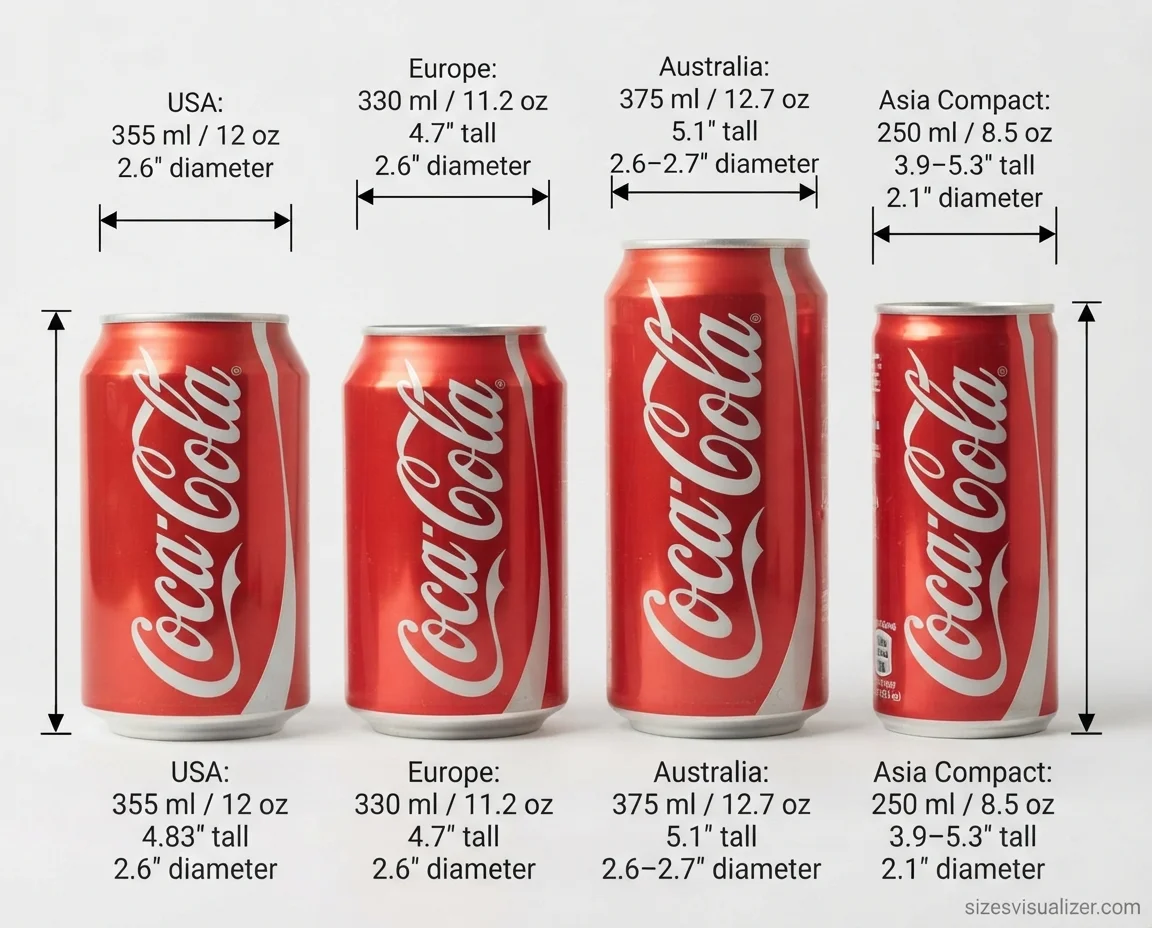
The European standard 330 ml Coke can measures about 4.7 inches tall with the same 2.6-inch diameter as the American can. It’s roughly 25 ml smaller than the U.S. version — a small gap that adds up to real aluminum and syrup savings across a market as large as Europe’s.
Australia’s 375 ml can stands taller, around 5.1 inches, with a slightly wider 2.6 to 2.7-inch diameter. This size traces back to a traditional 13 imperial fluid ounce glass bottle that got converted to metric rather than redesigned from scratch.
The compact 250 ml can is one of the smallest global formats, standing close to 3.9 to 5.3 inches tall (figures vary by narrow vs. standard-diameter versions) with a 2.1-inch diameter. You’ll spot it on airlines and in vending machines across Asia and parts of Europe.
| Country | Volume | Height | Diameter |
|---|---|---|---|
| USA | 355 ml / 12 oz | 4.83″ | 2.6″ |
| Europe | 330 ml / 11.2 oz | 4.7″ | 2.6″ |
| Australia | 375 ml / 12.7 oz | 5.1″ | 2.6–2.7″ |
| Asia (compact) | 250 ml / 8.5 oz | 3.9–5.3″ | 2.1″ |
Here’s a fun bit of math most articles skip. The mathematically perfect cylinder for holding 355 ml — the shape using the least aluminum — would be short and squat, roughly 76.8mm tall and 76.8mm wide. Nobody drinks from that shape. It wouldn’t fit a cup holder, wouldn’t stack on a pallet, and would feel awkward in hand. So manufacturers trade a bit of material efficiency for something people actually want to hold. Engineering bends to ergonomics here, not the other way around.
Why Coke Can Size Is So Precise (Engineering Explained)
A soda can isn’t just a tube of metal. It’s one of the more tightly engineered everyday objects you’ll ever touch.
The 202 end
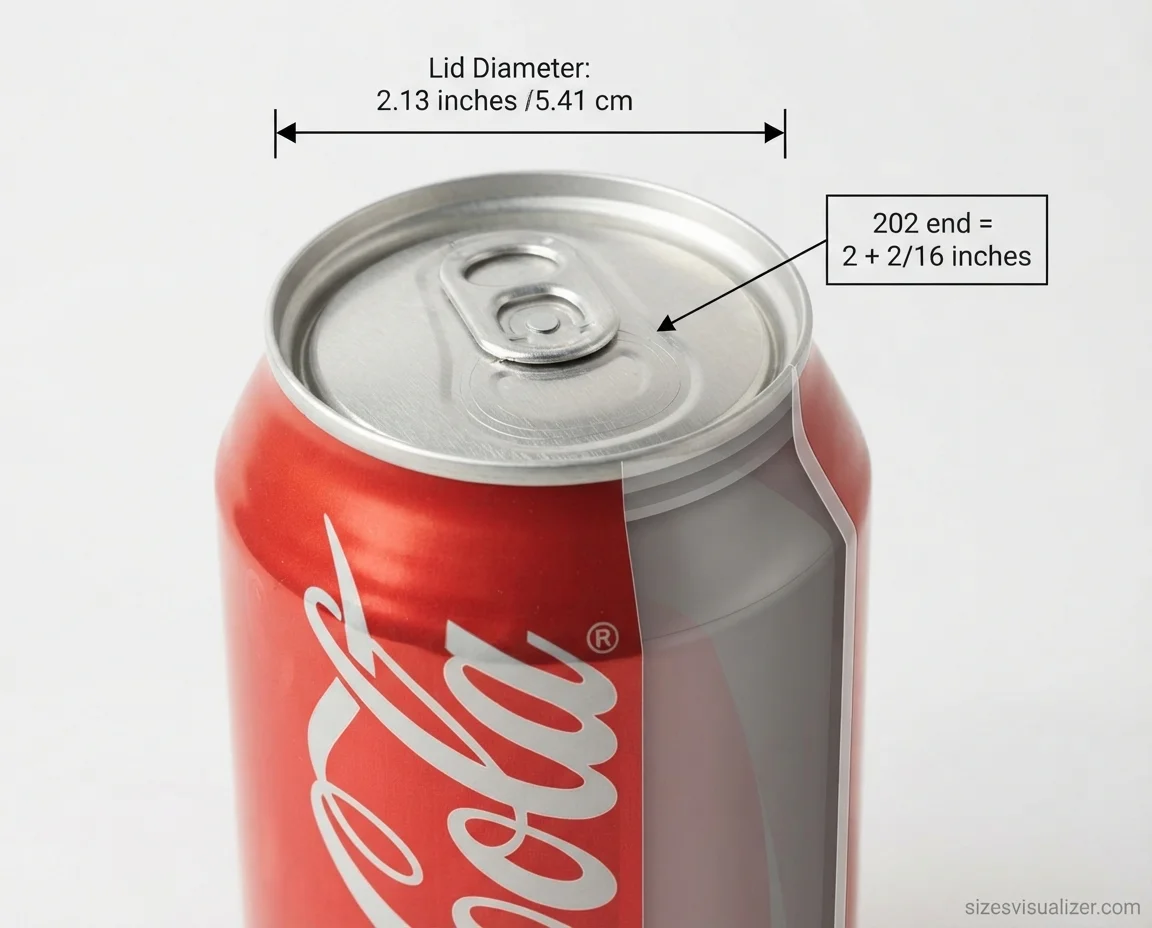
The lid code “202” means 2 and 2/16 inches — the industry shorthand for the lid diameter. Cans get squeezed inward near the top through a process called necking, done in stages across multiple dies so the aluminum doesn’t crack. A narrower lid uses less of the pricier 5182-series alloy needed for the top piece, which needs to be harder to survive the pull-tab mechanism.
Wall thickness and pressure
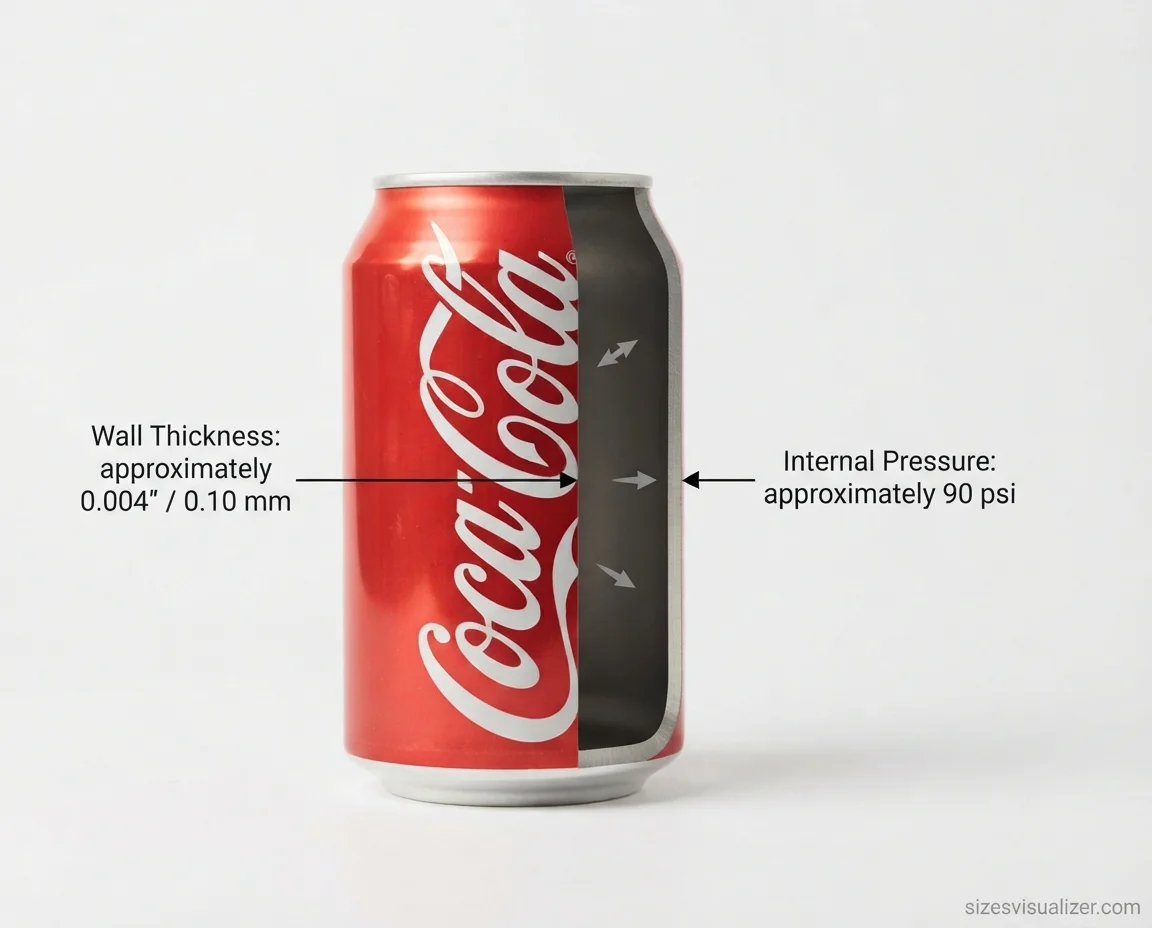
The can wall runs about 0.004 inches thick — thinner than a credit card’s magnetic stripe. Once pressurized with carbon dioxide to roughly 90 psi, that thin wall becomes rigid enough to support serious static weight without buckling. The pressure is doing structural work the metal alone couldn’t.
Manufacturing tolerances
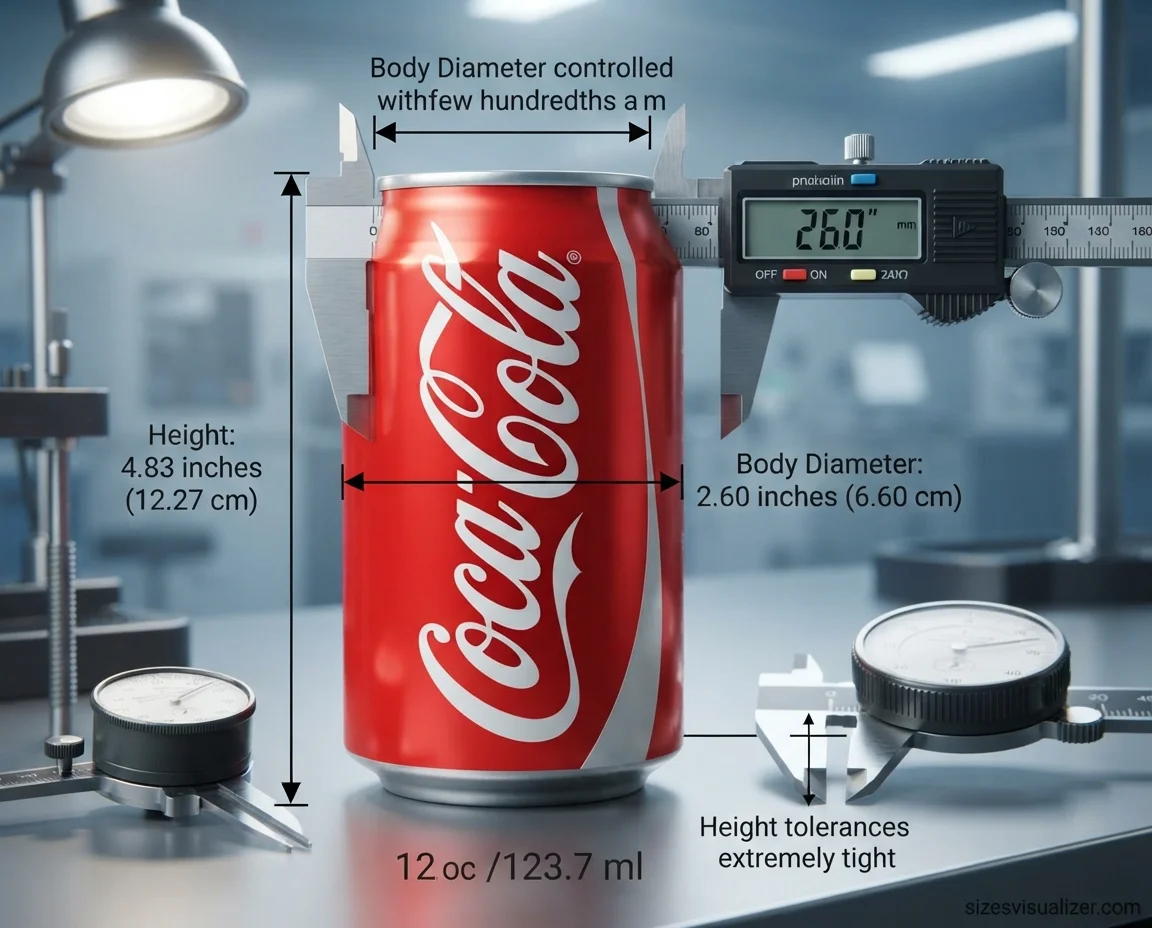
Body diameter typically holds to within a few hundredths of a millimeter, and height tolerances run just as tight. That precision is non-negotiable — it’s what lets cans stamped out in different factories across the country fit identical vending slots and retail shelf layouts without jamming.
How Coke can dimensions changed over time:
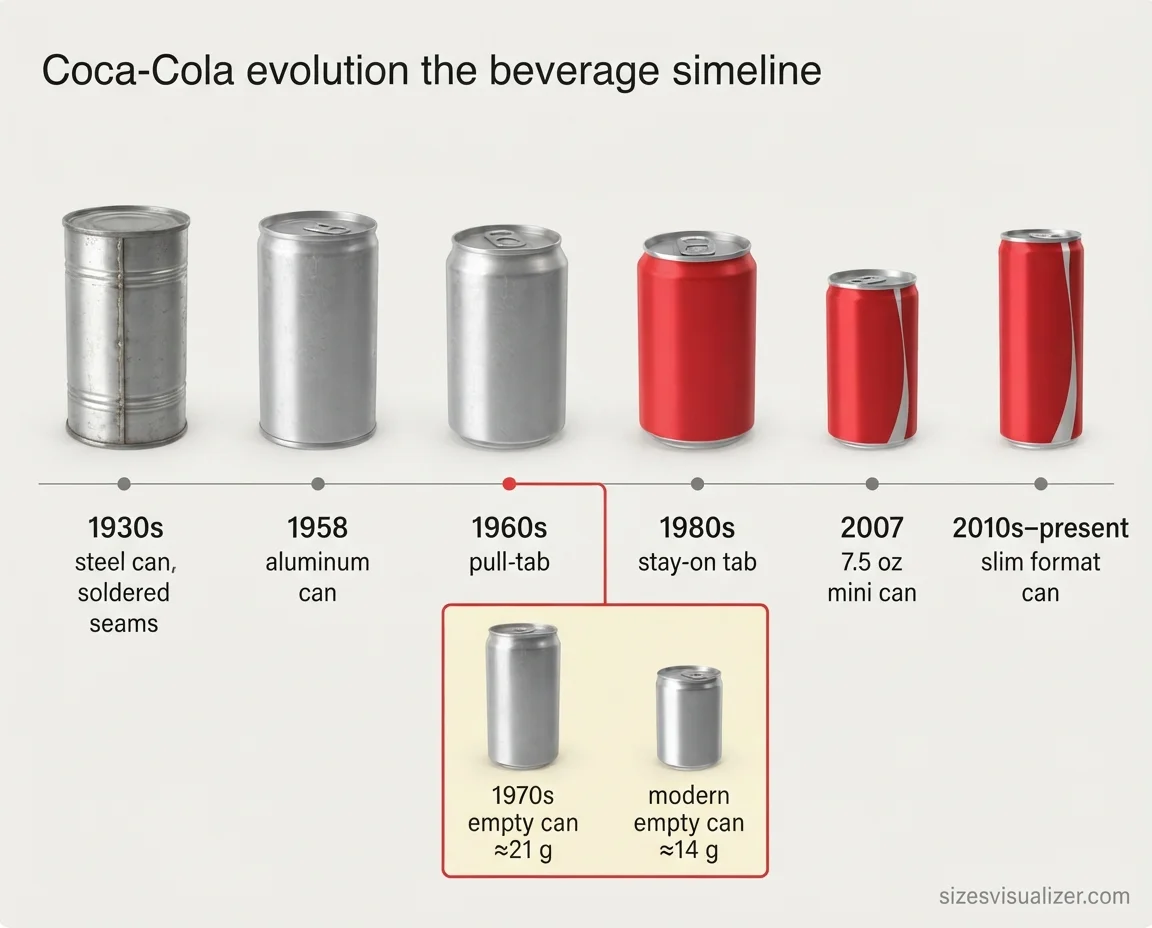
- 1930s — Steel cans, opened with a church key tool. Heavy, thick-walled.
- 1958 — Aluminum enters the picture, replacing steel across the industry.
- 1960s — The pull tab replaces the church key.
- 1980s — The stay-on tab arrives, cutting down on litter.
- 2007 — Coca-Cola launches the 7.5 oz mini can in the U.S.
- 2010s–present — Slim and sleek formats spread across premium product lines.
The quiet revolution nobody talks about is lightweighting. A can from the 1970s weighed around 21 grams empty. Today’s can weighs closer to 14 grams — nearly a third lighter, with no drop in strength. That’s decades of metallurgy compounding, one gram at a time, and it’s a big reason aluminum cans remain one of the most efficiently recycled containers on the planet, cycling back onto shelves within about 60 days according to industry recycling data.
Must visit: How Big Is a Soup Can? Standard Sizes, Dimensions, Weight & Capacity Guide
Coke Can Measurements in Everyday Use
Knowing exact Coke can dimensions isn’t just trivia. It solves real problems.
Fridge and cooler storage

A standard can needs at least 5 inches of vertical clearance. Most refrigerator shelves space out between 5.5 and 6.5 inches, leaving just enough room to grab a can without tilting it. Slim and tall boy formats need closer to 6.5 to 7 inches. A typical 24-can case measures roughly 19 x 5 x 5 inches, and a full pallet holds several thousand cans stacked in calibrated rows.
Cup holder fit
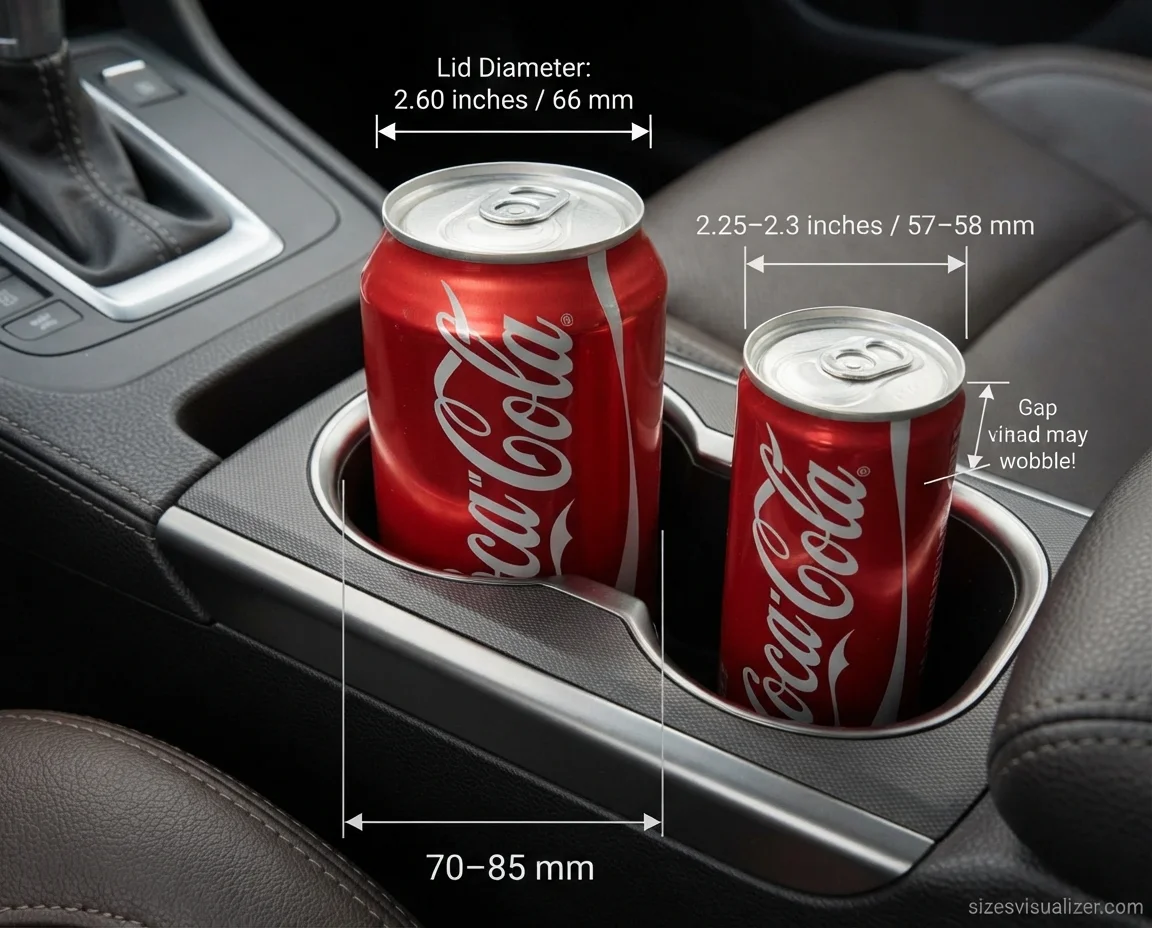
Standard U.S. automotive cup holders run 70mm to 85mm across. At 66mm wide, a standard Coke can drops in comfortably. Slim cans, at roughly 57mm, tend to wobble in older holders without a rubber insert or tension clip — worth knowing if you’re a fan of the sleek format.
Coke can size vs. other beverage cans
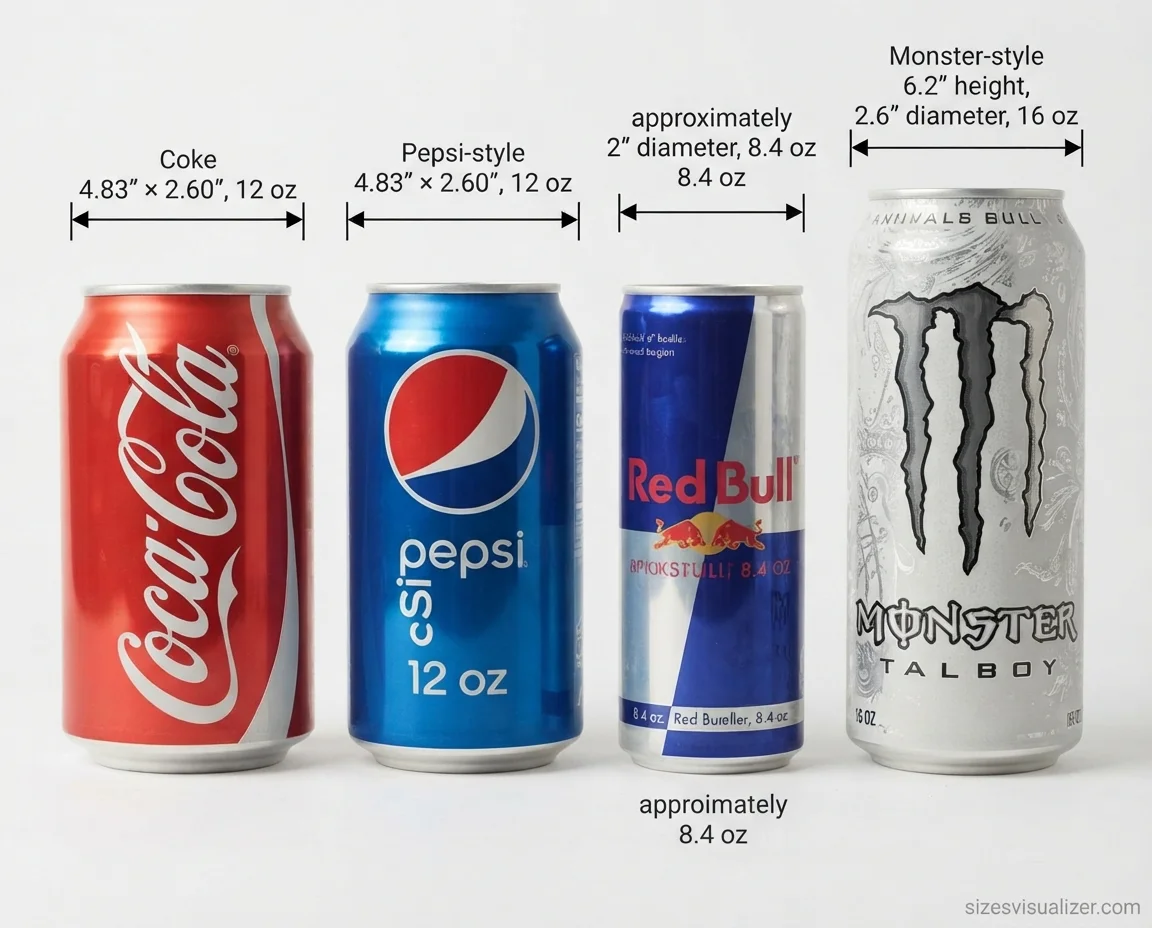
Pepsi shares nearly identical dimensions with Coke — same 4.83-inch height, same 2.6-inch diameter — because matching specs keeps both brands compatible with the same vending machines and shelf displays. Red Bull’s 8.4 oz can runs narrower, closer to a 2-inch diameter, giving it that recognizable slim grip. Monster Energy’s 16 oz can matches Coke’s standard diameter but stretches taller, tall-boy style.
Design, labeling, and 3D modeling
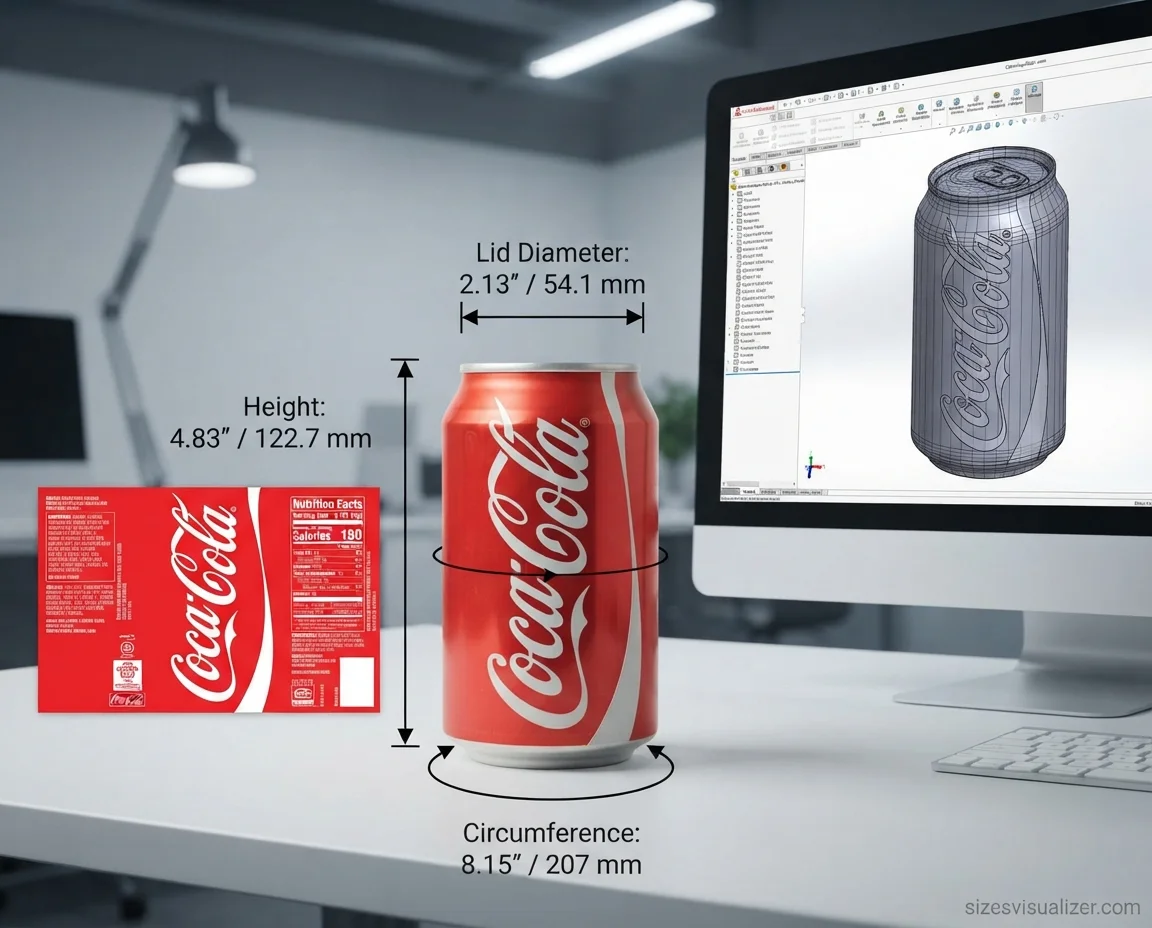
Graphic designers rely on exact soda can dimensions to build label wraps that don’t bubble or leave a gap. 3D modelers use the can as a go-to reference object because almost everyone instantly recognizes its true-to-life scale. Vending machine technicians check diameter specs before loading new stock, since even a couple of millimeters off can cause a jam.
FAQs
What is the dimension of a Coke can?
A standard U.S. Coke can measures 4.83 inches tall and 2.6 inches wide, with a lid diameter of 2.13 inches. It holds 12 oz, or 355 ml.
What are the dimensions of a 375ml Coke can?
The Australian 375 ml can stands about 5.1 inches tall with a diameter between 2.6 and 2.7 inches.
What are the dimensions of a 12-ounce soda can?
A standard 12 oz soda can — Coke, Pepsi, or otherwise — measures 4.83 inches tall and 2.6 inches wide across nearly every major U.S. brand.
What are the dimensions of a 250ml Coke can?
The 250 ml can stands roughly 3.9 to 5.3 inches tall, depending on the regional version, with a narrower 2.1-inch diameter.
How long is a Coke can?
“Long,” here, means height. A standard can stands 4.83 inches. Mini cans measure about 3.8 inches, and slim cans stretch to around 6.1 to 6.5 inches.
What is the size of a 330 ml can?
The 330 ml European can measures about 4.7 inches tall with a 2.6-inch diameter — roughly 7mm shorter than the U.S. standard.
Conclusion
The numbers behind a Coke can size are more deliberate than they look. A standard 12 oz can stands 4.83 inches tall, measures 2.6 inches wide, and holds 355 ml — dimensions locked in by decades of engineering, not guesswork. Whether you’re packing a cooler, designing a label, or just settling a bet, now you’ve got the exact numbers to back it up.

Measurement Researcher, Size Comparison Writer & Content Specialist
Timmy Ahad is a dedicated content writer and research specialist at SizesVisualizer.com, where he focuses on creating accurate, easy-to-understand content about measurements, dimensions, size comparisons, and real-world object visualization.