Ever grabbed a can of soup and wondered if it’s really “one serving”? You’re not alone. Soup can size confuses more shoppers than you’d think, since cans look similar but hold very different amounts.
This guide breaks down real soup can dimensions — diameter, height, weight, and capacity — using actual industry standards. No guesswork, just the numbers you need for cooking, shopping, or storing.
Table of Contents
What Is the Standard Size of a Soup Can?
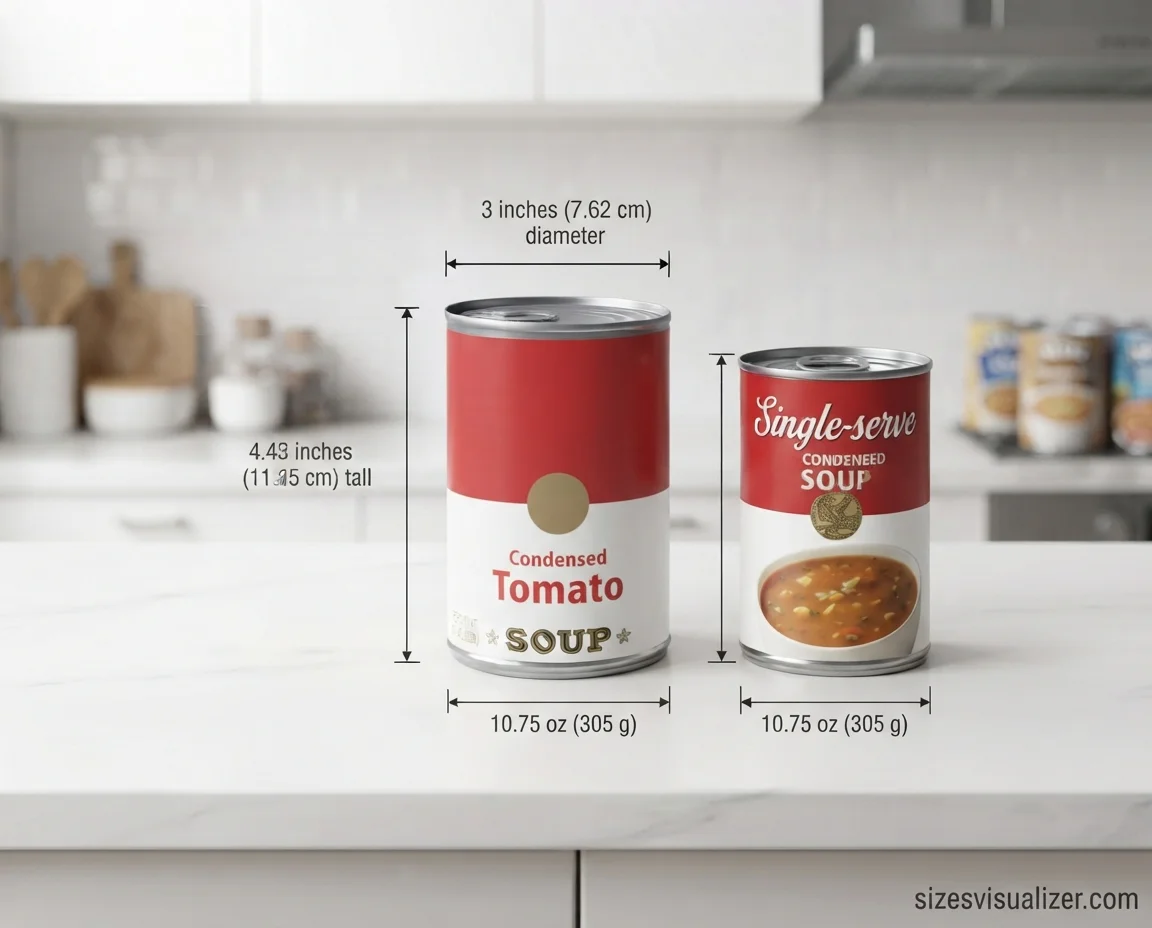
A standard condensed soup can measures 3 inches in diameter and 4.5 inches tall, holding 10.5 to 10.75 ounces. This is the classic size you’ll find stacked in nearly every American pantry.
Ready-to-serve soup cans run a bit bigger. They measure about 3.5 inches wide and 4.5 inches tall, packing in 18 to 19 ounces. No dilution needed — you just heat and eat.
Soup Can Dimensions Chart (Inches & Centimeters)
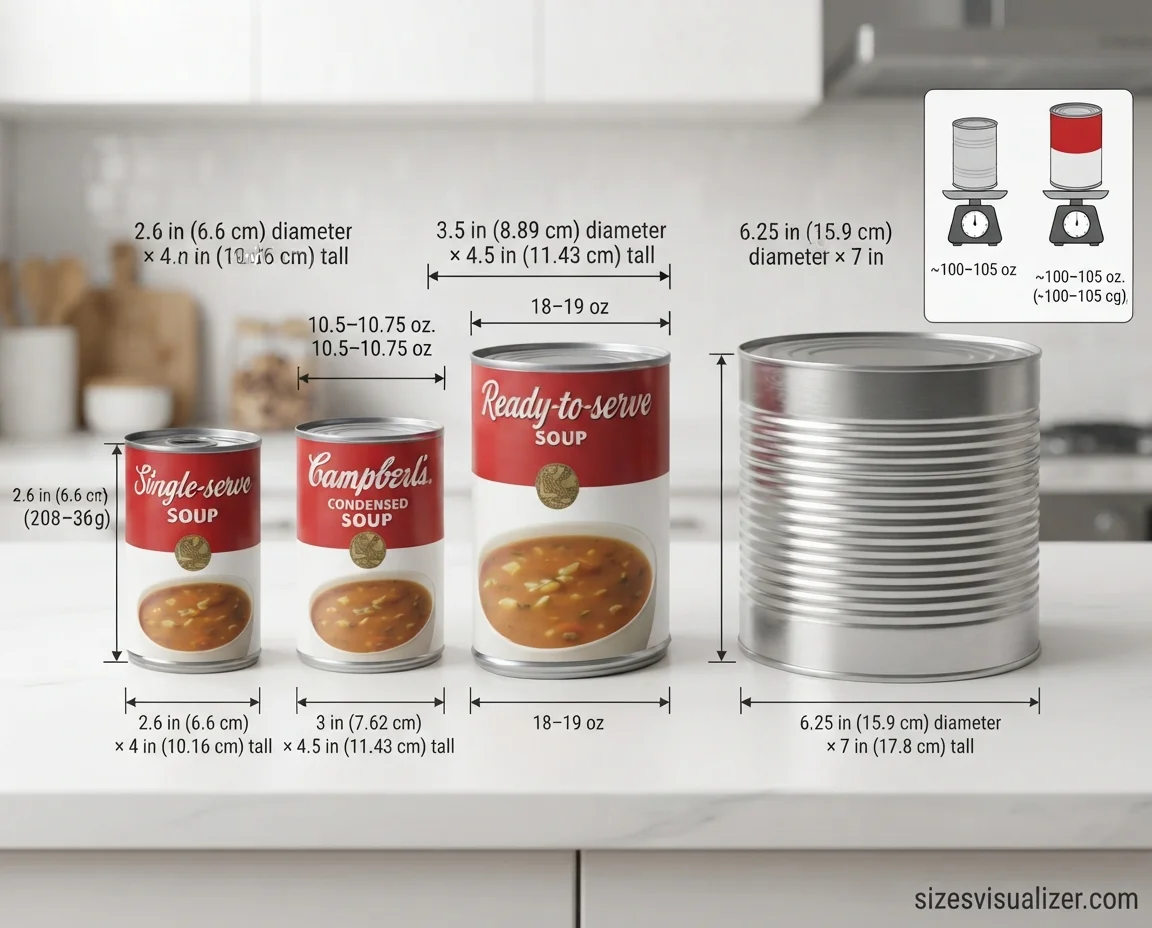
Metric conversions matter if you’re comparing imported brands or following international recipes. One inch equals 2.54 centimeters, so the math is simple once you know the base numbers.
Use our Size Visualizer Tool to compare dimensions and visualize the real-world size of objects with greater clarity and accuracy.
| Can Type | Diameter (in) | Height (in) | Diameter (cm) | Height (cm) | Capacity |
|---|---|---|---|---|---|
| Condensed | 3 in | 4.5 in | 7.62 cm | 11.43 cm | 10.5–10.75 oz |
| Ready-to-serve | 3.5 in | 4.5 in | 8.89 cm | 11.43 cm | 18–19 oz |
| Single-serve | 2.6 in | 4 in | 6.6 cm | 10.16 cm | ~7.25 oz |
| #10 institutional | 6.25 in | 7 in | 15.9 cm | 17.8 cm | ~100–105 oz |
Soup Can Weight — Empty Can vs. Filled Can

Here’s a detail most guides skip: the can’s own weight versus the net weight of soup inside it. Net weight only counts the food — not the steel container holding it.
A filled 10.75 oz condensed can typically weighs around 12 to 13 ounces total, once you add the empty steel can (roughly 1.5 to 2 ounces on its own). If you’re shipping, recycling, or just curious why a “10.75 oz” can feels heavier on a kitchen scale, this is why.
Net weight and fluid volume aren’t interchangeable either. The FDA’s food labeling guidelines require net weight in ounces or grams, but that number reflects mass, not the milliliters of liquid. Density varies by recipe — a creamy soup and a clear broth of equal weight won’t pour the same volume.
Soup Can Sizes by Type (Condensed, Ready-to-Serve, Single-Serve & Bulk)
Not every soup can serves the same purpose. Manufacturers size cans around how the soup gets prepared and who’s eating it.
Condensed soup cans
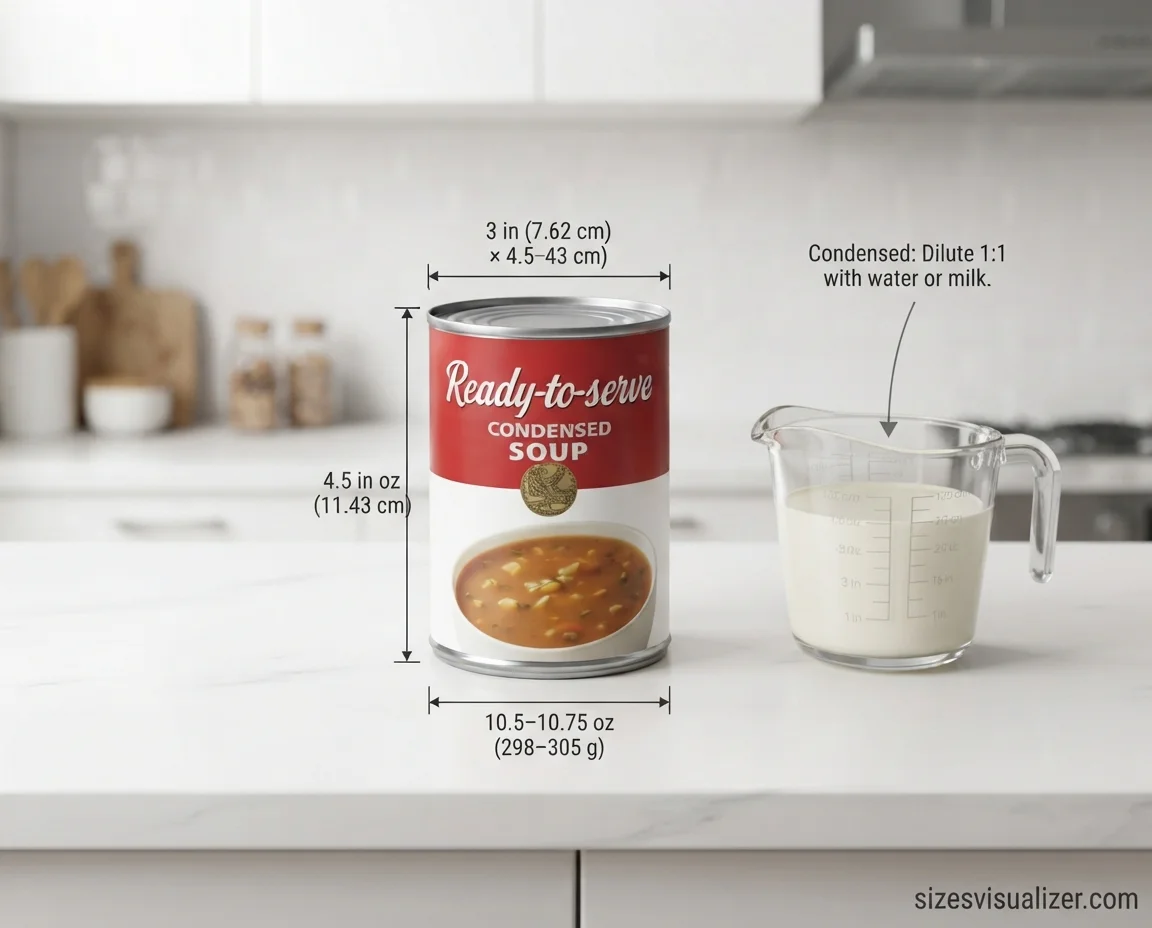
Condensed soup cans are the smallest common format. They’re built for dilution — mix in a can’s worth of water or milk before serving. This shrinks shipping weight and shelf footprint while still yielding multiple bowls.
Ready-to-serve cans

Ready-to-serve cans skip the dilution step entirely. They’re wider to fit chunky vegetables, noodles, and meat pieces comfortably, and they deliver a full meal straight from the can.
Single-serve cans

Single-serve cans are the compact option — around 2.6 inches wide and 4 inches tall, holding roughly 7.25 ounces. These fit neatly into a lunchbox or desk drawer, making them popular for portion control.
Bulk and institutional cans

Bulk and institutional cans go the other direction entirely. A #10 can — the standard for school cafeterias, restaurants, and catering — holds around 100 to 105 ounces, or roughly 12 to 13 cups of soup.
| Type | Diameter | Height | Capacity | Best For |
|---|---|---|---|---|
| Condensed | 3 in | 4.5 in | 10.5–10.75 oz | Pantry staples, recipes |
| Ready-to-serve | 3.5 in | 4.5 in | 18–19 oz | Quick full meals |
| Single-serve | 2.6 in | 4 in | ~7.25 oz | Portion control, kids |
| Family-size condensed | ~4 in | ~4.7 in | 22–23 oz | Batch cooking |
| 10 institutional | 6.25 in | 7 in | ~100–105 oz | Food service, bulk kitchens |
Soup Can Dimensions by Brand (Campbell’s, Progresso, Amy’s, Heinz & Store Brands)
Brands stick closely to industry-standard sizing, but small differences do show up — usually tied to ingredient chunkiness or packaging philosophy.
Campbell’s Condensed
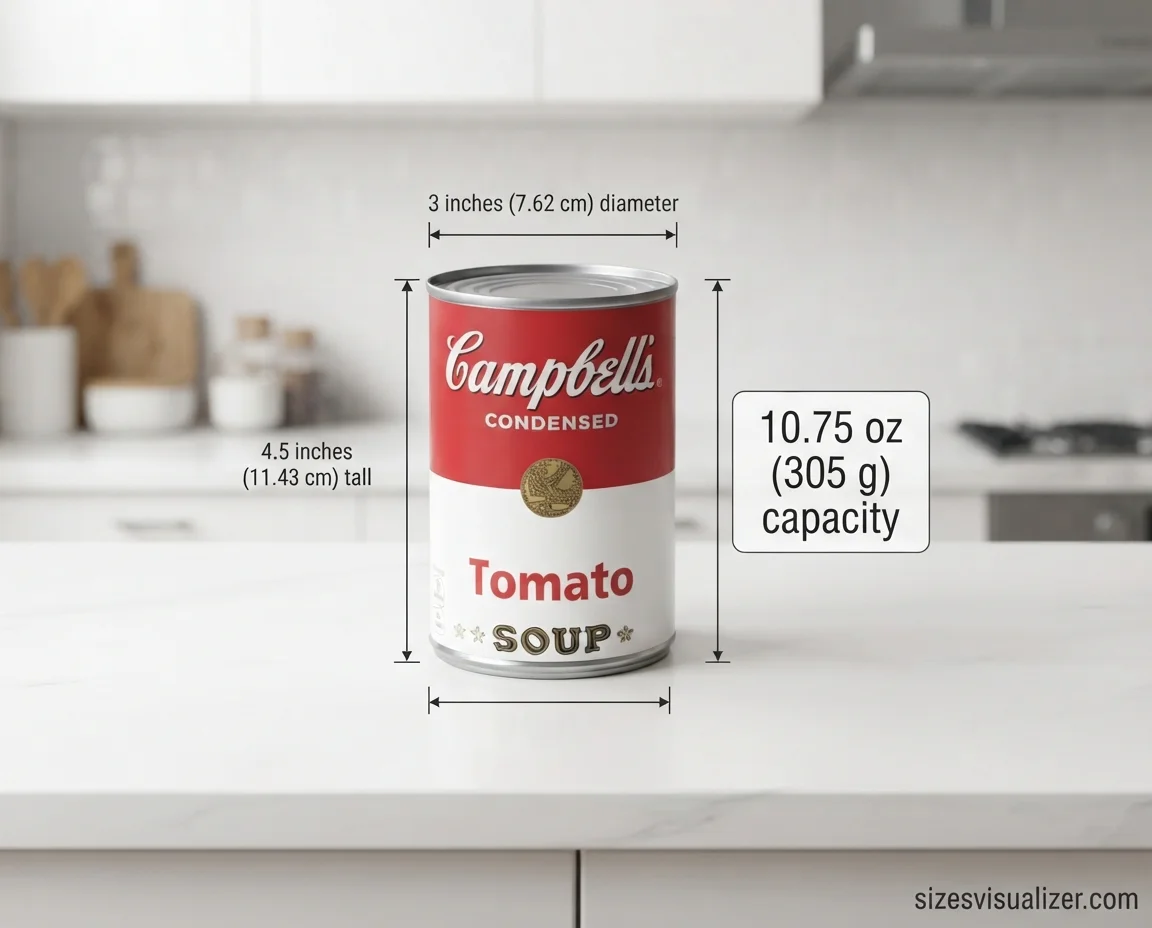
Campbell’s Condensed is the benchmark: 3 inches in diameter, 4.5 inches tall, 10.75 ounces. This exact size has stayed essentially unchanged for decades, which is part of why it’s such a recognizable shape on grocery shelves.
Campbell’s Chunky
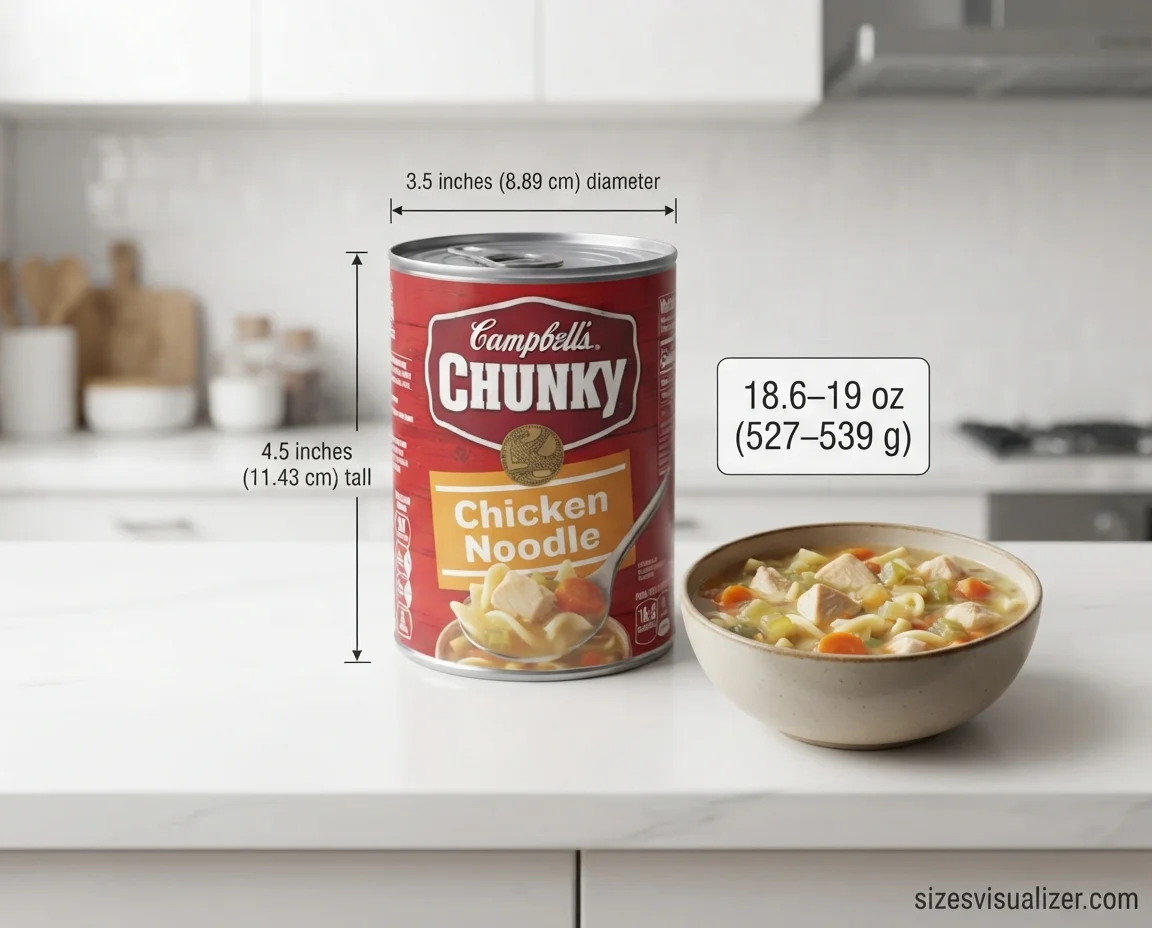
Campbell’s Chunky, the ready-to-serve line, measures 3.5 by 4.5 inches and holds 18.6 to 19 ounces.
Progresso
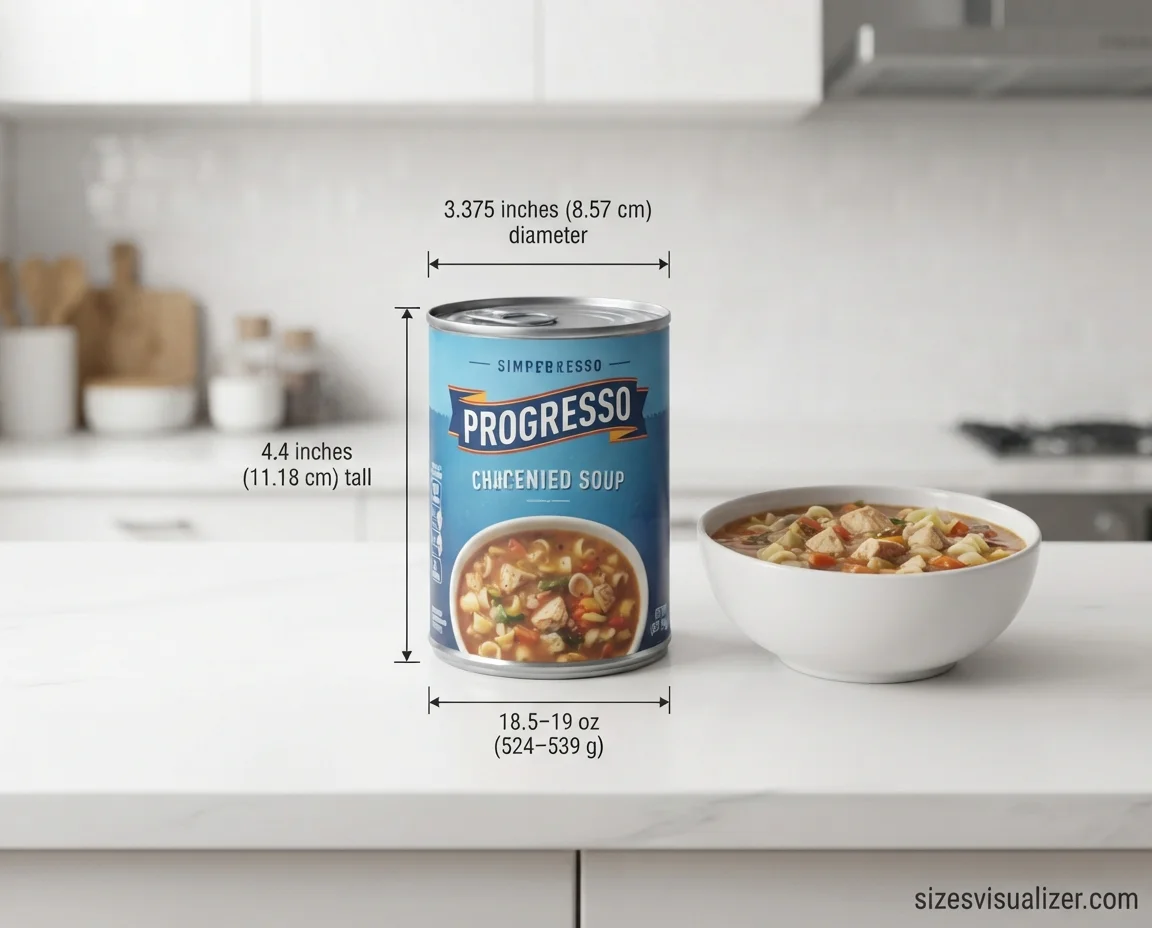
Progresso runs slightly wider at 3.375 inches in diameter and about 4.4 inches tall, holding 18.5 to 19 fluid ounces. That extra width gives room for larger vegetable and meat pieces without crowding the can.
Amy’s Organic soups
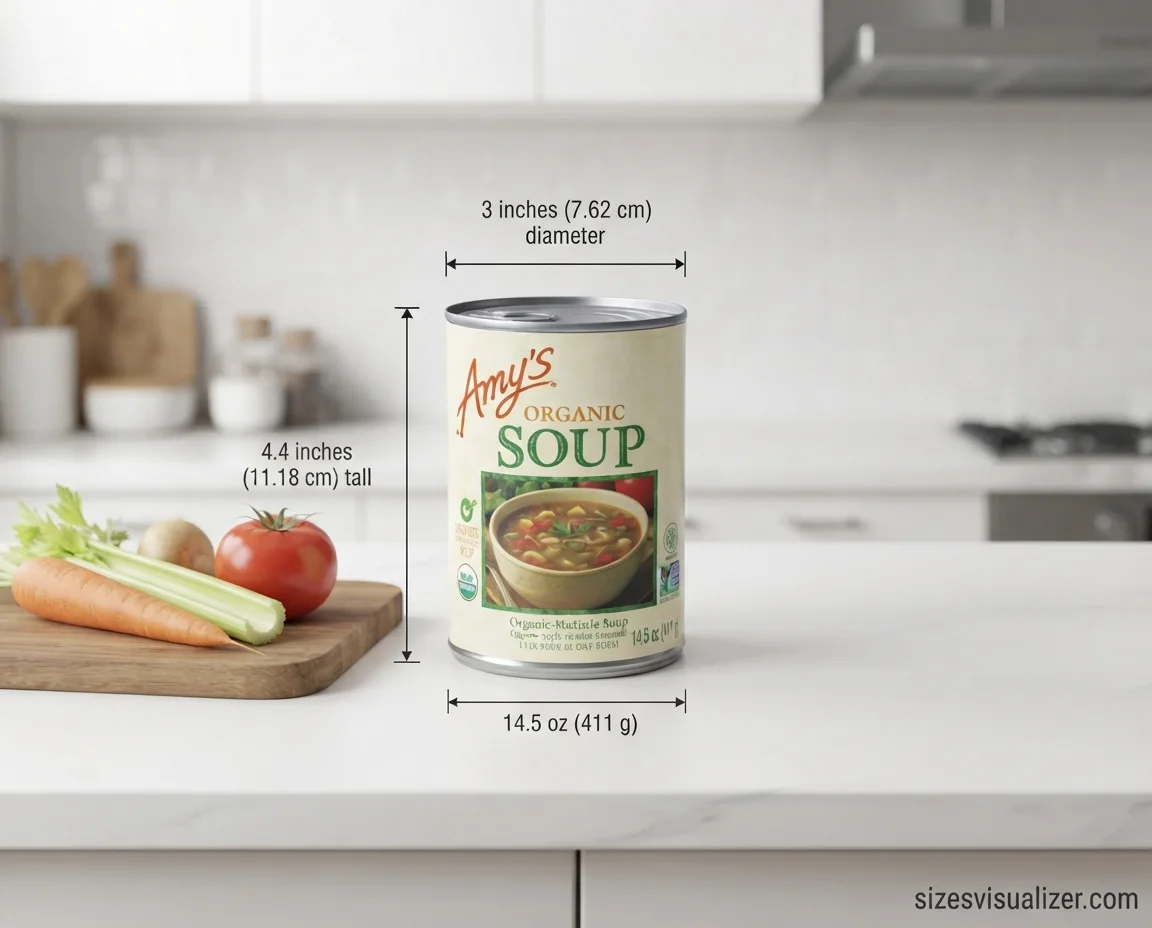
Amy’s Organic soups, packed in BPA-free cans, measure roughly 3 inches wide and 4.4 inches tall, holding 14.5 ounces — a size that sits between condensed and full ready-to-serve formats.
Heinz USA cans

Heinz USA cans typically hold 15 ounces at about 3 inches wide and 4.43 inches tall.
Store brands
Store brands from major retailers usually mirror Campbell’s dimensions almost exactly. This isn’t coincidence — matching sizes makes it easy for shoppers to do direct price comparisons on the shelf.
| Brand | Diameter | Height | Capacity |
|---|---|---|---|
| Campbell’s Condensed | 3 in | 4.5 in | 10.75 oz |
| Campbell’s Chunky | 3.5 in | 4.5 in | 18.6–19 oz |
| Progresso | 3.375 in | 4.4 in | 18.5–19 oz |
| Amy’s Organic | 3 in | 4.4 in | 14.5 oz |
| Heinz (USA) | 3 in | 4.43 in | 15 oz |
| Store Brand | 3 in | 4.5 in | 10.75 oz |
Soup Can Label Size & Dimensions

This is a detail most soup guides leave out entirely, but it matters if you’re designing packaging, printing labels, or just curious how that wraparound label fits so precisely.
A soup can label is essentially a rectangle sized to wrap the can’s full circumference, plus a small overlap for the glue seam. Circumference is calculated using the formula C = π × diameter.
For a standard 3-inch condensed can, that works out to about 9.42 inches around. Add roughly a quarter-inch for the overlap seam, and most label templates for a #300 can run close to 9.6 to 9.7 inches wide.
Height-wise, labels are cut slightly shorter than the can itself, usually leaving a small unlabeled strip at the top and bottom rim — often around 4 to 4.25 inches tall on a 4.5-inch can. This gap protects the label from crimping during the seaming process.
For ready-to-serve cans at 3.5 inches in diameter, circumference climbs to about 11 inches, so labels run proportionally wider — closer to 11.2 to 11.3 inches.
Getting these dimensions right isn’t just cosmetic. A label that’s even slightly off can misalign on high-speed bottling lines, causing wrinkles, gaps, or seam failures — a real cost concern in commercial food packaging.
Must Visit: How Big Is a 2-Car Garage? Standard Dimensions, Square Feet & Size Guide
Why Soup Can Size Matters (Storage, Shopping & Recipes)
Knowing exact soup can dimensions solves more everyday problems than people expect.
Pantry organization

Pantry organization gets easier once you group cans by size. Standard 3-inch condensed cans fit about four per row in a typical 12-inch-deep cabinet shelf, while wider 3.5-inch ready-to-serve cans only fit three. That extra half-inch adds up fast in a small kitchen.
Recipe scaling

Recipe scaling depends on knowing your can’s true yield. A condensed can isn’t “one serving” — it typically expands to about 2.5 cups once you add water, matching roughly 2.5 servings by USDA’s standard of 1 cup per serving. A ready-to-serve can, by contrast, yields closer to 2 servings with nothing added.
Smart shopping

Smart shopping comes down to price-per-ounce math, and can size drives that number directly. Larger formats usually cost less per ounce but require more storage space and faster use before flavor or texture declines. Smaller cans cost more per ounce but cut down on food waste for single-person households.
Shipping and case packs

Shipping and case packs also hinge on can dimensions. Standard #300 condensed cans typically ship in cases of 24, and even a tiny variance — as little as 0.01 inches — can throw off automated filling or sealing lines at a commercial scale.
FAQs
What is the size of a soup can?
A standard condensed soup can measures 3 inches in diameter and 4.5 inches tall, holding 10.5 to 10.75 ounces. Ready-to-serve cans measure 3.5 inches wide and 4.5 inches tall, holding 18 to 19 ounces.
What is the diameter of a can of soup?
Most condensed soup cans have a 3-inch diameter (7.62 cm). Ready-to-serve cans are wider, at 3.5 inches (8.89 cm), to accommodate chunkier ingredients.
What is the standard size of a can?
In the US, the most common food can code is #300, meaning 3 inches in diameter by 4 and 7/16 inches tall. Other common codes include #303 (3.1875 × 4.375 in) and #307 (3.4375 × 4.5625 in), each tied to a different capacity range.
What are the dimensions of a soup can label?
A label for a standard 3-inch can needs to wrap roughly 9.6 to 9.7 inches around (circumference plus overlap) and stands about 4 to 4.25 inches tall. Wider ready-to-serve cans need labels closer to 11.2 to 11.3 inches around.
What size is label size?
Label size scales directly with can circumference: C = π × diameter. A 3-inch can needs about 9.42 inches of wrap before adding the seam overlap; a 3.5-inch can needs about 11 inches.
How tall is a normal can of soup?
A normal soup can — whether condensed or ready-to-serve — stands 4.5 inches tall. Single-serve cans are shorter, around 4 inches, while large #10 institutional cans reach 7 inches.
Conclusion
Soup can size isn’t random — it follows decades-old industry standards that keep shelves, kitchens, and production lines running smoothly. Whether you’re planning a recipe, organizing a pantry, or just settling a curiosity, knowing the real diameter, height, and capacity behind that label takes the guesswork out of grocery shopping.

Measurement Researcher, Size Comparison Writer & Content Specialist
Timmy Ahad is a dedicated content writer and research specialist at SizesVisualizer.com, where he focuses on creating accurate, easy-to-understand content about measurements, dimensions, size comparisons, and real-world object visualization.