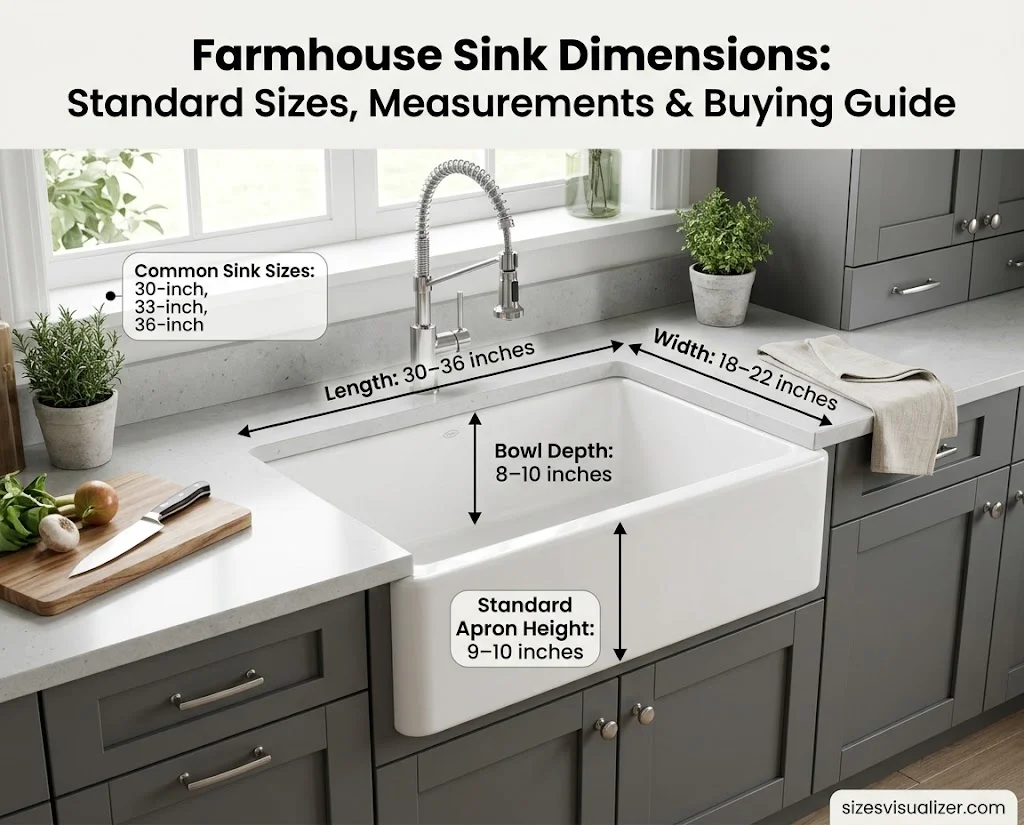
Farmhouse sink dimensions decide whether your new sink fits or becomes a costly cabinet fix. Most apron-front sinks are 24 to 36 inches long, 18 to 22 inches wide, and 8 to 10 inches deep.
This guide covers standard farmhouse sink sizes, depth, apron height, and cabinet fit. You also get a simple measuring method and quick answers to common questions.
Table of Contents
Standard Farmhouse Sink Dimensions by Size
The standard size of a farmhouse sink is 30, 33, or 36 inches long. Smaller kitchens often use 30 inches, and larger kitchens usually use 33 or 36. Single-bowl models span roughly 24 to 36 inches, and double-bowl models start near 30 inches. Extra-long workstation farmhouse sinks can run past 40 inches.
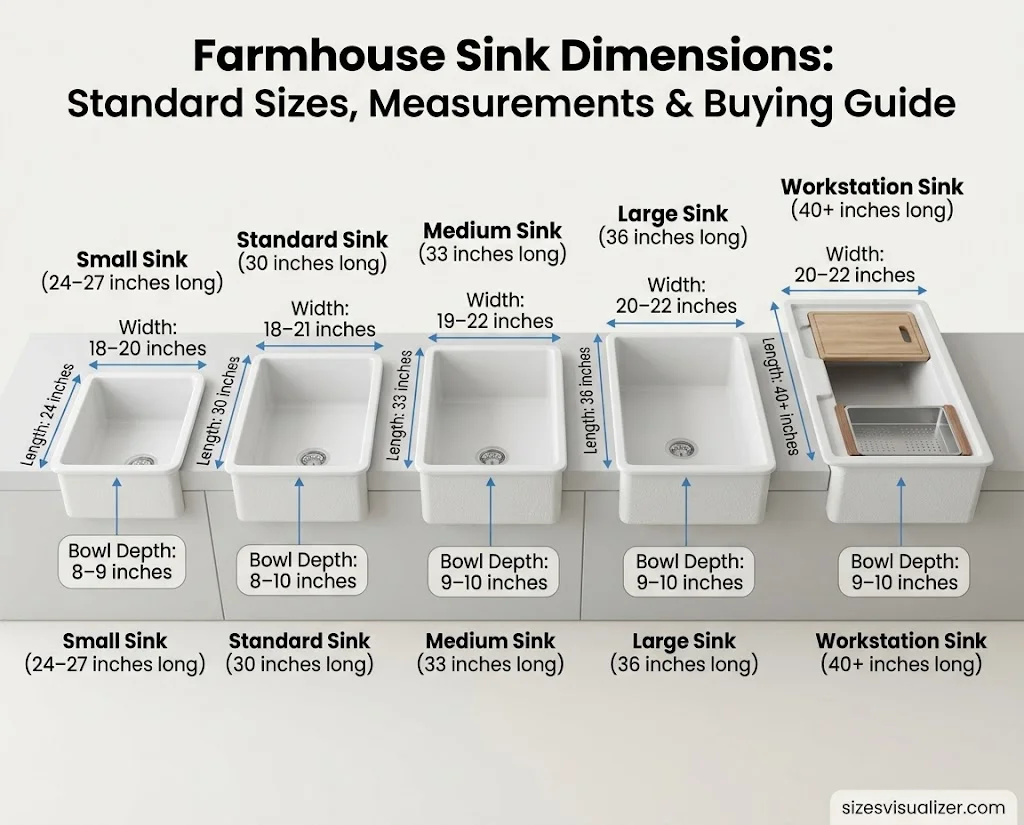
Here is a quick farmhouse sink size chart:
| Length | Width (front to back) | Bowl depth | Best for |
|---|---|---|---|
| 24–27″ | 18–20″ | 8–9″ | Small kitchens, prep areas |
| 30″ | 18–21″ | 8–10″ | Most homes |
| 33″ | 19–22″ | 9–10″ | Families, frequent cooks |
| 36″ | 20–22″ | 9–10″ | Large kitchens, double bowls |
| 40″+ | 20–22″ | 9–10″ | Workstation sinks |
Labels round up. A “33-inch” sink may measure slightly less, so always check the spec sheet.
Also compare outside and inside measurements. Thick fireclay walls shrink the usable bowl. The inner bowl is often a few inches smaller than the outer length.
Farmhouse Sink Depth, Apron Height & Width
A good depth for a farmhouse sink is 9 to 10 inches. Standard sinks are usually 7 to 8 inches deep. The extra depth hides dirty dishes and cuts splashing.

Is a 9 inch sink deep enough? Yes. It holds a stockpot, a roasting pan, and a stack of plates with room to spare. Choose 8 to 9 inches if you want less bending.
Depth also affects comfort. Most US counters stand about 36 inches high, so a deeper basin puts the water lower. Shorter users may feel more strain at 10 inches.
Apron height matters too. A full apron front is about 9 to 10 inches tall. A short or retrofit apron is about 7 inches. It fits existing cabinets with less cutting.
Check width as well. A wider sink steals counter space behind it or sticks out past the cabinet. Apron style (flat, fluted, ridged, curved, chiseled) changes how far the front shows.
Accessibility is a separate factor. The ADA sink guidelines cap the rim or counter height at 34 inches for accessible sinks. A very deep bowl can make that hard to meet.
Choosing the right farmhouse sink is important for both functionality and kitchen design, but other measurements also play a key role in creating a cohesive home. If you’re planning a renovation, explore this guide to standard interior door dimensions to find the right door sizes for every room and ensure a comfortable, well-proportioned space.
Farmhouse Sink Size Chart for Base Cabinets & How to Measure
A farmhouse sink rests on the base cabinet, not the countertop. So the cabinet sets your size limit.

What size cabinet does a farmhouse sink need? Add about 3 inches to the sink length. That leaves room for cabinet sides and bracing.
| Base cabinet width | Largest sink (typical) |
|---|---|
| 30″ | 27″ |
| 33″ | 30″ |
| 36″ | 33″ |
| 39″ | 36″ |
| 42″ | 36″–39″ |
Some makers allow a tighter fit. Always follow the manufacturer’s template.
Measure in this order:
- Cabinet inside width, depth, and height.
- Door and face-frame clearance.
- Countertop thickness and backsplash gap.
- Drain, water lines, and garbage disposal position.
- Space behind the sink for the faucet.
Most farmhouse kitchen sinks have no faucet holes. You need a deck-mount faucet on the counter or a wall-mount faucet. A cardboard cutout of the sink helps you spot problems before you buy.
Choosing the Right Farmhouse Sink Size

Start with how you cook. Then match the sink size to your kitchen:
- Small kitchen or dishwasher user: 27–30 inches, single bowl.
- Big family or batch cooking: 33 inches or longer, single bowl.
- Wash and rinse separately: 33–36 inches, double bowl.
Material changes weight and care. Cast iron and large fireclay sinks are very heavy, so the cabinet may need extra support. Stainless steel and copper weigh less. Copper also builds a natural patina. Granite composite resists scratches.
Custom sizes cost more and take longer to arrive. Many homeowners skip them by adjusting the cabinet instead. A pro installer helps with leveling, countertop cuts, and leak-free seals.
Add a sink grid to prevent scuffs and help water reach the drain.
FAQs
What is the standard size of a farmhouse sink?
Most are 30, 33, or 36 inches long. Width runs 18 to 22 inches, and depth runs 8 to 10 inches.
What are the dimensions of a 30 inch farmhouse sink?
Expect about 30 inches long, 18 to 21 inches wide, and 8 to 10 inches deep. It fits a 33-inch base cabinet.
Is a 30 inch farmhouse sink big enough?
Yes, for most households. It handles a standard 18 by 13 inch half-sheet pan and a large stockpot. Go bigger if you cook large meals often.
What is a good depth for a farmhouse sink?
Nine to ten inches suits most cooks. Pick 8 to 9 inches for easier reach.
What is the drawback of a farmhouse sink?
The main issues are higher cost, cabinet changes, heavy weight, and extra bending. Some materials can chip or scuff. There are also no faucet holes, so you need extra faucet planning.
Is a 9 inch sink deep enough?
Yes. It sits inside the usual 8 to 10 inch range and fits large pots comfortably.
Conclusion
Measure your cabinet first, then match the farmhouse sink to it. A 30-inch or 33-inch single bowl fits most kitchens. Confirm the spec sheet before you order.

Measurement Researcher, Size Comparison Writer & Content Specialist
Timmy Ahad is a dedicated content writer and research specialist at SizesVisualizer.com, where he focuses on creating accurate, easy-to-understand content about measurements, dimensions, size comparisons, and real-world object visualization.