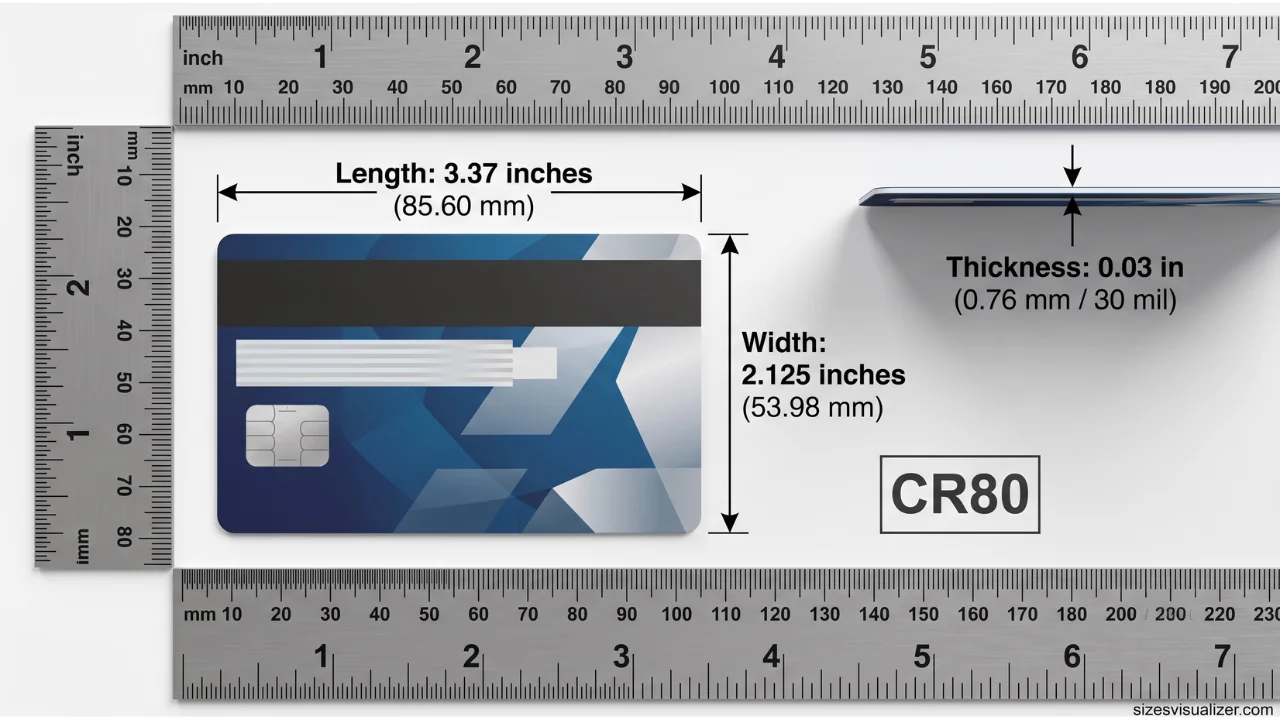
A standard credit card measures 3.37 inches long by 2.125 inches wide (85.6mm x 53.98mm), with a thickness of 0.03 inches, or 0.76mm. That’s it. Every card in your wallet — credit, debit, or ID — is built to this exact size.
This number isn’t random. It comes from a global rulebook that every bank, card maker, and payment terminal on Earth follows. Below, we’ll break down the full credit card dimensions, the credit card thickness in every unit you might search for, and why this tiny piece of plastic is one of the most precisely engineered objects you carry every day.
Standard Credit Card Dimensions: Size in Inches, MM & CR80 Format
What are the exact dimensions of a credit card? A standard card is 3.37in x 2.125in, or 85.6mm x 53.98mm. In the card-manufacturing world, this shape has a nickname: CR80. You’ll hear that term a lot if you ever order custom cards, so it’s worth knowing.
What Is the ISO/IEC 7810 ID-1 Standard?
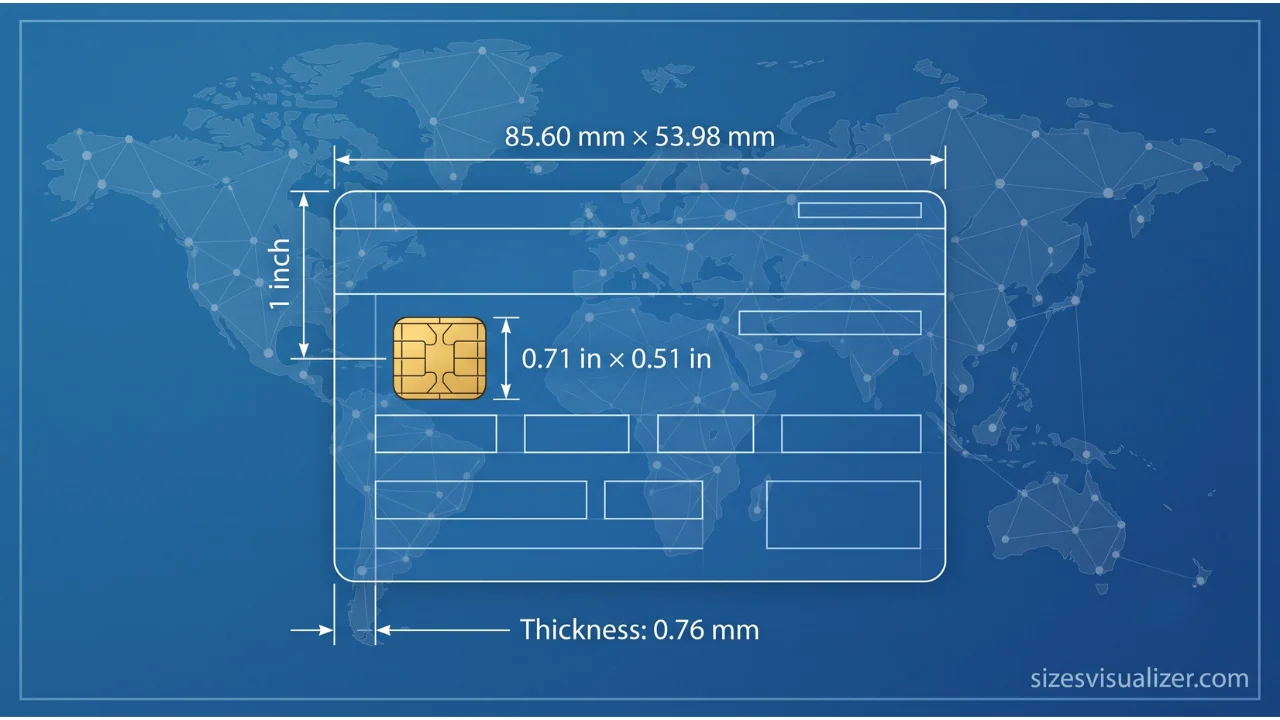
The rulebook behind every credit card’s size is called ISO/IEC 7810. This is an international standard published by the International Organization for Standardization — the same body that standardizes shipping containers, screw threads, and thousands of other everyday objects. Within this standard, credit cards fall under a specific category called ID-1.
ID-1 doesn’t just define length and width. It also sets rules for how much a card can bend before it cracks, how it holds up to heat, humidity, and chemical exposure, and exactly where the chip and magnetic stripe must sit. The chip, for example, must be 0.71 inches tall and 0.51 inches wide, positioned precisely 1 inch from the top edge. That level of precision is what lets a card made in one country work flawlessly in a machine built in another.
Credit Card Size Compared to a Driver’s License
Here’s a fact most people never notice: your driver’s license is the exact same size as your credit card. So are most government ID cards, transit passes, and hotel key cards. This isn’t a coincidence — ID-1 governs all of them. That’s why a wallet slot designed for a credit card also fits your license perfectly.
Use our Size Comparison Tool to instantly visualize real-world dimensions, making it easier to understand the actual size of everyday objects.
How Thick Is a Credit Card? Thickness in Mil, Inches & MM
How thick is a credit card? The standard credit card thickness is 0.03 inches, which equals 0.76mm, or 30 mil in the card-printing industry. “Mil” is a unit that trips a lot of people up, so let’s clear it up right away.
What Does “Mil” Actually Mean?
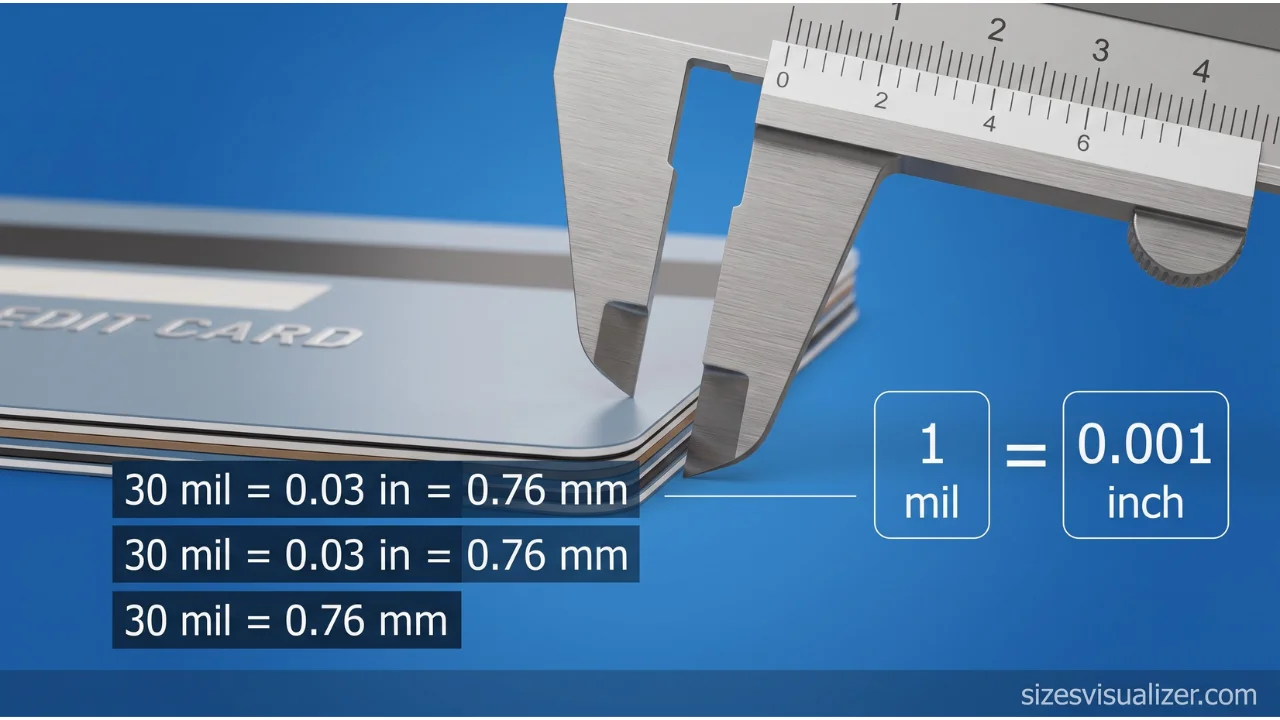
A mil is one-thousandth of an inch — not a millimeter, even though the words sound alike. This mix-up is one of the most common points of confusion in card sizing, and it’s worth memorizing: 1 mil = 0.001 inch, and 30 mil = 0.03 inches = 0.76mm.
Mil, Inches & MM Conversion Table
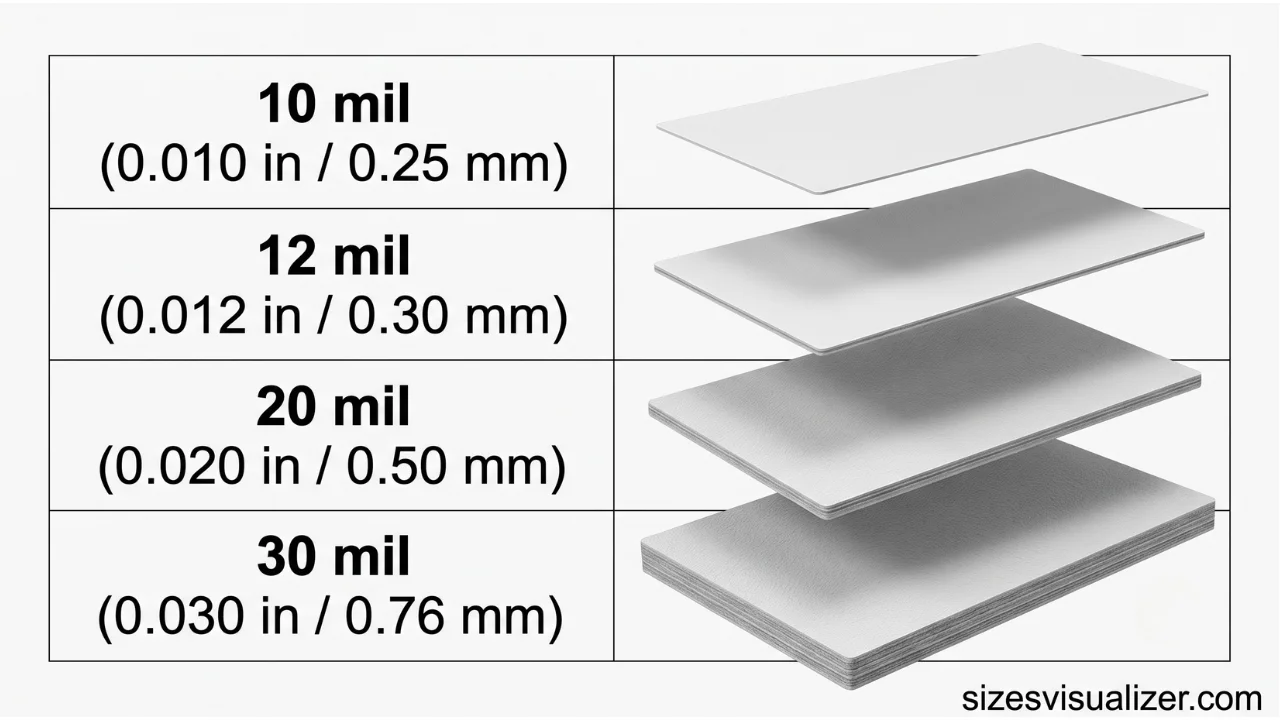
| Thickness (mil) | Thickness (inches) | Thickness (mm) | Typical Card |
|---|---|---|---|
| 10 mil | 0.010 in | 0.25mm | Mailers, temporary passes |
| 12 mil | 0.012 in | 0.30mm | Light-duty business cards |
| 20 mil | 0.020 in | 0.50mm | Gift cards, loyalty cards |
| 30 mil | 0.030 in | 0.76mm | Credit, debit & bank cards |
Embossed vs. Flat Cards — Does Thickness Change?
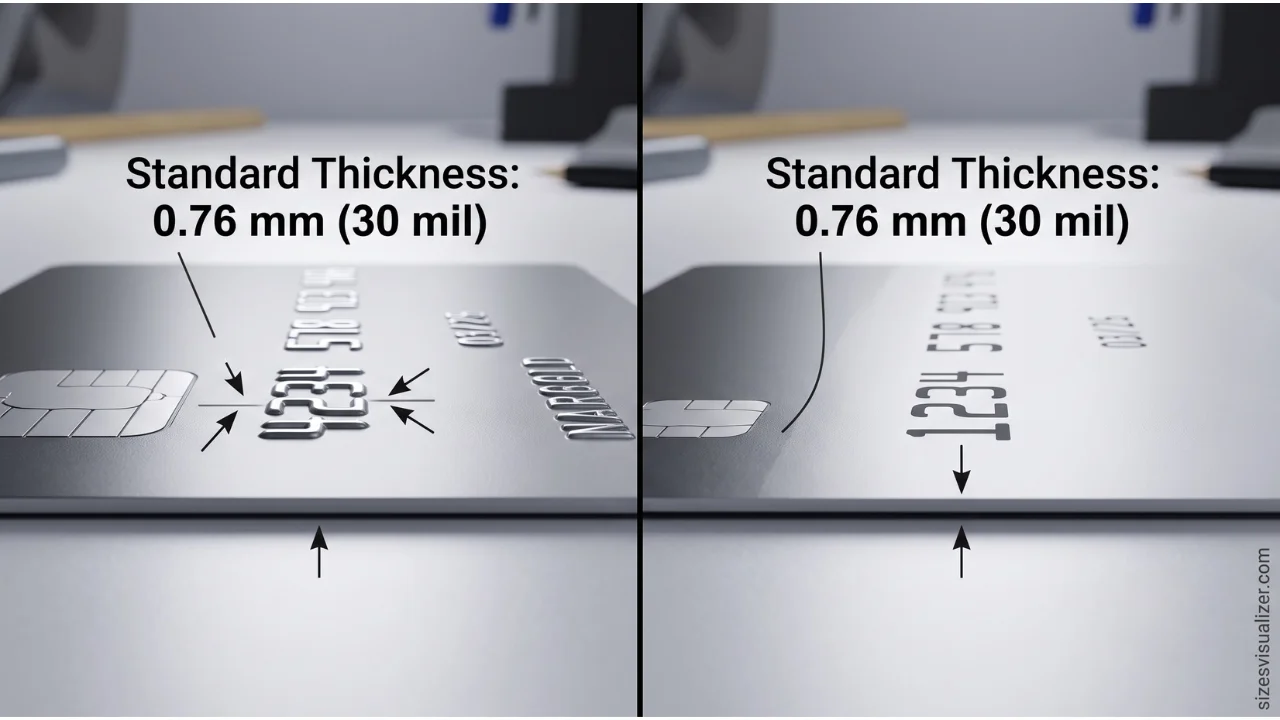
Older cards had raised letters and numbers, a style called embossing. This was originally required so cashiers could run a card through a manual imprint machine. That raised texture adds a hair of extra surface height, which is why an embossed card can feel slightly thicker in your hand than a flat, flush-printed card, even though both meet the same 30-mil standard. Flat printing has become the norm now that most transactions run through chip readers and contactless terminals, so fewer new cards carry embossing at all.
Why Are Credit Card Dimensions Standardized?
Card size feels like a small detail — until you imagine a world without it. Why do credit card dimensions matter? Because billions of card transactions happen every single day, and every one of them depends on a card fitting a slot it was never custom-built for.
The Role of ISO and Global Payment Networks
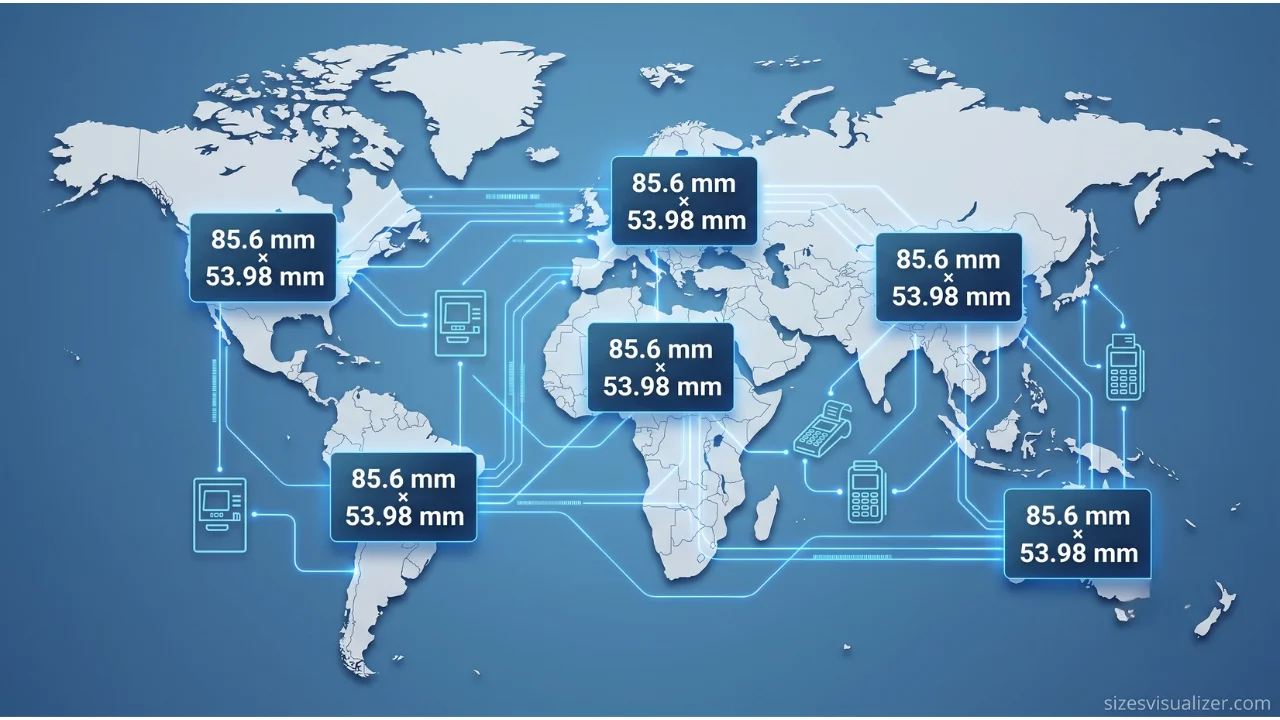
Major networks like Visa, Mastercard, and American Express all build their cards to the same ISO measurements. This is what lets a card issued in Tokyo work at a coffee shop register in Chicago. Without a shared standard, every bank would need its own proprietary card readers — an expensive, chaotic mess for merchants and travelers alike.
ATM, POS Terminal & EMV Chip Compatibility

Beyond ISO, chip placement follows a separate rulebook called the EMV standard, created jointly by Europay, Mastercard, and Visa. EMV governs not just where the chip sits, but how it “talks” to a payment terminal during a tap-to-pay or insert transaction. This standard is what makes chip-and-PIN technology — common across Europe, Canada, Australia, and India — increasingly common in the United States too.
What Happens If a Card Doesn’t Meet Standard Size?
A card even slightly off-spec risks jamming in an ATM, misreading at a point-of-sale (POS) terminal, or failing to seat correctly in a chip reader. That’s why manufacturers stay locked to ISO tolerances no matter how creative the card design gets.
Must Visit: How Big Is a Football Field? Official Dimensions, Yard Lines & Field Layout 2026
Credit Card Size vs. Other Card Types
Not every plastic card in your wallet is built the same way, even though most share the same footprint.
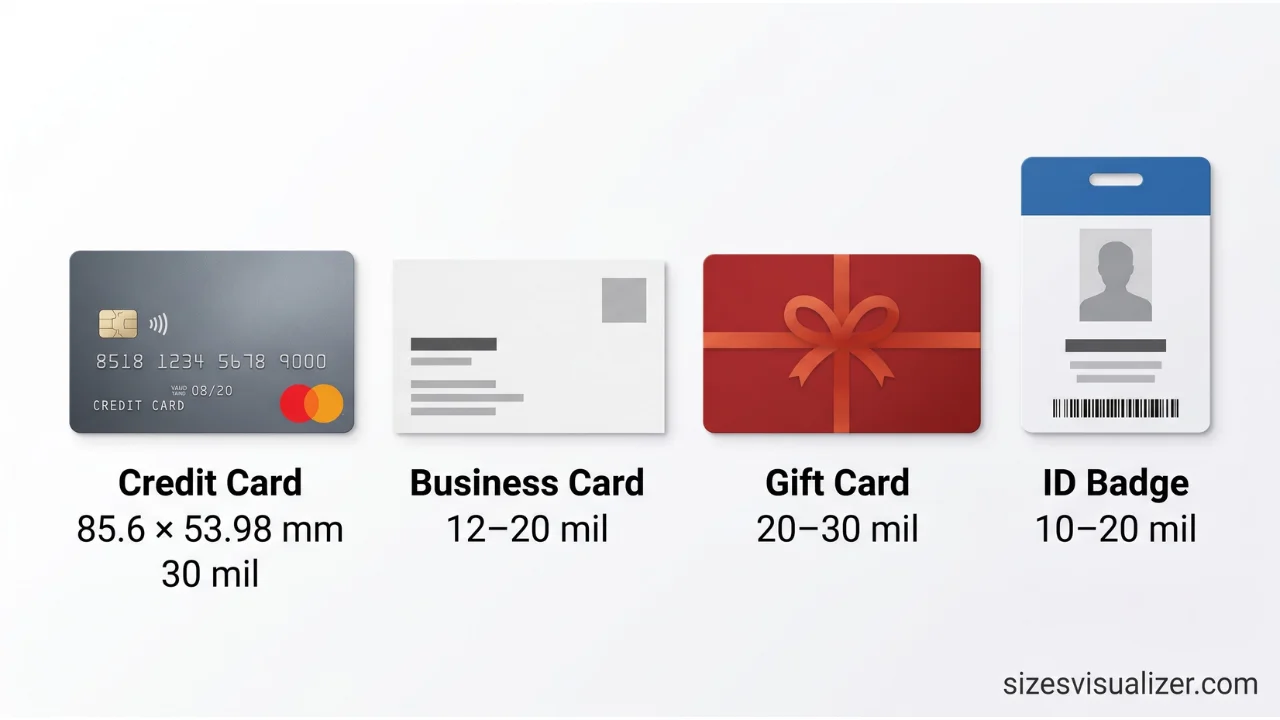
Credit Cards vs. Business Cards vs. Gift Cards vs. ID Badges
| Card Type | Standard Thickness | Notes |
|---|---|---|
| Credit / Debit Card | 30 mil (0.76mm) | Locked to ISO/IEC 7810 for terminal compatibility |
| Gift Card | 20–30 mil | Often matches credit card thickness for a premium feel |
| Plastic Business Card | 12–20 mil | Thinner, lighter, built for mailing and handing out |
| Loyalty / Membership Card | 20–30 mil | Built for repeat swiping over years of use |
| Event Pass / Badge | 10–20 mil | Thin, low-cost, meant for short-term use |
Metal Cards & Premium Cards — Weight Differences
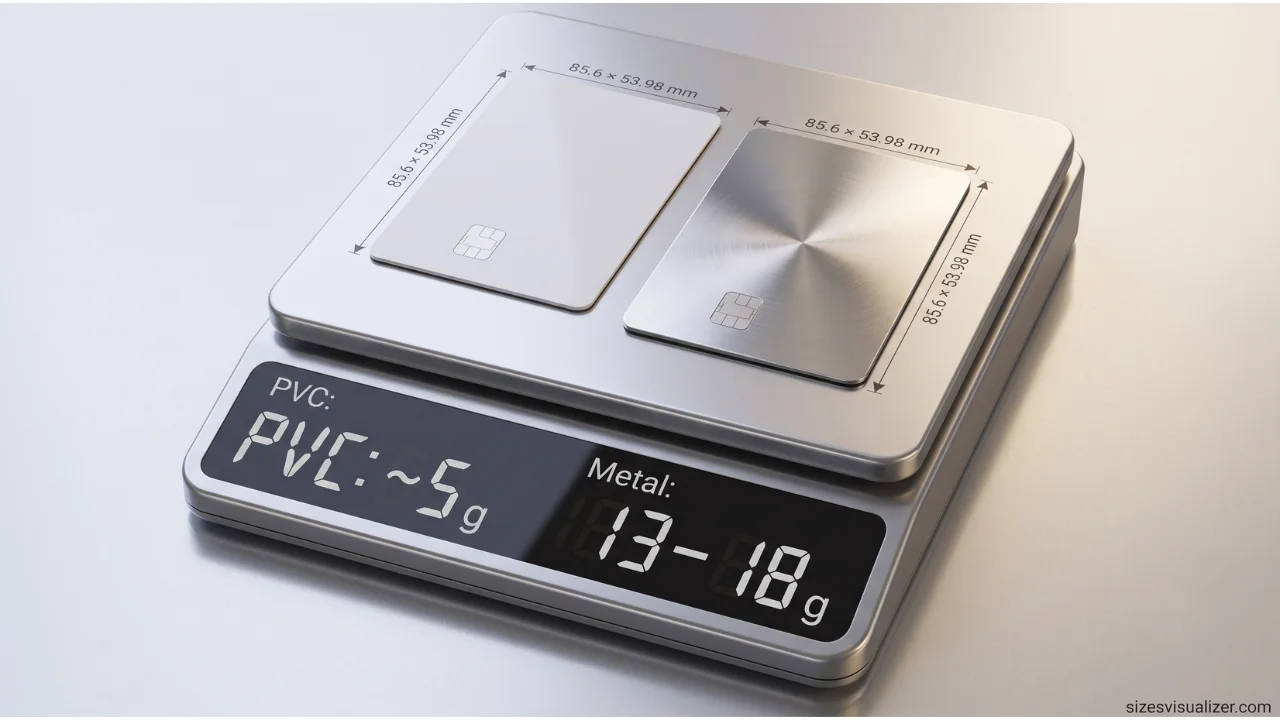
Metal cards — made from stainless steel, titanium, or aluminum alloys — keep the same length and width as plastic cards but pack noticeably more weight. A standard PVC card weighs around 5 grams, while a metal card typically weighs 13 to 18 grams. That extra heft is a deliberate design choice by premium card issuers, since metal signals status even though it doesn’t change the card’s official dimensions. The tradeoff: metal cards are less flexible, and older card readers occasionally struggle with their rigidity.
Do All Countries Use the Same Credit Card Size?
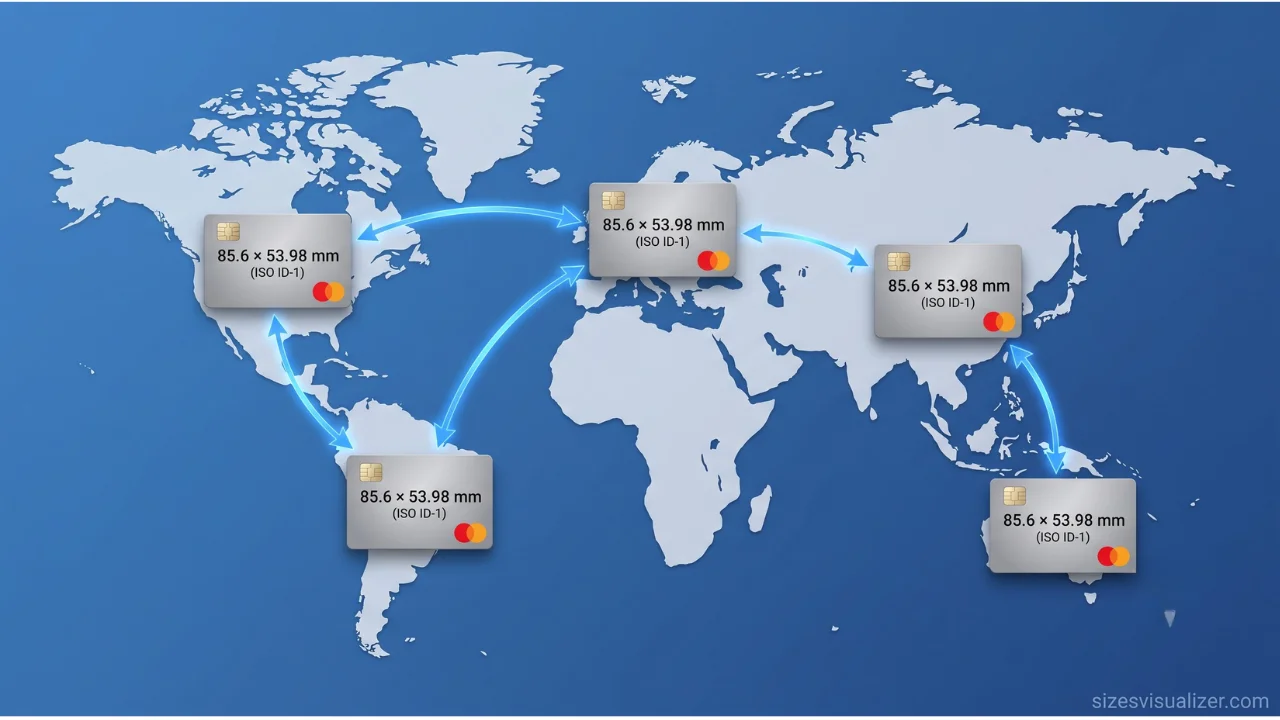
Yes, almost universally. Because ISO/IEC 7810 is an international standard, card size stays consistent from Argentina to Australia. You might notice small differences in edge finishing or material on government-issued cards in certain countries, but these come from local production choices, not a different size standard.
Credit Card Size in 2026: Materials, Trends & What’s Changing
Card technology keeps evolving, even if the core measurements stay frozen in place.
Eco-Friendly & Recycled PVC Cards
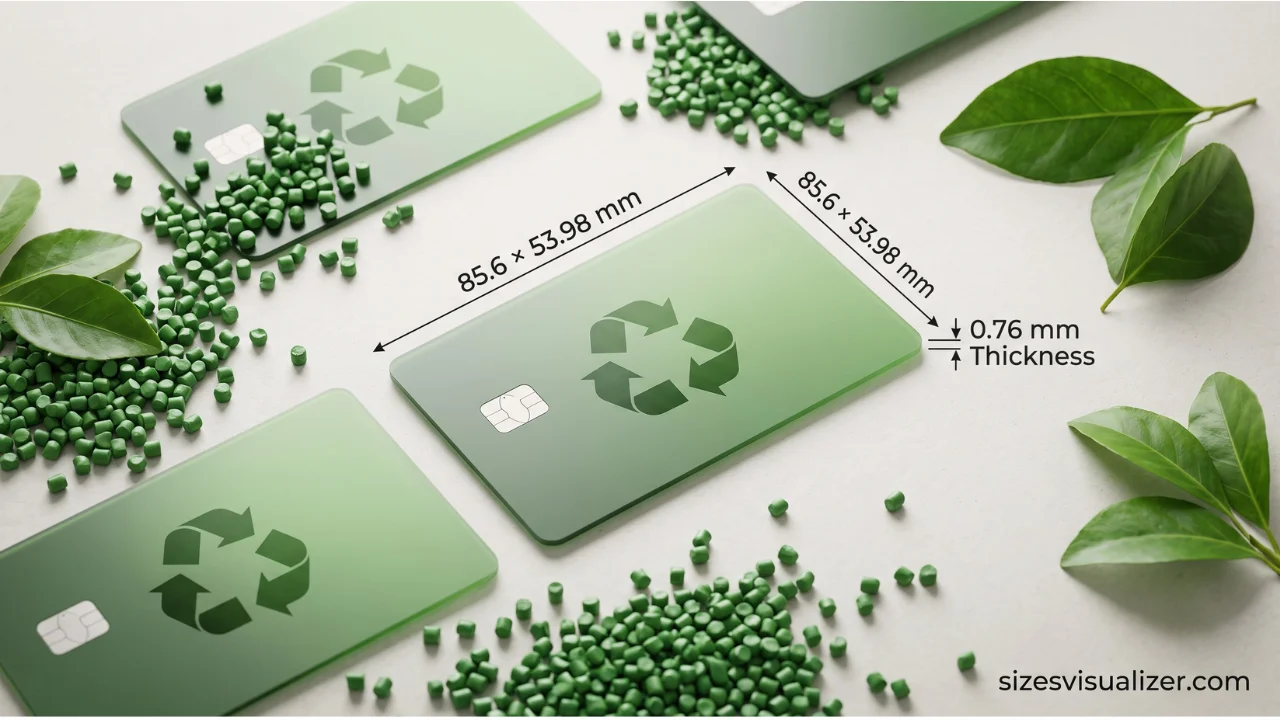
Banks are increasingly issuing cards made from recycled PVC, bioplastics, and PLA composites instead of virgin plastic. These greener materials still meet ISO thickness and durability rules, though they can show subtle differences in flexibility or edge texture compared to traditional PVC.
Contactless Chip Placement and Tap-to-Pay Design
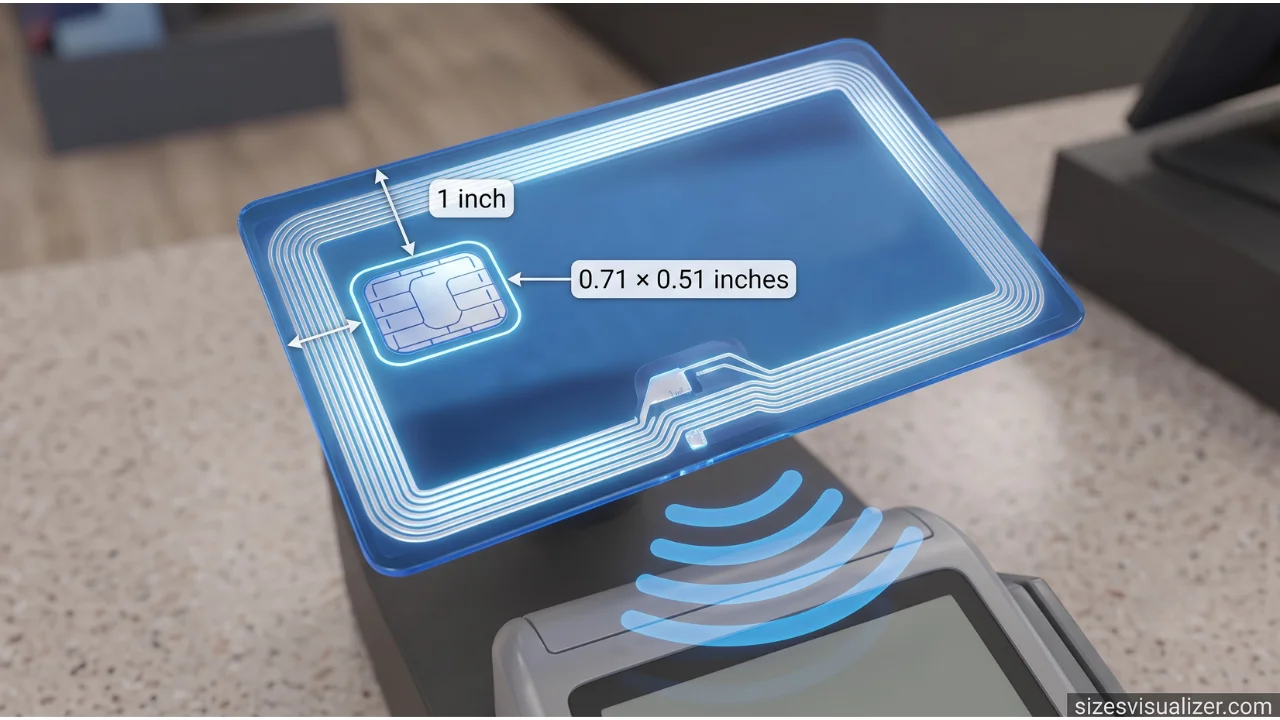
As tap-to-pay becomes the default way people pay, chip and antenna placement inside the card has gotten more precise than ever. The physical chip footprint hasn’t shrunk, but the contactless antenna woven inside the card body has become a bigger engineering focus, since it needs to communicate with a terminal from a short distance rather than through direct contact.
Are Cards Getting Thinner or Smaller?
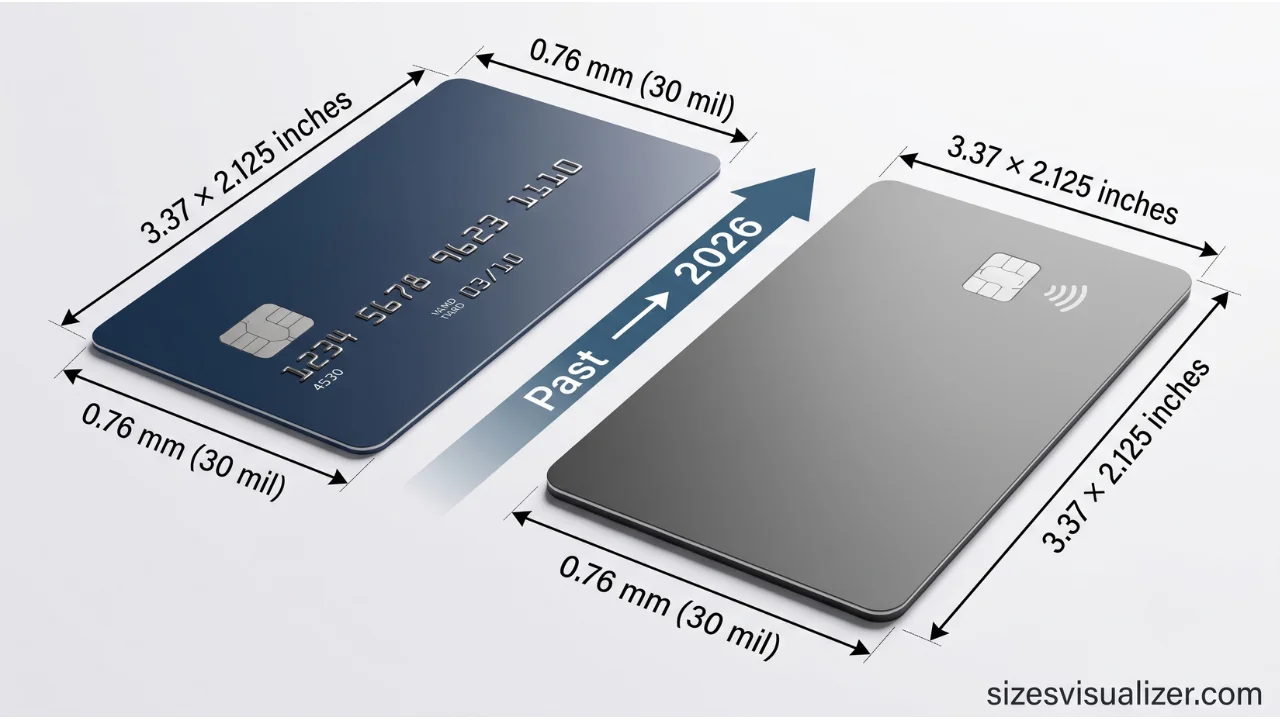
Not in any official sense — the length, width, and thickness are still locked to the same 30-mil, 3.37 x 2.125-inch footprint that’s existed for decades. What is changing is the feel: fewer embossed numbers, sleeker matte finishes, and lighter metal blends. Don’t expect the outer dimensions to shift anytime soon — global terminal compatibility depends on them staying exactly where they are.
FAQ’s
How thick is a normal credit card?
A normal credit card is 0.03 inches thick, which equals 0.76mm, or 30 mil. This is the standard set by ISO/IEC 7810 and used by nearly every bank card worldwide.
Is a credit card 1 mm thick?
No. A standard credit card is thinner than 1mm — it measures 0.76mm, not a full millimeter. A card that reached 1mm would be noticeably thicker than what fits most card readers and wallet slots.
Is a credit card 2mm thick?
No. At 2mm, a card would be more than double the standard 0.76mm thickness and likely wouldn’t fit properly into ATMs, POS terminals, or standard wallet slots. Only unusually chunky novelty items would approach that thickness — real payment cards never do.
What is the maximum thickness of a credit card?
Under the ISO/IEC 7810 standard, 0.76mm (30 mil) is treated as the standard, with minor manufacturing tolerances allowed. Specialty metal cards can feel thicker due to weight and rigidity, but they’re still built to stay within a fraction of a millimeter of the same benchmark to remain compatible with card readers.
What is the 75 rule for credit cards?
This one’s a quick detour from sizing — the “75 rule” isn’t about card dimensions at all. It refers to a common credit management guideline suggesting cardholders keep balances below roughly 75% of the total limit across their cards, distinct from the more widely cited 30% utilization advice. It’s a spending discipline concept, not a manufacturing spec.
Is $20,000 a high credit card limit?
Also unrelated to physical card size, but a fair question: $20,000 is generally considered a high limit, well above the average credit limit most consumers hold in the U.S. Limits like this are typically reserved for those with strong credit scores, high income, and a solid repayment history.
Conclusion
Every credit card you’ll ever hold follows the same tight blueprint: 3.37 x 2.125 inches, 0.76mm thick, built to the ISO/IEC 7810 ID-1 standard. That consistency is what lets your card work at a terminal it was never designed for, in a country its issuer never operated in. Small plastic, precise engineering.

Measurement Researcher, Size Comparison Writer & Content Specialist
Timmy Ahad is a dedicated content writer and research specialist at SizesVisualizer.com, where he focuses on creating accurate, easy-to-understand content about measurements, dimensions, size comparisons, and real-world object visualization.