Buying a bed is easy. Buying the right size bed is not. A queen bed looks simple on paper — one standard size, sold everywhere. But get the queen bed dimensions wrong for your room, and you’ll spend years bumping into a dresser at 2 a.m.
This guide breaks down the exact queen size bed dimensions, how they compare to other sizes, and how much real floor space you need. No guesswork. Just the numbers.
Table of Contents
What Are the Standard Queen Bed Dimensions in 2026?
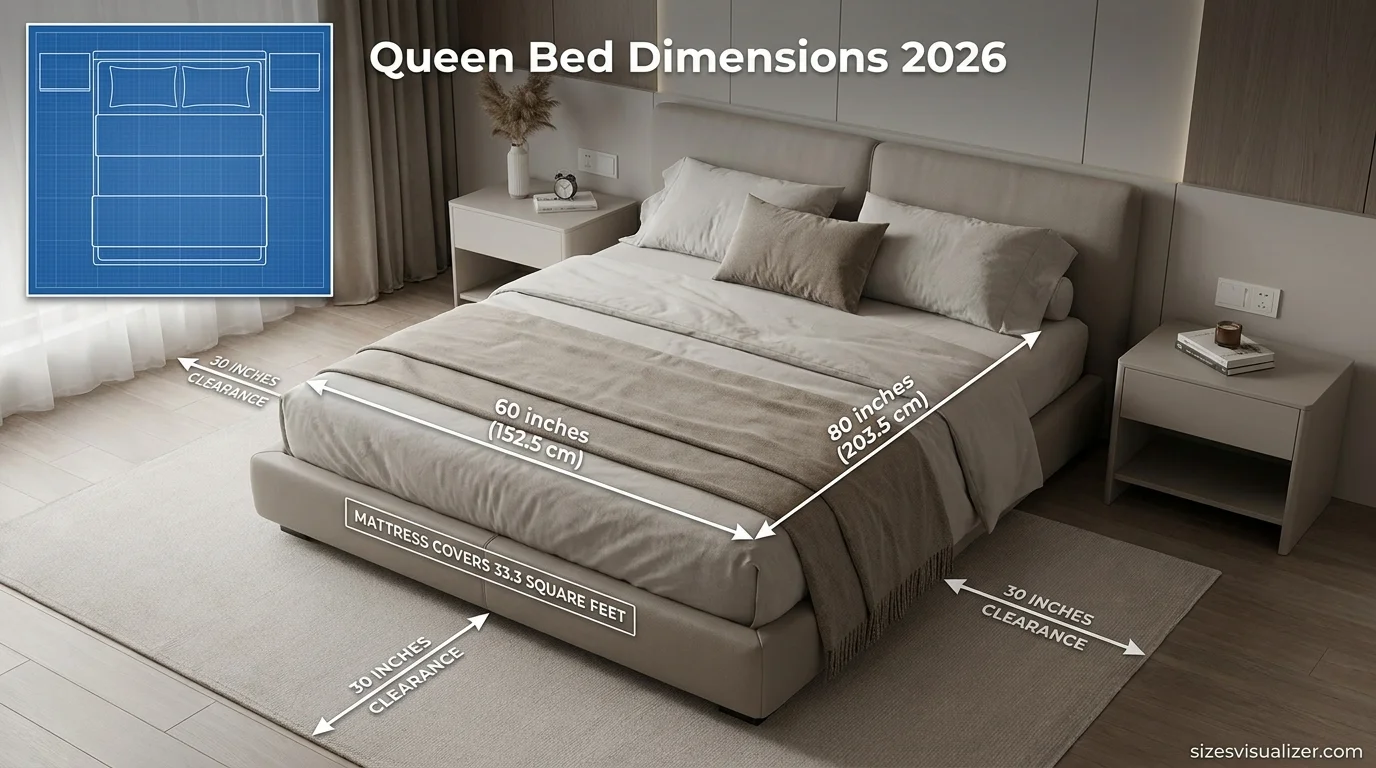
The actual size of a queen size bed is 60 inches wide by 80 inches long (152.5 cm x 203.5 cm). That’s the number to remember. It hasn’t changed in decades, and it won’t change in 2026 either — this size is set by the mattress industry as a national standard across the US.
A queen mattress covers about 33.3 square feet of floor space. That’s roughly the size of a small walk-in closet, just for sleeping on.
Queen Mattress Size vs. Queen Bed Frame Size
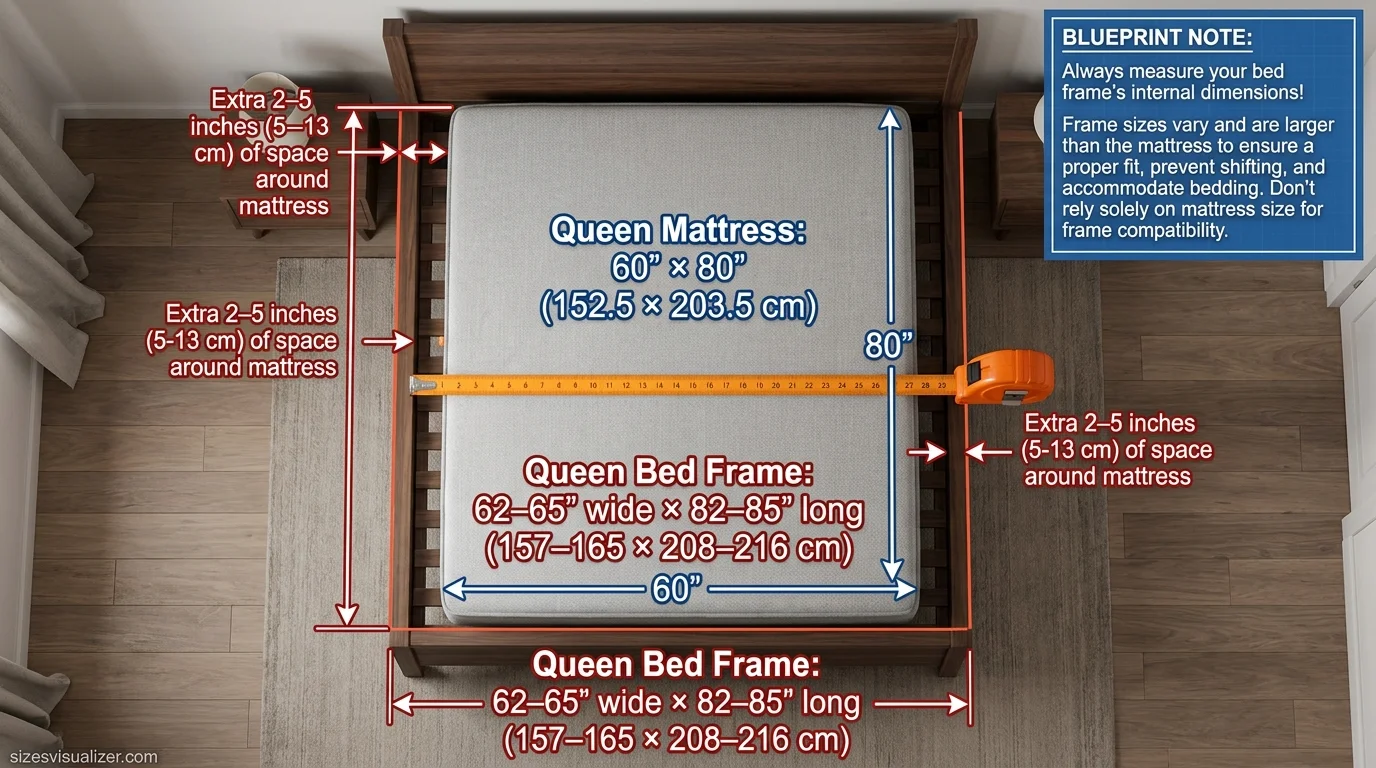
Here’s something most buyers miss: the mattress and the frame are not the same size. A queen mattress is 60″ x 80″. But a queen bed frame runs slightly larger — usually 62″ to 65″ wide and 82″ to 85″ long — to leave room for the mattress to sit inside the rails without hanging over the edge.
If you’re measuring your room before buying, always measure using the frame dimensions, not just the mattress. That extra 2 to 5 inches matters when a bed is pushed against a wall or between two nightstands.
Queen Mattress Thickness
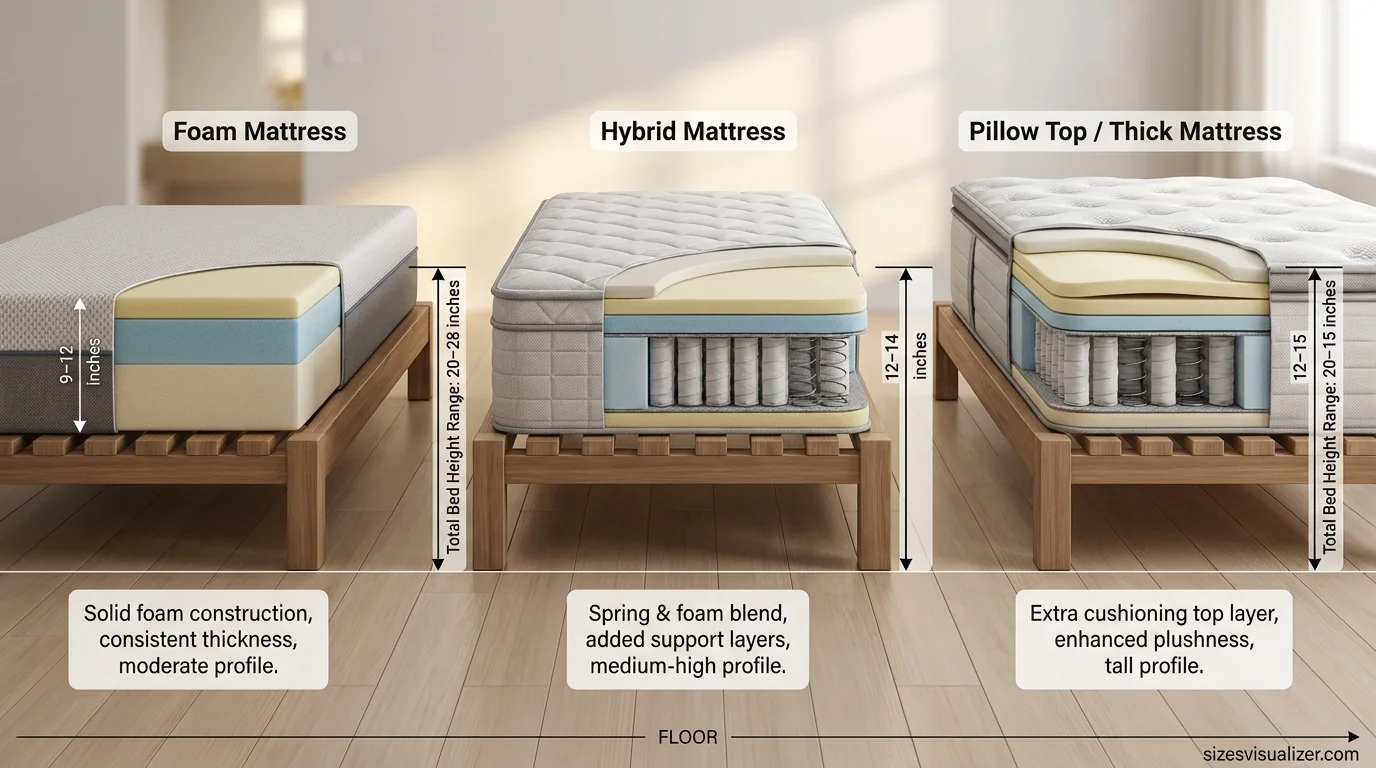
Mattress depth is the other number people forget to check. Queen mattresses typically range from 9 to 12 inches thick, depending on the material — foam mattresses tend to sit thinner, while hybrid and pillow-top styles can run deeper. Add the frame or box spring height on top of that, and total bed height often lands between 20 and 28 inches off the floor.
Visualize the exact footprint of a queen bed and compare it with your room using our free Size Visualizer Tool—making it easy to plan layouts before you buy.
Queen Bed Size vs. Other Mattress Sizes
Numbers make more sense side by side. Here’s how the queen size bed stacks up against every other standard US mattress size.
| Mattress Size | Dimensions (inches) | Dimensions (cm) | Best For |
|---|---|---|---|
| Twin | 38″ x 75″ | 96.5 x 190.5 cm | Kids, bunk beds |
| Twin XL | 38″ x 80″ | 96.5 x 203 cm | Dorms, tall solo sleepers |
| Full / Double | 54″ x 75″ | 137 x 190.5 cm | Solo sleepers, guest rooms |
| Queen | 60″ x 80″ | 152.5 x 203.5 cm | Couples, primary bedrooms |
| King | 76″ x 80″ | 193 x 203.5 cm | Couples wanting more width |
| California King | 72″ x 84″ | 183 x 213 cm | Taller sleepers |
Queen Bed Dimensions Drawings & Visual Room Layout Guide
Numbers on a page don’t always translate to real space. A queen bed dimension drawing — a scaled top-down view — makes it much easier to picture how the bed sits inside your room.
Picture a queen mattress as a rectangle five feet wide and six-and-a-half feet long. Now place two adults inside that rectangle, lying side by side. There’s about 30 inches of width per person — comparable to a twin bed each, minus a shared middle strip. That’s why a queen works for couples but starts to feel tight for anyone over 6’6″ or for sleepers who like to sprawl.
Sample Room Layouts
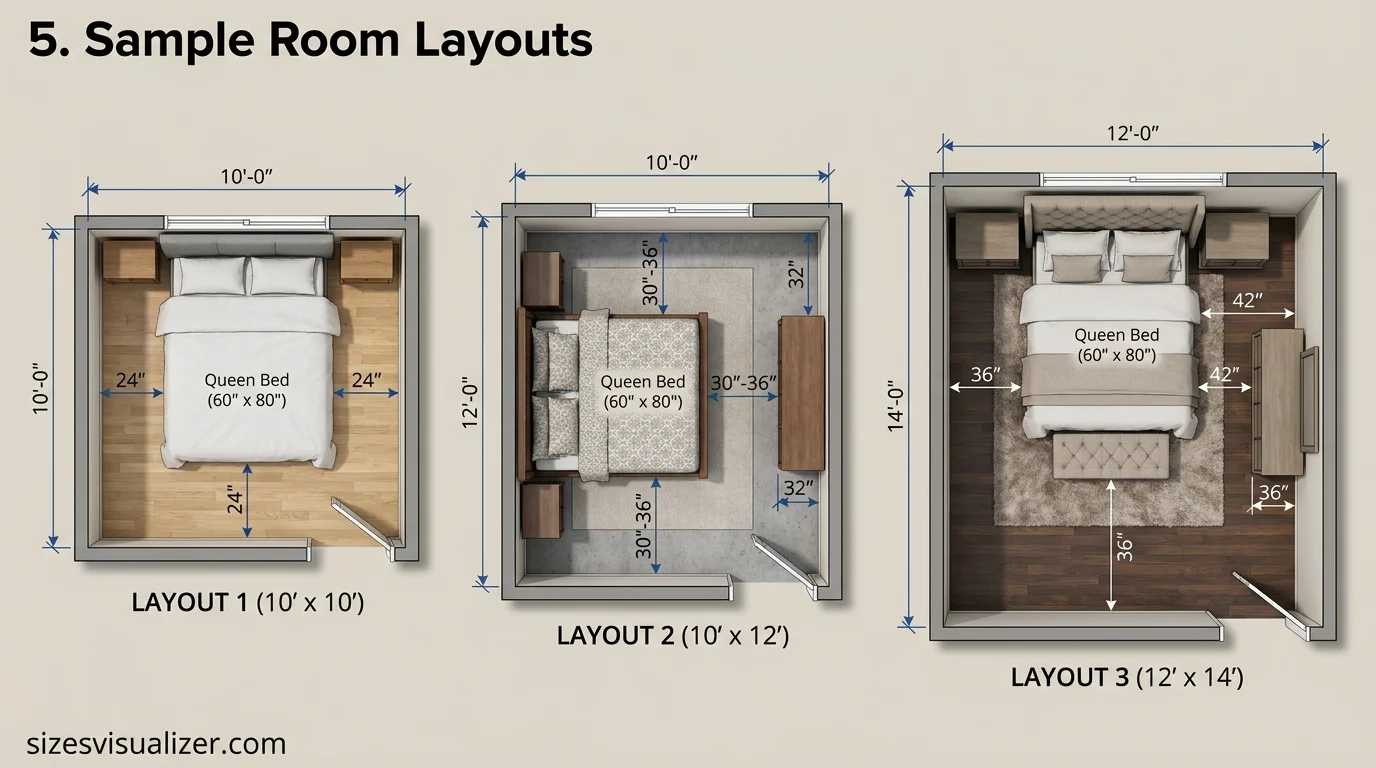
Here’s how a queen bed typically fits into three common room sizes:
- 10′ x 10′ room: This is the minimum recommended footprint. The bed takes up one-third of the floor, leaving narrow (24″) walk paths on two sides and just enough room for slim nightstands.
- 10′ x 12′ room: More breathing room. You get a full 30–36 inch walkway around three sides, plus space for a dresser along the remaining wall.
- 12′ x 14′ room: Comfortable for a full furniture set — bed, two nightstands, a dresser, and a bench or chair without anything feeling cramped.
Clearance is the detail most buyers skip. Designers recommend leaving 24 to 36 inches of open space on each side of the bed and at the foot, so doors, drawers, and closets can open without obstruction. Measure your walkway space before you measure the wall — it changes the whole layout.
Must Visit: How Big Is a Credit Card? Standard Dimensions, Thickness, Size & Measurements Guide 2026
How Much Space Do You Need for a Queen Bed?
Room size and mattress size aren’t the same conversation, but they’re connected. A queen mattress alone covers 33.3 square feet. A 10×10 room offers 100 square feet total — meaning the bed alone claims about a third of your usable floor before you’ve added a single other piece of furniture.
What size rug do you need for a queen bed? An 8′ x 10′ rug is the standard pairing for a queen bed. This size extends past the mattress on all sides, so your feet land on rug — not cold floor — when you get up.
Small Bedroom Workarounds
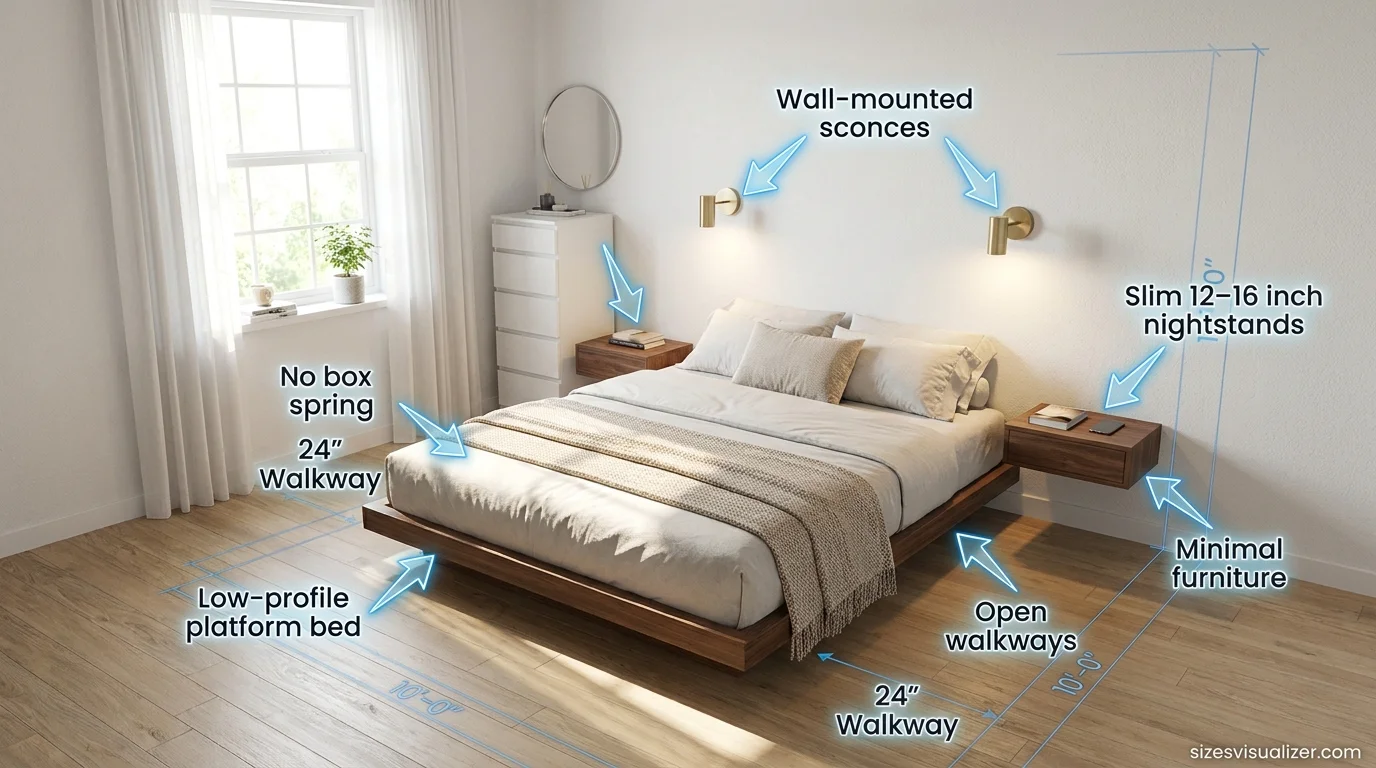
A queen can still work in a tighter room, even below the ideal 10×10 mark, with a few adjustments:
- Choose a platform bed frame with a low profile instead of a bulky headboard.
- Skip the box spring where possible — modern foam and hybrid mattresses often don’t need one.
- Use wall-mounted sconces instead of table lamps to free up nightstand space.
- Pick a slim nightstand (12–16 inches deep) instead of a standard 20-inch chest.
Choosing the Right Queen Mattress & Bed Frame in 2026
Is a queen bed big enough for two people? Yes, for most couples. A queen gives each sleeper close to 30 inches of personal width — enough for comfortable rest without constant contact. That said, taller sleepers (above 6’2″) or restless sleepers who move a lot at night often upgrade to a king for extra elbow room.
Mattress Types and How They Affect Bed Height
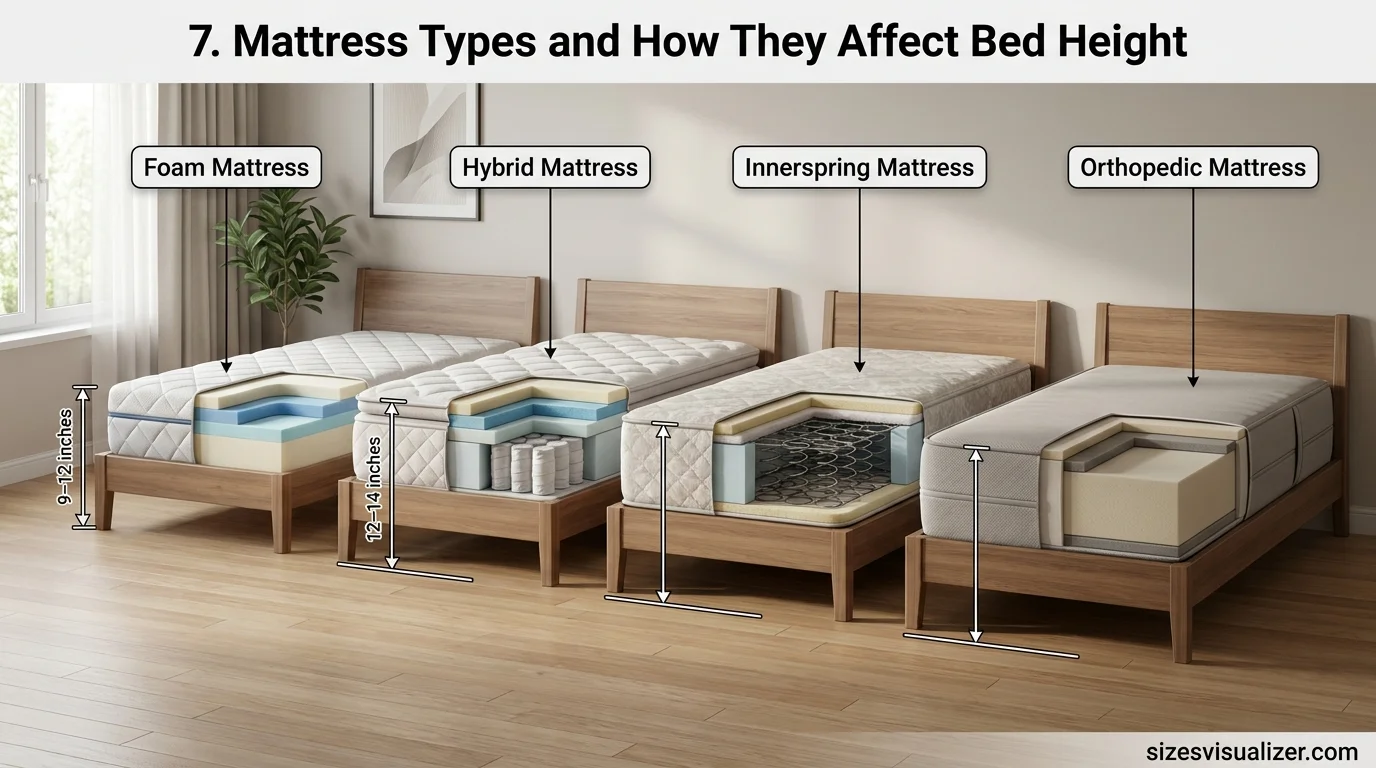
- Foam mattresses run 9–12 inches thick and sit low, giving bedrooms a sleeker look.
- Hybrid mattresses (foam plus coils) typically run 12–14 inches, offering more bounce and support.
- Innerspring mattresses are the traditional coil-based option, usually paired with a box spring.
- Orthopedic mattresses are built firmer, aimed at spinal alignment and back support.
Bed Frame Types
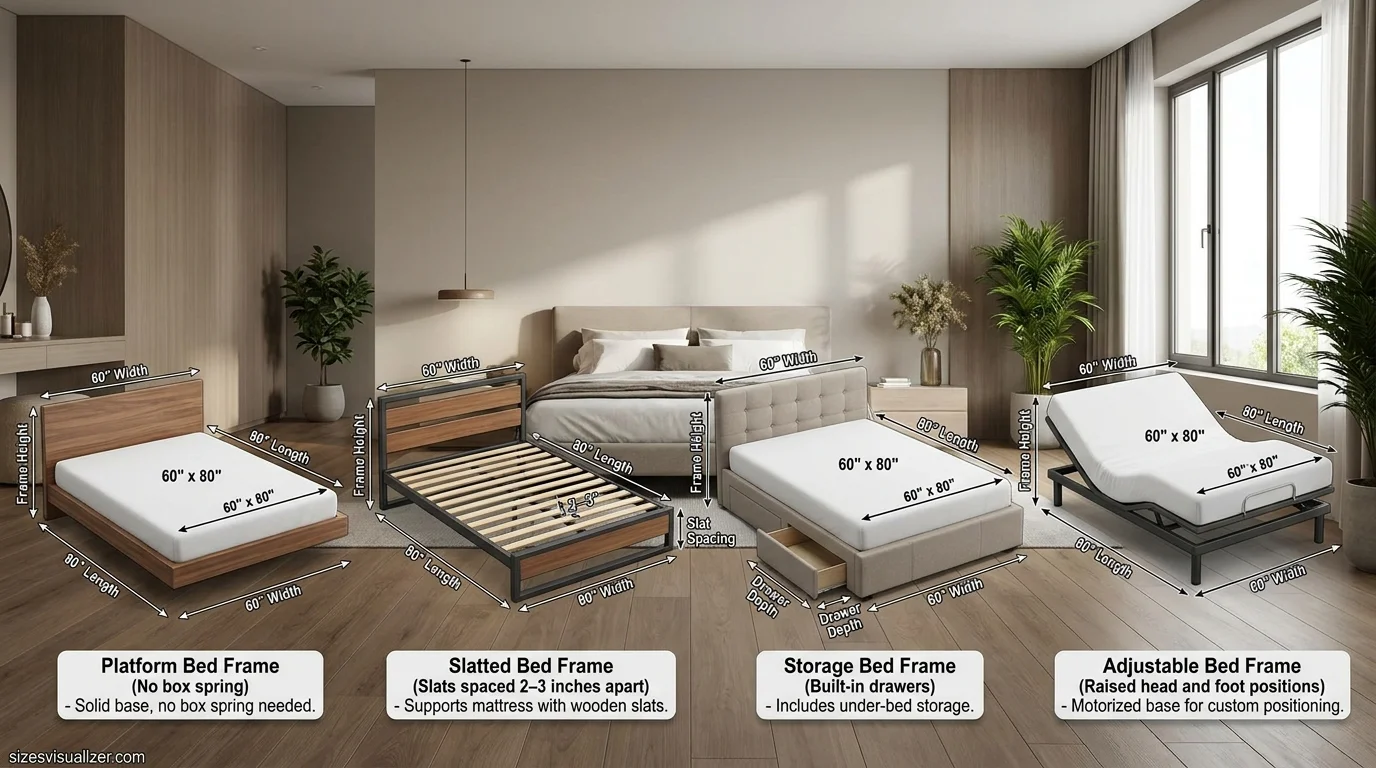
- Platform frames support the mattress directly — no box spring needed.
- Slatted frames need slats spaced no more than 2–3 inches apart to properly support a queen mattress and prevent sagging.
- Storage frames trade a few inches of under-bed clearance for built-in drawers.
- Adjustable frames raise the head or feet, useful for reading, tech use, or medical needs.
FAQs
What is the actual size of a queen size bed?
A standard queen bed measures 60 inches wide by 80 inches long (152.5 cm x 203.5 cm). This is the fixed US industry standard.
Is a queen size bigger than a king?
No. A king bed is 16 inches wider than a queen. Both share the same 80-inch length, so the difference is entirely in width.
Is a queen the same as a double bed?
No. A double (full) bed is 54″ x 75″. A queen is 6 inches wider and 5 inches longer, giving more total sleeping space.
What size bed is 180×200?
A 180 x 200 cm bed converts to roughly 71″ x 79″ — close to a US king in width, but slightly shorter in length. This sizing is common outside the US.
Is a queen bed big enough for two people?
Yes, for most couples. Each person gets about 30 inches of width, similar to sharing two narrow twin beds pushed together.
What is a 6 by 6 bed called?
A bed measuring 6′ x 6′ (72″ x 72″) is generally called a square king or, in round bed listings, sits close to the footprint of a round queen or round king bed, depending on the brand. It’s an uncommon, specialty size rather than a standard category.
Conclusion
The queen bed dimension — 60″ x 80″ — is one number worth memorizing before you shop. It decides your mattress fit, your frame size, your rug size, and ultimately, whether your room feels spacious or cramped. Measure twice, using frame dimensions and clearance space, and the rest of the buying process gets a lot easier.

Measurement Researcher, Size Comparison Writer & Content Specialist
Timmy Ahad is a dedicated content writer and research specialist at SizesVisualizer.com, where he focuses on creating accurate, easy-to-understand content about measurements, dimensions, size comparisons, and real-world object visualization.