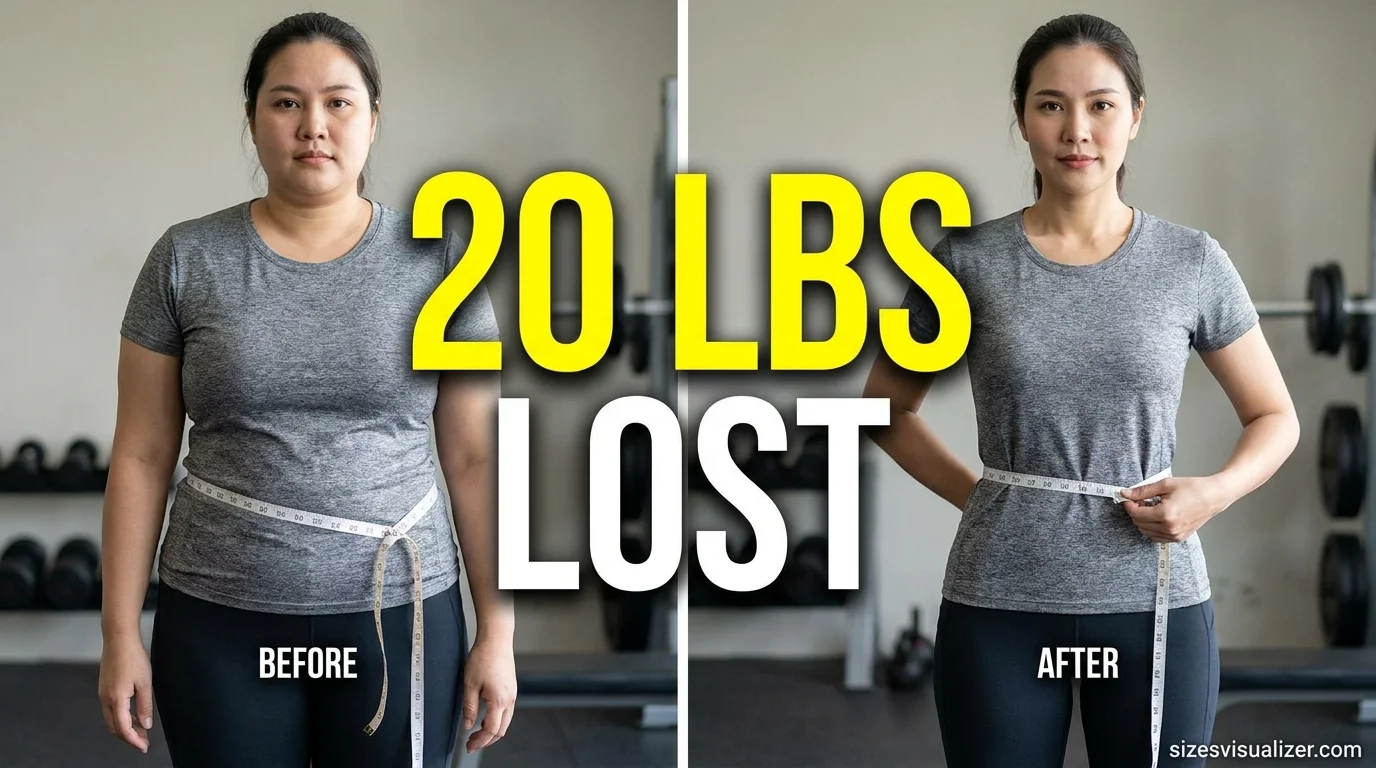
Twenty pounds. It sounds small on paper. But on a real body, it can mean a full clothing size gone, a jawline you haven’t seen in years, or stairs that no longer leave you winded.
If you’re wondering what does losing 20 pounds look like, you’re not alone. It’s one of the most searched weight-loss milestones because it sits right at the edge of “noticeable.” This guide breaks down the real, physical changes — backed by data, not guesswork — so you know exactly what to expect.
Table of Contents
What Does 20 Pounds Look Like? (Visual & Object Comparisons)
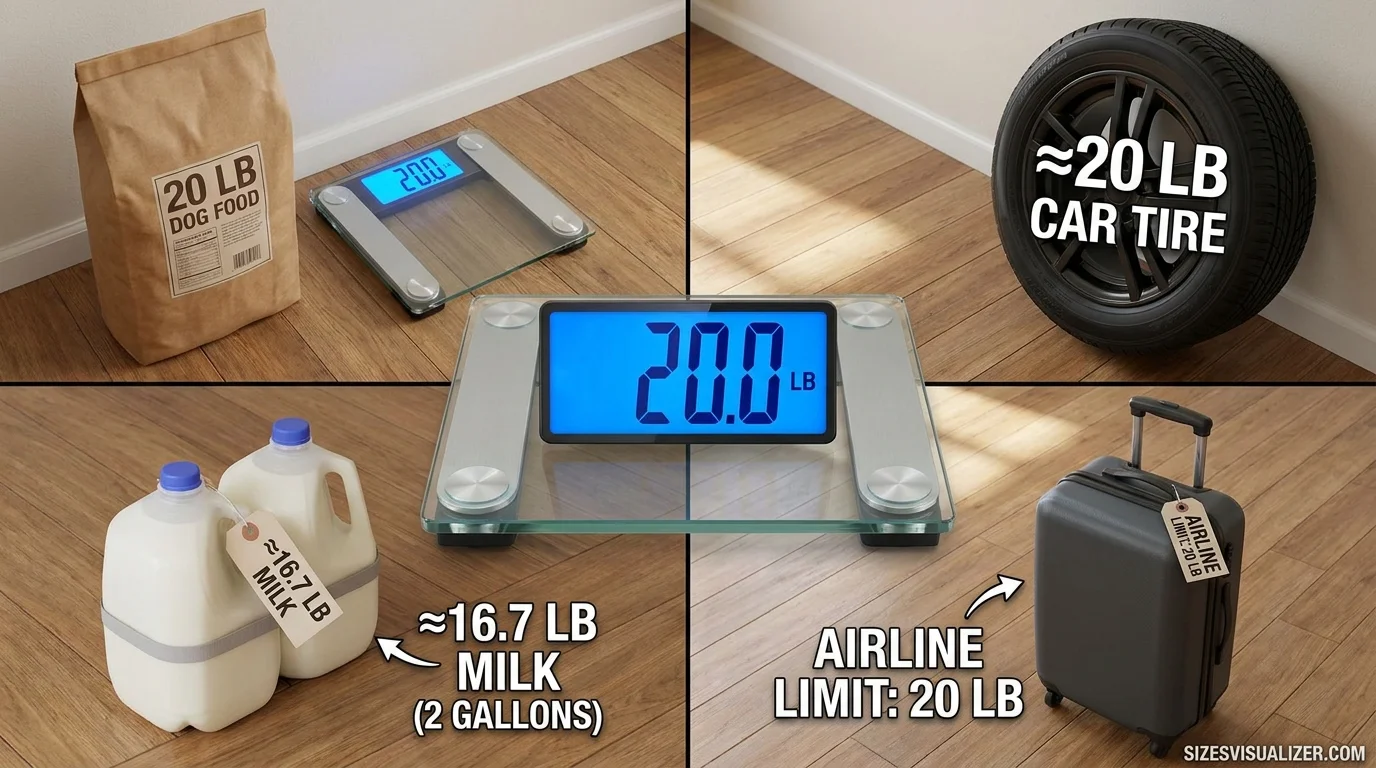
Before we get into body changes, it helps to picture how much 20 lbs actually is. Numbers on a scale don’t mean much until you compare them to something you can hold or see.
Here are a few everyday things that weigh close to it:
- A large bag of dog food
- Two gallons of milk, with a bit left over
- A car tire
- An average two-year-old child
- Most airline carry-on bag weight limits
Picture carrying that dog food bag around all day, every day. Then picture setting it down. That’s the physical load your knees, hips, and spine stop carrying once you lose the weight.
For most people, it is. Clothing is usually the first place it shows. A pair of jeans that used to pinch at the waist starts to feel loose. Shirts hang differently across the shoulders and stomach. Visually, in photos or the mirror, the change becomes obvious for most adults within a few weeks of steady, gradual loss — though this depends heavily on your starting weight and height, which we’ll cover next.
One important distinction: 20 lbs of fat and 20 lbs of muscle weigh the same, but they don’t take up the same space. Fat is less dense and bulkier per pound, while muscle is compact. This is why two people who lose the same 20 lbs — one mostly fat, one mostly water and muscle from a crash diet — can look completely different afterward.
Try our Size Comparison Tool to see how different objects measure against each other, helping you make informed decisions with confidence.
What Losing 20 Pounds Looks Like on Different Body Types
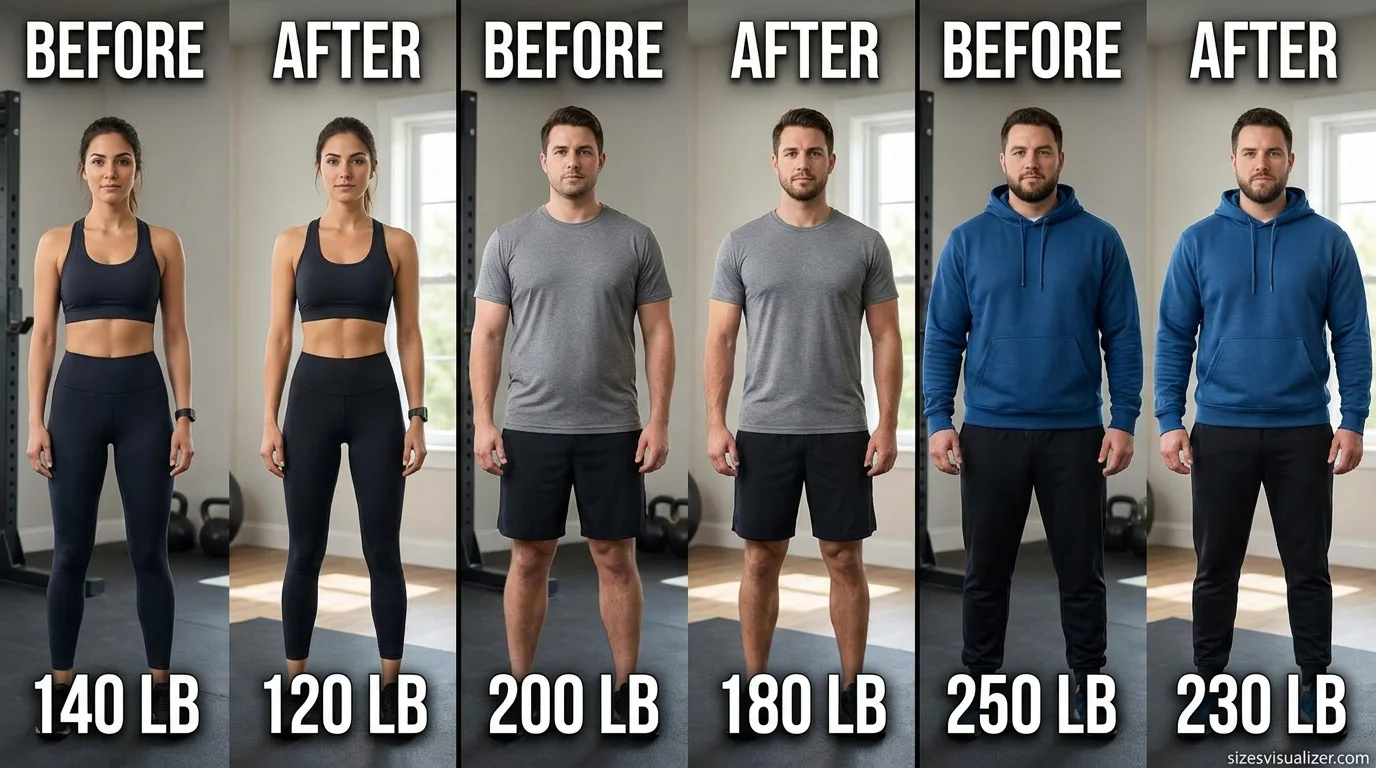
Here’s something rarely talked about: the same 20 pound weight loss looks completely different depending on where you started.
Someone who weighs 140 lbs and loses 20 lbs has lost roughly 14% of their total body weight. Someone who weighs 250 lbs and loses the same 20 lbs has lost about 8%. The person starting lighter will usually show a more dramatic visual shift, because that weight makes up a larger share of their total frame.
Height matters too. On a taller frame, 20 lbs spreads out over more surface area, so the change can look more gradual. On a shorter frame, the same 20 lbs is concentrated into less space, so it often shows up faster and more visibly.
Common patterns people report after a genuine 20 lb weight loss:
- One full clothing size, sometimes closer to two, depending on starting size
- A visibly slimmer face and reduced double chin
- A smaller waistline, often the first area to visibly shrink
- Looser rings, watch bands, and shoes (yes, feet can lose fat too)
None of this happens overnight. Real, sustainable fat loss follows a pattern, and understanding it makes the process feel far less mysterious.
Which Body Part Loses Weight First?
This is one of the most common questions people ask, and the honest answer is: it depends on your genetics, not on which exercises you do.
The idea that you can choose where fat comes off first — known as spot reduction — has been tested and disproven repeatedly in research. Your body decides the order fat leaves based on hormones, sex, and genetic patterning, not on which body part you train hardest.
That said, there are patterns most people experience:
Face and Neck
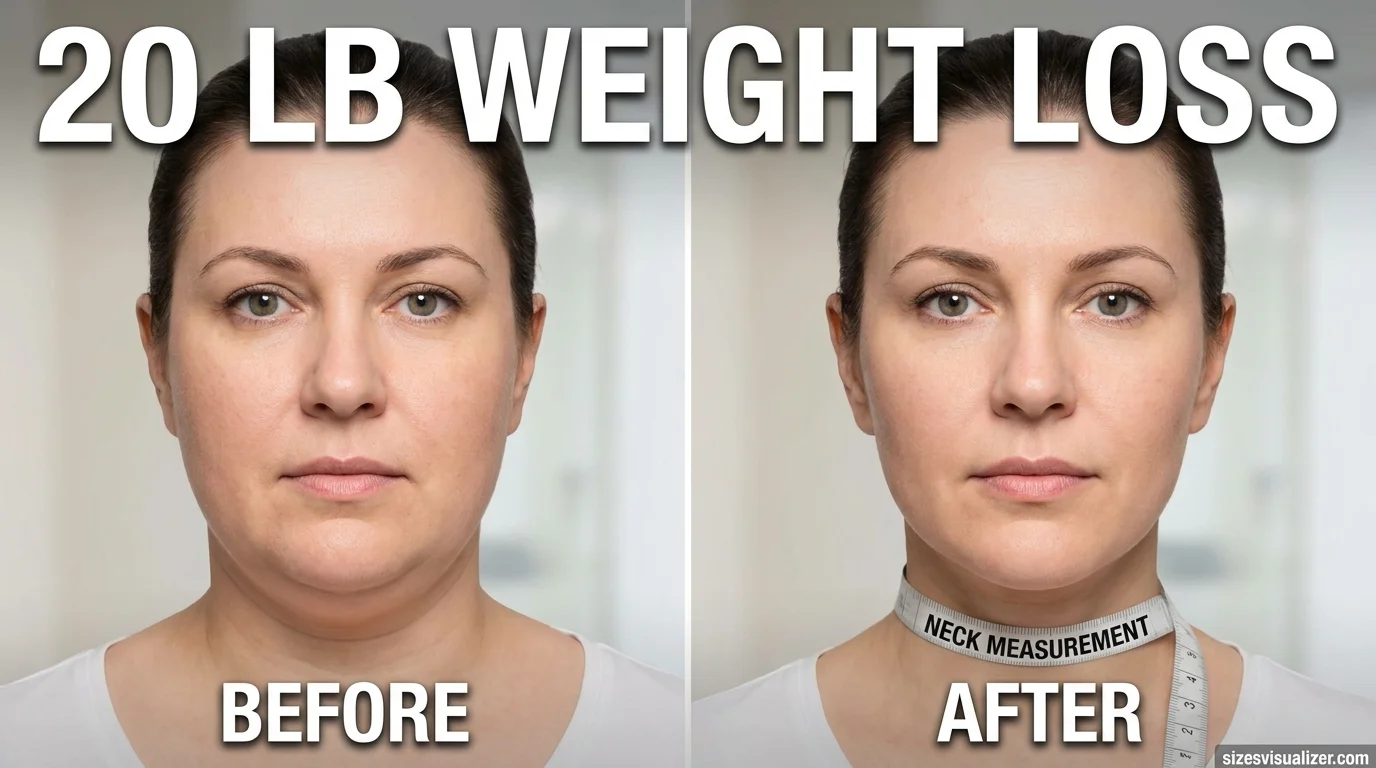
The face and neck often show change first. There’s very little fat storage capacity in the face compared to other areas, so even a small amount of total body fat loss becomes visible there quickly. This is often the first sign friends and family notice, before the scale reflects much progress at all.
Around Organs
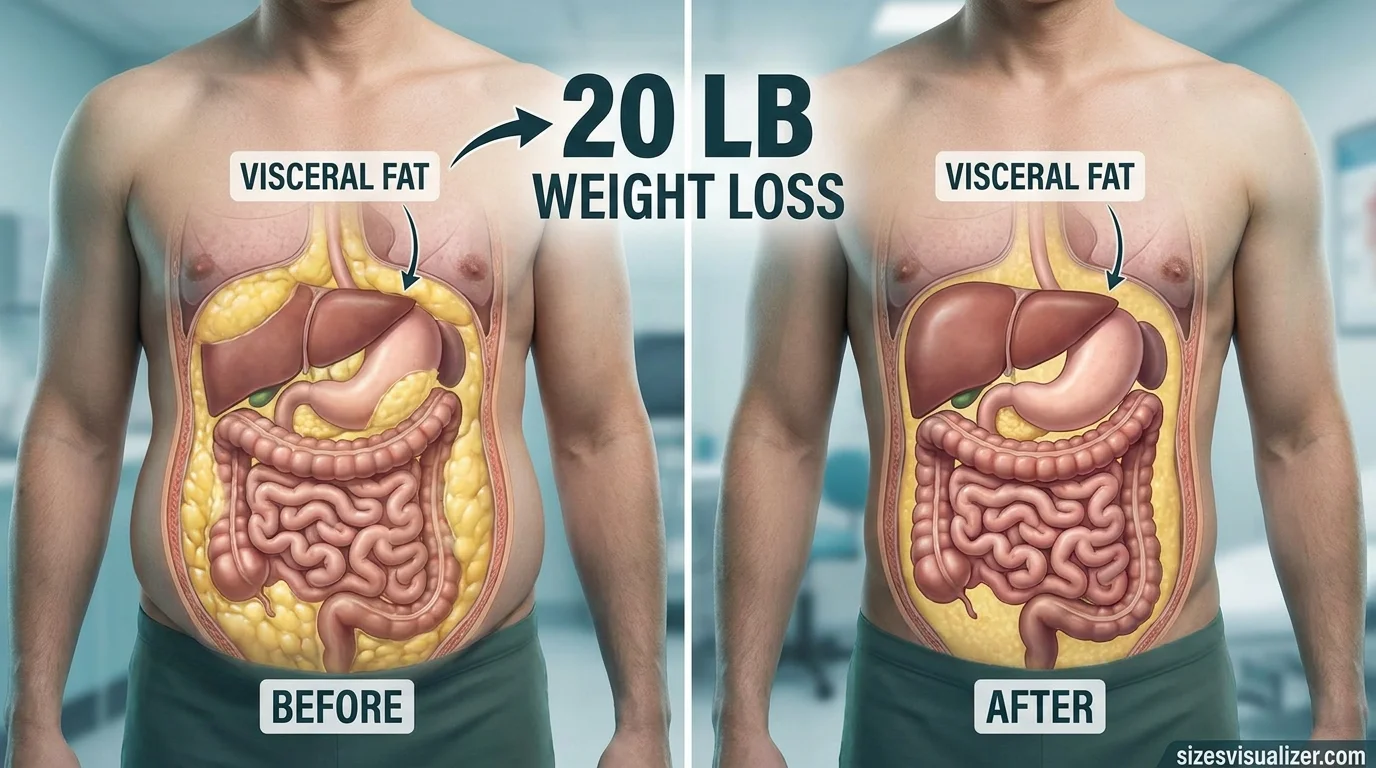
Visceral fat, the fat stored around your organs, tends to respond quickly to a calorie deficit and exercise, even though you can’t see it directly. This is a meaningful health win that happens early, even if your waistline hasn’t changed much yet.
Belly and Hips
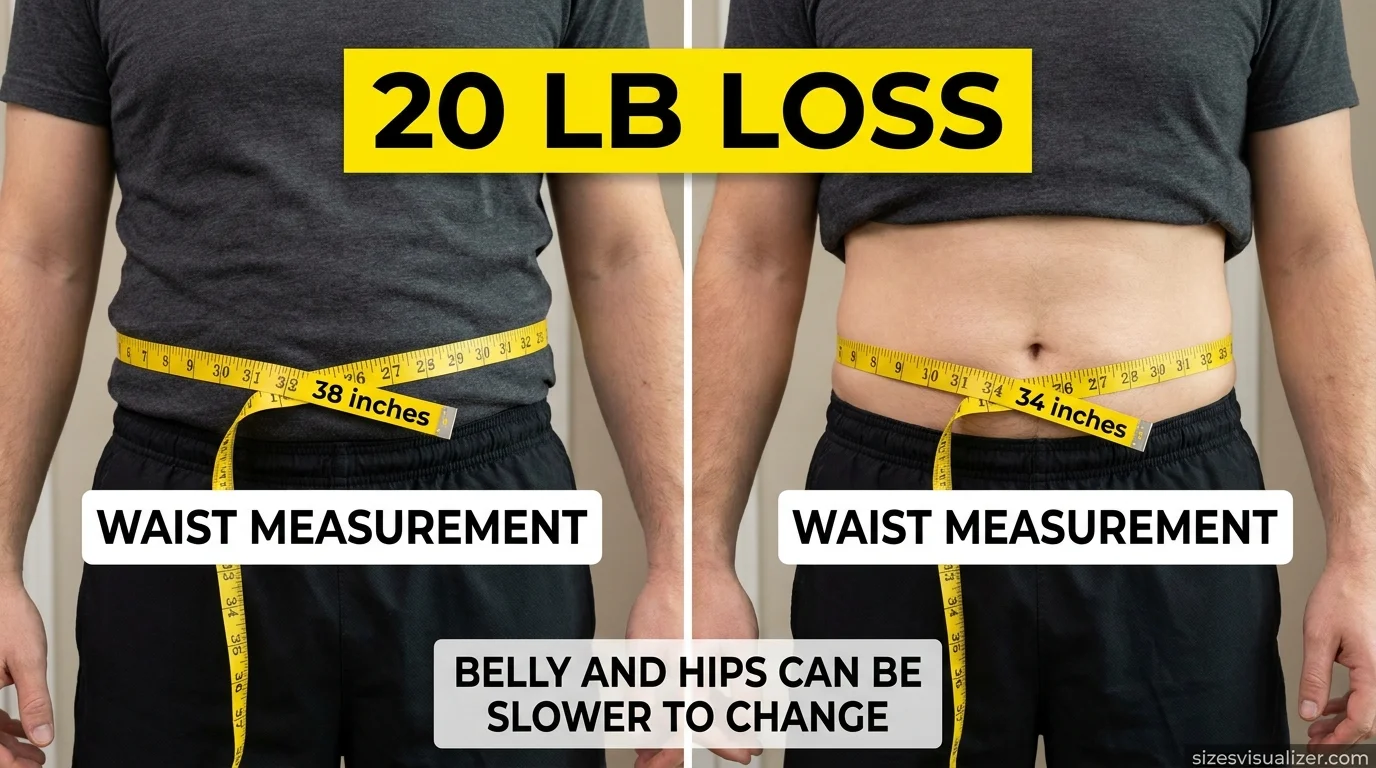
Subcutaneous fat around the belly, hips, and thighs is usually the slowest to shift. This is often called “stubborn fat,” and it’s simply the last area the body pulls from during a deficit for most people. If your midsection feels like the last place to change, that’s normal biology, not a sign something is wrong.
How Long It Takes to Lose 20 Pounds (And What Feels Different)
Health authorities are consistent on this. The <cite index=”9-1″>Centers for Disease Control and Prevention notes that people who lose weight at a gradual, steady pace of about 1 to 2 pounds a week are more likely to keep it off than those who lose weight faster.</cite> That pace generally comes from a daily calorie deficit of <cite index=”6-1″>500 to 750 fewer calories than you burn each day.</cite>
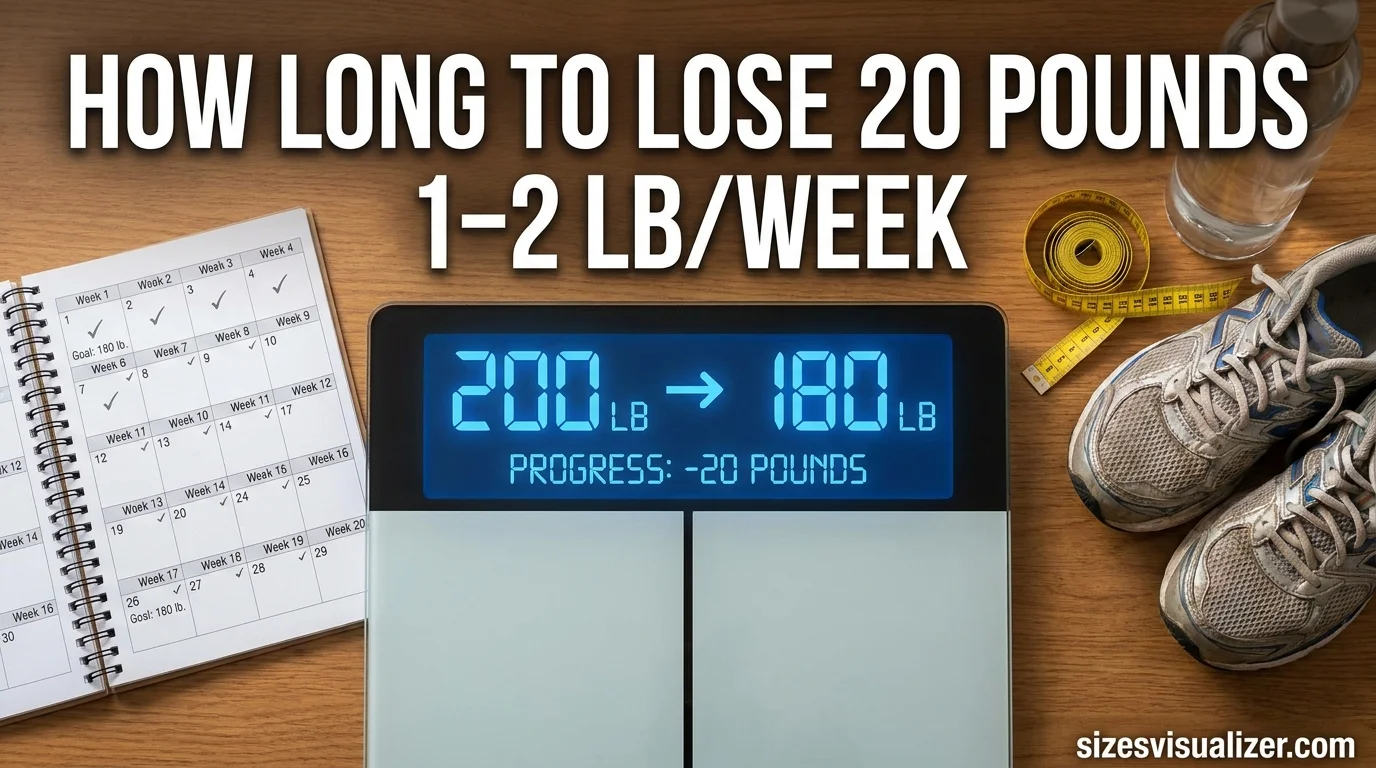
At that rate, losing 20 lbs typically takes somewhere between 10 and 20 weeks — roughly two and a half to five months — depending on your starting point, activity level, and consistency.
It’s worth knowing that <cite index=”11-1″>the first week or two of any new eating plan often produces a faster drop on the scale, largely from water and glycogen loss rather than fat.</cite> Don’t be discouraged when the rate slows after that initial dip. That’s actually the point where real fat loss begins.
People consistently describe a few common physical shifts once the weight is gone:
- Less pressure on the knees and lower back when walking, standing, or climbing stairs
- Noticeably easier movement — bending down, tying shoes, getting up from the floor
- Improved sleep quality and less snoring, since excess weight around the neck and torso can affect breathing at night
- More stable energy throughout the day, rather than the crashes that come with carrying extra weight and poor food timing
- Clothes that fit with room to spare, rather than needing to be “worked into”
What actually changes with age is usually lifestyle, not biology. <cite index=”16-1″>Activity levels tend to decrease as people get older, and moderate-to-vigorous physical activity in particular drops off with each passing decade.</cite> Add in muscle loss from inactivity, and the feeling of a slower metabolism sets in, even though the underlying engine hasn’t changed much at all. This means people in their 40s and 50s can absolutely see the same 20 lb transformation as someone in their 20s, provided the calorie deficit and muscle-preserving habits are in place.
Must Visit: Full Size Bed Dimensions Guide: Exact Measurements, Room Size Guide 2026
How to Track Your 20 Pound Weight Loss Progress
Tracking matters more than most people realize, because the scale alone rarely tells the whole story.
Take progress photos
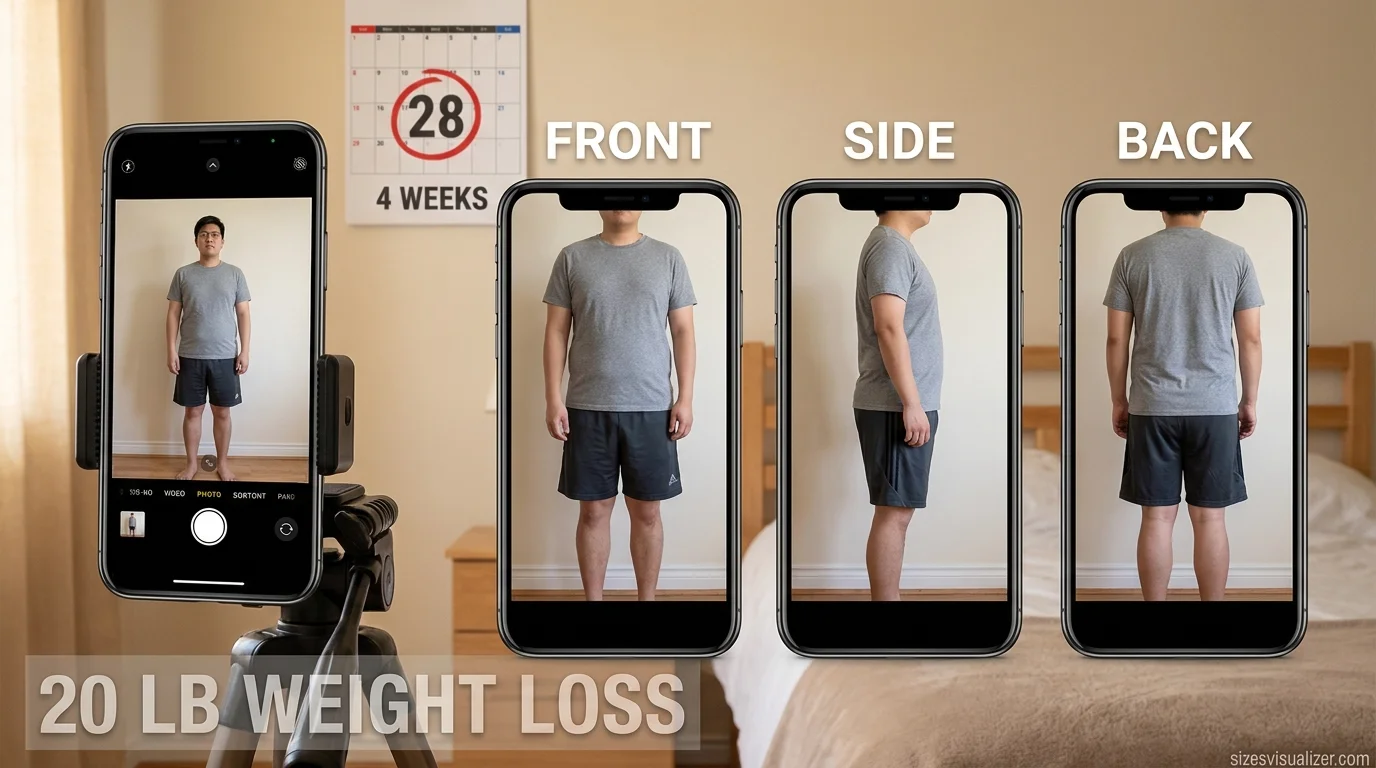
Take progress photos the right way. Use the same lighting, same time of day, and the same simple outfit each time. Stand in a neutral, relaxed posture rather than flexing or sucking in. Photograph from the front, side, and back. Because visible change can take several weeks to show clearly in photos, don’t judge progress from just one or two shots — compare across a full month.
Use more than one method
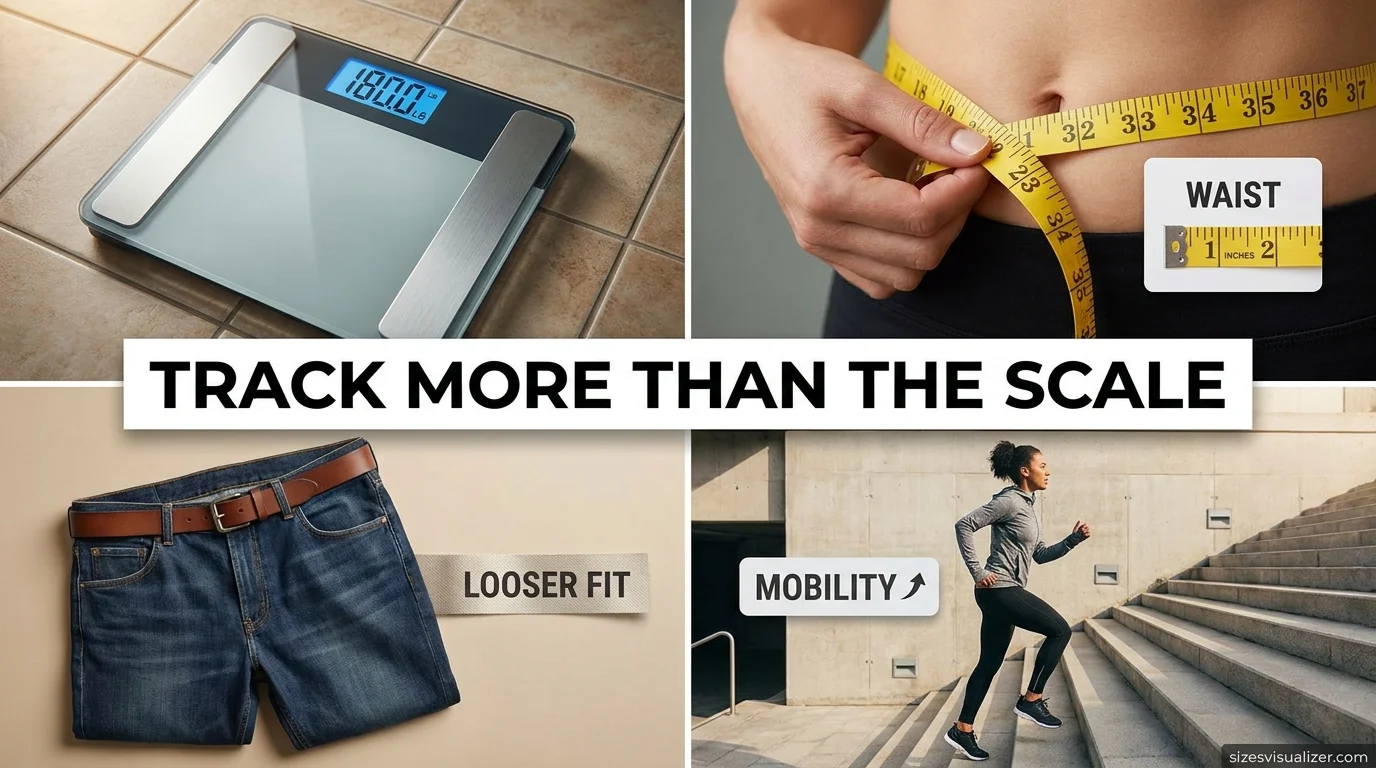
Use more than one method to confirm real change. Scale weight fluctuates daily due to water retention, sodium intake, hormones, and digestion, so it’s not a perfect single measure. Combining it with a few other tools gives a far more accurate picture:
- Body measurements — waist, hips, and thighs with a flexible tape measure, taken at the same spot each time
- How your clothes fit — a pair of jeans is often more honest than the scale on any given morning
- Energy and mobility — noticing if daily tasks feel physically easier is a real, if less quantifiable, sign of progress
Combining these approaches gives you a clearer, more honest read on whether the change is real and lasting, rather than a temporary shift in water weight.
FAQ’s
Is a 20 lbs weight loss noticeable?
Yes, for most adults it is. It typically shows first in how clothes fit, followed by visible changes in the face and waistline within a few weeks to a couple of months of steady loss.
How much is 20 lbs visually?
Think of a large bag of dog food, two full gallons of milk, or a car tire. That’s the amount of physical weight being removed from your body when you lose 20 lbs.
What is an example of 20 lbs?
Common everyday comparisons include an average two-year-old child, a car tire, or roughly two gallons of liquid. Picturing an object like this makes the number feel more real than “20 pounds” on its own.
What does 20 lbs feel like?
People typically notice less strain on their knees and back, easier movement, better sleep, and steadier energy throughout the day once the weight is gone.
What’s the hardest age to lose weight?
No single age makes weight loss biologically harder. <cite index=”15-1″>Research shows metabolism stays stable from 20 to 60 years old.</cite> Lifestyle factors like reduced activity and muscle loss, not age itself, are usually behind the extra difficulty people feel in midlife.
Which body part loses weight first?
The face and neck typically show visible change first, since they store less fat than other areas. Visceral fat around the organs also tends to respond early, while belly, hip, and thigh fat is usually the last to shift.
Conclusion
Losing 20 pounds is a real, visible milestone — one that shows up in your clothes, your face, your energy, and eventually your mirror. The timeline is typically two to five months at a safe, sustainable pace, and the changes follow patterns rooted in biology, not luck. Track it with more than just the scale, stay consistent, and the results will show themselves.

Measurement Researcher, Size Comparison Writer & Content Specialist
Timmy Ahad is a dedicated content writer and research specialist at SizesVisualizer.com, where he focuses on creating accurate, easy-to-understand content about measurements, dimensions, size comparisons, and real-world object visualization.