Ordering pizza sounds simple until you’re staring at a menu with five different sizes and no idea what “large” actually means. How big is a pizza, really? The answer depends on diameter, slice count, and how many people you’re feeding.
This guide breaks down every pizza size in inches, square inches, slices, and price — so you order exactly the right amount, every time.
Table of Contents
Pizza Sizes Explained — Diameter, Area & Square Inches
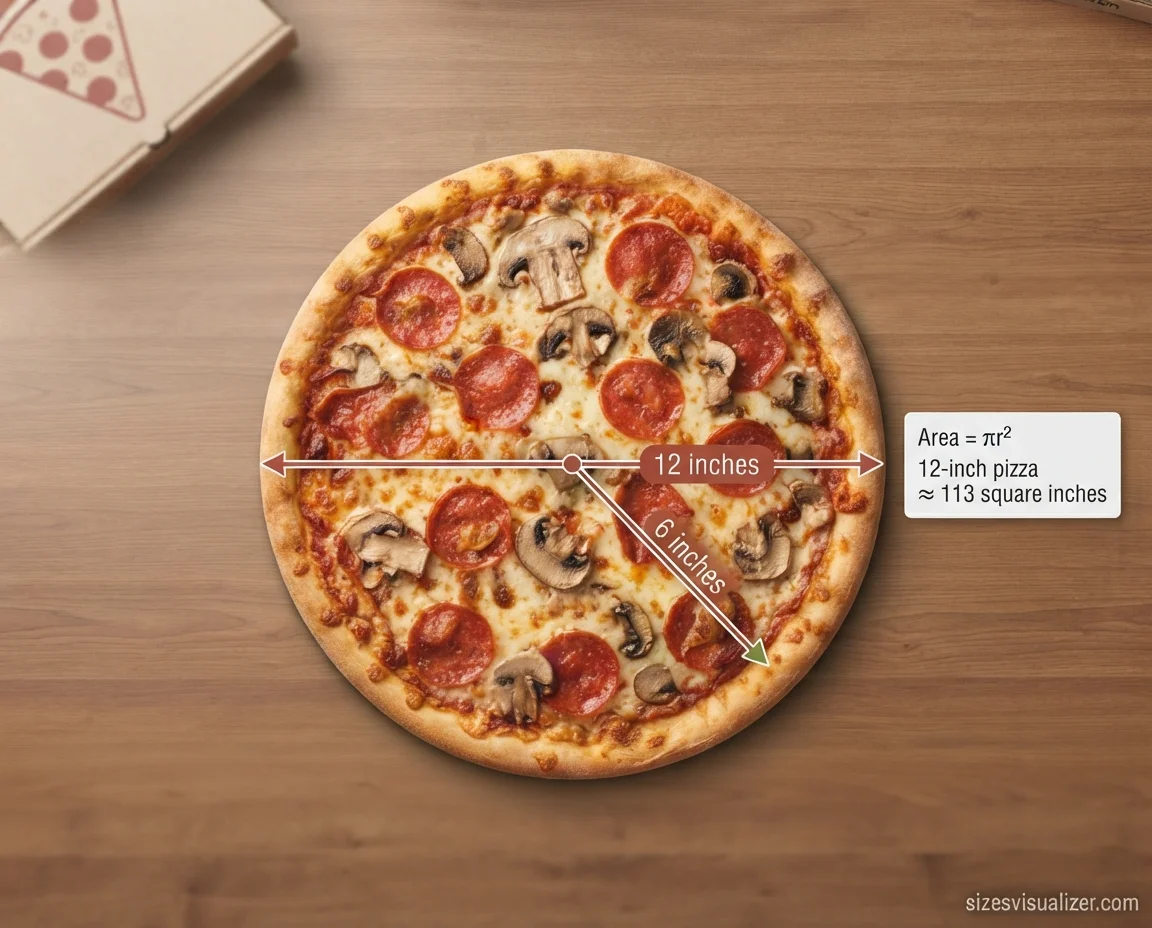
Pizza dimensions are measured across the middle, from crust edge to crust edge. That number — 10 inches, 12 inches, 16 inches — is the diameter, and it’s what every menu lists.
But diameter alone is misleading. A pizza is a circle, and circles don’t grow in a straight line. Two more inches of diameter adds far more surface area than most people expect.
How Pizza Size Is Measured (Diameter vs. Radius)
The radius is half the diameter. A 10-inch pizza has a 5-inch radius. This one number feeds directly into the formula that tells you how much actual pizza you’re getting.
The Pizza Area Formula (πr²) and Why It Matters More Than Diameter
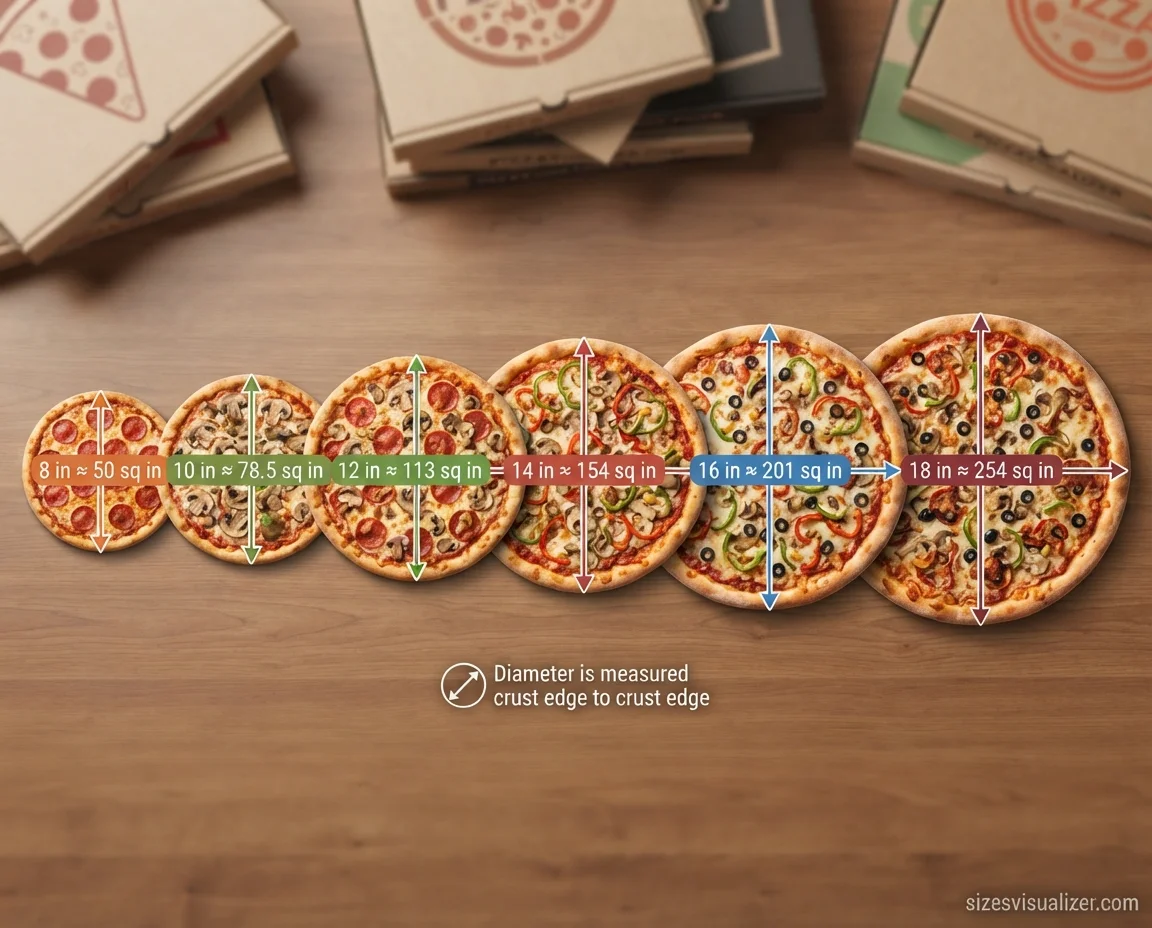
Pizza area is calculated with the classic geometry formula: π (3.14) multiplied by the radius squared. For a 10-inch pizza, that’s 3.14 × 5² = 78.5 square inches. A 14-inch pizza comes to roughly 154 square inches — nearly double, even though the diameter only grew by 4 inches.
This is the single most useful fact in pizza math: area grows exponentially, not linearly. A pizza that’s 20% wider can easily be 40% bigger in actual food.
Pizza Size Comparison Chart (Square Inches by Size)
| Diameter | Radius | Area (sq in) |
|---|---|---|
| 8 inches | 4 in | ~50 sq in |
| 10 inches | 5 in | ~78.5 sq in |
| 12 inches | 6 in | ~113 sq in |
| 14 inches | 7 in | ~154 sq in |
| 16 inches | 8 in | ~201 sq in |
| 18 inches | 9 in | ~254 sq in |
For context, a standard dinner plate measures about 10–11 inches across — so a 10-inch pizza is roughly plate-sized, while anything 14 inches or up needs its own box and table space.
Turn confusing measurements into clear visual comparisons with our Size Visualizer & Comparison Tool and better understand dimensions at a glance.
Pizza Size Chart — Small, Medium, Large & Extra-Large Dimensions
Every pizzeria labels sizes a little differently, but the industry generally follows this pizza size chart.
Personal & Small Pizza Size (8–10 Inches)
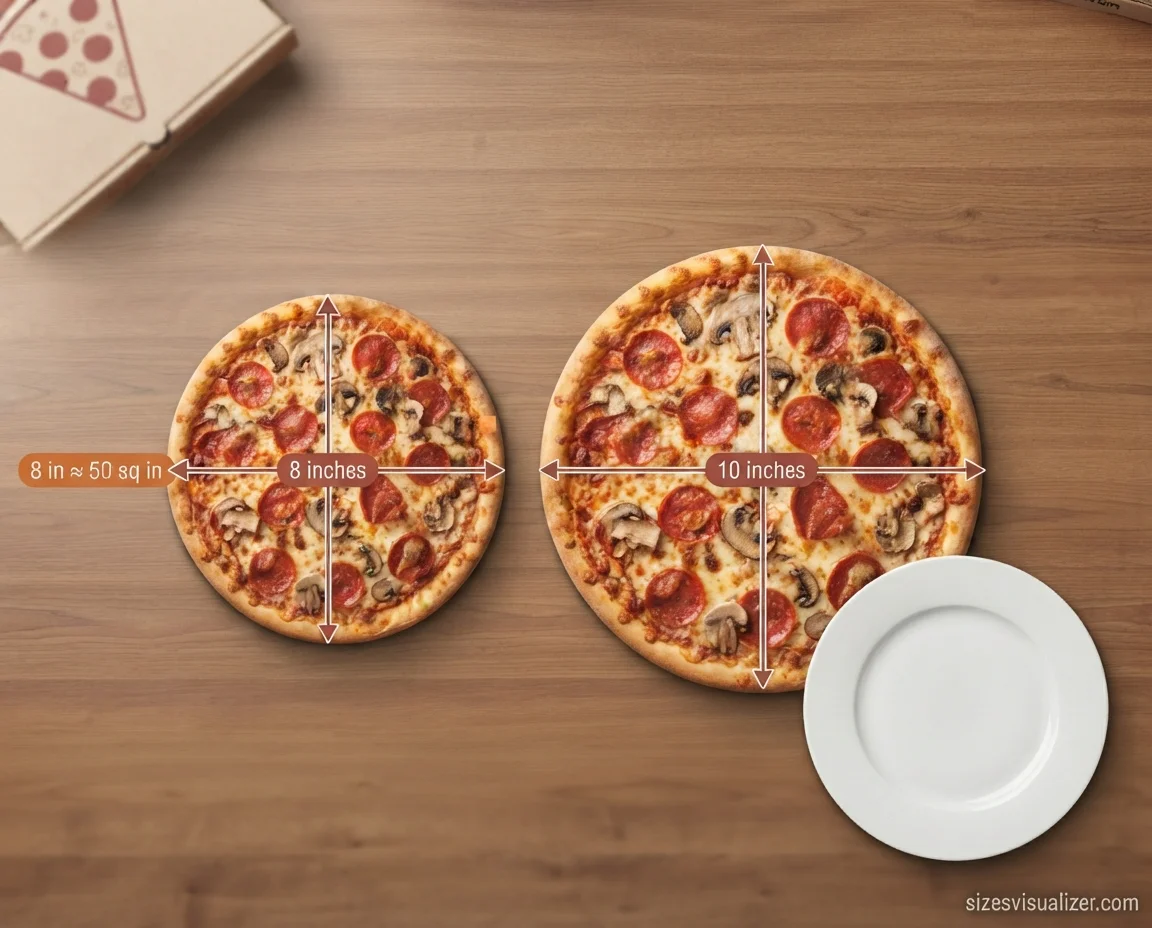
An 8-to-10-inch pizza is considered personal or small. It’s the go-to choice for solo meals, kids’ portions, or a light lunch. This size fits neatly in a single-serving box and reheats well without drying out.
Medium Pizza Size (12 Inches)
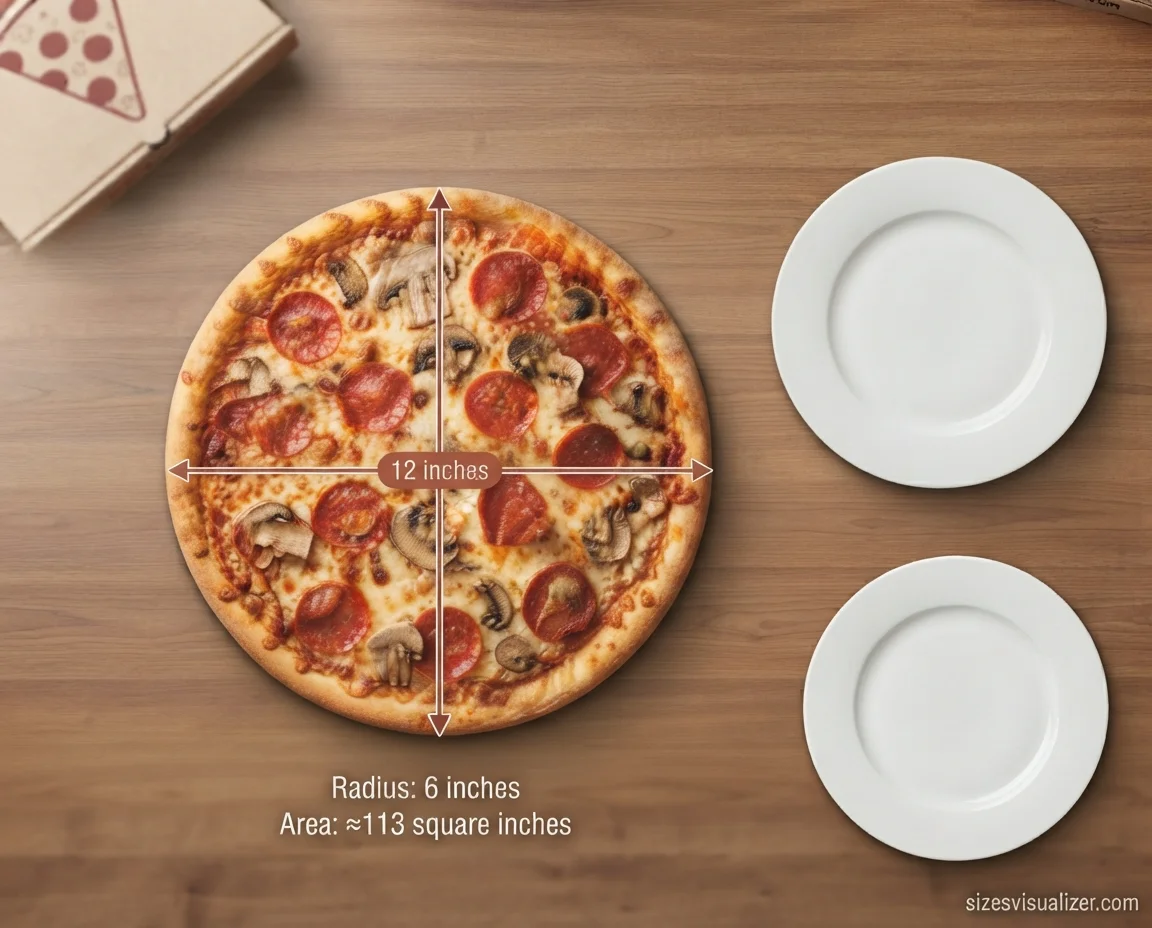
A 12-inch pizza is the true middle ground. It offers roughly 113 square inches of food — enough for two people with average appetites, or one very hungry eater.
Large Pizza Size (14–16 Inches)
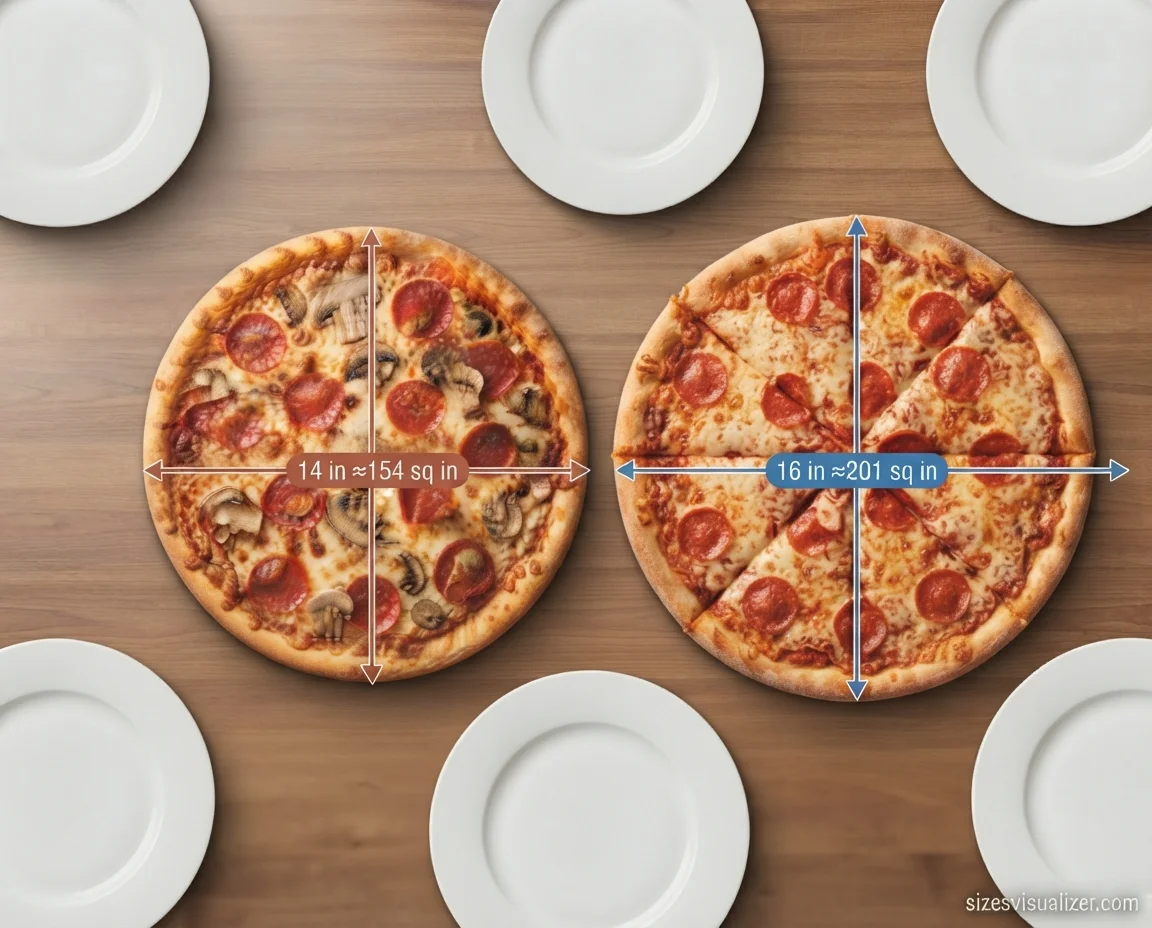
Large pizzas run 14 to 16 inches and are built for sharing. At 154 to 201 square inches, this size comfortably covers three to five people, depending on how many sides are on the table.
Extra-Large & Jumbo Pizza Size (18+ Inches)
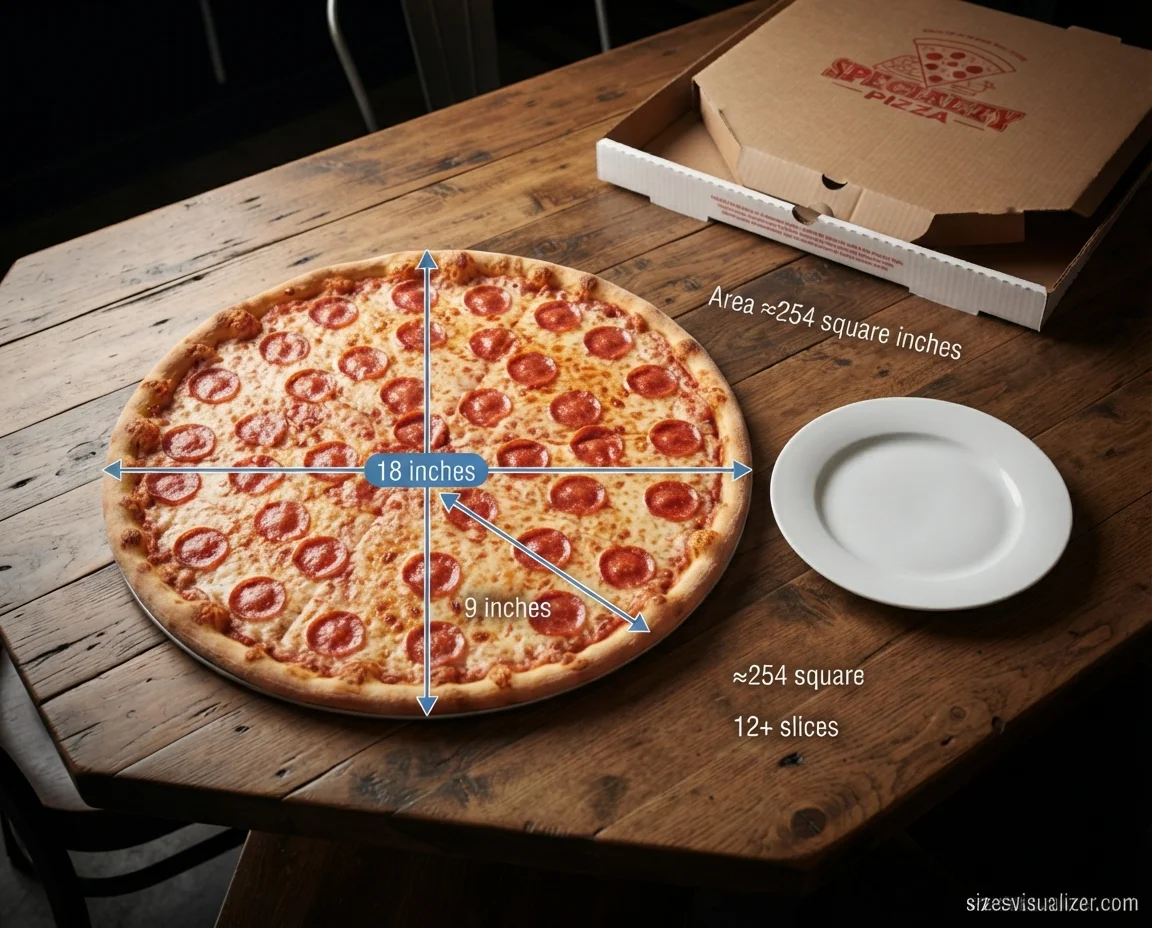
An 18-inch pizza or bigger crosses into party territory. These pies exceed 250 square inches and typically need a specialty pan, since they outgrow standard ovens and delivery boxes.
How Many Slices Per Pizza Size? (Slices & Servings Guide)
Slice count varies by shop, but there’s a reliable pattern most pizzerias follow.
Slice Count by Pizza Size (Chart)
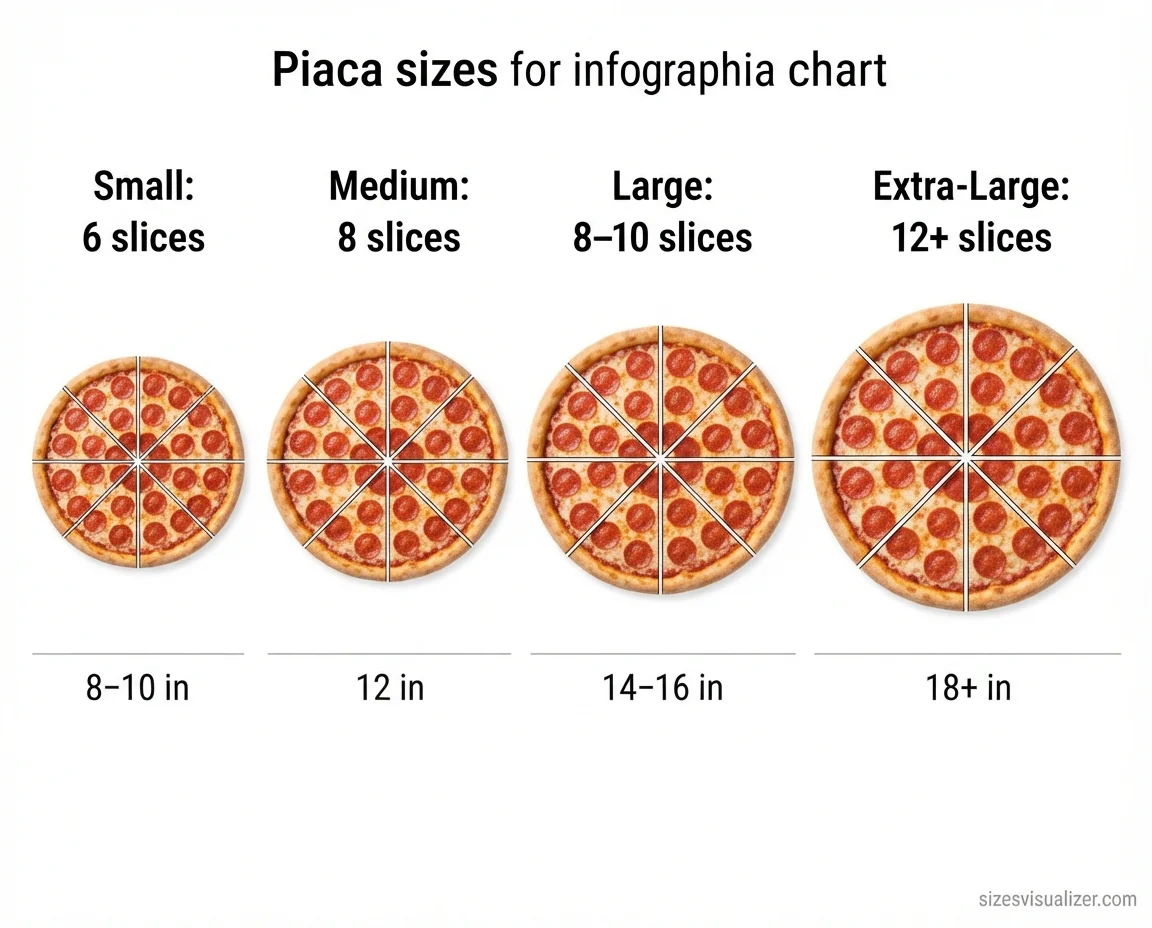
- Small (8–10 in): 6 slices
- Medium (12 in): 8 slices
- Large (14–16 in): 8 to 10 slices
- Extra-large (18+ in): 12 or more slices
How Many People Does Each Pizza Size Feed?
A small pizza feeds 1 to 2 people. A medium feeds 2 to 3. A large stretches to 3 to 5 people, and an extra-large can cover 5 to 6, especially alongside sides or salad.
Slices Per Adult vs. Per Child Rule of Thumb
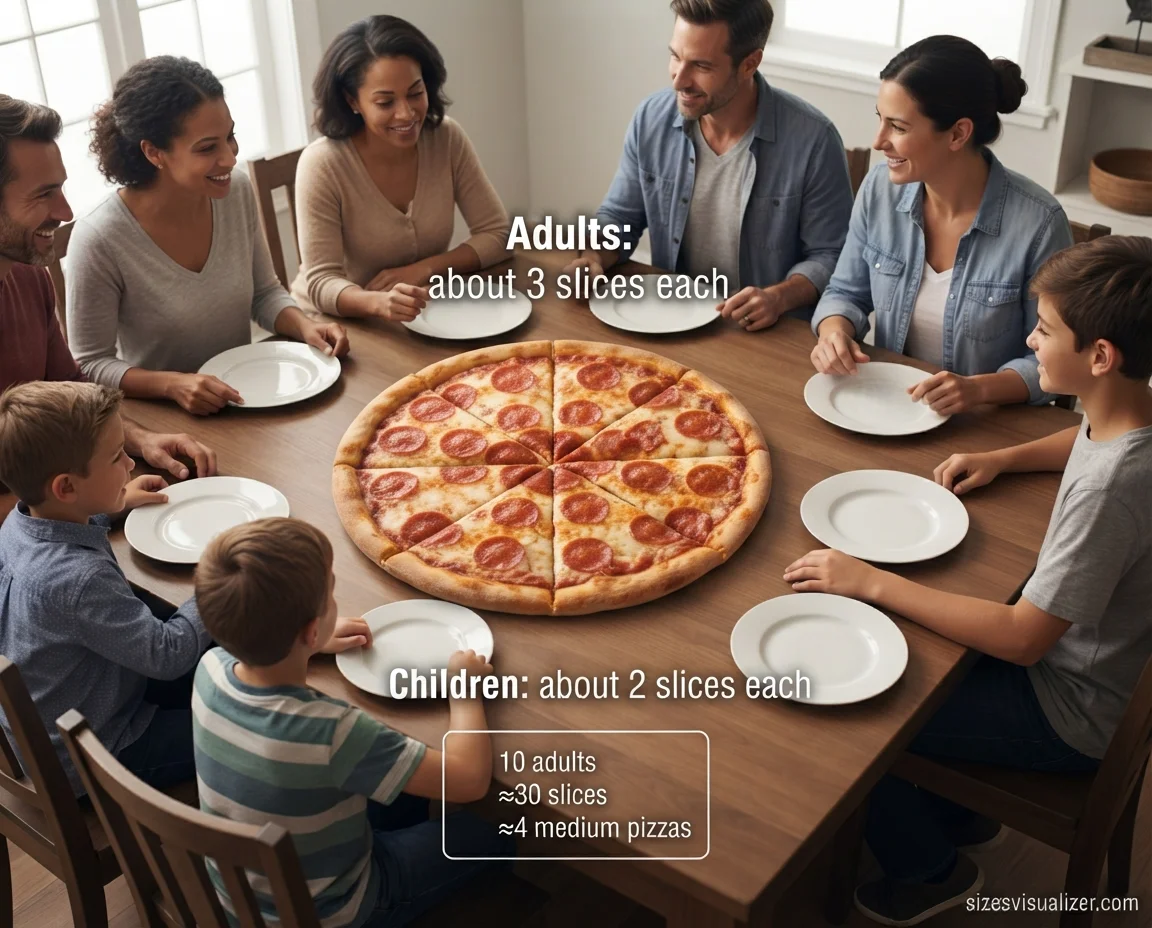
A dependable serving guideline is 3 slices per adult and 2 slices per child. For a group of 10 adults, that means roughly 30 slices total — or about 4 medium pizzas at 8 slices each.
Pizza Size vs. Price — Which Size Gives You the Best Value?
Bigger isn’t automatically cheaper per bite. Smart ordering means comparing price per square inch, not just the sticker price.
Price Per Square Inch by Pizza Size
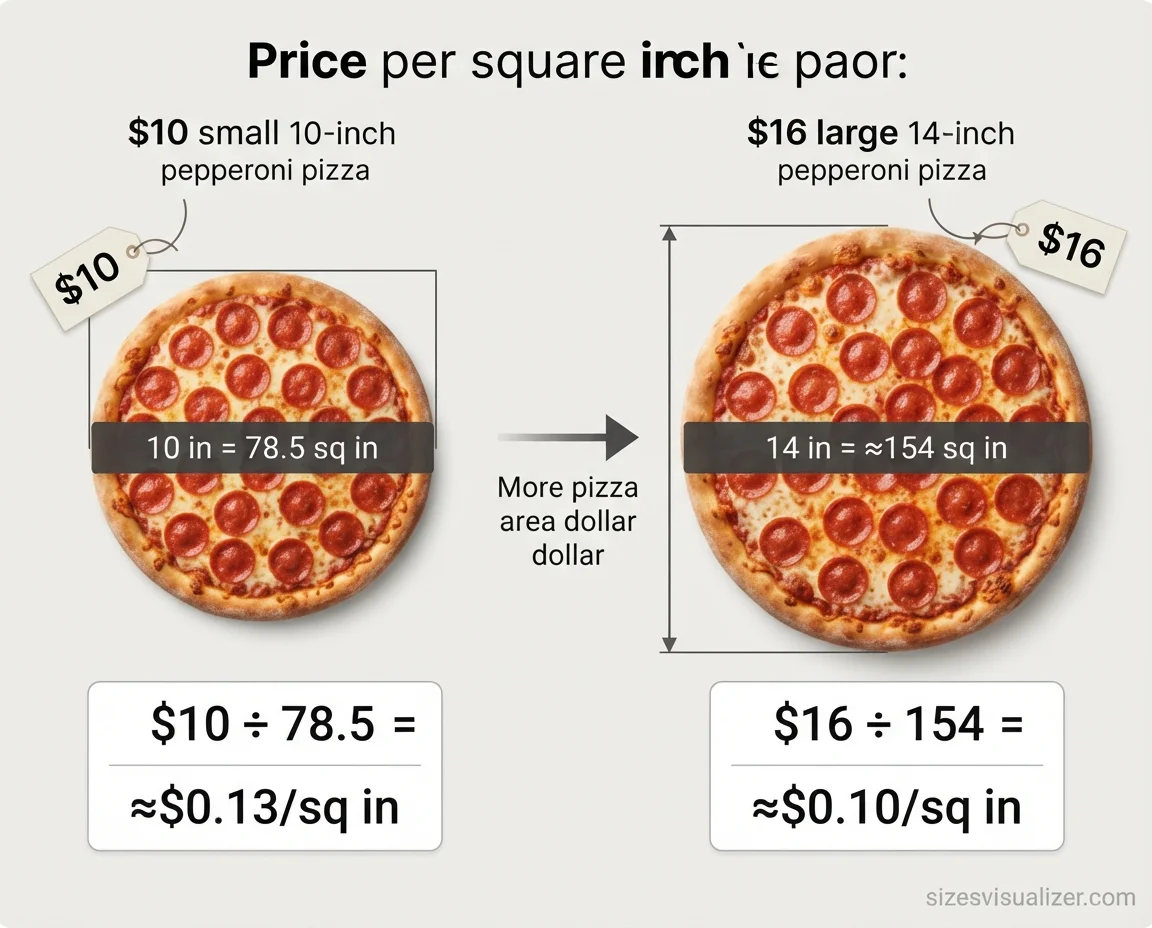
Divide the price by the square inches to find true value. A $10 small pizza (78.5 sq in) costs about 13 cents per square inch. A $16 large (154 sq in) costs closer to 10 cents per square inch — a better deal, even though the total price is higher.
Is a Bigger Pizza Always a Better Deal?
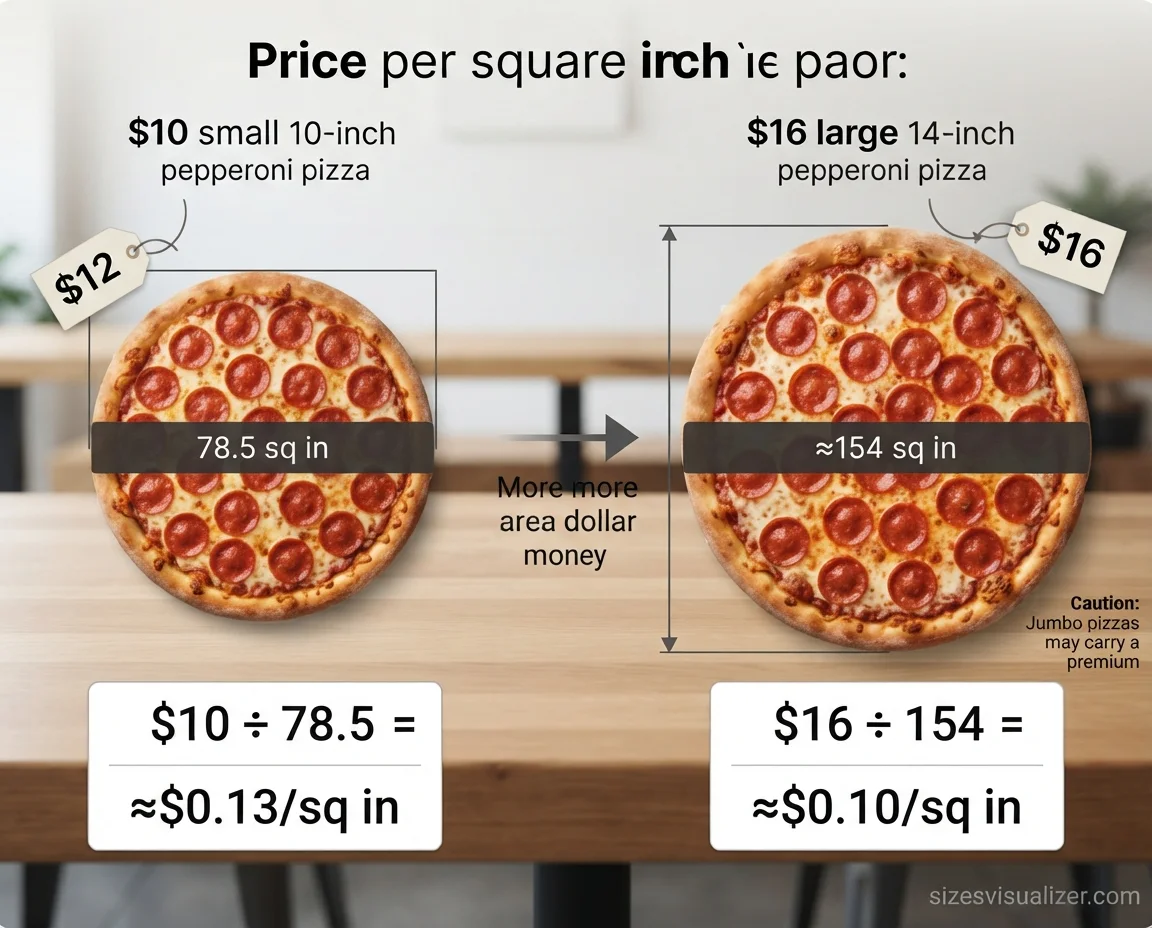
Usually, yes. Larger pizzas spread fixed costs — labor, box, base ingredients — across more area, which lowers the cost per slice. But this only holds true up to a point; jumbo sizes sometimes carry a premium for the specialty pan and harder handling.
10-Inch vs. Two 7-Inch Pizzas — Which Is Bigger (and Cheaper)?
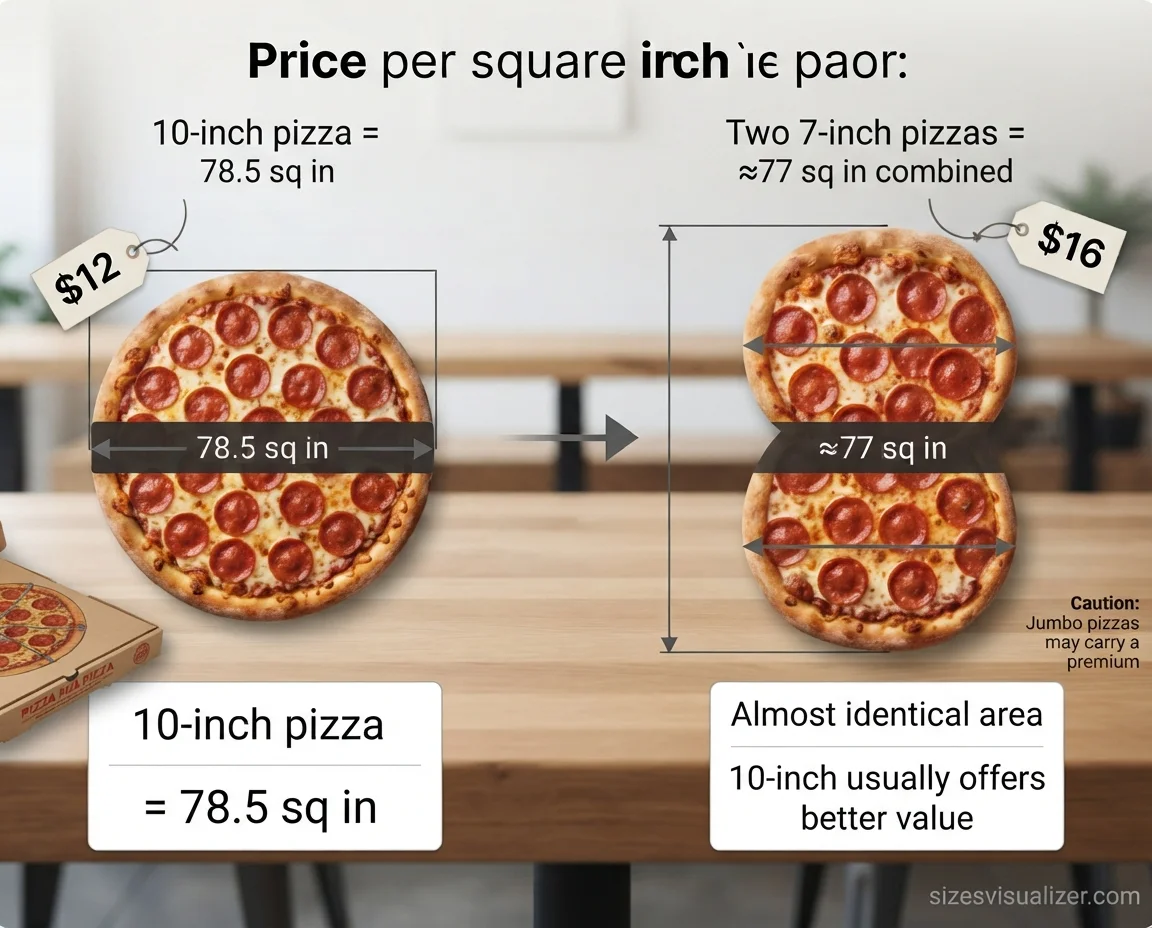
Here’s where the area formula proves its worth. One 10-inch pizza covers 78.5 square inches. Two 7-inch pizzas cover only 2 × (3.14 × 3.5²) = ~77 square inches combined — almost identical in total food, but two smaller pies usually cost more due to duplicated crust, packaging, and prep. One 10-inch pizza is typically the better value over two 7-inch pizzas, even though “two pizzas” sounds like more.
Must Visit: How Big Is 4 Inches? 20 Real-Life Examples to Help You Visualize It
How to Choose the Right Pizza Size for Your Order
Picking a size isn’t just about headcount — appetite, toppings, and occasion all shift the math.
Best Pizza Size for 1–2 People

A 10-inch or 12-inch pizza is ideal here. It provides 6 to 8 slices, enough for one hungry adult or two lighter eaters, without heavy leftovers.
Best Pizza Size for 3–5 People

A 14-to-16-inch large is the sweet spot, delivering 8 to 10 slices that comfortably match the 3-slices-per-adult rule for a small group.
Best Pizza Size for Parties & Groups
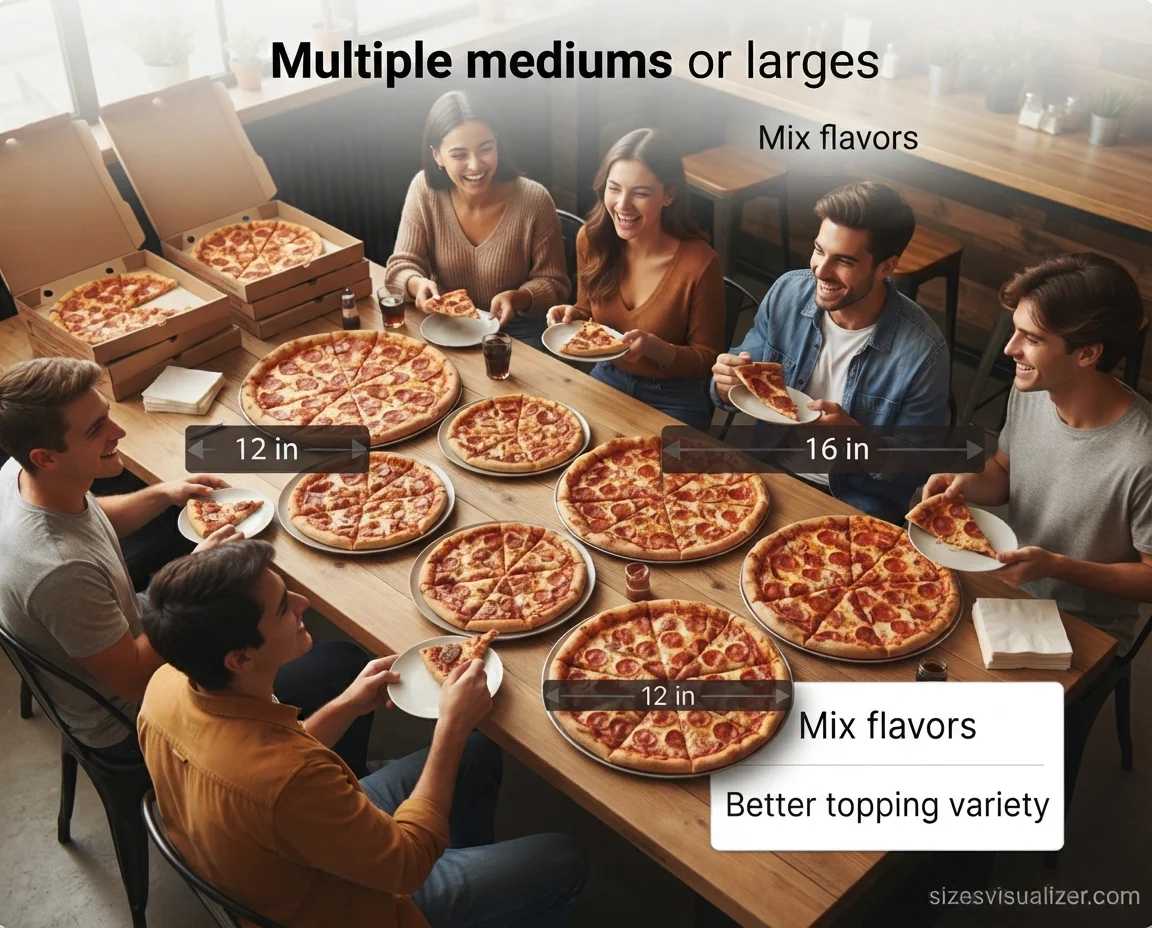
For gatherings of 8 or more, order multiple mediums or larges rather than one giant pizza. This keeps toppings fresh, prevents cold slices at the edges of huge pies, and lets guests mix flavors.
Factors That Change Your Ideal Pizza Size (Toppings, Crust, Appetite)
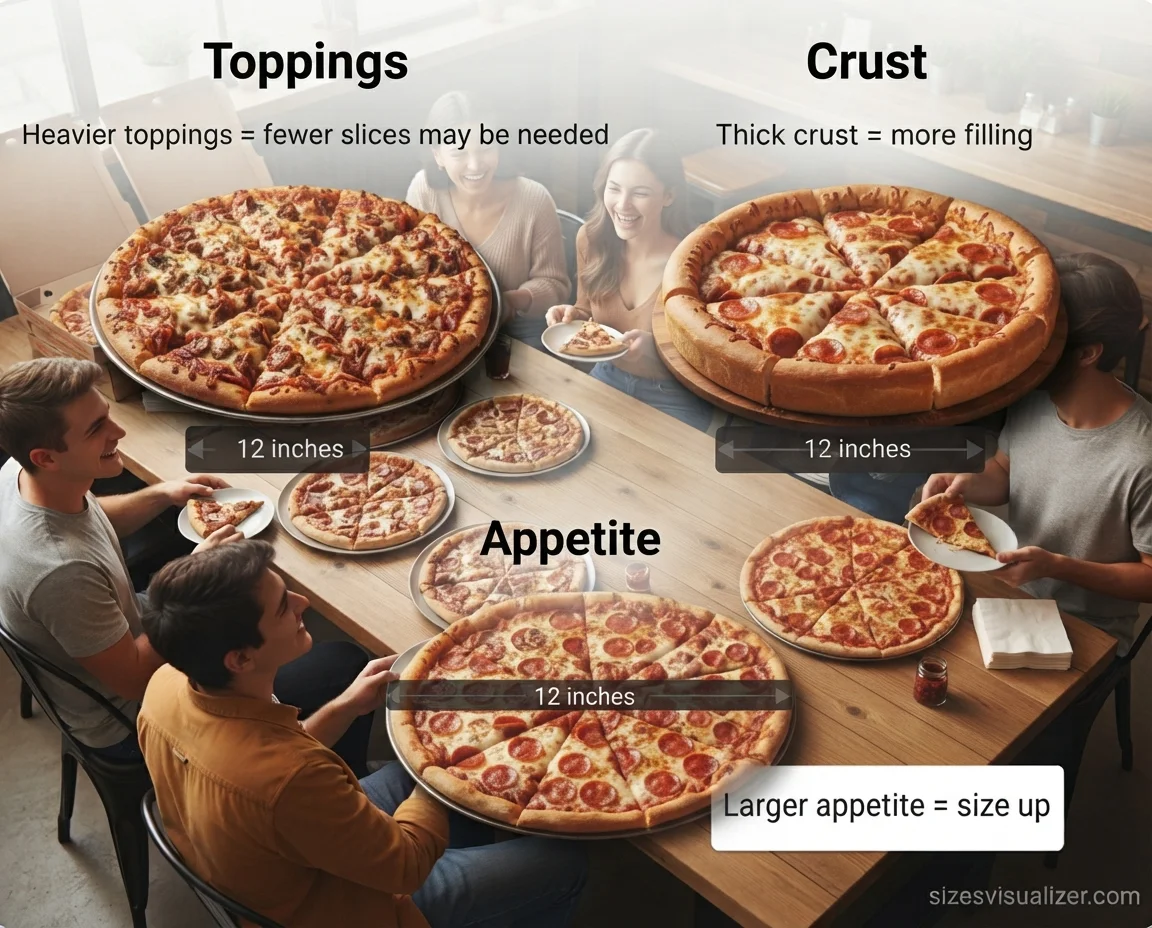
Heavier toppings — extra cheese, meat-loaded pies — make each slice more filling, so fewer slices go further. Thick crust adds bulk and calories, stretching a smaller pizza further than a thin-crust version of the same size.
FAQs
Should I Get a 10 or 12 Inch Pizza?
Choose a 10-inch pizza for one person or a light two-person meal. Choose a 12-inch pizza if two people have normal appetites, since it offers roughly 44% more area than the 10-inch.
Is a 10-Inch Pizza Bigger Than Two 7-Inch Pizzas?
They’re nearly equal in total area — about 78.5 square inches versus roughly 77 square inches combined. The 10-inch pizza is usually the smarter choice, since it avoids paying for two separate crusts and boxes.
Is a 10 Inch Pizza Too Small?
Not for one person. A 10-inch pizza delivers 6 slices and about 78.5 square inches, which is a full meal for a solo eater. For two hungry adults, it may fall short without a side dish.
Is a 12-Inch Pizza Enough for 2 People?
Yes, in most cases. A 12-inch pizza yields around 8 slices, giving each person 4 slices — above the standard 3-slices-per-adult guideline.
What Size Pizza for 2 Adults?
A 12-inch medium is the standard recommendation for two adults with average appetites. For bigger appetites or extra toppings, sizing up to a 14-inch large adds a safety margin.
How Many Slices for a 12-Inch Pizza?
A 12-inch pizza is typically cut into 8 slices, though some pizzerias offer 6 larger slices on request.
Conclusion
Pizza size comes down to simple math: diameter decides the area, area decides the slices, and slices decide how many people eat well. Use the square-inch comparisons above, apply the 3-slices-per-adult rule, and you’ll never over-order or run short again.

Measurement Researcher, Size Comparison Writer & Content Specialist
Timmy Ahad is a dedicated content writer and research specialist at SizesVisualizer.com, where he focuses on creating accurate, easy-to-understand content about measurements, dimensions, size comparisons, and real-world object visualization.