A crate should feel like a cozy den. Too big, and your pup may use one corner as a bathroom. Too small, and the fit gets tight and stressful.
This dog crate size chart by breed makes the choice simple. You’ll get sizes by weight, an easy way to measure, and clear answers to the most common questions.
Table of Contents
Dog Crate Size Chart by Breed and Weight

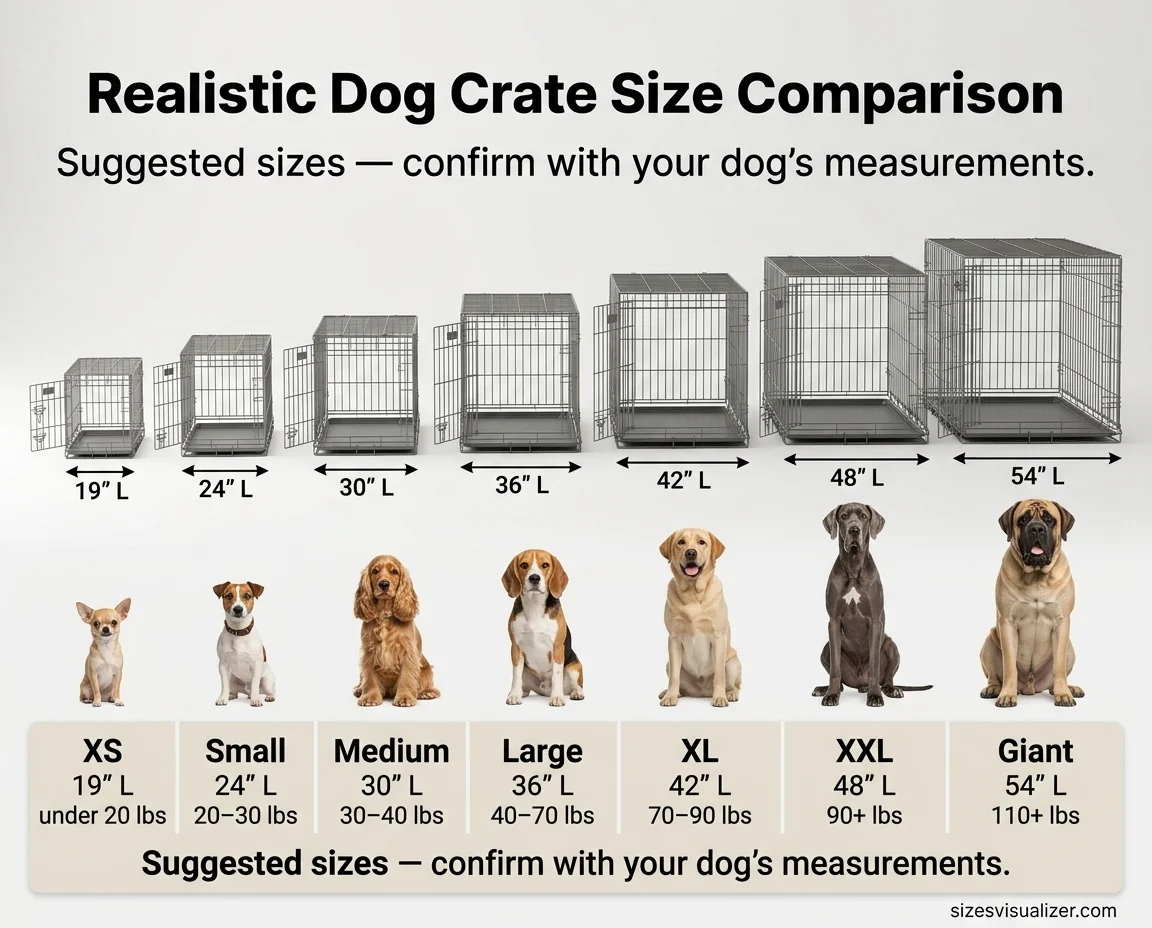
Start with your dog’s weight and breed. Then confirm the fit with a tape measure. Brands label sizes a little differently, so always check the listed dimensions.
| Crate Size | Crate Length | Dog Weight | Common Breeds |
|---|---|---|---|
| XS | 19″ (48 cm) | Under 20 lbs | Chihuahua, Maltese, Pomeranian |
| Small | 24″ (61 cm) | 20–30 lbs | Jack Russell Terrier, Miniature Poodle |
| Medium | 30″ (76 cm) | 30–40 lbs | Cocker Spaniel, French Bulldog |
| Large | 36″ (91 cm) | 40–70 lbs | Beagle, Bulldog, English Setter |
| XL | 42″ (107 cm) | 70–90 lbs | Labrador, Golden Retriever, Boxer |
| XXL | 48″ (122 cm) | 90+ lbs | Great Dane, Rottweiler, Bernese Mountain Dog |
| Giant | 54″ (137 cm) | 110+ lbs | Mastiff, St. Bernard, large Great Danes |
Giant breeds need a 54-inch XXL dog crate. These crates measure about 54″ long, 37″ wide and 45″ tall. They also take up about 4.5 by 3 feet of floor space, so measure your room first.
Weight is only a guide. Some makers say their crate sizes go by the dog’s measurements, not weight. A lean Greyhound and a stocky Bulldog can weigh the same and still need different crates.
How to Measure Your Dog Using a Crate Size Chart
Two measurements are all you need. Use a soft tape measure and keep your dog relaxed.
- Length: With your dog standing, measure from the nose tip to the base of the tail.
- Height: With your dog sitting, measure from the top of the head to the floor. Use the highest point, even if that’s the ears.
- Add room: Add 2 to 4 inches to both numbers. That gives you the ideal crate dimensions.
Then run the fit test. Your dog should stand without ducking, turn around without bumping the bars, and lie down with legs stretched out.
If your dog sits between two sizes, pick the smaller one for a puppy in training. Pick the larger one for a full-grown dog that will sleep in the crate.
Dog Crate Sizes by Breed Type: Puppies, Deep Chests and Giants
Breed names help, but body shape matters just as much. Here’s how to adjust the chart.
Puppies
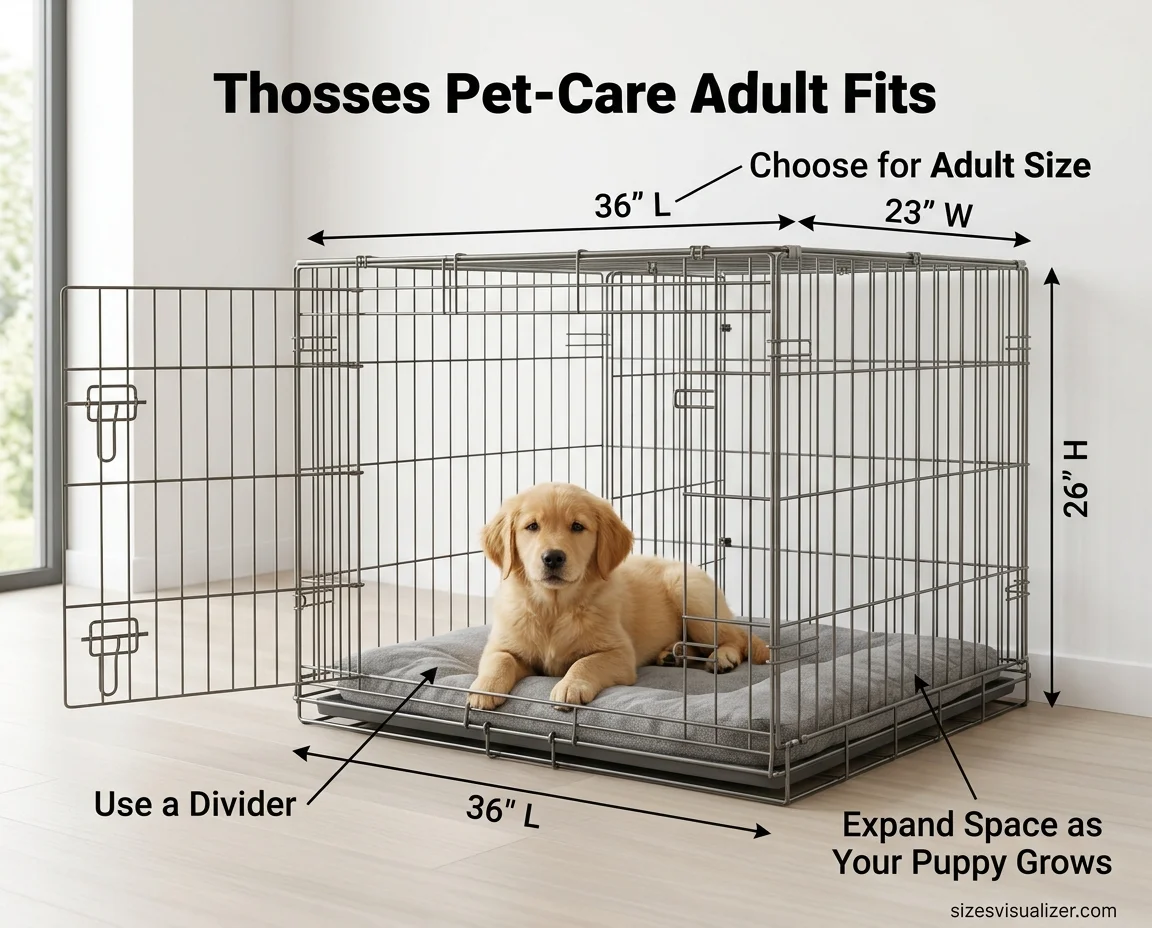
Buy for the adult size, then shrink the space with a divider panel. A big open crate teaches the wrong habit. Pups often sleep at one end and potty at the other. Move the divider back as your puppy grows.
Deep-chested and long dogs
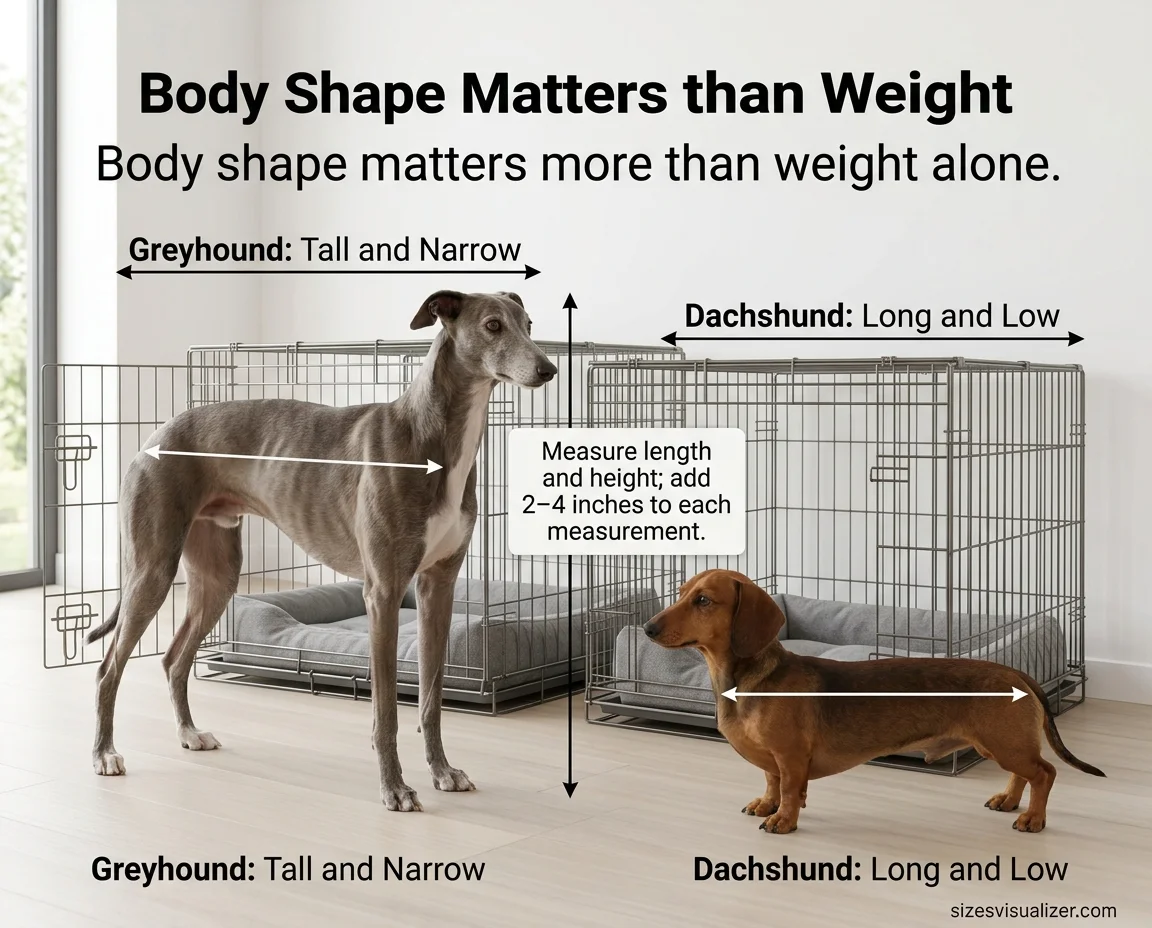
Greyhounds and Whippets are tall and narrow. Dachshunds and Corgis are long and low. Measure them. Don’t rely on weight alone.
Flat-faced breeds
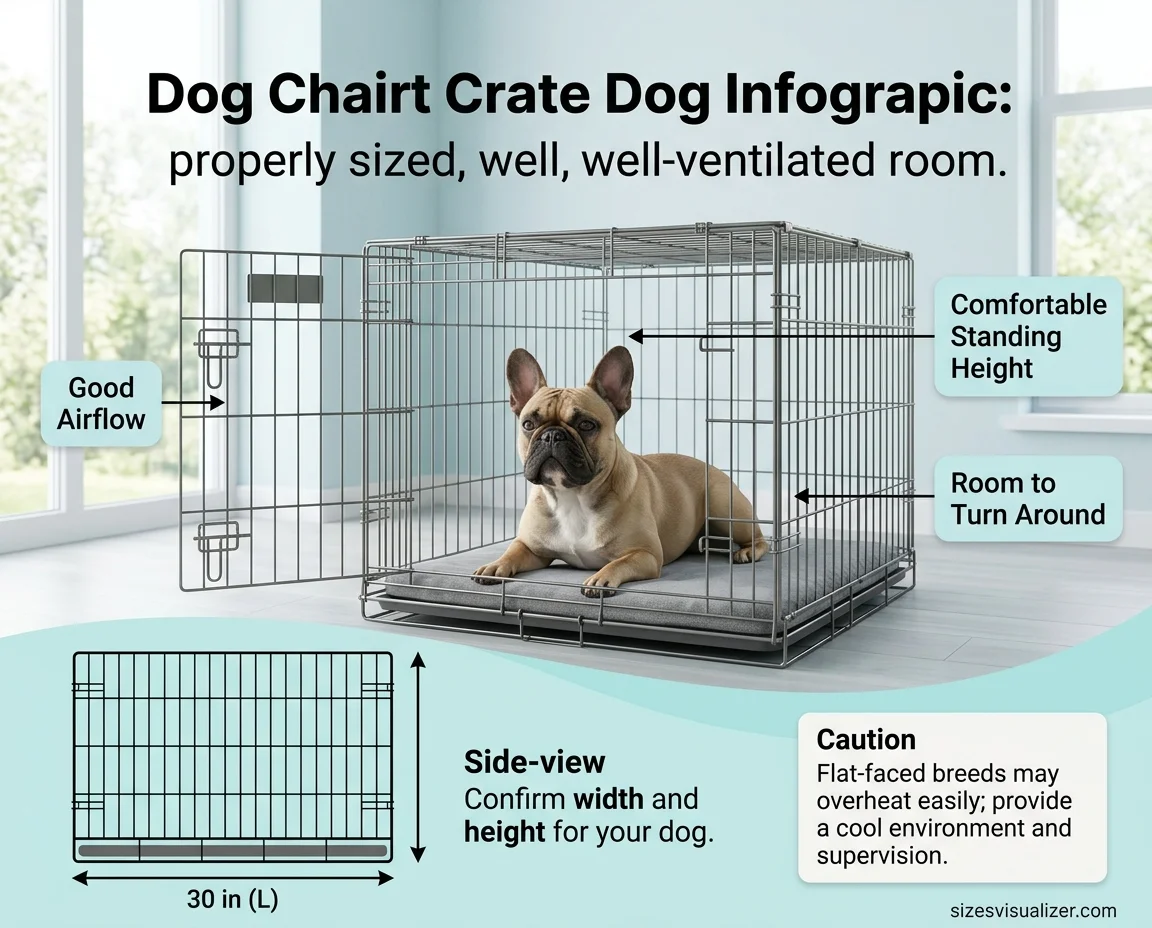
Bulldogs and Pugs overheat easily. Pick a wire crate with good airflow and keep it in a cool room.
Strong chewers and escape artists
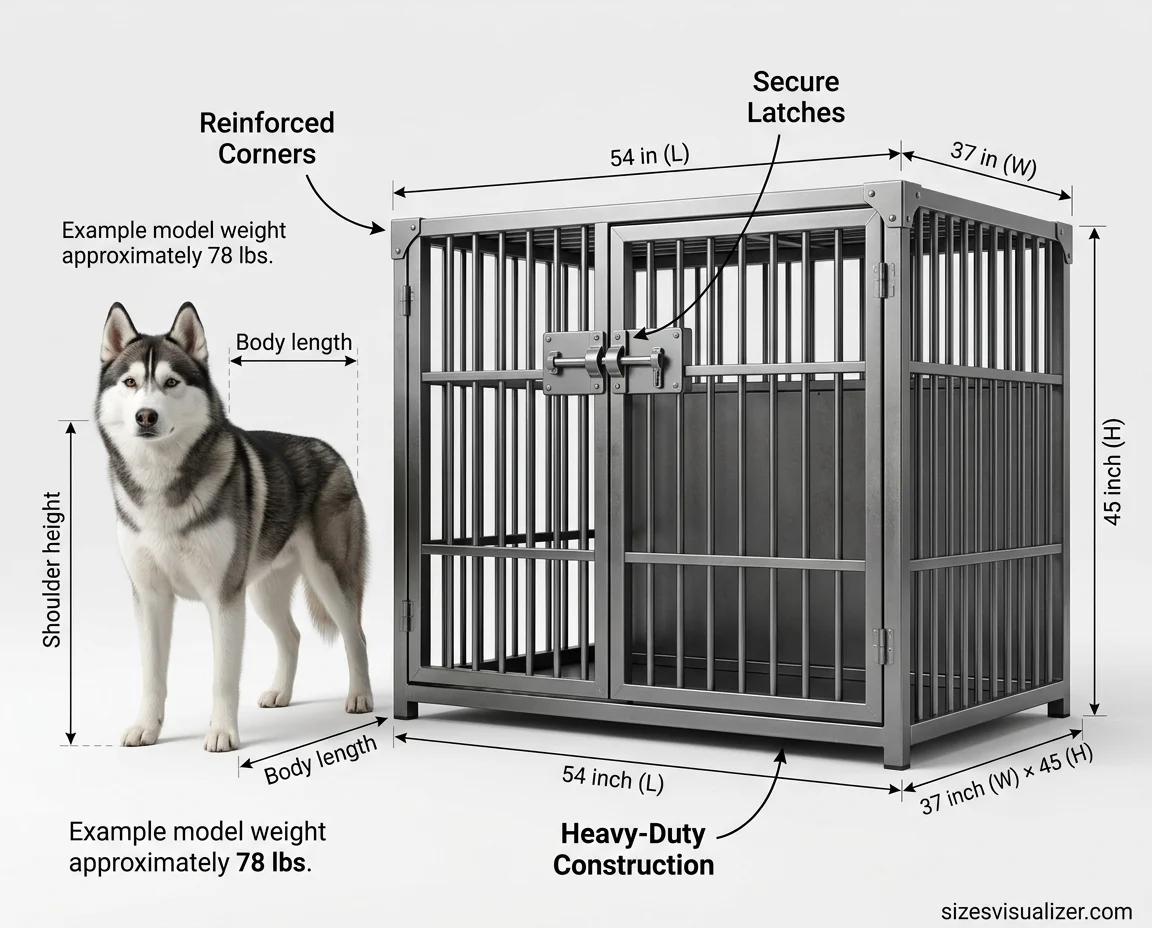
Huskies and Malinois may bend thin wire. A heavy-duty crate with reinforced corners and strong latches is safer. These crates are heavy. Some 54-inch models weigh about 78 pounds, so set them up where they’ll stay.
Crate type:
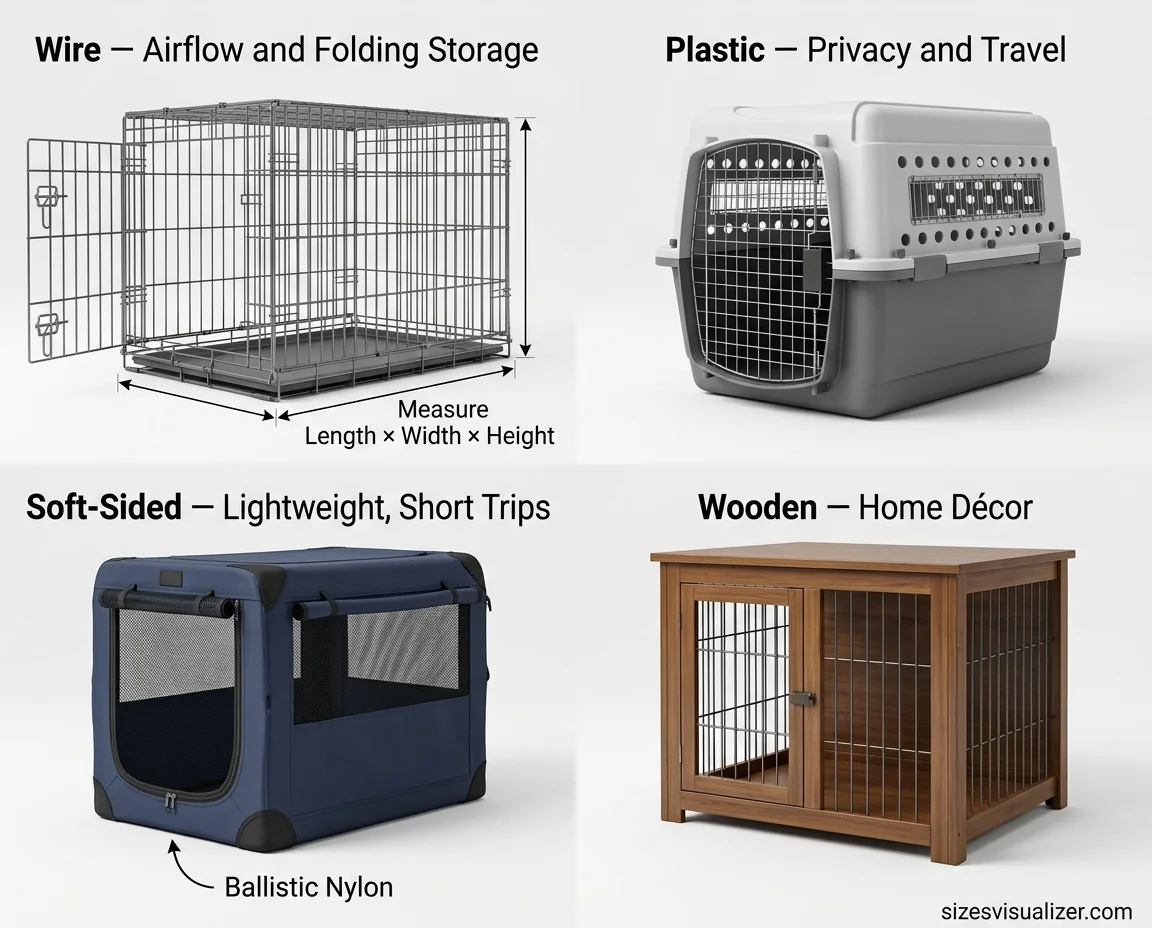
- Wire crates fold flat and let air flow.
- Plastic crates feel private and suit car and air travel. Most airlines want your dog to stand, turn and lie down in a travel crate, so check your airline’s rules.
- Soft-sided crates are light and good for short trips.
- Wooden crates blend with home décor.
Crate mats
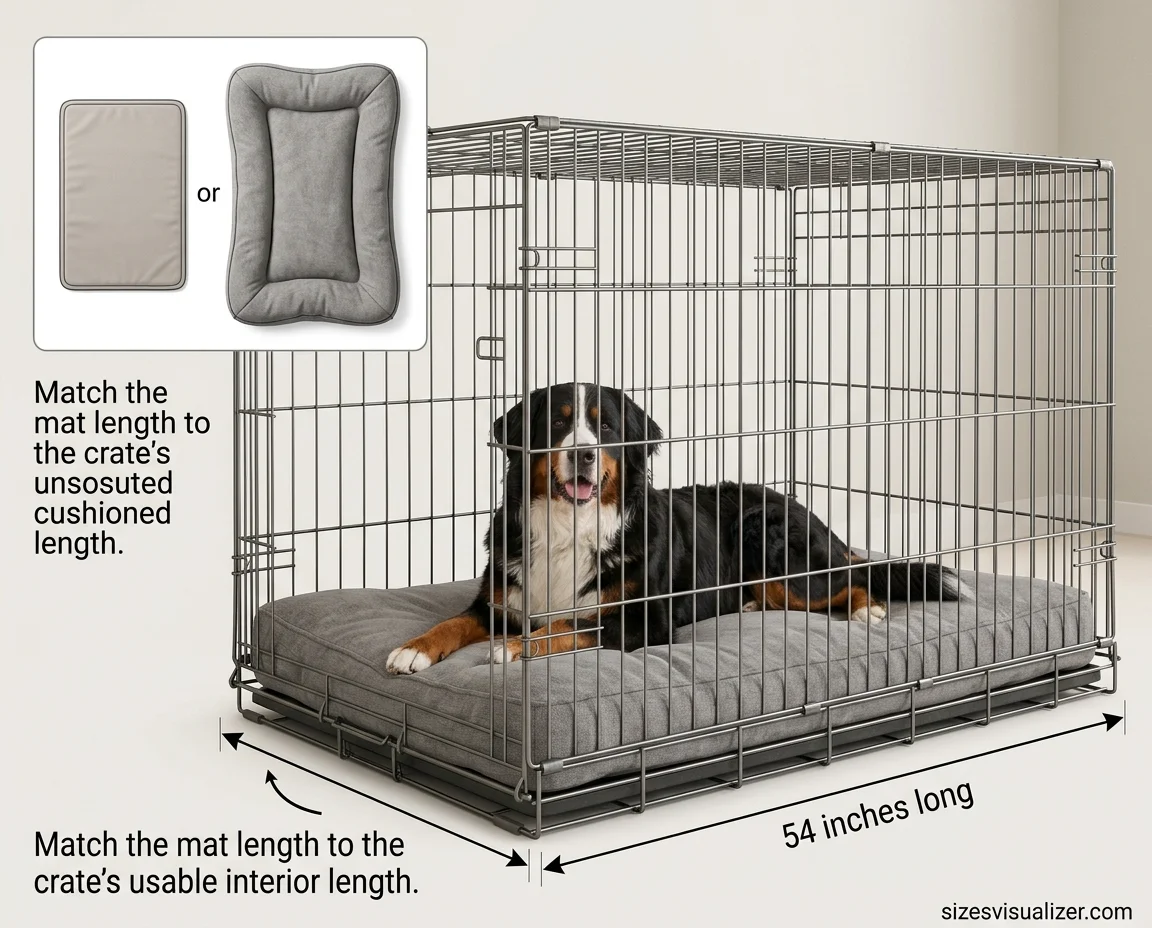
Match the mat to the crate length. For example, a 54-inch crate pairs with a 54-inch mat. Thin pads can leave a heavy dog sleeping on hard bars.
Choosing the right size for your dog is essential for comfort, safety, and enough room to move freely. Similarly, understanding official lacrosse field dimensions and layout helps ensure the right measurements, spacing, and markings for a regulation playing area.
Signs Your Dog Crate Size Is Wrong
Your dog will show you. Watch for these signals.
Too small
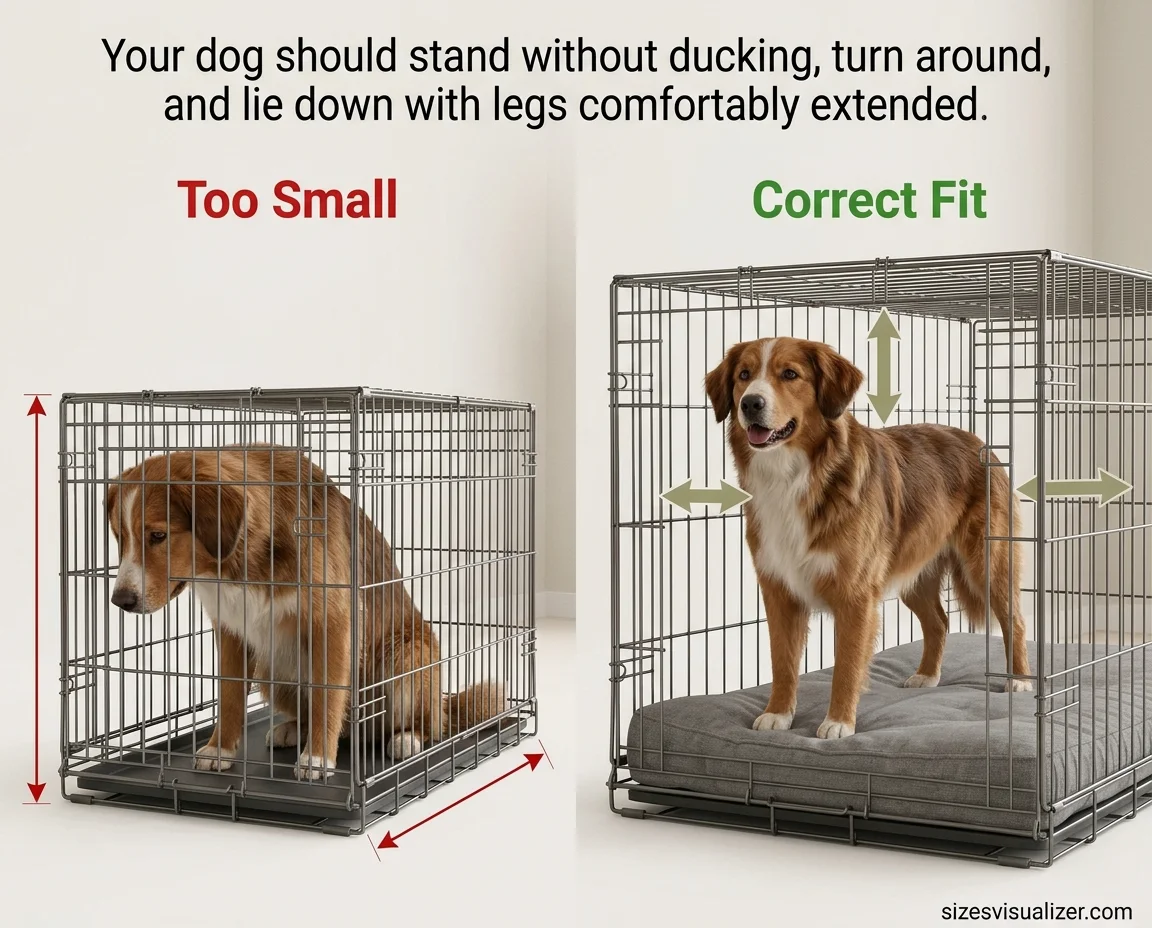
- Your dog can’t stand fully or turn around.
- Your dog sleeps curled tight or with the nose pressed to the door.
- Your dog pants, paws or looks cramped.
Too big
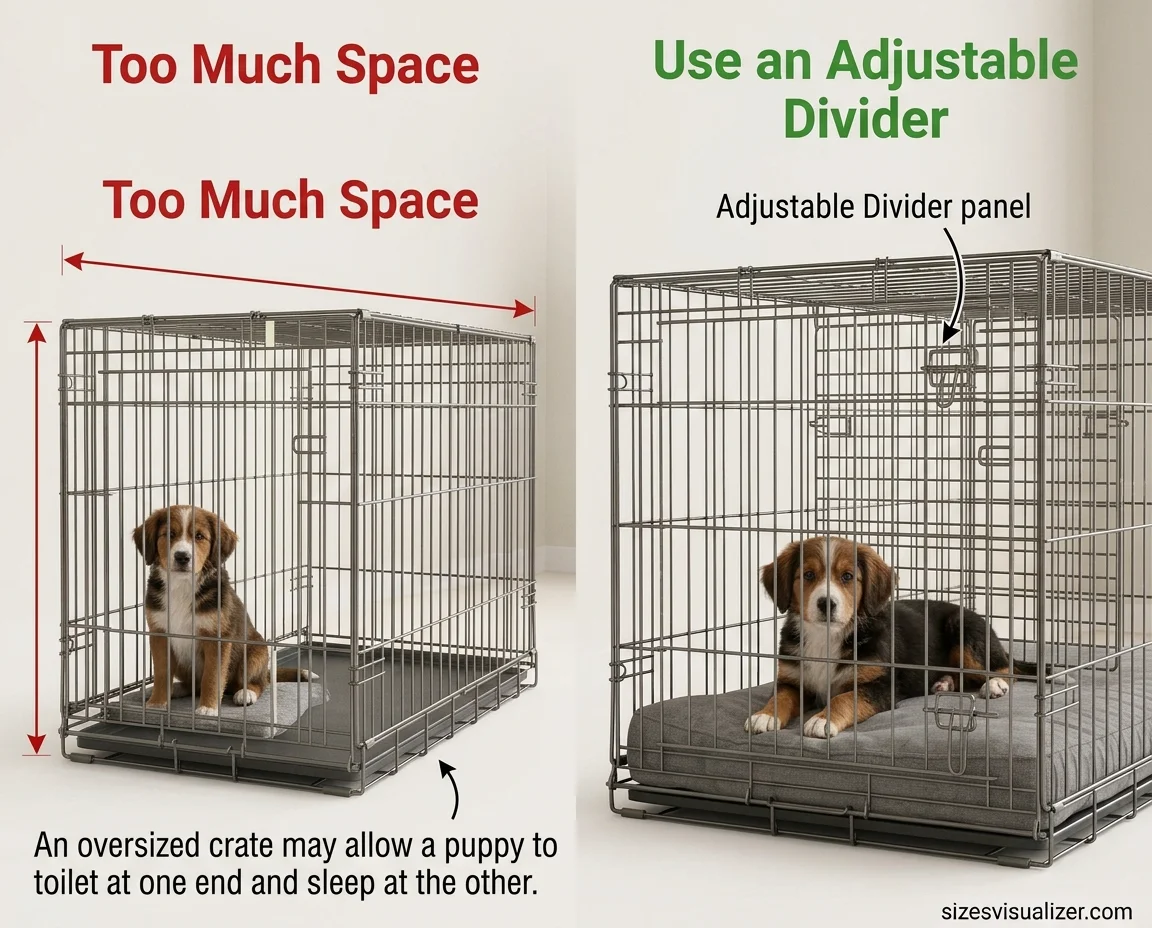
- Your dog uses one end as a toilet.
- Your pup treats the crate like a play area.
- Your dog seems unsettled instead of calm.
Fix a crate that’s too big with a divider. Fix one that’s too small by moving up one size.
FAQs
What is the size of a large dog crate?
A large dog crate is usually 36 inches long. It suits dogs of about 40–70 lbs. A typical 36-inch crate is roughly 36″ long, 23″ wide and 26″ tall. Some brands call 42 inches “large,” so check the label.
What size dog fits in a 42 inch dog crate?
A 42-inch crate fits dogs of about 70–90 lbs. Labradors, Golden Retrievers, Boxers and Siberian Huskies often fit well. Measure first, since body shape changes the fit.
How much does a 54 inch XXL dog crate cost?
Most 54-inch wire and heavy-duty crates run about $210 to $290 at major US retailers. One popular double-door model lists at $226.99 after a discount, and a single-door bundle with a mat was about $212. Prices change often, so compare a few stores. Budget wire models can cost less. Roof-top heavy-duty models can cost more.
Is a 36 inch dog crate a large?
Yes. In most US size charts, a 36-inch crate is large. A few brands label it medium-large, so rely on the listed inside dimensions.
How big is a large crate?
A large crate is about 36 inches long and fits a dog up to roughly 34 inches long and 23 inches tall. Leave floor space at home for the crate, plus a little room to open the door.
What is the 2:1 crate rule?
The 2:1 crate rule is a time guide, not a sizing rule. Trainers often describe it as two hours in the crate for every hour outside it. It helps young puppies get enough rest and avoid overstimulation. Adjust it as your dog grows and learns to settle.
Conclusion
The right crate comes down to three steps. Check the size chart, measure your dog, then add 2–4 inches. Use a divider for growing puppies and watch your dog’s body language.
Do that, and the crate becomes a calm, safe space your dog wants to use.

Measurement Researcher, Size Comparison Writer & Content Specialist
Timmy Ahad is a dedicated content writer and research specialist at SizesVisualizer.com, where he focuses on creating accurate, easy-to-understand content about measurements, dimensions, size comparisons, and real-world object visualization.