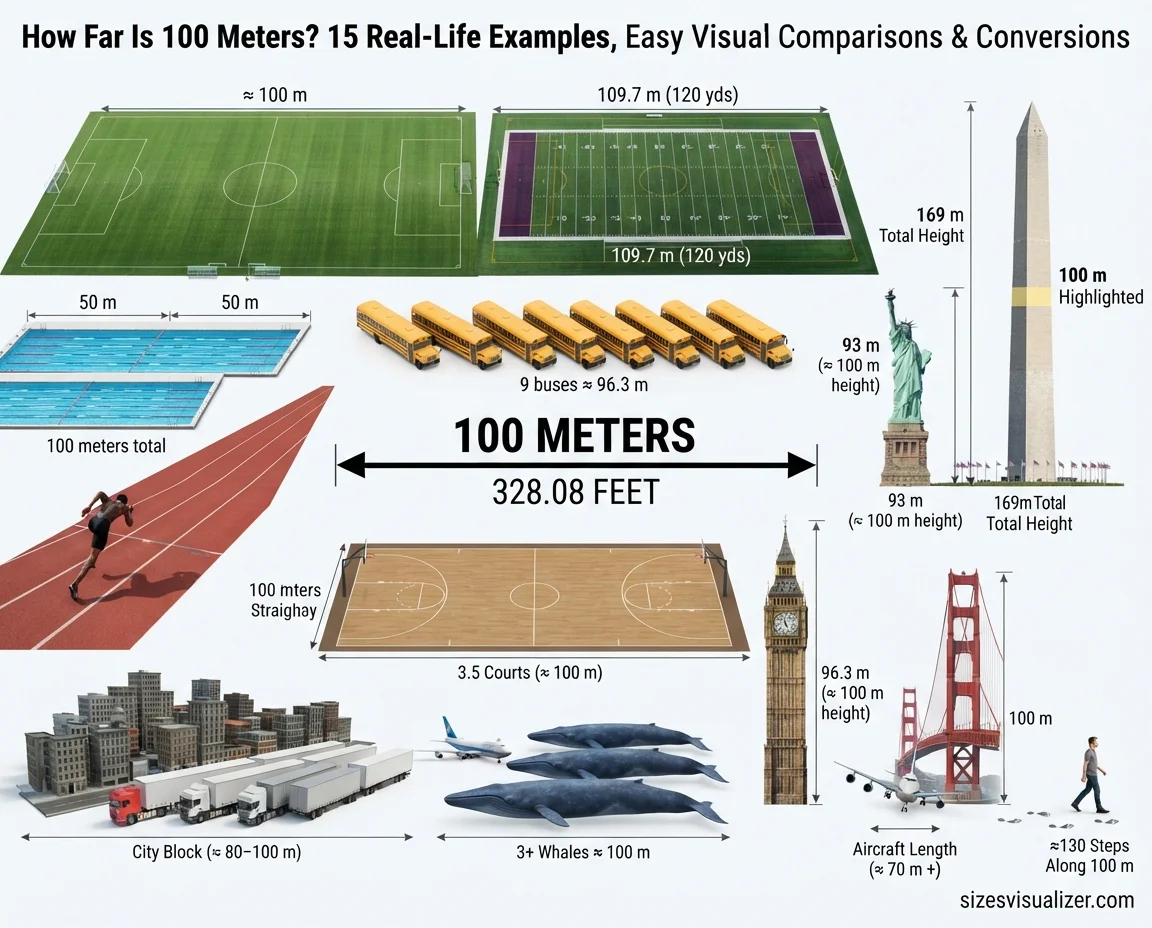
A number like 100 meters is easy to say but hard to picture. Is it a short walk? A quick jog? Something you’d need a car for?
This guide breaks down how far 100 meters really is using things you already know — sports fields, buses, buildings, and even a blue whale. By the end, you’ll be able to picture 100 meters anywhere, anytime, without a tape measures.
Table of Contents
How Far Is 100 Meters in Feet, Yards, and Miles?
100 meters equals 328.08 feet, 109.36 yards, or 0.1 kilometers. In miles, that’s roughly 0.0621 miles — a short sprint distance, not a walking-trip distance.
100 Meters to Feet
Multiply meters by 3.28084 to get feet. That math gives you 328.08 feet, just over the length of a standard American football field measured sideline to sideline in the other direction, or about one full city block in many mid-size U.S. towns.
100 Meters to Yards
In yards, 100 meters converts to 109.36 yards. This unit matters most for U.S. readers because American football is measured in yards. A full field with end zones runs 120 yards, so 100 meters and a football field are close cousins in size, even though they’re not identical.
100 Meters to Miles and Kilometers
100 meters is exactly 0.1 kilometers and about 0.0621 miles. Because a mile is so much longer, 100 meters is best thought of as a sprint benchmark, not a distance you’d measure a drive or a hike in.
Visualize any size instantly with our Size Visualizer & Comparison Tool and see how it compares with familiar objects.
How Long Is 100 Meters? 15 Real-Life Comparisons
Here are 15 everyday 100 meter comparisons — familiar objects and places that show exactly how far this distance stretches.
A Soccer Field, Goal Line to Goal Line
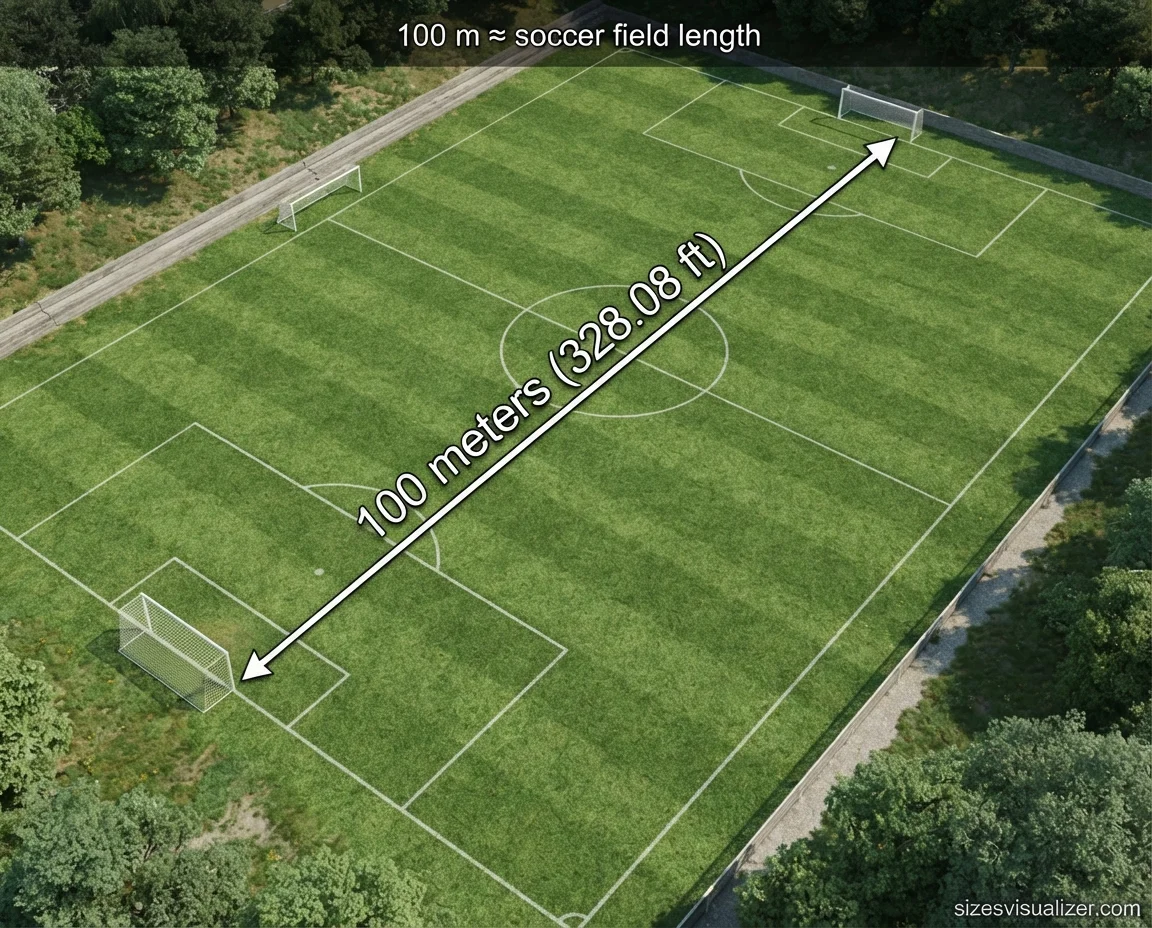
A regulation soccer pitch runs 100 to 110 meters long, according to the International Football Association Board (IFAB), the organization that writes football’s official Laws of the Game. Sprinting the full pitch length is nearly identical to running a 100-meter dash.
An American Football Field With End Zones
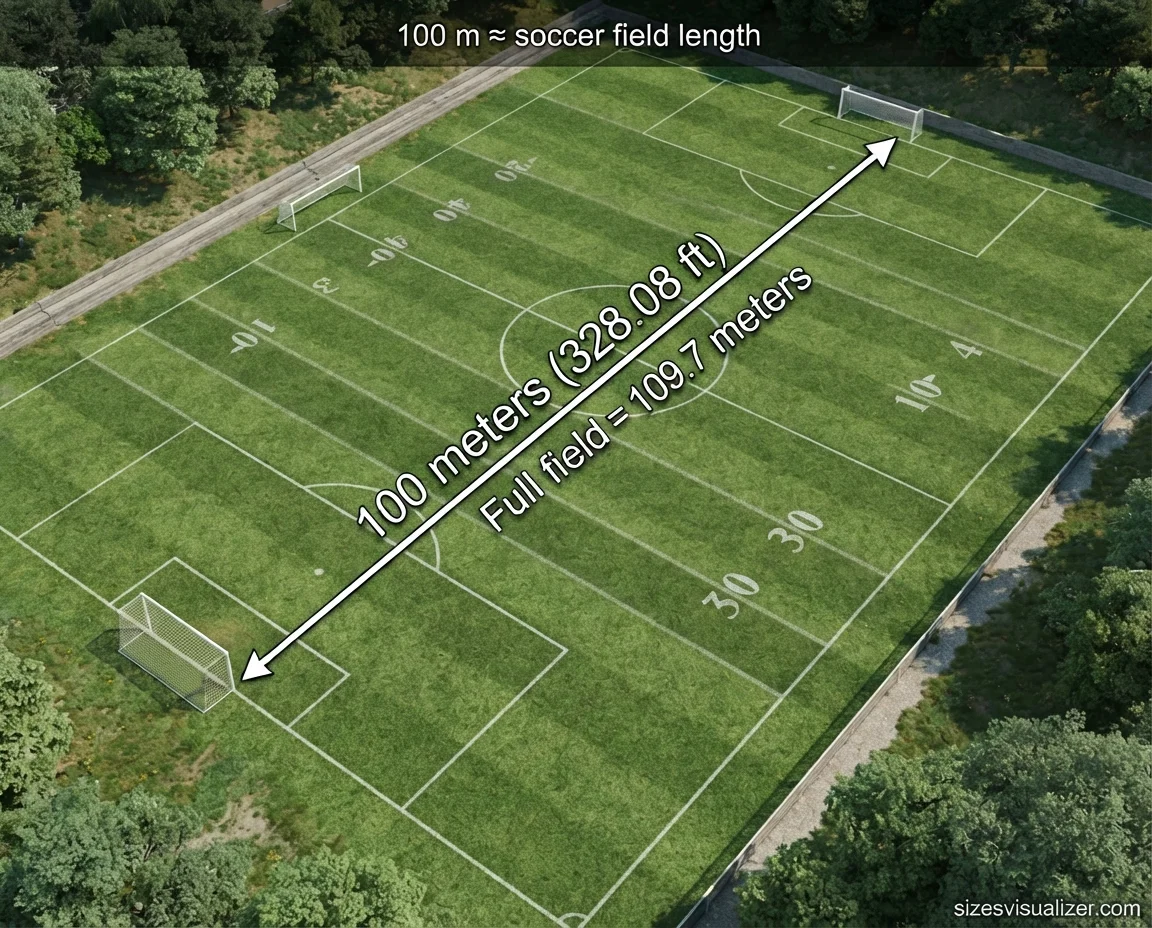
A U.S. football field, end zone to end zone, measures 120 yards, or about 109.7 meters. That’s roughly 10% longer than 100 meters, which is why football fields are the go-to mental model for this distance in the United States.
Two Lengths of an Olympic Swimming Pool
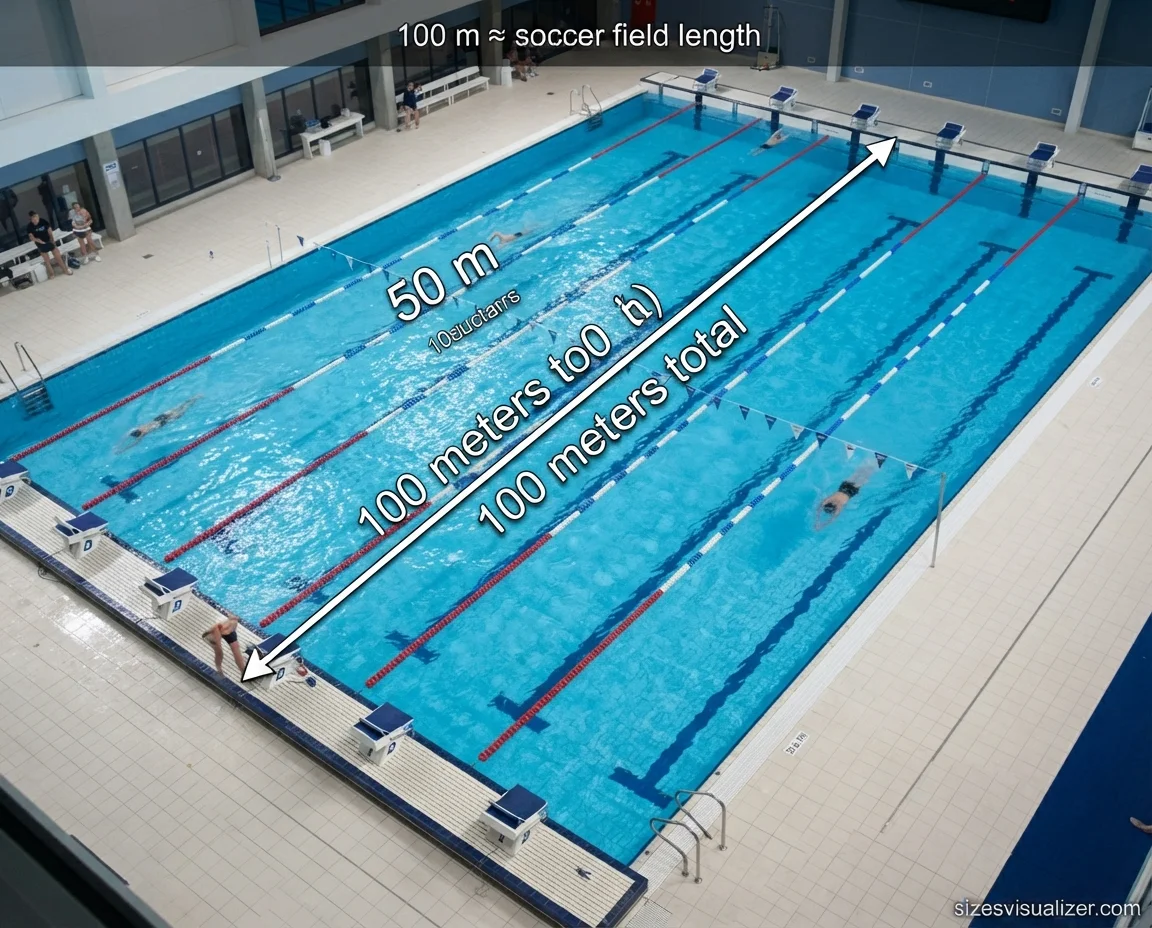
An Olympic-sized pool is exactly 50 meters long, the standard set by World Aquatics for every sanctioned competition. Swim it down and back once, and you’ve covered 100 meters.
The Straightaway on a Running Track
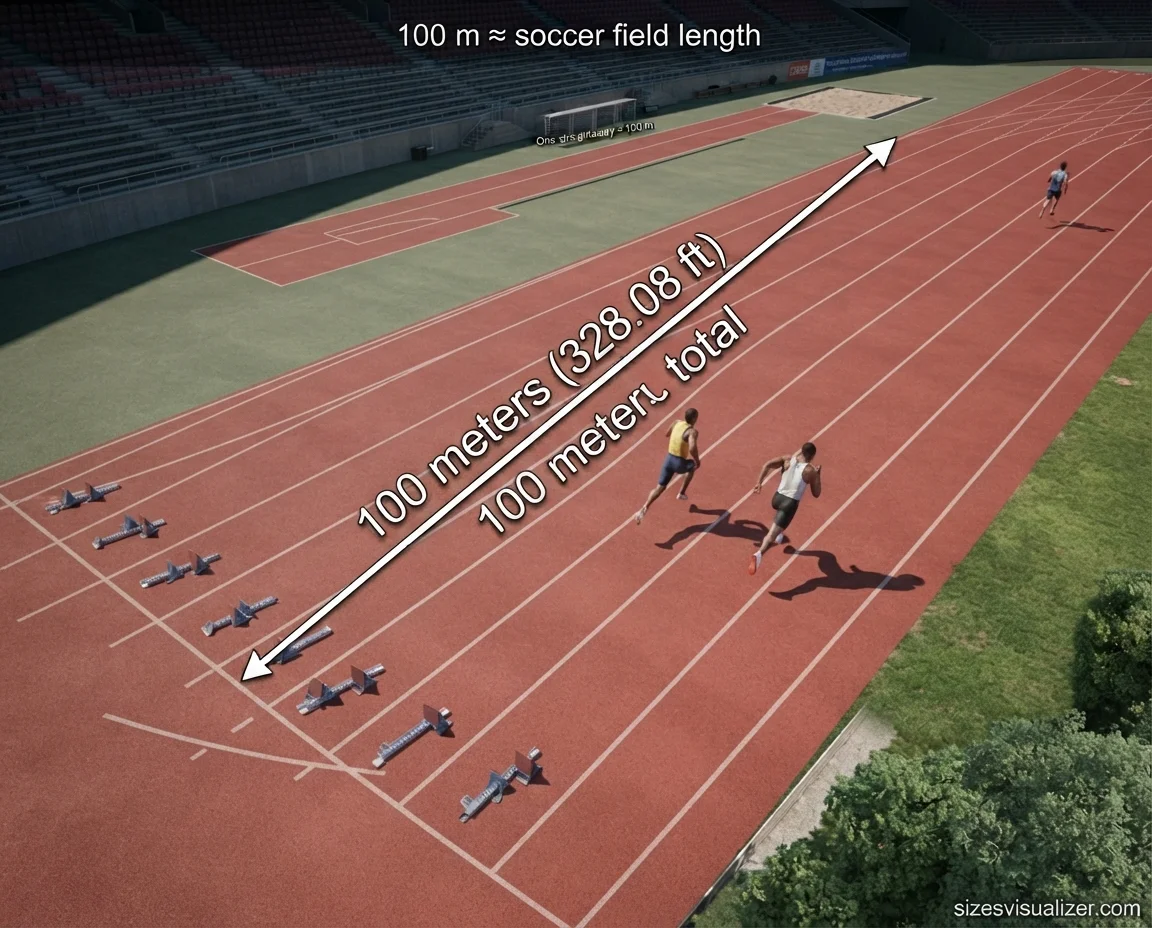
A regulation 400-meter track has two straight sections connected by curves, and each straightaway measures exactly 100 meters. This is also why the 100-meter dash is run in a straight line instead of around a bend — it’s the length of one full straightaway.
Nine School Buses, Bumper to Bumper
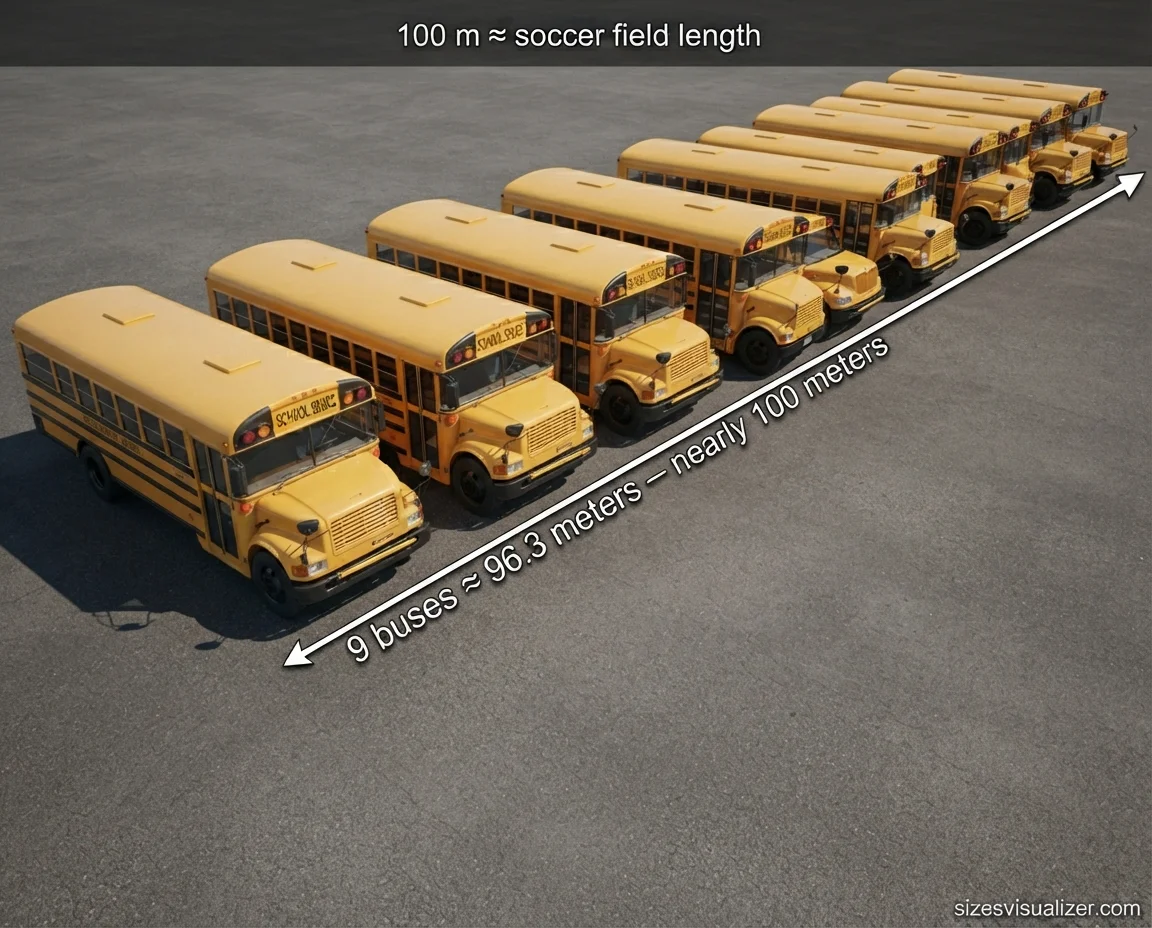
A standard U.S. school bus runs about 35 feet, or 10.7 meters, from front to back. Line up nine of them nose to tail, and you’ll span close to 100 meters — an image most American readers can picture from school pickup lines.
Three and a Half Basketball Courts
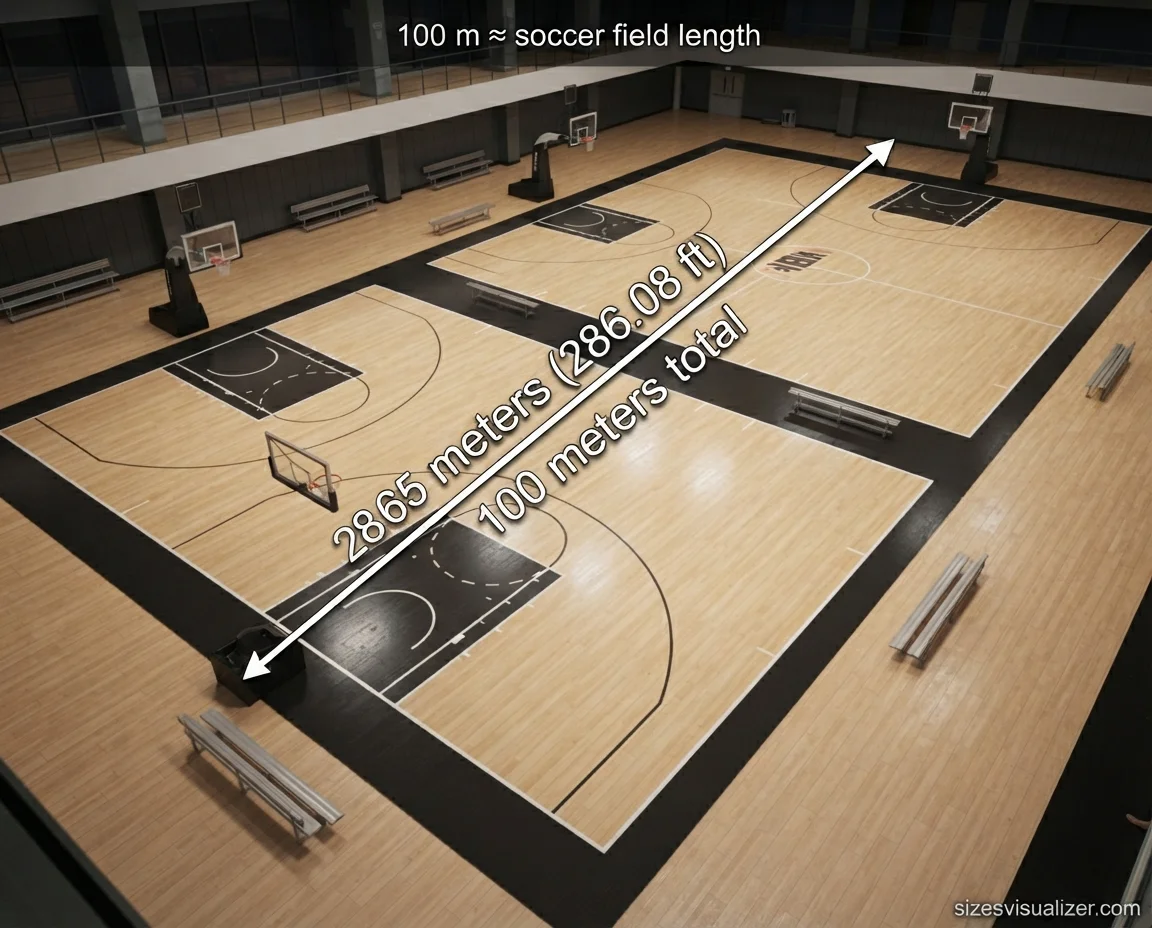
An NBA court measures 94 feet, or 28.65 meters, long. Roughly three and a half courts laid end to end equal 100 meters, a handy benchmark for basketball fans picturing the distance courtside.
The Height of the Statue of Liberty

From the base of the pedestal to the tip of the torch, the Statue of Liberty stands 305 feet, or about 93 meters, tall according to the National Park Service. That makes 100 meters almost exactly the statue’s full height — one of the clearest vertical comparisons for a U.S. audience.
Roughly 60% of the Washington Monument’s Height
The Washington Monument rises 555 feet, or 169 meters, per the National Park Service, making it the tallest structure in Washington, D.C. A 100-meter stretch covers just under 60% of its total height, another useful vertical anchor.
Six Semi-Truck Trailers, End to End
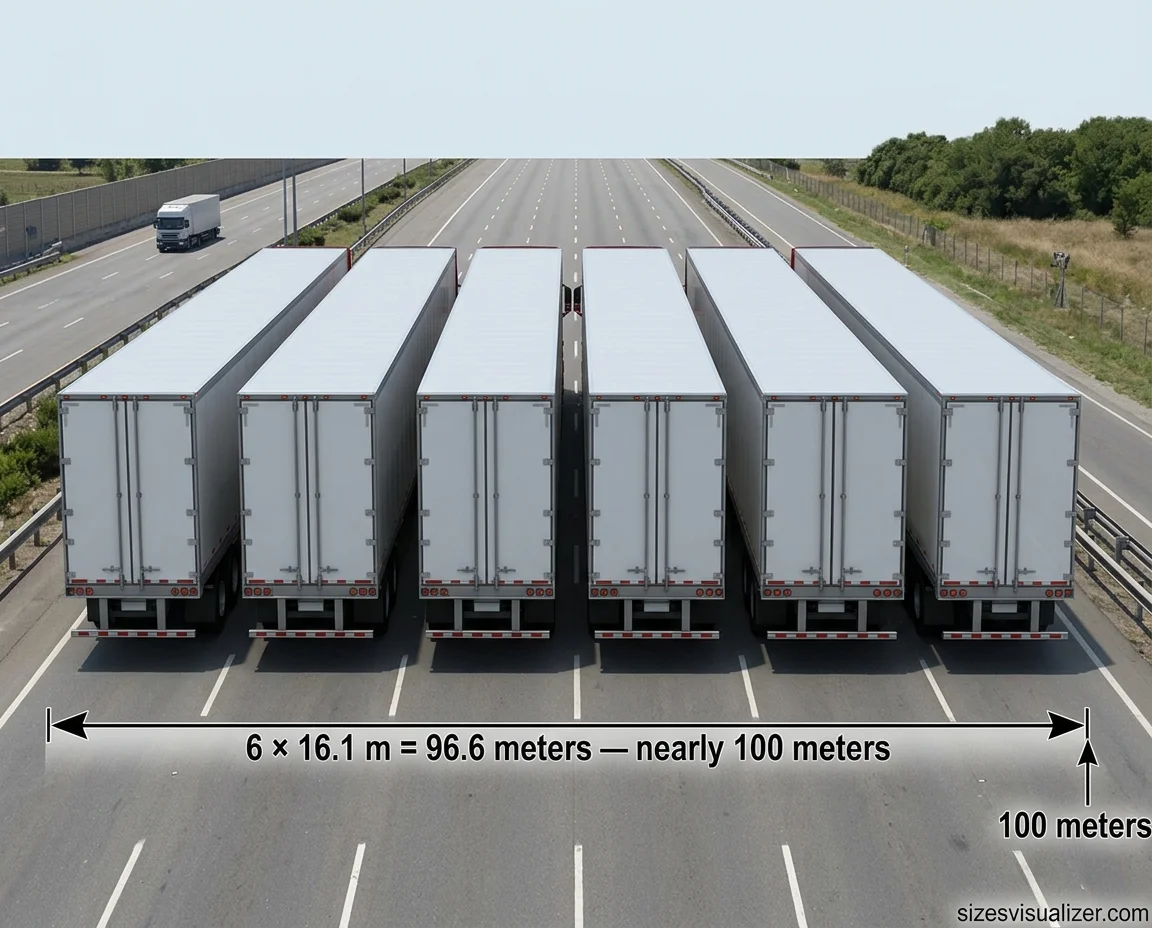
A standard U.S. semi-truck trailer measures 53 feet, or roughly 16.1 meters, the maximum length allowed on most interstates under federal highway regulations. Line up six trailers end to end, and you’re right around 100 meters.
A Typical City Block
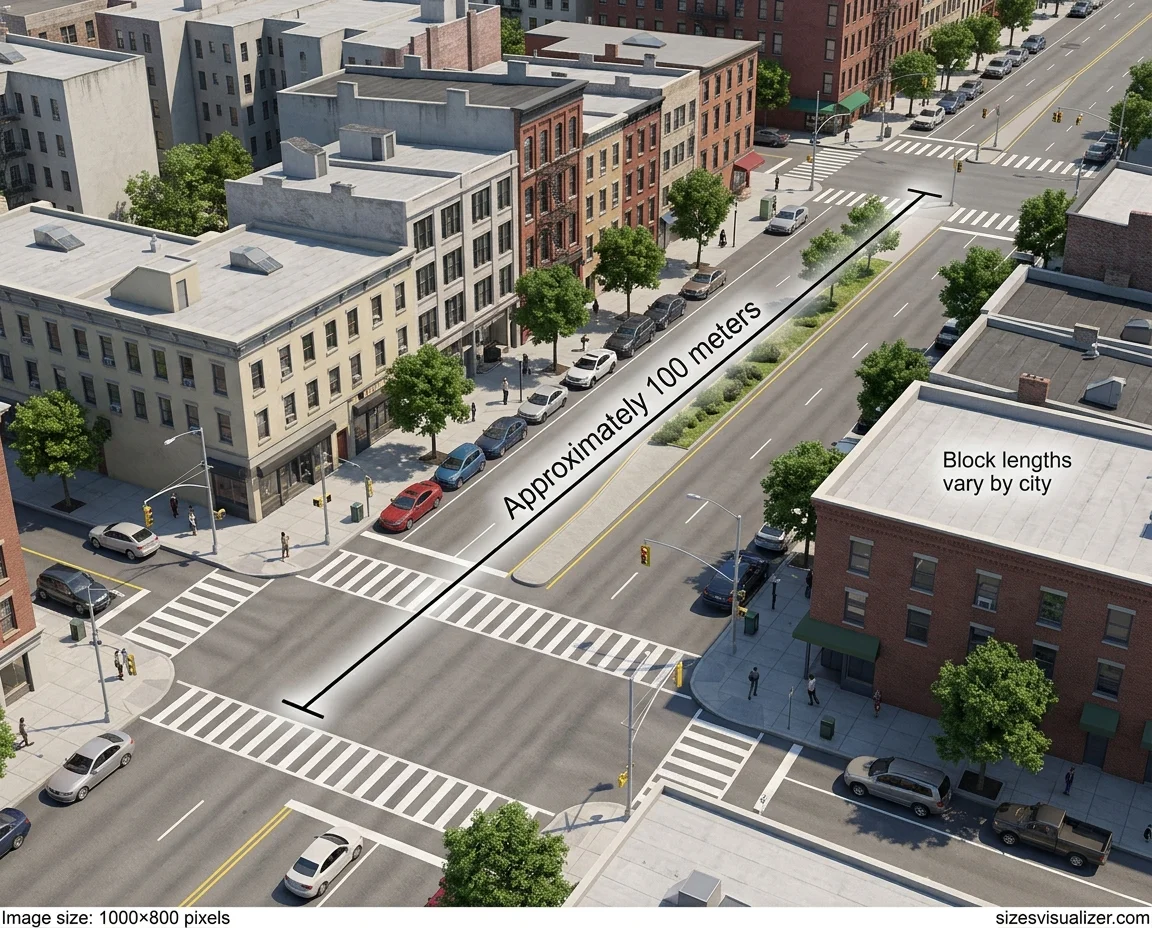
Block length varies by city, but many short urban blocks — the kind you cross at a crosswalk — run close to 80 to 100 meters. In cities like Chicago or Portland, walking one full block gets you close to the 100-meter mark, making it one of the most intuitive real-world comparisons available.
The Height of Big Ben’s Clock Tower
London’s Elizabeth Tower, widely known as Big Ben, stands 96.3 meters tall. It’s one of the closest real-world matches to a flat 100-meter measurement anywhere in the world.
Just Over Three Blue Whales, Nose to Tail
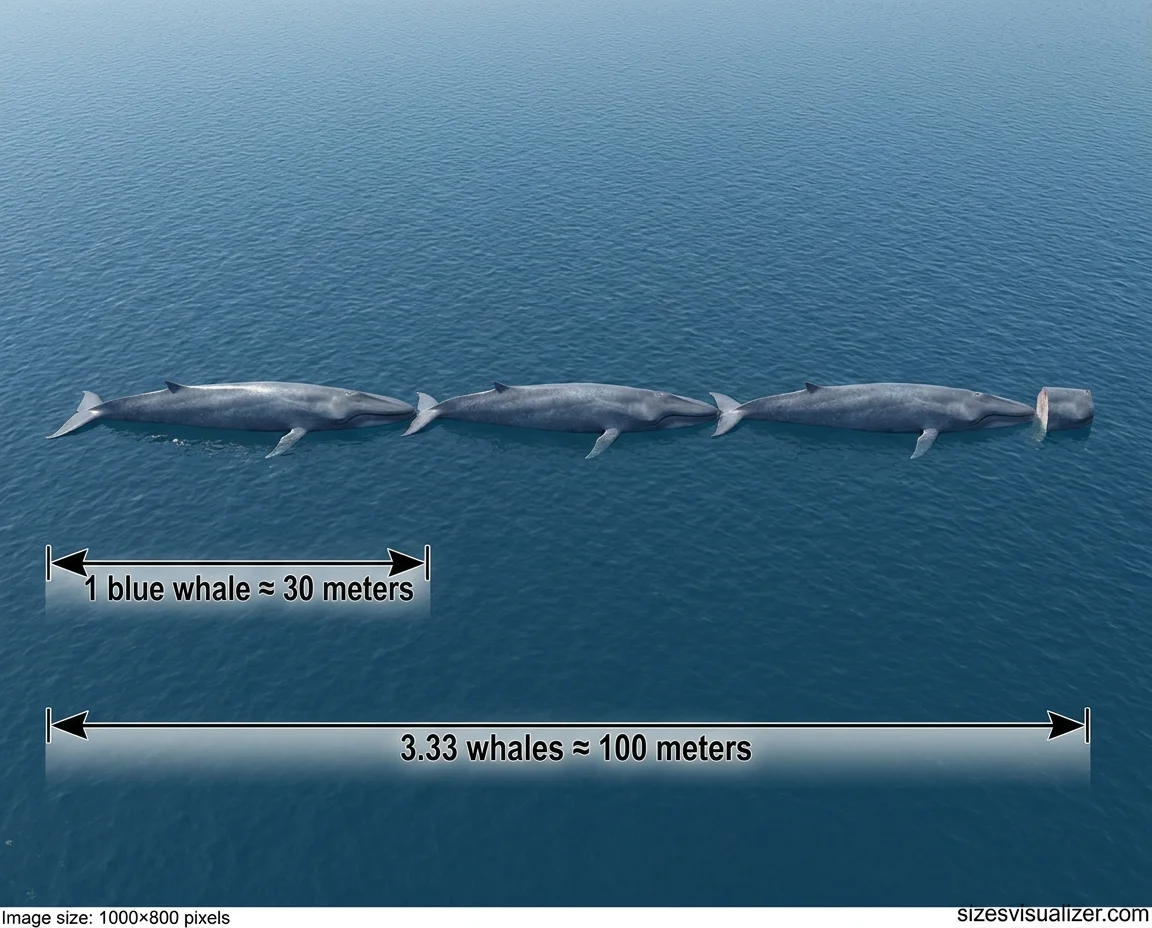
Blue whales are the largest animals on Earth and can reach up to 30 meters in length, according to NOAA Fisheries, the U.S. federal agency responsible for marine species research. Line up just over three of them, and you’ve spanned 100 meters without a single man-made structure.
One and a Half Boeing 747s

A Boeing 747 measures about 70.6 meters long, according to Boeing’s published aircraft specifications. Roughly one and a half jumbo jets, nose to tail, equal 100 meters — a comparison used by agencies like Fisheries and Oceans Canada to help boaters judge safe distances from marine life.
Under Half the Height of the Golden Gate Bridge’s Towers
The Golden Gate Bridge’s two towers rise 746 feet, or about 227 meters, above the water, per the Golden Gate Bridge Highway and Transportation District. A 100-meter stretch reaches less than half that height, showing just how massive the towers really are.
About 130 Average Walking Steps

Using an average adult stride of roughly 2.5 feet (0.75 meters), covering 100 meters takes about 130 steps. Stride length varies with height and pace, so treat this as a ballpark figure, not an exact count.
Must Visit: How Big Is 12 Inches? 20 Common Things That Are 12 Inches Long
How Long Does It Take To Run or Walk 100 Meters?
Sprint speed varies a lot by fitness level. Casual runners often need 13 to 15-plus seconds to cover 100 meters, while trained sprinters dip well under 11 seconds.
The men’s 100-meter world record is 9.58 seconds, set by Usain Bolt at the 2009 World Championships in Berlin. The women’s record, 10.49 seconds, has stood since Florence Griffith-Joyner ran it in 1988 — both figures maintained by World Athletics, the sport’s global governing body.
Walking is much slower. At an average pace of 4 to 5 km/h, covering 100 meters on foot takes about 1 to 2 minutes.
100 Meters Compared at a Glance
| Reference Point | Actual Size | Relationship to 100 Meters |
|---|---|---|
| Soccer pitch | 100–110 m | Roughly equal |
| American football field (with end zones) | 109.7 m | Slightly longer |
| Olympic swimming pool | 50 m | 2 lengths = 100 m |
| School bus | ~10.7 m | ~9 buses end to end |
| Statue of Liberty | ~93 m tall | Almost exactly 100 m |
| Washington Monument | 169 m tall | 100 m ≈ 60% of height |
| Semi-truck trailer | ~16.1 m | ~6 trailers end to end |
| NBA basketball court | 28.65 m | 3.5 courts ≈ 100 m |
| Big Ben (Elizabeth Tower) | 96.3 m tall | Just under 100 m |
| Blue whale | Up to 30 m | ~3.3 whales nose to tail |
| Boeing 747 | ~70.6 m | ~1.5 jets nose to tail |
FAQs
How long is 100 metres to walk?
At an average walking pace of 4 to 5 km/h, 100 meters takes about 1 to 2 minutes to walk. Pace and terrain can shift this slightly.
How long is the 100-meter?
The 100-meter dash is a track and field sprint event covering exactly 100 meters, or 328.08 feet. The men’s world record stands at 9.58 seconds, set by Usain Bolt in 2009.
Is 100 meters based on real life?
Yes. The meter is a standardized unit of length used worldwide for measuring distance, and 100 meters corresponds to real, fixed-length objects and spaces, like a soccer pitch or a running track straightaway, that you can walk or measure directly.
How far is 100 meters comparison?
100 meters is close to the length of a soccer field, the height of the Statue of Liberty, or nine school buses parked end to end. These real-world comparisons make the distance easier to visualize than the number alone.
How long is 100m visually?
Visually, 100 meters looks like one full length of a soccer pitch, a city block in many U.S. downtowns, or two lengths of an Olympic swimming pool — all useful mental anchors without needing a measuring tool.
How to measure 100m with a phone?
Most smartphones have a built-in measuring app (like Apple’s Measure app or Google’s Measure app on Android) that uses the camera and augmented reality to estimate distance. For 100 meters specifically, GPS-based running or mapping apps, such as those used for fitness tracking, are more accurate over longer outdoor distances than camera-based AR tools, which work best for shorter, close-range measurements.
Conclusion
100 meters isn’t just a number on a track. It’s the length of a soccer field, close to the full height of the Statue of Liberty, and a distance the fastest sprinters alive cover in under 10 seconds. Whether you’re picturing it in feet, yards, or against a landmark you already know, these comparisons turn an abstract measurement into something you can actually see.

Measurement Researcher, Size Comparison Writer & Content Specialist
Timmy Ahad is a dedicated content writer and research specialist at SizesVisualizer.com, where he focuses on creating accurate, easy-to-understand content about measurements, dimensions, size comparisons, and real-world object visualization.