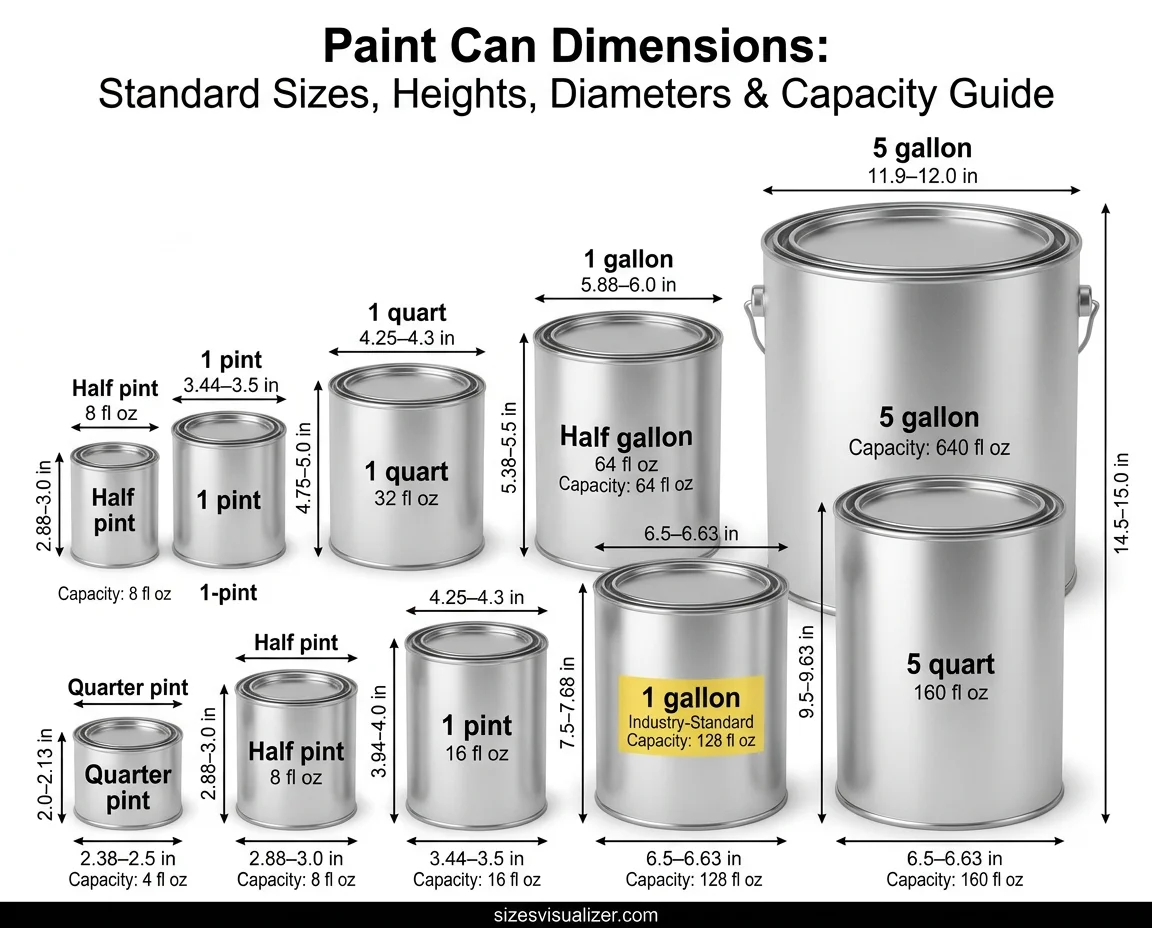
A standard 1-gallon paint can is about 7.5–7.7 inches tall and 6.5–6.6 inches wide. It holds 128 fluid ounces and covers roughly 350–400 square feet per coat.
This guide lists paint can dimensions for every common US size, from a quarter pint to a 5-gallon bucket. It also covers metric tins, materials, and how to pick the right can.
Table of Contents
Paint Can Dimensions Chart: Standard US Sizes
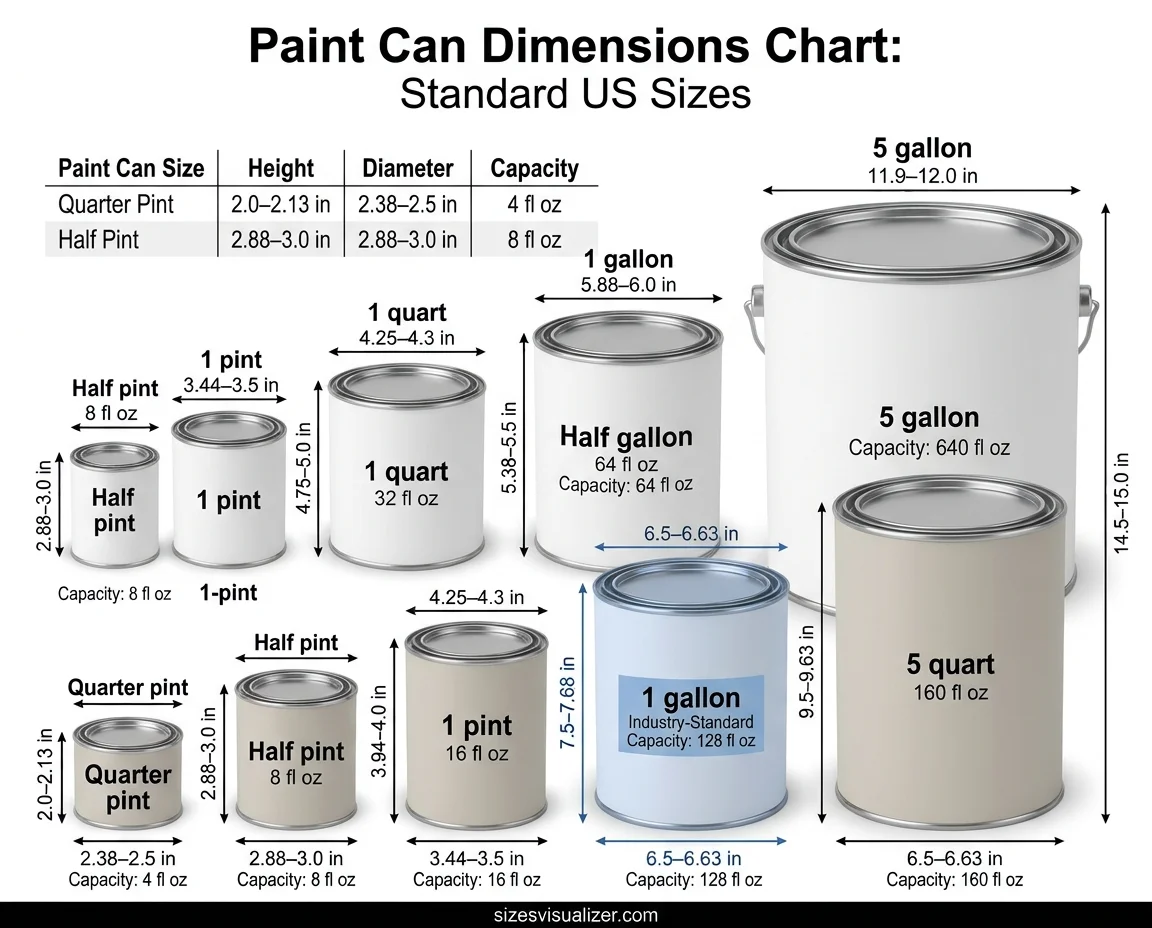
The chart below shows standard paint can sizes. These are outside measurements with the lid on. Brands differ by a few hundredths of an inch, so treat the numbers as typical, not fixed.
| Paint can size | Height (in) | Diameter (in) | Capacity | Coverage per coat |
|---|---|---|---|---|
| Quarter pint | 2.0–2.13 | 2.38–2.5 | 4 fl oz | ~11–12 sq ft |
| Half pint | 2.88–3.0 | 2.88–3.0 | 8 fl oz | ~22–25 sq ft |
| 1 pint | 3.94–4.0 | 3.44–3.5 | 16 fl oz | ~44–50 sq ft |
| 1 quart | 4.75–5.0 | 4.25–4.3 | 32 fl oz | ~88–100 sq ft |
| Half gallon | 5.38–5.5 | 5.88–6.0 | 64 fl oz | ~175–200 sq ft |
| 1 gallon | 7.5–7.68 | 6.5–6.63 | 128 fl oz | ~350–400 sq ft |
| 5 quart | 9.5–9.63 | 6.5–6.63 | 160 fl oz | ~437–500 sq ft |
| 5 gallon | 14.5–15.0 | 11.9–12.0 | 640 fl oz | ~1,750–2,000 sq ft |
Coverage uses the common rule of 350–400 square feet per gallon. Manufacturers publish figures from 250 to 400 square feet, since walls and products differ.
Here is what the numbers mean in real life:
- Quarter-pint and half-pint cans are sample sizes. They suit color tests and trim touch-ups.
- A pint handles a door, a chair, or a small repair.
- A quart fits an accent wall or a small room.
- A half-gallon can is wider than it is tall. The wide base makes it harder to tip.
- A gallon can is the industry standard. Its trade code is 603 × 708, which means about 6-3/16 inches wide and 7-11/16 inches tall.
A full gallon of paint weighs about 10–12 pounds. That is why gallon cans have a metal bail handle.
One more detail is easy to miss. These sizes are outside measurements. The inside is slightly smaller because of the wall thickness. Cans also leave a little headspace, so the label volume is not the brim volume.
A 2-gallon or 3-gallon can has no fixed size. Dimensions change by supplier, so check the spec before you plan storage.
Metric Paint Can Sizes: 250ml, 500ml & 1 Liter
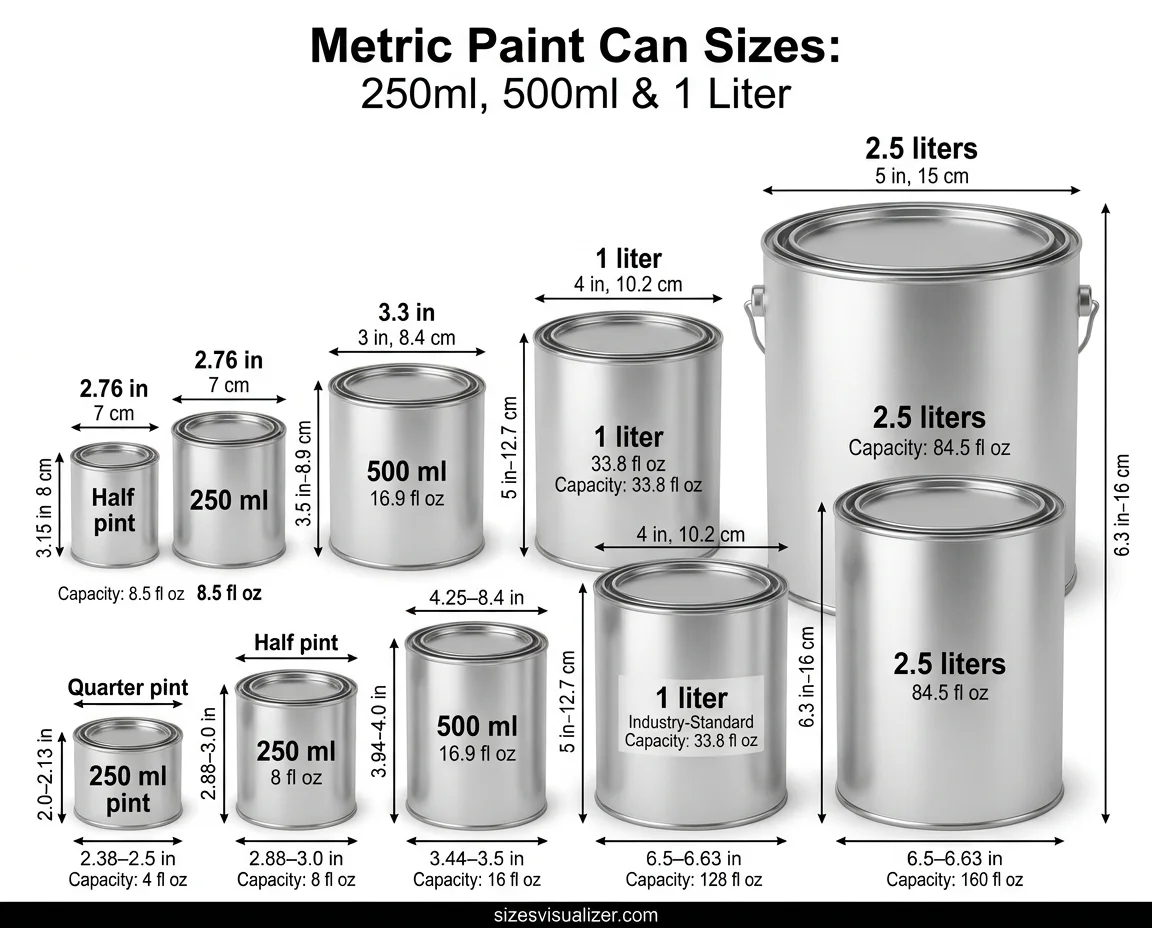
Metric paint can sizes are common on imported paint and in craft stores. Here are the usual dimensions:
- 250ml tin: about 3.15 inches (8 cm) tall and 2.76 inches (7 cm) wide. It holds about 8.5 fl oz, close to a US half pint.
- 500ml can: about 3.5 inches tall and 3.3 inches wide. It holds about 16.9 fl oz, a little more than a US pint.
- 1 liter can: about 5 inches tall and 4 inches wide. It holds 33.8 fl oz.
- 2.5 liter tin: about 6.3 inches tall and 5.9 inches wide. It holds 84.5 fl oz.
Watch out for gallon differences. One US gallon equals 3.785 liters. A British imperial gallon is about 4.546 liters. A 4-liter tin therefore holds slightly more than a US gallon.
You can work out coverage with simple math. A 250ml tin is about 0.066 gallons. At 350–400 square feet per gallon, that covers roughly 23–26 square feet. A 500ml can covers about 46–53 square feet. A 1-liter can covers about 92–106 square feet.
Metric tins also differ by brand. Two 1-liter tins can have different widths and heights. If shelf space is tight, measure the real tin.
Paint Can Materials, Lids & Linings That Affect Size
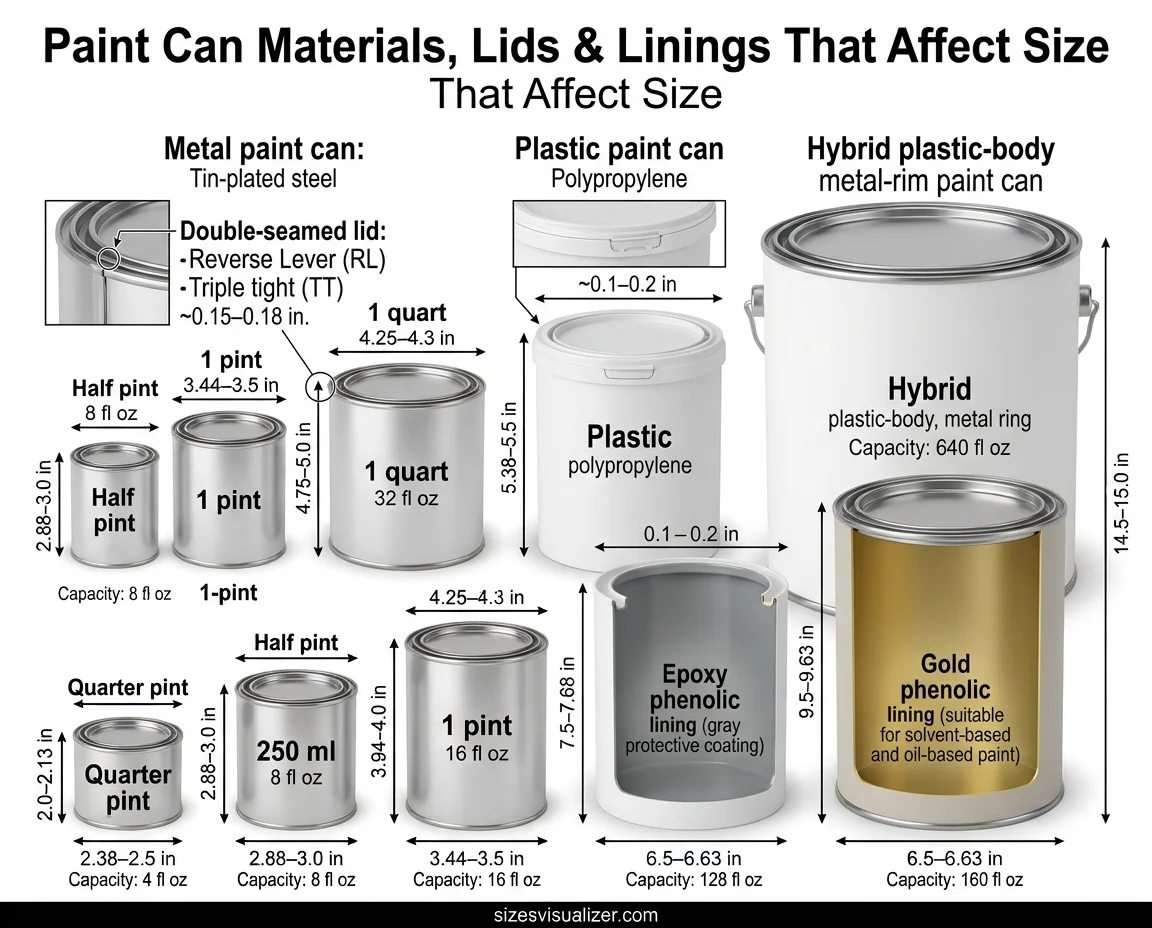
Paint can height and diameter change a little with the material. Each type also suits a different paint.
- Metal cans are made of tin-plated steel. They have a double-seamed lid. That seam adds about 0.15–0.18 inches to the height. Metal suits oil-based paint and solvent coatings.
- Plastic cans are made of polypropylene. They run about 0.1–0.2 inches shorter at the same volume. They suit latex and water-based paint. They resist dents and weigh less.
- Hybrid cans have a plastic body with a metal ring and lid. They are common for colorants and water-based paint.
Metal and hybrid cans often carry a lining. The lining stops rust, and rust can darken paint and contaminate it. Epoxy phenolic is gray and suits water-based paint. Gold phenolic suits solvent and oil-based paint. Some cans are unlined.
Lids matter too. Most use a lever design. Reverse Lever (RL) and Triple Tight (TT) are two common builds. A lid from one brand may not fit another brand’s can, even at the same capacity.
Height differences add up fast. One can won’t matter. A dozen stacked on a garage shelf will.
Choosing the right paint can size is essential for efficient storage and organization, especially when working in garages or workshops. Similarly, understanding standard garage door dimensions can help you maximize space, improve accessibility, and ensure a proper fit for vehicles and storage needs.
How to Choose the Right Paint Can Size
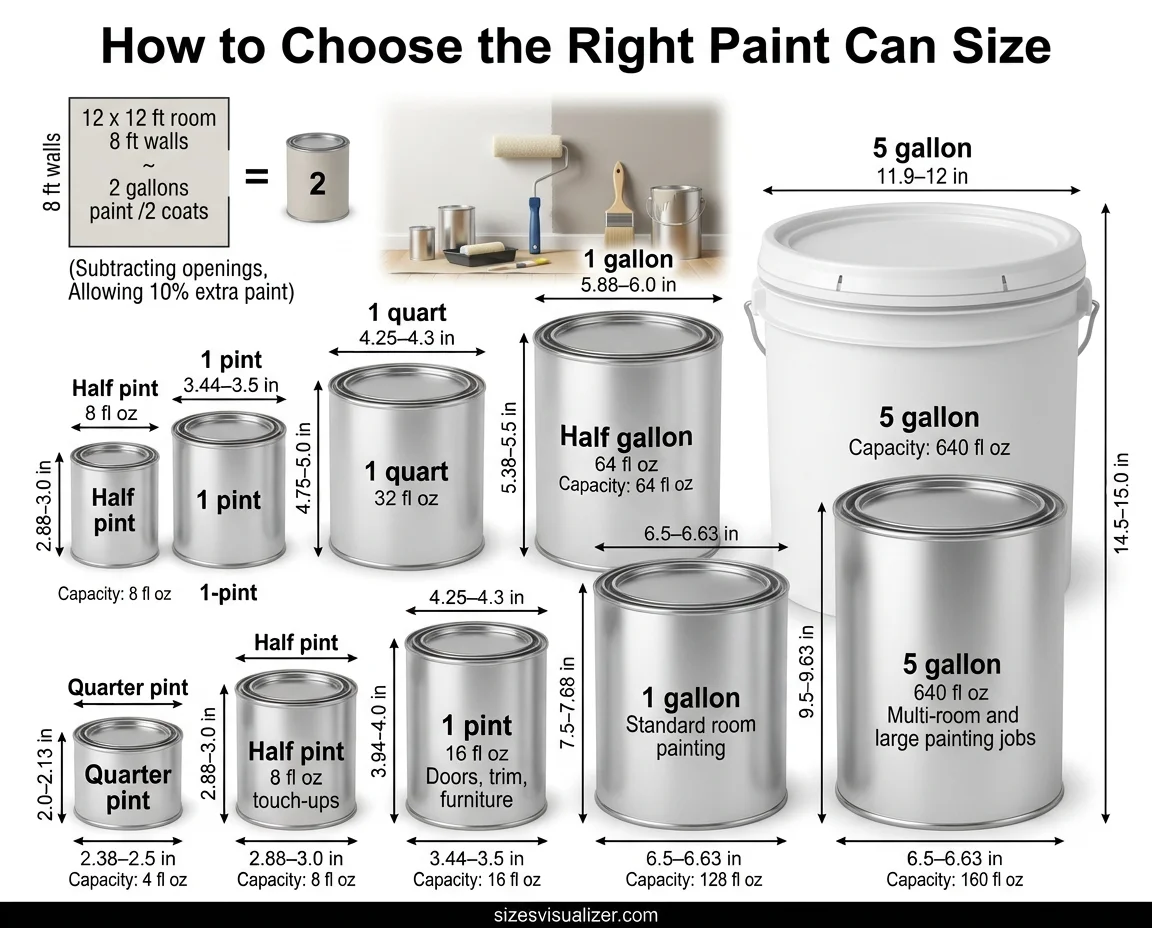
Use this four-step method to find how much paint you need:
- Multiply wall length by wall height.
- Subtract doors and windows.
- Multiply by the number of coats. Most rooms need two.
- Add 10% for edges, trim, and waste.
Here is an example. A 12 × 12 ft room with 8 ft walls has 384 square feet of wall. Subtract about 50 square feet for a door and two windows. That leaves 334. Two coats make 668. Add 10% and you get about 735. Divide by 350–400 and you need about 2 gallons.
Quick picks by project:
- Color test: quarter pint or half pint
- Trim, doors, furniture: 1 pint
- Accent wall or small room: 1 quart
- Bedroom or bathroom: half gallon to 1 gallon
- Full room, two coats: 1 to 2 gallons
- Multi-room job: 5-gallon bucket
Some jobs need more paint. Primer covers only 200–300 square feet per gallon. Textured walls, bare drywall, and big color changes also use extra paint.
If your total falls between sizes, round up. One large can also keeps the color the same across the whole job. Spray paint is different. Aerosol cans hold about 12–16 ounces.
Store cans in a cool, dry place, away from kids and pets. Wear gloves and a mask while you paint.
Plan for leftovers as well. The EPA estimates Americans throw away about 10% of the paint they buy each year. That is roughly 65–69 million gallons. Keep a little for touch-ups, and check local rules before you toss the rest. Oil-based paint usually needs a hazardous waste drop-off.
FAQs
What is the standard size of a paint can?
The standard size is 1 gallon. It is about 7.5–7.7 inches tall and 6.5–6.6 inches wide. It holds 128 fluid ounces.
How big is a 500ml paint can?
A 500ml paint can is about 3.5 inches tall and 3.3 inches wide. It holds about 16.9 fluid ounces. That is enough for roughly 46–60 square feet per coat, depending on the paint.
How big is a 250ml tin of paint?
A 250ml tin is about 3.15 inches (8 cm) tall and 2.76 inches (7 cm) wide. It holds about 8.5 fluid ounces. It is a handy size for color samples.
What are the dimensions of a 1-gallon paint can?
A 1-gallon paint can is 7.5–7.68 inches tall and 6.5–6.63 inches wide. Its trade code is 603 × 708. It holds 128 fluid ounces.
What is the size of a can of paint?
Paint cans range from a quarter pint, about 2 inches tall, to a 5-gallon bucket, about 15 inches tall. The 1-gallon can is the most common.
How much will 250ml of paint cover?
It covers about 23–26 square feet per coat on smooth, primed walls. That is enough for a small cabinet, a door panel, or a test patch.
Conclusion
Paint can sizes look simple until you shop. Know the height, diameter, and capacity of the can you need. Match it to your wall area, add 10%, and check the lid and lining. You will buy the right amount the first time.

Measurement Researcher, Size Comparison Writer & Content Specialist
Timmy Ahad is a dedicated content writer and research specialist at SizesVisualizer.com, where he focuses on creating accurate, easy-to-understand content about measurements, dimensions, size comparisons, and real-world object visualization.


