Buying a new car? Renting a garage? Sizing up a parking spot? You need real numbers, not guesswork.
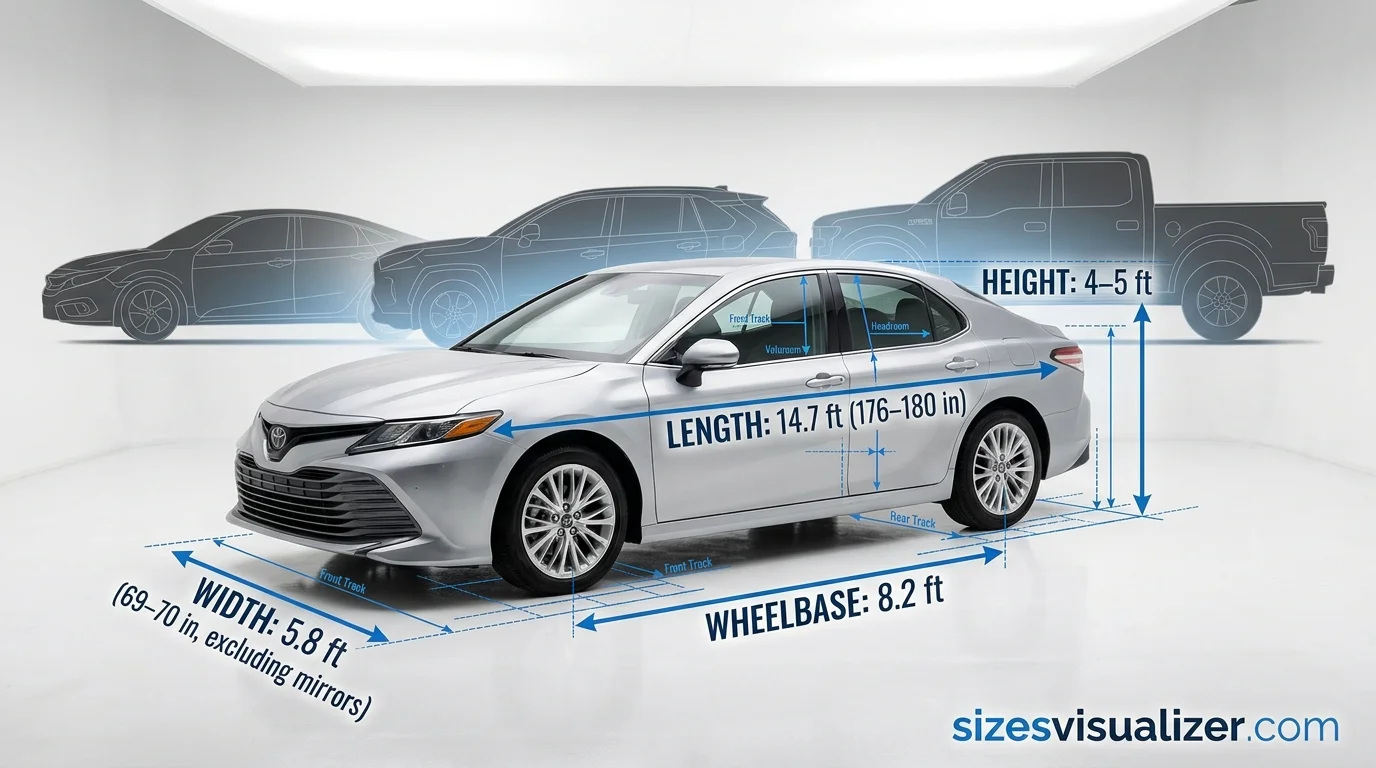
The average car size in the U.S. sits at about 14.7 feet long, 5.8 feet wide, and 4 to 5 feet tall. But that number shifts a lot depending on whether you’re driving a compact hatchback, a full-size SUV, or a new electric truck. This guide breaks down average car dimensions by class and type, so you know exactly what fits in your garage, driveway, or storage unit.
Table of Contents
How Long Is the Average Car in 2026?
The average car length in the United States is roughly 14.7 feet, or about 176 to 180 inches. That number has crept upward over the last few decades. Automakers keep adding interior space, better crash protection, and larger batteries for EVs, and all of that adds inches to the body.
SUVs now outsell sedans in the U.S. market, and SUVs run longer than traditional cars on average. That shift alone has pushed the nationwide average car length higher than it was ten years ago.
Use our Size Visualizer Tool to compare average car sizes and visualize their length, width, and height against everyday objects, garages, driveways, and parking spaces for a clearer understanding before you buy, park, or store a vehicle.
Here’s a quick breakdown by class:
| Car Class | Average Length (feet) | Average Length (inches) |
|---|---|---|
| Compact | 12 – 14 ft | 144 – 168 in |
| Mid-Size | 14 – 16 ft | 168 – 192 in |
| Full-Size | 16 – 18 ft | 192 – 216 in |
Average Car Length by Class
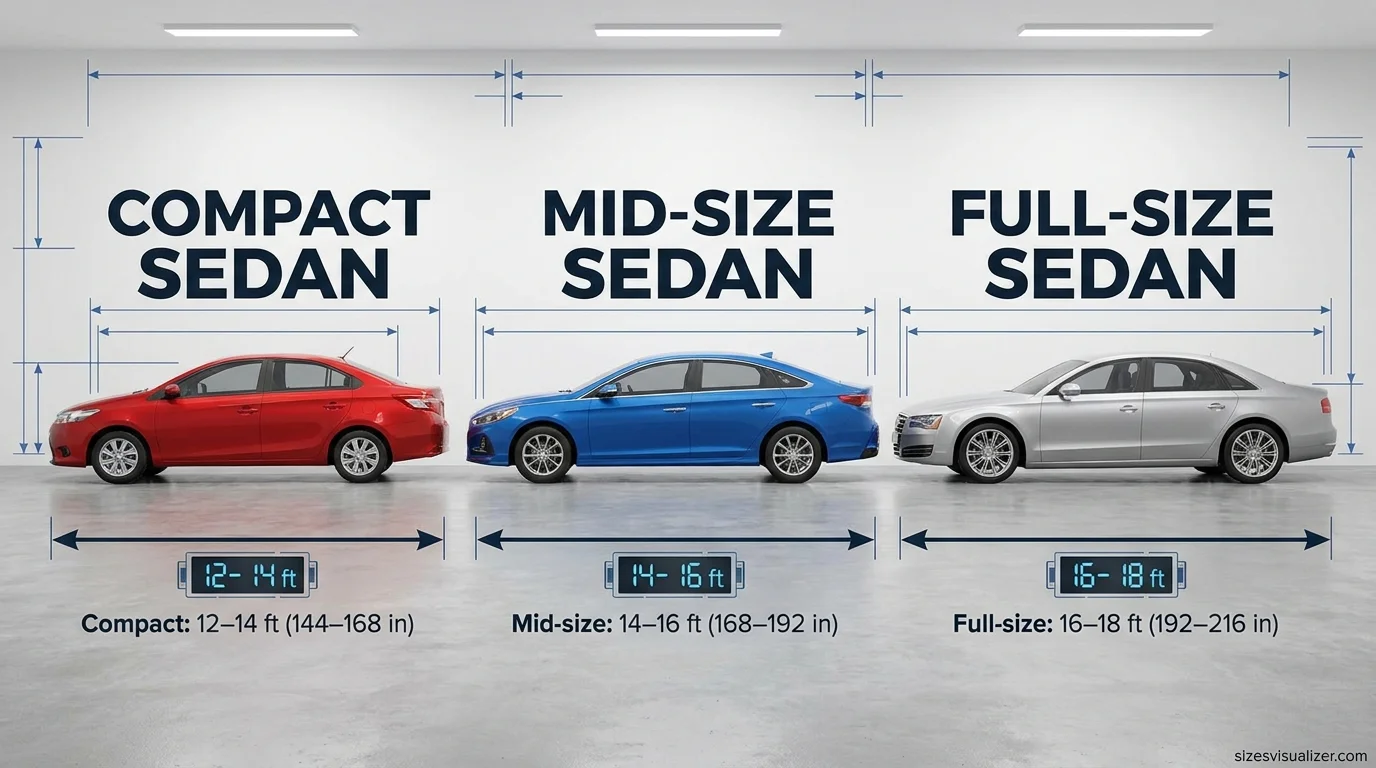
Compact cars like the Toyota Corolla or Honda Civic measure around 13.9 feet long. These cars are built for city driving, tight parking spots, and better fuel economy.
Mid-size cars such as the Toyota Camry or Honda Accord average close to 14.8 feet. This class balances passenger room with easy handling, which is why it’s the most common standard car size on U.S. roads.
Full-size cars stretch to about 15.7 feet. Think Dodge Charger or Chrysler 300 — longer wheelbases, roomier back seats, bigger trunks.
Shortest vs. Longest Cars Sold in the U.S.
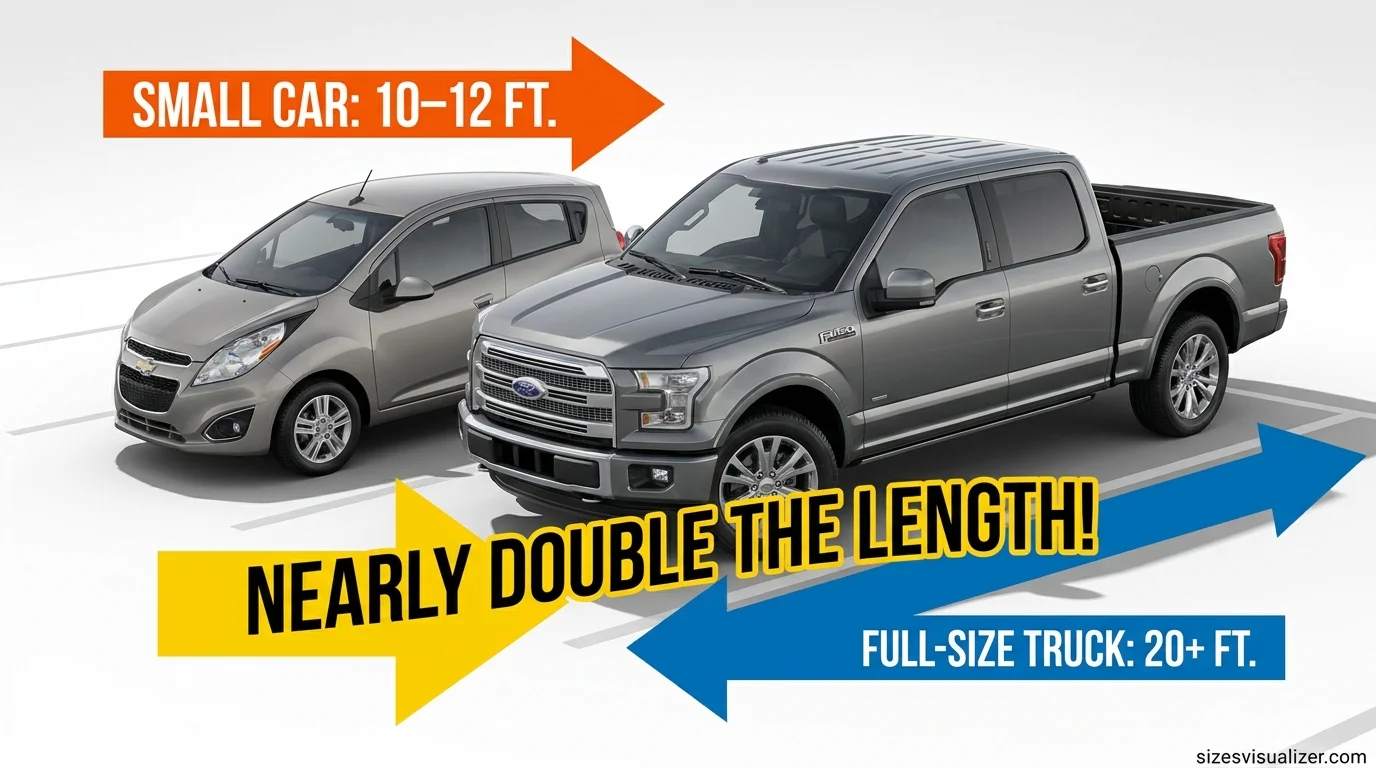
The smallest passenger cars on the market run around 10 to 12 feet long. On the other end, full-size pickup trucks and extended SUVs can stretch past 20 feet. That’s nearly double the length between the smallest and largest vehicles you can buy new today.
Average Car Width, Height & Wheelbase Explained
Length gets the most attention, but width, height, and wheelbase matter just as much for parking, storage, and everyday driving comfort.
The average car width is about 5.8 feet, or roughly 69 to 70 inches. That measurement is taken body-to-body, not including side mirrors. Add the mirrors back in, and you’ll need extra clearance — usually 6 to 12 inches per side — when backing into a tight garage.
Average car height ranges from 4 to 5 feet, depending on the class. Sedans sit lower to the ground for better aerodynamics. SUVs and trucks sit taller for ground clearance and cargo room.
Wheelbase — the distance between the center of the front wheel and the center of the rear wheel — averages around 8.2 feet. A longer wheelbase generally means a smoother ride, since the car has more room to absorb bumps between the axles.
Width With Doors Open
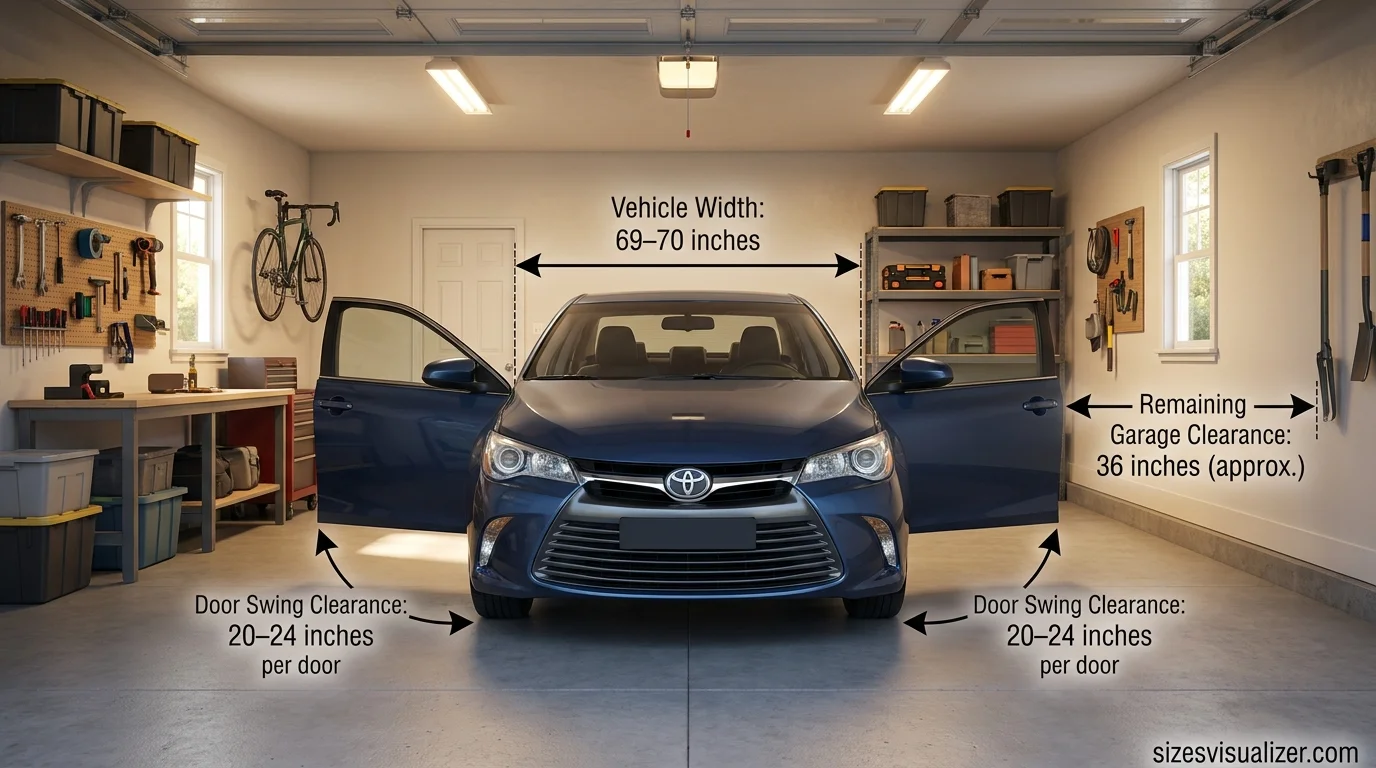
Here’s something most guides skip: door swing clearance. A standard car door needs 20 to 24 inches of open space to swing fully. If you’re parking in a storage unit or a narrow garage bay, factor this in — otherwise you won’t be able to get in or out comfortably.
How These Measurements Are Officially Taken
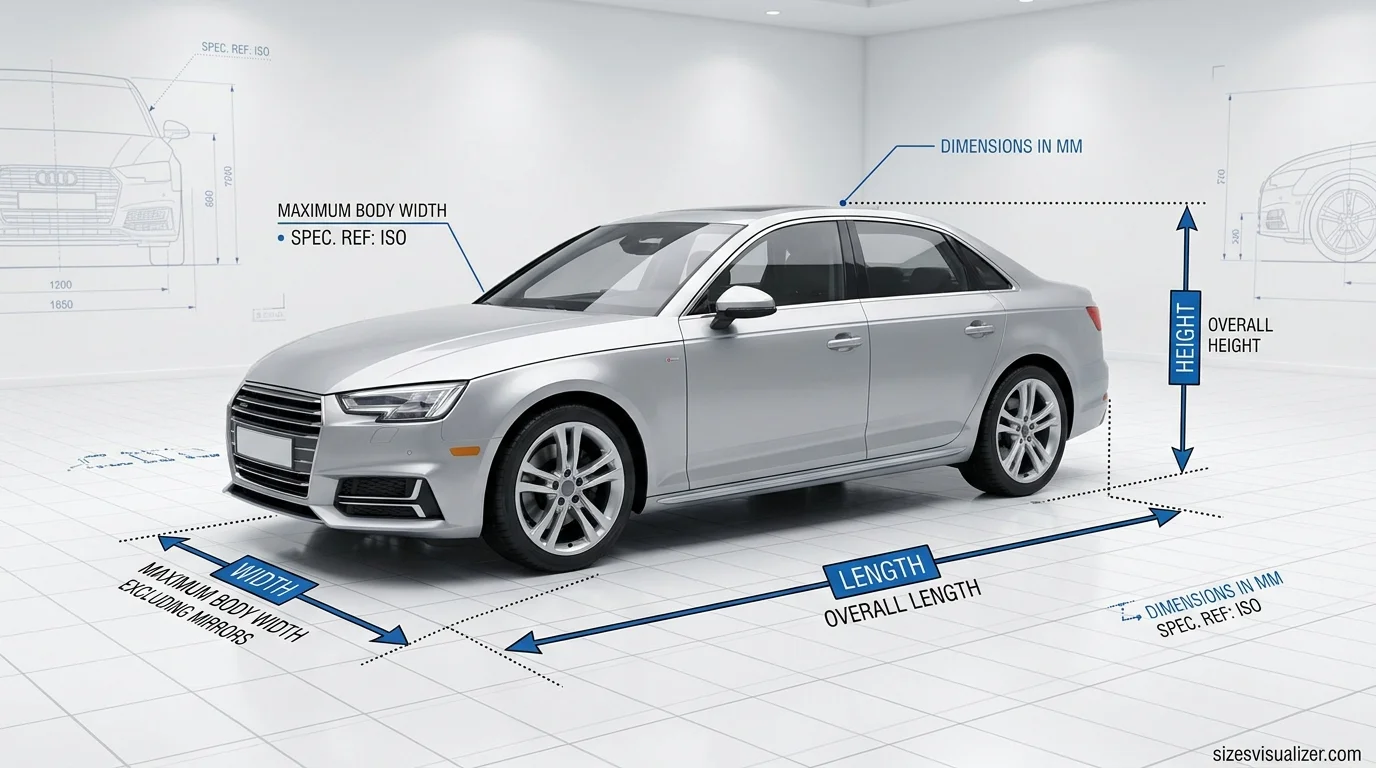
Manufacturers measure car length from the front bumper to the rear bumper, width from the widest point excluding mirrors, and height from the ground to the highest fixed point on the roof. These are the same standards the EPA and automakers use on official spec sheets.
Average Dimensions by Vehicle Type
Not every vehicle fits neatly into “compact, mid-size, full-size.” Body style changes the math too.
Sedans
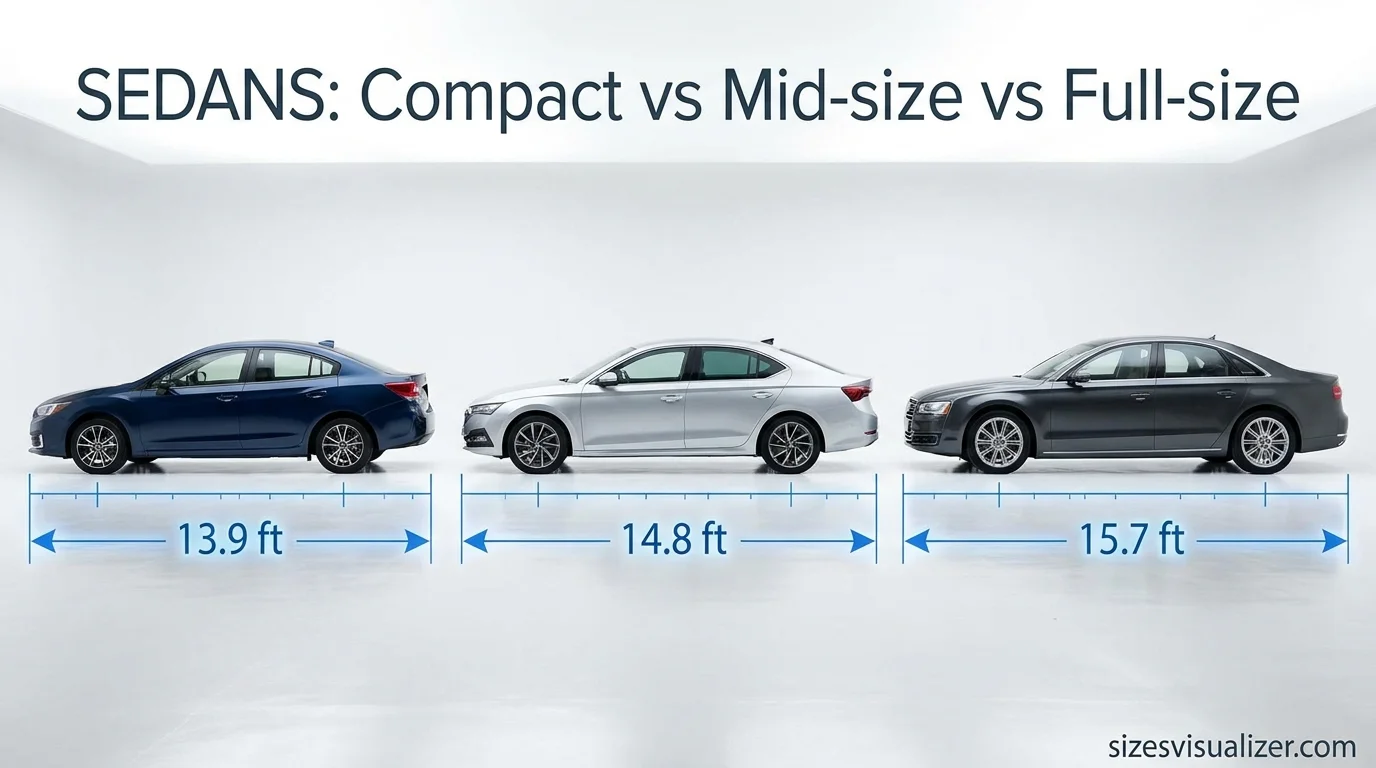
Sedans are the baseline for most car dimension comparisons.
- Compact sedan (Corolla, Civic): ~13.9 ft
- Mid-size sedan (Camry, Accord): ~14.8 ft
- Full-size sedan (Charger, Impala): ~15.7 ft
SUVs & Crossovers
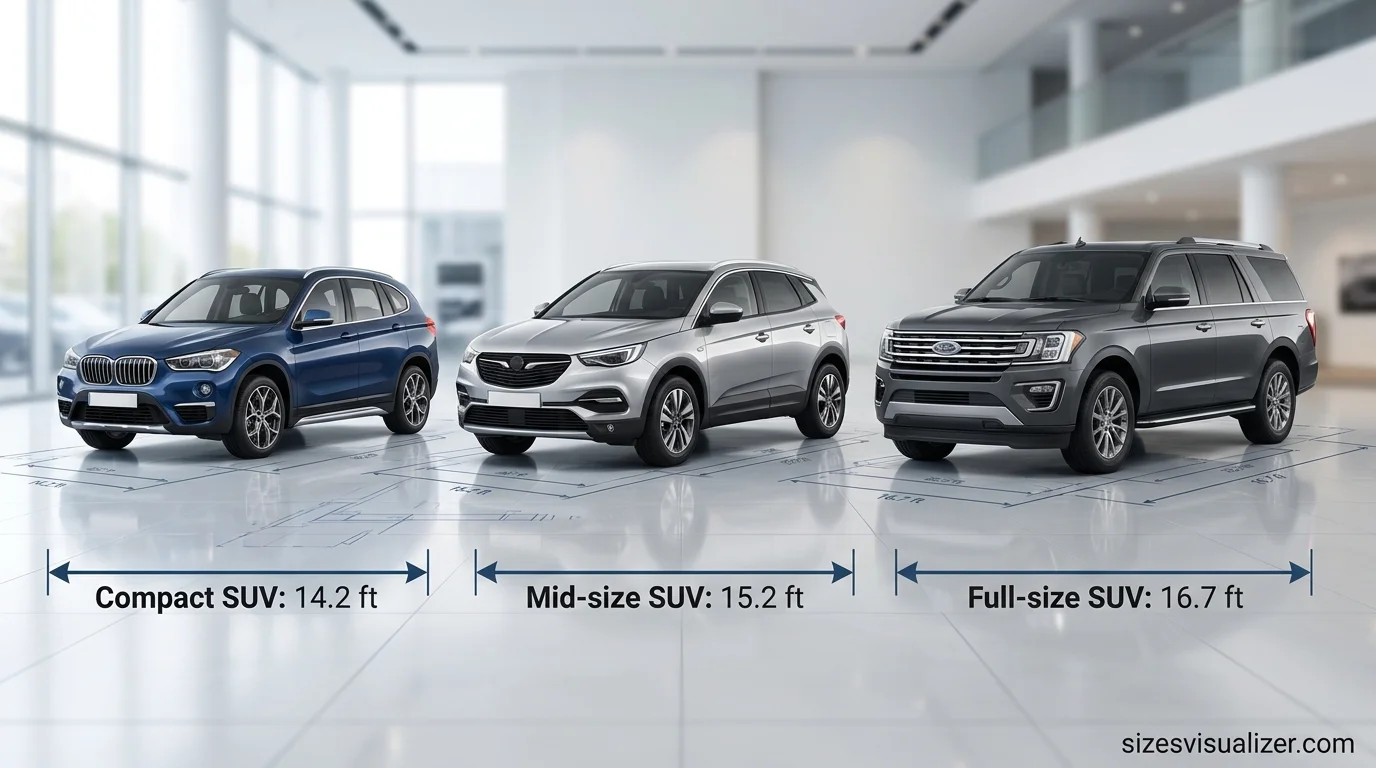
SUVs have become the dominant body style in America, and their footprint keeps growing.
- Compact SUV (CR-V, RAV4): ~14.2 ft
- Mid-size SUV (4Runner, Explorer): ~15.2 ft
- Full-size SUV (Tahoe, Suburban): ~16.7 ft
Pickup Trucks & Minivans
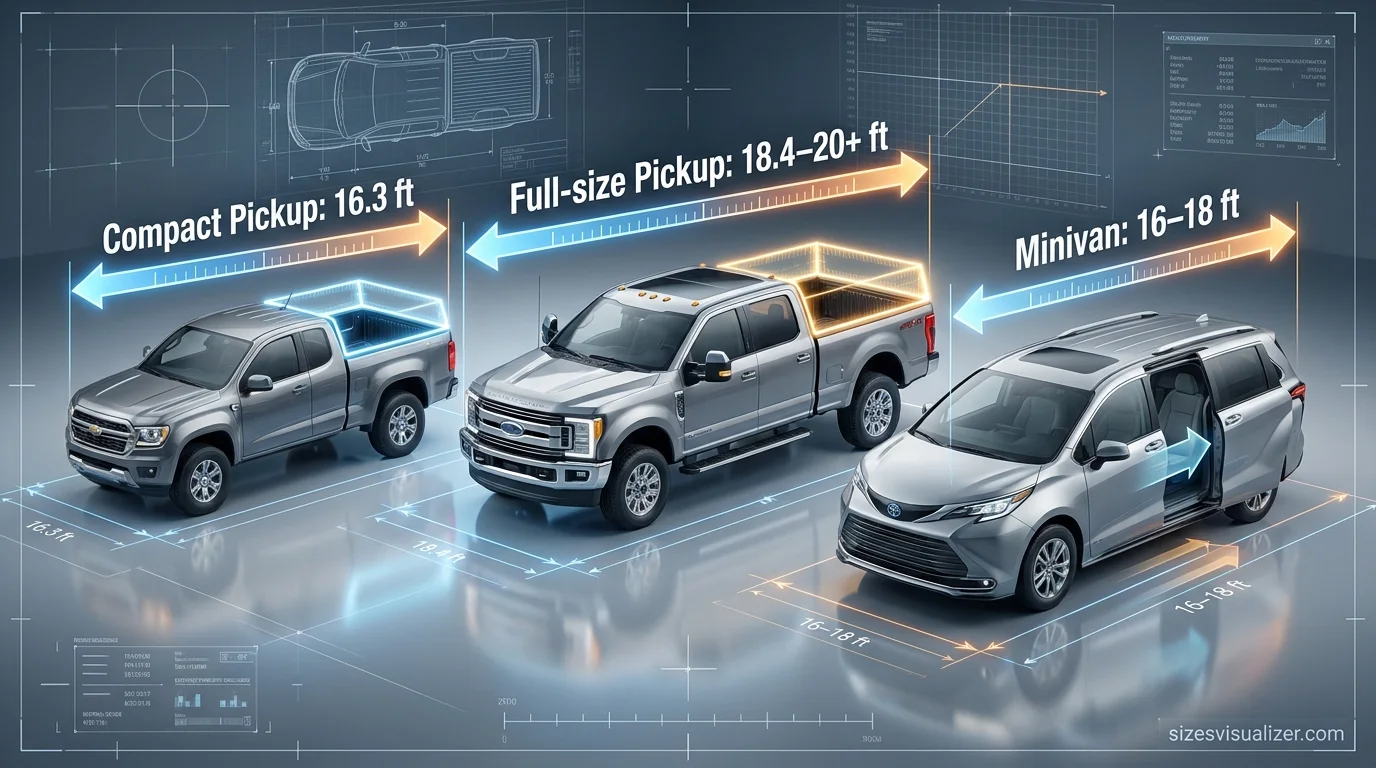
Pickup trucks need extra length to handle cargo beds.
- Small pickup (Maverick, Santa Cruz): ~16.3 ft
- Full-size pickup (F-150, Silverado): ~18.4 ft to 20+ ft with certain cab/bed combos
Minivans average 16 to 18 feet, built around passenger space and sliding-door access rather than speed or agility.
Electric Vehicles
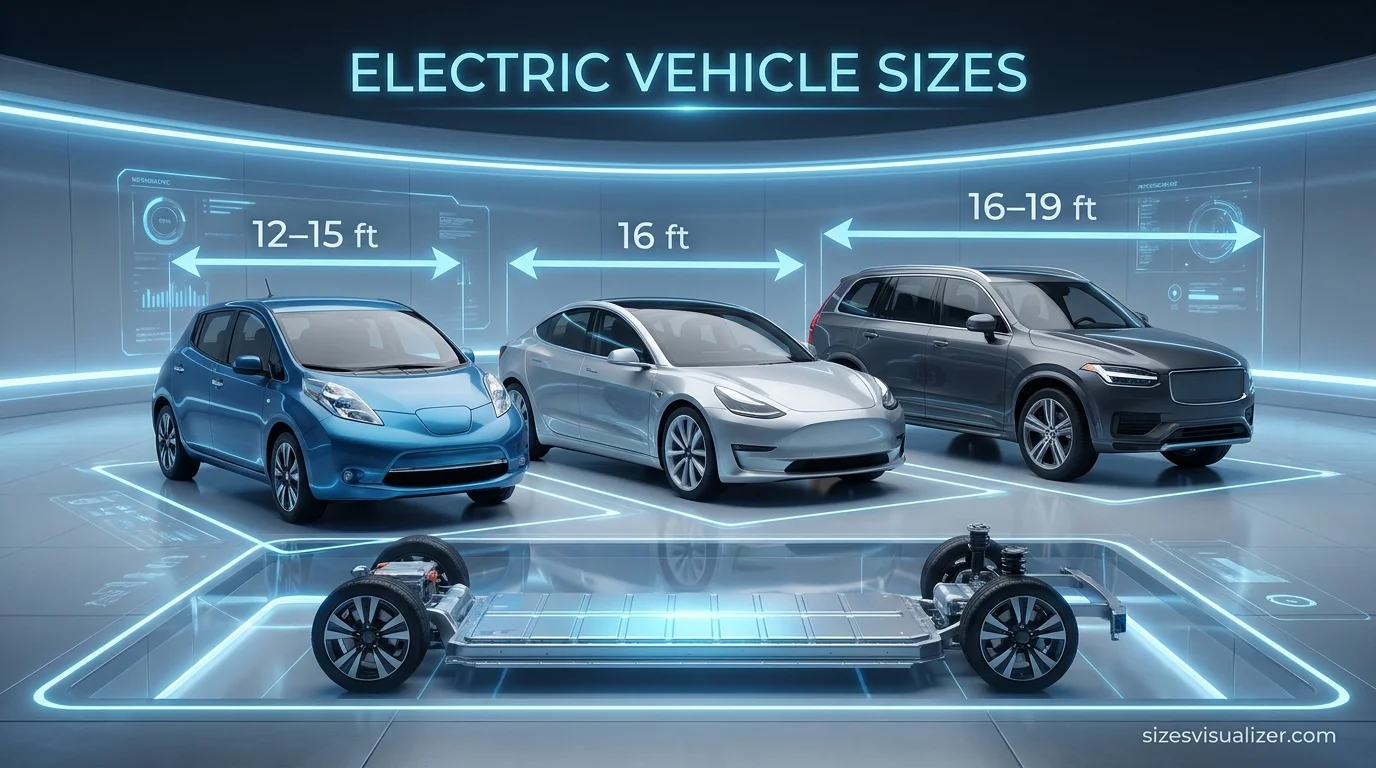
EVs deserve their own category, since battery packaging changes the shape of the vehicle. Automakers build EVs with flat battery packs under the floor, which often pushes overall height down slightly compared to gas SUVs of the same class, while keeping the wheelbase long for stability and range.
- Compact EV (Bolt, Leaf): ~12 – 15 ft
- Mid-size EV (Model S, IONIQ 6): ~16 ft
- Full-size EV (Model X, Cadillac Escalade IQ): ~16 – 19 ft
How to Find Your Exact Car Dimensions
Average numbers are useful for planning, but your specific car’s dimensions could differ by several inches depending on trim level and options.
VIN Decoder Method

Every car has a 17-character VIN. Run it through a free decoder from the NHTSA or the automaker’s own site, and you’ll pull the exact factory specs for your model, including length, width, and height.
Manufacturer Spec Sheet
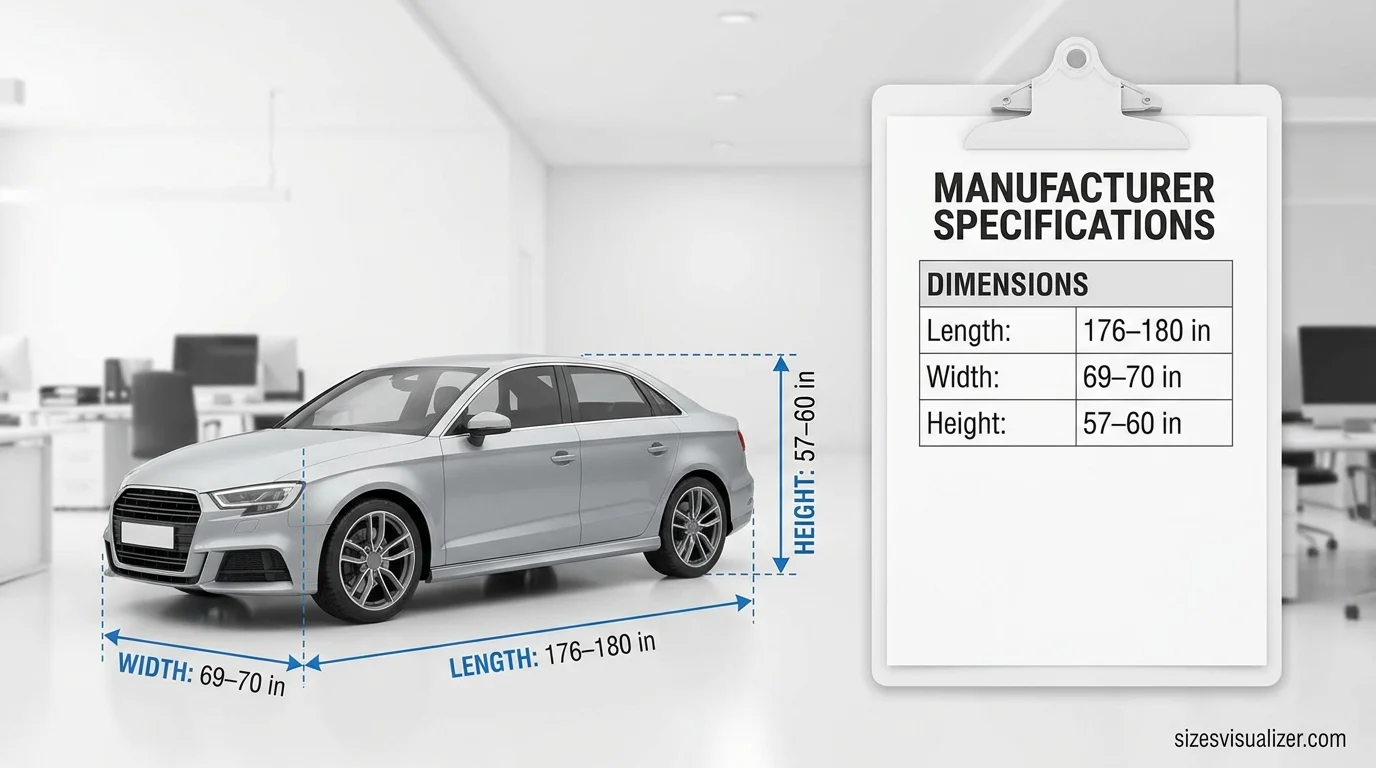
Skip the guesswork — go straight to the automaker’s build-and-price tool online. Every listed trim shows its official dimensions, often more current than third-party databases.
Manual Measurement
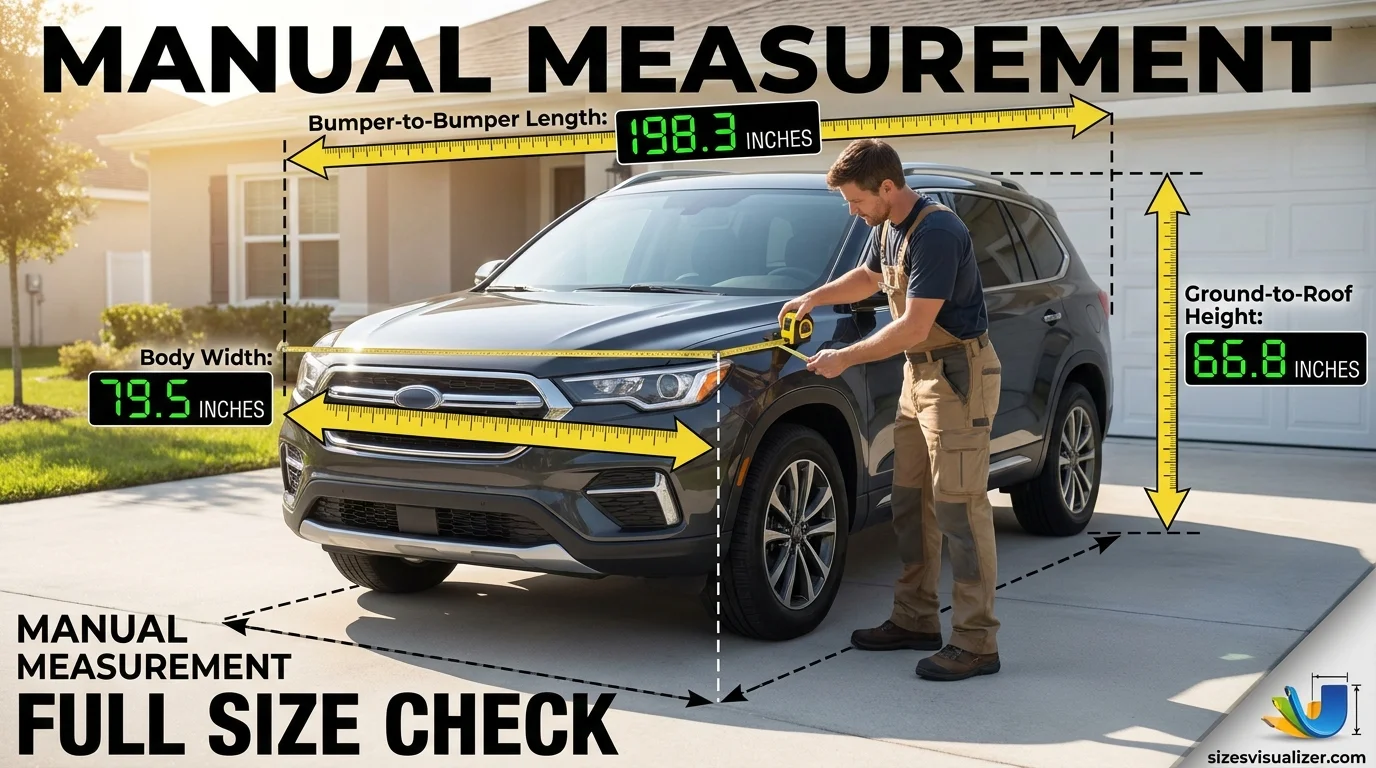
If your car has aftermarket parts — a roof rack, a lift kit, a trailer hitch — none of that shows up on factory specs. Grab a tape measure and check bumper-to-bumper for length, widest point to widest point for width, and ground to roofline for height.
Must Visit: Queen Bed Dimensions 2026: Standard Size, Measurements, Drawings & Room Layout Guide
Why Average Car Size Matters for Garage, Parking & Storage
Knowing your car’s dimensions isn’t just trivia. It solves real problems.
Garage & Driveway Sizing
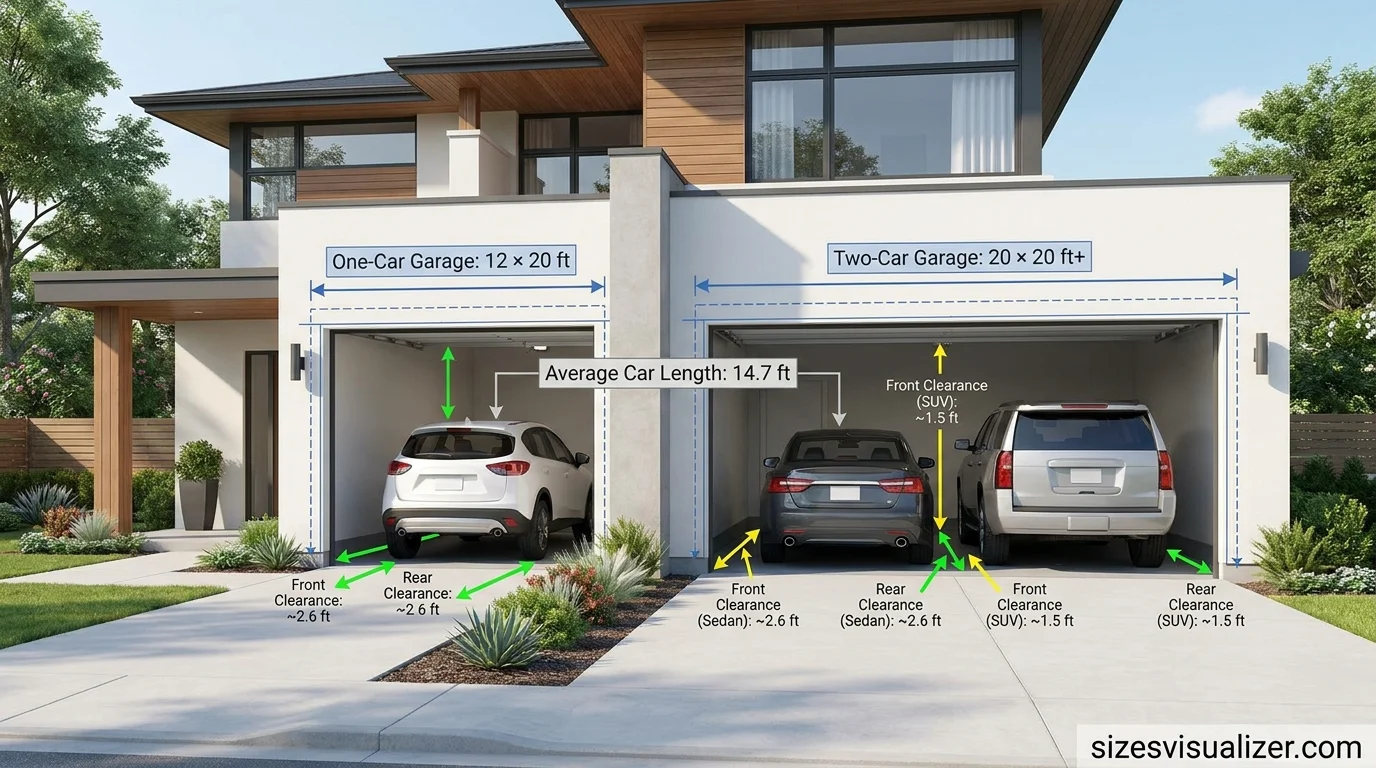
A standard one-car garage measures about 12 x 20 feet. A two-car garage typically runs 20 x 20 feet or larger. Most compact and mid-size cars fit comfortably, but full-size trucks and SUVs often need extra depth.
Standard U.S. Parking Space Dimensions
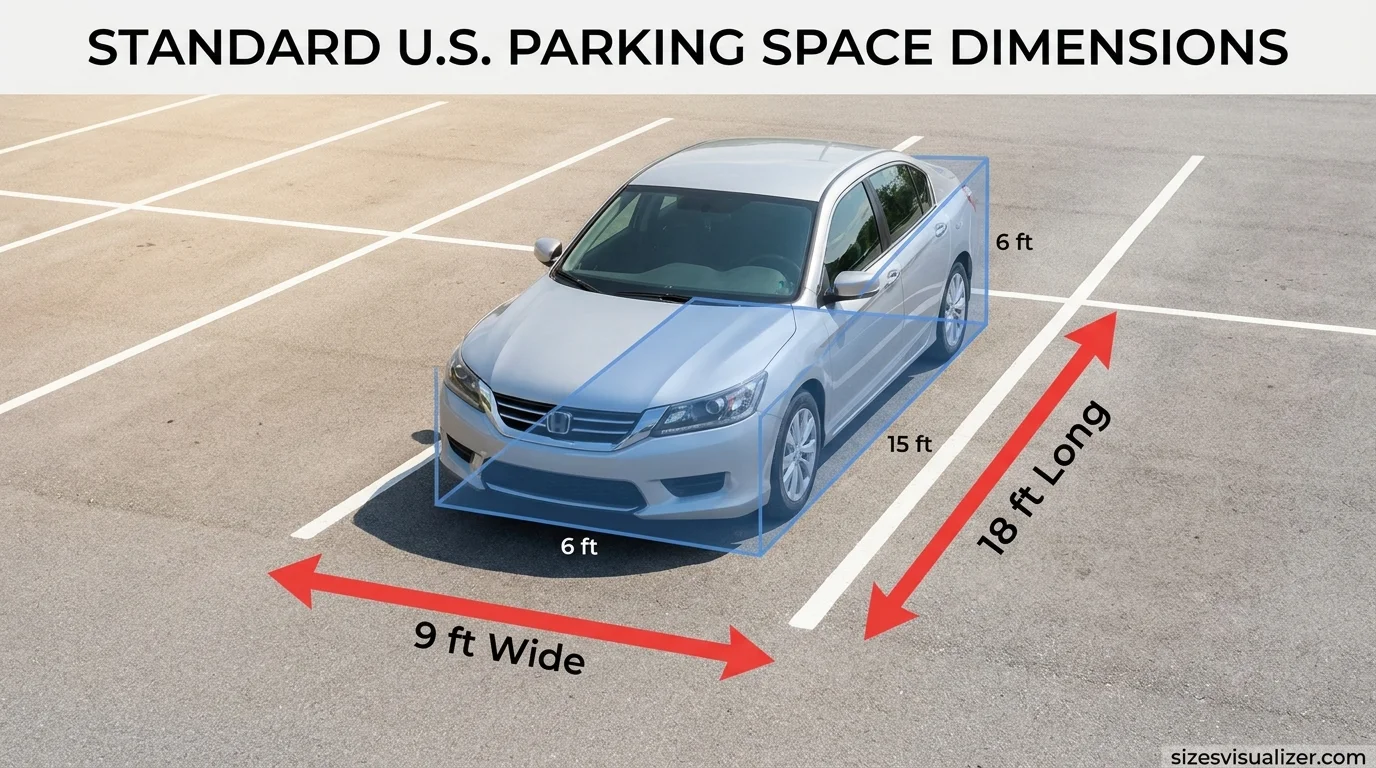
A typical U.S. parking space measures 9 feet wide by 18 feet long. That’s enough room for most sedans and compact SUVs, but full-size trucks sometimes overhang the line.
Vehicle Storage Unit Sizing
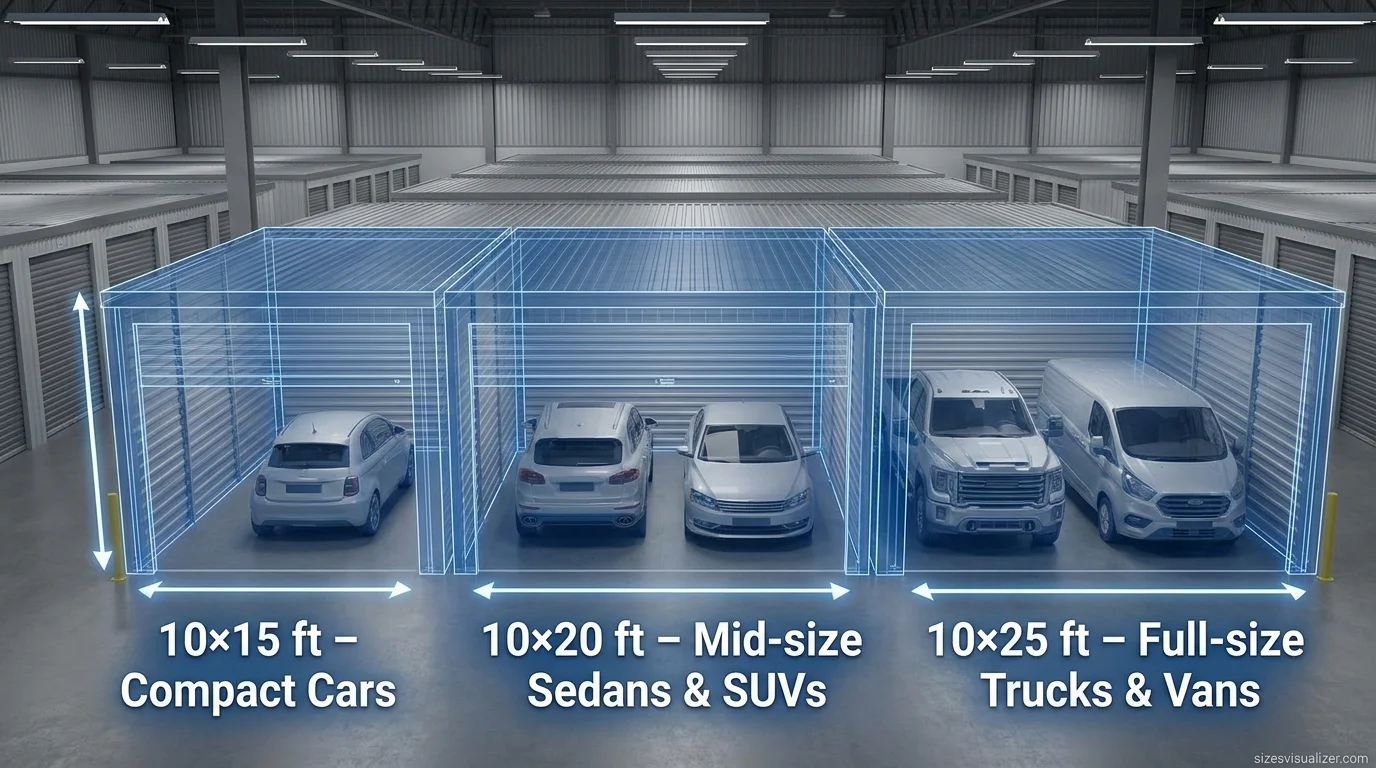
Storage facilities size their units around these averages:
- 10×15 units fit compact cars
- 10×20 units fit mid-size sedans and SUVs
- 10×25 or larger fits full-size trucks and vans
How Car Size Affects Insurance & Fuel Efficiency
Bigger vehicles generally weigh more, which affects fuel efficiency and can influence insurance premiums, since larger vehicles often cost more to repair after a collision. Size alone doesn’t determine your rate, but it’s one factor insurers weigh alongside safety ratings and repair costs.
FAQs
How long is a normal car in feet?
A normal, mid-size car in the U.S. averages 14.7 feet long, or about 176 to 180 inches.
What car is 17 feet long?
Many full-size SUVs and trucks fall near 17 feet, including the Chevrolet Tahoe, Ford Expedition, and full-size pickups like the Ford F-150 in certain cab configurations.
What cars are 15 ft long?
Mid-size sedans and compact-to-mid SUVs typically measure close to 15 feet, including the Toyota Camry, Honda Accord, and Toyota 4Runner.
What is the length of a standard car?
A standard car, as classified by rental companies and automakers, generally measures 15.5 to 16.7 feet (186 to 200 inches) and seats five passengers.
How many cars is 32 feet?
At an average car length of 14.7 feet, 32 feet fits about 2.1 average-size cars parked bumper to bumper, or roughly two mid-size sedans with a small gap between them.
How many feet is 4 car lengths?
Using the 14.7-foot average, 4 car lengths equal about 58.8 feet.
Conclusion
Car sizes vary more than most drivers realize, but the numbers aren’t complicated once you break them down by class. Whether you’re squeezing a new SUV into a two-car garage or renting a storage unit for a full-size truck, knowing the average car dimensions for your vehicle type takes the guesswork out of the decision. When in doubt, check your VIN or the manufacturer’s spec sheet for exact measurements before you buy, park, or store.

Measurement Researcher, Size Comparison Writer & Content Specialist
Timmy Ahad is a dedicated content writer and research specialist at SizesVisualizer.com, where he focuses on creating accurate, easy-to-understand content about measurements, dimensions, size comparisons, and real-world object visualization.