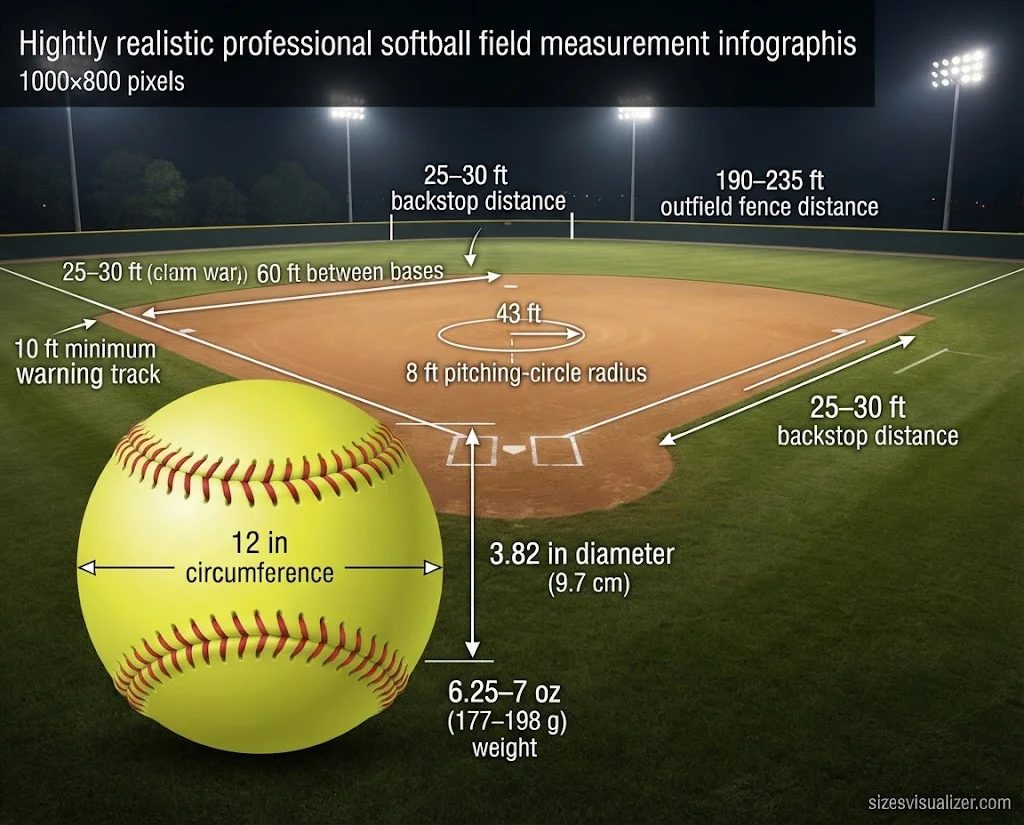
Softball dimensions are easy to remember once you know the key numbers. A regulation ball is 12 inches around, about 3.82 inches across, and weighs 6.25–7 oz.
The field is just as simple. Bases sit 60 feet apart, and the pitcher stands 43 feet from home plate in high school and college play. Here is every softball size and field measurement in one place.
Table of Contents
Softball Dimensions & Size: Diameter, Circumference & Weight
What is the size of a softball? A regulation softball is 12 inches in circumference and about 3.82 inches (9.7 cm) in diameter. It weighs 6.25 to 7 ounces (177 to 198 g).
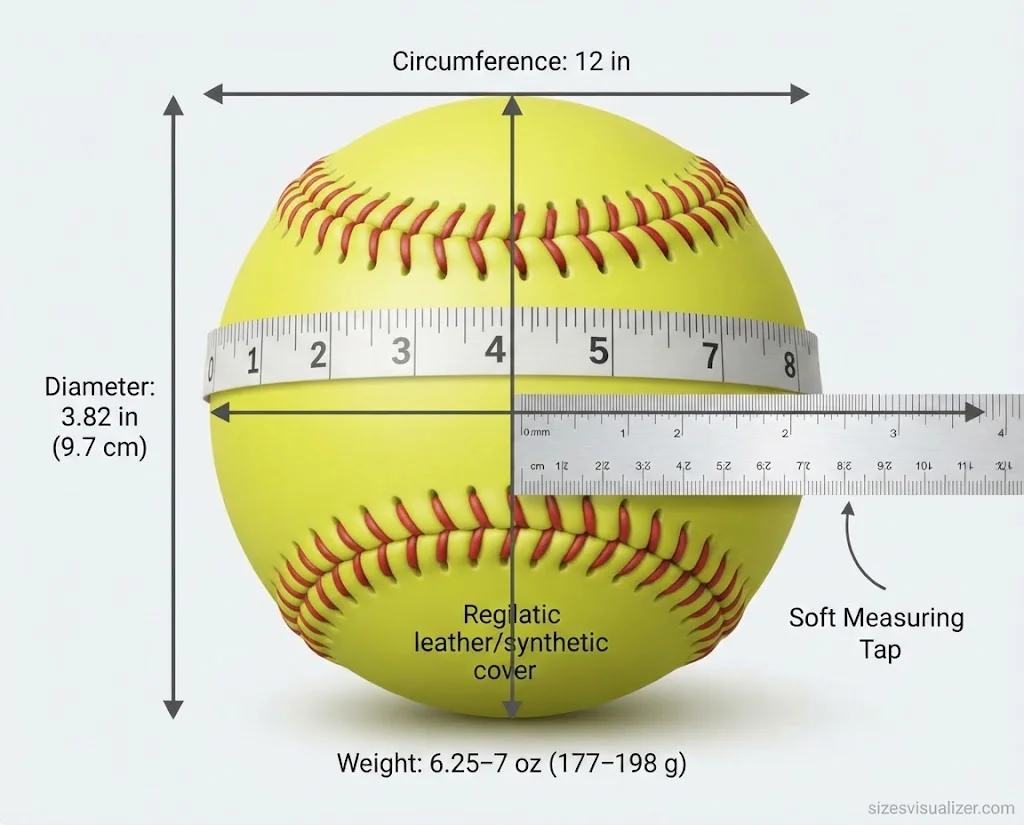
Softball sizes are named by circumference, which is the distance around the ball. Diameter is the distance across it. To find the diameter, divide the circumference by 3.14. For a 12-inch ball, 12 ÷ 3.14 gives 3.82 inches.
Inside, the core is made of kapok fiber, a cork-and-rubber blend, or polyurethane. The cover is leather or synthetic, held by red stitching. Most balls are optic yellow, which the NCAA and NAIA use for better visibility.
Want to check a ball at home? Wrap a soft tape around its widest part. A stiff ruler won’t work.
A softball is much bigger than a baseball. Here is how they compare:
| Softball | Baseball | |
|---|---|---|
| Circumference | 12 in | 9 in |
| Weight | 6.25–7 oz | about 5 oz |
| Base distance | 60 ft | 90 ft |
| Pitching distance | 43 ft, flat circle | 60 ft 6 in, raised mound |
Softball Sizes by Type and Age Group
How many softball sizes are there? Five sizes have real use: 10, 11, 12, 14 and 16 inches. Each is named for its circumference.
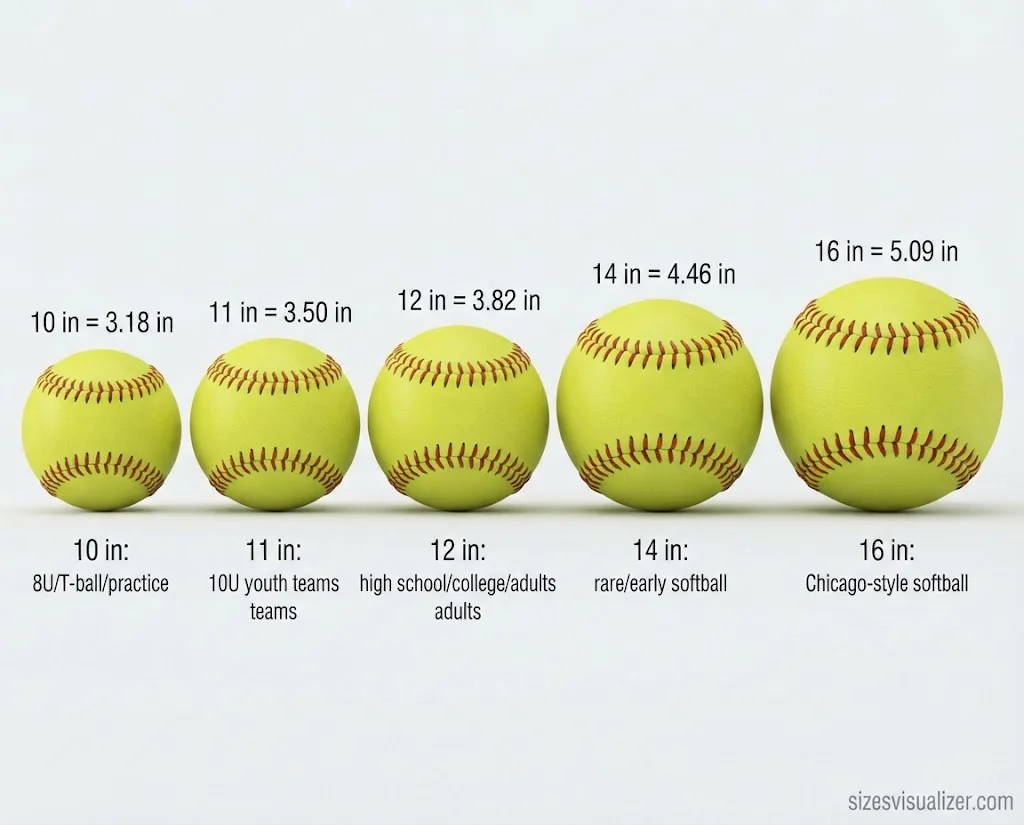
| Size | Diameter (about) | Typical use |
|---|---|---|
| 16 in | 5.09 in | Chicago-style 16-inch softball |
| 14 in | 4.46 in | Early softball, now rare |
| 12 in | 3.82 in | Standard for high school, college and adults |
| 11 in | 3.50 in | Many 10U and younger youth teams |
| 10 in | 3.18 in | 8U and younger, T-ball, practice |
The 12-inch softball is the national standard. Fastpitch and slowpitch both use it. Leagues also set rules on compression and COR, which measures how lively a ball is. So always check your league’s rulebook before you buy.
The 11-inch softball suits smaller hands. Many 10-and-under teams use it, and so do some co-ed leagues.
Who uses 10-inch softballs? Mostly players aged 8 and under. Coaches also use them for T-ball, coach-pitch and practice. The softer core lowers the risk of injury.
The 16-inch softball, nicknamed the clincher, is a Chicago favorite. Softball began in Chicago in November 1887, and the city stayed loyal to the big ball, according to the Encyclopedia of Chicago. It is softer and doesn’t fly as far. That let players skip gloves and fit games into tight city parks, as this overview explains.
Must Visit: Beverage Can Dimensions: Sizes, Heights, Diameters & Capacity Guide (2026)
Softball Field Dimensions & Measurements
Most softball field dimensions follow the NCAA field diagram. Here is the cheat sheet:
| Measurement | Size |
|---|---|
| Distance between bases | 60 ft |
| Home plate to second base | 84 ft 10¼ in |
| Pitching distance (high school, college) | 43 ft |
| Pitcher’s circle | 8 ft radius (16 ft across) |
| Pitching rubber | 24 x 6 in |
| Batter’s box | 3 ft x 7 ft |
| Backstop from home plate | 25–30 ft |
| Warning track | At least 10 ft wide |
| Outfield fence | 190–235 ft |
Bases and baselines
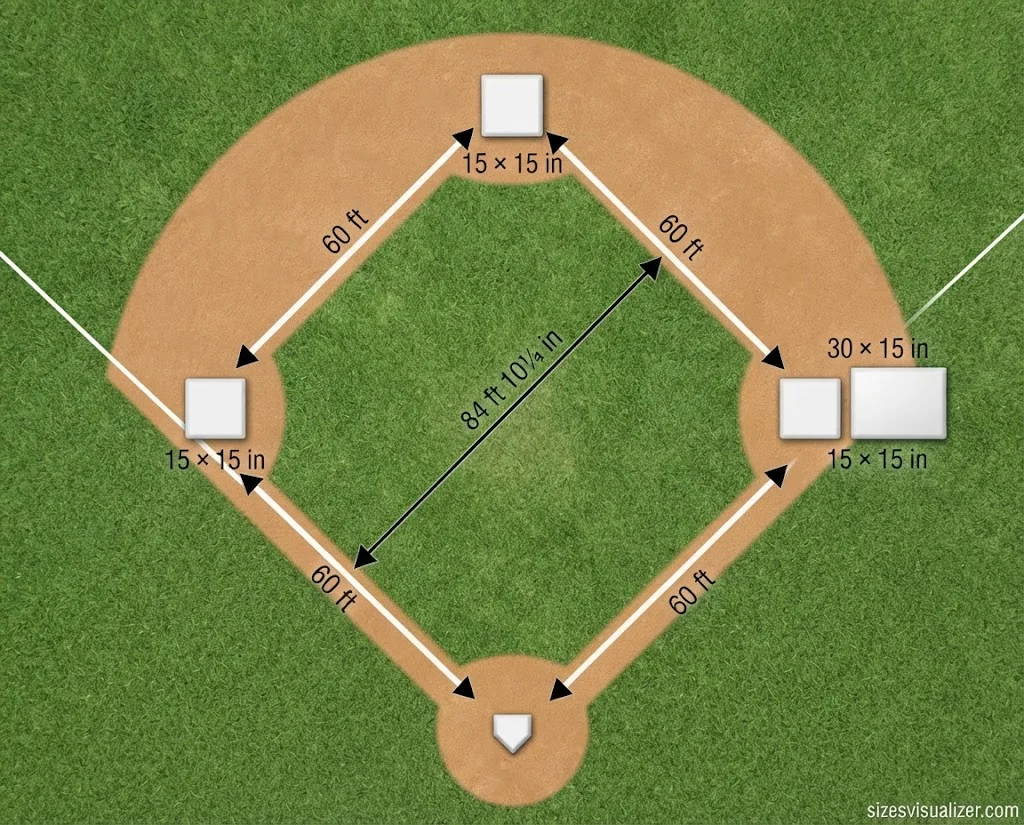
The four bases form a perfect square. Each base is 15 inches square. First base is a double base, which is 30 x 15 inches. Here is a handy check: the diagonal from home to second must be 84 ft 10¼ in. If it isn’t, a baseline is off.
Home plate and batter’s box
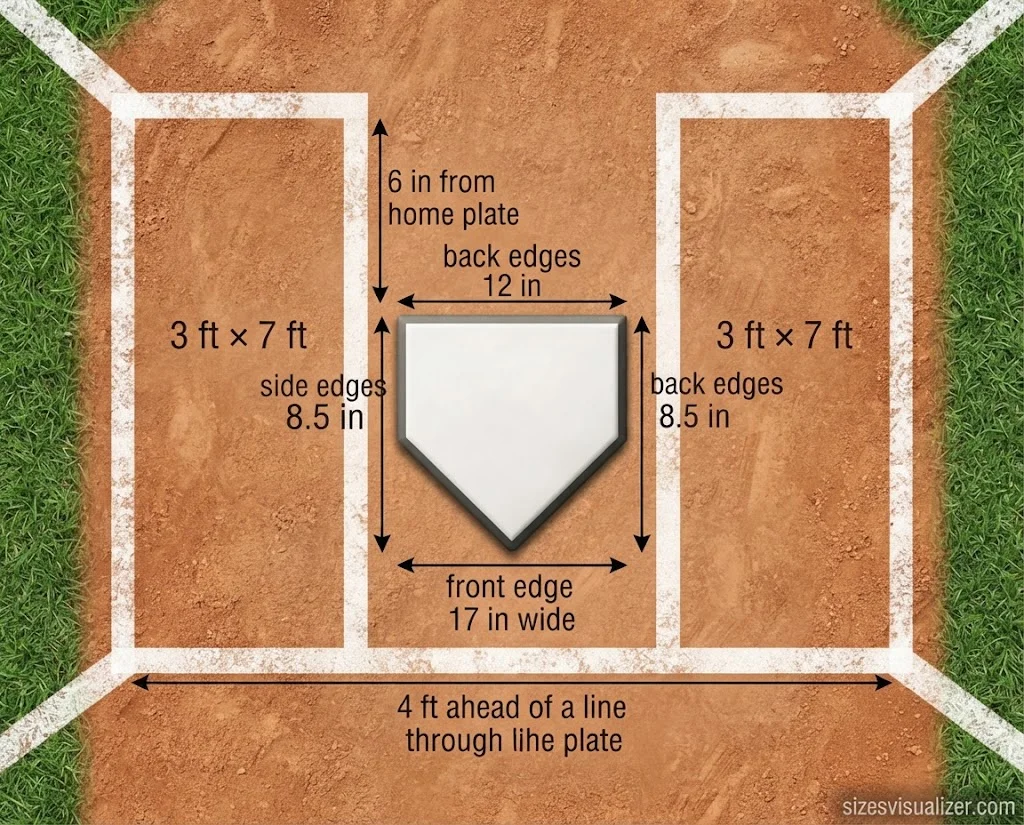
Home plate is a five-sided slab of white rubber. Its front edge is 17 inches wide, and the two sides are 8.5 inches long. The two back edges are 12 inches long. Each batter’s box sits 6 inches from the plate. Its front line is 4 feet ahead of a line through the plate’s center.
Pitching
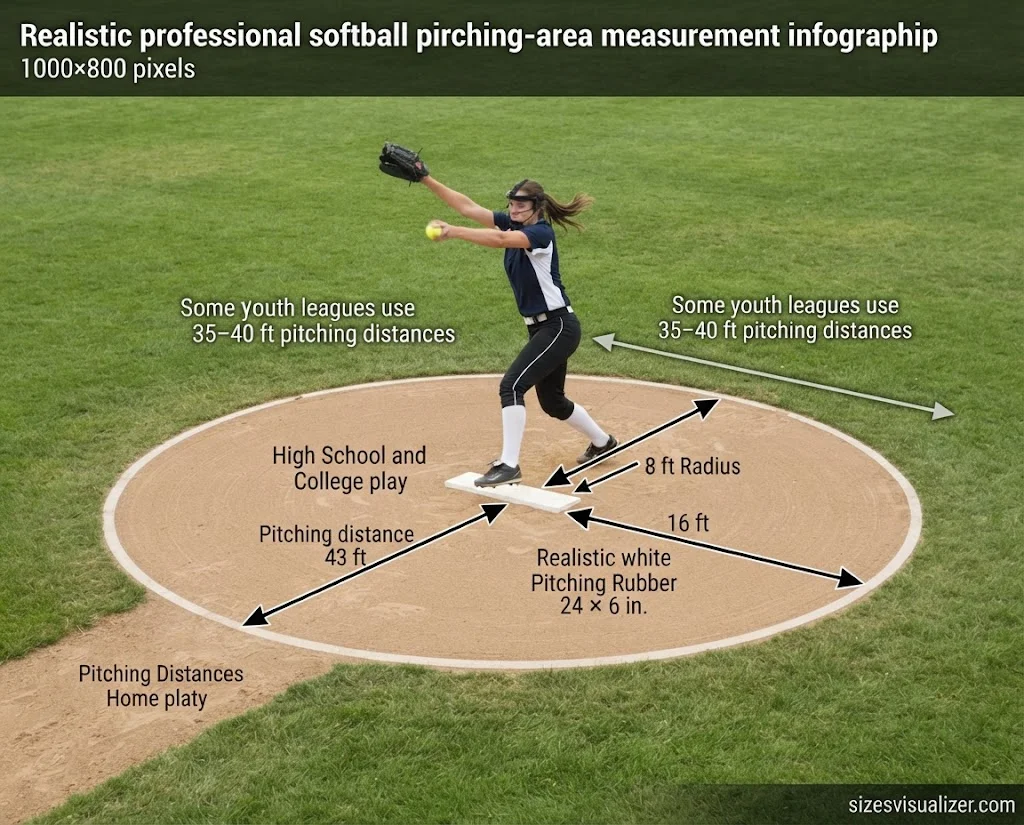
Softball uses a flat pitching circle, not a raised mound. Many youth leagues shorten the pitching distance to 35–40 feet.
Outfield fences

A taller fence can sit closer to home. A shorter one must sit farther back.
| Fence height | Foul lines | Center field |
|---|---|---|
| 6 ft | 190 ft | 220 ft |
| 4 ft | 210 ft | 230 ft |
warning track
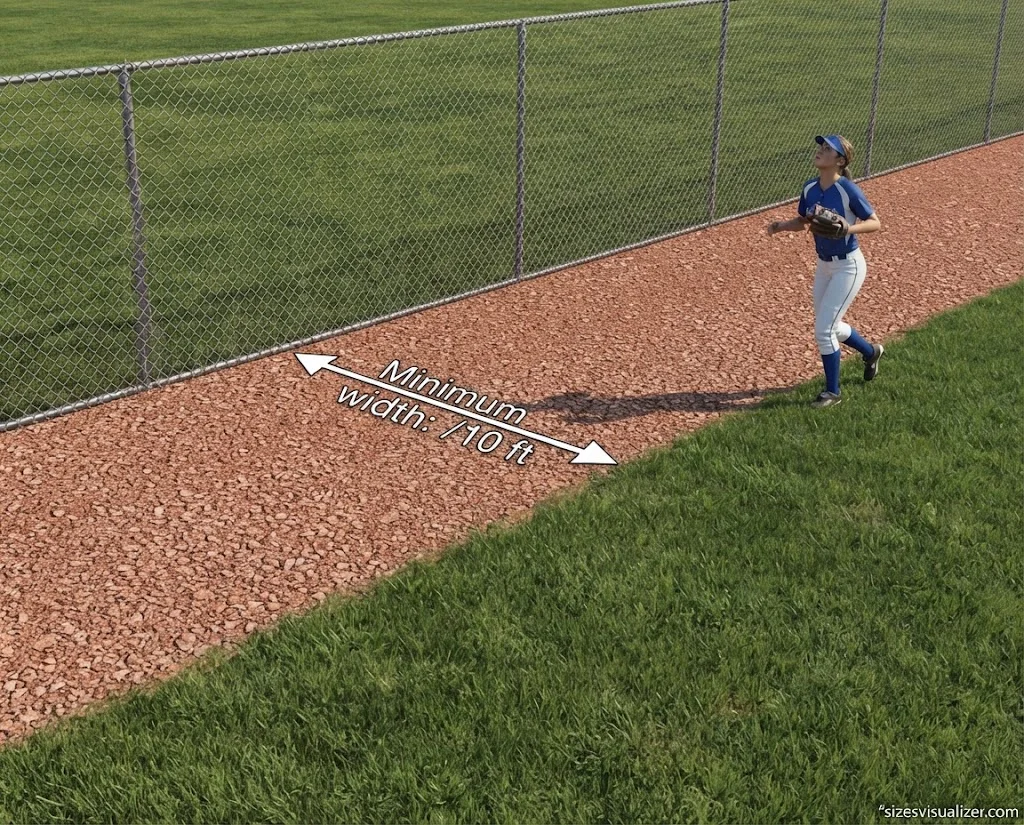
The warning track runs along the fence. It is at least 10 feet wide, usually 3 inches of crushed stone, dirt or rubber. Its different feel underfoot tells outfielders the wall is near.
Youth fields
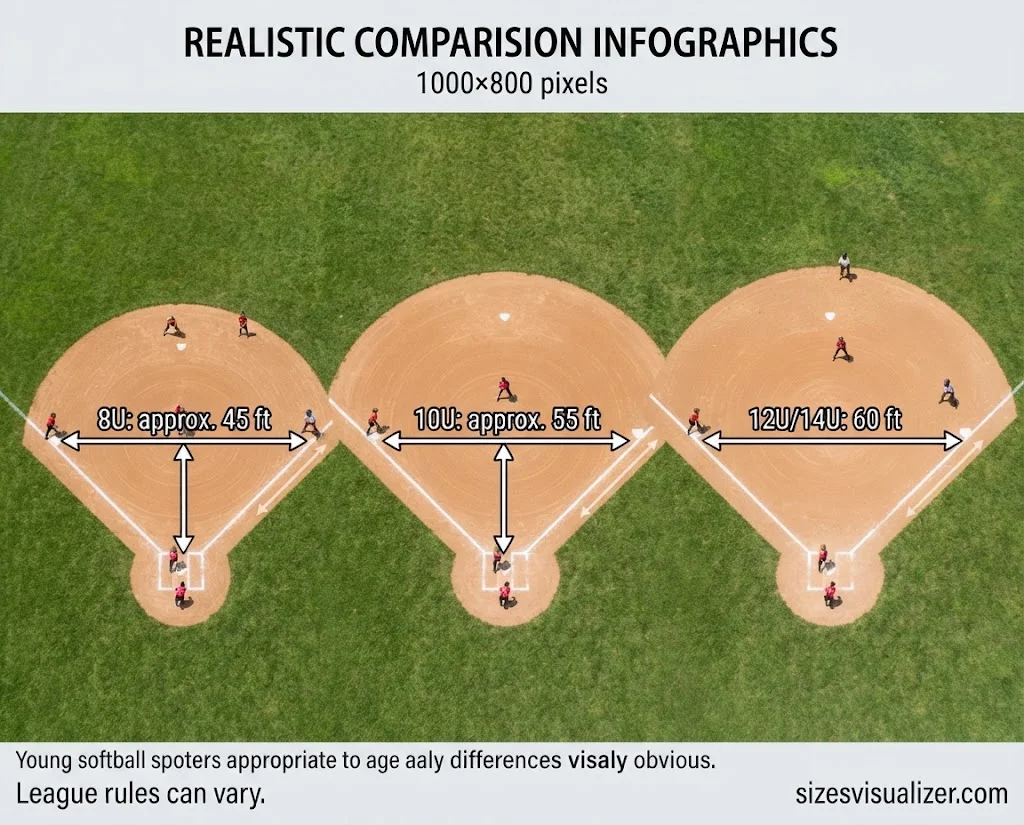
Softball Australia’s field guidelines suggest about 45 ft bases for 8U and 55 ft for 10U. They suggest 60 ft for 12U and 14U. League rules in the US vary, so check yours.
Slowpitch fields
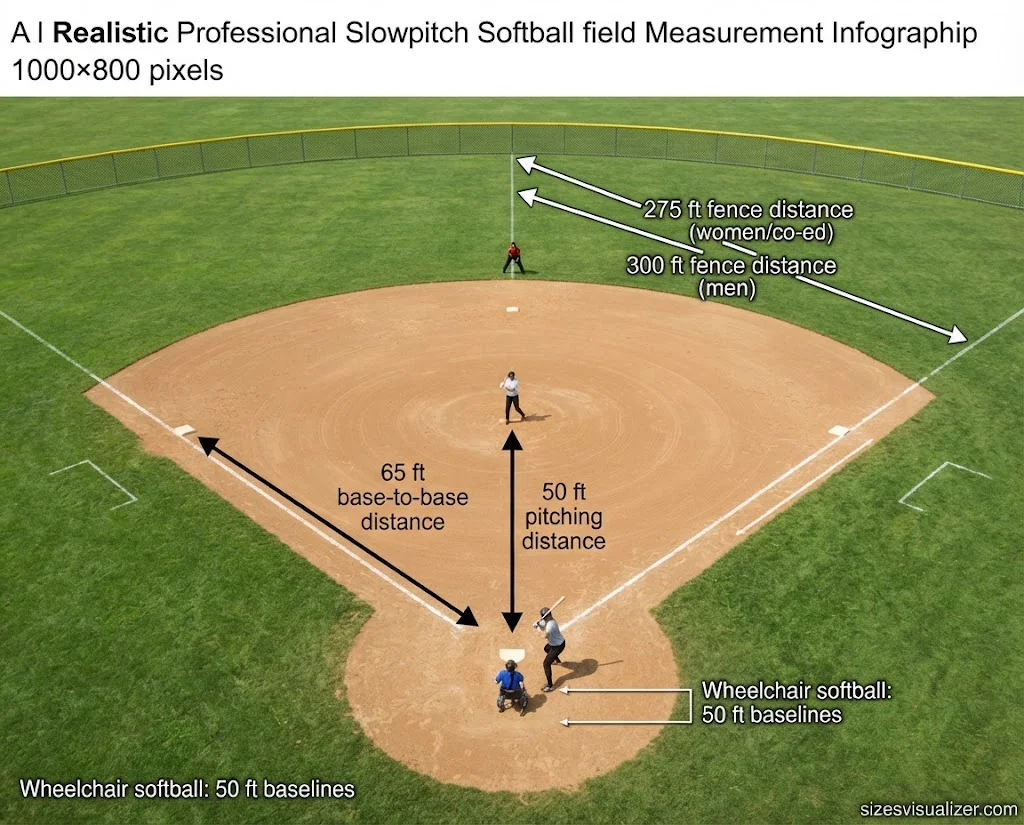
Adult slowpitch runs larger. The international standard is 65 ft bases and a 50 ft pitching distance. Fences sit 275 ft away for women and co-ed play, and 300 ft for men. Wheelchair softball uses 50 ft baselines.
FAQs
Are softball bases 60 feet apart?
Yes, in fastpitch at the high school and college levels and for most players 12 and older. Younger youth fields are shorter. Adult slowpitch bases are usually 65 feet apart.
What is the actual size of a softball?
A regulation ball is 12 inches around and about 3.82 inches across. It weighs 6.25 to 7 ounces.
Why is it called 16 inch softball?
The name comes from the ball’s circumference, which is 16 inches. The game began in Chicago and is often played without gloves.
What are the dimensions of a 12 inch softball?
It measures 12 inches in circumference and about 3.82 inches (9.7 cm) in diameter. It weighs 6.25–7 oz (177–198 g). It has a kapok, cork-rubber or polyurethane core and a leather or synthetic cover.
What is the size of a normal softball?
Most players use the 12-inch ball. Some younger players use the 11-inch ball.
Who uses 10 inch softballs?
Players aged 8 and under use them, along with T-ball and coach-pitch teams. They also work well for practice because of the softer core.
Conclusion
A regulation softball is 12 inches around, about 3.82 inches wide and 6.25–7 oz. Bases are 60 feet apart, and the pitching distance is 43 feet. Sizes and distances shift by age and league, so always check your local rulebook.

Measurement Researcher, Size Comparison Writer & Content Specialist
Timmy Ahad is a dedicated content writer and research specialist at SizesVisualizer.com, where he focuses on creating accurate, easy-to-understand content about measurements, dimensions, size comparisons, and real-world object visualization.