Ever tried to slide a dime into a slot and wondered if it would actually fit? Or maybe you’re comparing coins for a school project and need the real number, not a guess.
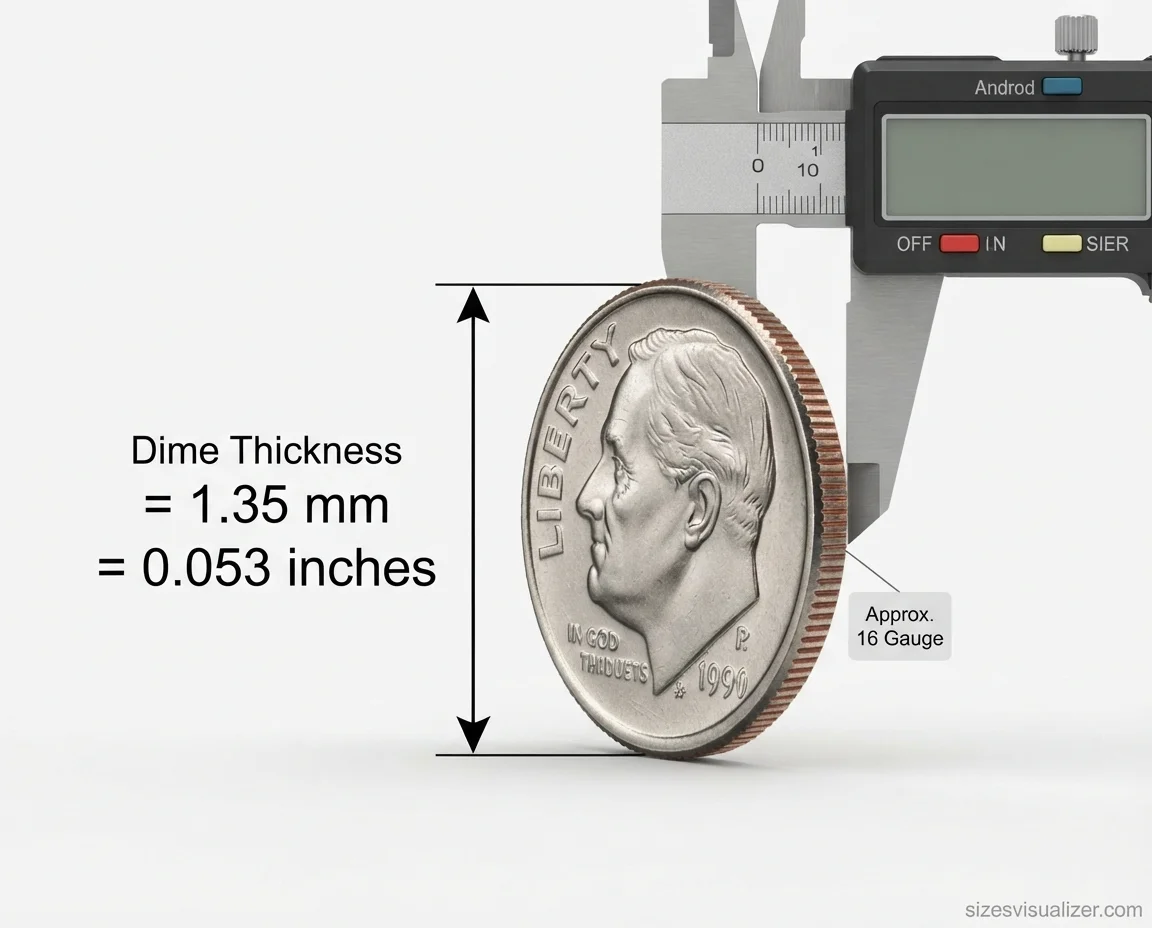
A U.S. dime is 1.35 mm thick, or 0.053 inches. That makes it the thinnest coin the U.S. Mint currently produces. Below, you’ll find the exact numbers, how a dime stacks up against other coins, and a few real-world ways to picture just how slim it is.
Table of Contents
How Thick Is a Dime? (The Quick Answer)
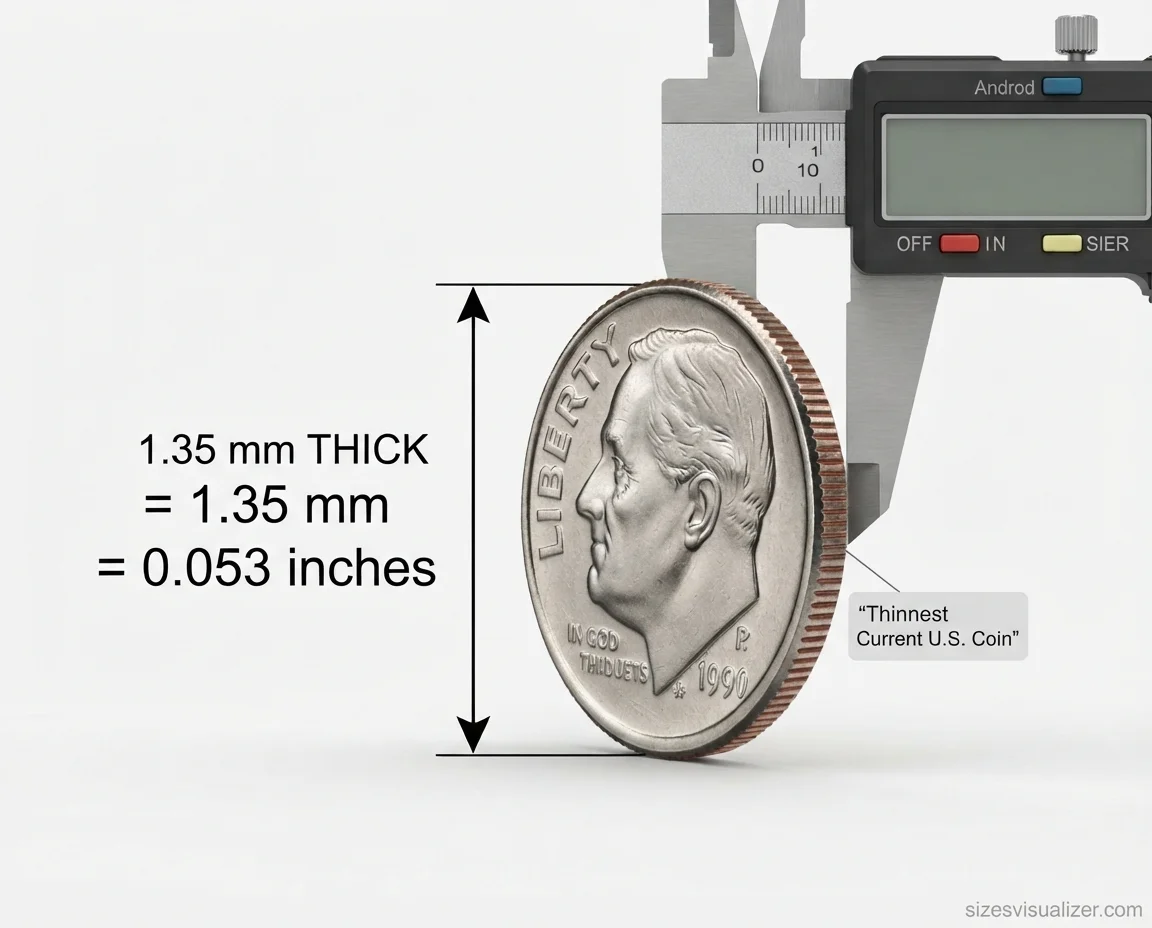
The thickness of a dime is 1.35 millimeters (0.053 inches), according to official specifications from the U.S. Mint. This has been the standard since 1965, when the U.S. Mint switched dimes from silver to a cupro-nickel blend.
Here’s a fact most people don’t know: the dime isn’t just thin, it’s the thinnest coin in circulation today. Every other U.S. coin, the penny, nickel, quarter, half dollar, and dollar, measures thicker.
That thinness isn’t random. The Mint sets a precise tolerance for every coin so vending machines, coin counters, and self-checkout kiosks can read them correctly. A dime that’s even a fraction of a millimeter off spec would jam machines across the country.
Use our Length Measurement Tool to quickly and accurately measure the length of any object in your preferred unit.
Dime Thickness in Millimeters vs. Inches
Depending on where you live or what tool you’re using, you might need the dime’s thickness in a different unit. Here’s the full breakdown.
Dime Thickness in Millimeters
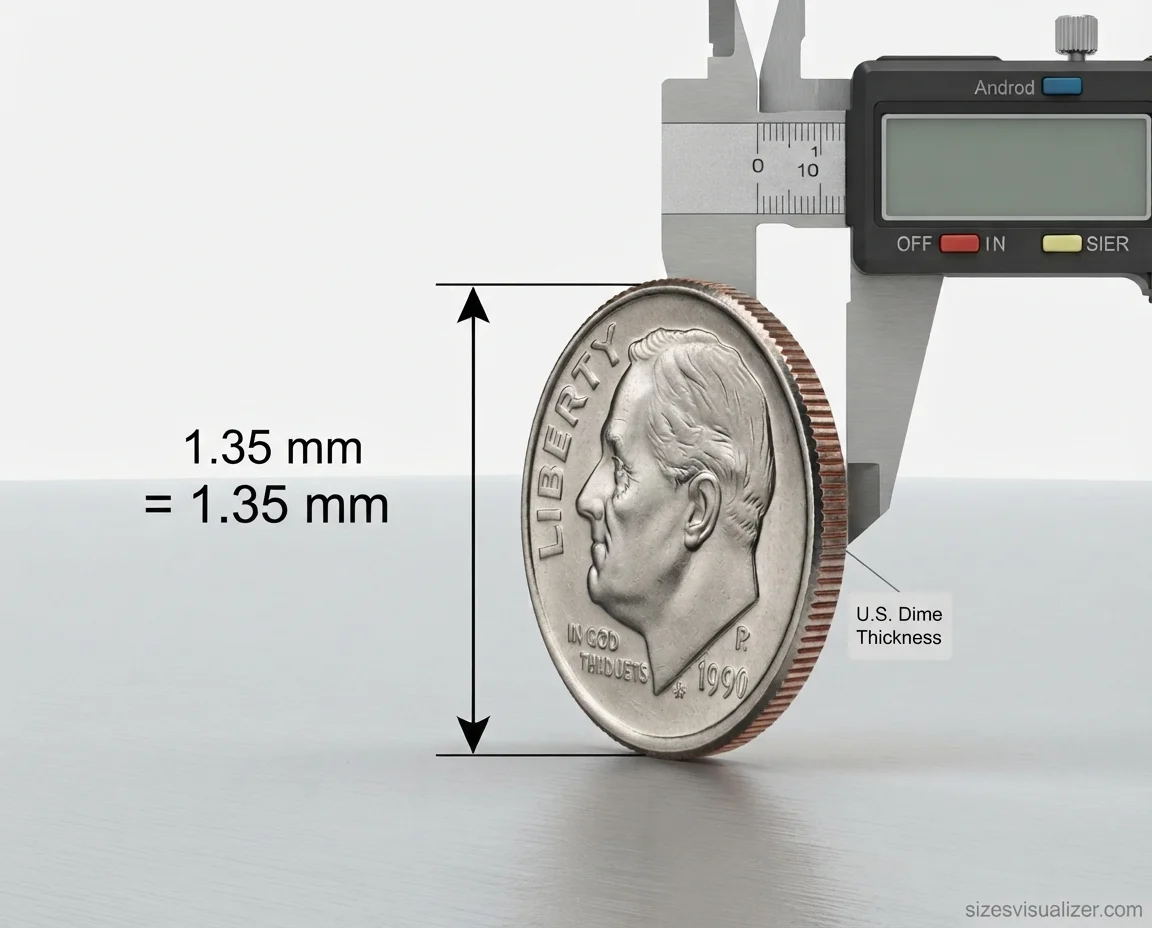
A dime measures 1.35 mm thick. This is the figure you’ll see on coin specification charts, in science classrooms, and in manufacturing tolerances.
Dime Thickness in Inches
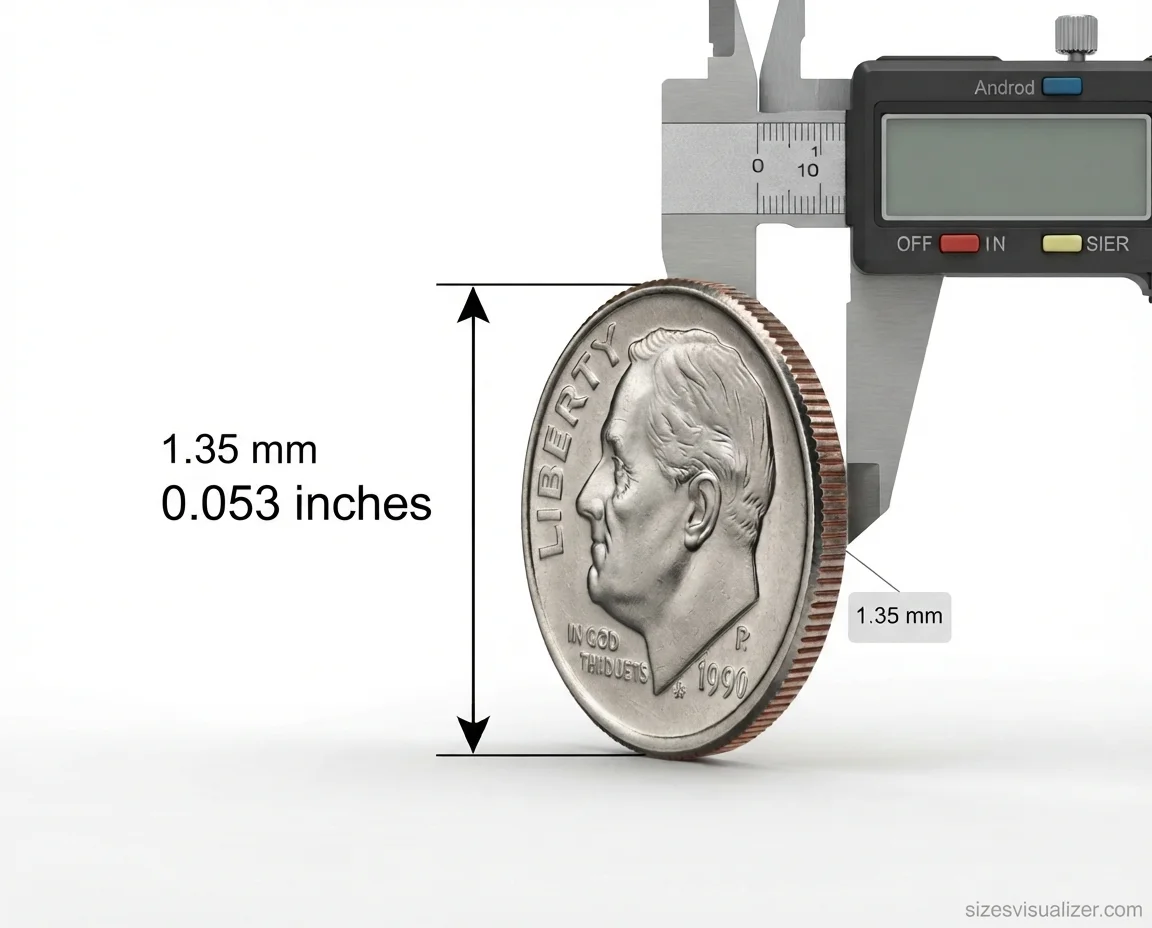
In inches, a dime is 0.053 inches thick. That’s roughly one-twentieth of an inch, thinner than a standard credit card in most cases.
Dime Thickness in Gauge
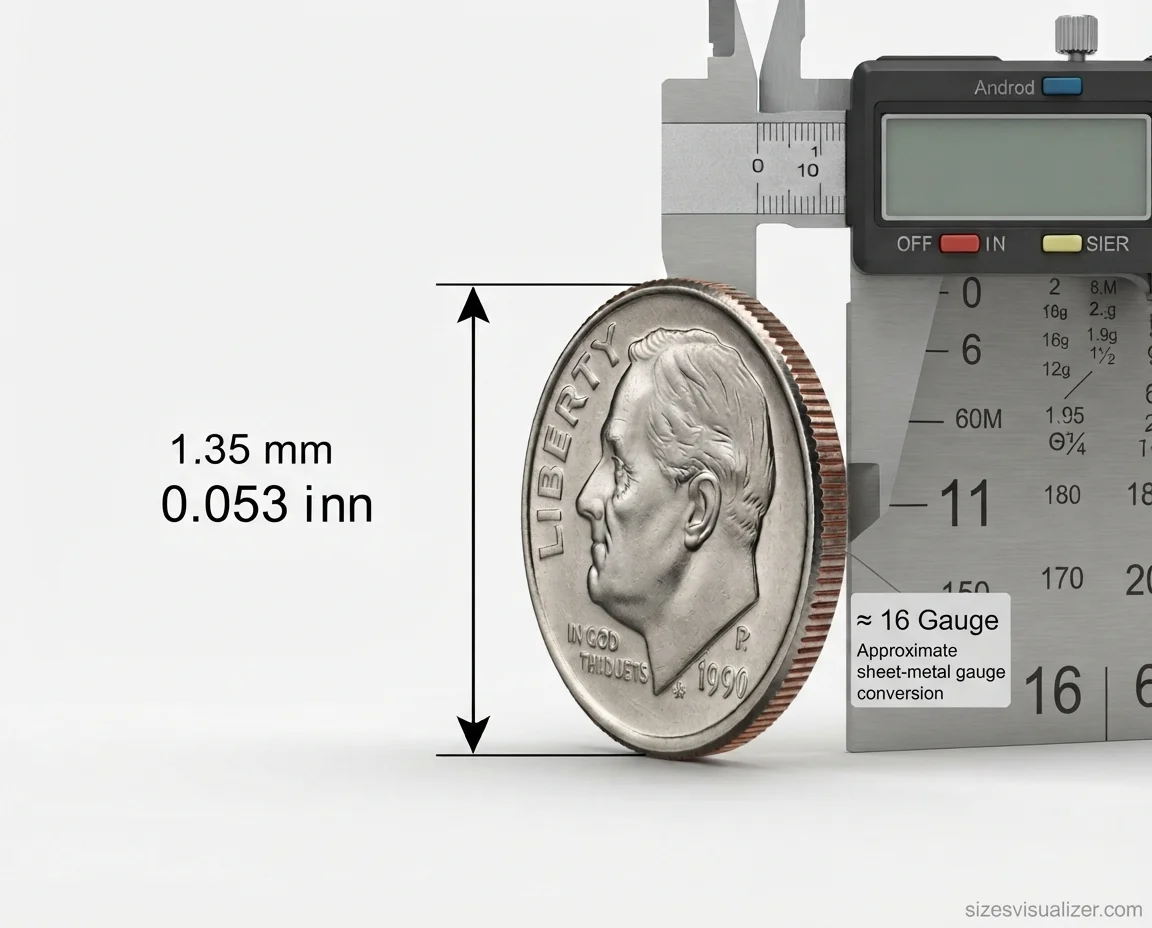
Gauge measurements are more common for sheet metal and wire than coins, but if you convert it, a dime’s thickness lands close to 16-gauge sheet metal. Gauge numbers work backward, meaning a lower gauge number means thicker material, so a dime sits in the mid-range of common metal gauge charts.
| Unit | Dime Thickness |
|---|---|
| Millimeters | 1.35 mm |
| Inches | 0.053 in |
| Approximate Gauge | ~16 gauge |
Dime Thickness Compared to Other U.S. Coins
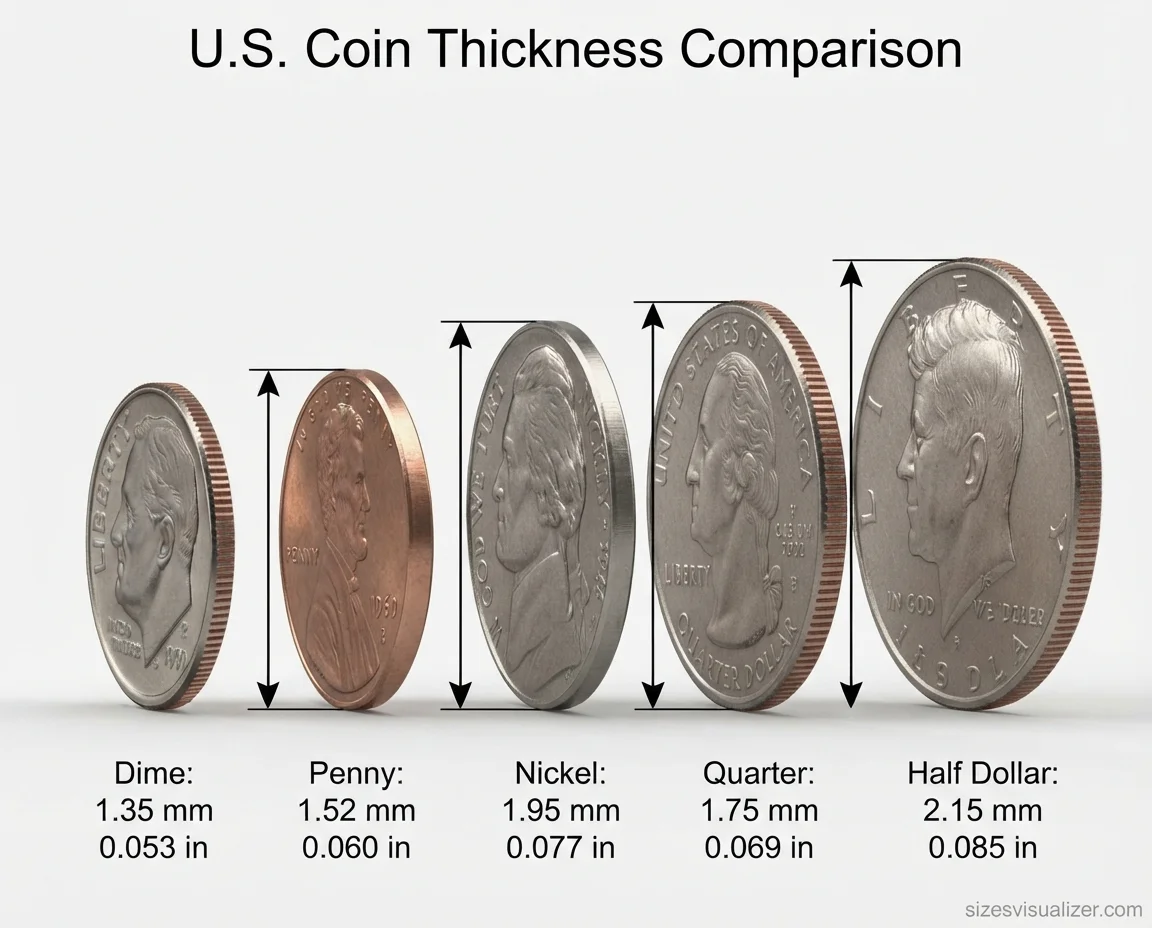
Numbers make more sense side by side. Here’s how the dime’s thickness compares to every other coin the U.S. Mint currently produces, straight from official Mint data.
| Coin | Thickness (mm) | Thickness (in) | Diameter | Weight |
|---|---|---|---|---|
| Dime | 1.35 mm | 0.053 in | 17.91 mm | 2.268 g |
| Penny | 1.52 mm | 0.06 in | 19.05 mm | 2.50 g |
| Nickel | 1.95 mm | 0.077 in | 21.21 mm | 5.00 g |
| Quarter | 1.75 mm | 0.069 in | 24.26 mm | 5.67 g |
| Half Dollar | 2.15 mm | 0.085 in | 30.61 mm | 11.34 g |
Looking at this table answers a common question right away: which is thicker, a penny or a dime? The penny wins. At 1.52 mm, it’s noticeably thicker than the dime’s 1.35 mm, even though the dime is worth ten times more.
Interestingly, the dime isn’t just the thinnest coin, it’s also the smallest in diameter. Despite being smaller in every dimension, it’s still worth more than the penny or nickel. That’s a fun bit of trivia that trips up a lot of people the first time they hear it.
Why Is a Dime This Thin?
The dime’s slim profile comes down to two things: metal composition and manufacturing history.
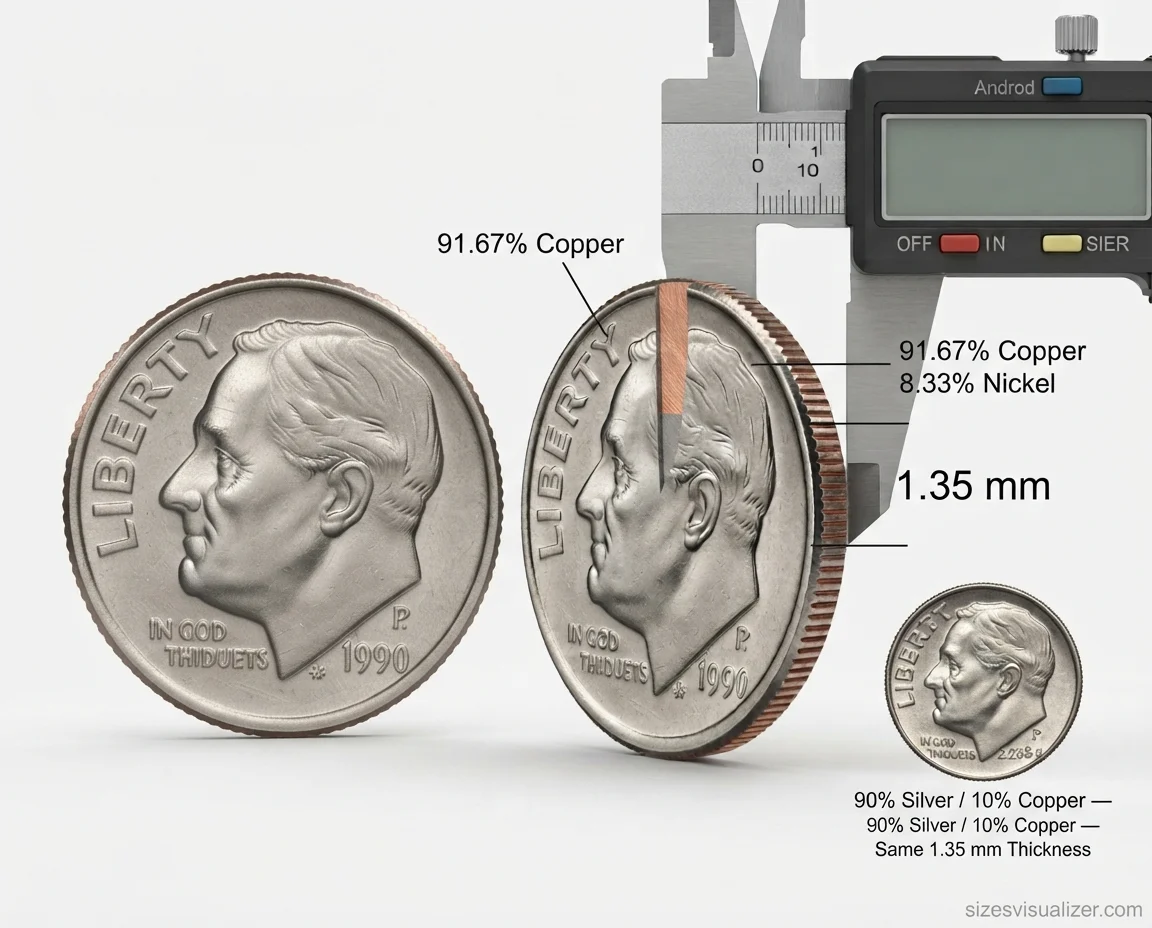
Since 1965, U.S. dimes have been made from a clad composition of 91.67% copper and 8.33% nickel, layered together in what’s often called a “clad sandwich.” This replaced the older 90% silver, 10% copper mix used before 1965.
Here’s something worth knowing: pre-1965 silver dimes were actually the same 1.35 mm thickness, but they weighed more (2.50 grams versus today’s 2.268 grams) because silver is denser than the copper-nickel blend used now. So thickness stayed consistent across the decades, even as the metal inside changed.
The Mint also adds 118 reeds (the small ridges) around the dime’s edge. Originally, reeded edges were a security feature from the era when coins were made of precious metal, preventing people from shaving off slivers of silver. Today, reeding remains mostly for tradition and to help people with visual impairments tell coins apart by touch.
Must Visit: How Thick Is Human Hair? Average Hair Thickness in Microns, mm & Inches
Real-World Ways to Picture a Dime’s Thickness
Numbers on a page don’t always click. Here are a few ways to actually visualize how thin a dime is.
Stack about 19 dimes and you’ll reach roughly one inch. That’s a tight, dense little tower for just ten cents times nineteen.
A dime is also close in thickness to a standard sheet of cardstock or two stacked credit cards. If you’ve ever fumbled a dime because it “disappeared” between your fingers, that’s why, it’s genuinely one of the thinnest objects most people handle daily.
For comparison, a typical human hair is about 0.07 mm thick. That means a dime is roughly 19 times thicker than a strand of hair, which sounds like a lot until you remember it’s still thinner than almost every other coin in your pocket.
FAQs
Is a dime 1 mm thick?
No. A dime is 1.35 mm thick, not 1 mm. It’s close, but the actual figure from the U.S. Mint is 1.35 millimeters.
How thick is a dime in inches?
A dime measures 0.053 inches thick.
What coin is 1 mm thick?
No standard U.S. coin measures exactly 1 mm. The dime, at 1.35 mm, is the closest and remains the thinnest coin in U.S. circulation.
How thick is a dime in gauge?
Converted to sheet metal gauge, a dime’s thickness lands around 16 gauge.
What coin is 3mm thick?
No current U.S. coin reaches 3 mm. The thickest circulating coin, the half dollar, measures 2.15 mm, still short of 3 mm.
Which is thicker, a penny or a dime?
The penny is thicker. It measures 1.52 mm compared to the dime’s 1.35 mm.
Conclusion
The dime might be small, but its specs are exact: 1.35 mm thick, 0.053 inches, and the thinnest coin the U.S. Mint makes today. Whether you’re double-checking a measurement, comparing coins, or just settling a curious debate, these numbers come straight from official Mint data, so you can trust them.

Measurement Researcher, Size Comparison Writer & Content Specialist
Timmy Ahad is a dedicated content writer and research specialist at SizesVisualizer.com, where he focuses on creating accurate, easy-to-understand content about measurements, dimensions, size comparisons, and real-world object visualization.