Planning a new system or a replacement? Size matters before the first shovel hits the dirt. Here are the 1000 gallon septic tank dimensions, plus weight, hole size, and install steps.
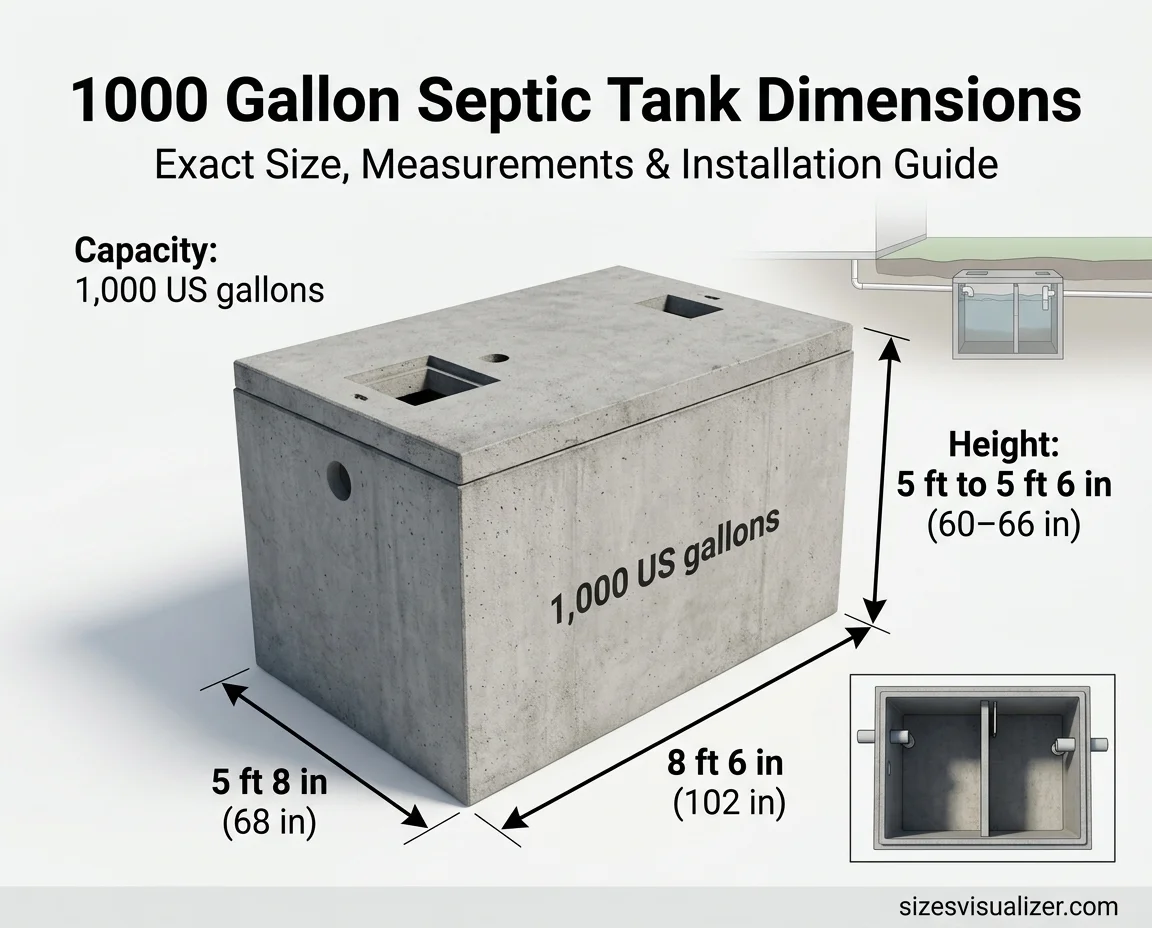
Quick answer: A 1000 gallon concrete septic tank is about 8.5 feet long, 5.5 to 5.75 feet wide, and 5 to 5.5 feet tall. Plastic tanks run close to 8.5 feet long, 5 feet wide, and 5 feet tall.
Table of Contents
1000 Gallon Septic Tank Dimensions: Exact Size in Feet and Inches
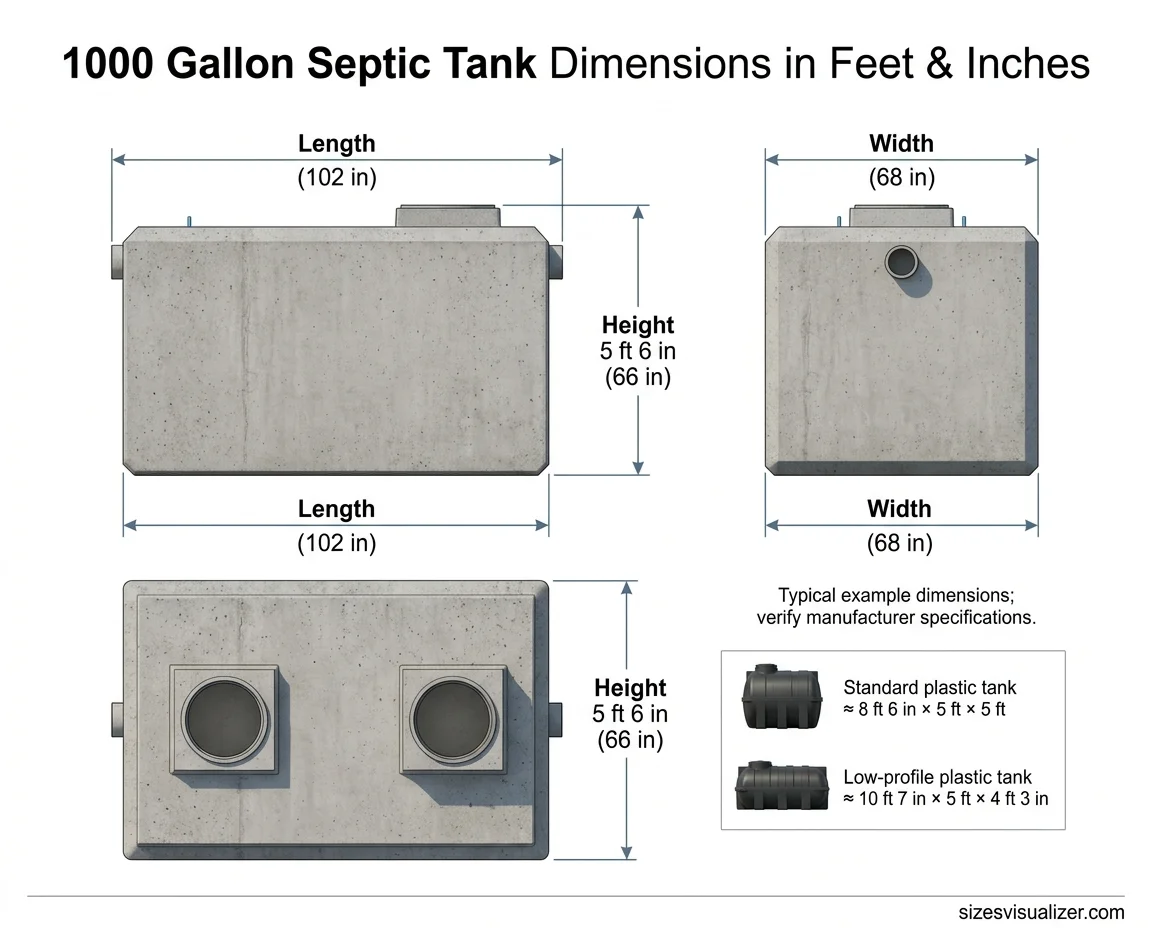
What are the dimensions of a 1000 gallon septic tank? They vary a little by maker and material. Here are typical 1000 gallon septic tank measurements from manufacturer spec sheets:
| Tank type | Length | Width | Height |
|---|---|---|---|
| Concrete, one-piece | 8’2″ to 8.5′ (102″) | 5’8″ to 5’9″ | 59″ to 66″ |
| Concrete, two-piece | 8’4″ | 5’4″ | 6′ |
| Plastic (polyethylene) | 101″ to 102″ | 60″ | 60″ to 63″ |
| Low-profile plastic | 127″ | 60″ | 51″ |
| Concrete lowboy | 154″ | 69″ | 46″ |
These are outside measurements. Always check the maker’s sheet before you dig.
What is inside a 1000 gallon septic tank? Two numbers matter most:
- Inlet invert: about 48 to 54 inches from the tank floor.
- Outlet invert: about 2 to 3 inches lower than the inlet.
That small drop keeps wastewater moving without stirring up settled sludge.
The tank also holds less liquid than its name suggests. Headspace and baffles take up room. A standard plastic tank has about 42 square feet of liquid surface area.
A two-compartment tank has the same footprint as a single one. A divider wall sits inside it. Many states now require two compartments for new systems.
Who is this size for? A 1000 gallon tank usually fits 1 to 3 bedroom homes. It is the minimum in many states, but not all. Florida, for example, sets a higher minimum of 1,050 gallons. Check your county health department first.
1000 Gallon Concrete vs. Plastic Septic Tank: Weight, Size & Cost
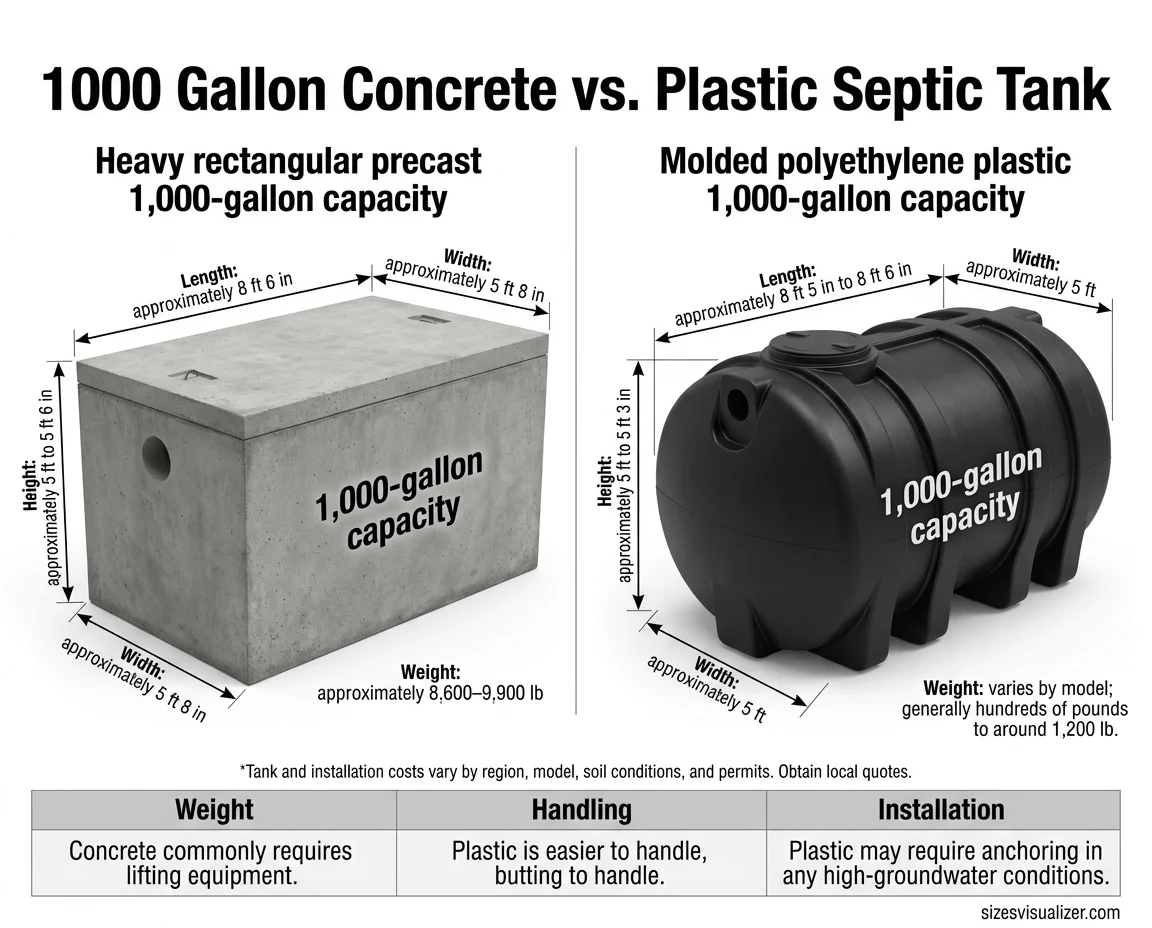
How much does a 1000 gallon septic tank made of concrete weigh? Spec sheets show about 8,600 to 9,900 pounds. Some sources list up to 13,000 pounds. Crews need a crane or a large excavator to set one.
Plastic and fiberglass are far lighter. They range from a few hundred pounds to about 1,200 pounds.
| Feature | Concrete | Plastic / Fiberglass |
|---|---|---|
| Wall thickness | 3.5 to 5 inches | Under 1 inch |
| Weight | 8,600+ lbs | A few hundred to 1,200 lbs |
| Float risk | Low | Higher in wet soil |
| Handling | Crane needed | Easier on tight sites |
1000 Gallon Septic Tank Hole Size, Depth & Setbacks
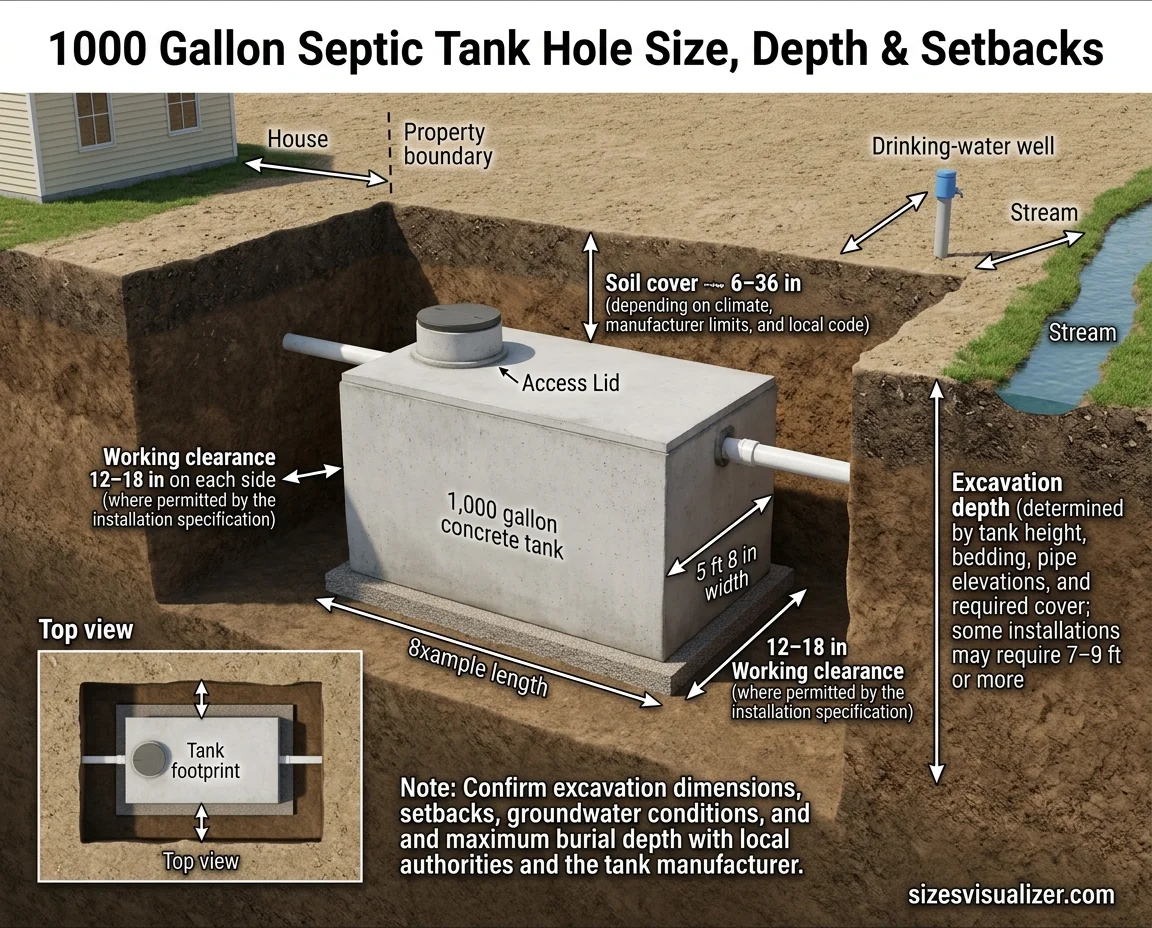
How big a hole do you need? Plan for the tank’s outside size plus 12 to 18 inches on every side. That leaves room for bedding and workers. One precast maker lists a hole of 7 feet by 8.5 feet for a 1000 gallon tank.
How deep should it go? Soil cover over the lid is often 6 inches in warm areas. In cold states it can reach 36 inches to stay below the frost line. Add the tank’s height, and the full dig can run 7 to 9 feet or more.
Keep these points in mind:
- Water table: the tank bottom should sit above the seasonal high water.
- Setbacks: codes set distances from the house, property lines, wells, and streams. Measure from the tank wall, not its center.
- Access: never build a patio or shed over the lid.
- Risers: a riser brings the lid up to ground level for easy pumping.
- Outlet height: it sets how deep your leach field lines can go.
Short on depth? A low-profile tank sits shallower but runs longer and wider.
Proper planning is essential for a successful septic tank installation, just as choosing the right dimensions matters when setting up a comfortable bedroom. If you’re also planning your bedroom essentials, explore this guide to standard quilt sizes and bed measurements to find the right fit for your mattress.
1000 Gallon Septic Tank Installation Guide: Step by Step
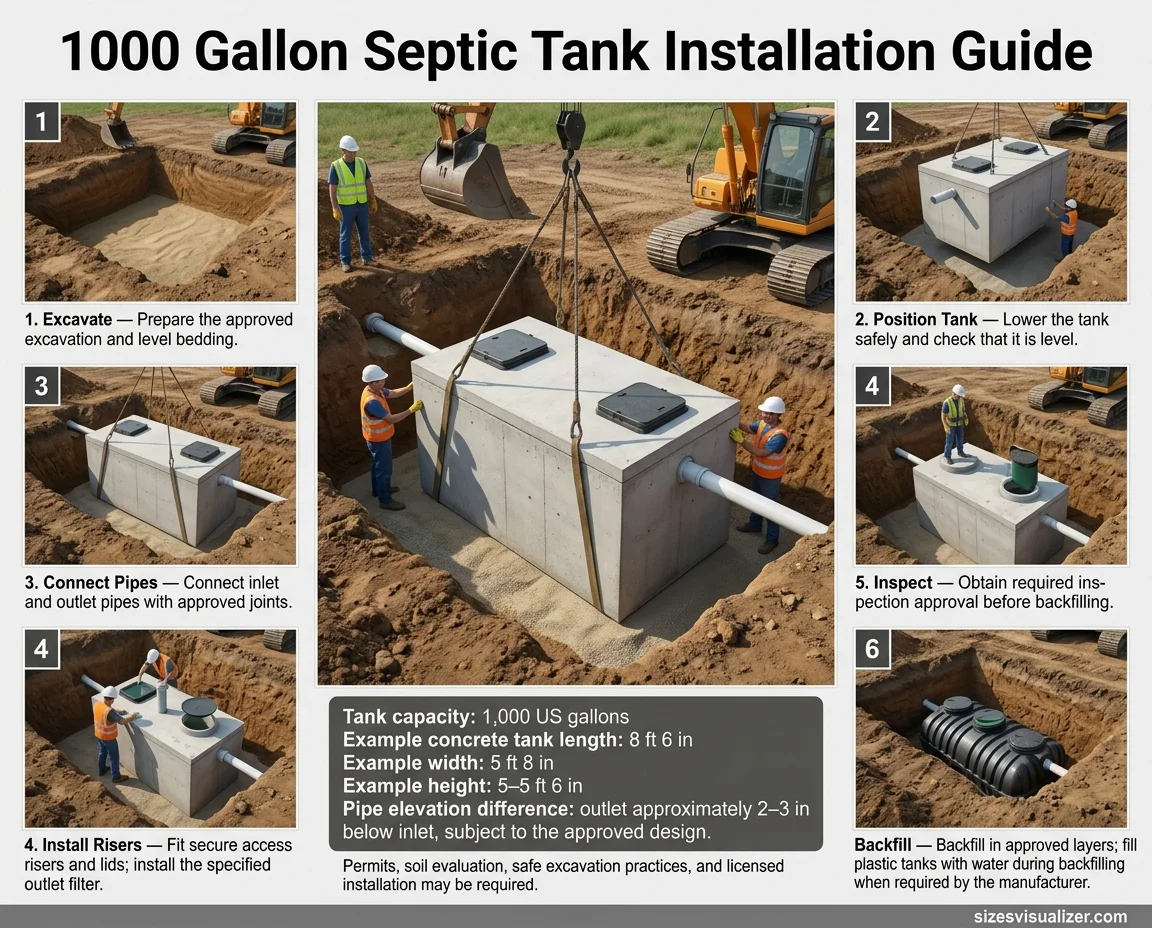
A licensed installer should do the work. Most places also require a perc test, soil evaluation, and permit first.
- Dig the hole to the right size and depth. Level the base with gravel or sand.
- Set the tank. Check the inlet and outlet sides. Make sure it sits level.
- Connect the pipes. Keep the 2 to 3 inch drop and seal every joint.
- Add risers and lids. Fit an effluent filter on the outlet.
- Pass inspection before any backfill.
- Backfill in layers. On a plastic tank, fill it with water as you go to stop it floating.
How often should you pump it? The University of Minnesota Extension lists about every 2.6 years for a four-person home with a 1,000-gallon tank. A garbage disposal shortens that gap. The EPA SepticSmart program says a well-built, well-kept system can last 25 to 30 years.
Common mistakes to avoid:
- A tank too small for the bedroom count.
- A tank set too deep for the drain field.
- No access riser.
FAQs
What does a 1000 gallon septic tank look like?
It is a buried, rectangular concrete box or a rounded plastic tank. Only the lid or riser shows above ground. Inside, a wall or baffle guides the flow.
How much does a 1,000-gallon septic tank cost?
The tank itself often runs a few thousand dollars. The full installed price is higher and varies by region, soil, and permits. Get local written quotes.
What are the dimensions of a septic tank?
Sizes depend on capacity. A 1000 gallon tank is about 8.5 feet long and 5 to 5.75 feet wide. It is 5 to 5.5 feet tall.
How much does a 1000 gallon septic tank made of concrete weigh?
About 8,600 to 9,900 pounds on typical spec sheets. Some run heavier.
What are the dimensions of a 1000 gallon concrete septic tank in feet?
About 8.5 feet long, 5.5 to 5.75 feet wide, and 5 to 5.5 feet tall. Two-piece versions can stand 6 feet tall.
Which is better for a 1000 gallon septic tank, plastic or concrete?
Concrete is heavy and sturdy. Plastic is light and easy to install. Pick based on soil, water table, and access.
Conclusion
A 1000 gallon septic tank is about 8.5 feet long and 5 to 5.75 feet wide. Weight, hole size, and depth change with the material you choose. Confirm exact numbers with the tank maker, your county health department, and a licensed installer before you order.

Measurement Researcher, Size Comparison Writer & Content Specialist
Timmy Ahad is a dedicated content writer and research specialist at SizesVisualizer.com, where he focuses on creating accurate, easy-to-understand content about measurements, dimensions, size comparisons, and real-world object visualization.