A 32-inch TV measures about 27.9 inches wide and 15.7 inches tall (roughly 70.8 cm by 39.8 cm). That’s the screen size, measured diagonally, not the width or height on its own.
This size sits in a comfortable middle spot. It’s not tiny, and it’s not a home-theater centerpiece either. It’s the size most people pick for a bedroom, kitchen, dorm, or small home office.
Below, you’ll find the exact 32-inchs TV dimensions, how it compares to other sizes, where it fits best, and what resolution actually makes sense at this size.
Table of Contents
How Big Is a 32-Inch TV? Exact Dimensions in Inches and CM
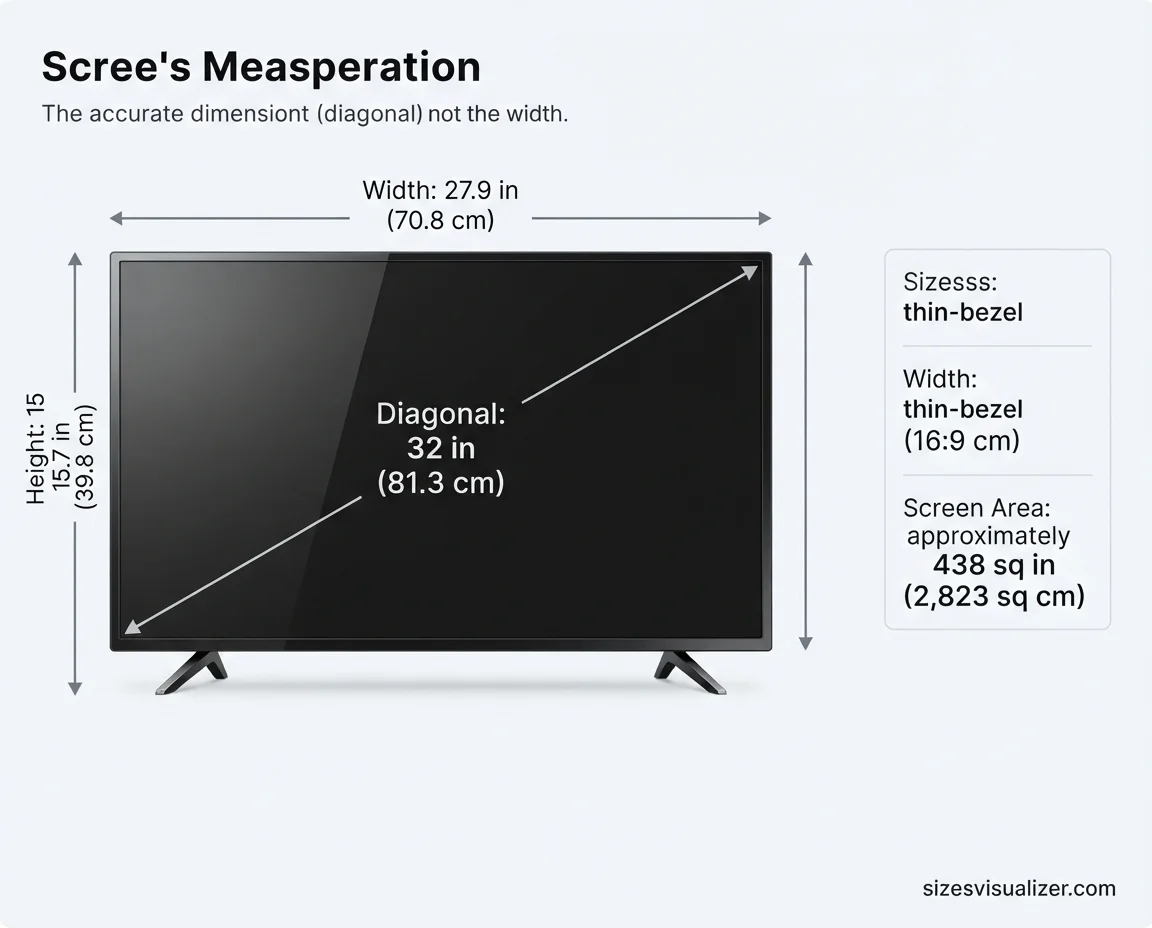
The “32 inches” on the box refers to the screen diagonal — the line from one corner of the screen to the opposite corner. It’s not the width. This is standard across the TV industry, so a 32-inch screen from any brand should measure close to the same size.
Almost every modern TV uses a 16:9 aspect ratio. That ratio, paired with the diagonal, is what gives you the width and height:
| Measurement | Inches | Centimeters |
|---|---|---|
| Diagonal | 32 in | 81.3 cm |
| Width | 27.9 in | 70.8 cm |
| Height | 15.7 in | 39.8 cm |
| Screen area | ~438 sq in | ~2,823 sq cm |
Manufacturers use a simple formula to get these numbers:
- Width = Diagonal × 0.872
- Height = Diagonal × 0.491
These figures cover the active screen area only. The bezel (the frame around the screen) adds a small amount to the outer size, usually less than half an inch per side on modern sets. A stand or base adds a bit more height and depth, but stand size varies quite a bit by brand.
Weight also varies. Most modern 32-inch LED TVs weigh between 8 and 15 pounds without the stand. Older LCD or CRT models were heavier, sometimes over 30 pounds, since they used thicker glass and bulkier internal parts.
Measure objects with confidence using our Length Measurement Tool, designed for fast, convenient, and easy-to-understand length calculations.
32-Inchs TV Size Compared to Other TVs and Everyday Objects

Numbers on a spec sheet don’t always translate into a real sense of size. Here’s how a 32-inchs TV stacks up against nearby sizes:
| TV Size | Width | Height |
|---|---|---|
| 24 inch | 20.9 in | 11.8 in |
| 32 inch | 27.9 in | 15.7 in |
| 40 inch | 34.9 in | 19.6 in |
| 43 inch | 37.5 in | 21.1 in |
A jump from 32 to 40 inches adds about 36% more screen area, even though the diagonal only grows by 8 inches. That’s the nature of diagonal measurements — small jumps in the number create bigger jumps in actual screen surface.
For a real-world comparison, a 32-inch screen is roughly the width of a standard interior door, or a bit wider than a large suitcase laid flat. Mounted on a wall, it typically sits a few inches shorter than a kitchen upper cabinet is wide.
Where a 32-Inch TV Fits Best: Room Size & Viewing Distance
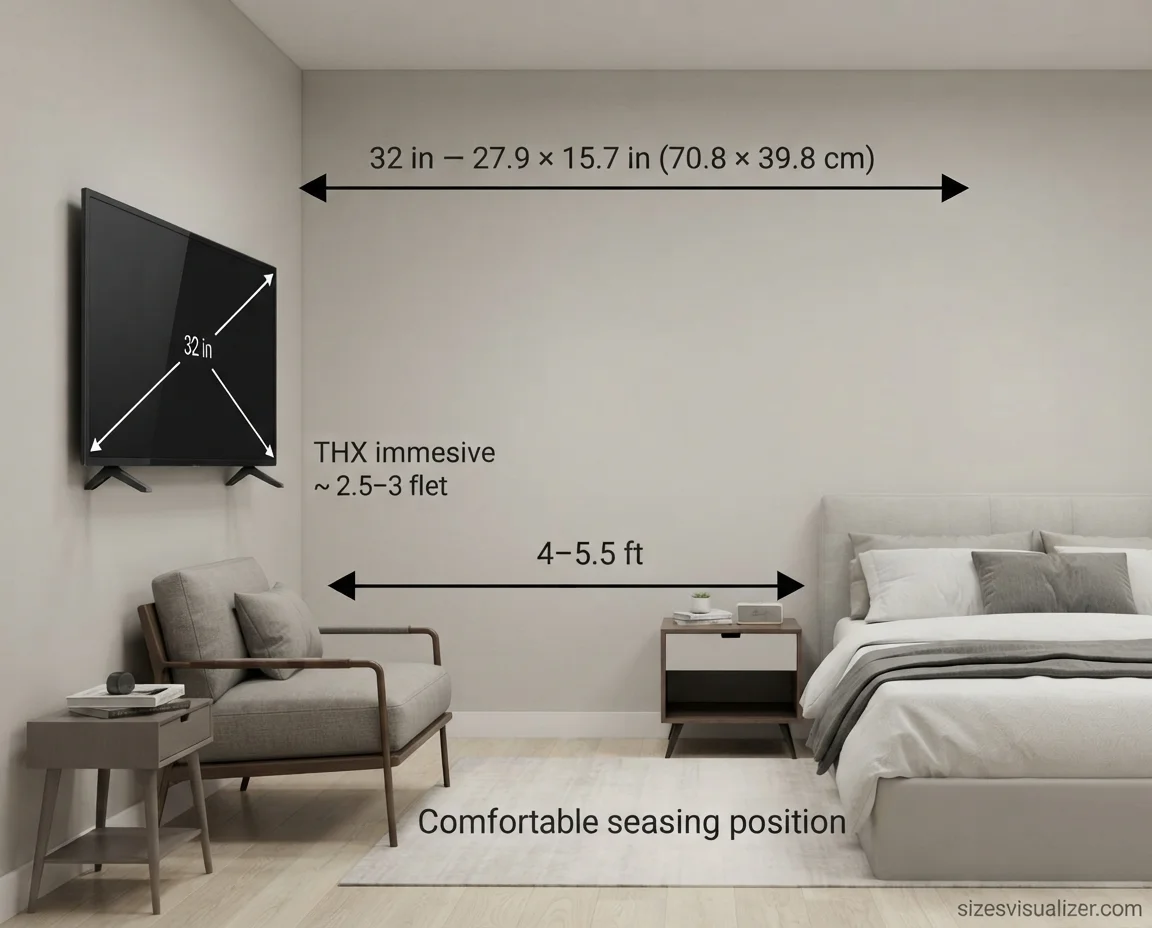
Viewing distance matters more than room size on its own. Two industry standards are commonly used to judge this: the Society of Motion Picture and Television Engineers (SMPTE), which recommends sitting far enough back that the screen fills about a 30-degree field of view, and THX, which recommends a wider 40-degree angle for a more immersive feel (source).
For a 32-inch screen, that works out to roughly:
- SMPTE comfort range: about 4 to 5.5 feet
- THX immersive range: about 2.5 to 3 feet
Good spots for a 32-inch set include:
- Bedrooms and guest rooms
- Kitchens and breakfast nooks
- Dorm rooms and small apartments
- Home offices and gyms
- RVs, campers, and boats
Weight, Stand Footprint, Wall Mounting & Box Size
Beyond the screen itself, a few practical measurements matter for setup.
Stand footprint
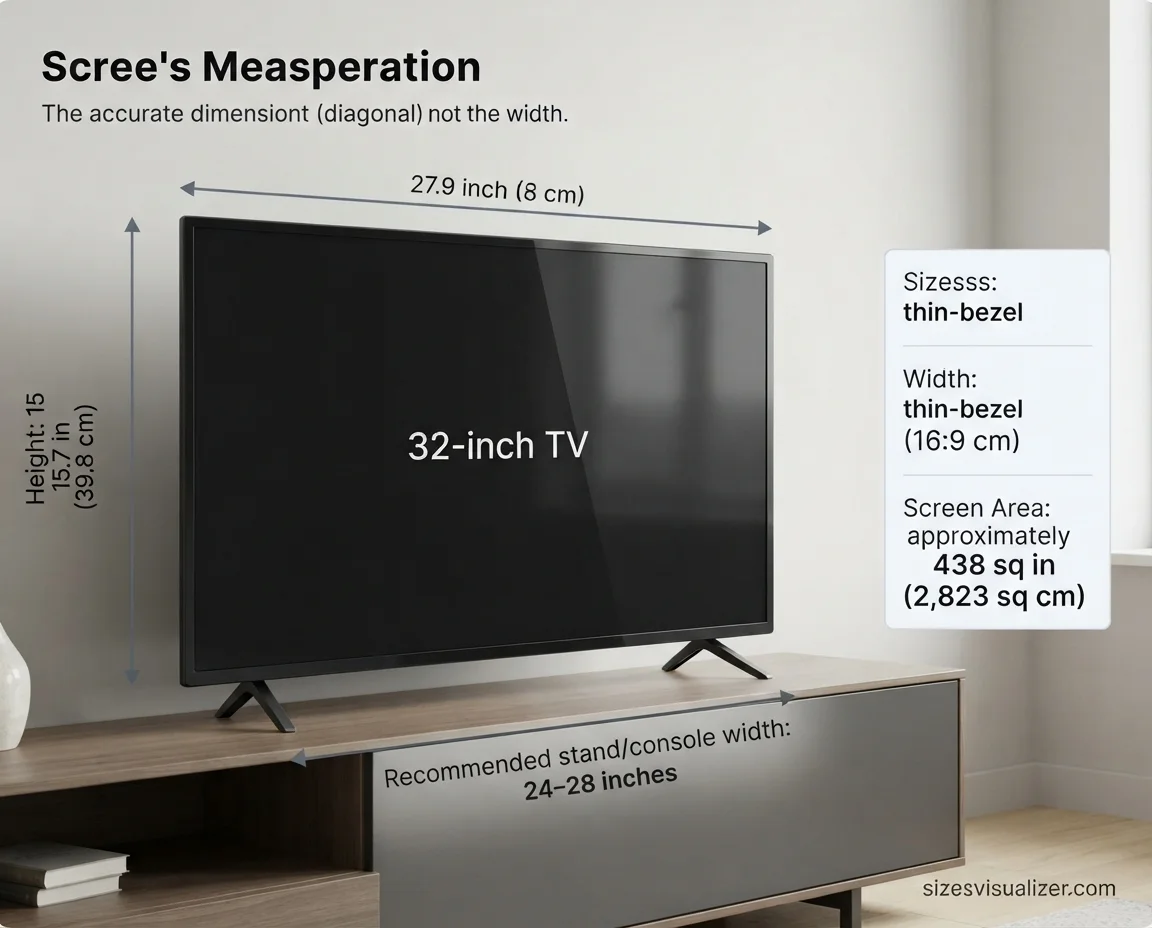
Most 32-inchs TVs need a stand or console at least 24 to 28 inches wide to sit safely, since the feet are usually spaced wider than the screen itself for balance.
Wall mounting
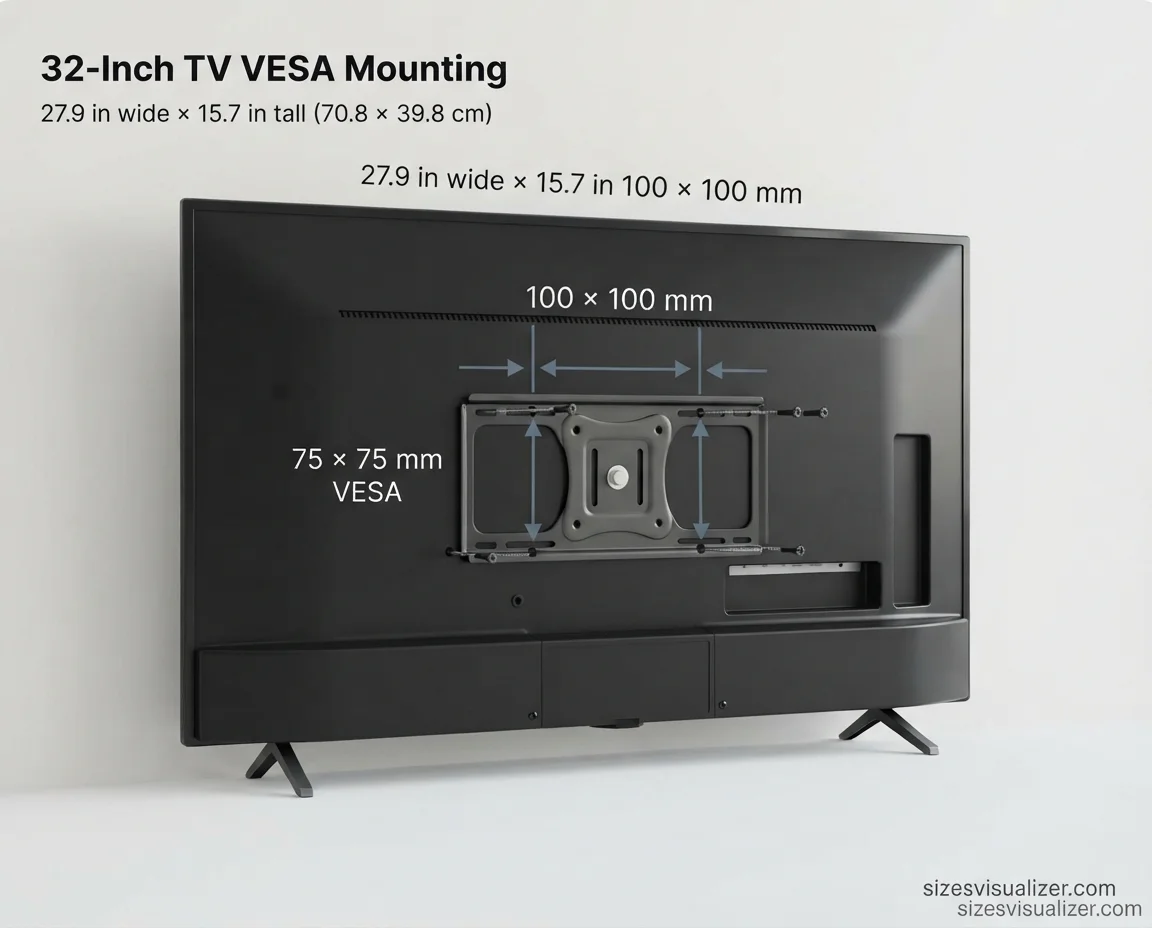
Nearly all 32-inchs TVs use the VESA 100×100 mm or 75×75 mm hole pattern on the back. This is a standardized spacing, so most universal wall mounts sold for small-to-mid TVs will fit.
Box size
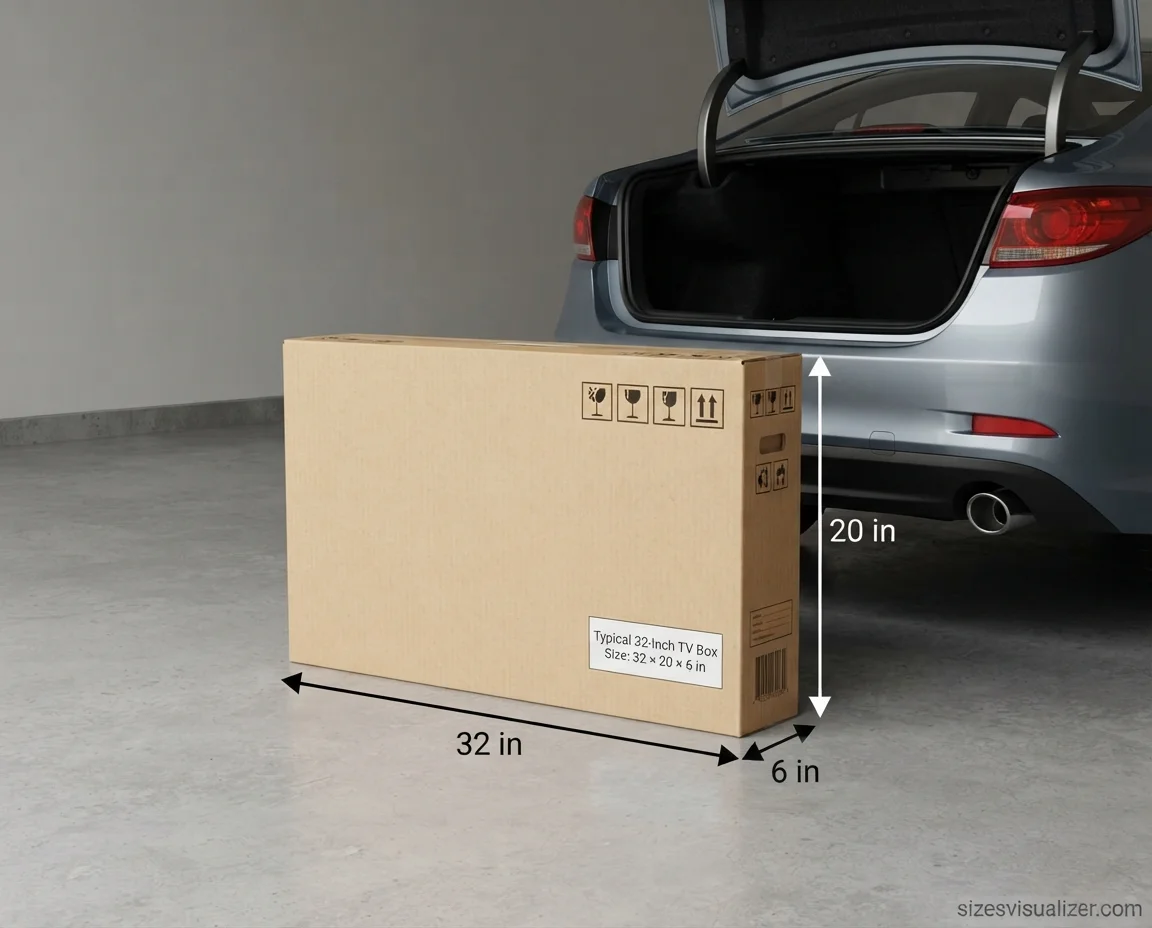
Shipping boxes for a 32-inchs TV typically measure close to 32 x 20 x 6 inches. That’s small enough to fit in the trunk of nearly any car without folding down seats.
Thickness
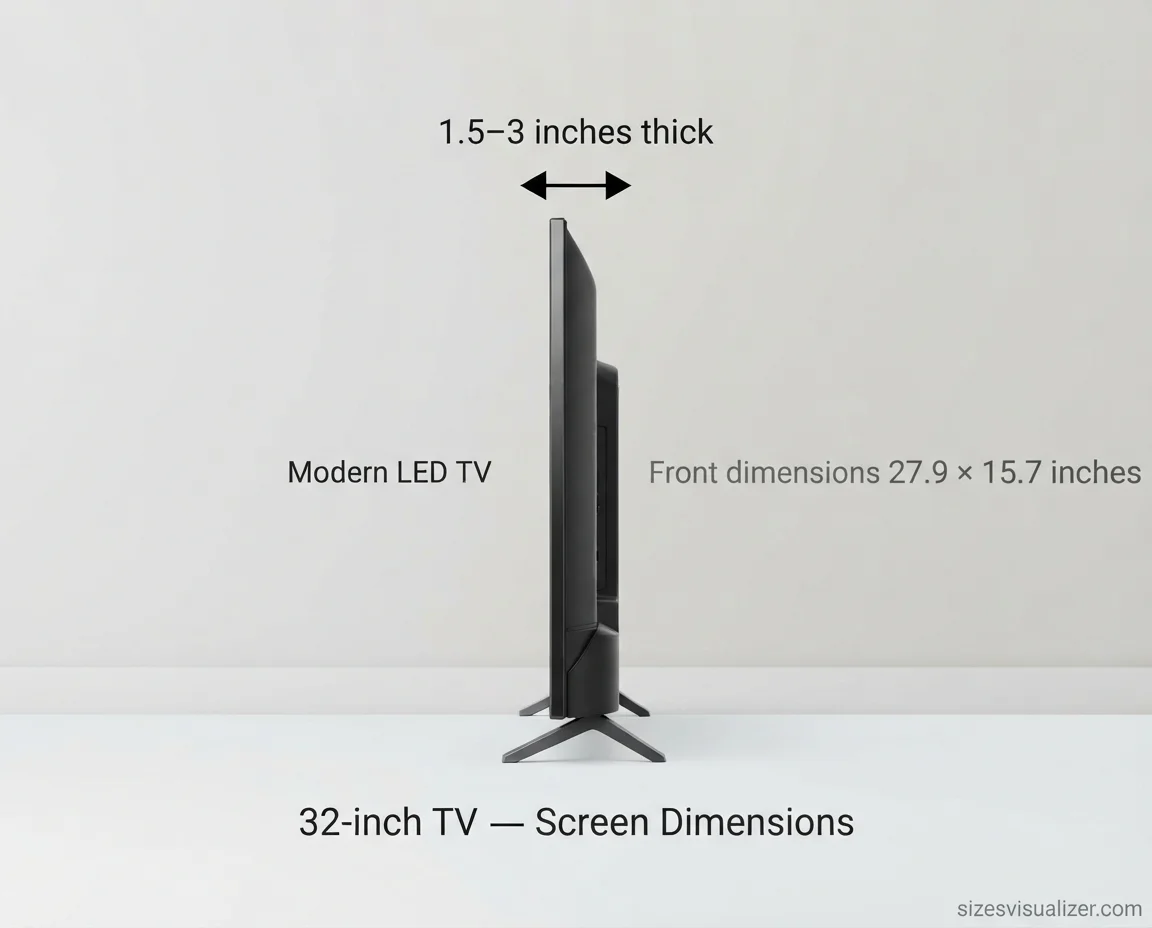
Modern LED panels run 1.5 to 3 inches thick. Older LCD sets or ones with built-in DVD players can run thicker, closer to 4 to 5 inches.
Must Visit: US Dollar Bill Dimensions: Exact Size, Width, Height, Thickness & Fun Facts
Resolution, Smart Features & What You Actually Get at 32 Inches
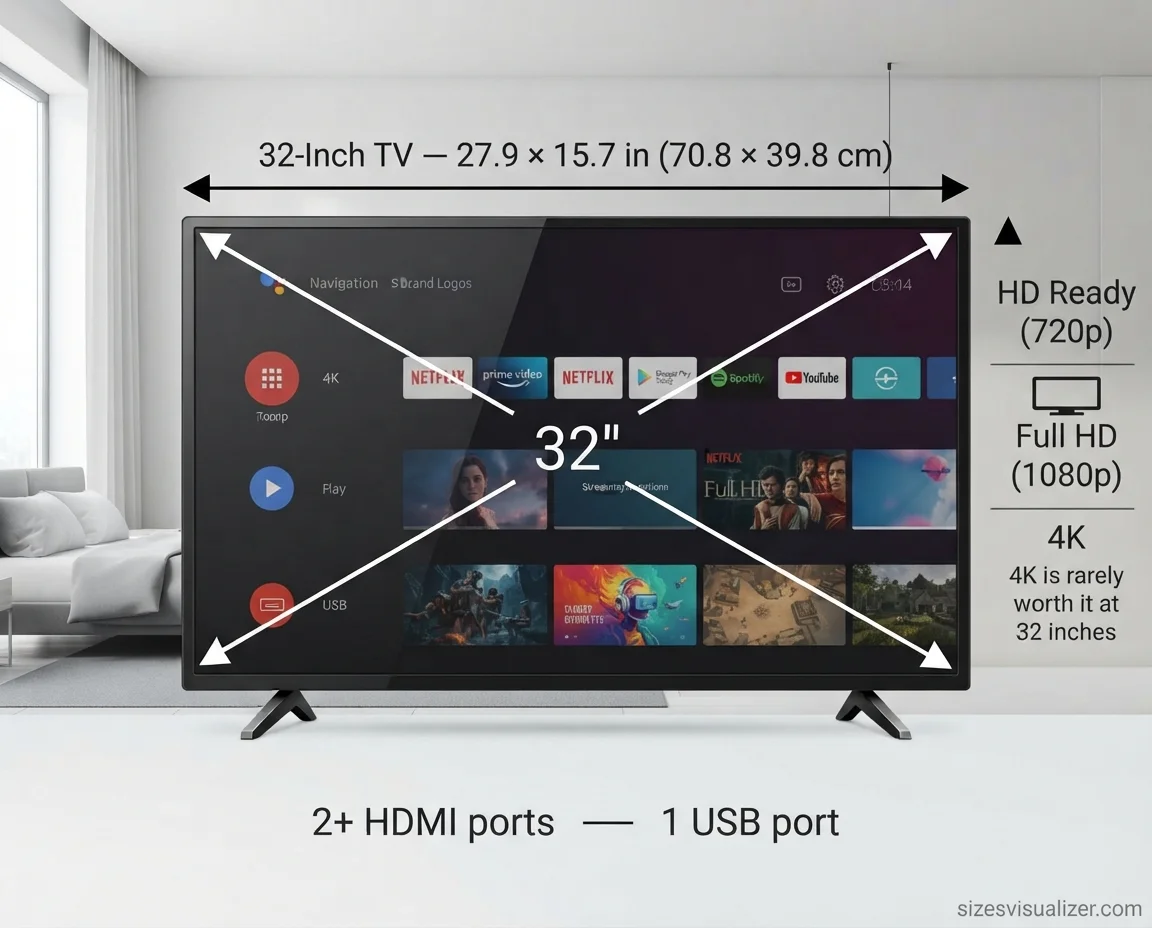
Screen resolution decides how sharp the picture looks, but at 32 inches, the differences shrink compared to larger TVs.
- HD Ready (720p): Still common at this size. From a normal seating distance, the drop in sharpness compared to Full HD is hard to notice.
- Full HD (1080p): Sharper detail, especially useful for streaming or gaming up close.
- 4K: Rarely worth it at 32 inches. The pixel density is already high enough that most eyes can’t tell 4K apart from 1080p unless sitting closer than 2 feet.
Smart TV vs. non-smart: A smart TV built into a 32-inch set gives direct access to streaming apps without extra hardware. A non-smart model tends to cost less and works fine when paired with a streaming stick, or in rooms mainly used for live TV or cable.
Ports worth checking: Look for at least two HDMI ports and one USB port. These cover streaming devices, game consoles, and media playback from a flash drive.
FAQs
Is a 32-inchs TV big or small?
It’s on the smaller end of today’s TV market, but not the smallest available. Most new TVs sold now range from 32 to 75 inches, so 32 sits near the bottom of that range — small by comparison, but a practical, full-featured size on its own.
What is the size of a 32-inchs TV?
A 32-inch TV measures about 27.9 inches wide and 15.7 inches tall (70.8 cm by 39.8 cm), based on the standard 16:9 aspect ratio.
Is 32-inchs TV too small?
Not for close-range viewing. It’s too small only when placed more than 6 to 7 feet from the seating area, which is common in larger living rooms.
Is a 32-inchs TV too small for a bedroom?
No. A bedroom is one of the best rooms for this size, since bed-to-wall distances usually land inside the ideal viewing range.
What does a 32-inchs TV look like in a room?
About the width of a standard door, and noticeably smaller than the large flat-screens common in living rooms today. It reads as a practical, secondary-TV size rather than a main entertainment centerpiece.
Should I get a 24 or 32-inchs TV?
Choose 24 inches for viewing distances under 4 feet, like a desk or small kitchen counter. Choose 32 inches for distances of 5 feet or more, such as a bedroom or small living space.
Concusion
A 32-inchs TV measures roughly 27.9 by 15.7 inches, or 70.8 by 39.8 cm, and works best in rooms where the seating sits within about 4 to 6 feet of the screen. It’s not built to dominate a living room, but for bedrooms, kitchens, dorms, and smaller spaces, it hits a practical, well-sized balance between screen and room.

Measurement Researcher, Size Comparison Writer & Content Specialist
Timmy Ahad is a dedicated content writer and research specialist at SizesVisualizer.com, where he focuses on creating accurate, easy-to-understand content about measurements, dimensions, size comparisons, and real-world object visualization.