You pull out a new plate and think: is this actually a dinner plate, or did you grab a salad plate by mistake? You’re not alone. Plate sizes vary more than most people expect, and the labels on store shelves don’t always match what lands on your table.
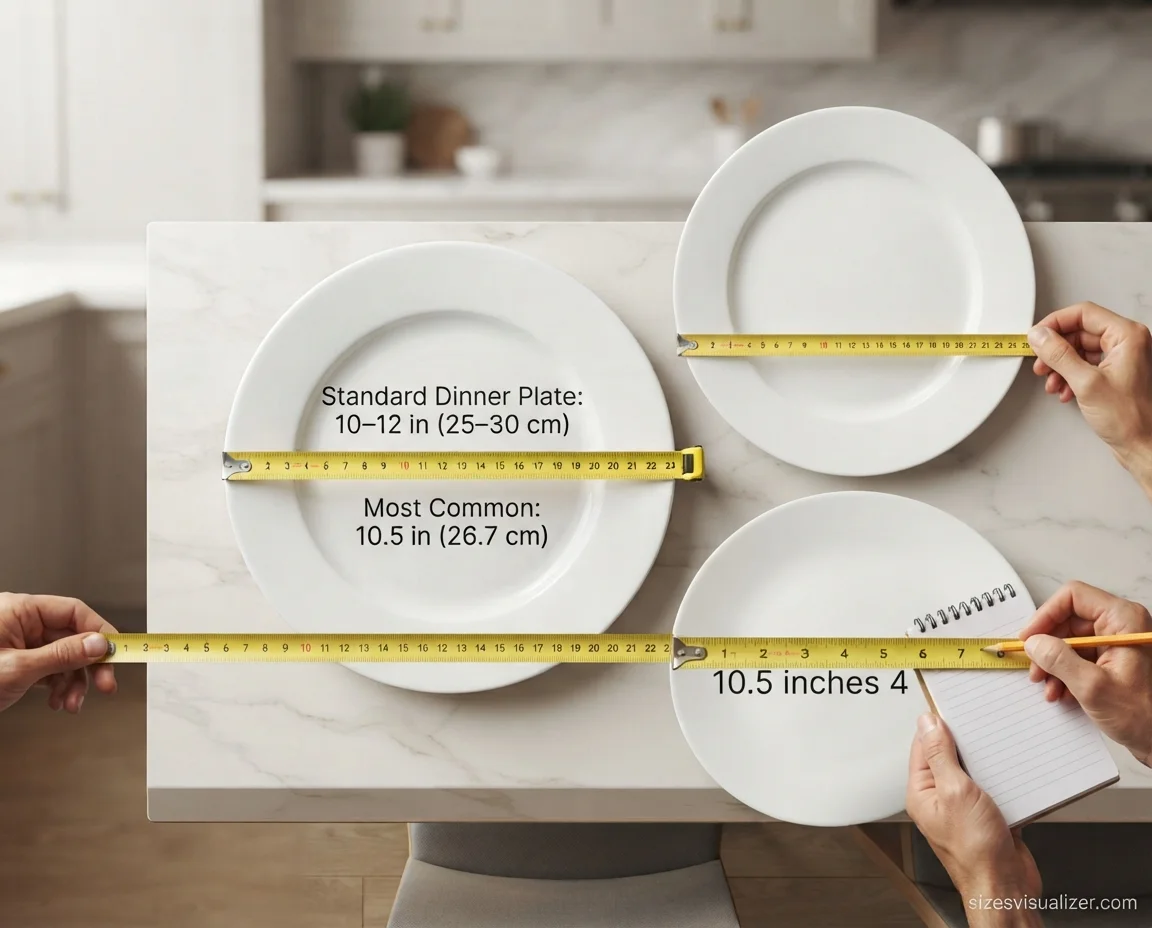
Here’s the short answer of question how big are dinner plates: a standard dinner plate size in the US runs 10 to 12 inches (25 to 30 cm) across. But that range hides a lot of nuance — history, materials, and even psychology all play a role. Let’s break it down.
Table of Contents
Standard Dinner Plate Size in the US (Inches & CM)
What Counts as a “Standard” Dinner Plate?
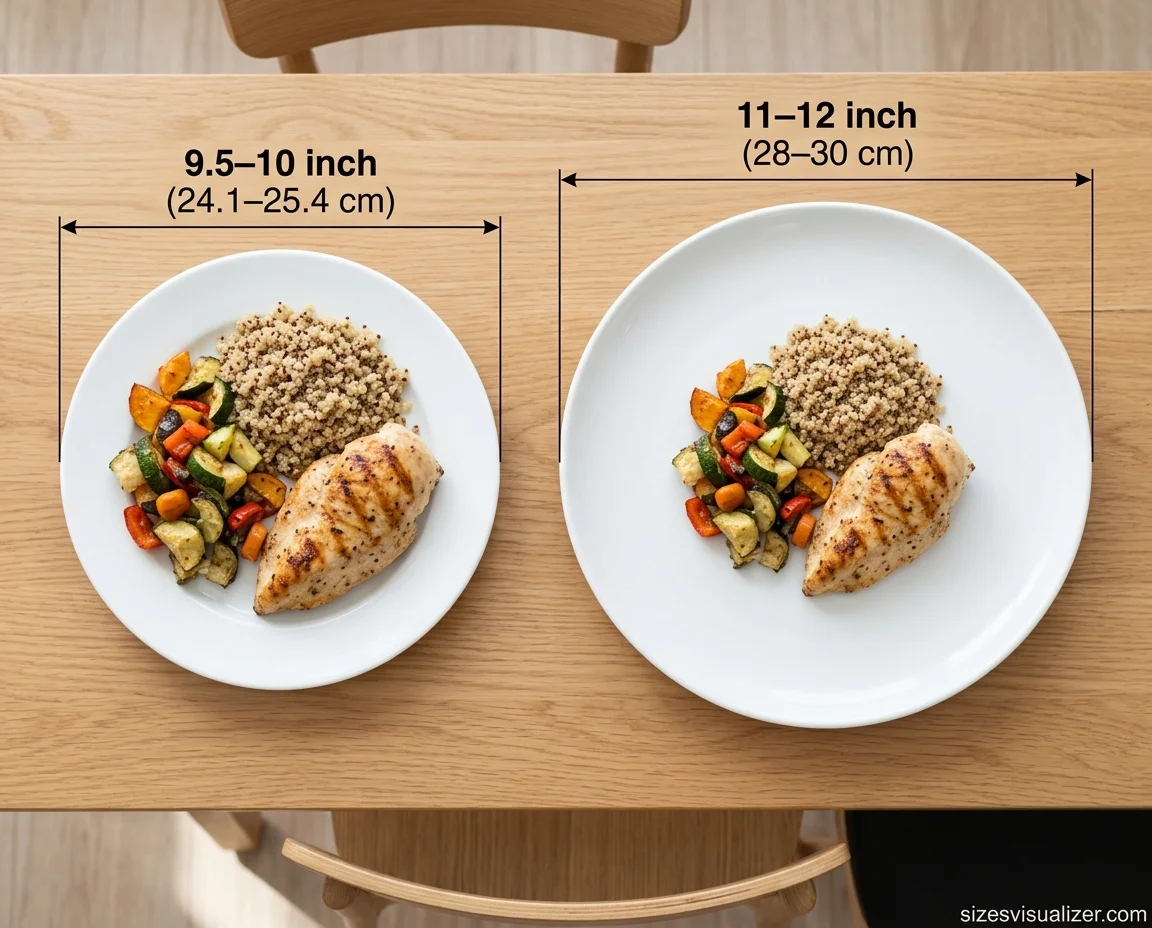
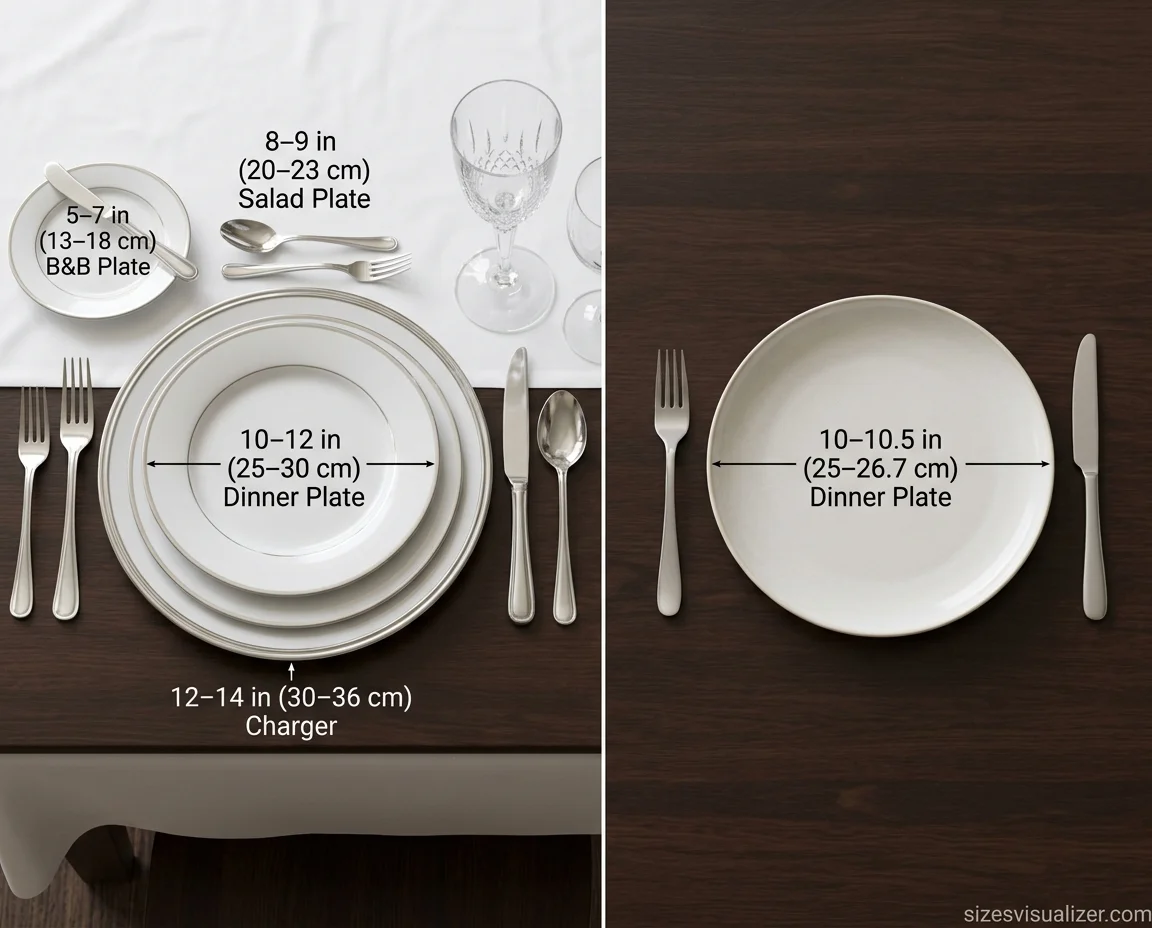
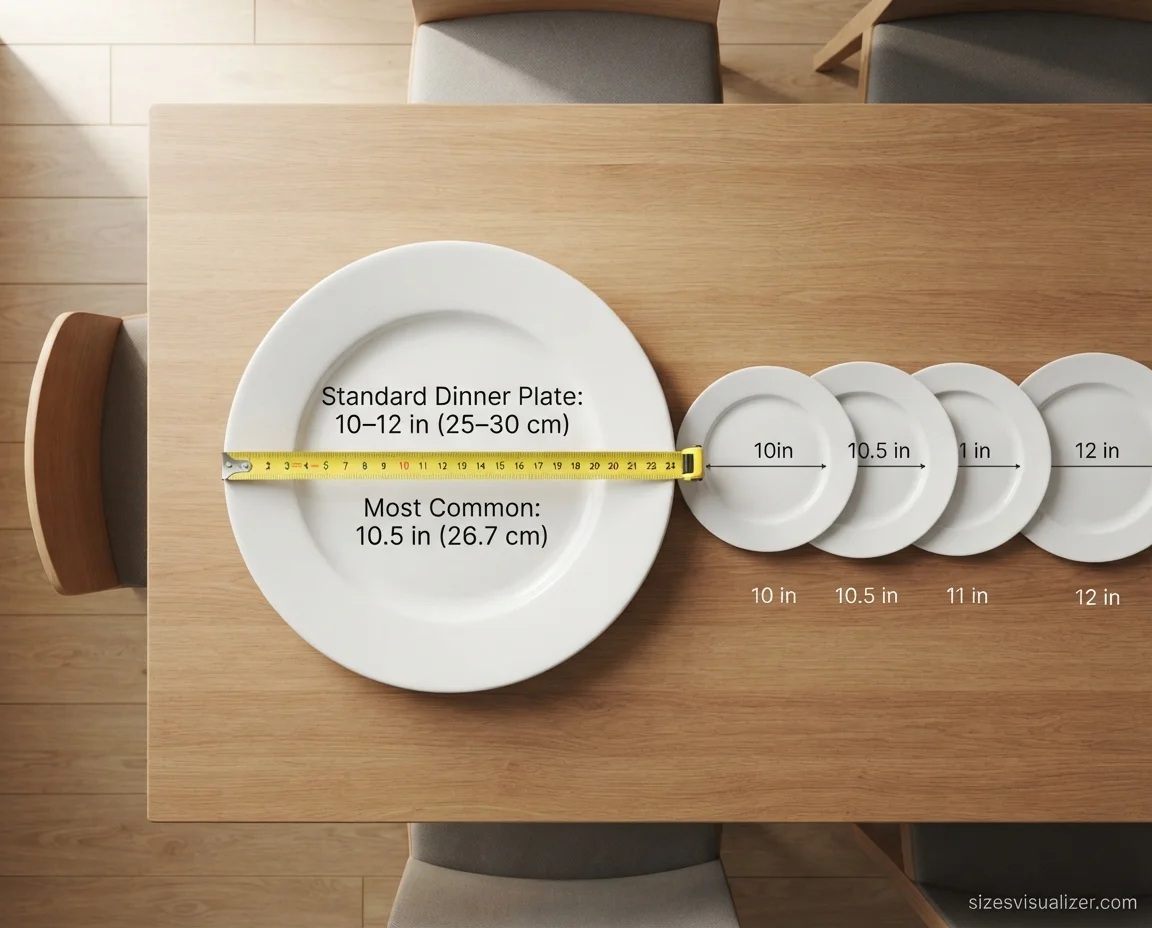
A dinner plate is the largest plate in a normal place setting, built to hold your main course. In the US, the average dinner plate size sits between 10 and 12 inches in diameter, with 10.5 inches being the most common single size on store shelves today.
Restaurants tend to run larger. Many commercial kitchens use 11-inch plates because they need room for bigger portions and more elaborate plating. Home sets, by contrast, often land closer to 10 to 10.5 inches.
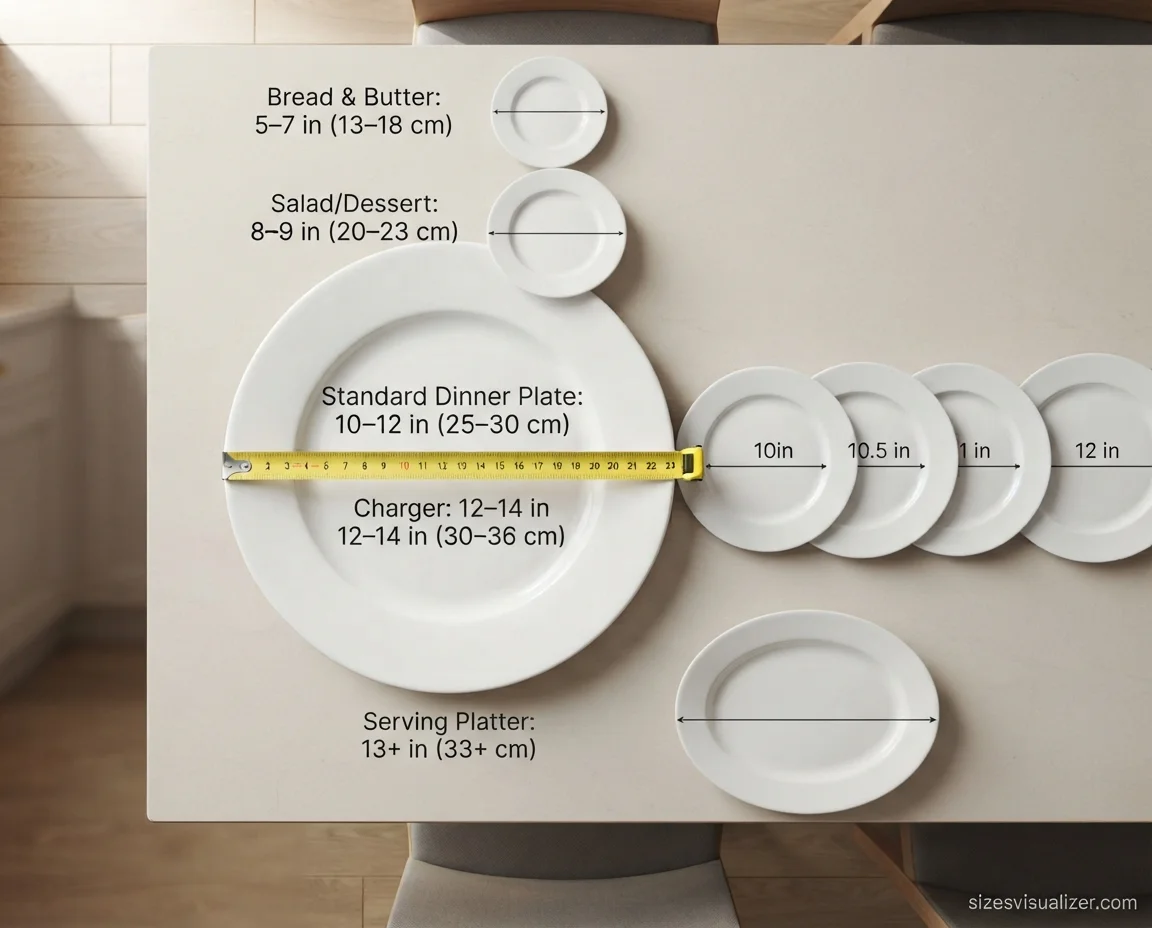
Dinner Plate Size Chart — Inches & CM
Here’s how the full range of everyday plates breaks down:
| Plate Type | Inches | Centimeters |
|---|---|---|
| Bread & butter plate | 5–7 in | 13–18 cm |
| Salad / dessert plate | 8–9 in | 20–23 cm |
| Dinner plate | 10–12 in | 25–30 cm |
| Charger plate | 12–14 in | 30–36 cm |
| Serving platter | 13 in and up | 33 cm+ |
This chart matters because plate dimensions aren’t random — each size serves a specific course or function, and mixing them up throws off both portioning and presentation.
Explore our Size Visualizer & Comparison Tool to compare dimensions visually, making measurements easier to understand, estimate, and visualize.
A Brief History — How Dinner Plate Sizes Grew Over Time
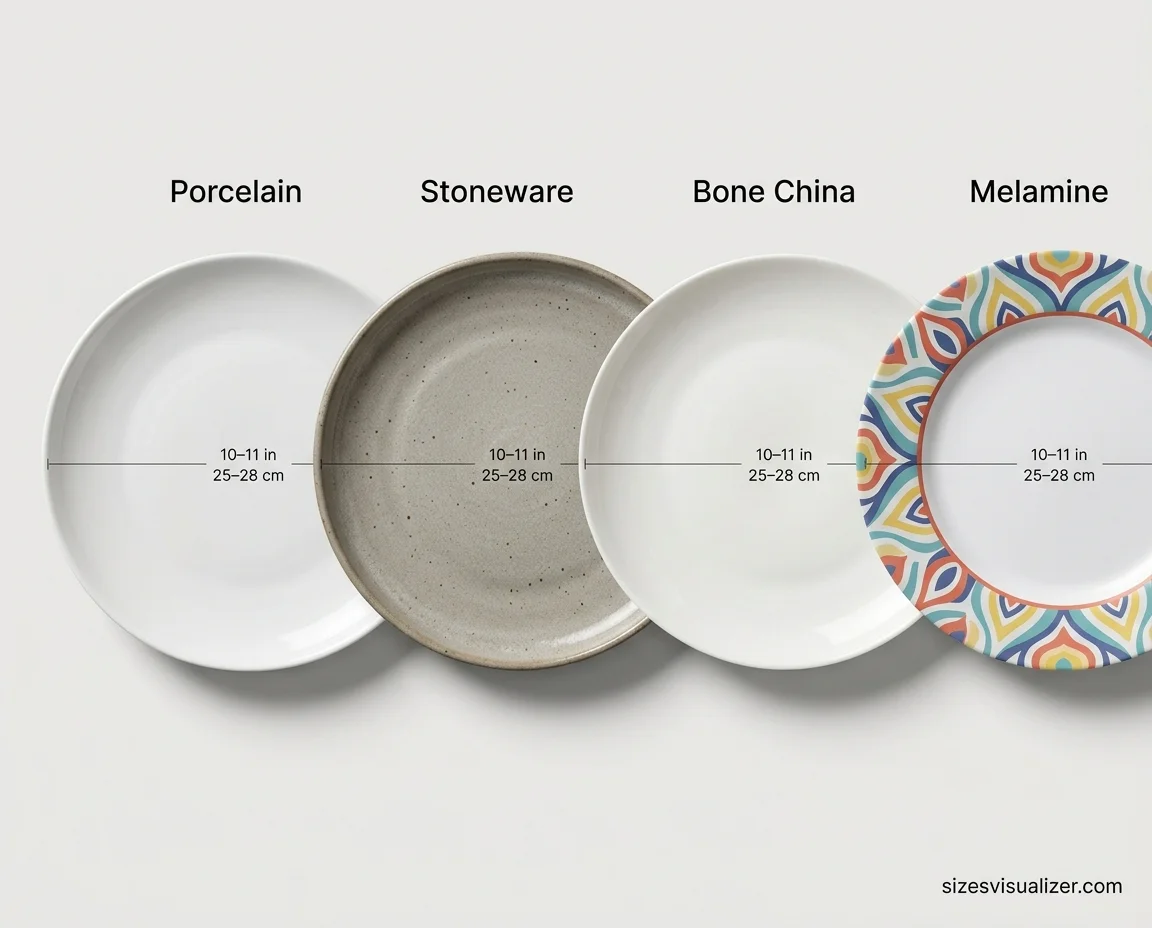
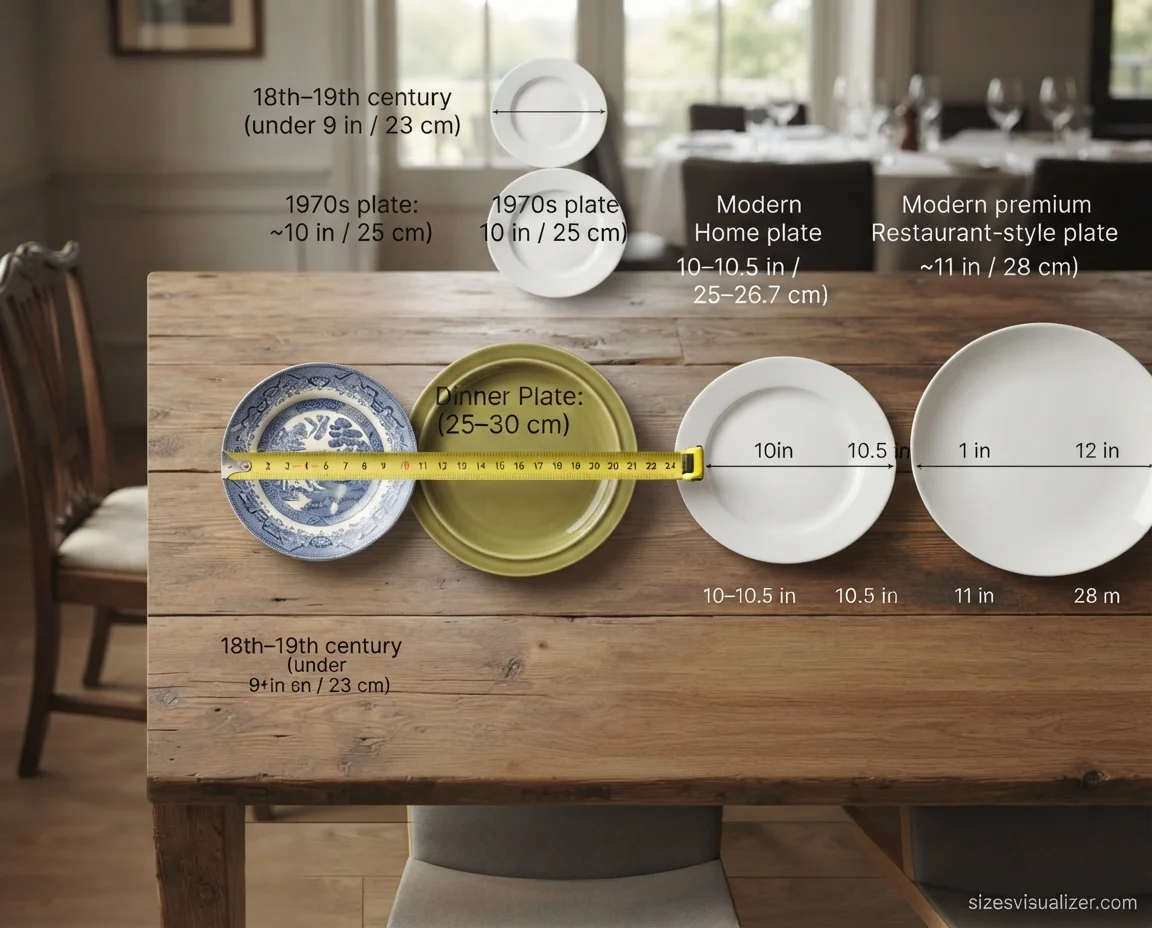
Plate sizes haven’t stayed still. Through the 18th and 19th centuries, the typical dinner plate measured under 9 inches — noticeably smaller than what we use now. As dining habits shifted through the 20th century, plates grew alongside them. By the 1970s, 10-inch plates became common in American homes. Over the last two decades, many premium dinnerware brands pushed toward 11-inch plates, largely to match restaurant-style portions and rising guest expectations.
This gradual growth reflects more than fashion — it tracks changes in portion sizes, kitchen technology, and how people entertain at home.
US vs. International Plate Sizes
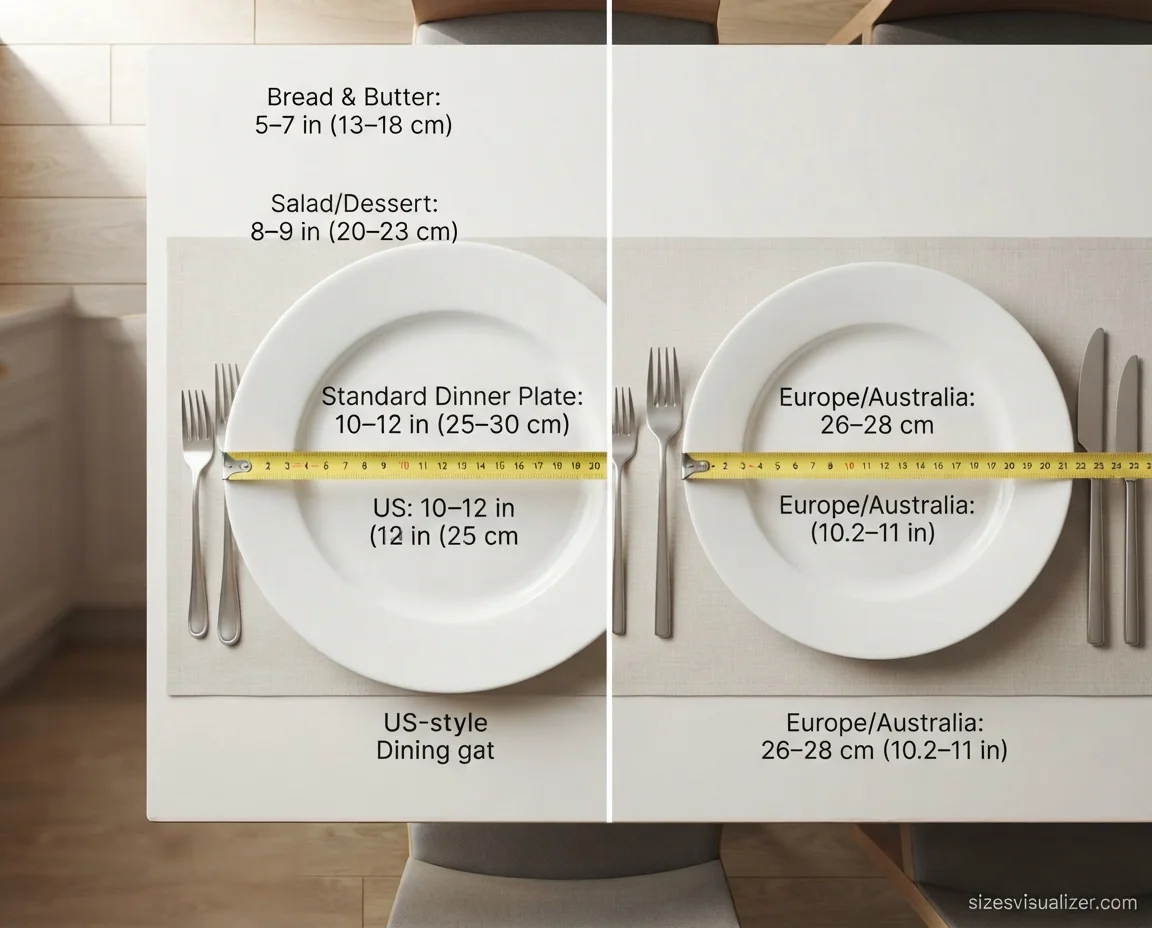
If you’ve ever bought dinnerware from a European or Australian brand, you may have noticed the sizing feels slightly off. That’s because metric-first markets — including much of Europe and Australia — typically use a 26 to 28 cm standard, which converts to roughly 10.2 to 11 inches. It’s a close overlap with the US range, but not identical, so it’s worth double-checking measurements before buying imported sets, especially if you’re trying to match an existing collection.
How to Measure a Dinner Plate the Right Way
Step-by-Step Measuring Method
Getting an accurate reading only takes a minute:
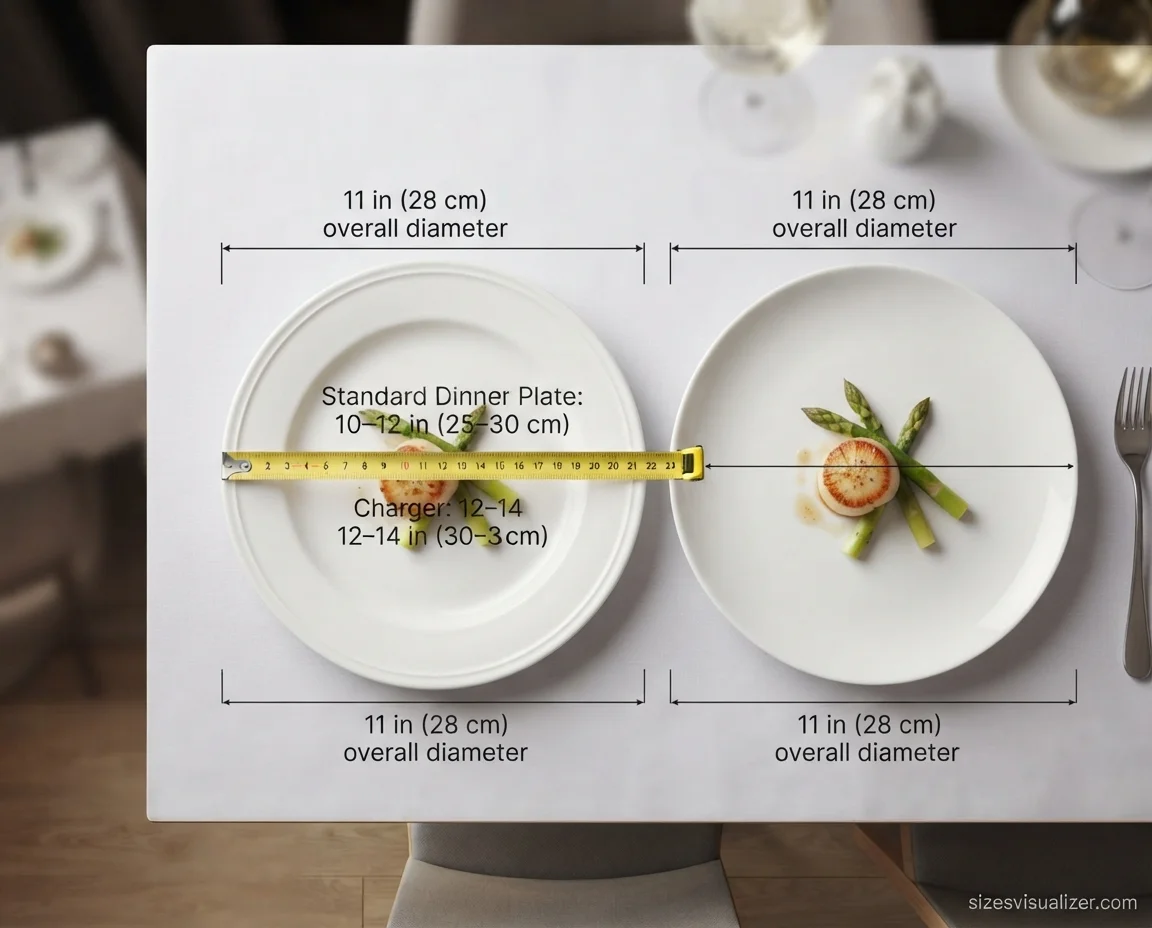
- Lay the plate flat on a table or counter.
- Place a flexible tape measure across the widest point — center to center.
- Measure straight across, including any decorative rim.
- Record the number in both inches and centimeters for easy comparison.
Check a few plates from the same set. A small variance under half an inch is normal in handmade or ceramic pieces, but anything larger usually signals a different plate size entirely.
Rim vs. Coupe Style — Why Two “11-Inch” Plates Can Feel Different Sizes
Here’s something most buying guides skip: the rim style changes how much usable space you actually get. A traditional rimmed plate has a raised border that can eat up an inch or more of eating surface. A coupe-style plate — flat, with no rim — keeps the entire diameter usable for food.
So two plates listed as the same size can feel completely different once food is on them. If you like generous plating, a coupe design often feels roomier without needing a larger physical plate.
How to Choose the Right Dinner Plate Size for You
Formal Place Setting vs. Casual Table Setting
A formal place setting typically layers plates: a charger as the base, the dinner plate on top, then a salad plate stacked above it before the meal begins, with a small bread and butter plate positioned near the forks. Each layer adds structure and visual height to the table.
Casual settings simplify this. Usually it’s just the dinner plate, with a salad plate added only if the meal calls for it — no charger required.
Matching Plate Size to Table Size & Storage Space
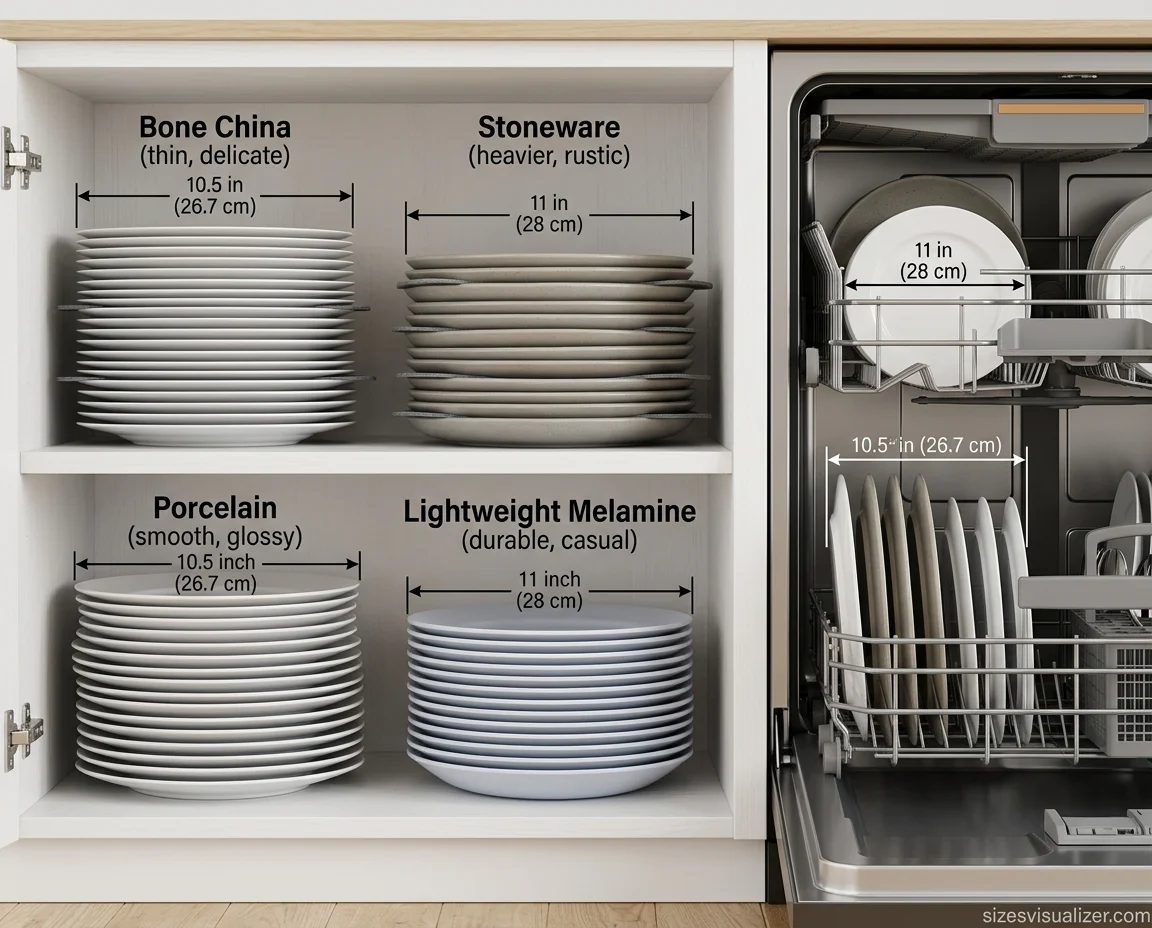
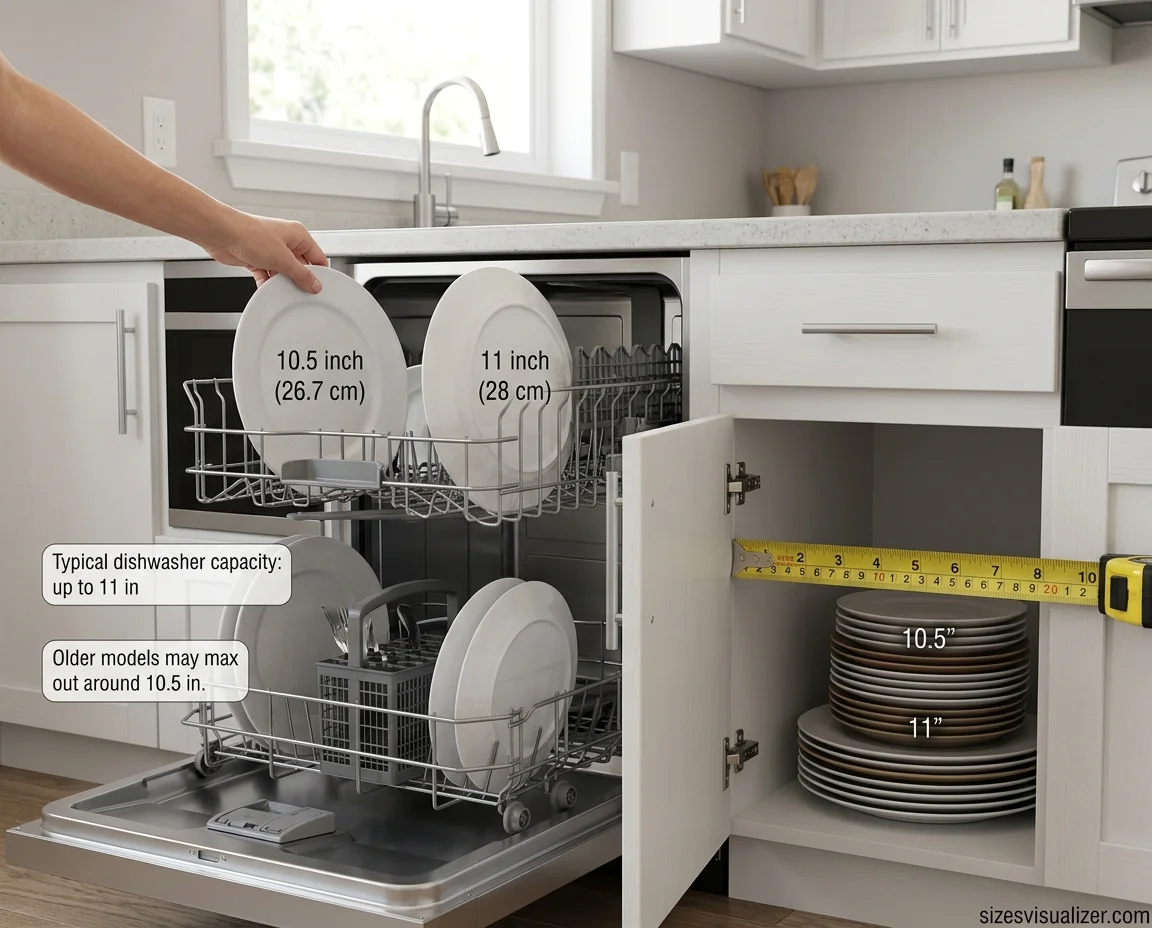
Before buying a full set, open your cabinet and dishwasher. Most standard dishwashers accommodate plates up to 11 inches, though older models may max out around 10.5 inches. Also check the depth of your cabinet shelves — plates that sit too close to the shelf edge can block doors from closing properly.
Dinner Plate Materials and Their Effect on Size, Weight & Durability
Porcelain vs. Stoneware vs. Bone China vs. Melamine
Material shapes more than looks — it affects weight, durability, and even how large a plate feels.
- Porcelain is made from kaolin, feldspar, and quartz, fired at high heat to create a hard, glossy, lightweight finish. It’s a favorite for both everyday and formal dinnerware.
- Stoneware is thicker and more rustic, with strong chip resistance, making it a durable pick for daily use.
- Bone china is prized for its delicate, translucent look and impressive strength for something so thin.
- Melamine is virtually unbreakable and lightweight, which is why it’s common for outdoor dining and households with kids.
How Material Affects Storage, Stacking & Dishwasher Fit
Heavier materials like stoneware take up more vertical space when stacked, so tall cabinets work better for banquetware-style sets. Lighter porcelain and melamine stack more efficiently and are gentler on shelves. Whatever the material, using felt or silicone separators between plates prevents scratching and chipping over time.
Must Visit: How Big Is a Burger? Average Burger Size, Patty Weight & Dimensions Guide
Plate Size, Portion Control & Sustainability
Does Plate Size Affect How Much You Eat?
This isn’t just kitchen folklore — it’s backed by research. A meta-analysis published in the Journal of Human Nutrition and Dietetics examined how plate size influences how much food people serve themselves, finding a consistent link between larger plates and higher food intake. In simple terms: bigger plates tend to make people eat more, often without realizing it.
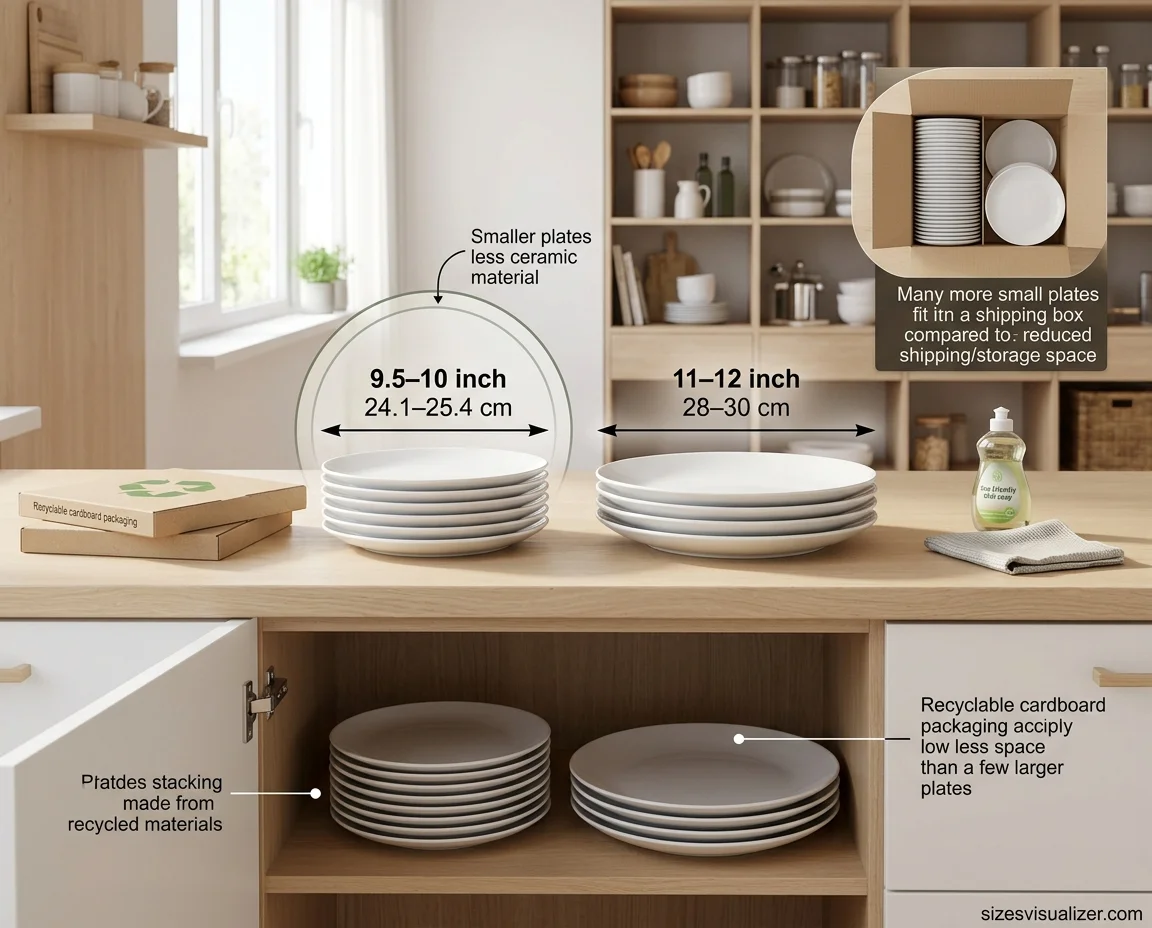
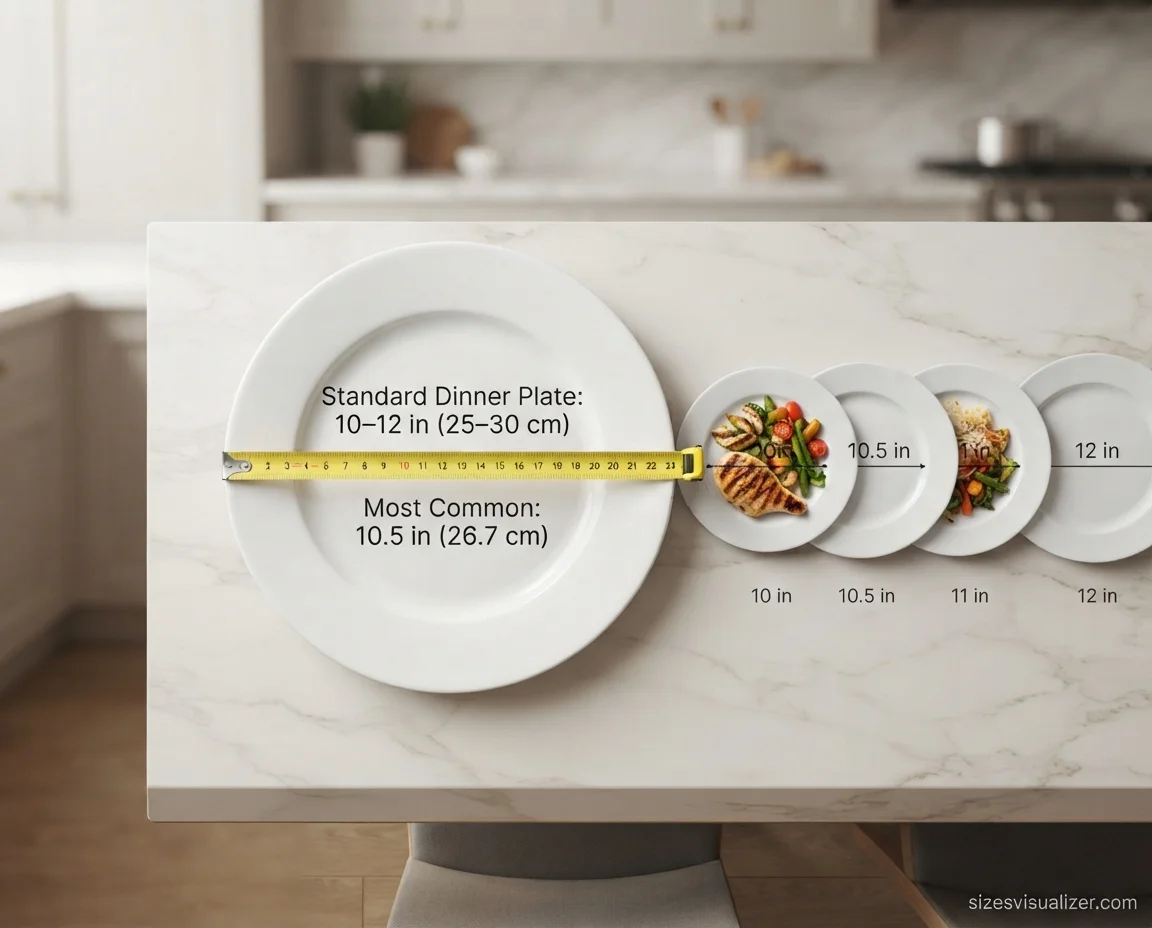
If portion control matters to you, sticking with a 9.5 to 10-inch plate can help create a natural visual cue for appropriate serving sizes, without needing to measure anything.
Smaller Plates, Smaller Footprint — Sustainable Dinnerware Choices
There’s an environmental angle here too. Smaller plates require less raw material and less energy to fire, and they weigh less during shipping. If sustainability plays into your buying decision, a modest plate diameter is a small but genuine way to reduce your footprint — without giving up quality or style.
FAQs
What is the standard size of a dinner plate in the US?
The standard dinner plate size in the US is 10 to 12 inches in diameter, with 10.5 inches being the most common size found in home dinnerware sets.
What is the typical size of a dinner plate?
Most dinner plates typically measure around 10 to 10.5 inches, though restaurant and formal sets often use 11-inch plates for larger portions and more generous plating.
Is 8 inches too small for a dinner plate?
Yes — an 8-inch plate is generally too small to be called a dinner plate. That size falls into the salad or dessert plate category, better suited for appetizers, sides, or light meals.
Is a 7 inch plate a dinner plate?
No. A 7-inch plate is closer to a bread and butter plate, which typically ranges from 5 to 7 inches and is meant for small items like rolls or condiments, not full meals.
Are 7 inch plates too small?
For a main course, yes. 7-inch plates work well for appetizers, desserts, or bread service, but they’re too small to comfortably hold a full dinner portion.
What is a 9 inch plate used for?
A 9-inch plate sits right between salad and dinner sizing. It’s commonly used for lunch, brunch, salads, or lighter entrées, and it’s also a popular choice for anyone practicing intentional portion control.
Conclusion
Dinner plate sizes aren’t just a matter of preference — they reflect history, dining habits, and even health research. Whether you’re outfitting a new kitchen or replacing a broken set, matching the right diameter, material, and style to your lifestyle makes every meal easier to serve and enjoy.

Measurement Researcher, Size Comparison Writer & Content Specialist
Timmy Ahad is a dedicated content writer and research specialist at SizesVisualizer.com, where he focuses on creating accurate, easy-to-understand content about measurements, dimensions, size comparisons, and real-world object visualization.