Human hair looks thin to the naked eye. But under a microscope, it tells a different story.
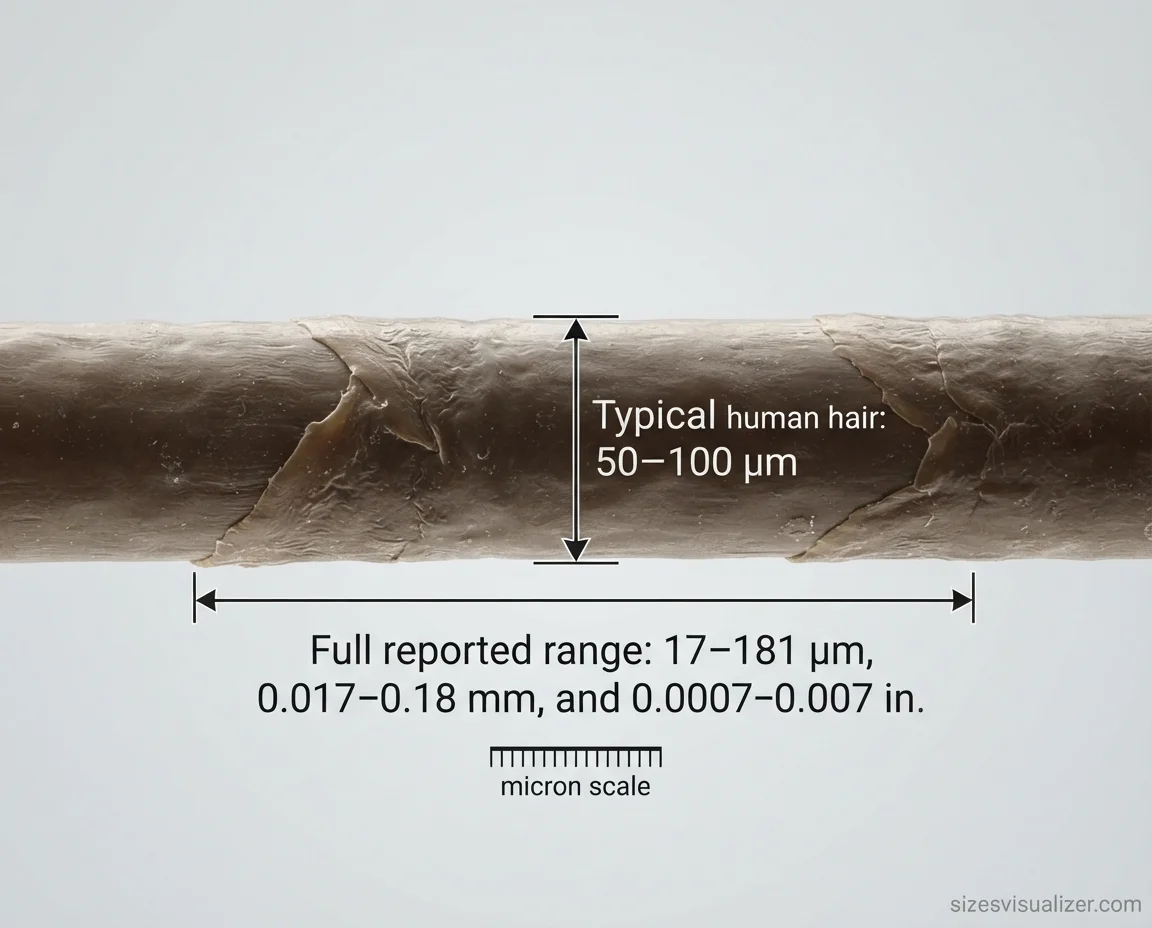
The average human hair thickness ranges from 17 to 181 microns, depending on genetics, ethnicity, and hair type. That’s thinner than a sheet of paper, yet thick enough to block out microscopic pollution particles. This guide breaks down exactly how thick human hair is in microns, millimeters, and inches — with real data, real comparisons, and the world’s thickest hair strand on record.
Table of Contents
How Thick Is Human Hair? The Quick Answer
The short answer: human hair thickness typically falls between 50 and 100 microns (μm). A micron, also called a micrometer, is one-millionth of a meter. According to data compiled by Harvard’s BioNumbers database, the full range of human hair diameter stretches from 17 to 181 microns, citing research from the Physics Factbook.
Average Human Hair Thickness in Microns
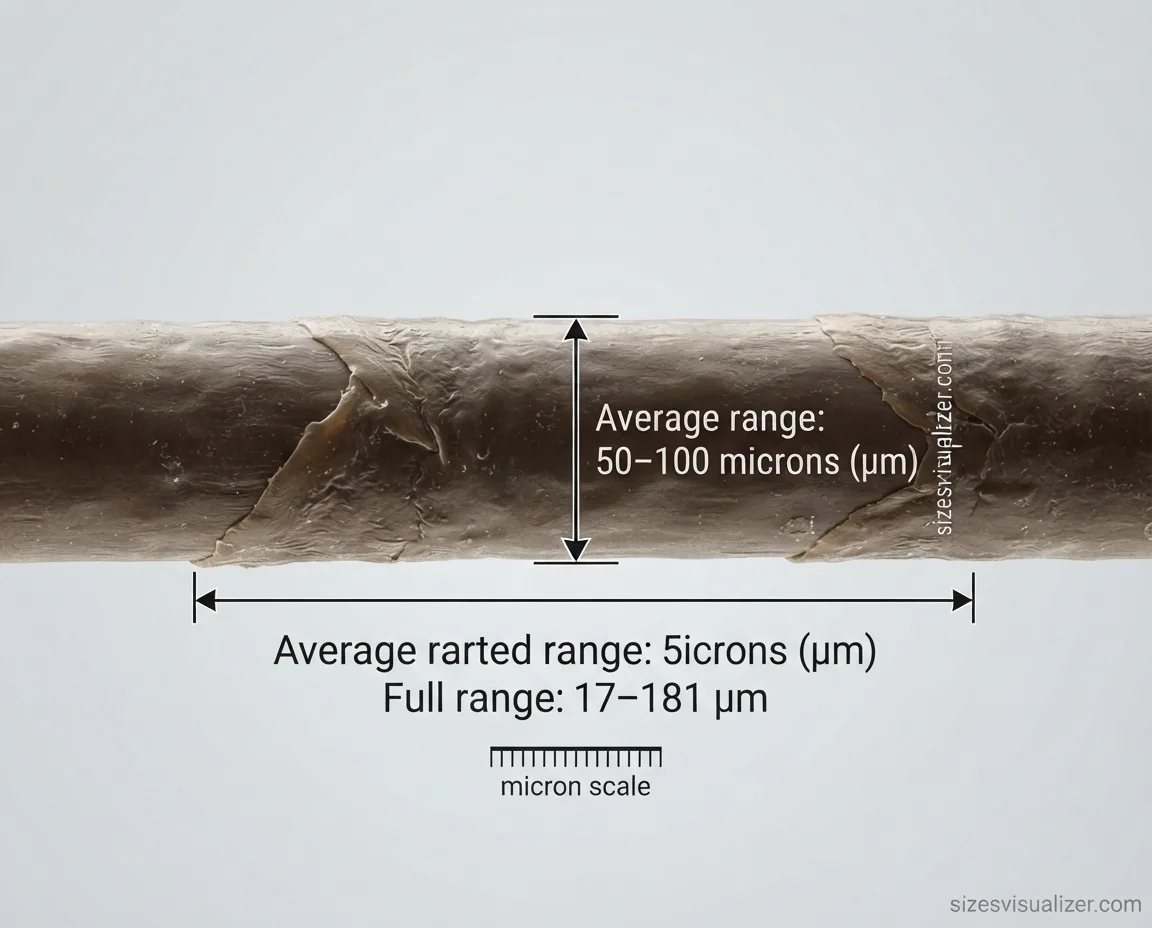
Most healthy scalp hair sits in the 50 to 100 micron range. Fine hair often measures below 50 microns. Coarse hair can push past 100 microns. Your hair diameter depends heavily on the size of your hair follicle — bigger follicle, thicker strand.
Average Human Hair Thickness in MM and Inches
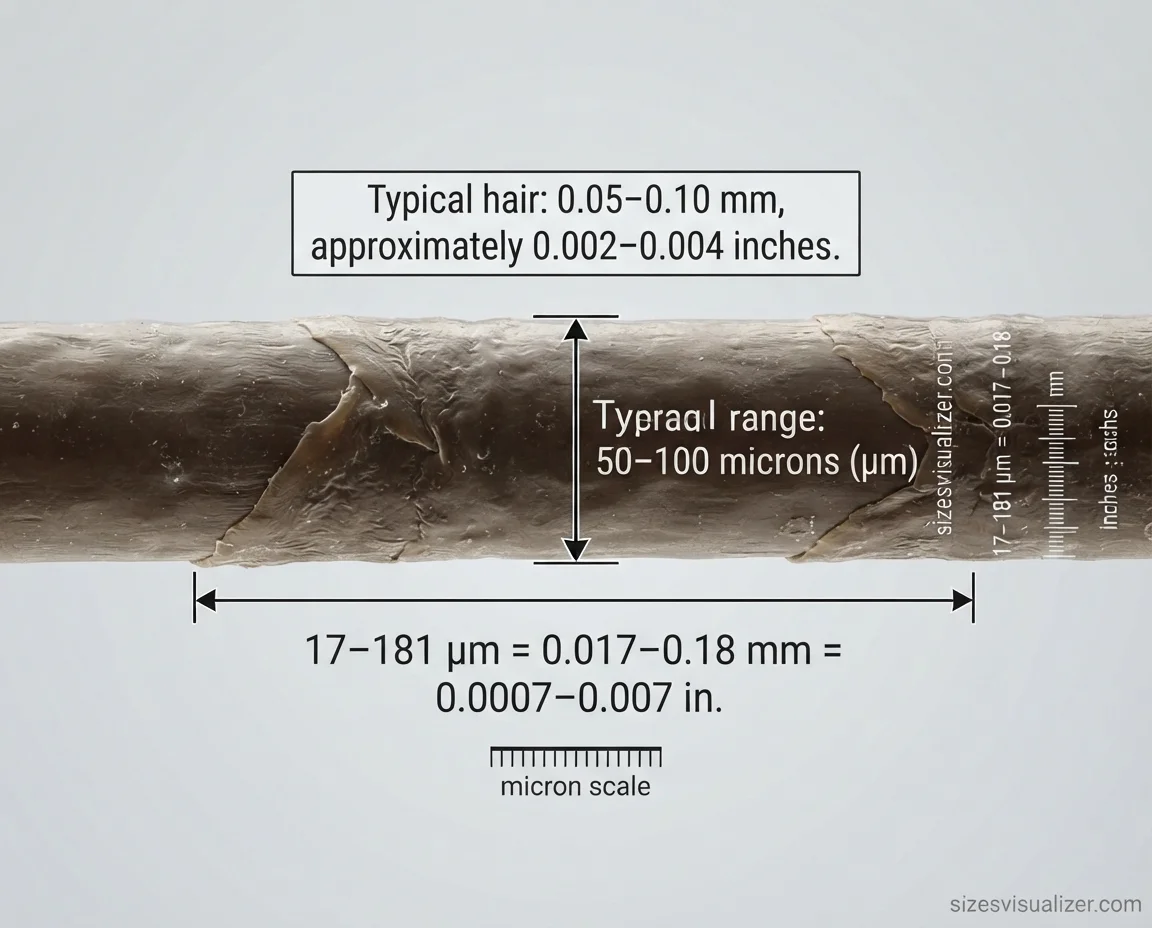
In millimeters, that same range converts to roughly 0.017mm to 0.18mm. In inches, it’s about 0.0007 to 0.007 inches. These numbers seem tiny, but they matter in fields like forensics, textile engineering, and cosmetic science, where precision hair measurement is routine.
Our Length Measurement Tool makes it easy to determine accurate object lengths and compare measurements across different units.
Human Hair Thickness in Microns, MM & Inches — Full Conversion
Converting between units helps put hair diameter into perspective, especially if you’re comparing lab data to everyday measurements.
Microns to Millimeters to Inches Conversion Table
| Hair Type | Microns (μm) | Millimeters (mm) | Inches |
|---|---|---|---|
| Fine hair | Under 50 μm | Under 0.05mm | Under 0.002 in |
| Medium hair | 50–90 μm | 0.05–0.09mm | 0.002–0.0035 in |
| Coarse hair | 90–181 μm | 0.09–0.18mm | 0.0035–0.007 in |
Fine, Medium & Coarse Hair Thickness Explained
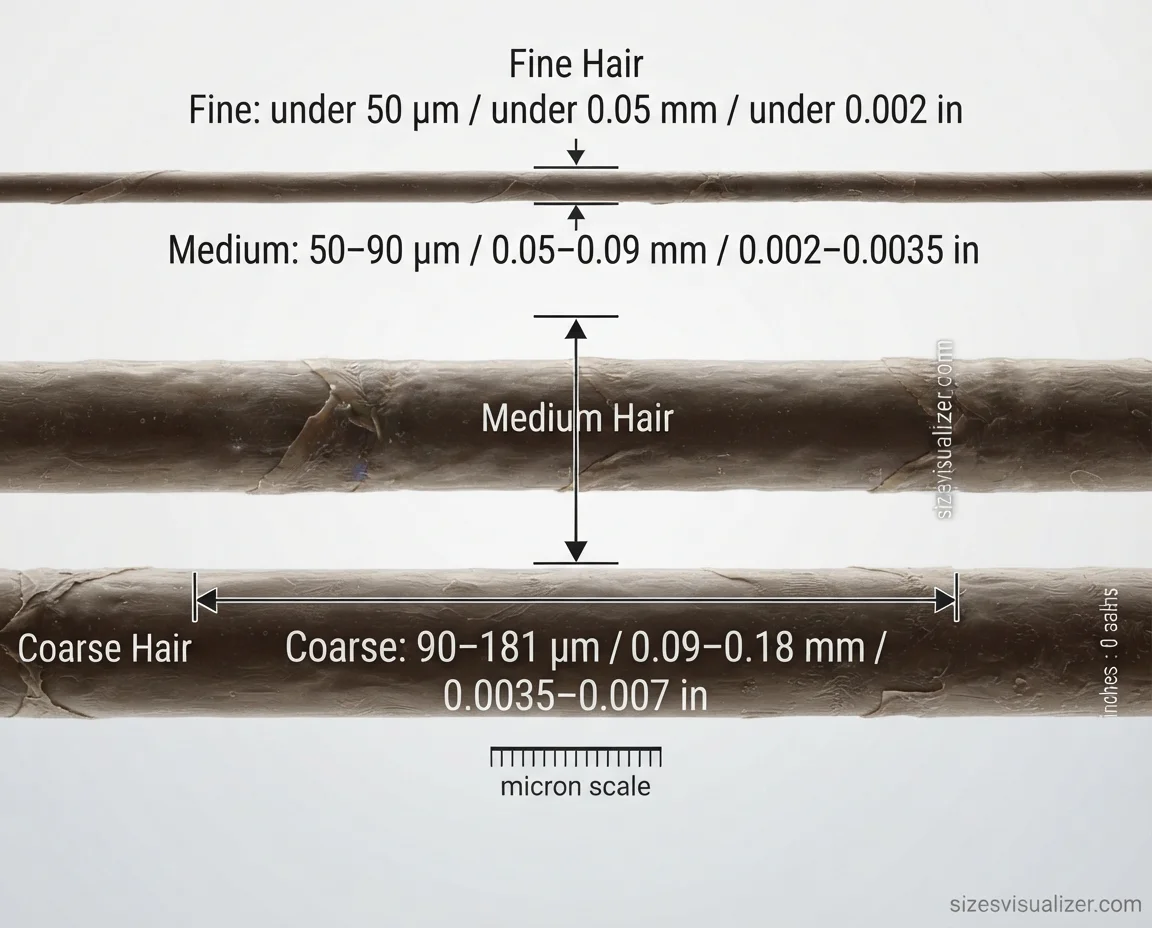
Hair thickness isn’t just a cosmetic label — it’s a measurable trait. Fine hair has a smaller cross-section and tends to feel silky but limp. Medium hair is the most common category worldwide. Coarse hair has a wider shaft, which makes it feel firmer and more resistant to styling. Knowing your category helps you pick the right shampoo, conditioner, or heat tool, since fine and coarse strands react differently to product weight and heat exposure.
How Hair Thickness Is Measured
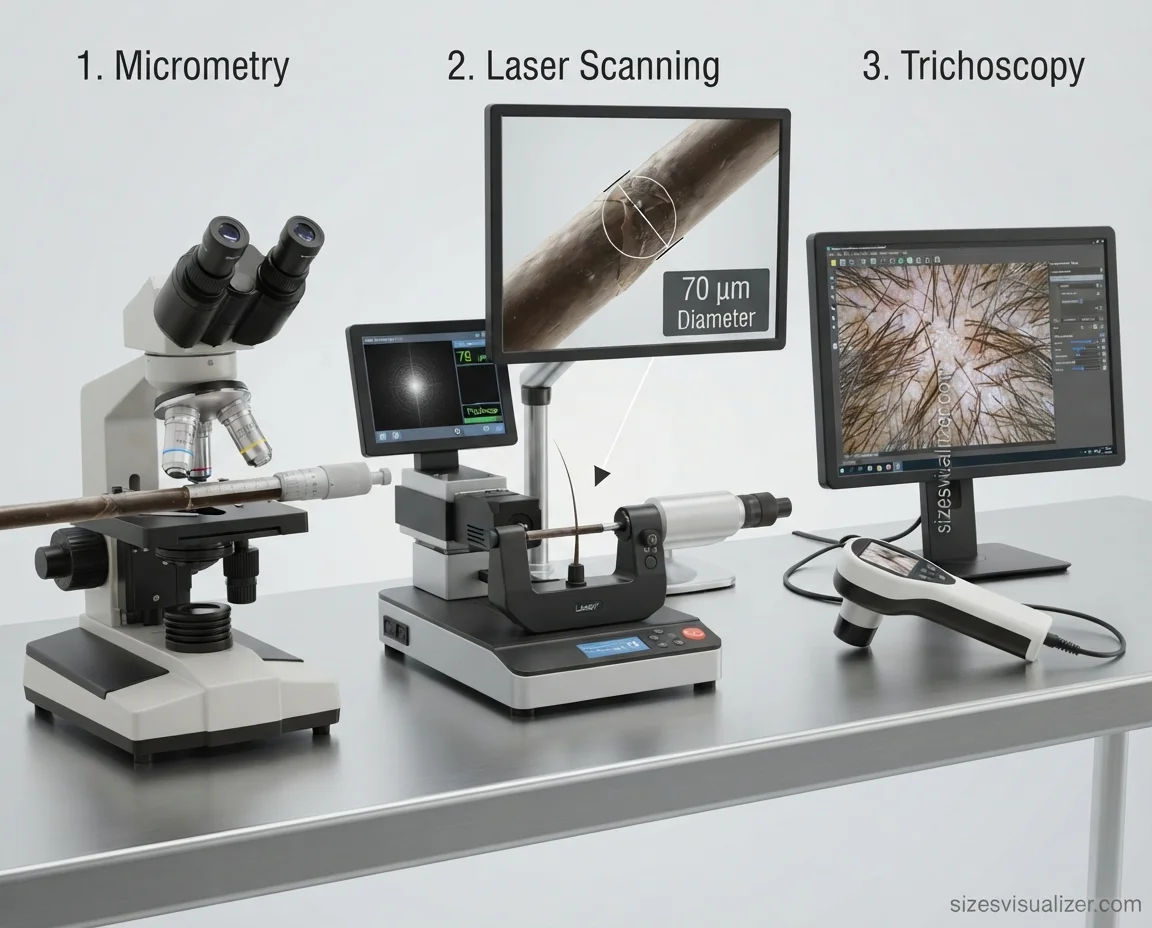
Scientists measure hair shaft diameter using a few reliable methods:
- Micrometry — a microscope with a calibrated scale measures the strand directly.
- Laser scanning — a non-contact method that scans the hair’s cross-section for a precise reading.
- Trichoscopy — a handheld device dermatologists use to check hair and scalp health without pulling a sample.
Each method gives a slightly different number, which is why published ranges (like 17–181 microns) are so wide.
What Makes Hair Thicker or Thinner
Hair diameter isn’t random. It’s shaped by biology, and it can shift over a lifetime.
Genetics and Follicle Size
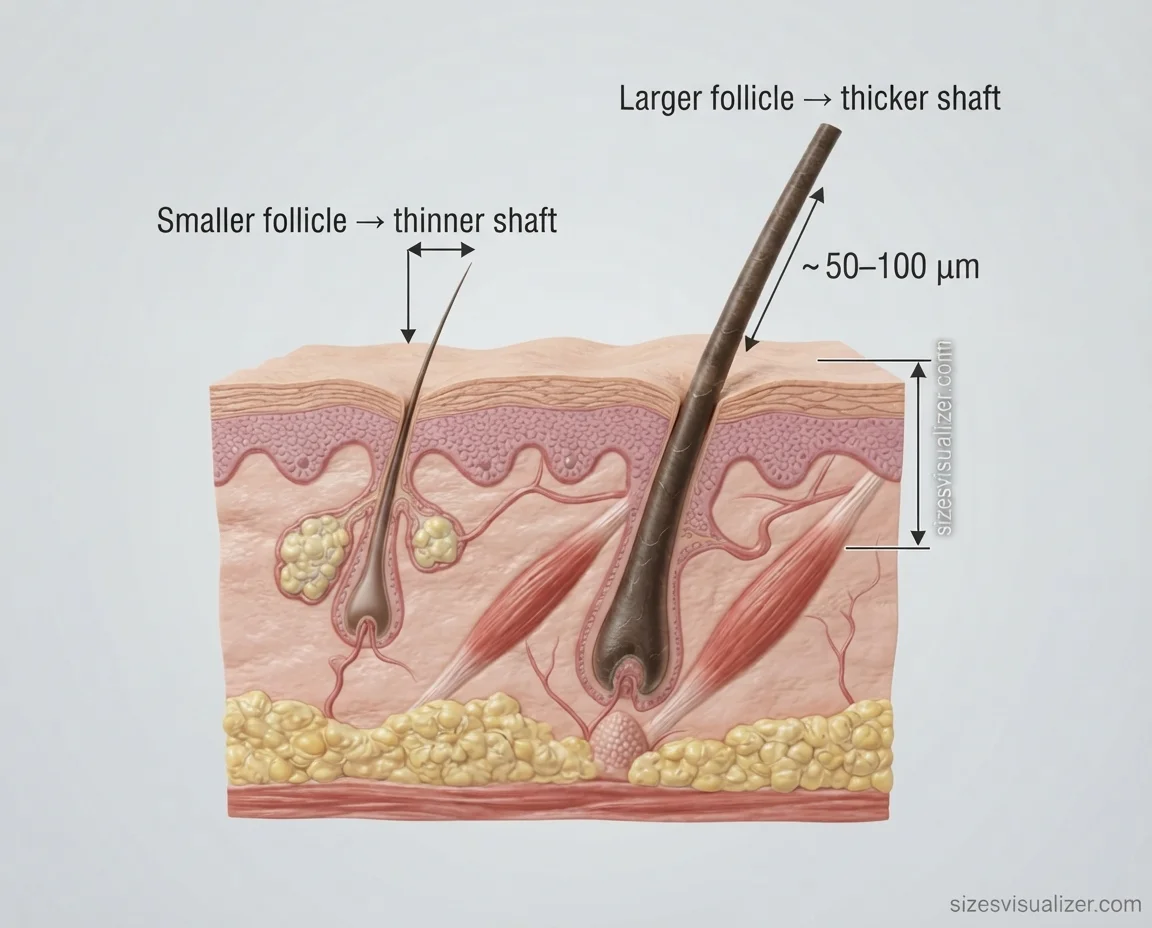
Your hair follicle — the tiny sac in your skin that grows each strand — sets your baseline thickness. A larger follicle pushes out a thicker shaft. This is inherited, meaning hair thickness runs in families much like eye color or height.
Ethnicity and Hair Thickness
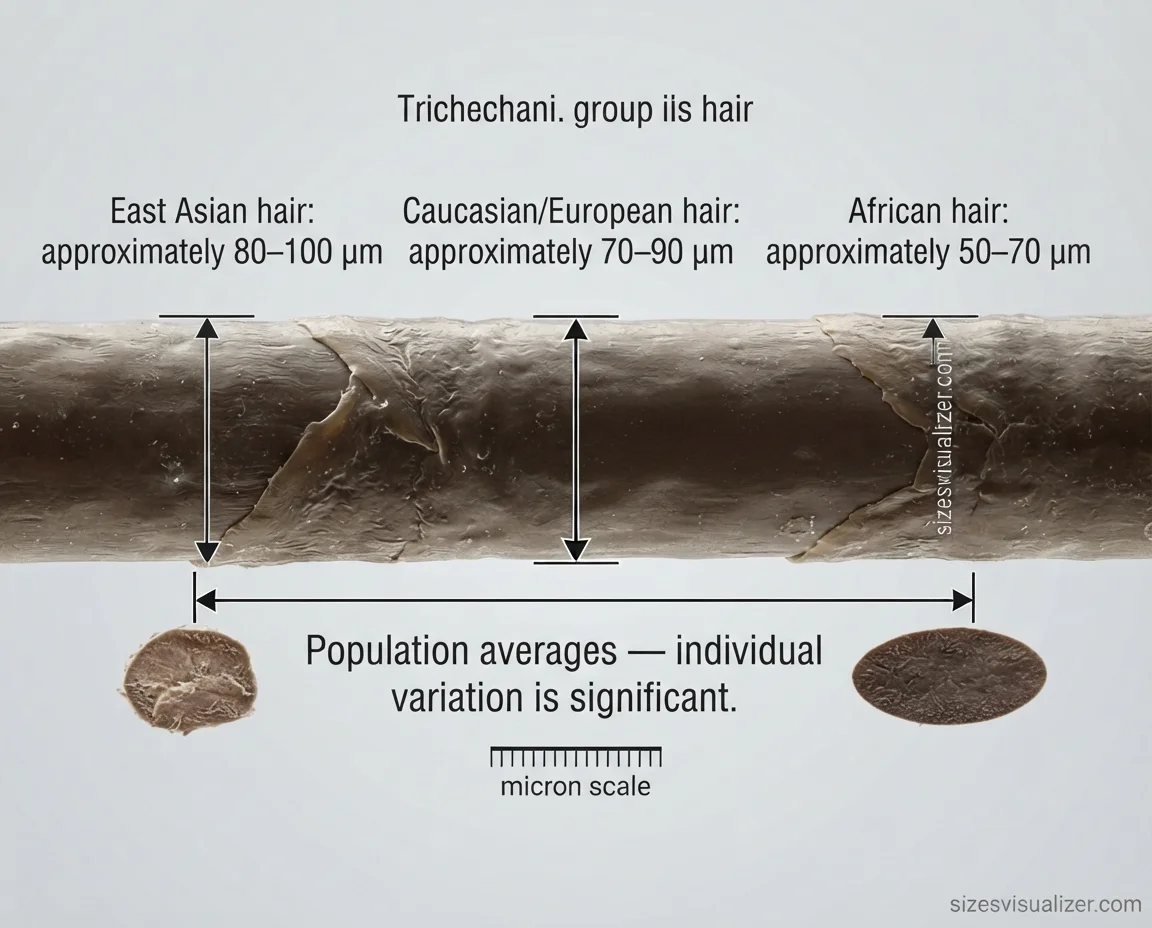
Population studies show clear patterns. Hair of East Asian descent tends to be the thickest, often averaging 80–100 microns. Caucasian hair typically measures 70–90 microns. African hair tends to be finer in diameter, generally in the 50–70 micron range, though it often has a flatter, more elliptical cross-section that affects curl pattern. These are population averages, not fixed rules — individual variation is significant.
Age, Hormones, and Health
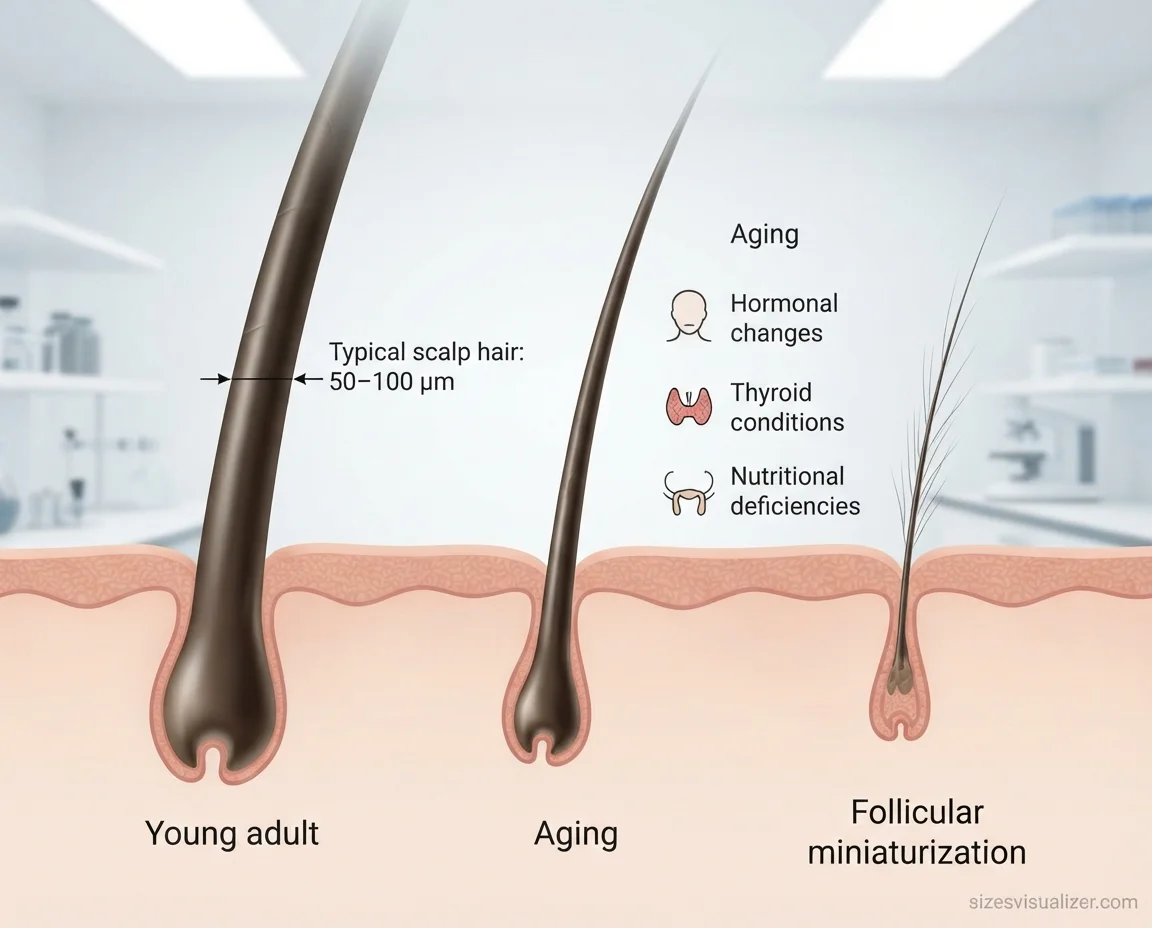
Hair follicles shrink over time, a natural part of aging called follicular miniaturization. This is why hair often feels finer later in life. Hormonal shifts, thyroid conditions, and nutrient deficiencies like low iron can also thin the hair shaft, regardless of your genetic starting point.
How Thick Is Human Hair Compared to Everyday Things?
Numbers like “70 microns” are hard to picture. Comparisons make them click.
Human Hair vs PM2.5 and PM10 Air Particles
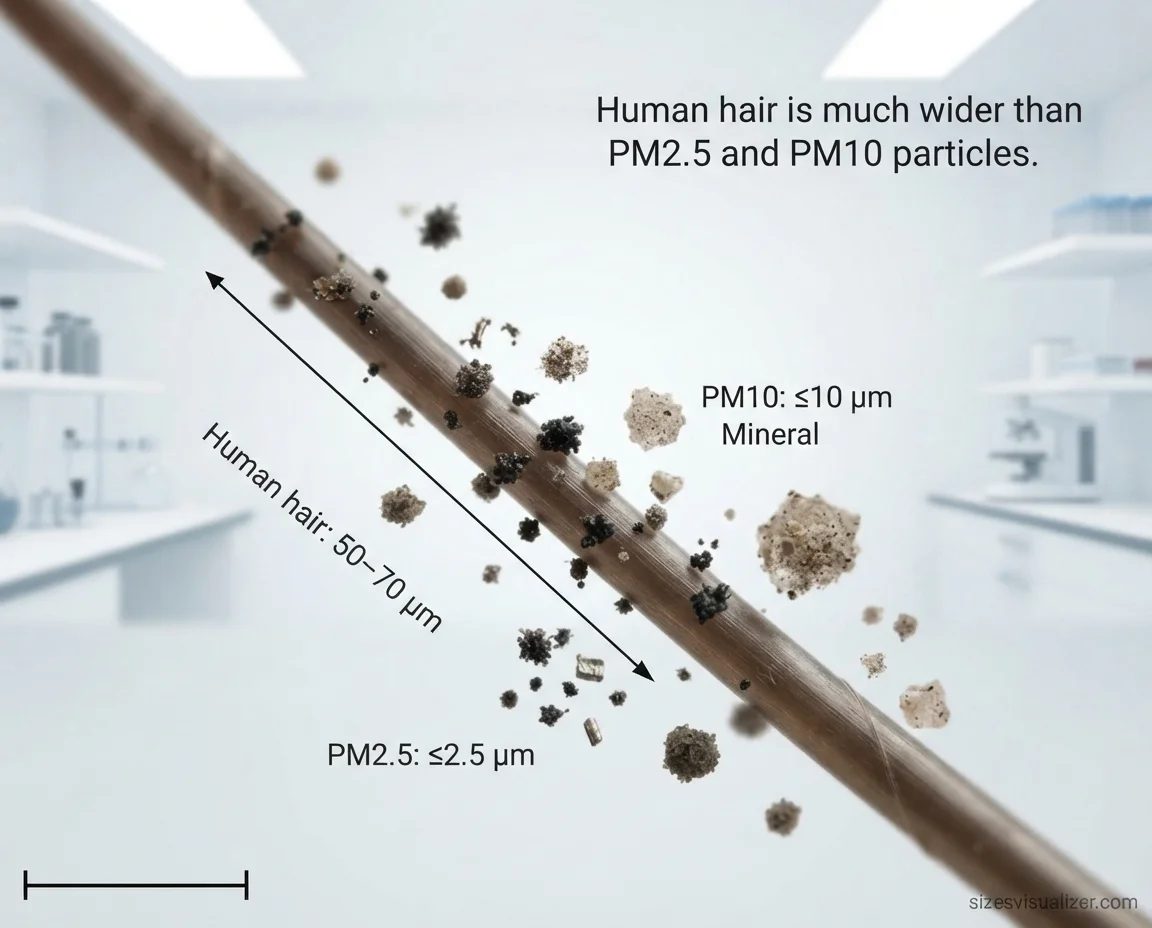
Air quality science uses human hair as a visual benchmark. According to the Arctic Monitoring and Assessment Programme (AMAP), human hair measures 50 to 70 microns in diameter, while PM2.5 particles — combustion soot, organic compounds, and metals — are under 2.5 microns. PM10 particles, like dust, pollen, and mold, stay under 10 microns. That means dozens of PM2.5 particles could line up across the width of a single hair. It’s a striking way to grasp just how small dangerous air pollution really is.
Human Hair vs a Nanometer-Scale Transistor
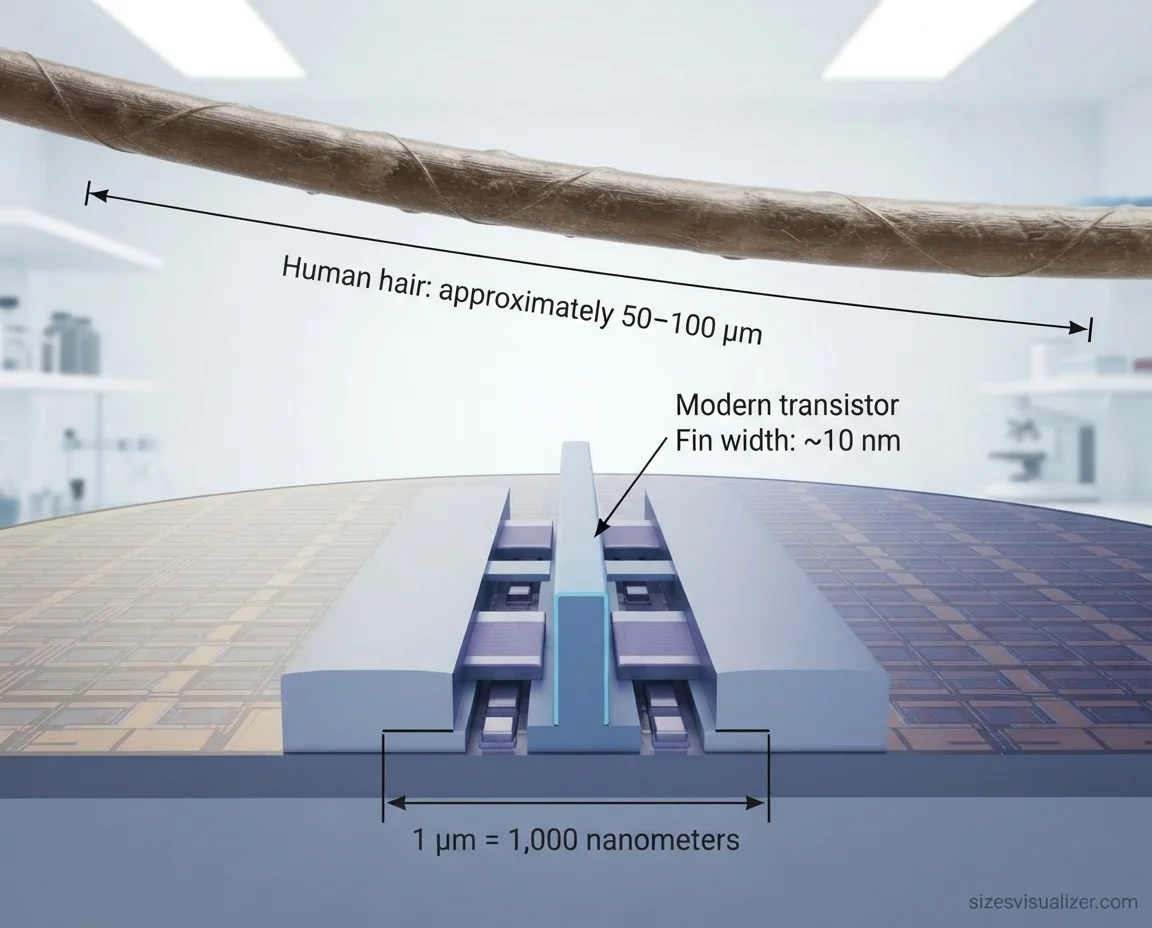
In manufacturing and semiconductor fabrication, a strand of hair is enormous. Modern transistors are measured in nanometers — one nanometer is one-thousandth of a micron. Thousands of transistors could fit across the width of one human hair. That’s why clean rooms in chip factories require full head coverings: a single stray hair can ruin a silicon wafer during production.
Human Hair vs Pubic Hair and Body Hair
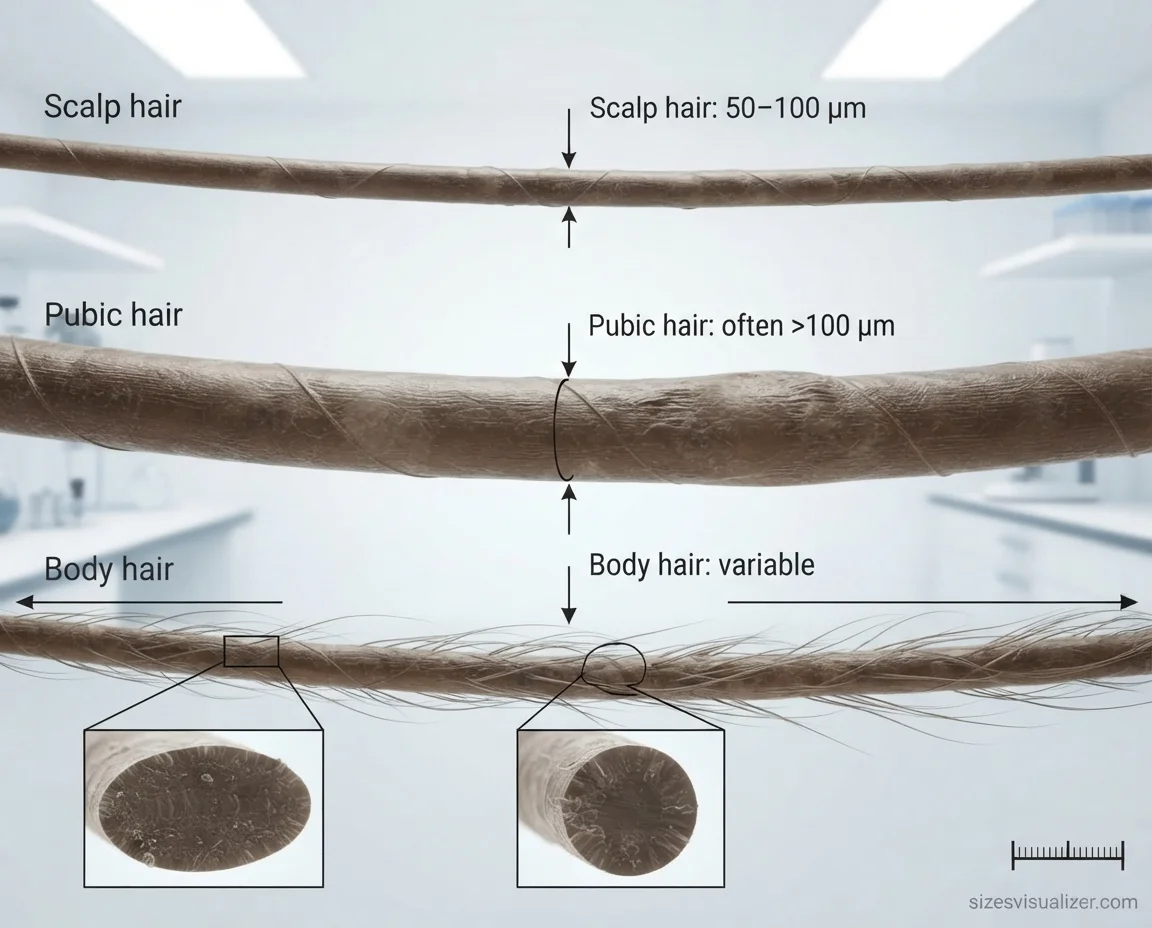
Pubic hair is generally coarser and thicker than scalp hair, often exceeding 100 microns in diameter. It also has a different growth cycle and curl structure, shaped by androgen hormones during puberty. Body hair elsewhere — like eyebrows or arm hair — varies just as widely, but pubic hair consistently ranks among the thicker hair types on the human body.
Must Visit: How Big Is a 32-Inch TV? Dimensions, Width, Height & CM Guide
The Thickest Human Hair Ever Recorded
Some hair strands break every expectation of what “thin” means.
Muhammad Umair Khan’s 772-Micron Record Strand
The thickest human hair ever verified belongs to Muhammad Umair Khan of Lahore, Pakistan. According to Guinness World Records, his strand measured 772 micrometers (0.03 inches), verified on 3 March 2021. It wasn’t scalp hair — it was plucked from his beard. That’s roughly ten times thicker than average scalp hair, making it an extreme outlier rather than the norm.
What 100% Human Hair Is Made Of
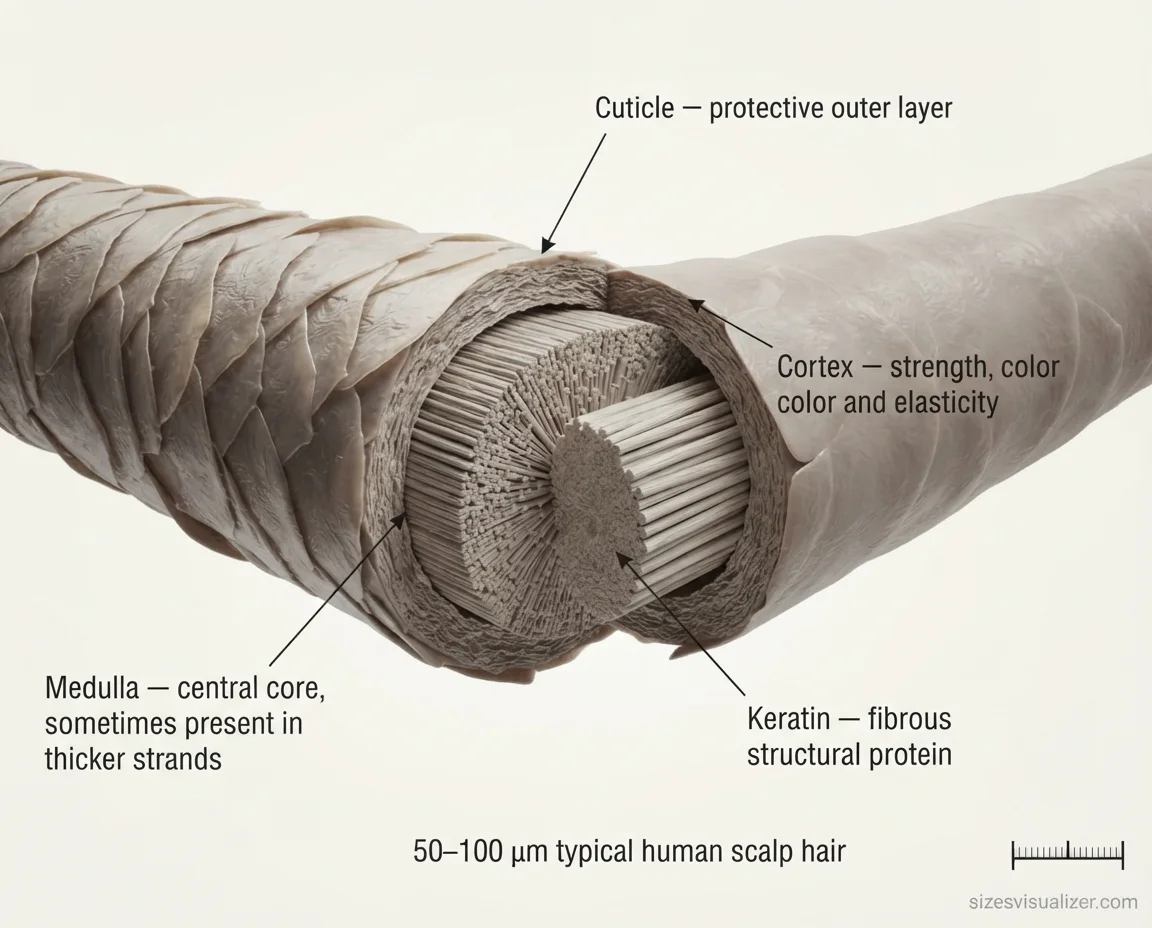
Every human hair, thin or record-breaking, is built the same way. Hair is made almost entirely of keratin, a tough structural protein also found in nails and skin’s outer layer. Each strand has three layers: the cuticle (protective outer layer), the cortex (which gives hair its strength, color, and elasticity), and sometimes a medulla at the core in thicker strands. Coarser hair, like Khan’s record strand, usually has a fuller medulla and cortex, which explains the extra diameter.
FAQs
How thick is human hair?
Human hair typically measures between 17 and 181 microns in diameter, with most people falling in the 50 to 100 micron range depending on genetics and ethnicity.
What is 100% human hair made of?
Human hair is made almost entirely of keratin, a fibrous structural protein, arranged into a cuticle, cortex, and sometimes a medulla layer.
How thick is a human hair?
On average, a single strand is about 0.07 millimeters or roughly 0.0027 inches thick — thinner than a sheet of standard printer paper.
What is the thickest human hair possible?
The record for the thickest verified strand is 772 microns, set by Muhammad Umair Khan of Pakistan and confirmed by Guinness World Records in 2021.
How thick is a pubic hair?
Pubic hair is generally coarser than scalp hair, often measuring over 100 microns in diameter due to its different growth cycle and hormonal influence.
Which organ is connected to hair?
Hair grows from the hair follicle, a structure rooted in the skin, which is the organ responsible for producing and anchoring every strand.
Conclusion
Human hair may look simple, but its thickness tells a detailed biological story — shaped by genetics, ethnicity, age, and health. From an average of 50 to 100 microns to a world-record 772-micron strand, hair diameter spans a wider range than most people realize. Whether you’re comparing it to air pollution particles or a computer chip’s transistors, one thing is clear: even the smallest measurements on your body carry real scientific weight.

Measurement Researcher, Size Comparison Writer & Content Specialist
Timmy Ahad is a dedicated content writer and research specialist at SizesVisualizer.com, where he focuses on creating accurate, easy-to-understand content about measurements, dimensions, size comparisons, and real-world object visualization.