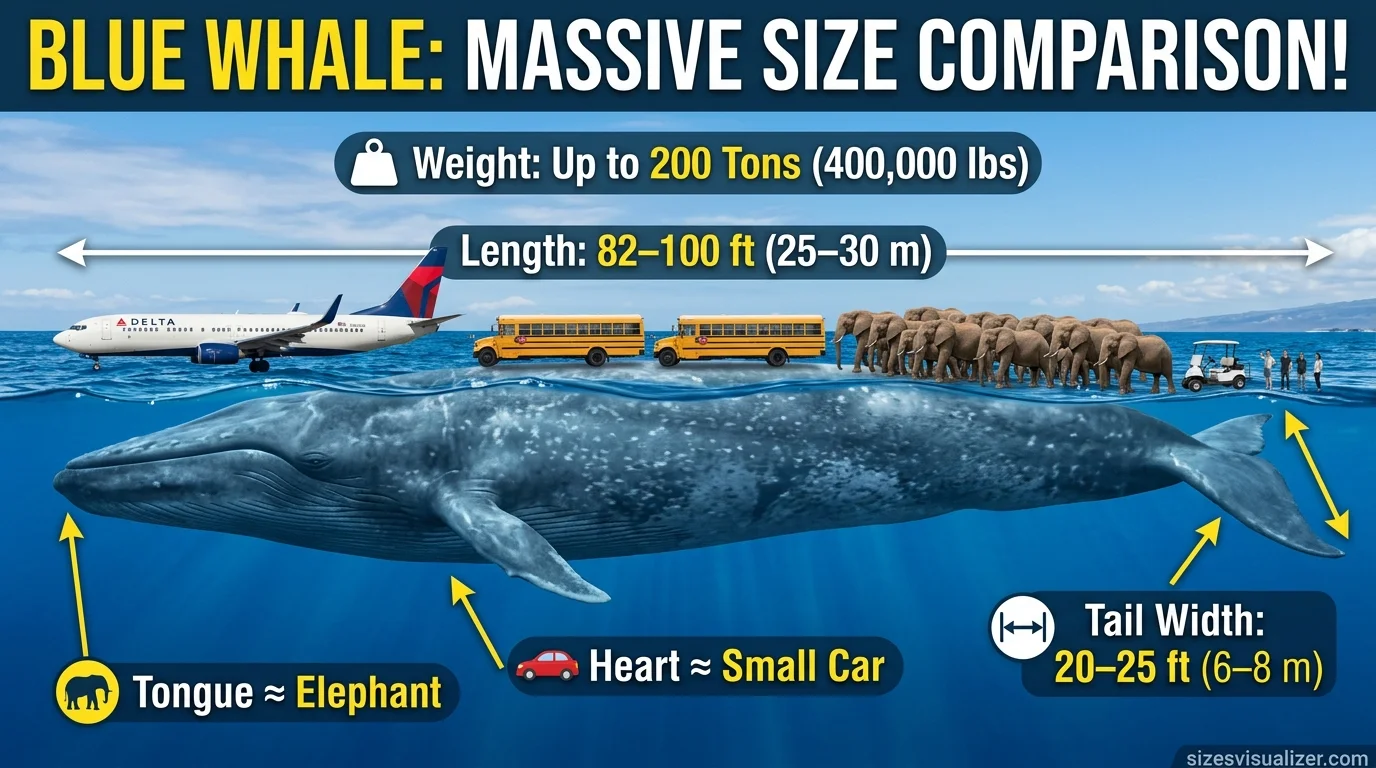
Blue whales hold a record no other animal has ever beaten. They are the largest animal to ever live on Earth — bigger than any dinosaur that ever walked the planet.
But numbers like “100 feet” or “200 tons” are hard to picture. This guide breaks down a blue whale size piece by piece, using real-world comparisons, so you can finally understand just how massive these ocean giants really are.
How Big Is a Blue Whale? Length & Weight at a Glance
A full-grown blue whale is longer than most buildings are tall, and heavier than a small army of elephants combined. Here’s what the numbers actually look like.
Blue Whale Length — Up to 100 Feet Explained
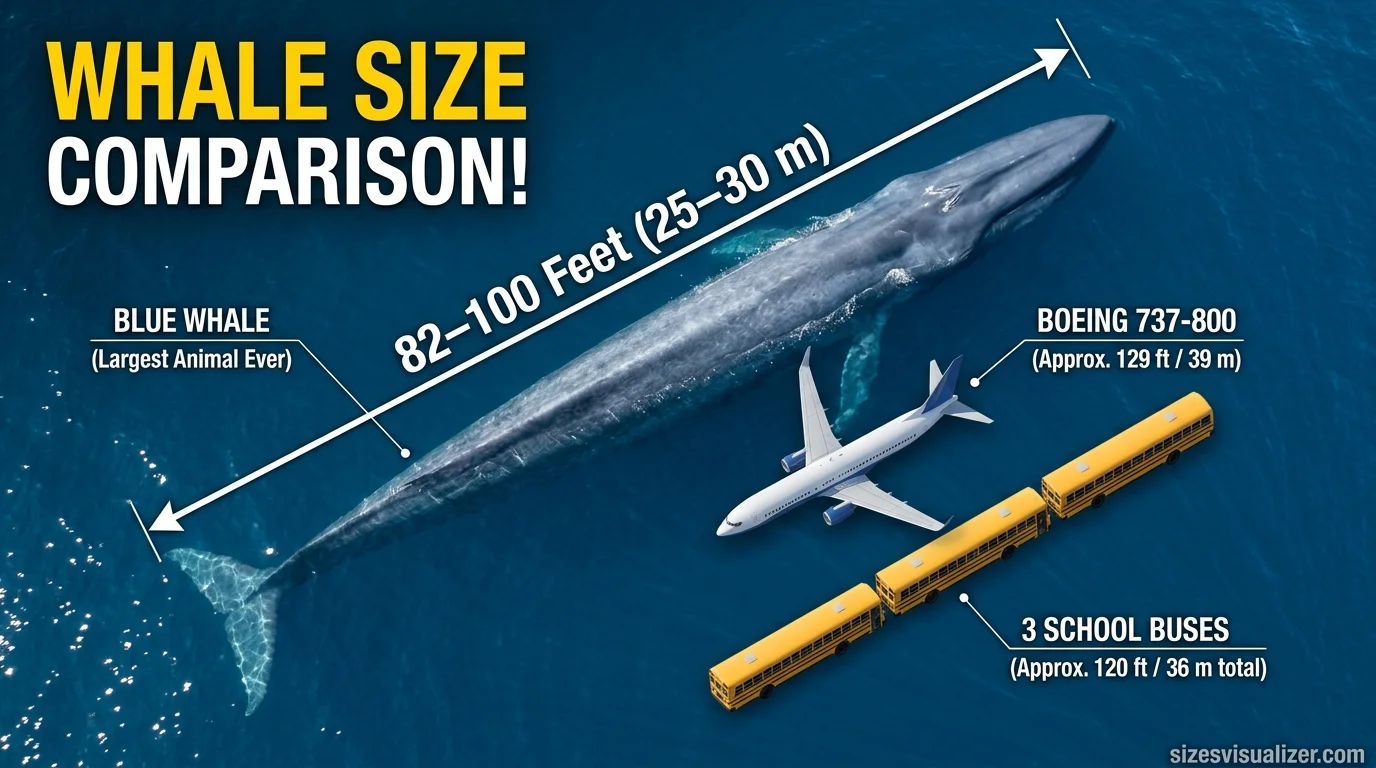
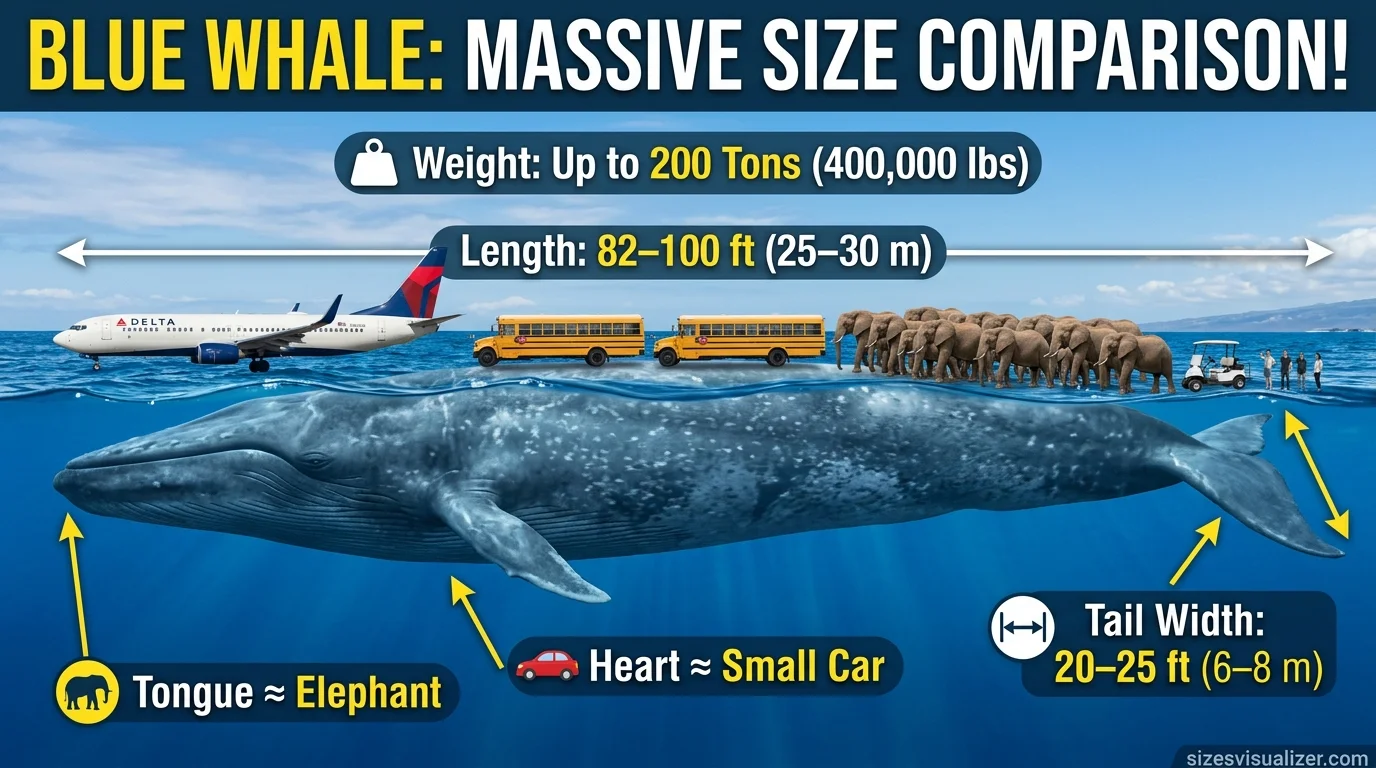
A full-grown blue whale can measure between 82 and 100 feet long, according to National Geographic. That’s roughly the length of a Boeing 737 airplane, or three school buses parked end to end.
Females tend to grow slightly longer than males, a common trait among baleen whales. Even at the smaller end of the scale, a blue whale’s length dwarfs almost every other creature on the planet, including elephants, giraffes, and even most dinosaurs.
Blue Whale Weight — How Many Tons Do They Reach?
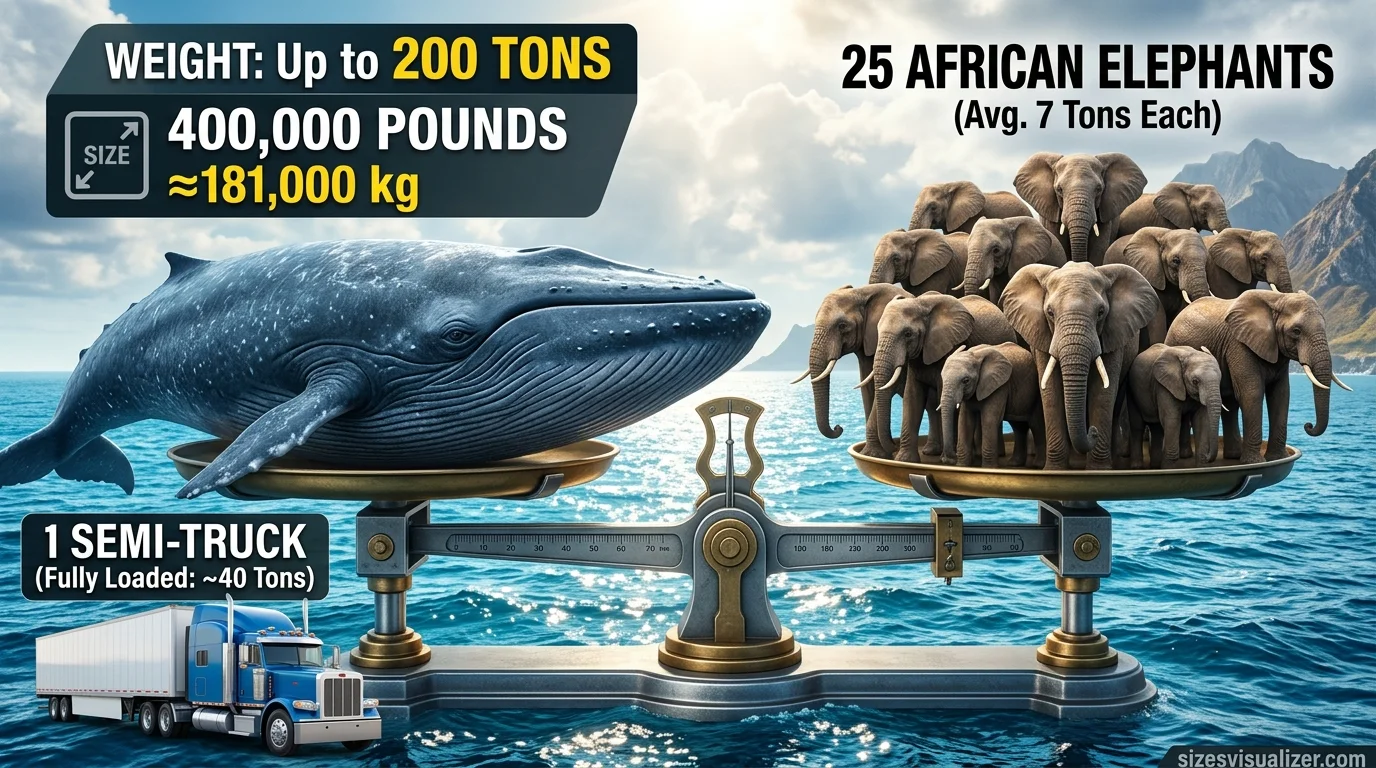
Blue whales can weigh up to 200 tons, or around 400,000 pounds, based on data from National Geographic. Females, again, tend to outweigh males — some recorded females have topped 330,000 pounds even without reaching historic maximum weights.
Before commercial whaling nearly wiped them out, some blue whales reached even greater sizes. That kind of blue whale weight puts them far beyond any land animal that has ever existed, living or extinct.
Quick-Reference Size Chart
| Measurement | Size |
|---|---|
| Length | 82–100 feet |
| Weight | Up to 200 tons (400,000 lbs) |
| Heart | ~400–1,000 lbs |
| Tongue | Up to 6,000 lbs |
| Tail (fluke) width | 20–25 feet |
| Lifespan | 80–90 years (up to 110) |
| Daily krill intake | 4–8 tons |
Blue Whale Body Size Breakdown: Heart, Tongue, Tail & Brain
Total length only tells half the story. To really grasp how big a blue whale is, look at its individual organs — each one is a record-breaker on its own.
How Big Is a Blue Whale’s Heart?
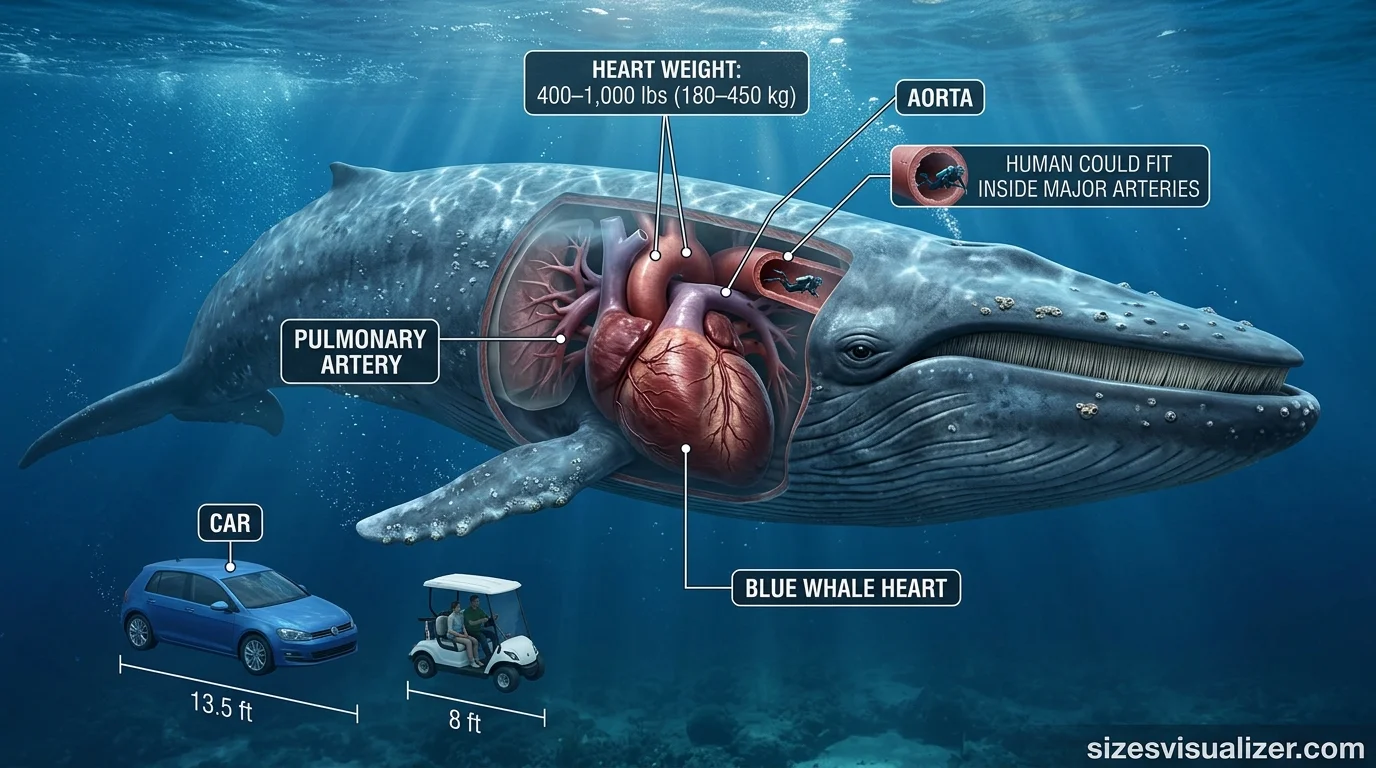
A blue whale’s heart weighs about as much as a small car. Estimates range from roughly 400 pounds to over 1,000 pounds depending on the individual whale. Each heartbeat can be detected from over two miles away with tracking equipment, and when a blue whale dives deep, its heart rate can slow to just a few beats per minute to conserve oxygen.
The arteries connected to that heart are so wide that an adult human could theoretically swim through the largest ones — a detail that shows just how oversized every part of this animal really is.
How Big Is a Blue Whale’s Tongue?
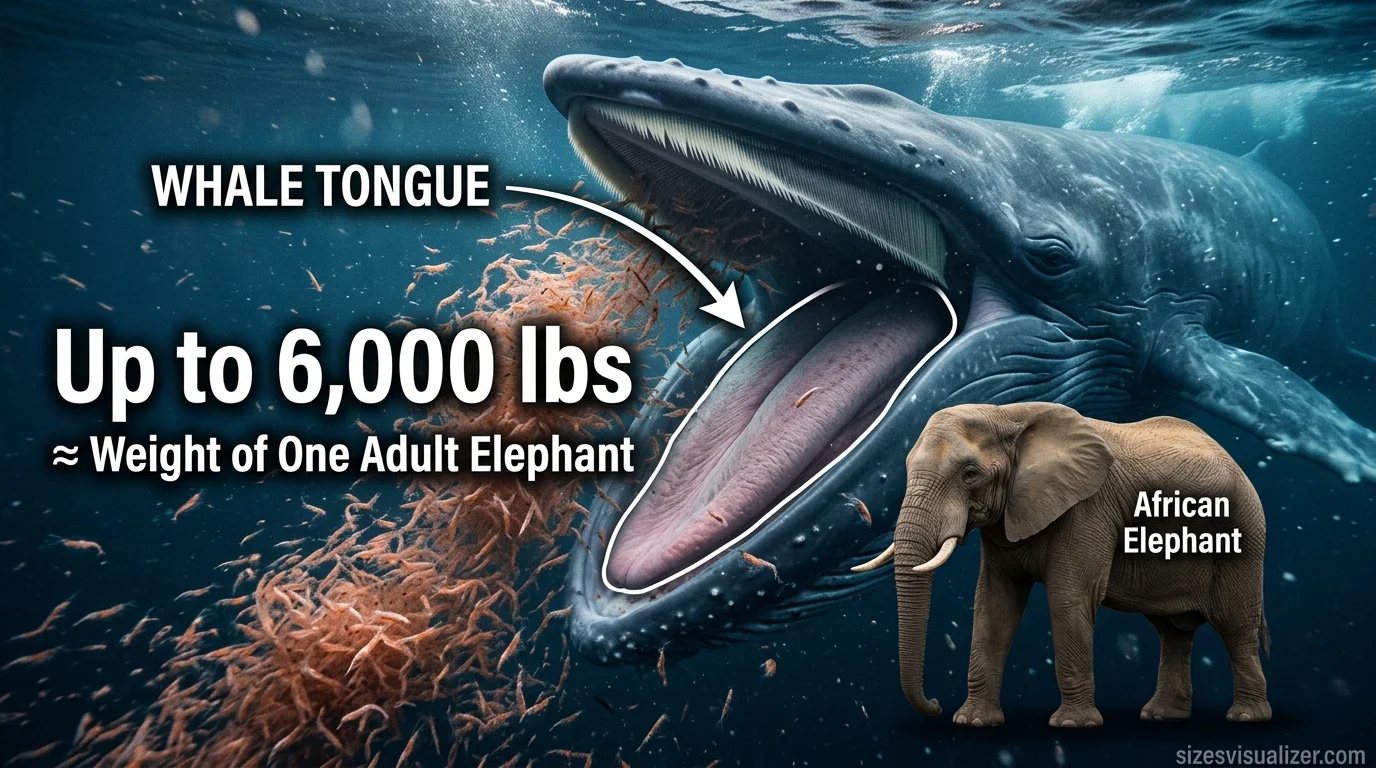
A blue whale’s tongue can weigh as much as a fully grown elephant. That single organ helps push enormous volumes of seawater out through the whale’s baleen plates while feeding, trapping thousands of tiny krill behind in the process.
This oversized tongue isn’t just for show — it’s a functional feeding tool that lets the whale filter tons of food in a single gulp.
How Big Is a Blue Whale’s Tail (Fluke)?
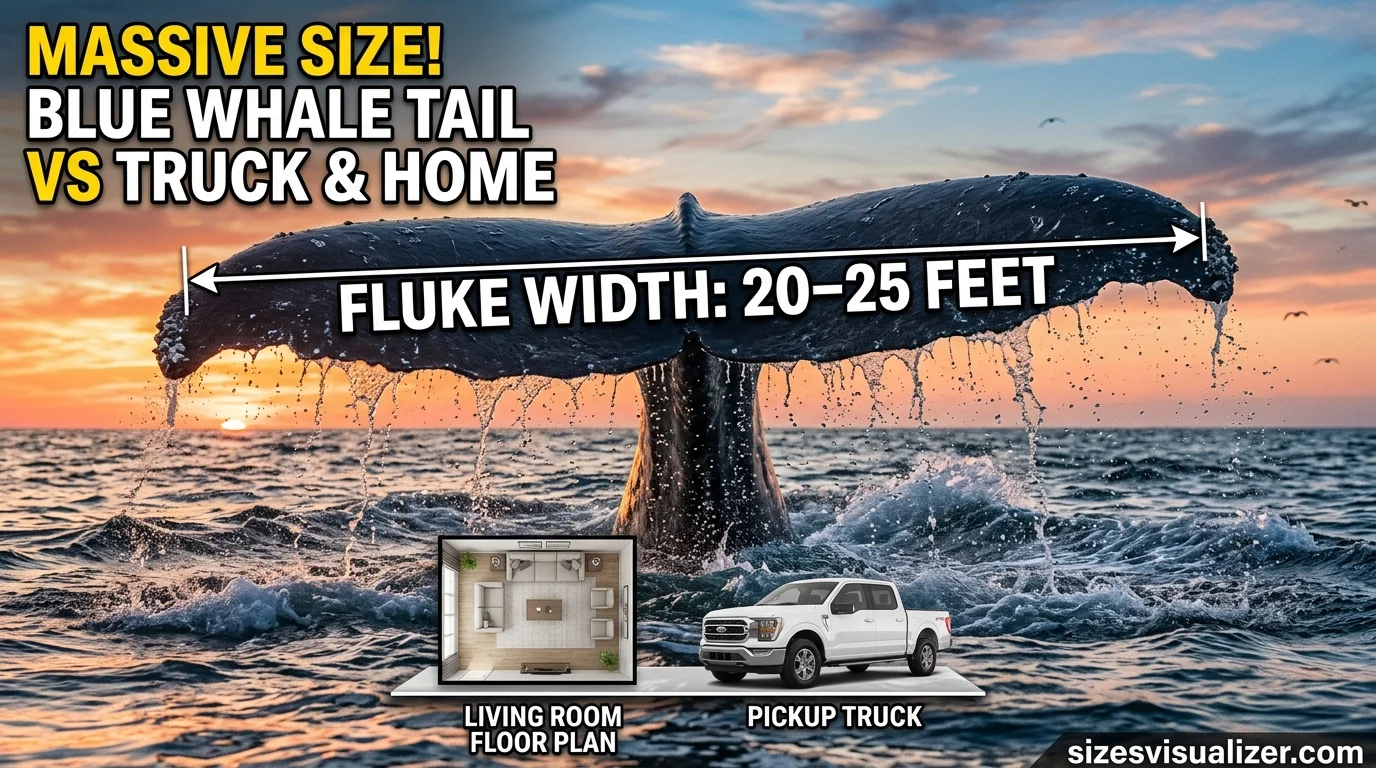
The tail, or fluke, of a blue whale spans 20 to 25 feet wide — wider than most living rooms. Each powerful stroke propels the whale’s massive body through open water, usually around 5 miles per hour while cruising, but faster when the animal is startled or agitated.
How Big Is a Blue Whale’s Brain?
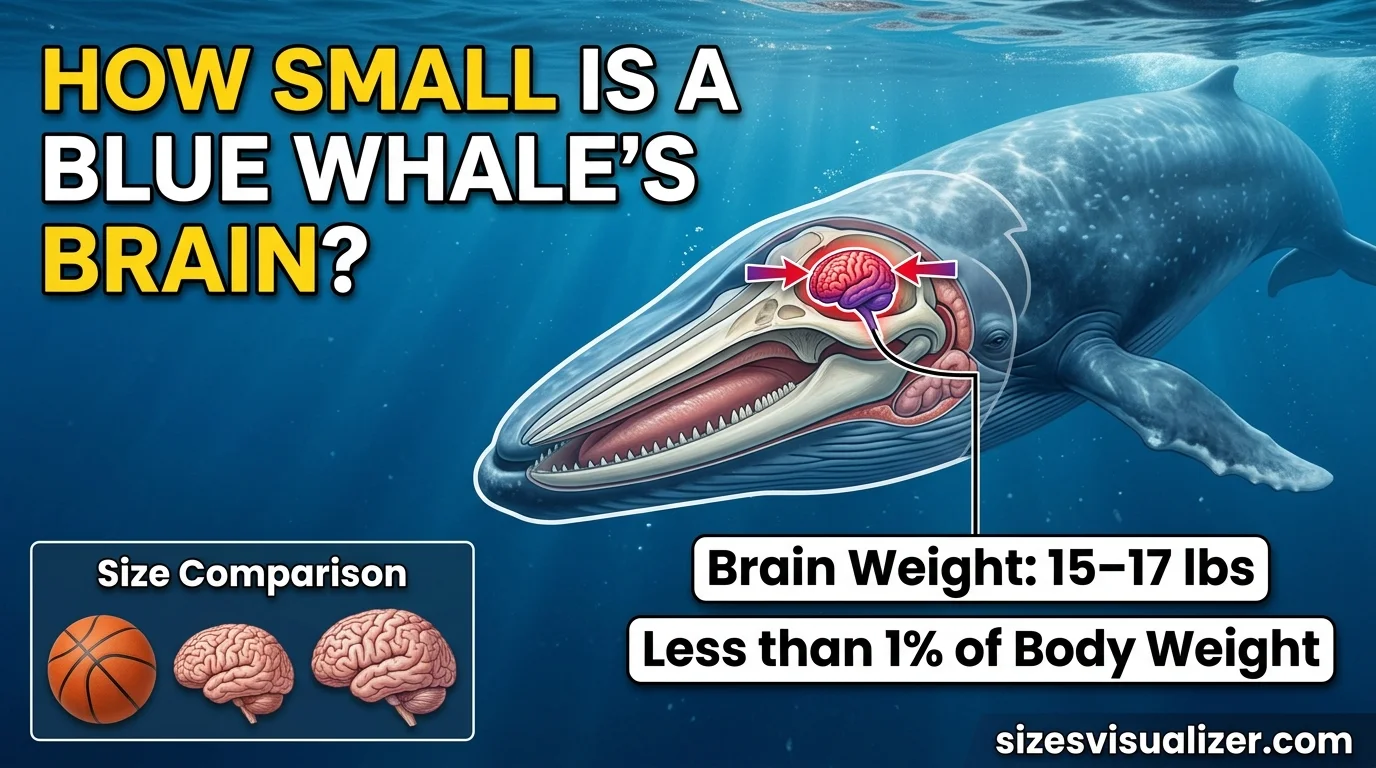
Here’s where the pattern breaks. Despite its colossal body, a blue whale’s brain weighs only around 15 to 17 pounds — a small fraction of its total body weight, well under 1%. Size doesn’t always scale evenly across an animal’s anatomy, and the blue whale is proof of that.
Blue Whale Size Comparisons: Dinosaurs, Other Whales & Everyday Objects
Numbers alone rarely stick. Comparisons make blue whale size click instantly.
Blue Whale vs. the Largest Dinosaur Ever Found
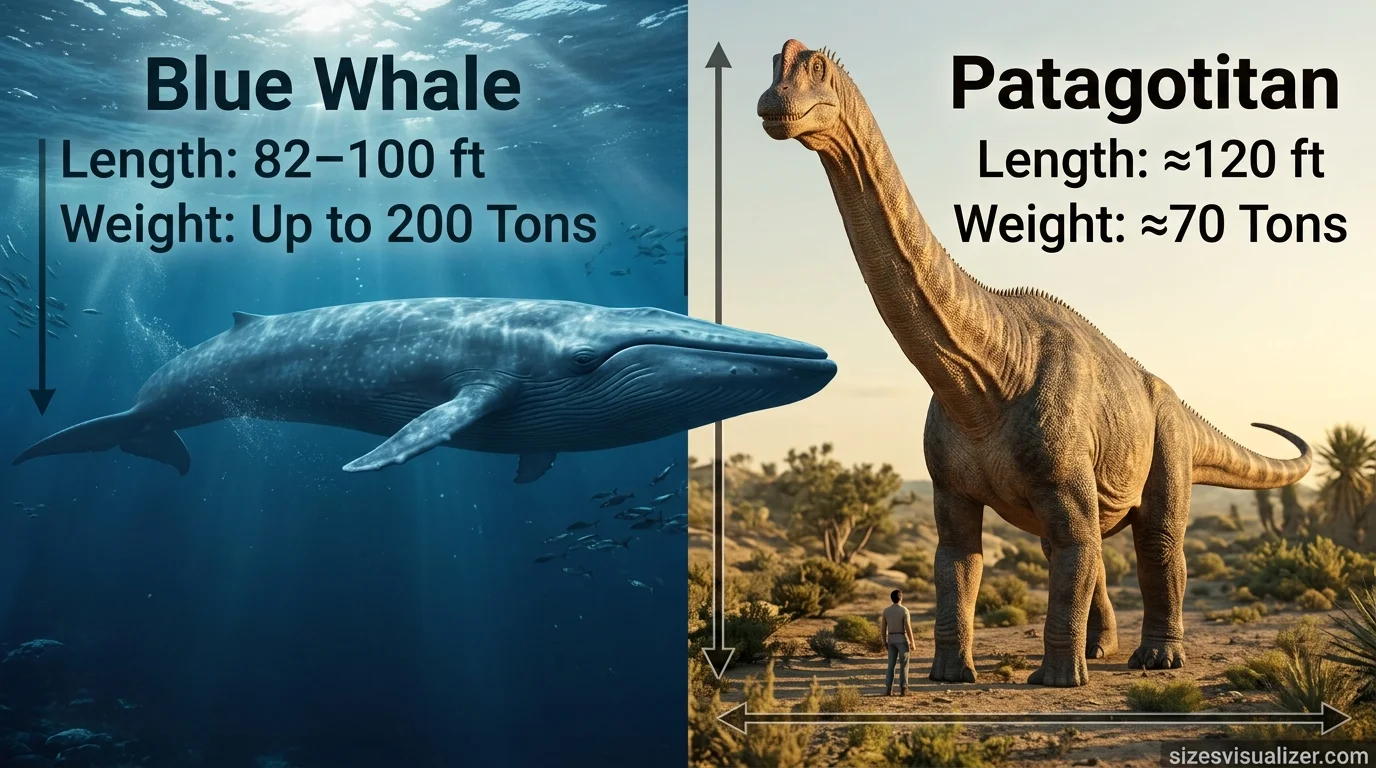
Even Patagotitan mayorum, one of the largest dinosaurs ever discovered, falls short. That titanosaur measured around 120 feet long but weighed far less than a blue whale — roughly 140,000 pounds versus a blue whale’s potential 400,000 pounds. No dinosaur, no matter how long, ever matched a blue whale’s mass.
Blue Whale vs. Other Whale Species
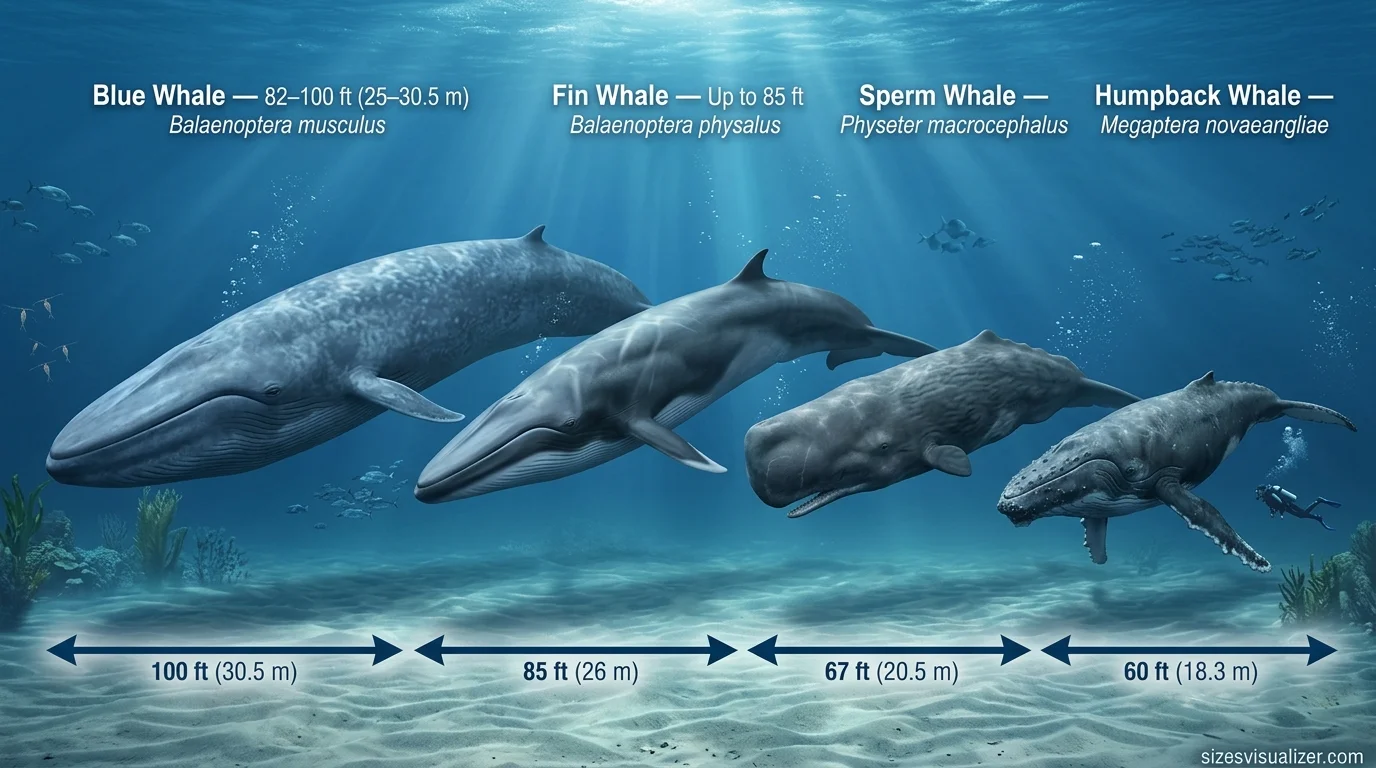
Blue whales aren’t just the biggest animal overall — they’re also the biggest whale by a wide margin. A fin whale, the second-largest whale species, tops out around 85 feet. Humpback whales reach roughly 60 feet, and sperm whales rarely exceed 67 feet. Nothing in the ocean, or on land, comes close to a full-grown blue whale.
Blue Whale vs. Human-Scale Objects
To put blue whale size into everyday terms:
- Length: Close to the wingspan of a Boeing 737
- Weight: Equal to roughly 25 adult elephants
- Heart: About the size of a golf cart
- Tongue: As heavy as one elephant
- Tail width: Wider than a standard living room
These comparisons make it easier to visualize an animal that’s genuinely hard to picture in the wild.
Must Visit: 55 Inch TV Dimensions Explained: Width, Height, Viewing Distance & Wall Mount Guide 2026
How a Blue Whale Grows: From Calf to Full-Grown Adult
Even blue whale babies are giants compared to almost every other animal on Earth.
Newborn Blue Whale Size and Weight
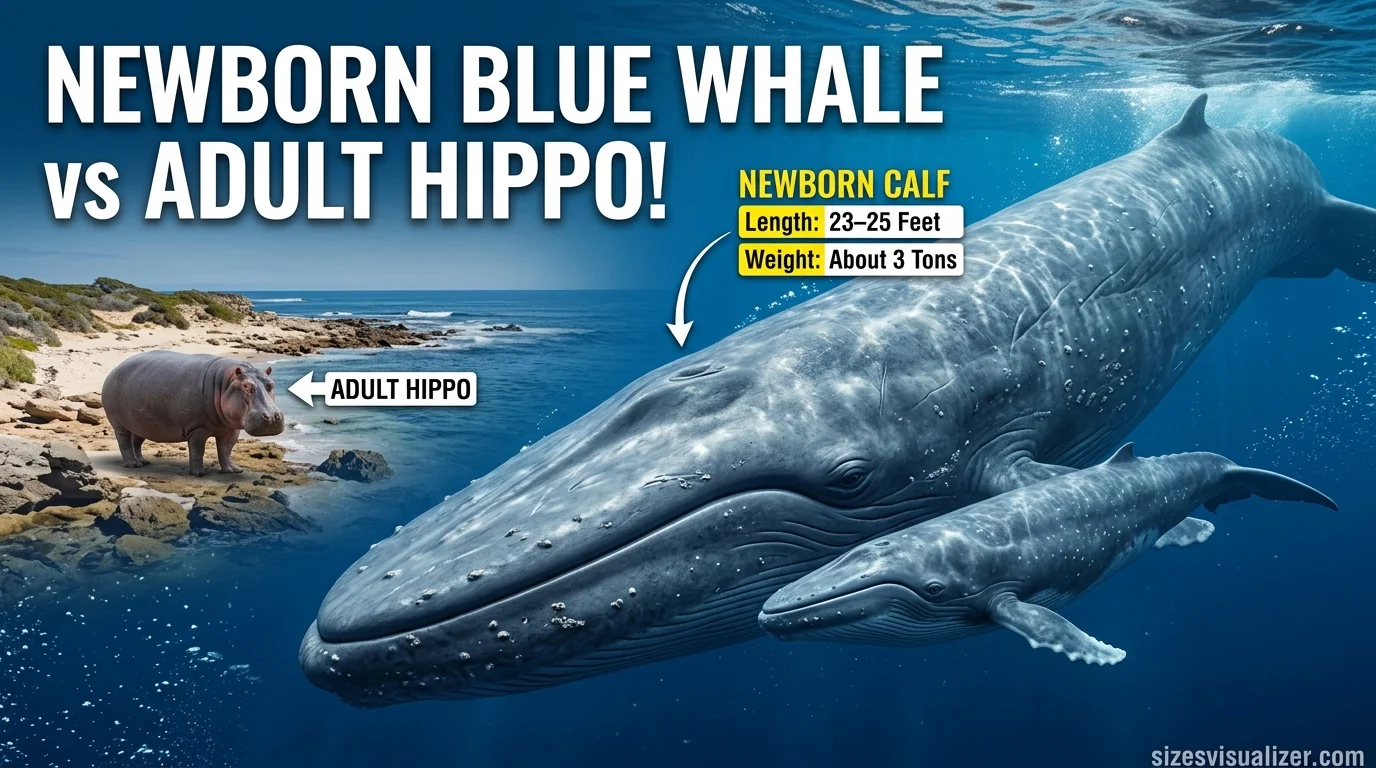
A newborn blue whale calf is already around 23 to 25 feet long and weighs close to 3 tons at birth. That’s roughly the size of an adult hippopotamus — before the calf has taken a single breath on its own.
How Fast Do Blue Whale Calves Grow?
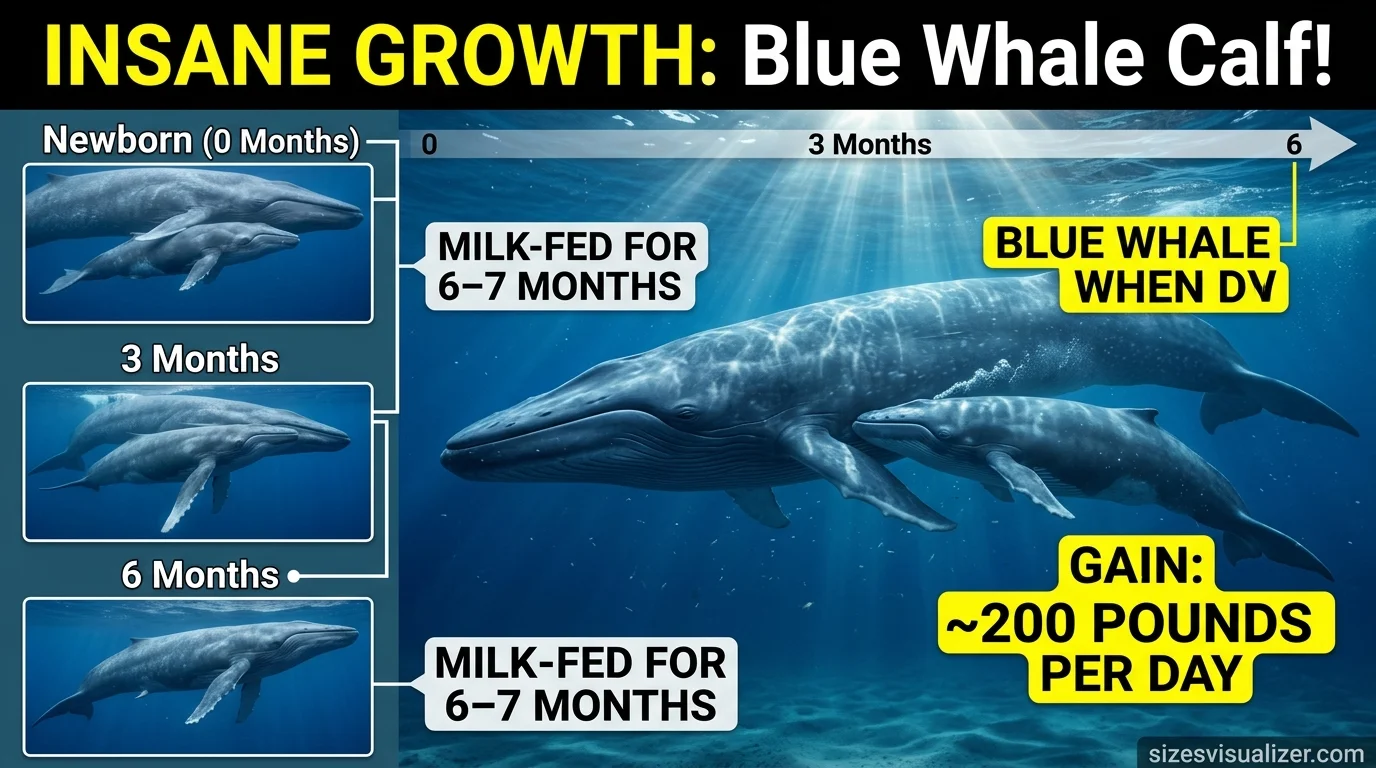
Blue whale calves grow at a startling pace. A nursing calf can gain around 200 pounds every single day, fueled entirely by its mother’s milk. Within about six to seven months, the calf is weaned and begins feeding on krill independently.
Use the Sizes Visualizer tool to instantly compare the dimensions of a 55-inch TV with furniture, walls, and everyday items for a more confident buying decision.
Where to See a Full-Grown Blue Whale in the U.S.
Blue whales live in every ocean on Earth except the Arctic, and several coastlines across the United States offer real opportunities to see one in person.
Best U.S. Whale-Watching Seasons and Regions
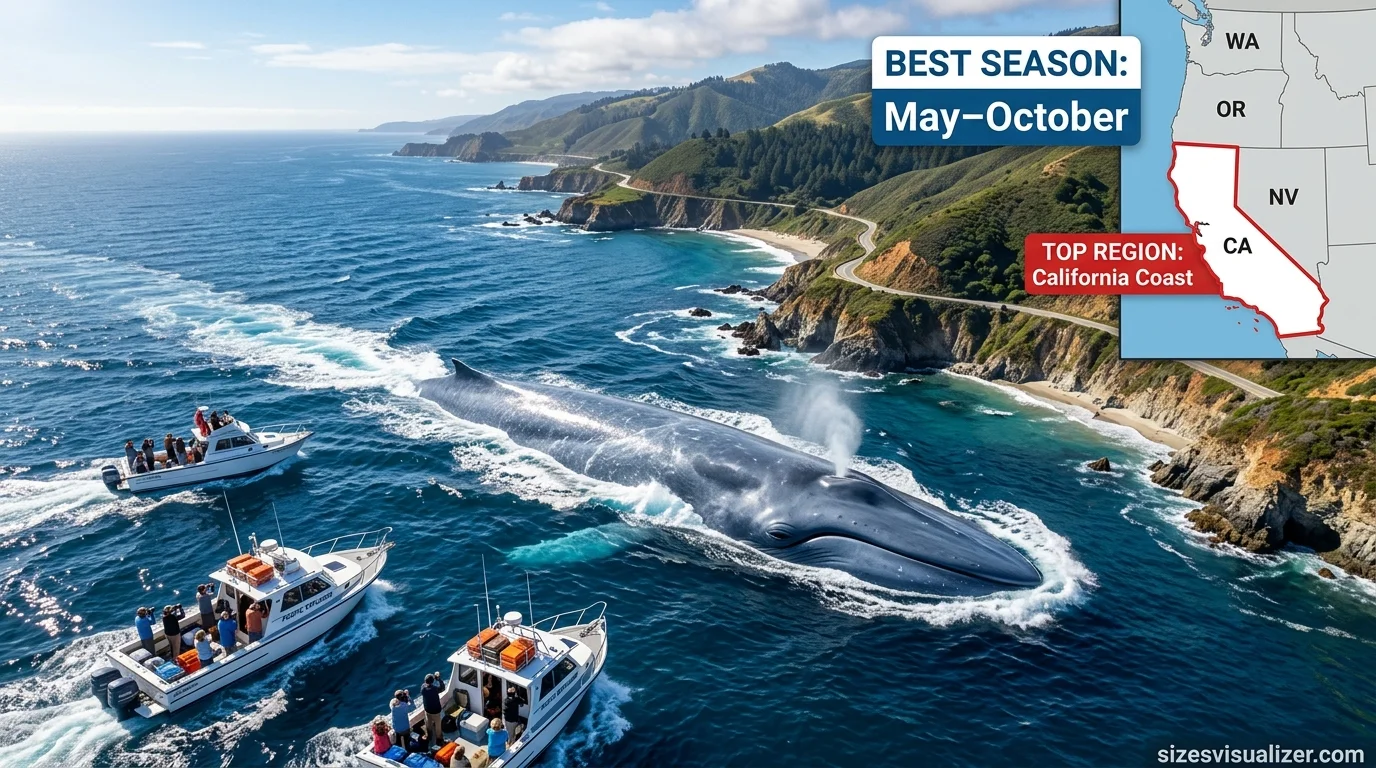
Along the U.S. West Coast, blue whales are most commonly spotted between May and October, when they migrate closer to shore to feed on dense krill populations. California’s coastal waters — from Southern California up through Central California — are considered some of the most reliable places in the country for sightings during peak season, according to NOAA Fisheries.
Sightings are never guaranteed, since blue whales follow food, not schedules. But peak season significantly improves the odds.
Blue Whale Conservation Status Today
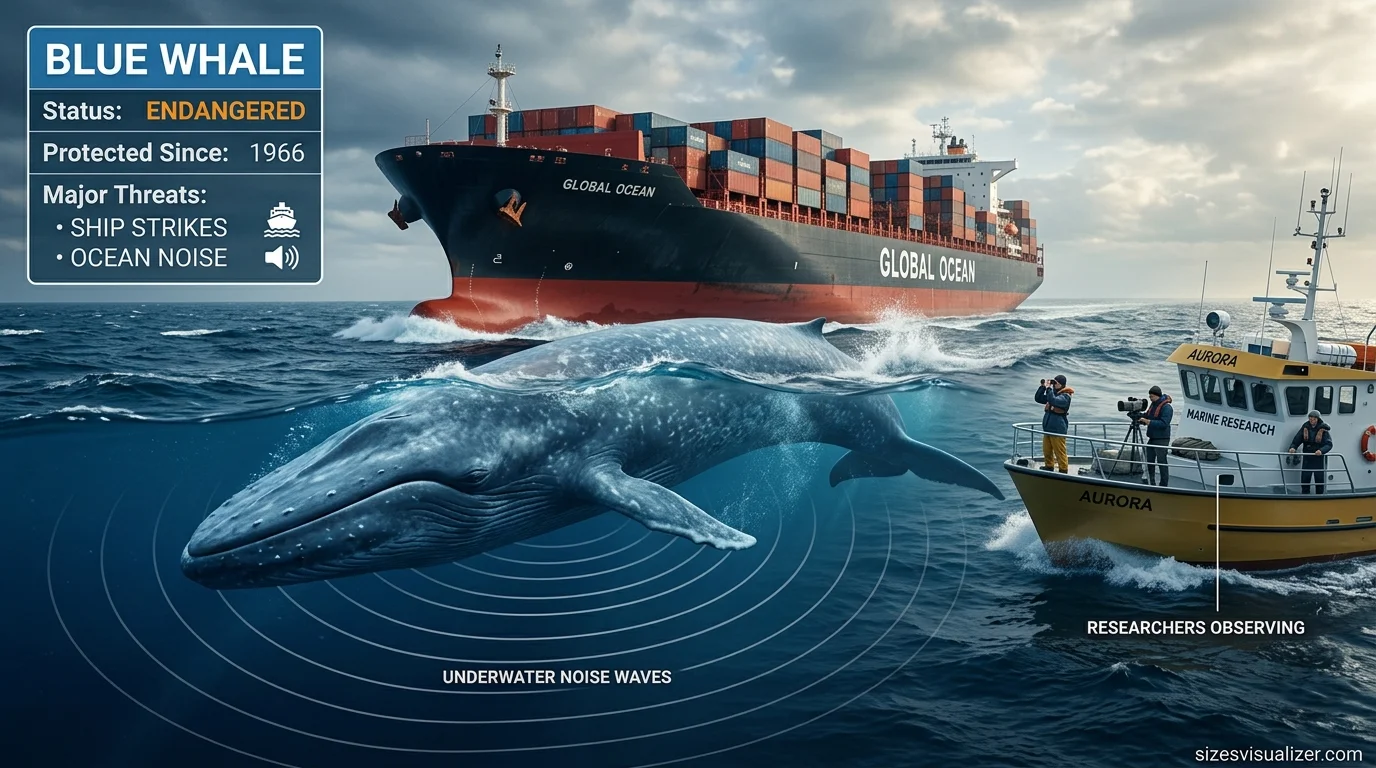
Blue whales are currently listed as an endangered species. Commercial whaling between 1900 and the 1960s killed an estimated 360,000 blue whales, according to National Geographic, pushing the population to the brink of collapse. International protections since 1966 have helped numbers slowly recover, though the population is still far below historic levels.
Today, the biggest threats to blue whales are vessel strikes and ocean noise pollution, both of which interfere with feeding, migration, and communication between whales.
FAQ’s
How big is a fully grown blue whale?
A fully grown blue whale typically measures between 82 and 100 feet long and can weigh up to 200 tons, making it the largest animal ever known to exist.
Can a blue whale live 100 years?
Yes. Most blue whales live 80 to 90 years, but the oldest confirmed blue whale, aged using its waxy earplug layers, was estimated at around 110 years old.
What are the top 3 biggest animals?
The blue whale ranks first, followed by the fin whale and the North Pacific right whale, both of which are large baleen whales but significantly smaller than the blue whale.
Can blue whales reach 200 tons?
Yes. Some blue whales have reached up to 200 tons, or roughly 400,000 pounds, making them heavier than any dinosaur ever discovered.
Could we drink whale milk?
Technically it’s safe to drink, but blue whale milk is extremely thick, fatty, and unlike anything sold commercially. It exists purely to help calves gain weight quickly.
What whale lives for 300 years?
The bowhead whale, not the blue whale, holds this record. Bowhead whales have been estimated to live over 200 years, with some studies suggesting a potential lifespan approaching 300 years, based on eye-lens and harpoon-fragment analysis.
Conclusion
There’s no exaggerating it: the blue whale is the largest animal our planet has ever produced, before or after the dinosaurs. From a heart the size of a car to a tongue as heavy as an elephant, every part of this animal breaks a record. Understanding its true scale is the first step to appreciating why protecting it matters just as much today as ever.

Measurement Researcher, Size Comparison Writer & Content Specialist
Timmy Ahad is a dedicated content writer and research specialist at SizesVisualizer.com, where he focuses on creating accurate, easy-to-understand content about measurements, dimensions, size comparisons, and real-world object visualization.