You see them every morning, flashing yellow and rolling down the street. But how big is a school bus, really?
Here is a complete breakdown of school bus dimensions. Most school buses run 20 to 45 feet long, about 8 feet wide, and 10 to 11 feet tall. The exact number depends on the type of bus and how many students it carries.
Table of Contents
School Bus Size at a Glance
Not every school bus is built the same. Size changes based on the bus type, the seating capacity, and even the state it’s registered in.
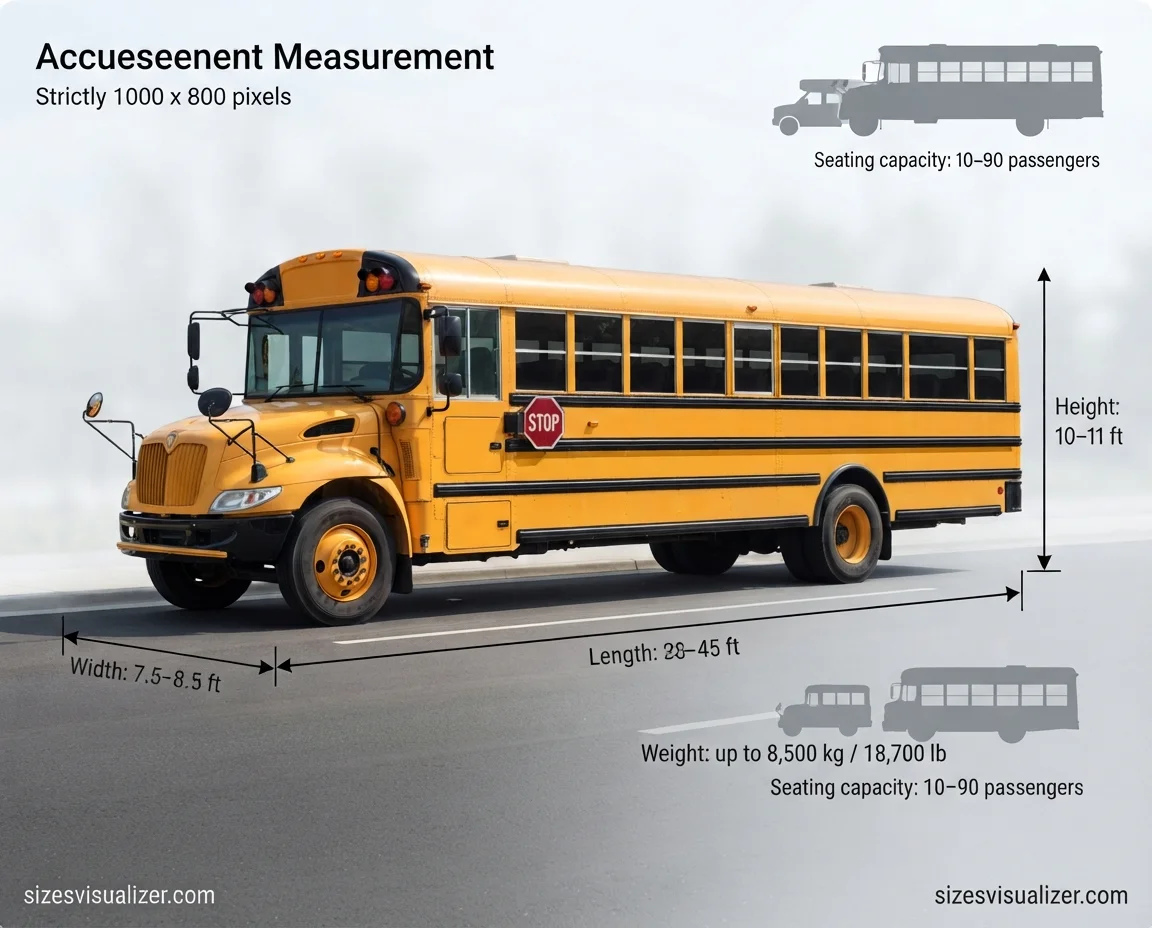
Here’s a quick snapshot before we break things down type by type.
| Measurement | Average Range |
|---|---|
| Length | 20 – 45 feet |
| Width | 7.5 – 8.5 feet |
| Height | 10 – 11 feet |
| Weight | Up to 8,500 kg (about 18,700 lbs) |
| Seating capacity | 10 – 90 passengers |
On average, a full-size school bus measures 35 to 45 feet in length, 8 feet wide, and 10 to 11 feet tall, with room for up to 90 students. Smaller buses, often called “short buses,” drop down to 20-25 feet and seat far fewer riders.
There’s no single “standard” school bus. Size is a design choice, shaped by how many kids need a ride and what kind of roads the bus has to handle.
Quickly visualize the actual size of any object and compare its dimensions with familiar items using our Size Visualizer & Comparison Tool.
School Bus Sizes by Type: A, B, C, and D
The National Highway Traffic Safety Administration (NHTSA) sorts school buses into four federal classifications: Type A, B, C, and D. Each type has its own size range and job to do.
Type A: Mini School Buses
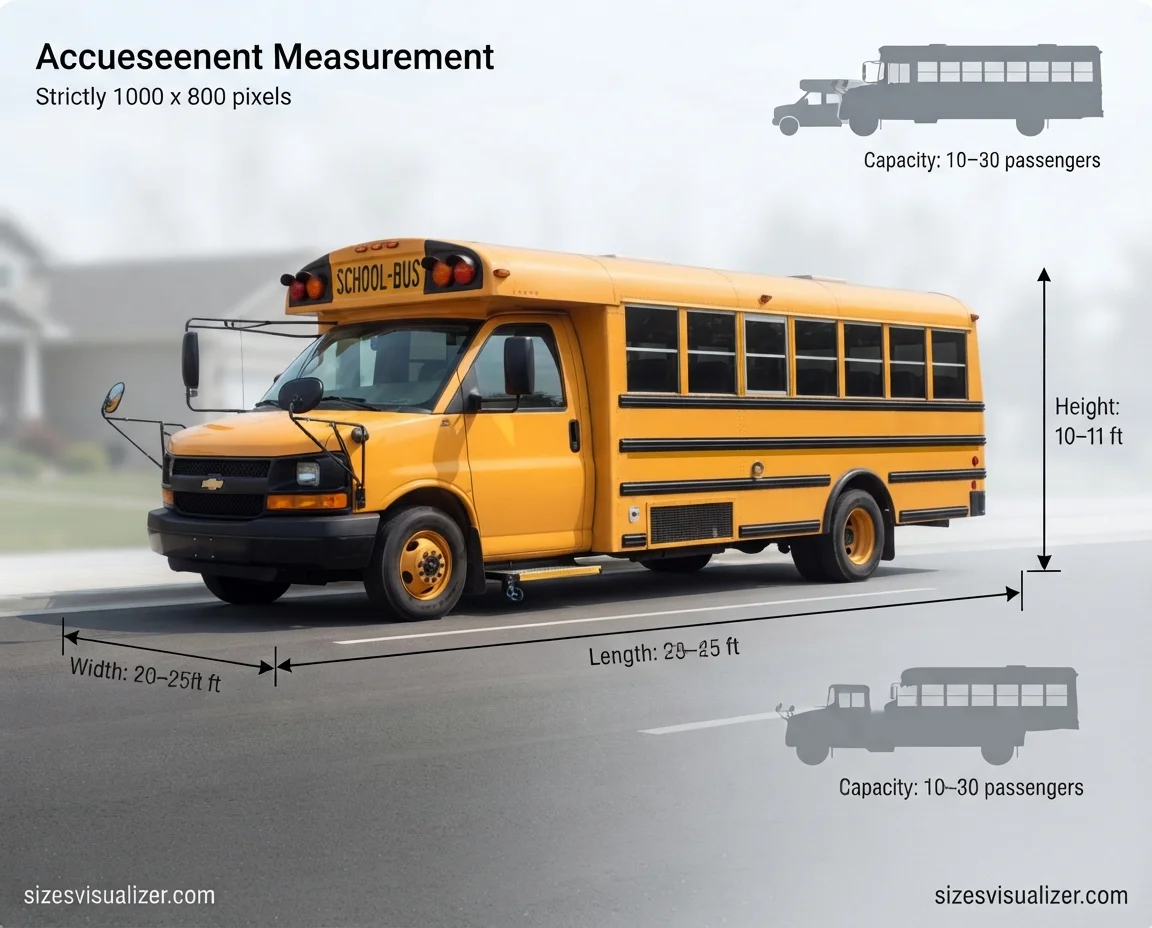
Type A buses are the smallest in the fleet. Built on a van-style cutaway chassis, they run 20 to 25 feet long and seat between 10 and 30 passengers.
Their compact frame makes them nimble on tight streets, which is why small private schools, daycare programs, and special education routes lean on them so often. Many are also fitted with wheelchair lifts, since their lower floor height makes accessibility upgrades easier to install.
Type B: Small School Buses
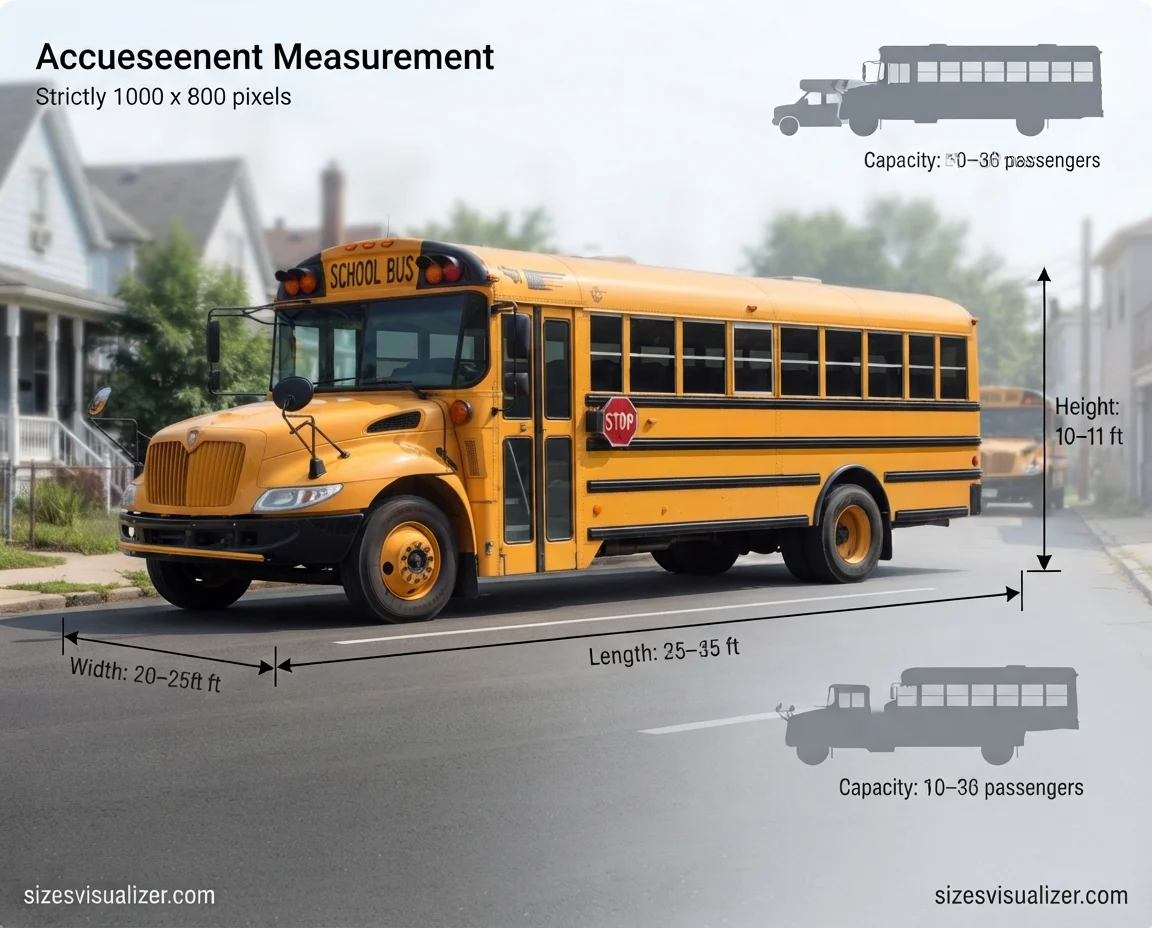
Type B buses sit between mini and full-size. Built on a stripped chassis with the entry door positioned behind the front wheels, they measure 25 to 35 feet and carry 30 to 36 passengers.
They’re a practical middle ground — bigger than a Type A, but still maneuverable enough for narrow neighborhood routes.
Type C: Conventional School Buses

This is the bus most people picture when they hear “school bus.” The classic flat-front, long-hood yellow bus. Type C buses stretch 35 to 40 feet and hold up to 72 elementary students or 48 high schoolers, depending on seating rules.
Type C is the workhorse of American student transportation. Districts favor it because one bus can cover a large route, cutting down the total number of trips — and drivers — needed each morning.
Type D: Transit-Style School Buses
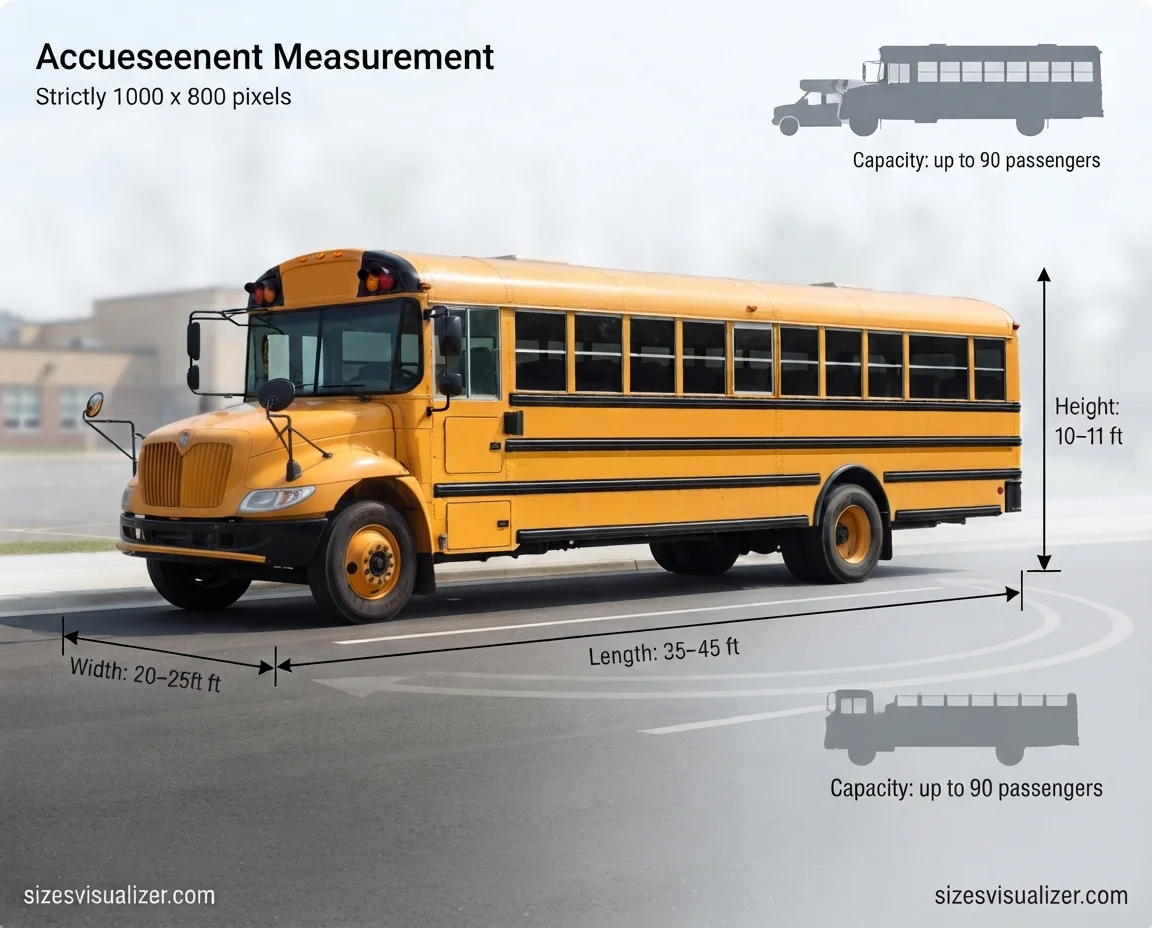
Type D buses, sometimes called “flat-nose” buses, are the giants of the group. The engine sits underneath or behind the driver instead of out front, which frees up extra cabin length. These buses reach 40 to 45 feet and can pack in up to 90 passengers, the highest capacity of any standard type.
That size comes at a cost, though. Type D buses need a wider turning radius and burn more fuel per mile than smaller models.
Activity Buses (MFSABs)
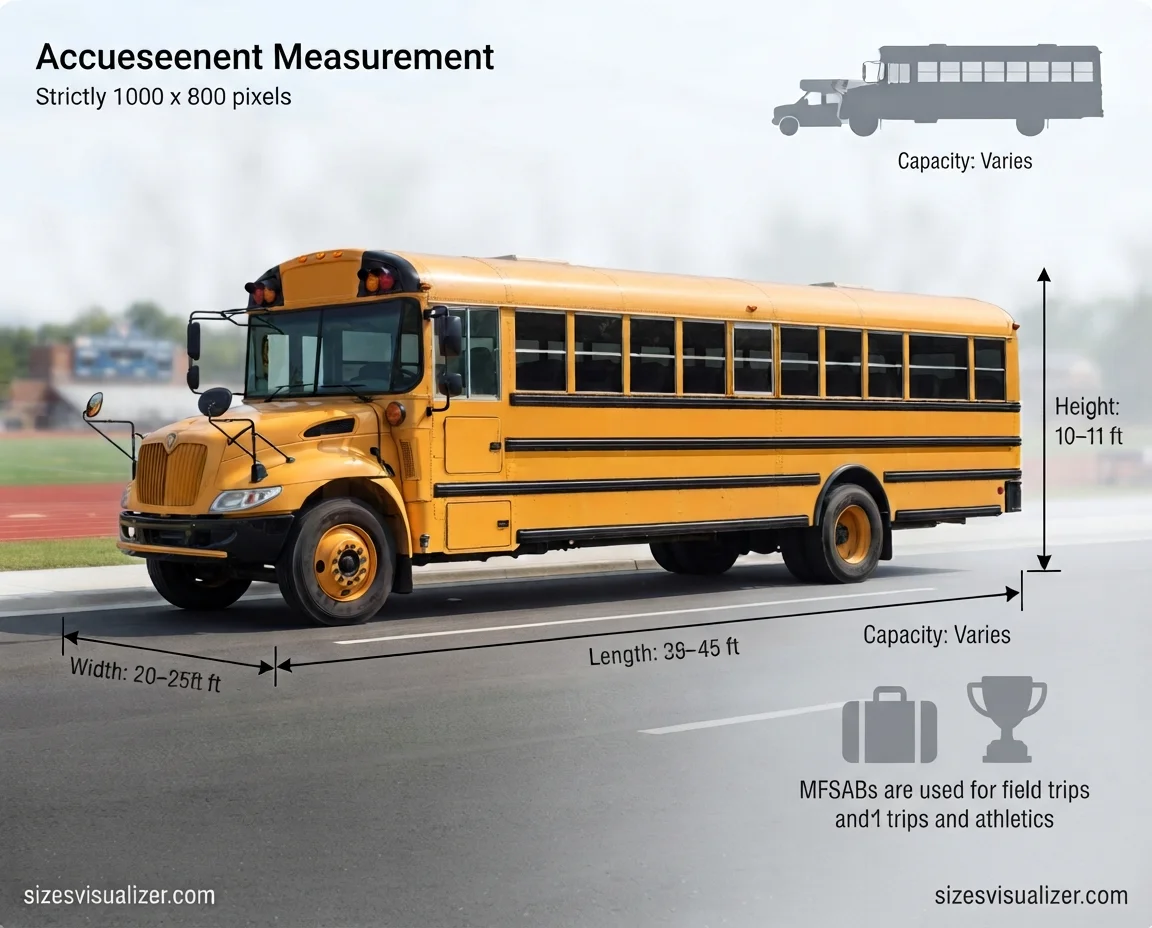
Multi-Function School Activity Buses, or MFSABs, aren’t defined by size — they’re defined by purpose. Built on the same chassis as Type A or Type C buses, they range from 19 to 45 feet. Because they’re used for field trips and sports transport rather than daily routes, they skip stop-arms and flashing lights, and often get comfier seating instead.
| Type | Length | Capacity | Best For |
|---|---|---|---|
| Type A | 20–25 ft | 10–30 | Special needs, small groups |
| Type B | 25–35 ft | 30–36 | Medium routes, narrow streets |
| Type C | 35–40 ft | 48–72 | Standard daily routes |
| Type D | 40–45 ft | Up to 90 | High-capacity, long routes |
| MFSAB | 19–45 ft | Varies | Field trips, athletics |
Key School Bus Dimensions Explained
Length is only part of the story. A few other measurements shape how a school bus looks, moves, and functions.
Width and height
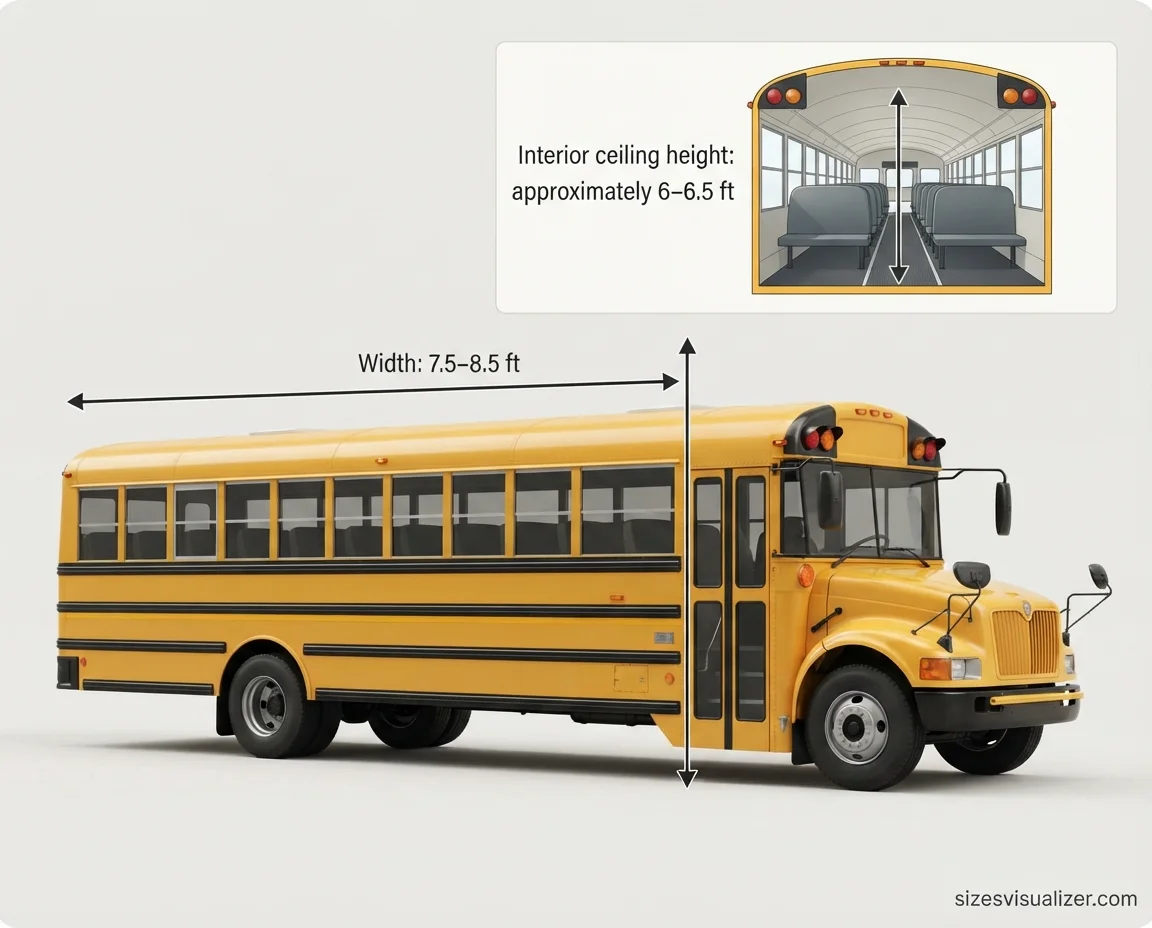
Most school buses are 7.5 to 8.5 feet wide, narrow enough to sit comfortably inside a standard traffic lane. Exterior height usually falls between 10 and 11 feet, low enough to clear most highway overpasses. Inside, ceiling height runs about 6 to 6.5 feet, giving students and staff room to stand and move down the aisle safely.
Wheelbase and turning radius
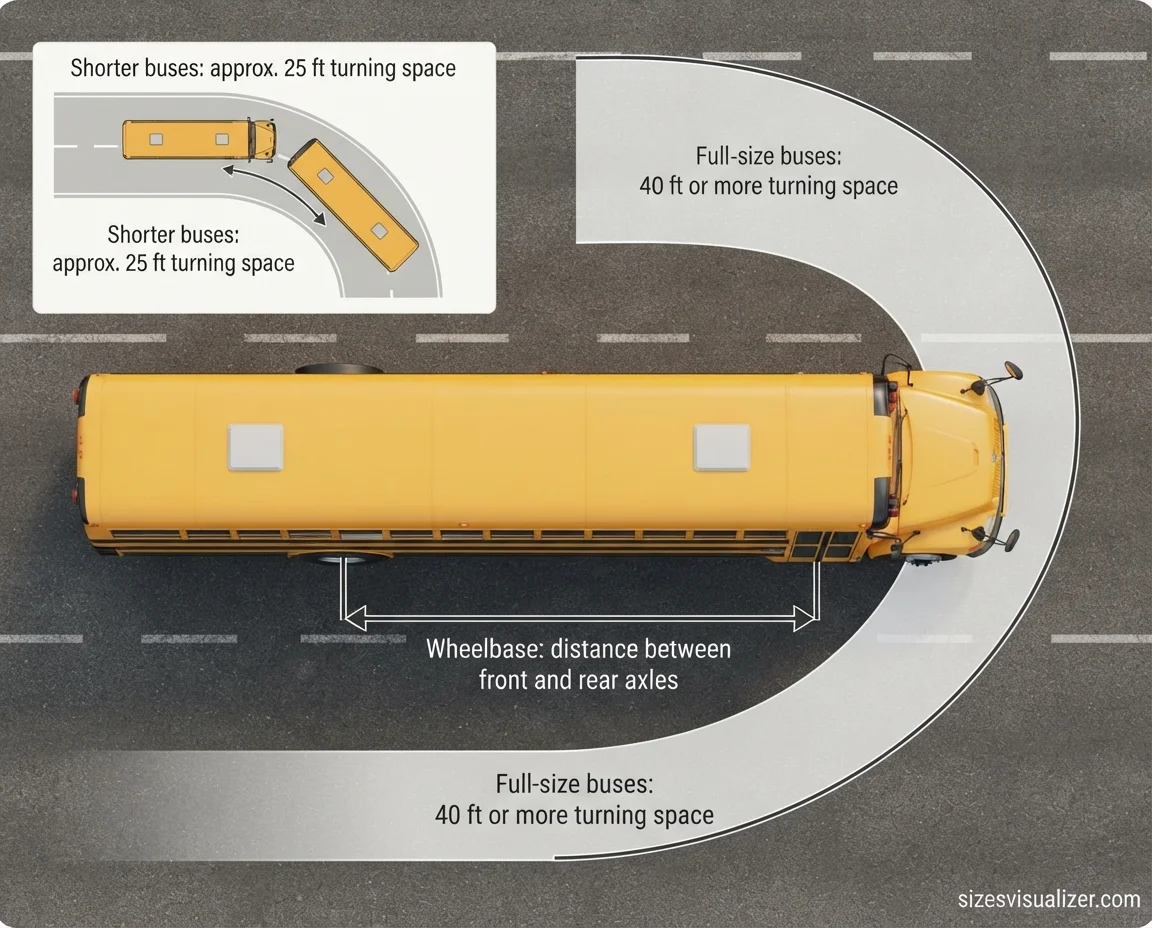
The wheelbase — the distance between the front and rear axles — determines how tightly a bus can turn. Shorter buses turn in as little as 25 feet, ideal for cul-de-sacs and tight city blocks. Full-size buses often need 40 feet or more to complete a turn, which is why districts route them along wider roads.
Weight and load capacity
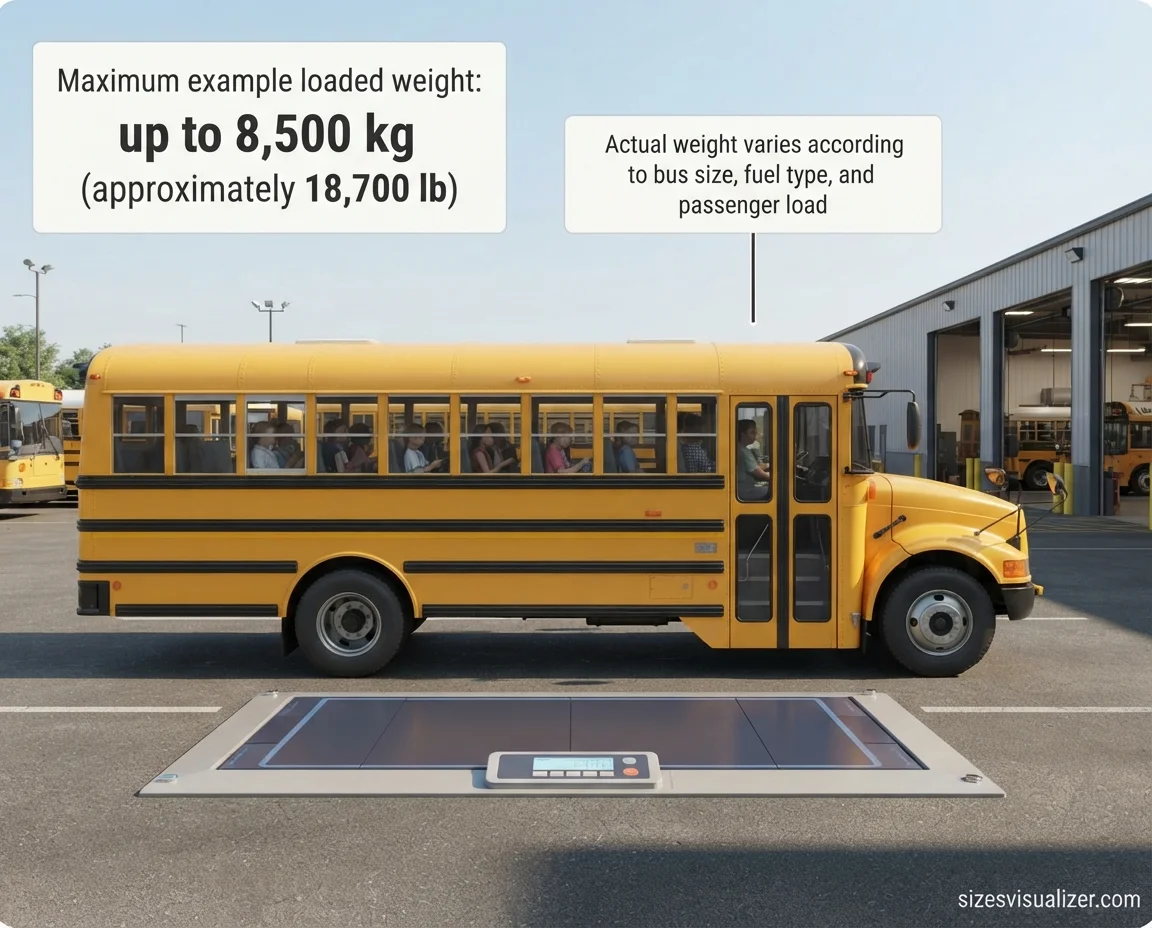
A fully loaded school bus can weigh close to 8,500 kg (roughly 18,700 pounds), though this shifts based on size, fuel type, and how many passengers are on board.
Must Visit:How Big Is a 20×20 Room? 400 Sq Ft Dimensions, Layout & What Fits
Why School Bus Size Matters
Size isn’t just a spec on paper. It directly shapes safety, cost, and how well a bus fits its route.
Safety and crash protection
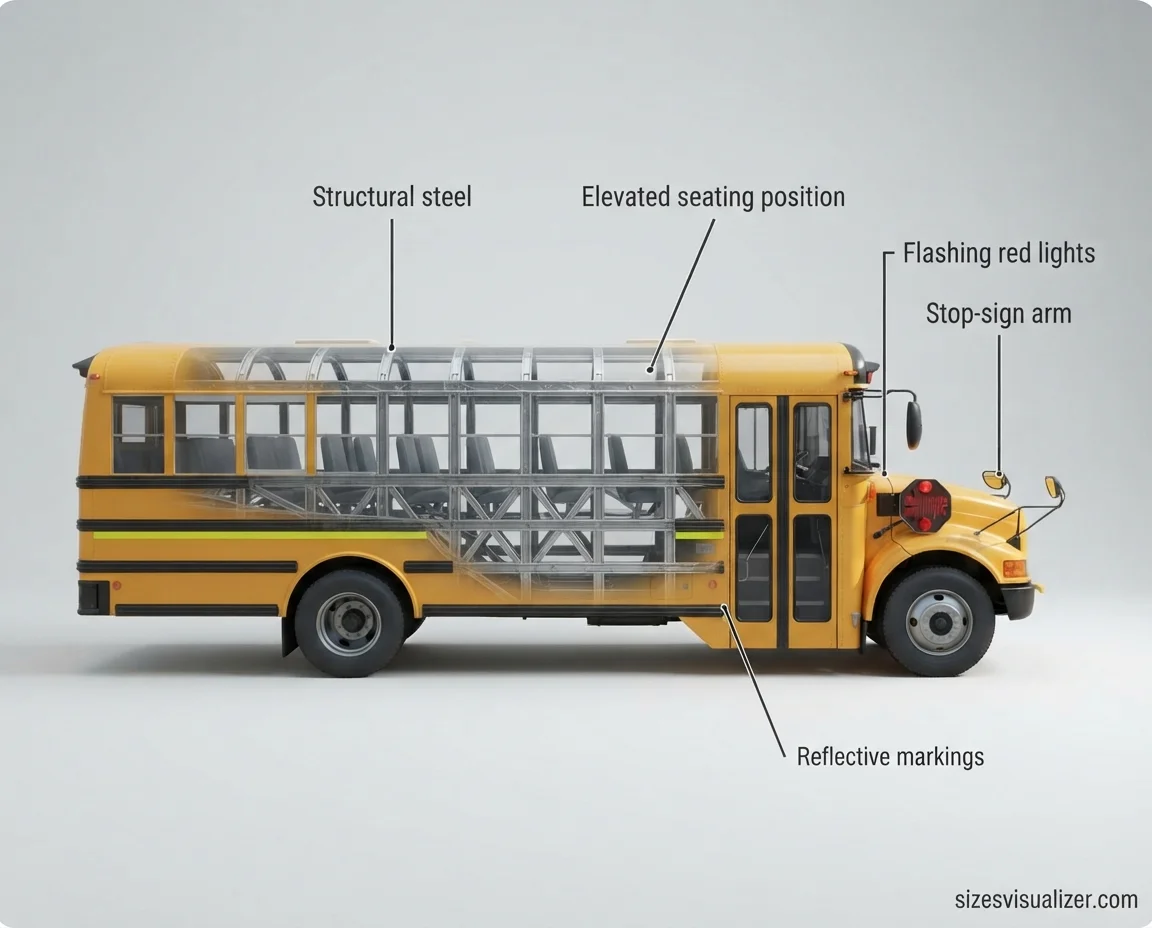
Larger buses like Type C and D have more structural steel and higher seating positions, both of which improve crash protection. Every school bus, regardless of size, carries flashing red lights, a stop-sign arm, and reflective markings to alert traffic during pickup and drop-off.
Regulation
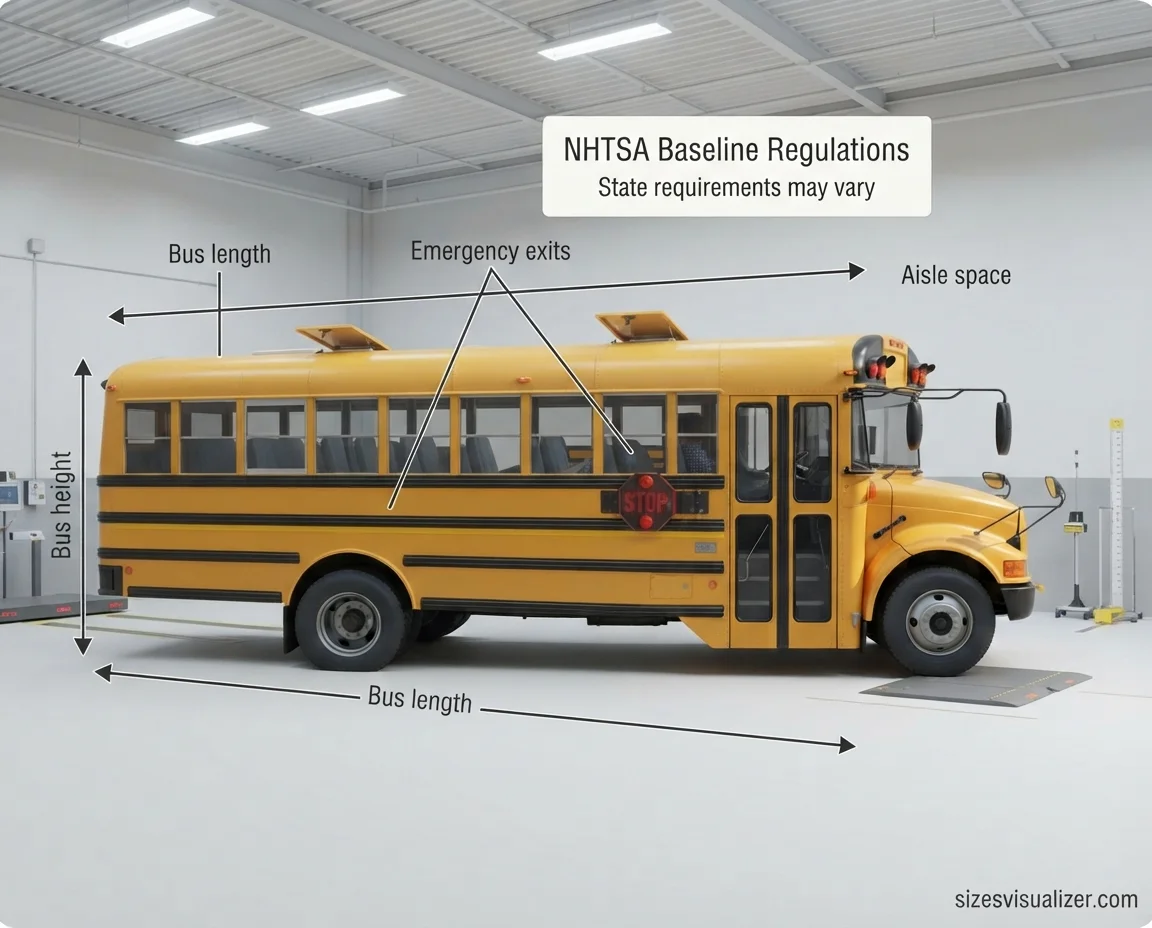
NHTSA sets the baseline rules for bus length, width, height, emergency exits, and aisle space. States can add their own requirements on top, which is part of why bus specs vary slightly by region.
Route fit
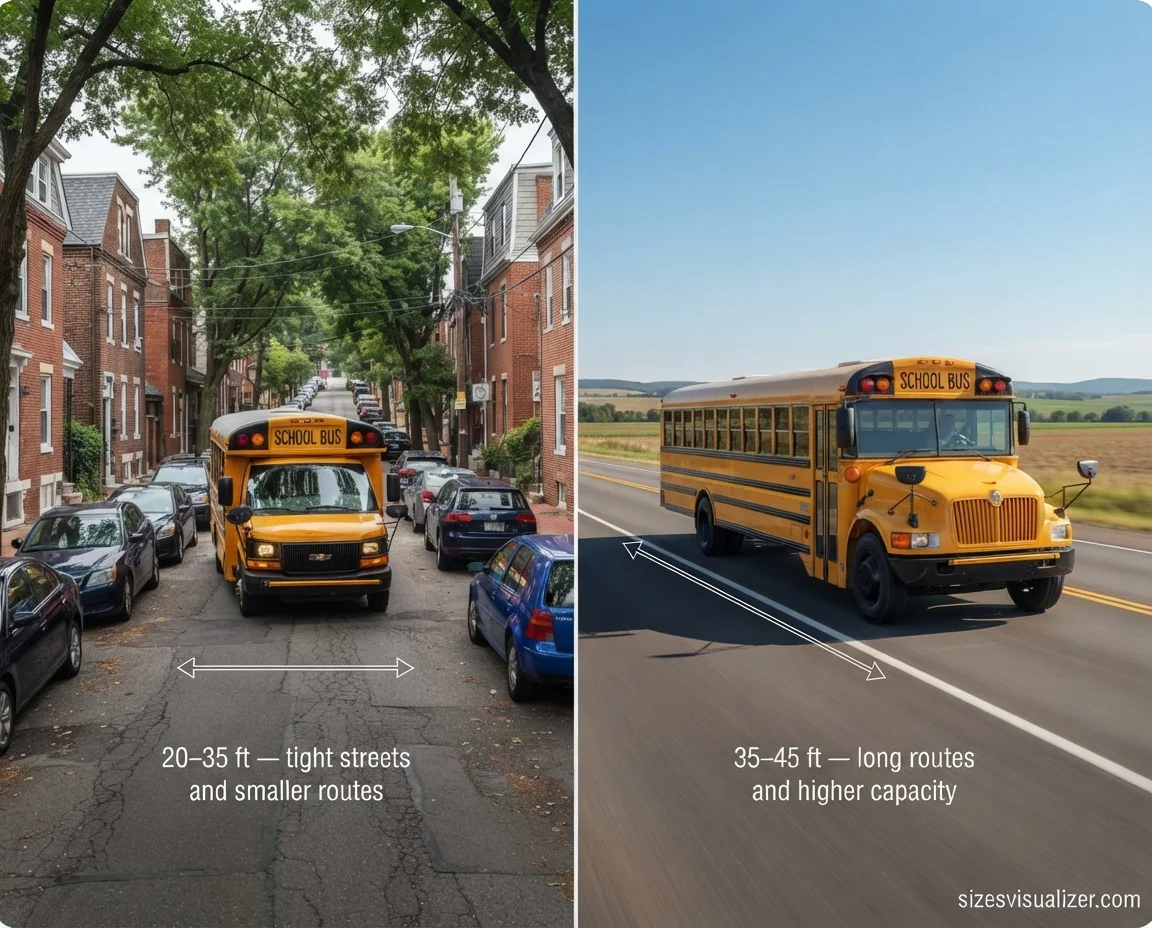
Urban and rural districts have opposite needs. Cities often lean on smaller Type A or B buses for tight streets, while rural routes rely on Type C or D buses to cover long distances efficiently in a single trip.
FAQs
What is the size of a school bus?
A standard school bus measures 35 to 45 feet long, about 8 feet wide, and 10 to 11 feet tall, with seating for up to 90 passengers. Smaller mini buses run as short as 20 feet.
How long is a 14-window school bus?
Using the standard window-width rule of about 2.5 feet per window, a 14-window bus measures roughly 35 feet — a typical Type C conventional school bus.
Why are bus windows so big?
Large side windows serve as emergency push-out exits, sized to let students escape quickly in a crash or emergency. They also improve visibility for the driver and cabin lighting.
Is America the only country that has school buses?
No. Canada uses a nearly identical yellow school bus system. Other countries, like the UK and Australia, rely more on coach-style or public transit options for student transport.
Does Japan have school buses?
Most Japanese public school students walk or use public transportation. School buses are more common at private schools and kindergartens, and they differ in style from the American yellow bus.
What do three black lines mean?
The black horizontal lines on a school bus’s side are rub rails and panel seams — structural reinforcement, not a safety code.
Conclusion
School bus size isn’t random — every foot of length and every inch of width serves a purpose, from safety to seating to street access. Whether it’s a compact Type A or a full 90-passenger Type D, the size on the outside always tells you something about the job happening inside.

Measurement Researcher, Size Comparison Writer & Content Specialist
Timmy Ahad is a dedicated content writer and research specialist at SizesVisualizer.com, where he focuses on creating accurate, easy-to-understand content about measurements, dimensions, size comparisons, and real-world object visualization.