Ever grabbed a “quarter pound” burger and felt like you got shorted? You’re not imagining it. Burger size varies a lot more than most people think — and once you know the numbers, you’ll never eyeball a patty the same way again.
This guide breaks down the real how big is a burger size, from tiny sliders to half-pound monsters, using actual weights, diameters, and thickness — not guesswork.
Table of Contents
What Is the Average Burger Size?
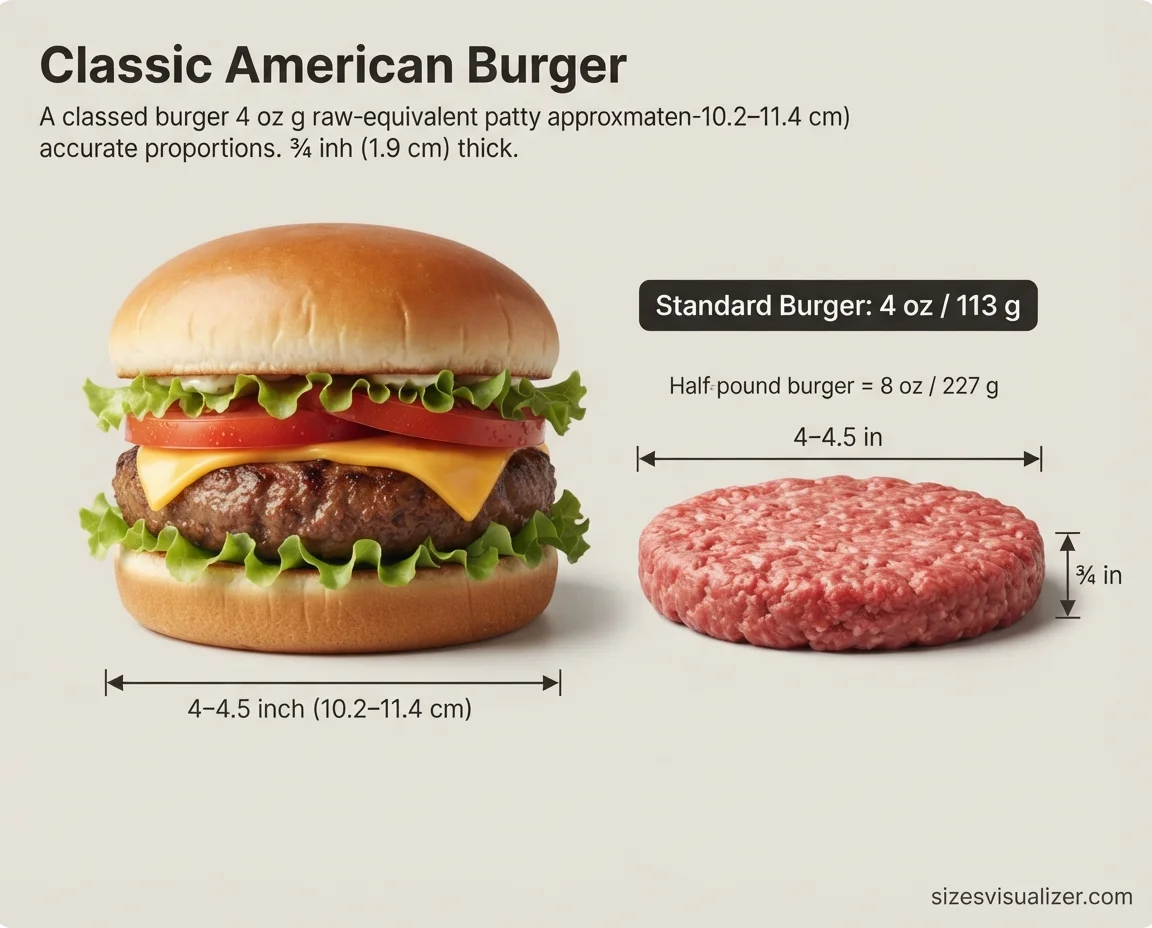
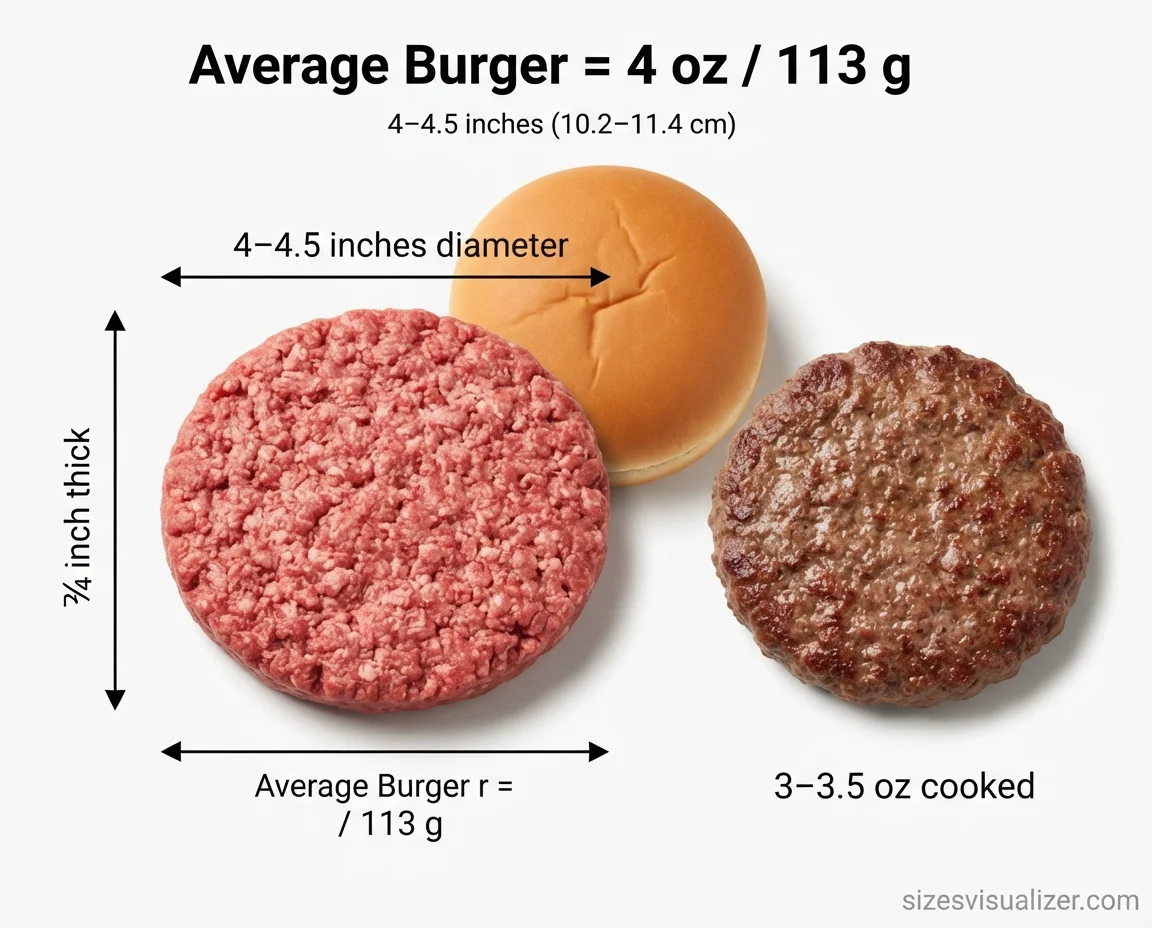
The average burger size in the U.S. is a quarter-pound patty — that’s 4 ounces raw, or about 113 grams. It measures roughly 4 to 4.5 inches wide and ¾ inch thick before cooking.
This size isn’t random. It’s the sweet spot where the patty fits a standard bun, cooks evenly, and gives you a solid meat-to-bread ratio. It’s thick enough to stay juicy in the middle but thin enough to develop a good crust on the outside.
Quick answer: A standard burger weighs 4 ounces raw. A half-pound burger weighs 8 ounces — double the standard size.
Here’s how the most common sizes stack up:
| Type | Raw Weight | Diameter | Best For |
|---|---|---|---|
| Slider | 2 oz | 2.5–3 in | Parties, kids, tastings |
| Standard | 4 oz | 4–4.5 in | Everyday burgers |
| Third-pound | 5.3 oz | 4.5 in | Bigger appetites |
| Half-pound | 8 oz | 5–5.5 in | Restaurant-style, sit-down meals |
| Double meat | 10–12 oz | Varies (often stacked) | Specialty or competition burgers |
Knowing this burger patty weight chart makes it much easier to portion meat correctly, whether you’re grilling at home or comparing menu claims at a restaurant.
Use our Size Visualizer & Comparison Tool to see accurate, easy-to-understand visual comparisons and better understand the real-world size of any object.
Burger Patty Weight Chart: From Sliders to Half-Pound Burgers
Not every burger needs to be the same size. The right burger patty weight depends on what you’re making and who you’re feeding.
Sliders
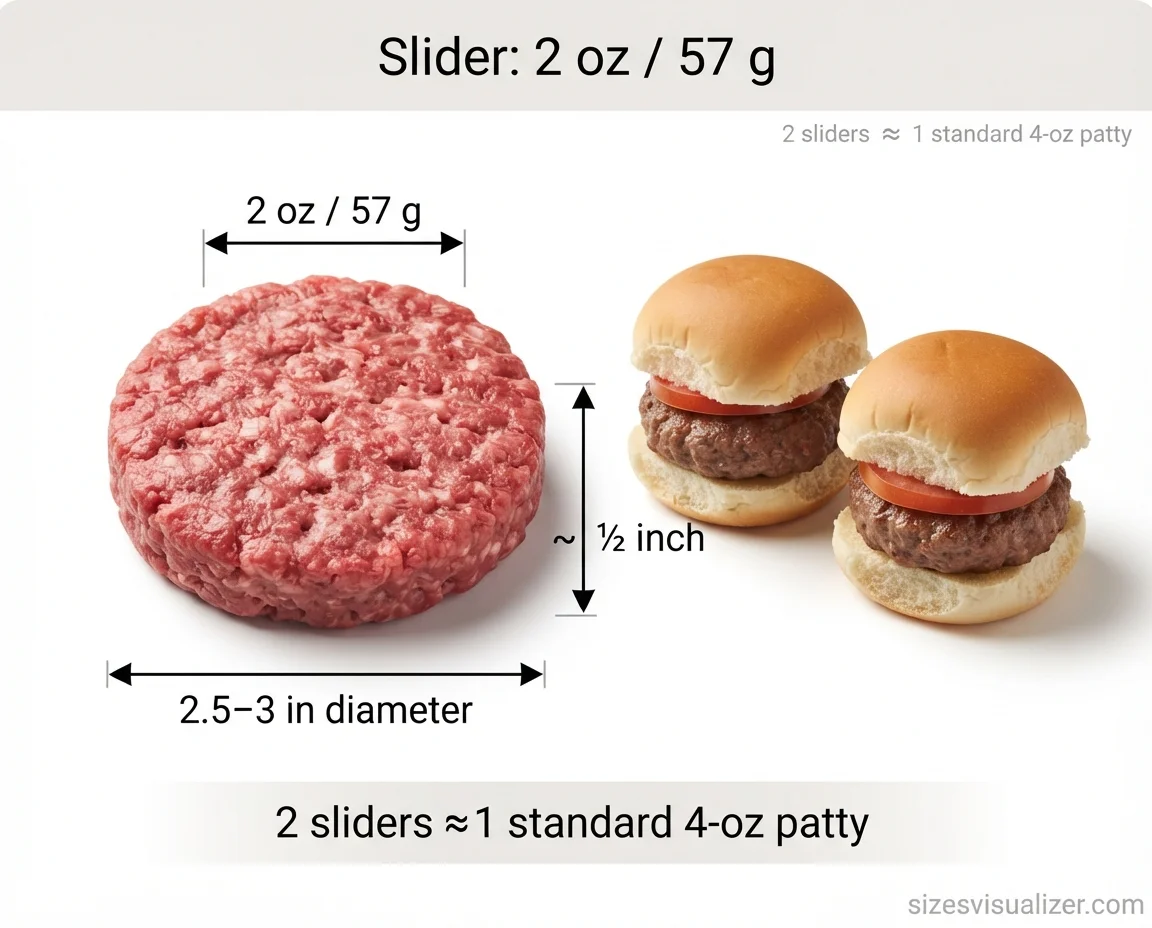
Sliders sit at 2 ounces. They’re built for finger food — think tailgates, potlucks, or feeding a crowd of kids. Two sliders together weigh about the same as one standard patty, but you get more crust per bite because there’s more surface area relative to the meat.
Standard patties
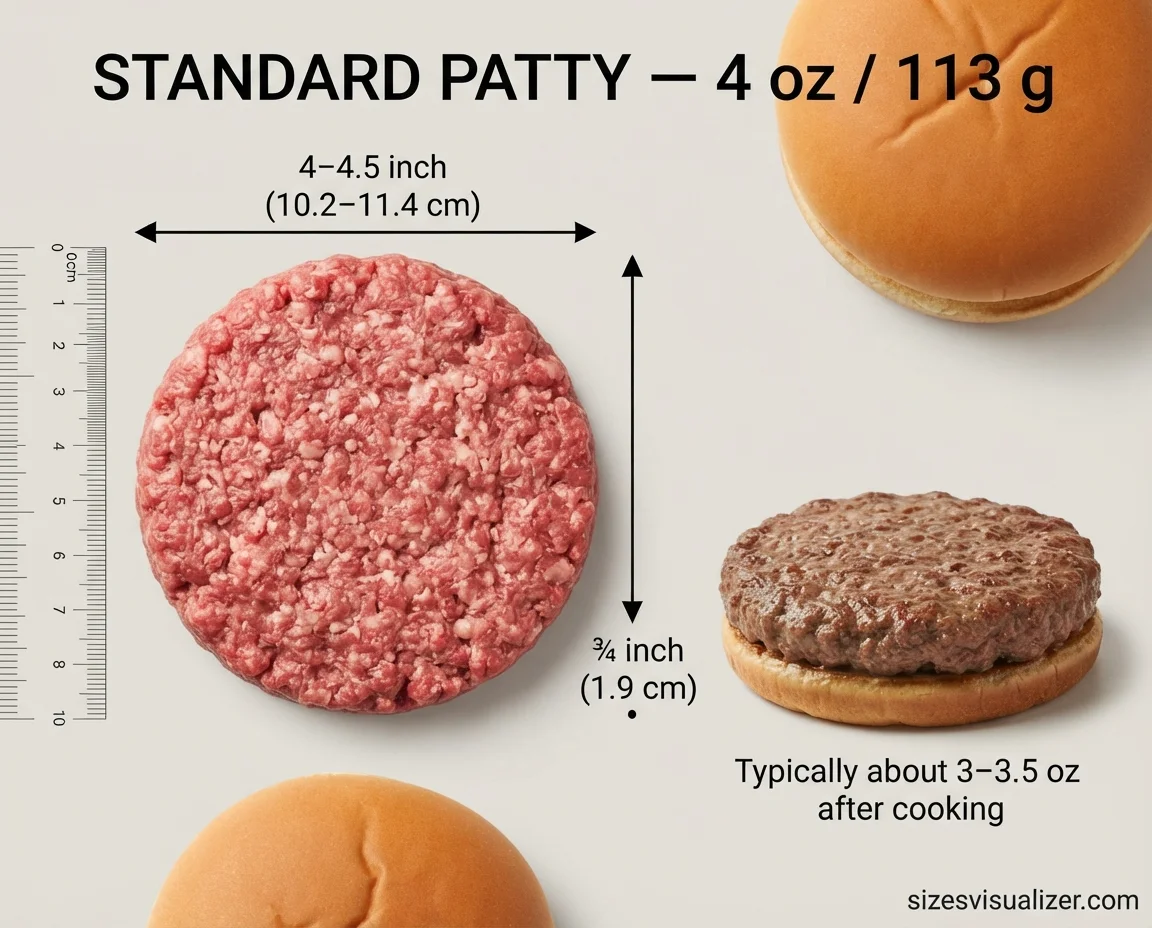
Standard patties are 4 ounces. This is the default size for most home recipes and fast-food “quarter pounders.” It’s the benchmark most cooks measure everything else against.
Third-pound patties
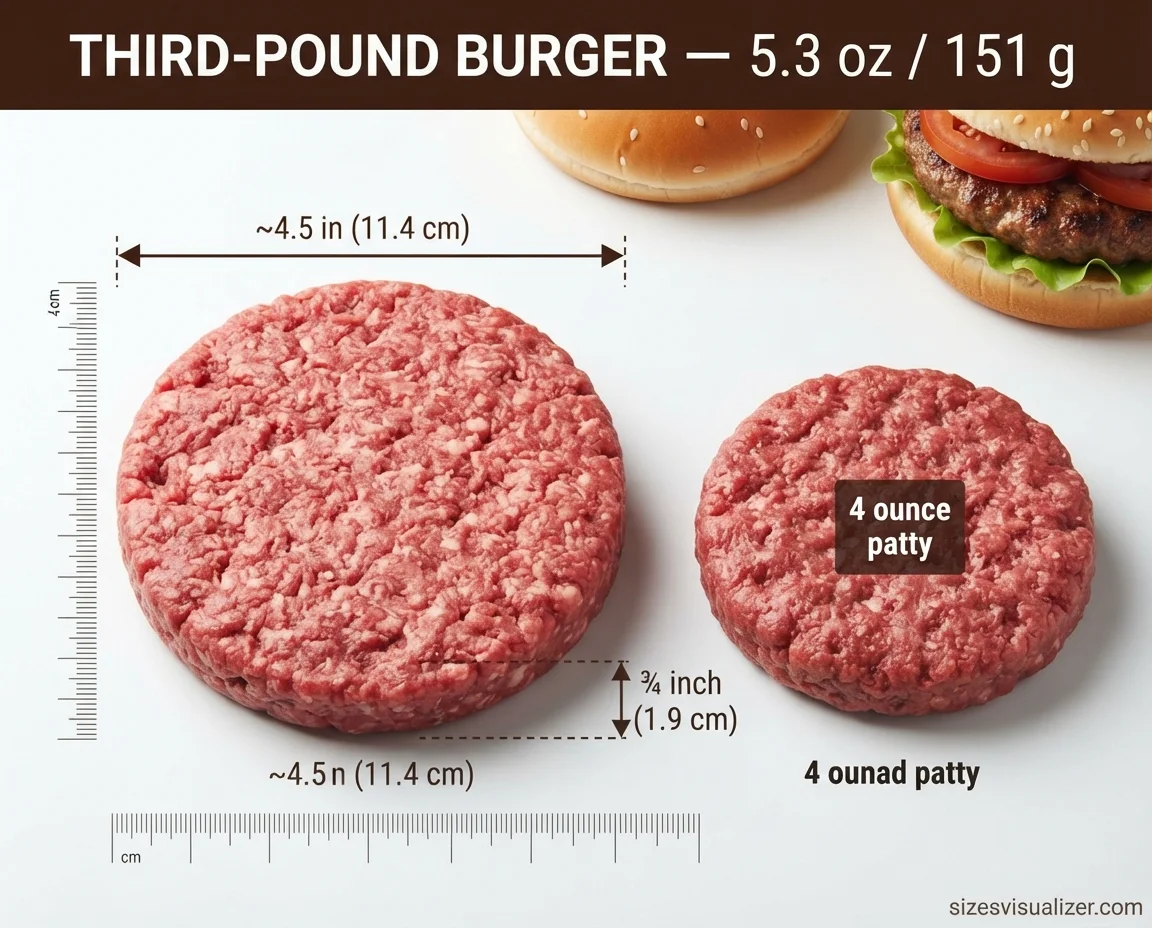
Third-pound patties weigh 5.3 ounces. This size shows up often at casual burger joints — it’s noticeably bigger than a quarter-pounder without tipping into “meal replacement” territory.
Half-pound burgers
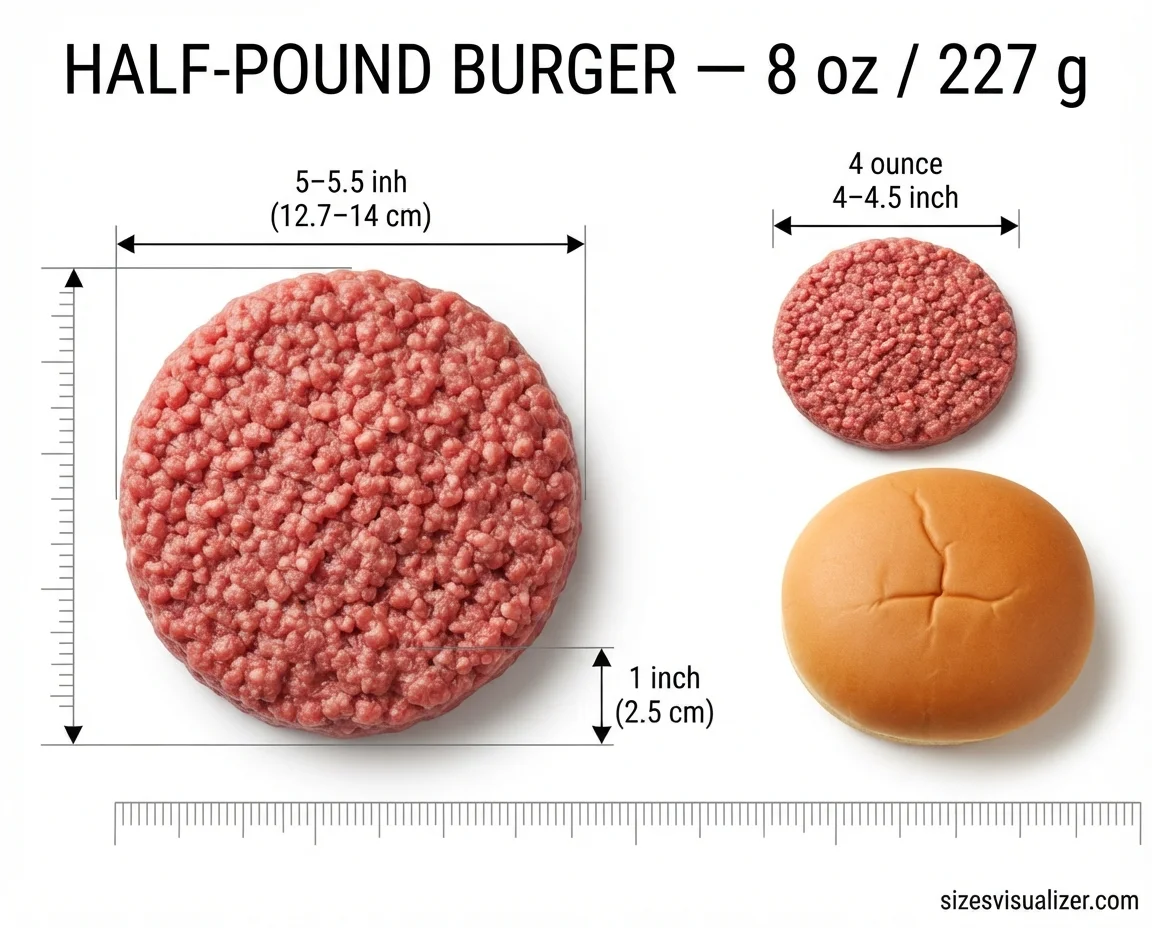
Half-pound burgers weigh a full 8 ounces raw. This is where things get serious. A half pound burger is double a standard patty, and it changes the entire eating experience — more on that below.
Smash burger
Smash burgers don’t follow a fixed weight rule, but they’re usually built from 2 to 4-ounce balls of meat, flattened hard on a hot surface. The smash burger technique trades thickness for a huge amount of crispy, caramelized crust — a different goal than a thick, juicy patty.
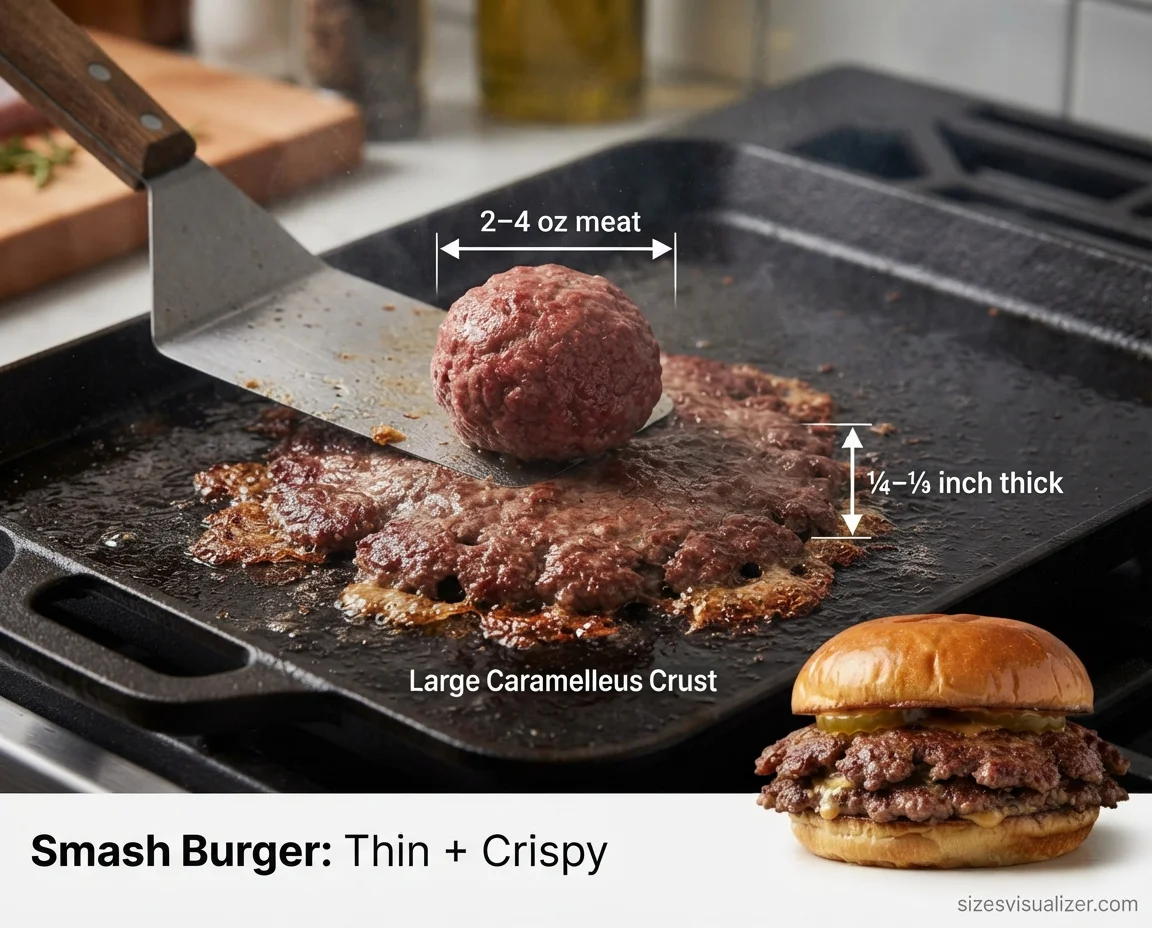
One thing to keep in mind: raw and cooked weight are not the same. According to how ground beef is regulated by the USDA, most ground beef sold for burgers falls in the 80/20 to 90/10 lean-to-fat range (USDA FSIS). Fat renders out during cooking, so a 4-ounce raw patty typically shrinks to somewhere around 3 to 3.5 ounces once it’s off the grill.
Is a Half-Pound Burger Too Big? What a 1/2 Lb Burger Looks Like
This is the question most people actually want answered: is a half pound burger too big?
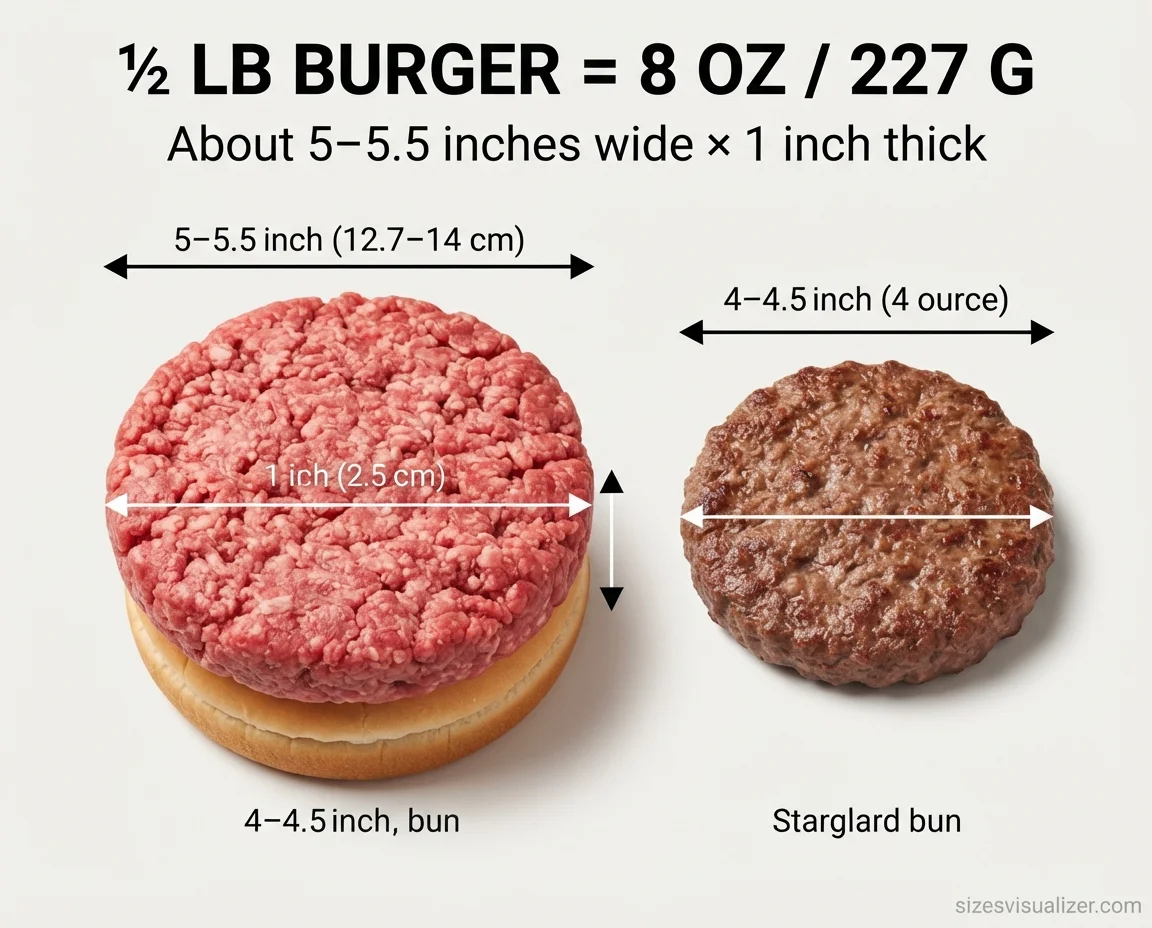
The honest answer is — it depends on your appetite, but for most people, a half-pound burger is a full, hearty meal on its own, not a light lunch.
Picture a patty about 5 to 5.5 inches across and close to 1 inch thick before cooking. That’s noticeably wider than a standard hamburger bun, which typically runs 4 to 4.5 inches. So a true half-pounder often hangs slightly over the edge of a regular bun — which is why many restaurants pair them with a larger, sturdier bun built to match.
There’s also a cooking challenge with this size. A patty this thick is harder to cook evenly. The outside can char while the center stays underdone, especially over high heat. That’s why many chefs prefer stacking two 4-ounce patties instead of shaping one 8-ounce patty — you get the same total burger patty weight, but better texture and more control over doneness.
Must Visit: What Does 1 Pound of Ground Beef Look Like? Visual Size & Ounces
Burger Dimensions: Diameter and Thickness, Raw vs. Cooked
Burger dimensions matter just as much as weight. Two patties can weigh the same but eat completely differently depending on how they’re shaped.
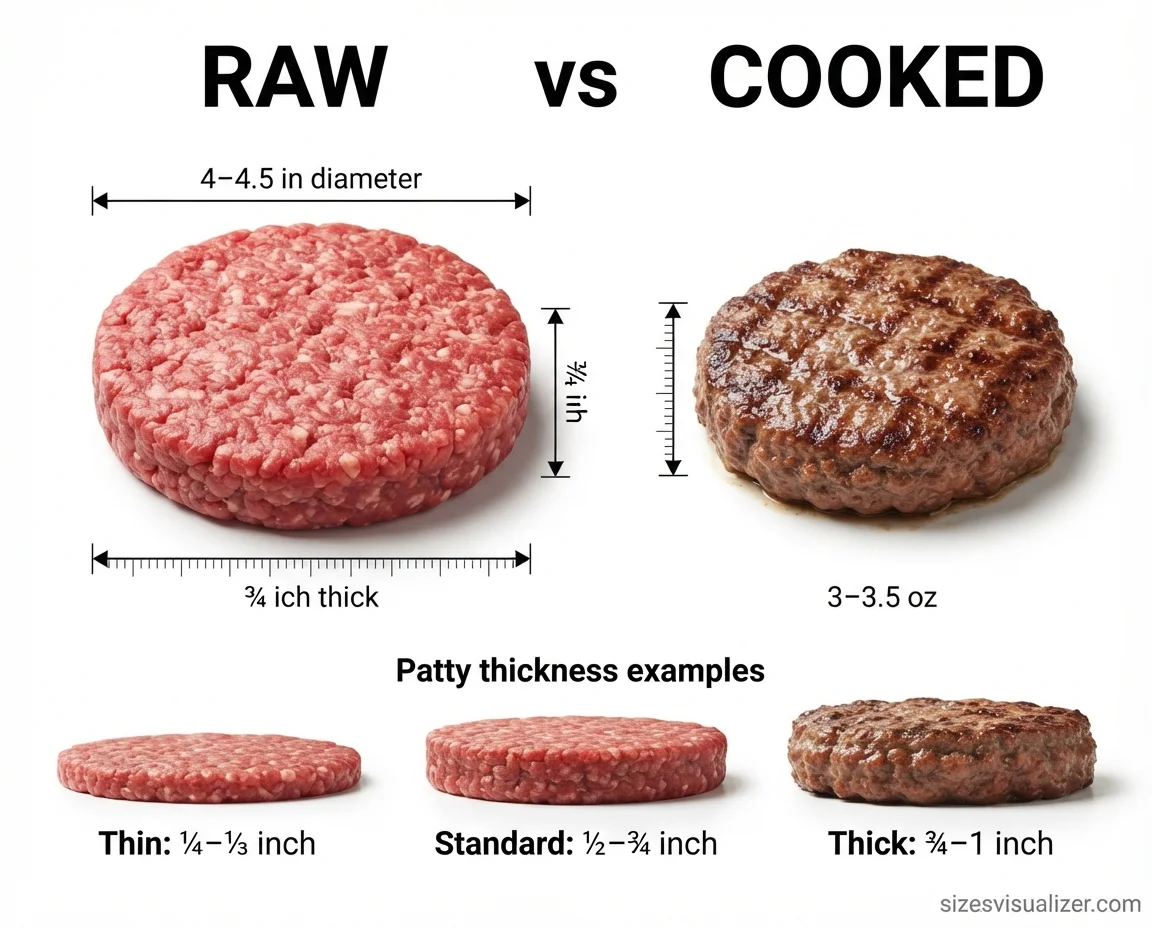
As a general rule, wider and thinner patties cook faster and develop more crust, while narrower and thicker patties stay juicier but need closer attention on the grill.
Here’s a rough breakdown of burger size by thickness:
- Thin patties (¼ to ⅓ inch): Used for smash burgers. Cook in 2–3 minutes total. Almost all crust, very little pink center.
- Standard patties (½ to ¾ inch): The typical home-cooked burger. Balances crust and juiciness.
- Thick patties (¾ inch to 1 inch): Used for half-pound and larger burgers. Juicy but riskier to cook evenly.
Anything beyond 1 inch thick starts to behave more like a small meatloaf than a burger — the center takes too long to reach a safe temperature relative to the outside.
Shrinkage is the part most home cooks forget about. Because ground beef loses fat and moisture as it cooks, a raw patty needs to be shaped slightly wider than your bun to end up the right size once it’s done. Pressing a shallow dimple into the center of the patty before cooking also helps — it stops the middle from puffing up into a dome, a trick favored by plenty of professional grill cooks.
How to Get Consistent Burger Sizes at Home
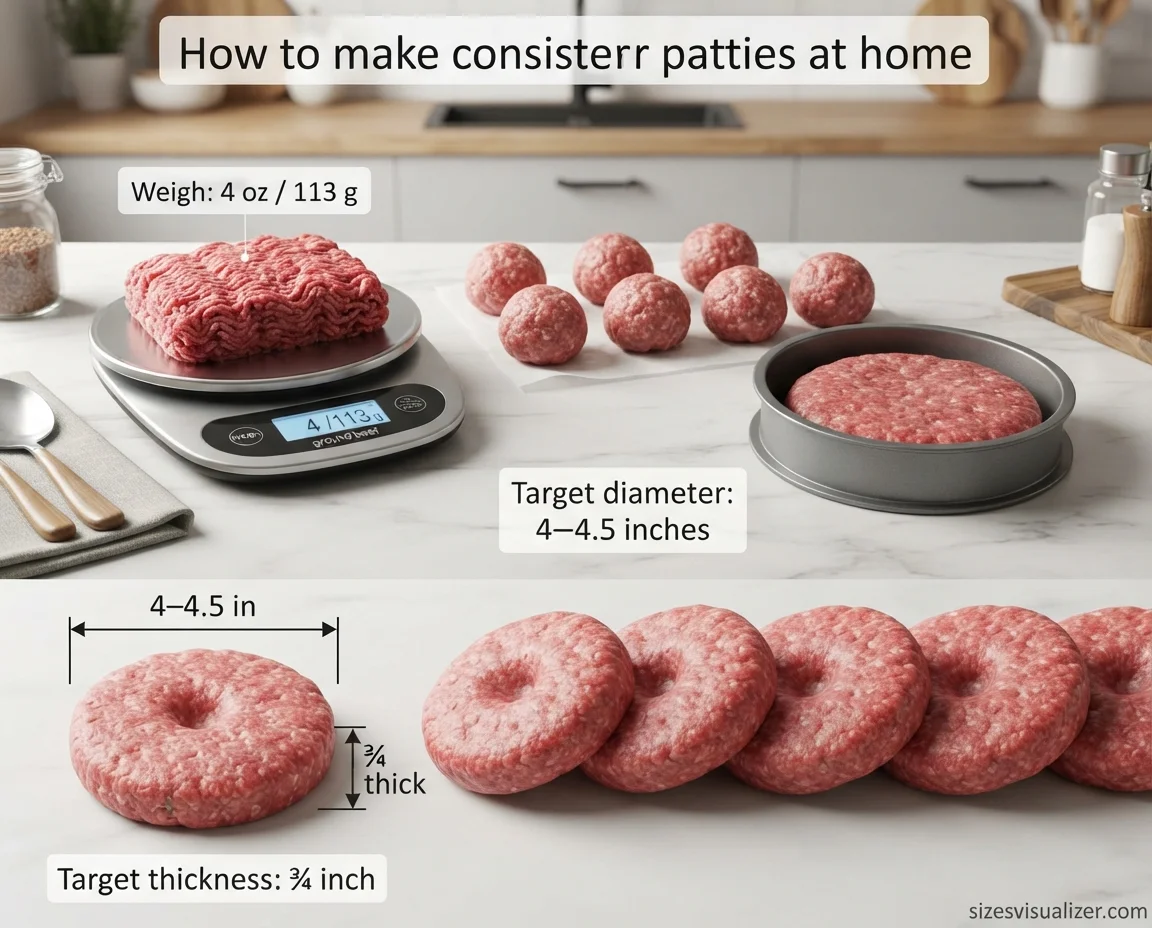
Eyeballing patties leads to uneven cooking — one burger finishes before the other, and portion sizes drift all over the place. A kitchen scale fixes this instantly. Weigh your ground beef, divide by how many patties you want, and portion each one to the same burger patty weight every time.
A ring mold helps with consistent diameter and thickness, especially for thicker styles like the half-pounder. Press the meat into the mold, then release — you get a uniform disc every time instead of a lopsided hand-shaped patty.
For smash burgers, a simple approach works well: portion the meat into loose balls first, then flatten them directly on the cooking surface with a spatula or press. This is where most of the crust develops, since the sudden, hard contact with a hot pan or griddle triggers rapid browning through the Maillard reaction.
There’s also a well-known cooking-time guideline worth knowing: the 5 6 7 rule. In simple terms, it’s a timing method for grilling patties roughly ½ to ¾ inch thick over medium-high heat — cooking one side, flipping, and adjusting the total time in minutes depending on how done you want the center. It’s not an exact science, since grill heat and patty thickness vary, but it’s a useful starting point for consistent results without constantly cutting into the burger to check.
FAQs About Burger Size and Weight
Are half-pound burgers too big?
For a single sitting, a half-pound burger is on the larger side for most adults. At 8 ounces of raw meat, it’s double a standard quarter-pound patty and often qualifies as a full meal rather than a quick bite.
What does a 1/2 lb burger look like?
A half-pound patty is roughly 5 to 5.5 inches in diameter and close to 1 inch thick when raw. It’s noticeably wider than a standard burger bun and shrinks slightly once cooked.
What is a 1/2 lb burger?
It’s a burger patty made from 8 ounces of raw ground beef — exactly double the weight of a standard 4-ounce quarter-pound burger.
What is a half pound burger?
A half pound burger is a single patty weighing 8 ounces before cooking. It’s a common “big burger” size at sit-down restaurants and is usually served on a larger bun to match its size.
Is 1/2 pound burger a lot?
Yes, relative to standard burger sizes. Most everyday burgers weigh 4 ounces, so a half-pound patty has twice the meat and roughly double the calories of a standard burger.
What is the 5 6 7 rule for burgers?
The 5 6 7 rule is a simple grilling timing guideline used for burgers around ½ to ¾ inch thick over medium-high heat. It helps home cooks judge how long to cook each side to reach a desired level of doneness without repeatedly cutting into the patty to check.
Conclusion
Burger size isn’t one-size-fits-all — it depends on your appetite, your bun, and how you like your patty cooked. Whether you stick to a classic 4-ounce burger or go for a full half-pound burger, knowing the real weights and dimensions means fewer surprises and better results every time you fire up the grill.

Measurement Researcher, Size Comparison Writer & Content Specialist
Timmy Ahad is a dedicated content writer and research specialist at SizesVisualizer.com, where he focuses on creating accurate, easy-to-understand content about measurements, dimensions, size comparisons, and real-world object visualization.