The great white shark is the largest predatory shark in the ocean, and its true dimensions are frequently misunderstood. This article explains verified great white shark dimensions data, corrects common myths, and puts its scale in proper context using research-backed figures.
Table of Contents
How Big Is a Great White Shark? Average Length and Weight

The average adult great white shark measures between 14 and 18 feet in length, or roughly 4.3 to 5.5 meters. For comparison, that is longer than most standard parking spaces and close to the length of a full-size pickup truck.
Great white shark weight typically ranges from 1,500 to 4,000 pounds (680 to 1,800 kilograms). This range is wide because weight is influenced by several factors, including age, sex, geographic location, and prey availability in a given region.
A well-documented pattern in great white sharks is sexual size dimorphism, meaning females and males differ significantly in size. Females are consistently larger than males, often reaching 15 feet or more, while mature males typically range between 11 and 13 feet. Researchers attribute this difference to the physiological demands of reproduction, since larger females can carry and support developing pups more effectively.
Great white sharks are ovoviviparous, meaning embryos develop inside eggs that hatch within the mother before live birth occurs. A newborn pup already measures 4 to 5 feet at birth, an unusually large size compared to most other fish species.
Growth is slow. Using bomb radiocarbon dating, a technique that analyzes carbon isotopes absorbed into vertebral tissue, scientists have determined that great white sharks may not reach full sexual maturity until 26 years of age or later, with some individuals living 30 to 70 years in total.
Our Size Visualizer Tool helps you visualize measurements and understand the actual scale of objects through clear size comparisons.
Great White Shark Dimensions Size Comparison
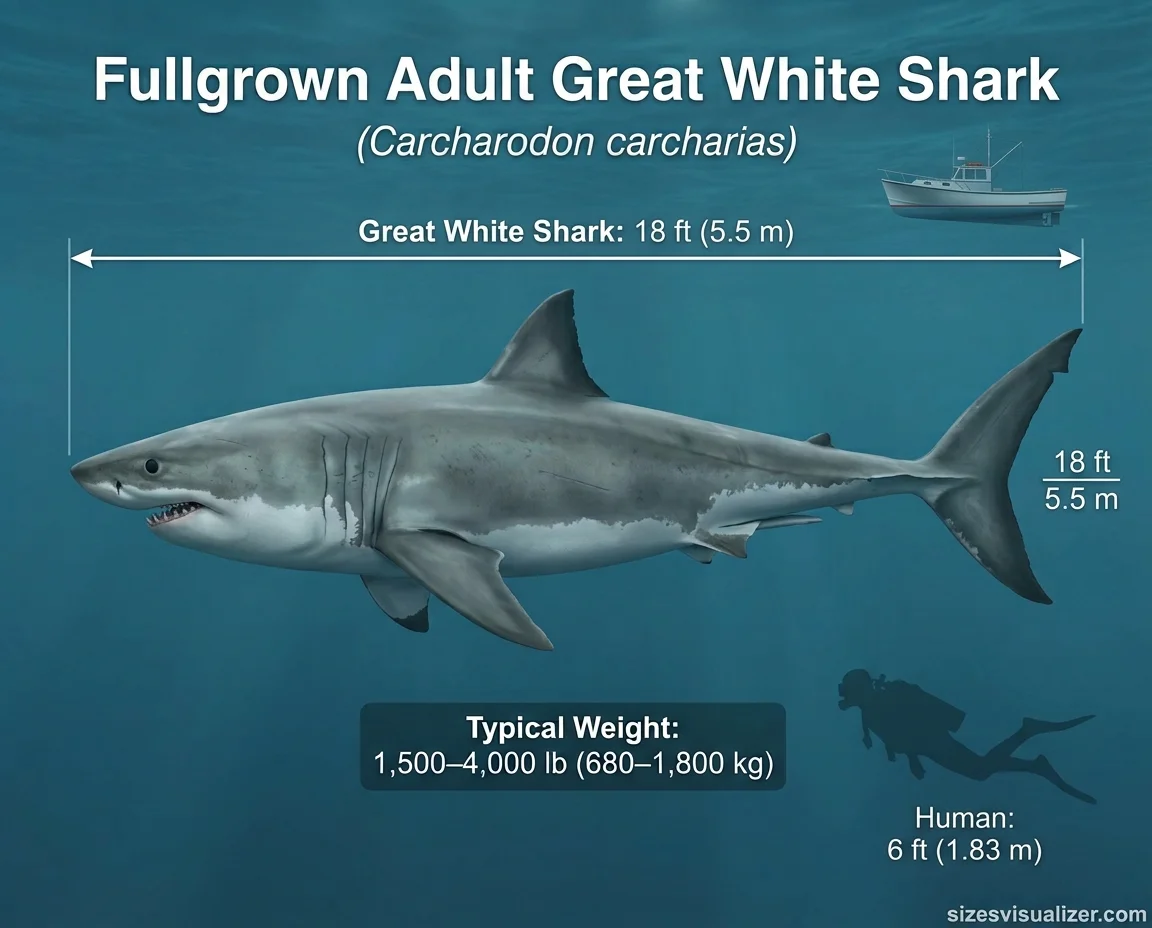
Raw measurements become far more meaningful when placed against familiar, real-world references. An 18-foot great white shark stands roughly three times taller than an average adult human, and when positioned beside a small fishing boat, a large adult can account for nearly one-third of the vessel’s total length.
Next to a scuba diver, the size disparity is immediately visible. A mature great white can appear two to three times longer than a diver in the water, which is part of why underwater encounters leave such a strong visual impression, even though the species rarely targets humans as prey.
One of the most important clarifications in great white shark facts involves its ranking among sharks overall. The great white is not the largest shark species in the ocean. That distinction belongs to the whale shark, a filter-feeding species that can exceed 40 feet in length. The great white shark instead holds a different, more specific title: it is the largest predatory shark, meaning the largest shark species that actively hunts, chases, and kills prey such as seals, sea lions, and other fish, rather than filtering plankton from the water.
Must visit: How Big Is a Grizzly Bear? Size, Height, Weight, Length & Facts
The Largest Great White Shark Ever Recorded
Historical size claims about the great white shark have long created confusion in scientific literature. For decades, a specimen originally measured at 36.5 feet was cited as factual in multiple publications. In 1973, marine biologist J.E. Randall re-examined the jaw and teeth of that same specimen and published corrected findings in the peer-reviewed journal Science, demonstrating that the shark’s true length was closer to 17 feet. This correction remains one of the most cited examples of exaggerated shark measurements in scientific history.
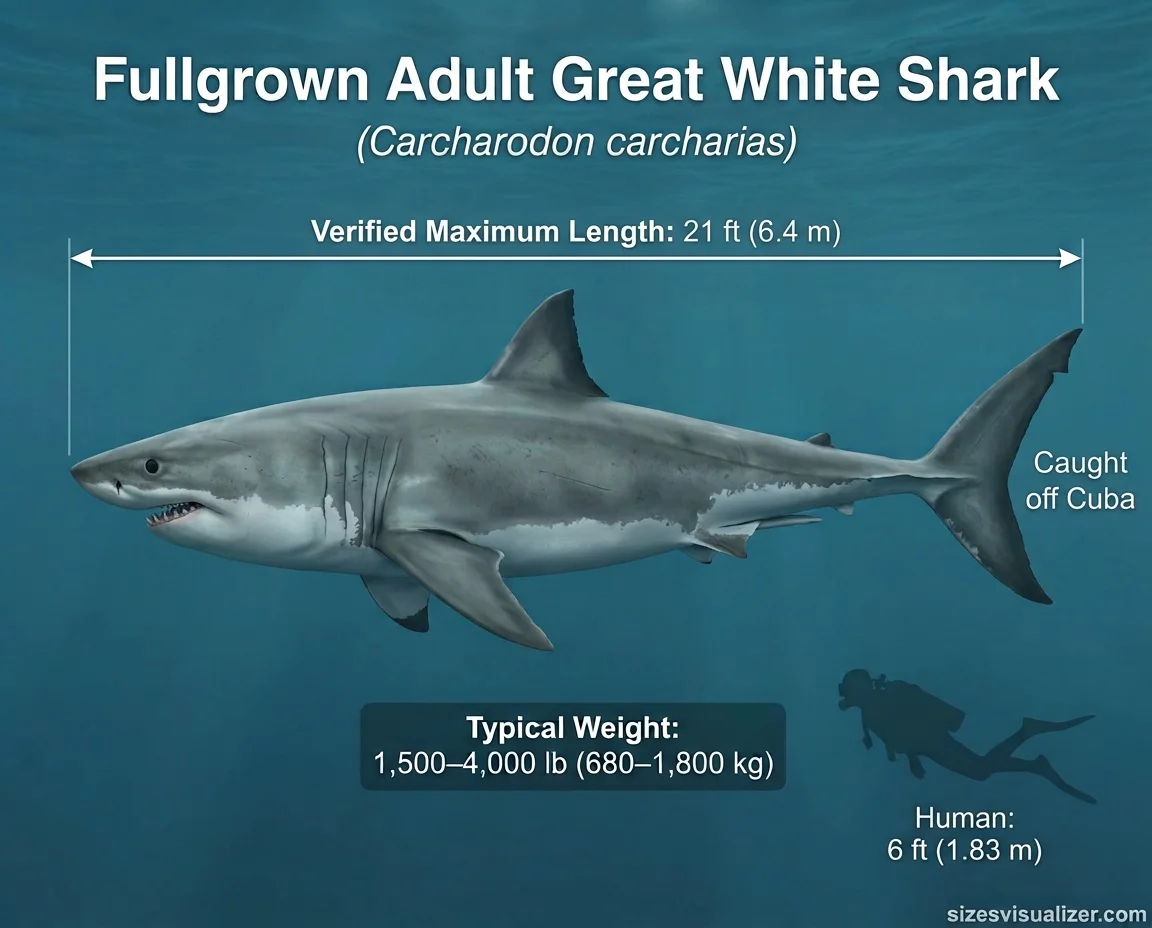
Based on verified physical evidence, the largest great white shark ever reliably measured was a 21-foot individual caught off the coast of Cuba. This measurement continues to serve as the scientific benchmark for maximum confirmed body length in the species.
Modern satellite tracking has introduced new, well-documented data points. Deep Blue, a mature female great white tracked in the Pacific Ocean, is estimated at nearly 20 feet in length and is widely regarded as the largest confirmed living great white shark observed to date. In the Atlantic, a male great white named Contender was tagged in 2025 by the nonprofit research organization OCEARCH. Contender measures nearly 14 feet in length and weighs an estimated 1,653 pounds, making him the largest male great white shark ever tagged in the western North Atlantic Ocean.
Claims describing great white sharks in the 25-, 30-, or 40-foot range remain unverified. Bite marks discovered on whale carcasses off southern Australia suggest that sharks in the 25 to 26-foot range may exist in the wild, but no living specimen of that size has ever been physically measured or scientifically confirmed.
Must visit: How Big Is a Grizzly Bear? Size, Height, Weight, Length & Facts
Great White Shark Size vs. Other Ocean Predators
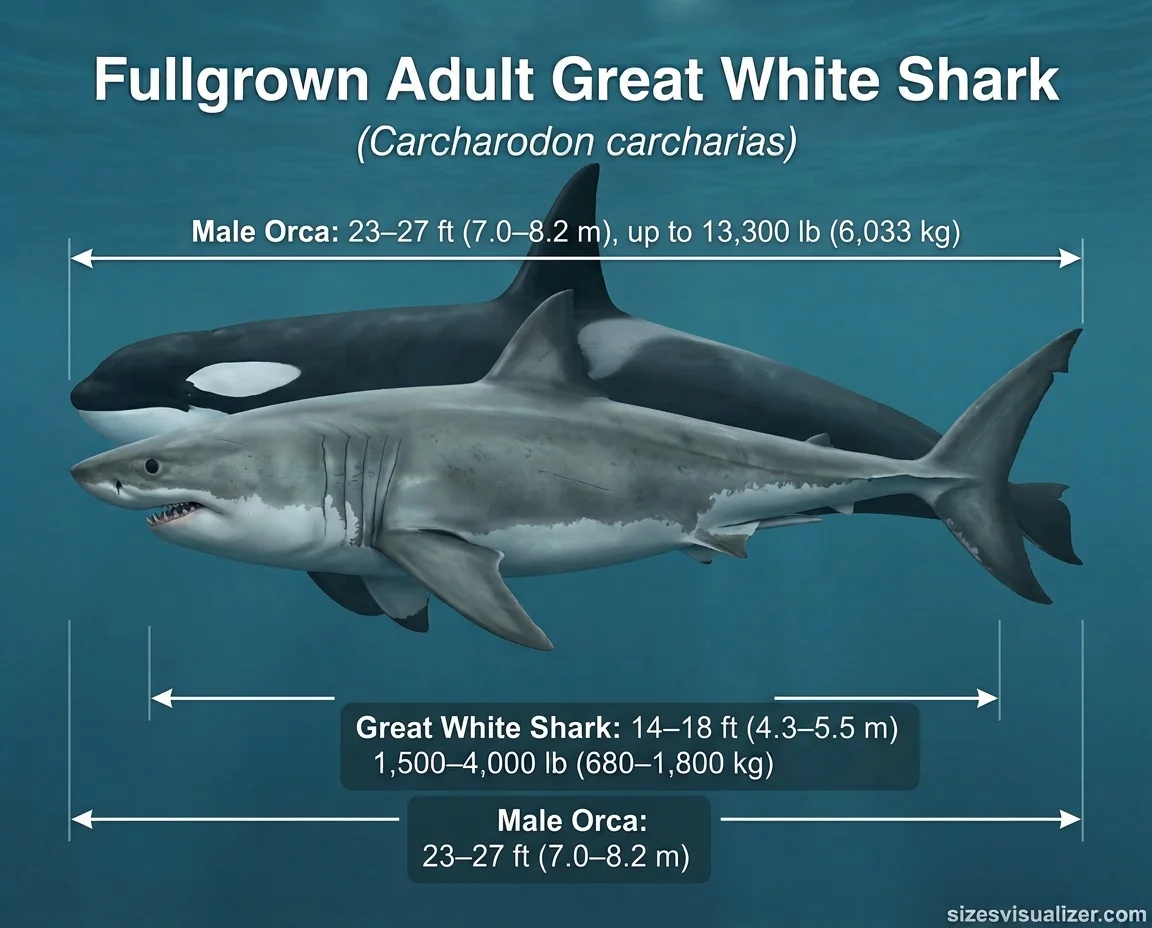
Body size alone does not determine dominance within marine ecosystems. The orca, commonly known as the killer whale, significantly exceeds the great white shark in both length and mass. According to data published by the Alaska Department of Fish and Game, adult male orcas typically reach 23 to 27 feet in length and can weigh up to 13,300 pounds, making a single orca roughly three to five times heavier than an average adult great white shark.
This size advantage translates directly into documented predatory behavior. Marine researchers off the coast of South Africa have recorded multiple confirmed instances of orcas hunting and killing great white sharks, specifically targeting the shark’s liver for its dense nutritional fat content. Following these events, entire local great white shark populations have been observed relocating away from affected areas for extended periods, sometimes lasting several months.
When ranking sharks by documented risk to humans rather than physical size, the tiger shark is widely recognized as the second most dangerous shark species, based on globally recorded unprovoked bite incidents, ranking directly behind the great white shark.
FAQs
How big is the biggest great white shark ever recorded?
The largest great white shark ever reliably measured was 21 feet long, caught off the coast of Cuba. Among tracked living sharks, Deep Blue, a female great white in the Pacific, is estimated at nearly 20 feet.
What is the #1 biggest shark in the world?
The whale shark holds the title of the largest shark species overall, growing beyond 40 feet. The great white shark is the largest predatory shark, a distinct category based on hunting behavior rather than overall size.
Has there ever been a 20 ft great white shark?
Yes. Deep Blue, a mature female great white tracked by researchers in the Pacific Ocean, is estimated to measure close to 20 feet, making her the largest confirmed living great white shark documented to date.
Are there 40 ft sharks?
Not among great white sharks. No verified 40-foot great white has ever been scientifically measured. Species that do reach or exceed that length, such as the whale shark and basking shark, are filter feeders rather than active predators.
What is the #2 deadliest shark?
The tiger shark ranks second behind the great white shark, based on globally recorded unprovoked bite incidents.
Who would win, 1 orca or 5 great white sharks?
Based on documented marine behavior, the orca. A single adult orca already exceeds the size and weight of an individual great white shark, and orcas have been repeatedly recorded hunting and killing great white sharks in the wild, in some cases displacing entire local shark populations afterward.
Conclusion
Understanding true great white shark dimensions requires separating verified scientific measurement from decades of exaggerated claims. While the great white shark remains the ocean’s largest active predator among sharks, it is neither the largest shark species overall nor the most dominant predator in its own habitat, a distinction that belongs to the orca based on documented size and behavior.

Measurement Researcher, Size Comparison Writer & Content Specialist
Timmy Ahad is a dedicated content writer and research specialist at SizesVisualizer.com, where he focuses on creating accurate, easy-to-understand content about measurements, dimensions, size comparisons, and real-world object visualization.