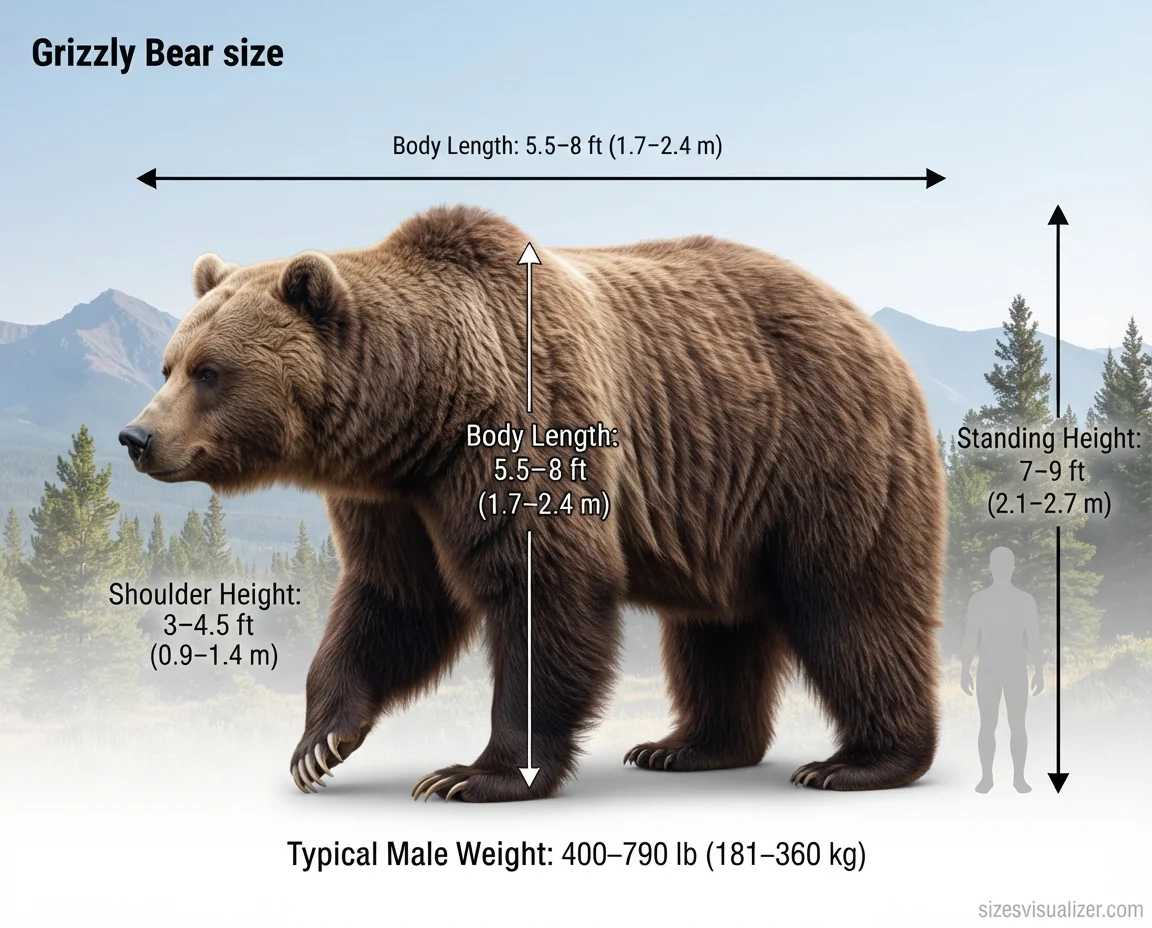
A grizzly bear is one of the largest land predators in North America. An adult male can weigh as much as 800 pounds and stand over 8 feet tall on its hind legs. Females are smaller, but still powerful enough to outweigh most adult humans by hundreds of pounds.
This guide breaks down real grizzly bear size numbers — weight, height, and length — with simple facts you can trust. No fluff. Just the data you’re looking for.
Table of Contents
Grizzly Bear Size at a Glance
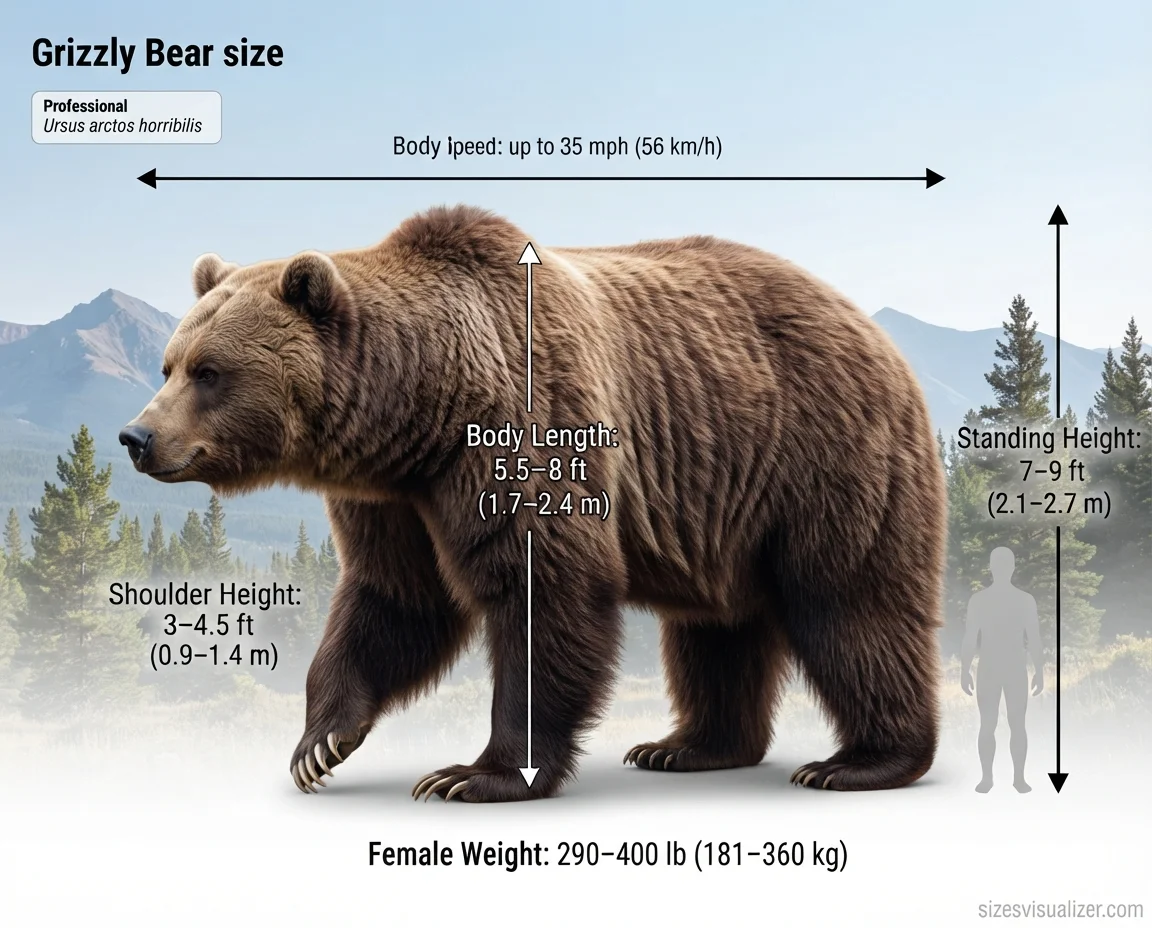
Before we go deep, here’s the quick answer. This table shows the average grizzly bear size range based on wildlife research and field data.
| Trait | Range |
|---|---|
| Scientific name | Ursus arctos horribilis |
| Average weight (male) | 400–790 lb (181–360 kg) |
| Average weight (female) | 290–400 lb (130–180 kg) |
| Shoulder height | 3–4.5 feet (0.9–1.4 m) |
| Standing height | 7–9 feet (2.1–2.7 m) |
| Body length | 5.5–8 feet (1.7–2.4 m) |
| Lifespan | 20–26 years wild; up to 44 in captivity |
| Top speed | Up to 35 mph (56 km/h) |
The grizzly bear, a subspecies of the brown bear, gets its name from the “grizzled,” or silver-tipped, look of its fur. It’s not a separate species — it’s the North American branch of one very large family tree.
Use our Size Visualizer Tool to see how an object’s dimensions compare with real-world items for easier understanding.
Grizzly Bear Weight: How Much Does Grizzly Bear Weigh?
Weight is where grizzly bear size varies the most. Genetics, diet, and location all play a role.
Male grizzly bear weight
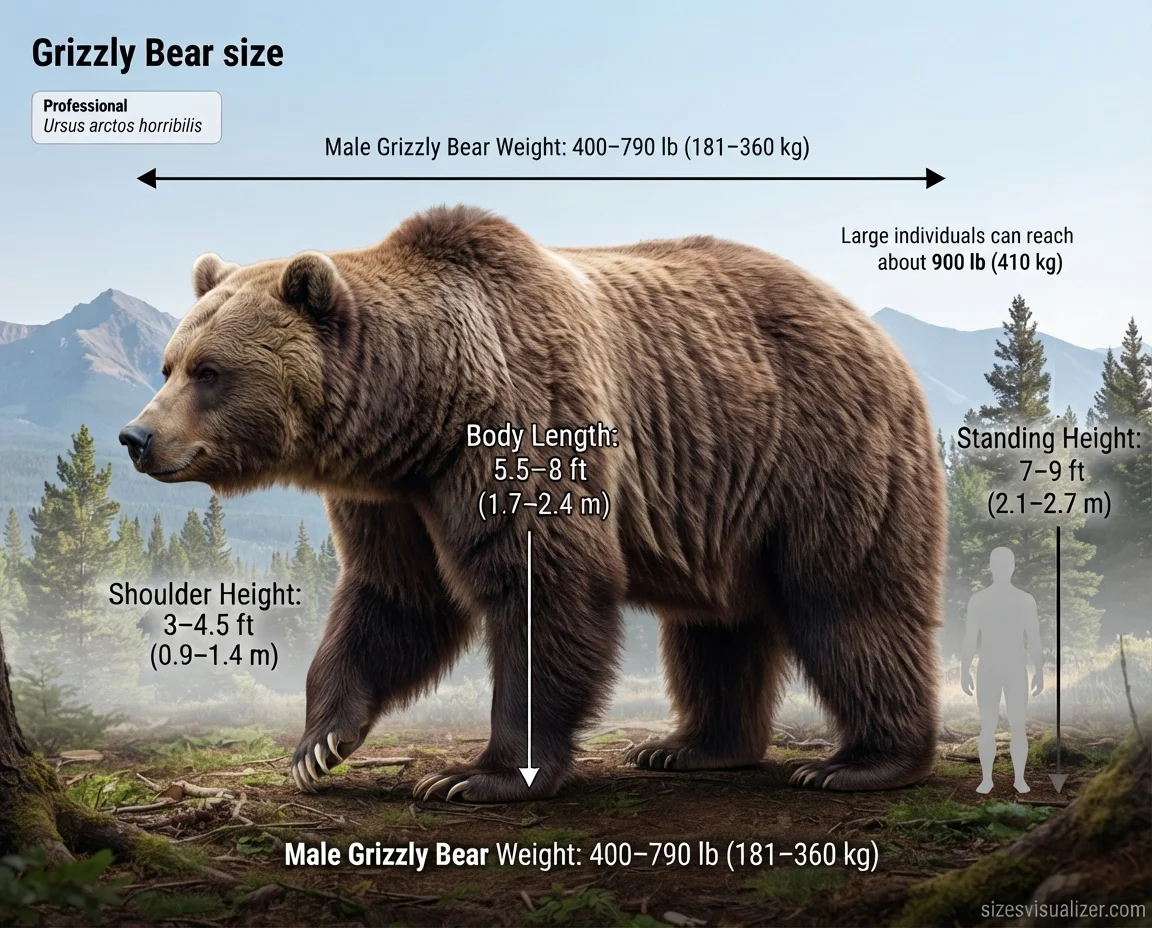
Male grizzly bear weight typically falls between 400 and 790 pounds. Some especially large males, particularly those near coastal salmon runs, have topped 900 pounds. Britannica notes that a large adult grizzly can weigh about 410 kg (900 pounds), confirming just how massive this animal can get.
Female grizzly bear weight
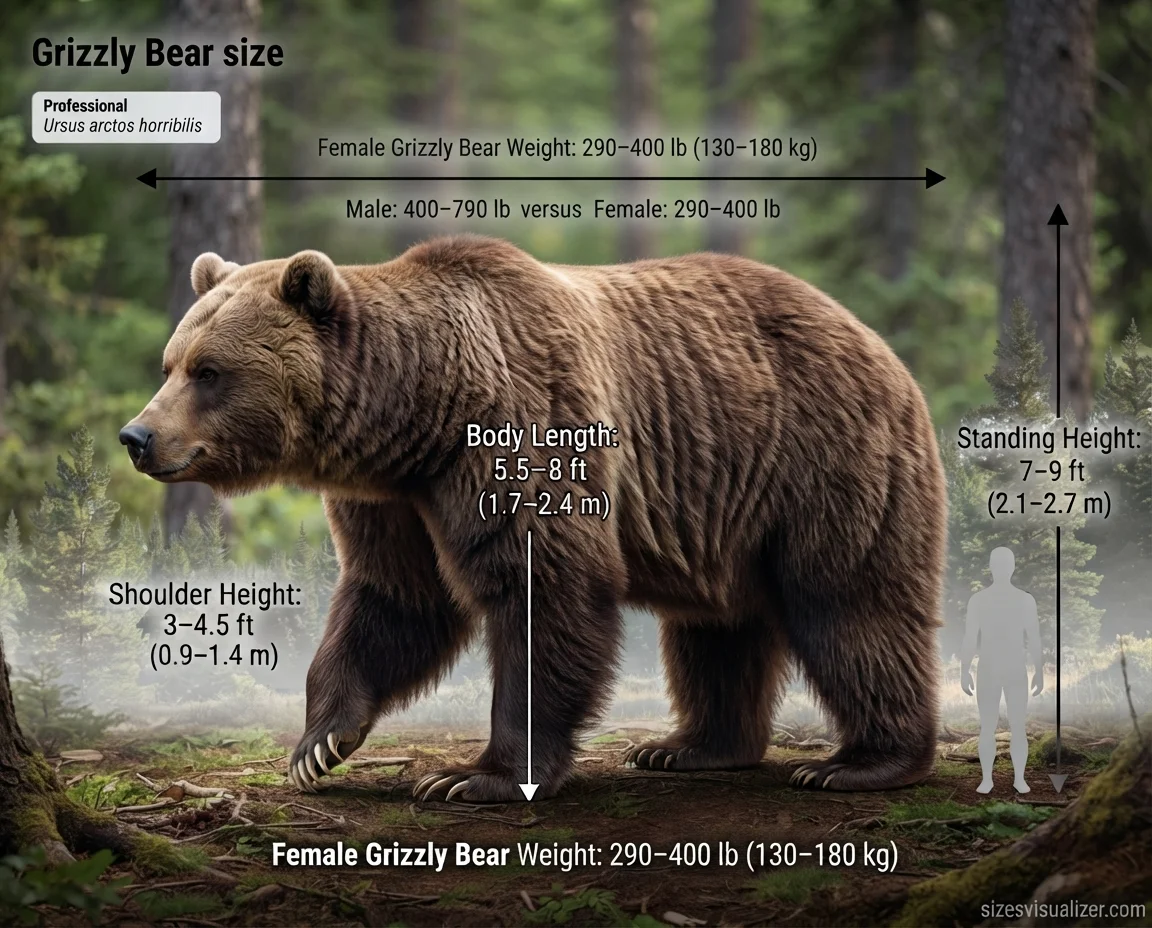
Female grizzly bear weight runs lighter, usually 290 to 400 pounds. A mother grizzly needs enough bulk to survive hibernation and nurse cubs, but she doesn’t need the same mass as a male competing for territory or mates.
Grizzly bear cubs
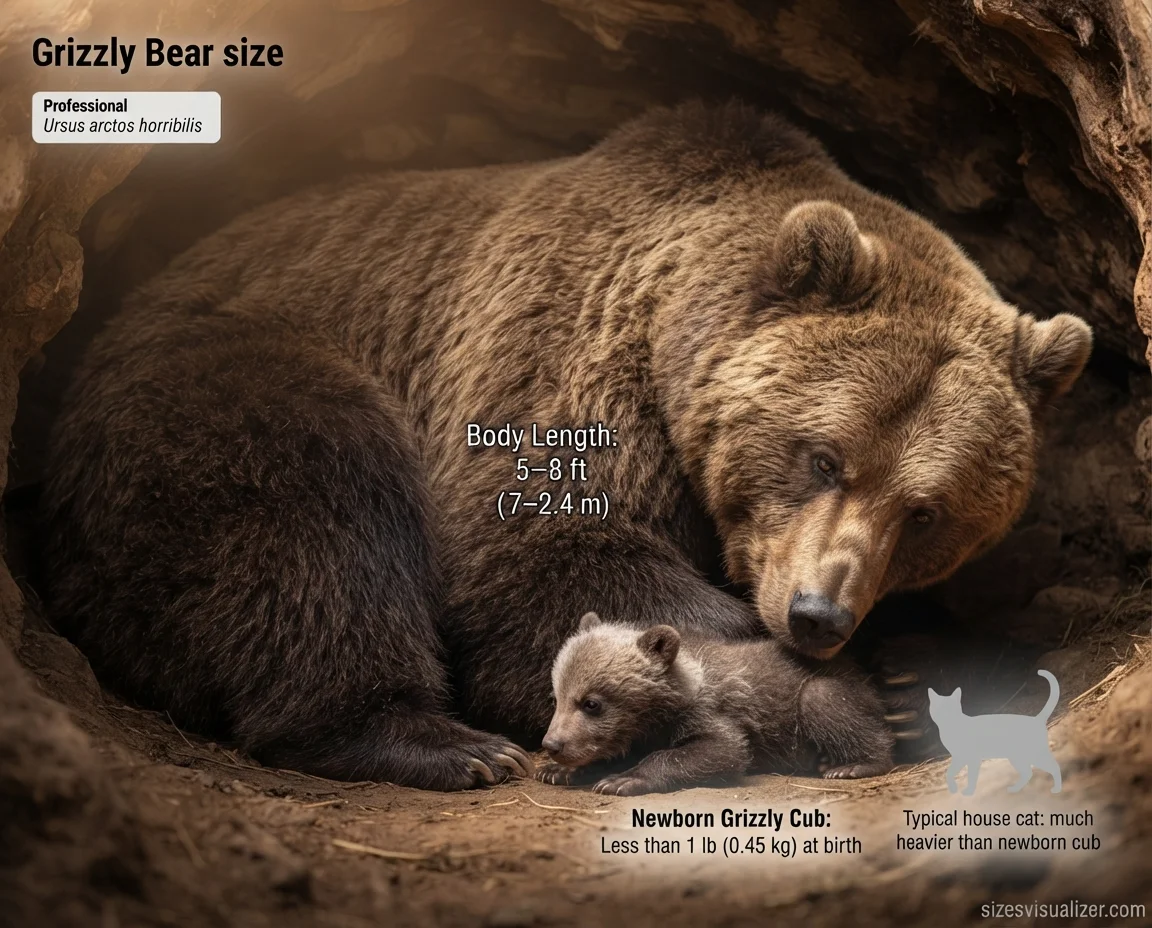
Grizzly bear cubs start out tiny. A newborn cub weighs less than 1 pound at birth — smaller than a housecat. Cubs grow fast on rich milk and can gain dozens of pounds within their first year.
Here’s a fact most people miss: coastal grizzlies are noticeably bigger than inland grizzlies. Bears near salmon-rich rivers in Alaska and coastal British Columbia gorge on fish protein all summer. Inland grizzlies, living in places like Yellowstone or the Rocky Mountains, rely more on roots, berries, and smaller prey — so they tend to stay leaner. This diet gap alone can shift average weight by 100 pounds or more.
Before winter, grizzlies enter a stage called hyperphagia. During this period, a bear can eat up to 10 times its normal calorie intake, packing on fat reserves to survive months without food. This single biological trick explains why a grizzly’s weight can swing dramatically between spring and late fall.
Grizzly Bear Height and Length
Shoulder height
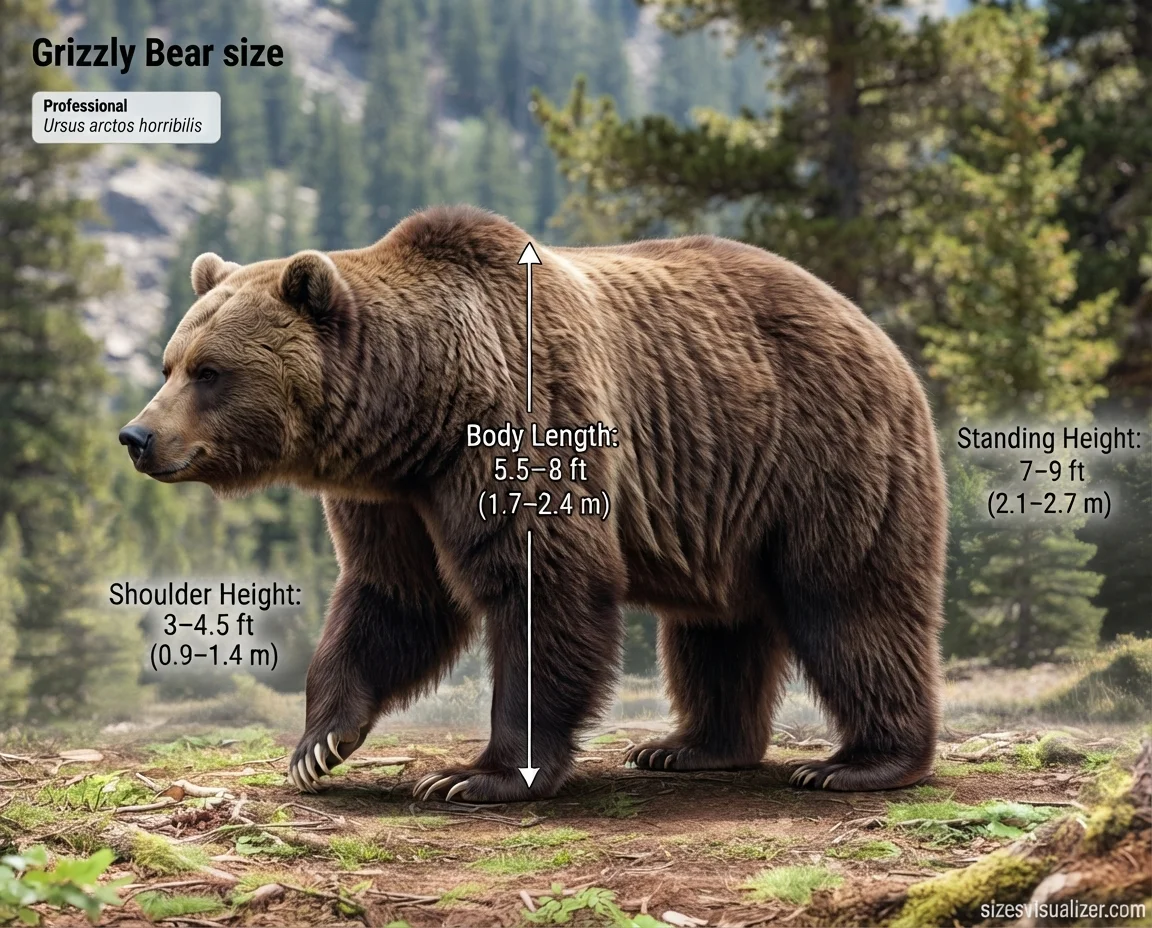
How tall a grizzly stands on all four legs — usually falls between 3 and 4.5 feet. This is the height you’d see if the bear were walking toward you, which is exactly why grizzlies look so low and powerful up close.
Standing height
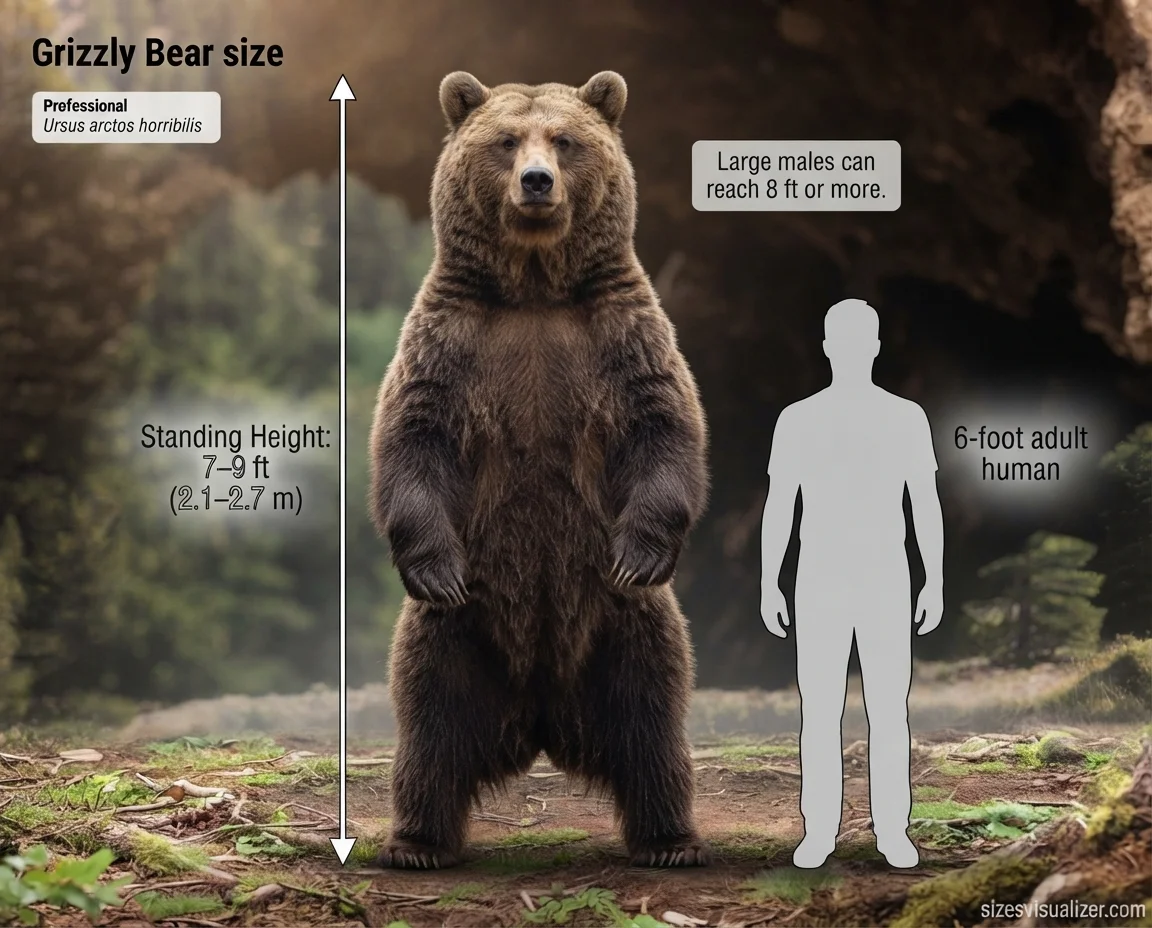
when a grizzly rears up on its hind legs, is a different story. Adult males can reach 8 feet tall or more. Females typically stand around 6.5 feet. Bears don’t stand up to attack — they usually do it to see farther, smell the air, or size up a threat.
Body length
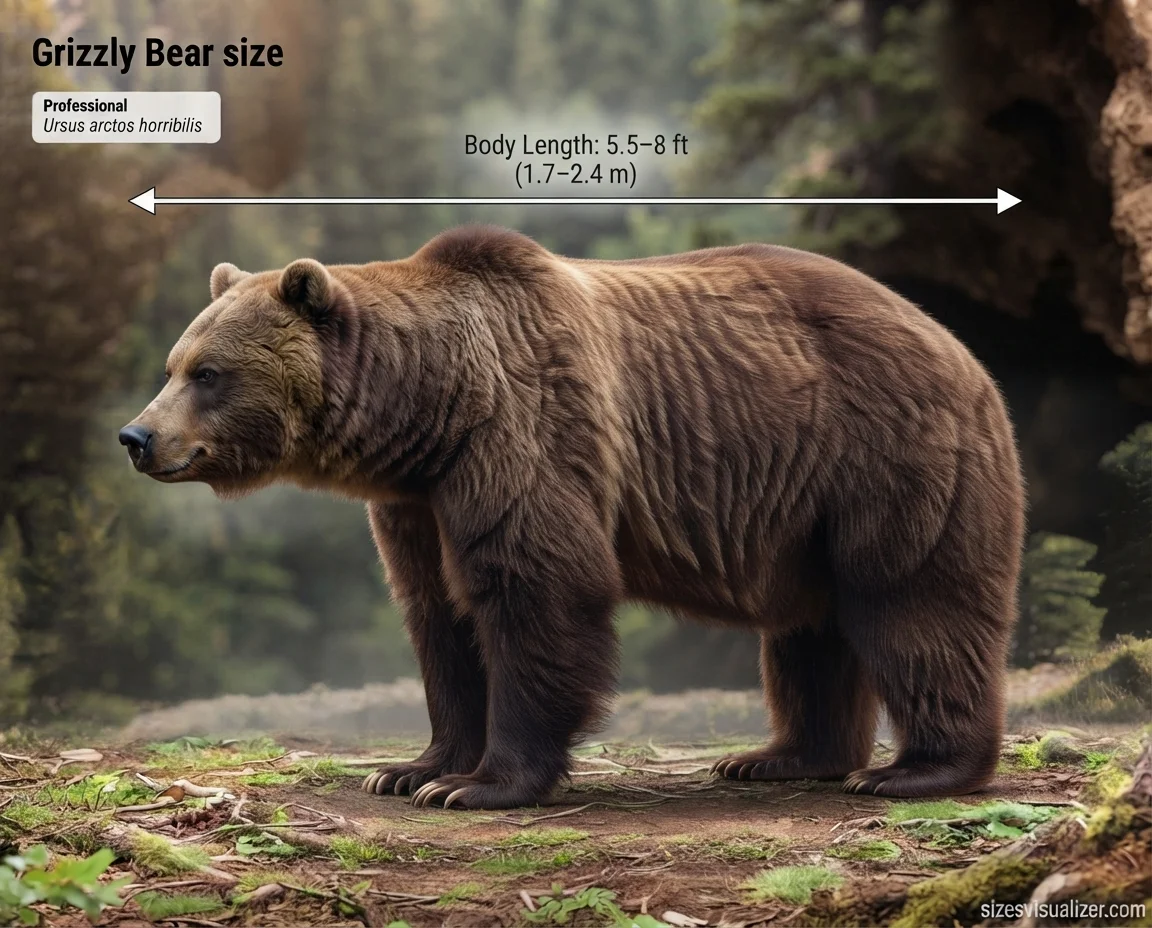
Body length, measured nose to tail, ranges from about 5.5 to 8 feet. Combined with a muscular shoulder hump — a feature unique to grizzlies and not found on black bears — this gives the animal its unmistakable silhouette.
One small but telling detail: a grizzly’s front claws measure 2 to 4 inches long, built for digging dens and roots rather than climbing. Compare that to a black bear’s shorter, curved claws, made for climbing trees.
Must visit: How Tall Is a Giraffe? Height, Size, Weight & 15 Fascinating Facts
How Big Is a Grizzly Bear Compared to Other Animals?
Numbers alone don’t always click. Comparing a grizzly bear’s size to other animals — and to us — makes the scale easier to picture.
Grizzly bear vs. human size
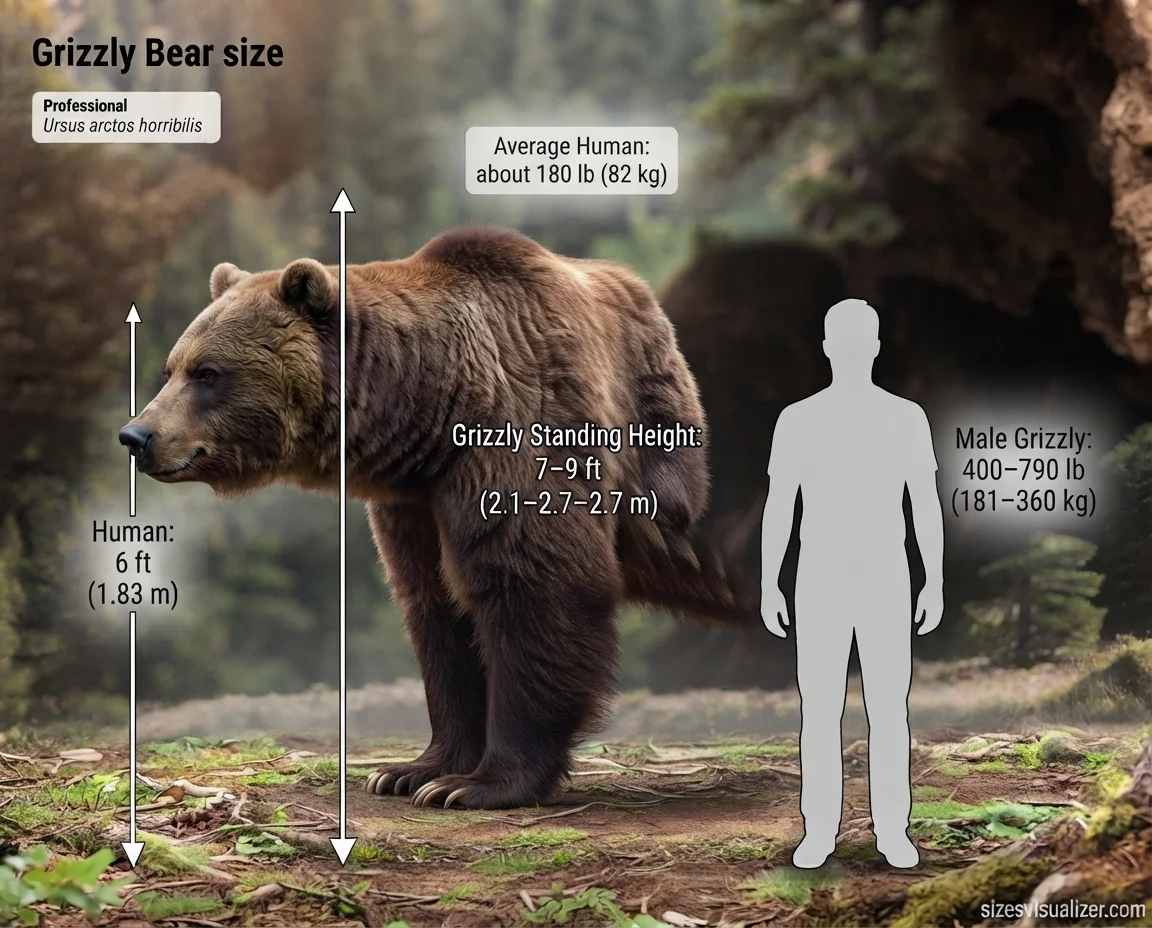
A 6-foot-tall man barely reaches the shoulder of a standing male grizzly. Where an average adult human weighs around 180 pounds, a grizzly can weigh four to five times that. In raw strength, a grizzly’s bite force and paw swing far outmatch anything a human body can produce.
Grizzly bear vs. Kodiak bear
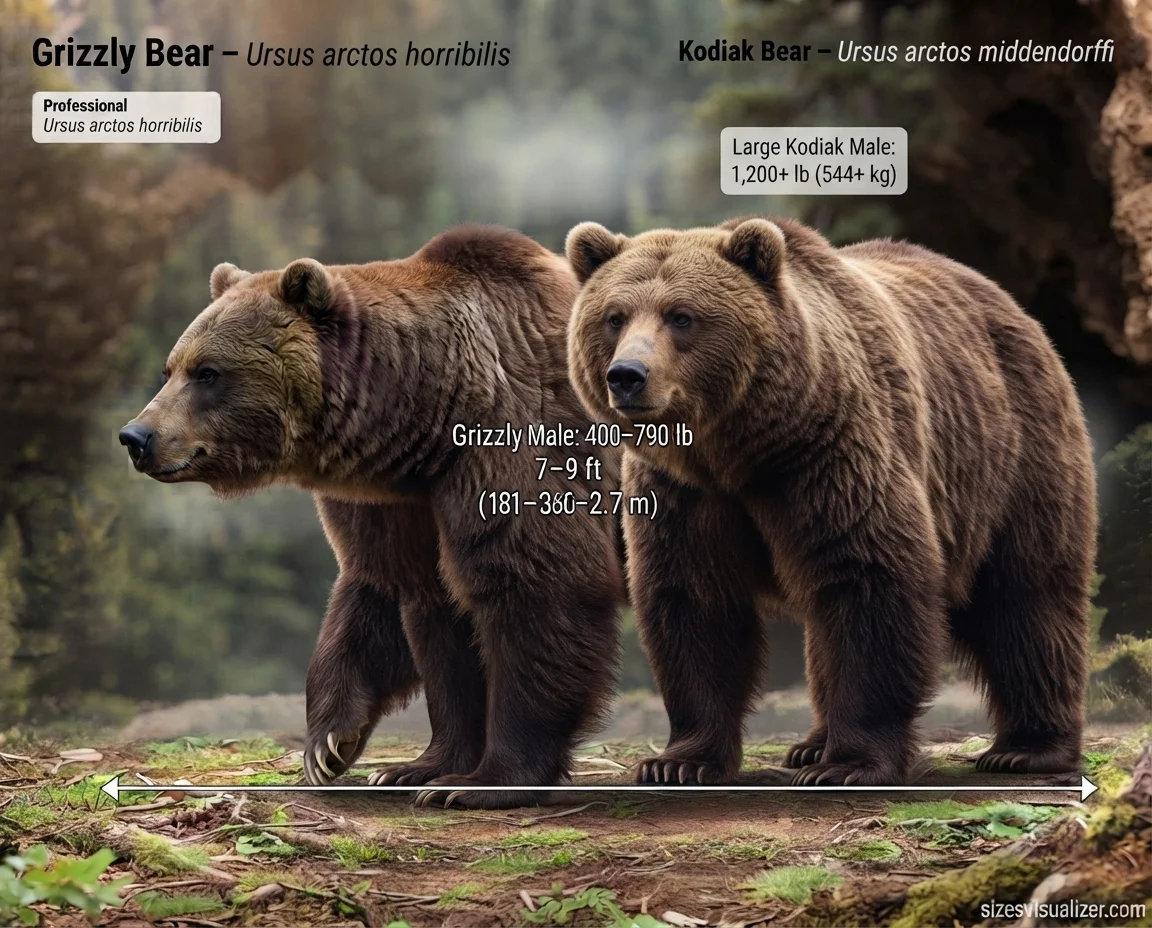
The Kodiak bear (Ursus arctos middendorffi) is technically a separate subspecies of brown bear, found only on Alaska’s Kodiak Island. Kodiaks are, on average, larger than grizzlies — big males can weigh over 1,200 pounds. Their isolated island habitat and steady salmon supply help them grow bigger than their mainland grizzly relatives.
Grizzly bear vs. black bear
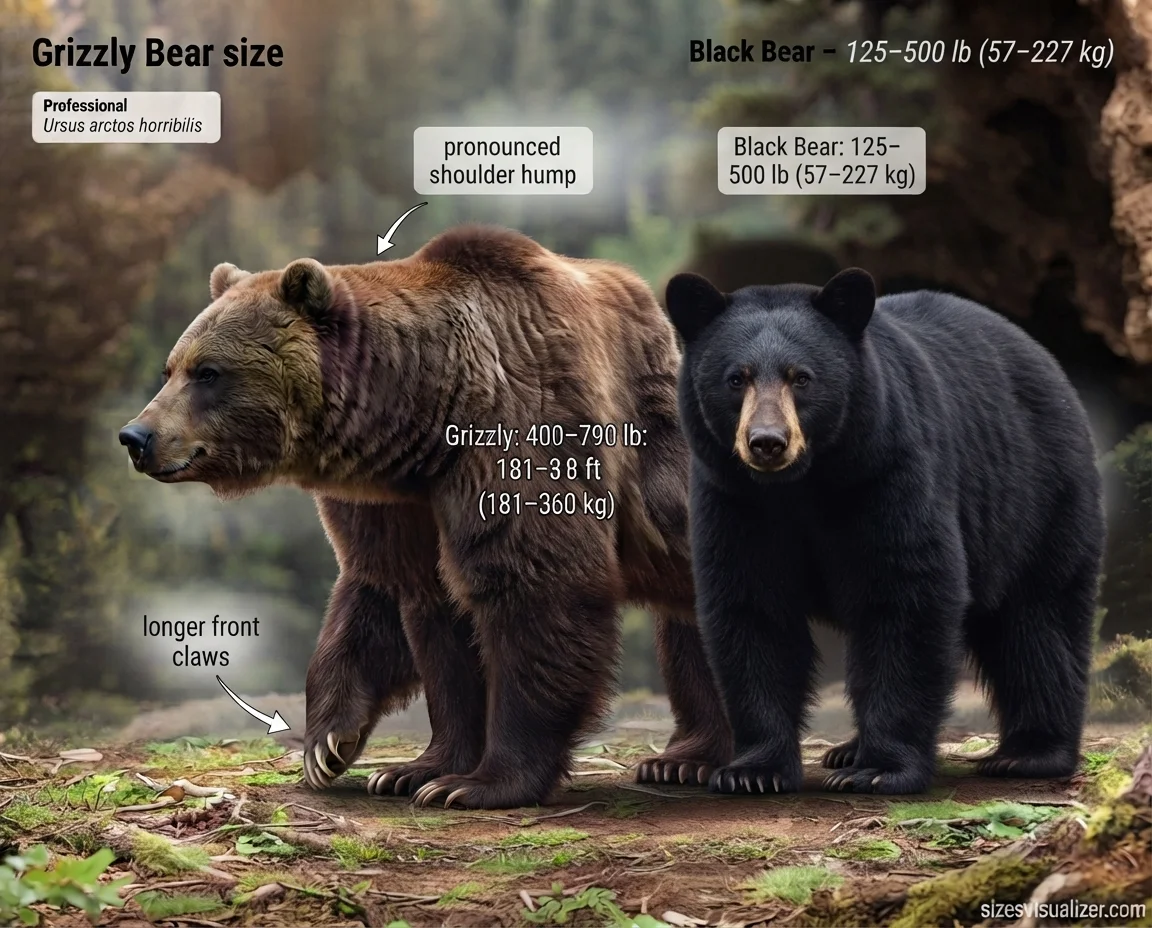
Black bears are smaller across the board. An adult black bear usually weighs 125 to 500 pounds, well under a grizzly’s range. Grizzlies also carry a shoulder hump and dished facial profile that black bears lack.
Grizzly bear vs. gorilla and lion
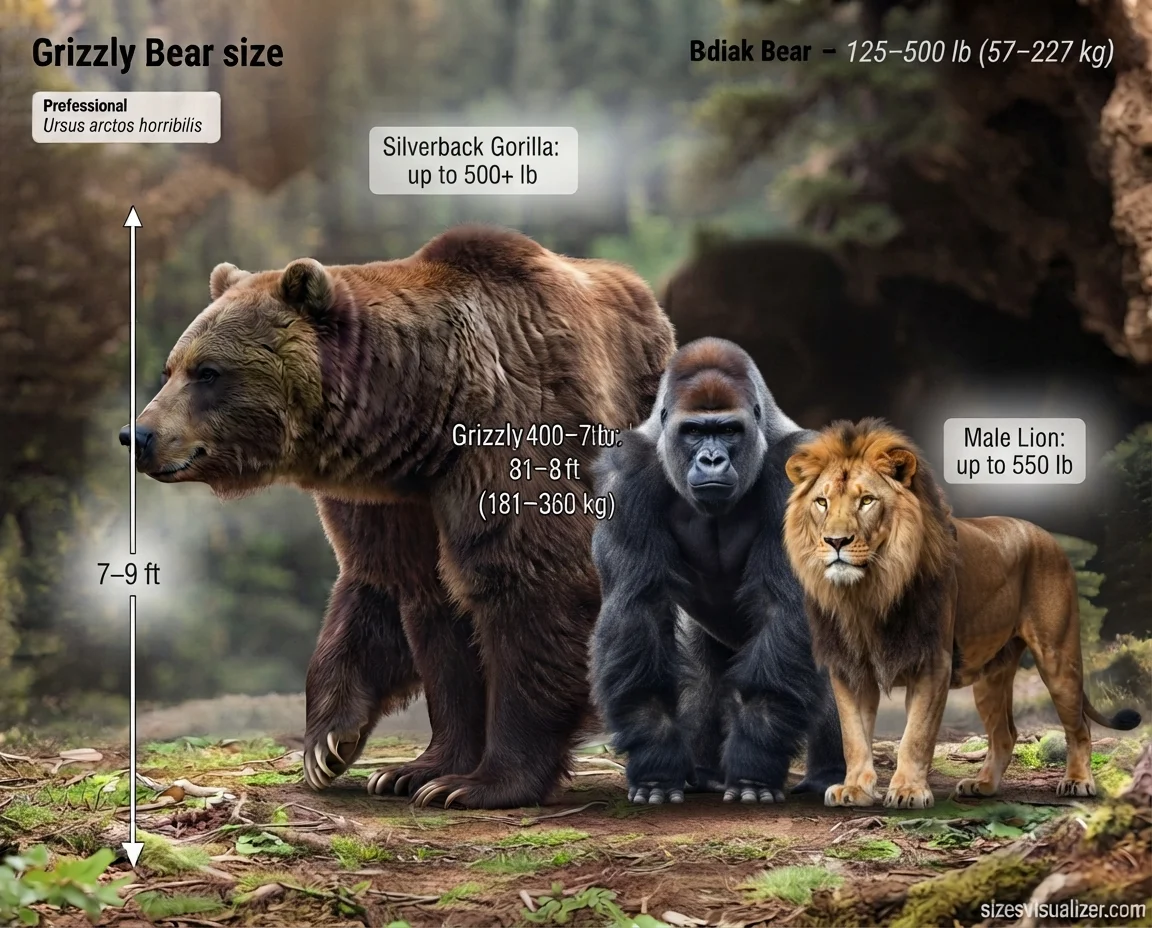
A silverback gorilla can weigh up to 500 pounds — heavy, but still lighter than most adult male grizzlies. A lion, by comparison, tops out around 550 pounds. Grizzlies outweigh both animals on average, and their standing height gives them a serious reach advantage in any physical comparison.
FAQ’s
Could 100 men beat a grizzly bear in a fight?
In a coordinated setting with tools or weapons, yes — sheer numbers would win. But in a bare-handed scenario, a grizzly’s speed, strength, and thick hide make it extremely difficult for even a large group of unarmed people to bring down safely.
Is a grizzly or Kodiak bear bigger?
The Kodiak bear is generally bigger. Kodiaks benefit from a rich, year-round salmon diet and no competition from other bear subspecies on their island, which pushes their average weight above that of mainland grizzlies.
Is a grizzly bear bigger than a gorilla?
Yes. An adult male grizzly typically outweighs a full-grown silverback gorilla, sometimes by 200 pounds or more, and stands taller when reared up.
Is a grizzly bigger than a lion?
Yes. Grizzly bears usually weigh more than lions and have a taller standing height, though lions are faster over short bursts on flat ground.
What is a grizzly bear’s worst enemy?
Adult grizzlies have almost no natural predators. Their biggest threats come from humans — through habitat loss, vehicle strikes, and historical hunting — along with occasional conflicts with other grizzlies over territory or mates.
Can a human overpower grizzly bear?
Not through physical strength alone. A grizzly’s power, speed of up to 35 mph, and thick muscle mass make it far stronger than any human. Survival experts recommend avoidance, bear spray, and proper food storage over any direct confrontation.
Conclusion
Grizzly bear’s size is no myth — it’s backed by real numbers, from an 800-pound frame to an 8-foot standing height. Whether you’re comparing it to a Kodiak bear, a gorilla, or a grown man, one thing is clear: the grizzly earns its reputation as one of nature’s most powerful land animals.

Measurement Researcher, Size Comparison Writer & Content Specialist
Timmy Ahad is a dedicated content writer and research specialist at SizesVisualizer.com, where he focuses on creating accurate, easy-to-understand content about measurements, dimensions, size comparisons, and real-world object visualization.