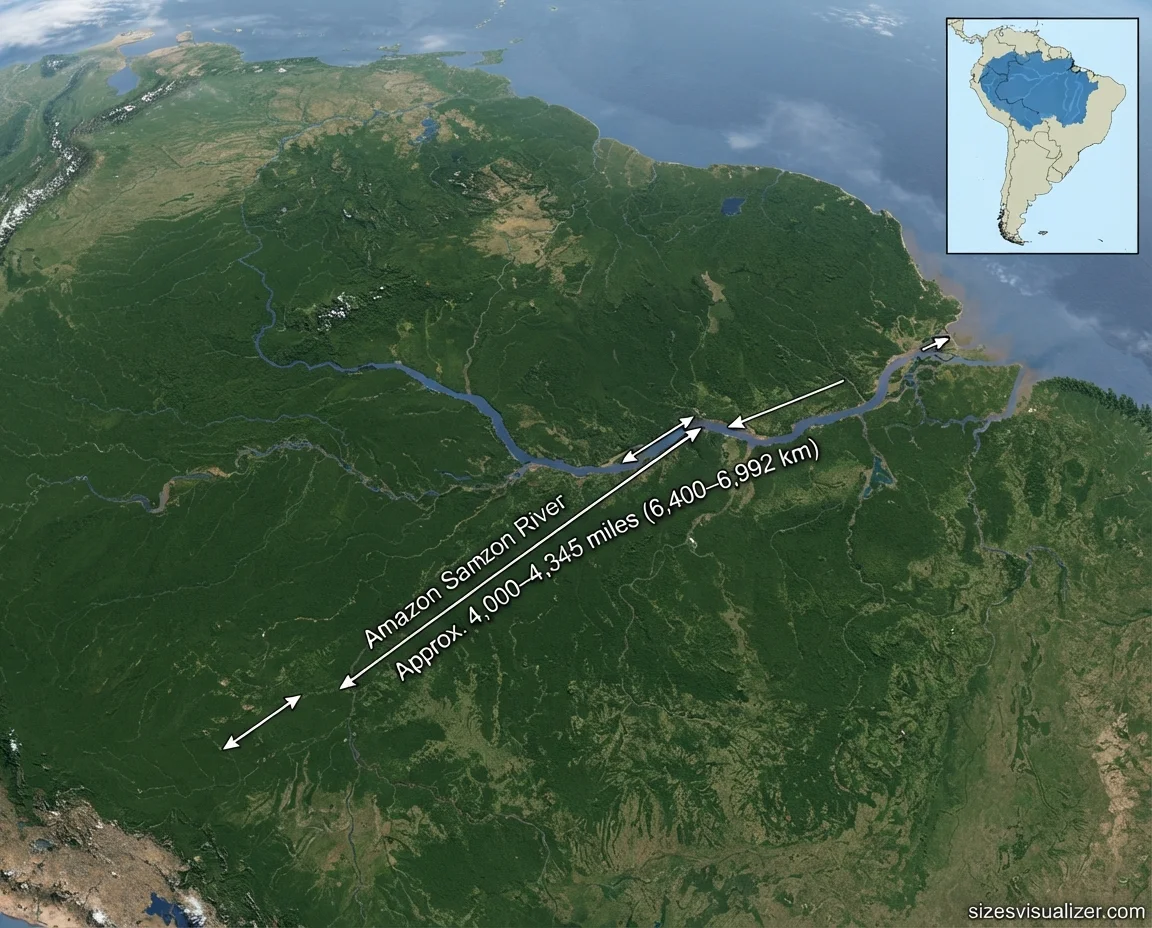
The Amazon River stretches over 4,000 miles across South America, making it one of the two longest rivers on Earth. It carries more water than any other river on the planet.
This guide breaks down Amazon River’s exact length, its location, and the facts that make it one of the most powerful natural forces in the world.
Table of Contents
How Long Is the Amazon River? (Length Explained)
That’s a massive distance. For comparison, it’s almost the same as flying from New York to Tokyo.
Make measurements easier to understand with our Size Visualizer Tool, designed to provide simple and realistic size comparisons.
Amazon River vs. Nile River — Which Is Really Longer?
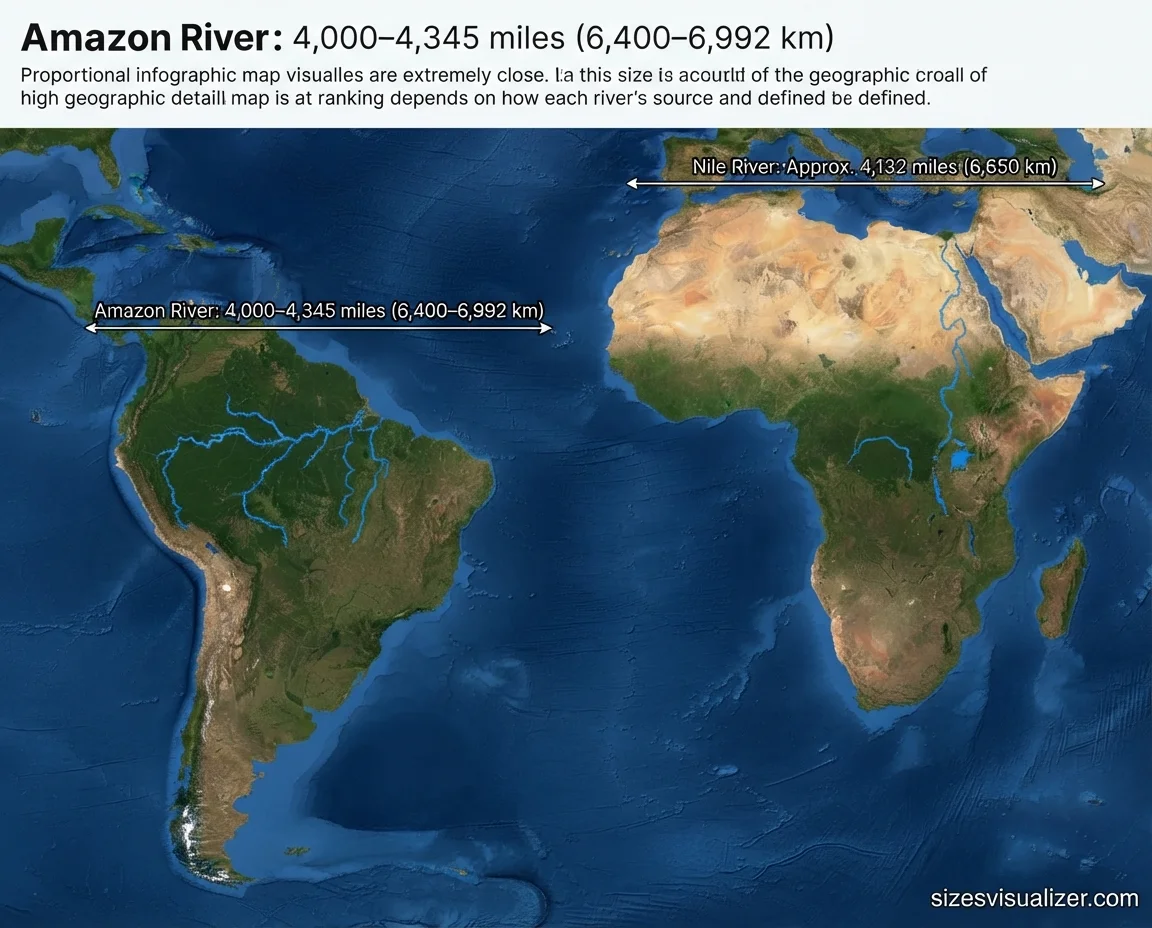
The Nile River has long held the title of the world’s longest river, at about 4,132 miles (6,650 km). But the gap is razor-thin, and the debate hasn’t gone away.
A 2007 Brazilian research expedition measured the Amazon at 4,345 miles, which would make it slightly longer than the Nile. Their methodology was never formally published, so many scientists still treat the Nile as the record-holder — but only barely.
Here’s the honest answer: it depends on where you decide the river begins and ends.
Why the Amazon’s Exact Length Is Still Debated
Measuring a river sounds simple. It isn’t, especially with the Amazon.
The river doesn’t have one clean starting point. It’s fed by more than 1,000 tributaries, and geographers still argue over which trickle of Andean snowmelt counts as the “true source.” Two creeks in Peru — Carhuasanta Creek and Apacheta Creek — are the leading candidates.
The ending point is just as messy. The Amazon splits into multiple channels before reaching the Atlantic Ocean, and some researchers include a southern outlet near Marajó Island, while others don’t. Change either endpoint, and the total length shifts by hundreds of miles.
Where Is the Amazon River Located?
The Amazon River location spans a huge chunk of northern South America. It touches six countries and drains an area roughly the size of the contiguous United States.
The Amazon River’s Source in the Andes Mountains
The river begins high in the Andes Mountains of southern Peru, at an elevation of about 5,600 meters (over 18,000 feet). From there, glacial meltwater trickles downhill and gradually merges into larger streams — first the Apurímac River, then the Ucayali, before joining the main channel.
It’s a strange thought: one of the world’s mightiest rivers starts as a thin mountain stream you could step over.
Countries the Amazon River Flows Through
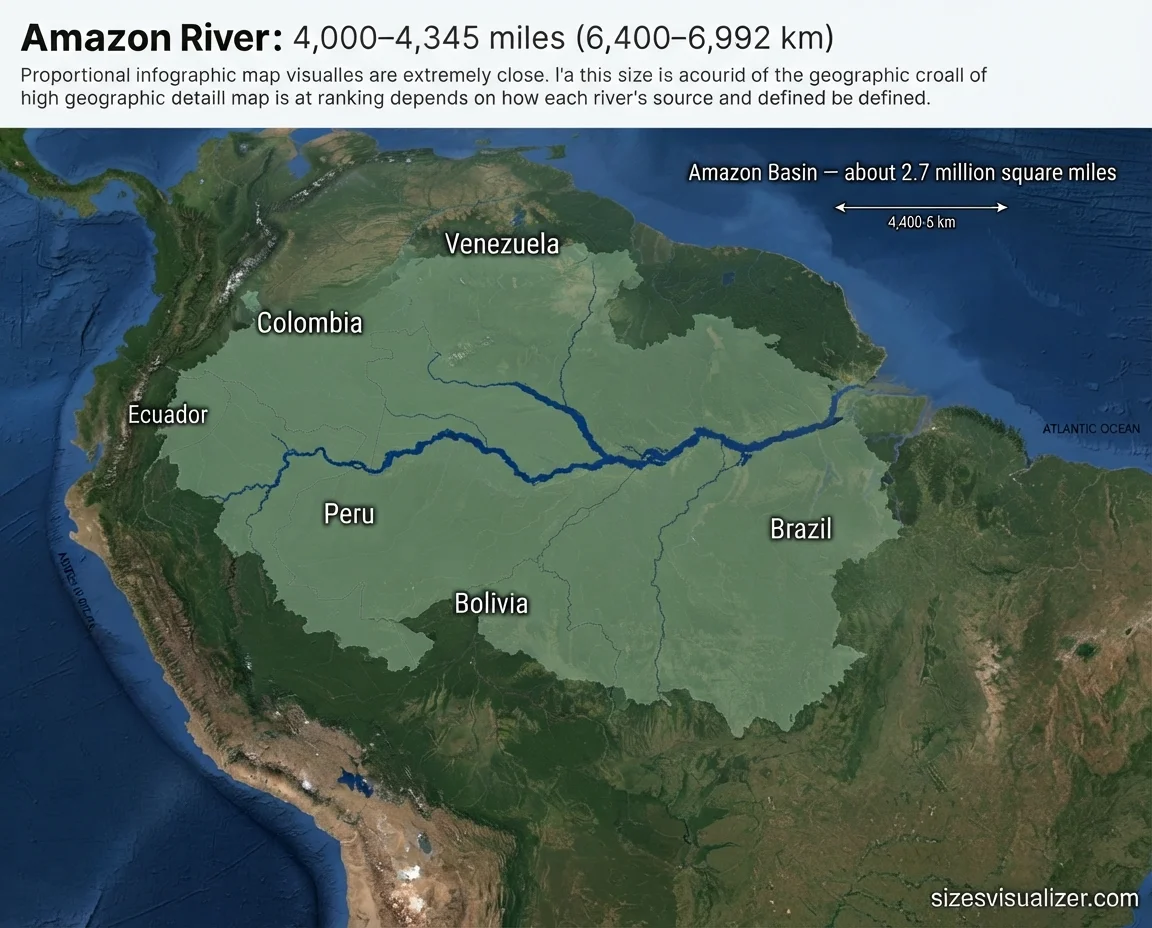
Amazon River and its basin pass through:
- Peru
- Brazil
- Colombia
- Ecuador
- Venezuela
- Bolivia
Most of the river’s length runs through Brazil, but its watershed — the total land area that drains into it — touches all six nations.
Where the Amazon River Empties Into the Atlantic Ocean
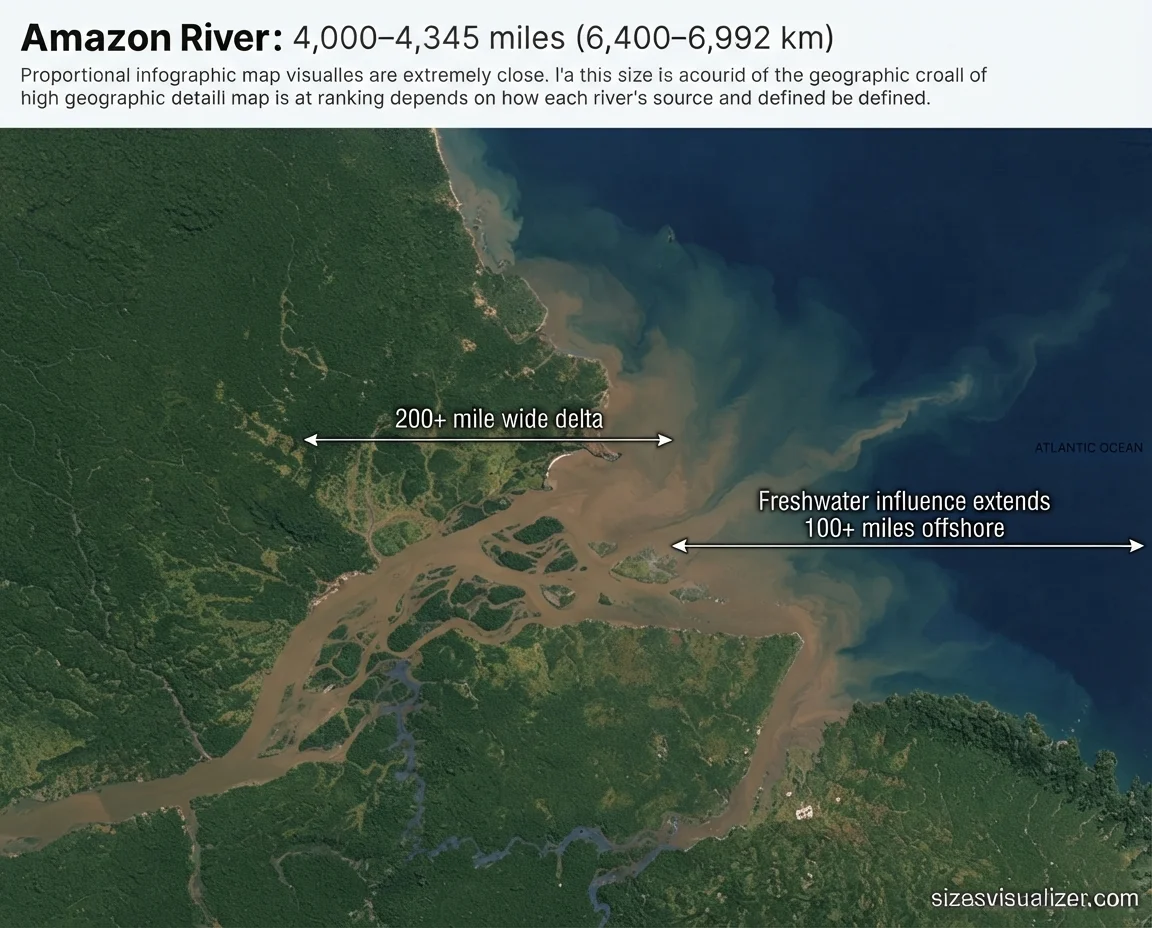
The river’s journey ends in northern Brazil, where it empties into the Atlantic Ocean through a delta more than 200 miles wide. The freshwater discharge is so massive that it dilutes the ocean’s salinity for over 100 miles offshore — sailors could once detect land was near just by tasting the seawater.
Amazon River Size: Width, Depth & Distance Covered
The Amazon isn’t just long. It’s also the widest and highest-volume river on Earth, and its size changes dramatically with the seasons.
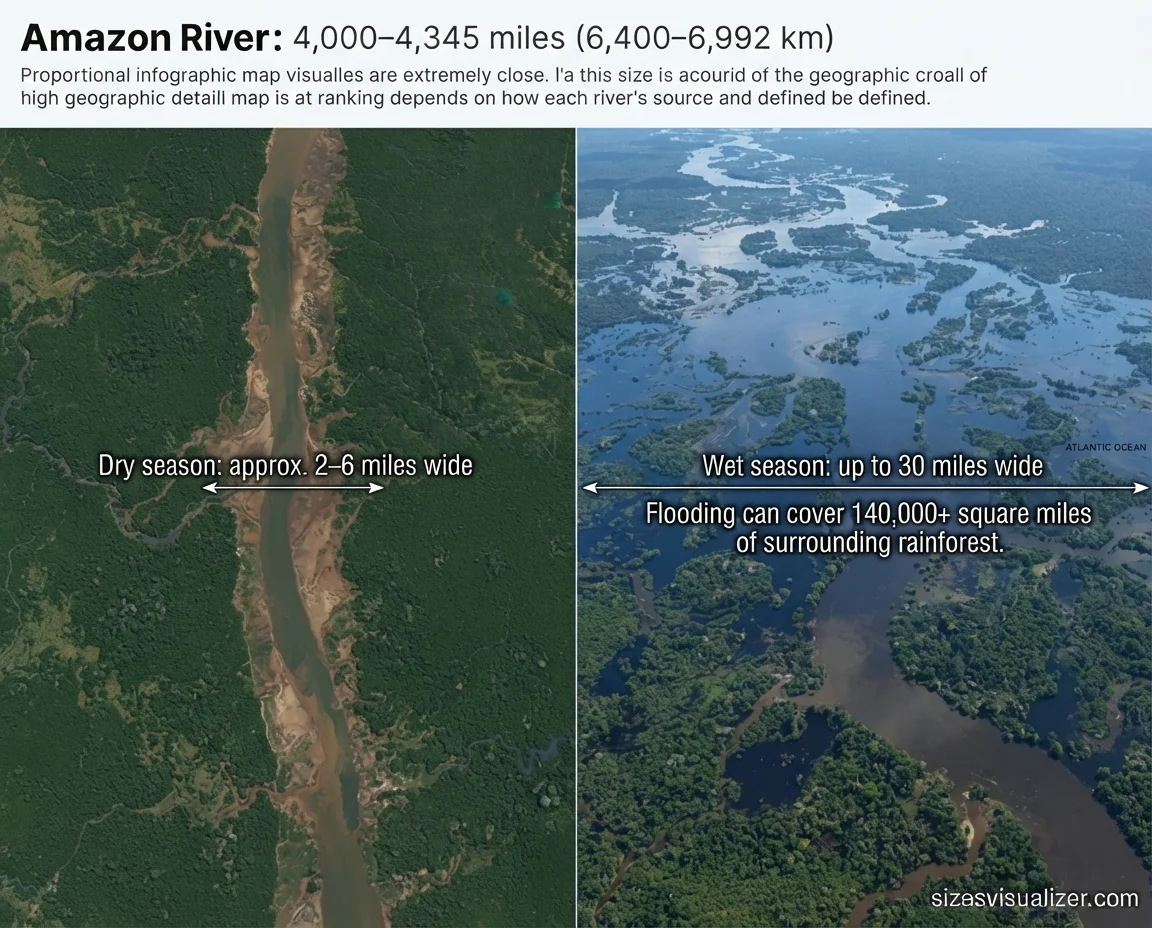
Amazon River Width in Dry vs. Wet Season
How wide is Amazon River? It depends entirely on the time of year.
- Dry season: roughly 2 to 6 miles wide
- Wet season (flooding): can expand to 30 miles wide in places
This seasonal swelling floods more than 140,000 square miles of surrounding rainforest, transforming dry land into temporary wetland for months at a time.
How Deep Is the Amazon River?
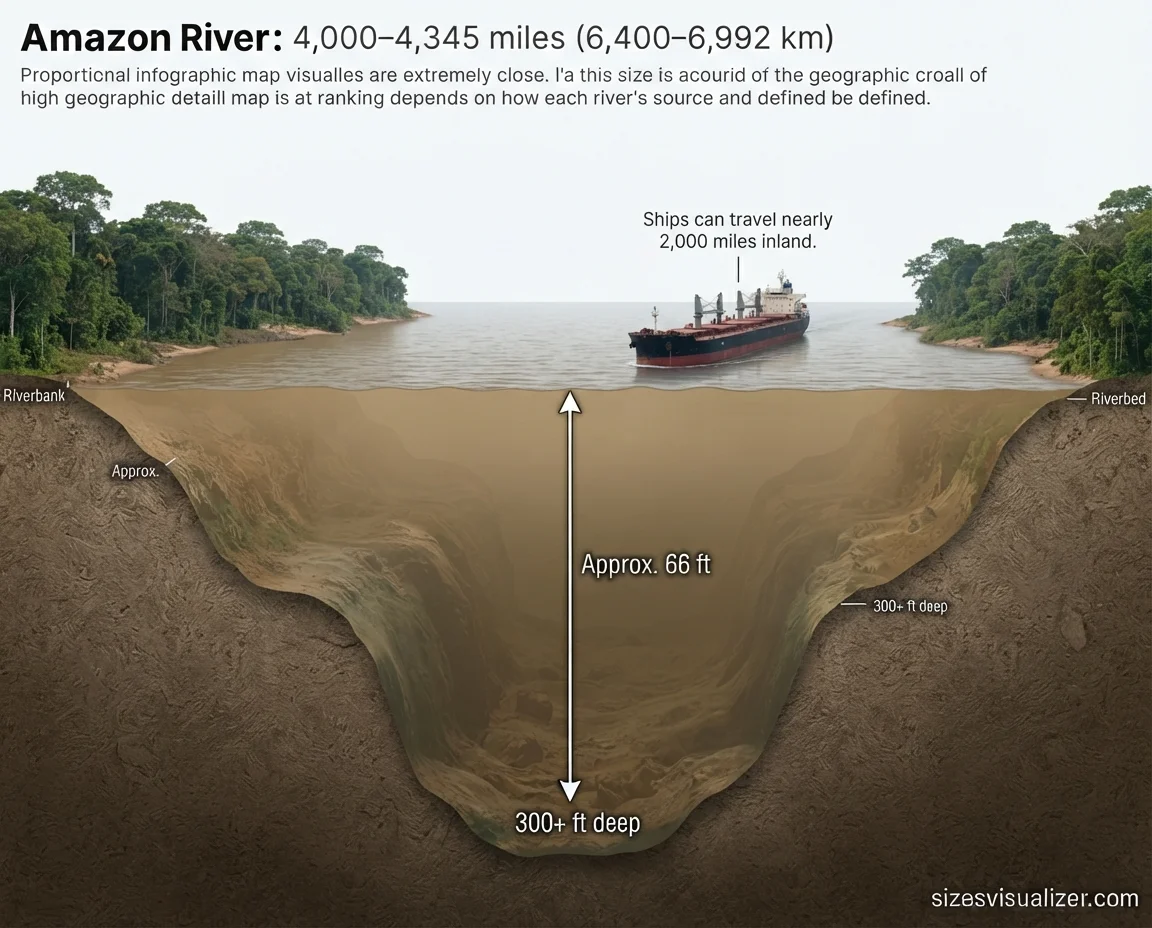
The Amazon’s depth ranges from about 66 feet in shallower stretches to over 300 feet in its deepest channels. That’s deep enough for oceangoing ships to sail nearly 2,000 miles inland, all the way to Iquitos, Peru — a city with no road access, reachable only by boat or plane.
Is the Amazon River Bigger Than the USA?
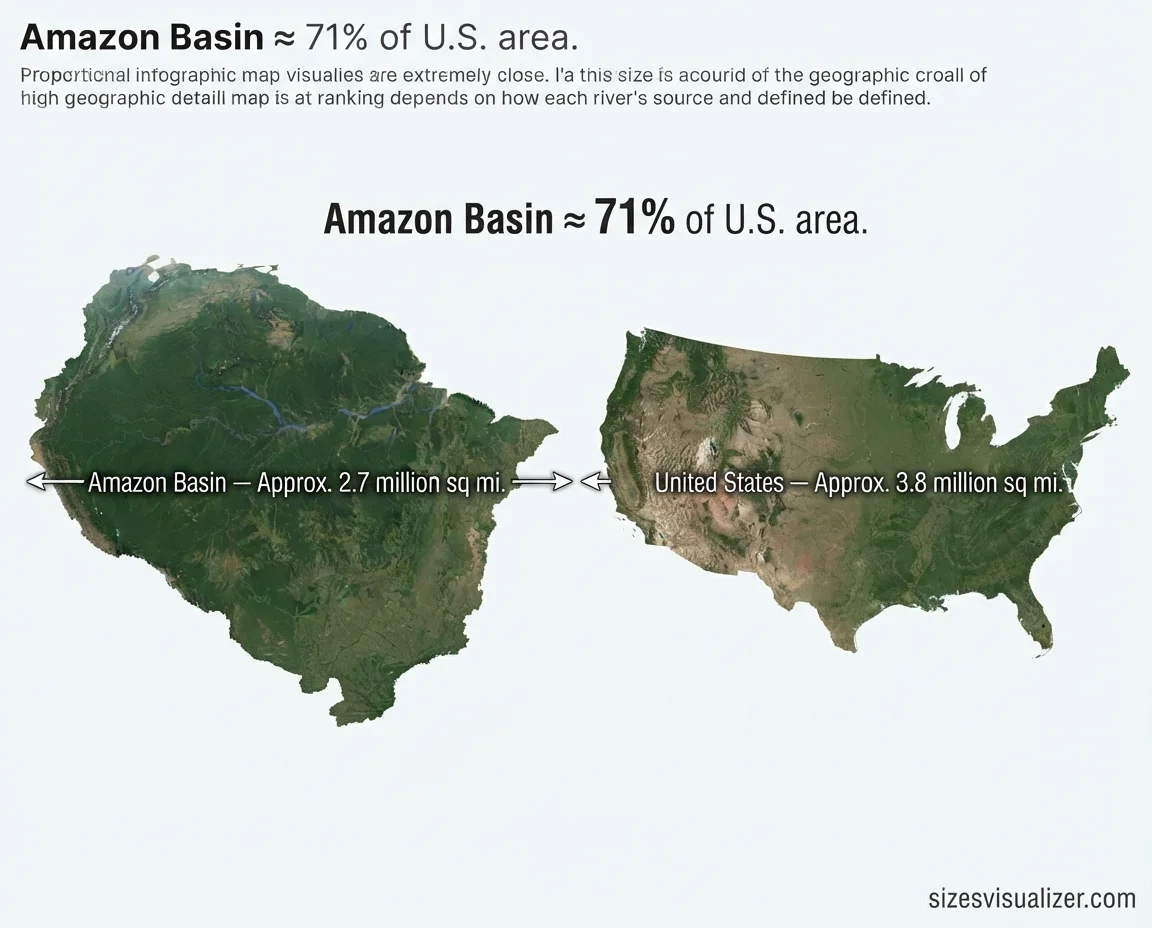
No, the Amazon River basin is not larger than the entire United States, but it’s close enough to be startling. The Amazon Basin covers about 2.7 million square miles, while the U.S. covers roughly 3.8 million square miles.
Put another way: the Amazon’s drainage basin alone is about 71% the size of the entire United States — all feeding into a single river system.
Why Is the Amazon River So Large? Fascinating Facts
Why is the Amazon River so large? Three factors combine to make it a giant: heavy year-round rainfall, a vast Andean watershed, and more than a thousand tributaries funneling water into one channel.
The Amazon’s Water Volume — More Than the Next 7 Rivers Combined
This is the statistic that separates the Amazon from every other river on Earth. It discharges an average of about 209,000 cubic meters of water per second into the Atlantic Ocean.
That single number outpaces the combined flow of the world’s next seven largest rivers. No other river comes close in terms of raw volume.
How the Amazon River Got Its Name
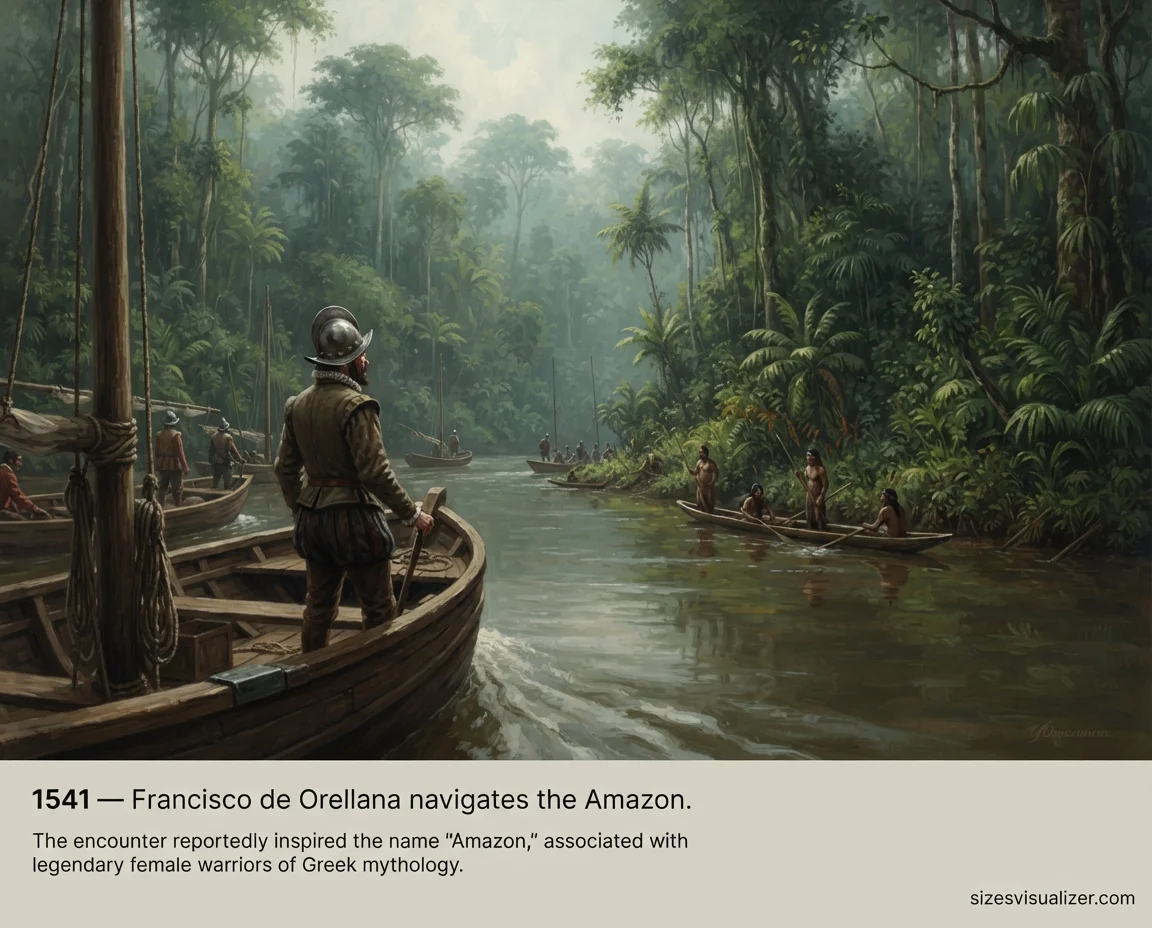
The river’s name traces back to 1541, when Spanish conquistador Francisco de Orellana became the first European to navigate its length. According to historical accounts, Orellana and his crew clashed with indigenous warriors, some of whom were women. The encounter reminded him of the Amazons — the legendary female warriors of Greek mythology — and the name stuck.
Why There Are No Bridges Over the Amazon River
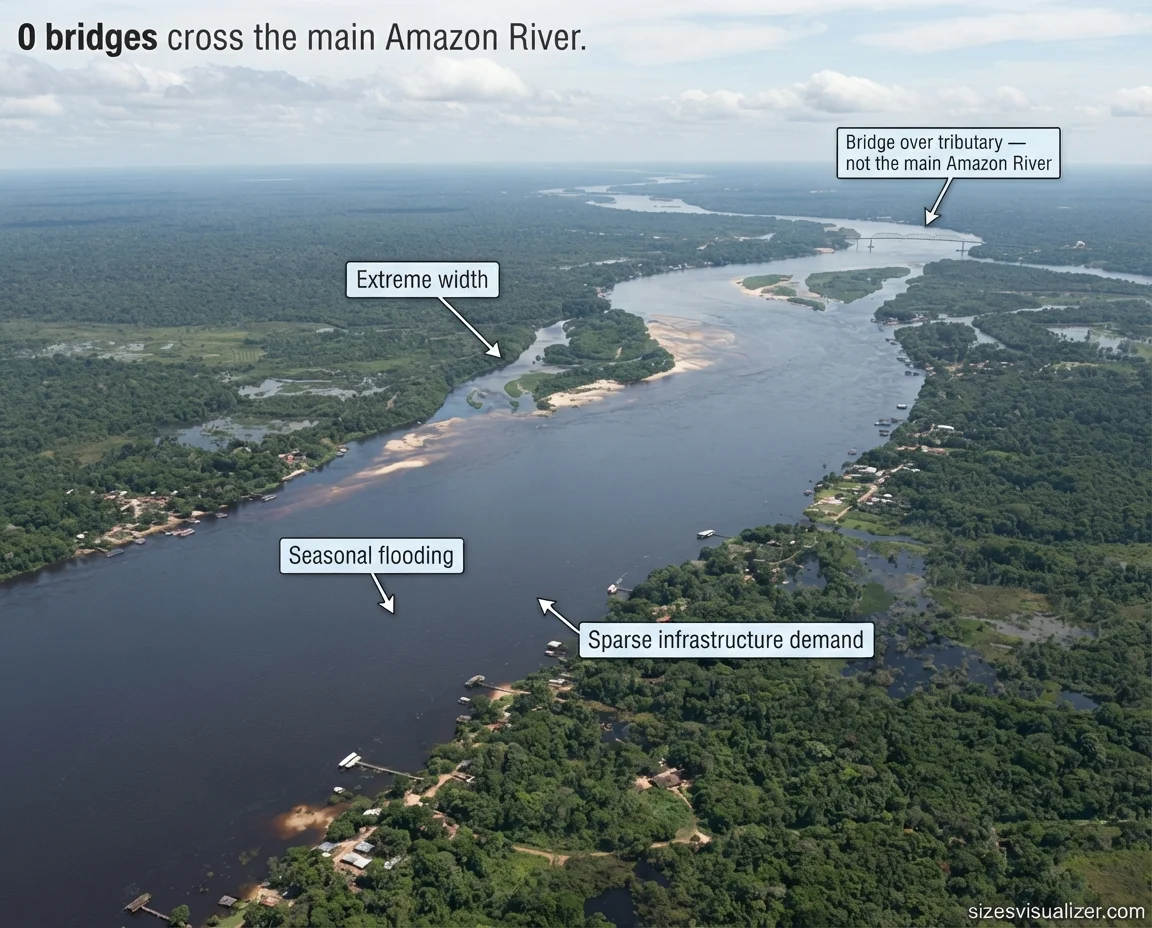
Here’s a fact that surprises most people: there are zero bridges crossing the main Amazon River. Not one, anywhere along its entire course.
Three reasons explain this. The river is simply too wide in most stretches. Its banks shift and flood unpredictably every year. And for most of its length, it runs through dense, sparsely populated rainforest where there’s little demand for a crossing. The closest engineering feat is the Manaus–Iranduba Bridge in Brazil, which spans a major tributary — not the Amazon itself.
Must visit: How Big Is 1200 Square Feet? 10 Real-Life Examples, Floor Plans & Size Comparisons
Amazon River Ecosystem, Wildlife & Environmental Threats
The Amazon River doesn’t just move water. It sustains one of the most biodiverse ecosystems on the planet.
Animals That Live in the Amazon River
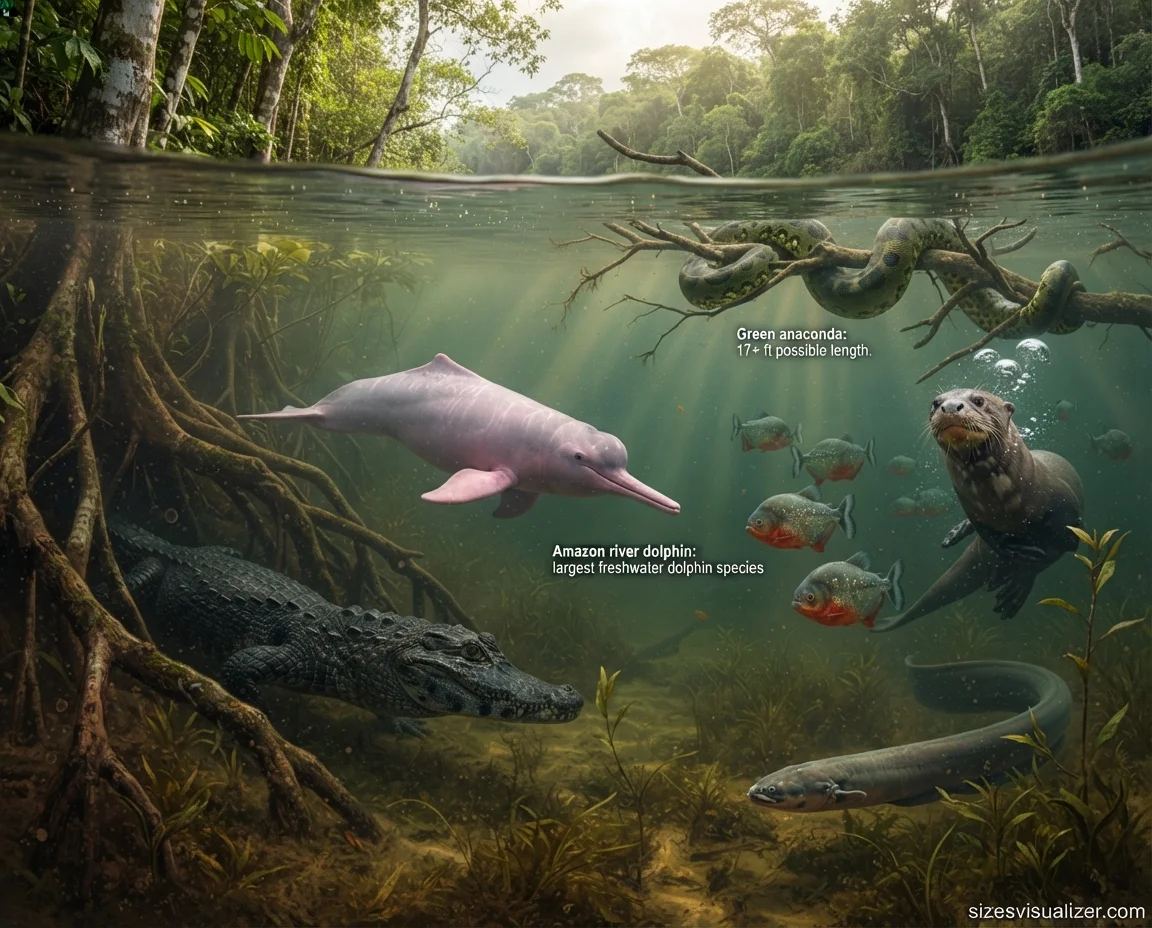
An estimated one-third of the world’s known species live in or around the Amazon River and its surrounding rainforest. Notable residents include:
- Amazon river dolphin (the largest freshwater dolphin species alive)
- Black caiman
- Electric eel
- Green anaconda
- Red-bellied piranha
- Giant otter
The Amazon Rainforest’s Role in the River’s Ecosystem
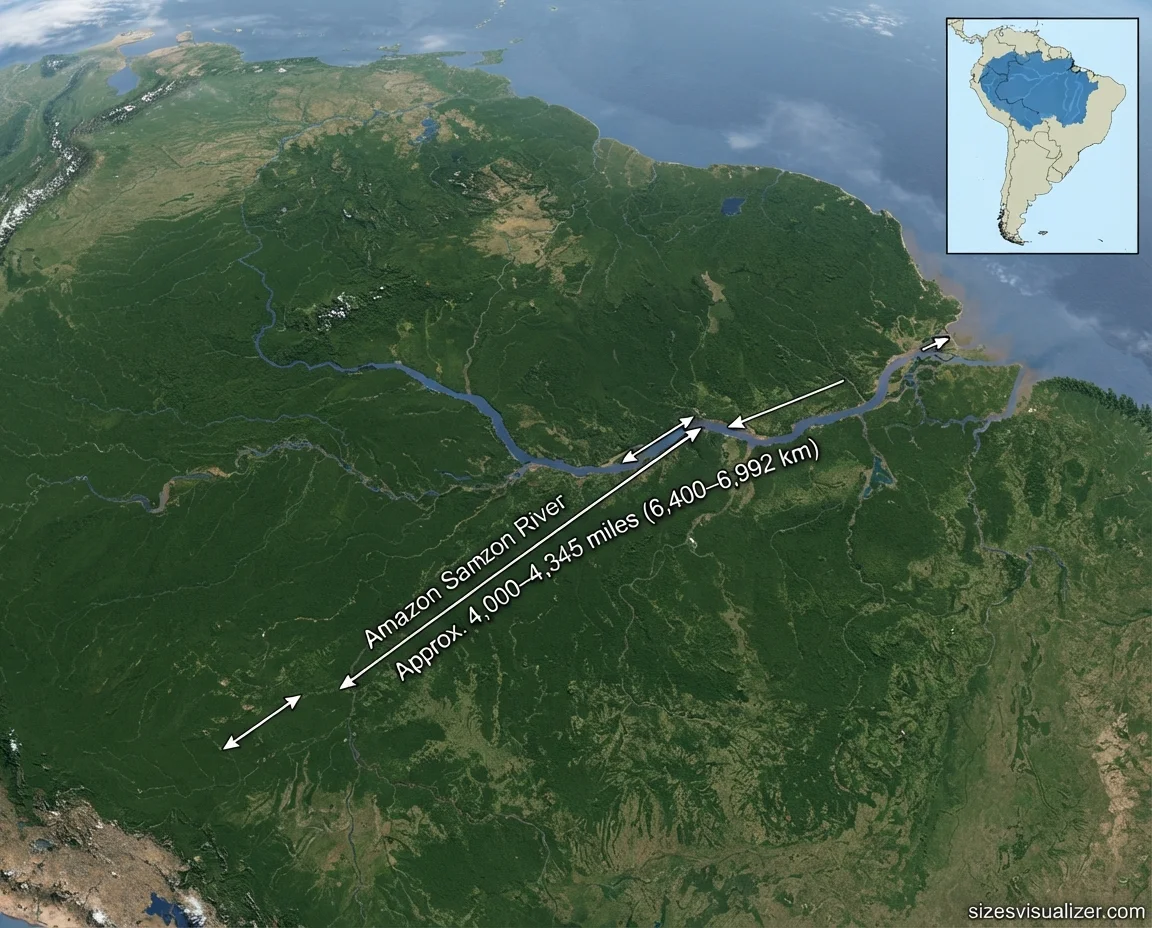
The Amazon Rainforest and the river function as one connected system. Roughly two-thirds of the river’s course runs through dense forest, and that vegetation does more than sit alongside the water — it holds the soil together, absorbs seasonal floodwaters, and regulates the entire basin’s rainfall cycle.
Deforestation, Damming & Pollution Risks
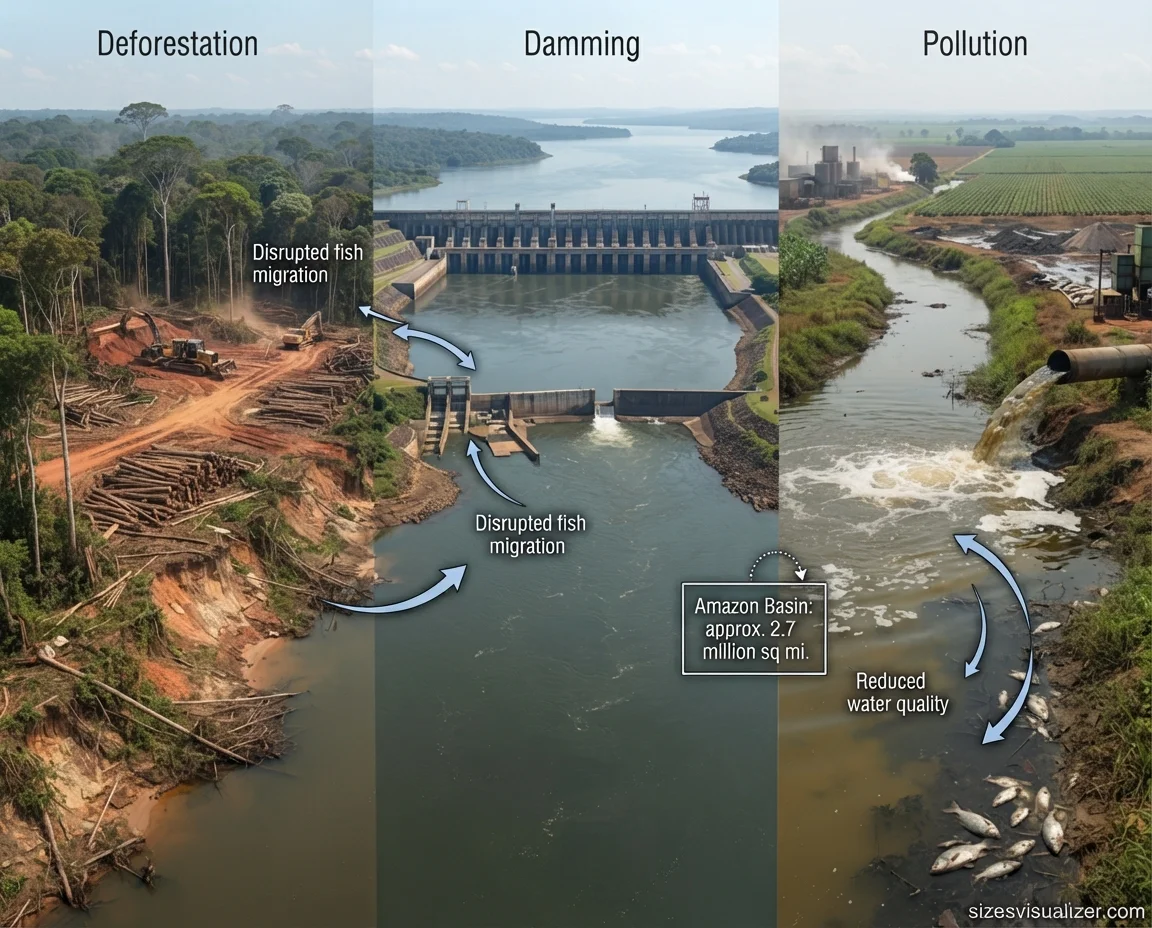
Industrial activity is putting real pressure on this system. Deforestation clears the vegetation that stabilizes riverbanks and absorbs floodwater. Dam construction interrupts natural flow patterns and fish migration. Industrial pollution, particularly from logging operations, is contaminating water that both wildlife and local communities rely on.
These aren’t hypothetical risks — they’re active, ongoing changes to one of Earth’s most important freshwater systems.
FAQs
Can we swim in the Amazon River?
Yes, people do swim in parts of the Amazon River, but it’s genuinely risky. Strong currents, low visibility, caimans, electric eels, and disease-carrying parasites are all real hazards. Locals typically swim only in known, calmer stretches — not the main channel.
Is Amazon bigger than the USA?
No. The Amazon River basin covers about 2.7 million square miles, while the United States covers roughly 3.8 million square miles. The basin is large, but it’s smaller than the entire country.
What is the 1 biggest river in the world?
By length, the Nile River is generally recognized as the longest, at about 4,132 miles, though some studies argue the Amazon is longer. By volume and discharge, the Amazon is unmatched — it’s the biggest river on Earth by a wide margin.
Why is the Amazon River so large?
It combines heavy, near-constant rainfall across the Andes and Amazon Basin with more than 1,000 tributaries feeding into one main channel, producing a volume of water no other river system can match.
Can we drink Amazon River water?
No, not safely, and not without treatment. The river carries sediment, bacteria, and, in many areas, agricultural or industrial runoff. Indigenous communities historically used filtering and boiling methods; untreated river water isn’t considered safe to drink today.
Is there a big snake in the Amazon River?
Yes — the green anaconda, one of the largest snake species on Earth, lives in and around the Amazon River. It can grow over 17 feet long and is a powerful, semi-aquatic constrictor that hunts near riverbanks and swamps.
Conclusion
The Amazon River is a study in extremes: nearly the length of the Nile, wider than any other river on Earth, and carrying more water than the next seven largest rivers combined. Its exact length may still be up for debate, but its scale, power, and role in sustaining one of the planet’s richest ecosystems are not.

Measurement Researcher, Size Comparison Writer & Content Specialist
Timmy Ahad is a dedicated content writer and research specialist at SizesVisualizer.com, where he focuses on creating accurate, easy-to-understand content about measurements, dimensions, size comparisons, and real-world object visualization.