The wrong pallet can cost you money. It wastes trailer space, adds freight charges, and can get a load rejected at the dock.
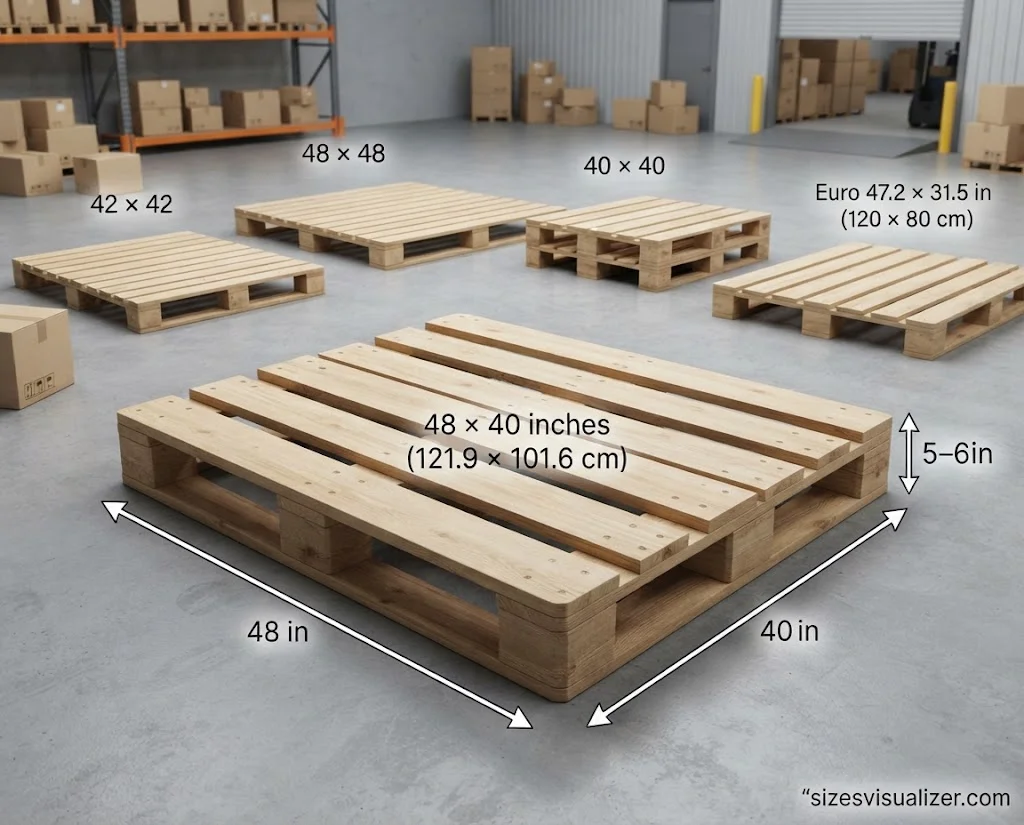
The good news is that the standard pallet sizes & Dimensions in the USA is easy to remember: 48″ x 40″. This guide gives you the pallet dimensions, a pallet size chart in inches and cm, the main types of pallets, and tips for picking the right one.
Table of Contents
What Is the Standard Pallet Size in the USA?
The standard pallet size is 48 inches long x 40 inches wide x about 5 to 6 inches high. In metric, that is 121.9 cm x 101.6 cm. The height changes a little with the build. Some pallets stand 4.5 inches tall, and others reach 6 inches.
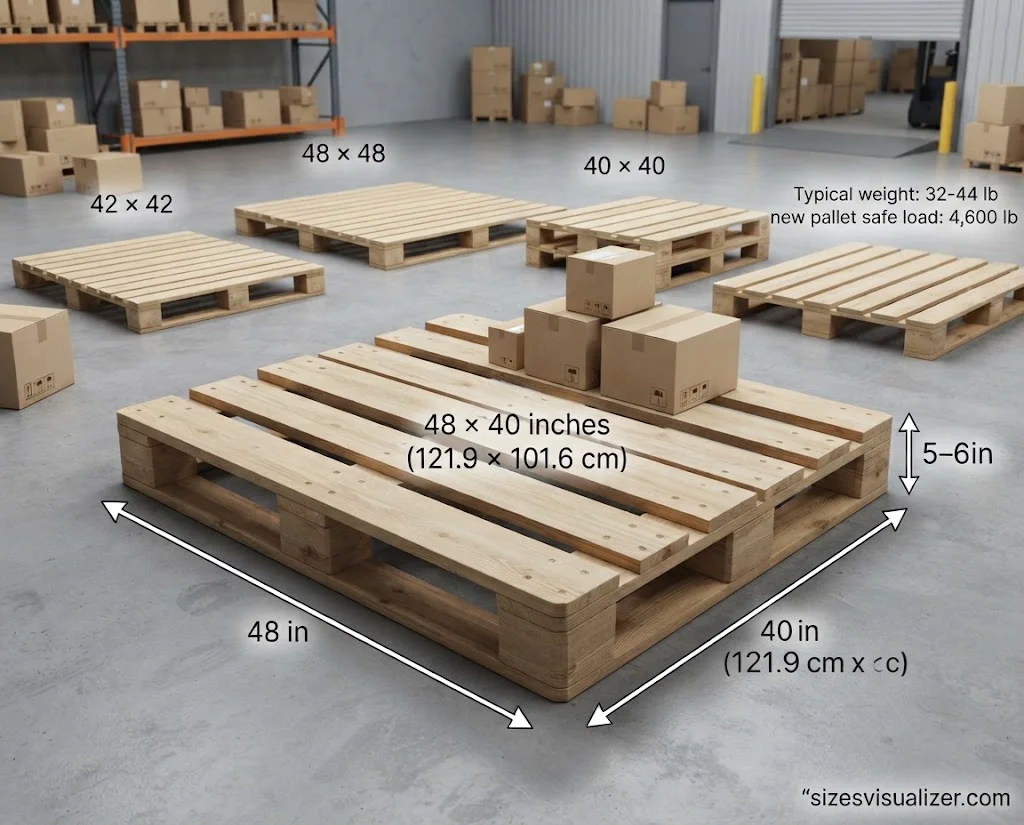
This is also called the GMA pallet. The Grocery Manufacturers Association created it, and the group is now the Consumer Brands Association. Industry estimates say about 30% of new wood pallets made in the US use this size.
A typical wood 48×40 pallet weighs about 32 to 44 lbs. A new one can safely hold about 4,600 lbs.
Why are pallets 40×48? The size grew out of grocery shipping. It fits trucks, rail cars, racks, and store aisles well. One footprint for everyone meant fewer gaps and faster handling.
Is a 40×48 pallet the same as a 48×40? Yes, the footprint is the same. The order tells you the build. By the usual pallet dimension rule, the first number is the stringer length and the second is the deck board length. So the fork entry direction can differ.
Standard Pallet Sizes Chart (Inches & CM)
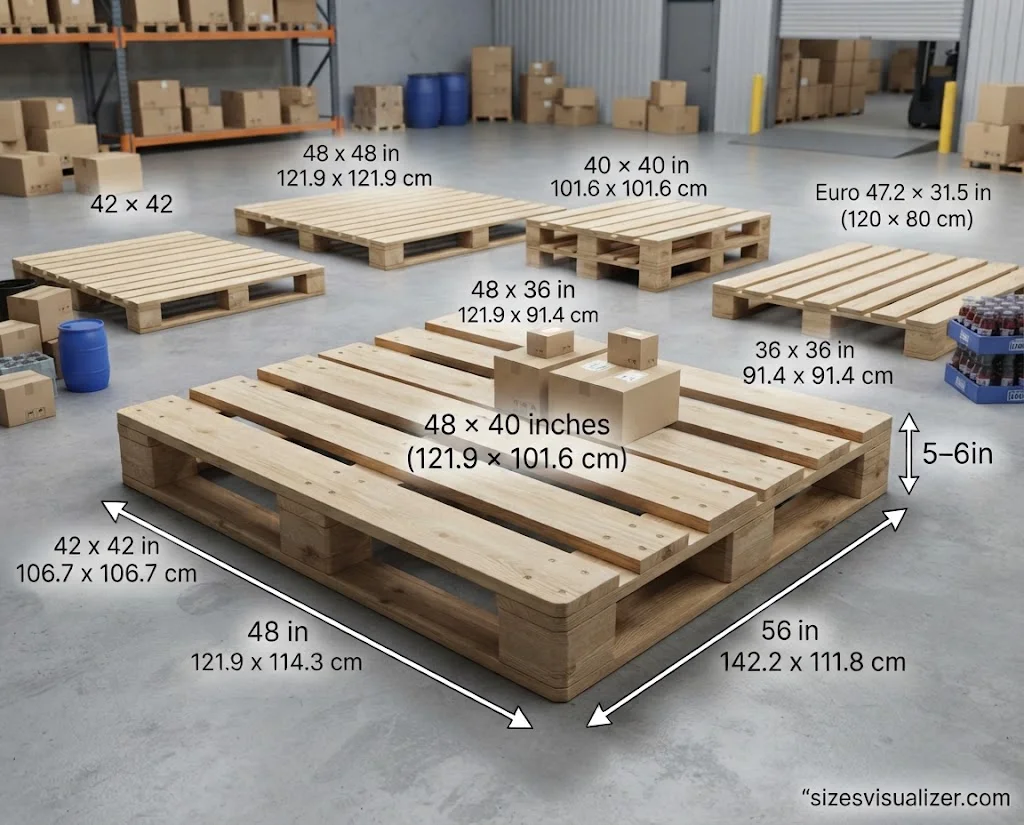
Here are the standard pallet sizes used most in the US, plus two global ones. Weights and loads are averages for new wood pallets.
| Size (inches) | Size (cm) | Avg. weight | Safe load | Common use |
|---|---|---|---|---|
| 48 x 40 | 121.9 x 101.6 | 37 lbs | 4,592 lbs | Grocery, general freight |
| 42 x 42 | 106.7 x 106.7 | 36 lbs | 4,445 lbs | Telecom, paint, coatings |
| 48 x 48 | 121.9 x 121.9 | 37 lbs | 4,673 lbs | Drums, chemicals |
| 48 x 42 | 121.9 x 106.7 | 35 lbs | 4,333 lbs | General freight |
| 48 x 36 | 121.9 x 91.4 | 31 lbs | 5,261 lbs | Bagged and boxed goods |
| 40 x 40 | 101.6 x 101.6 | 29 lbs | 3,544 lbs | Light, compact loads |
| 36 x 36 | 91.4 x 91.4 | 32 lbs | 3,544 lbs | Beverages |
| 48 x 45 | 121.9 x 114.3 | Varies | Varies | Automotive |
| 56 x 44 | 142.2 x 111.8 | Varies | Varies | Glass and cans |
| Euro (47.2 x 31.5) | 120 x 80 | Varies | Varies | Europe, export |
Real limits change with lumber grade, board thickness, and the load type. Static, dynamic, and racking loads all differ. Always check the maker’s rating.
Global standards
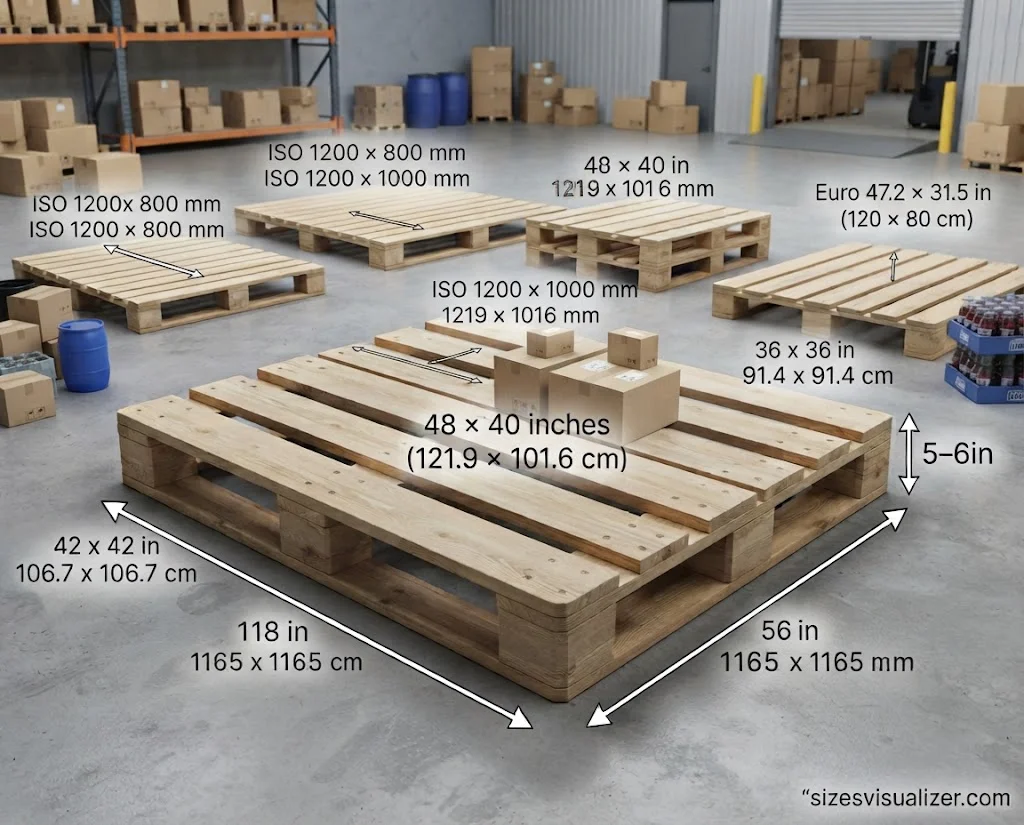
The ISO lists six pallet sizes. They include 1200 x 800 mm, 1200 x 1000 mm, and 1219 x 1016 mm (which is 48×40). The EPAL system governs the Euro pallet across Europe. Australia’s common pallet is 1165 x 1165 mm.
Pallets fit in a truck
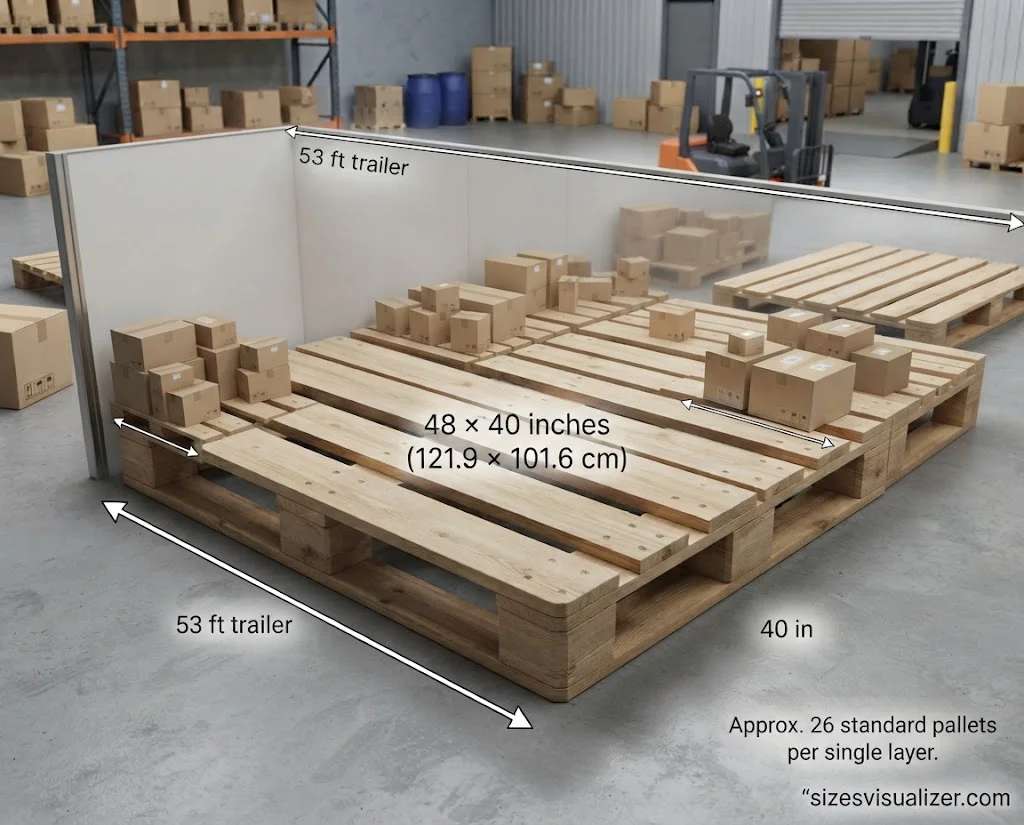
A 53-foot trailer holds about 26 standard 48×40 pallets in a single layer. A 40-foot container holds about 25 Euro pallets.
Types of Pallets: Materials, Styles & Entry Options
What are the three types of pallets? They are stringer, block, and skid.
- Stringer pallets: Three boards run between the deck layers. They are the most common in the US. Notched stringers allow partial four-way entry.
- Block pallets: Blocks of wood or plastic support the deck. They are stronger and allow four-way entry.
- Skid pallets: They have no bottom deck. They are light, simple, and low cost.
Materials matter too.
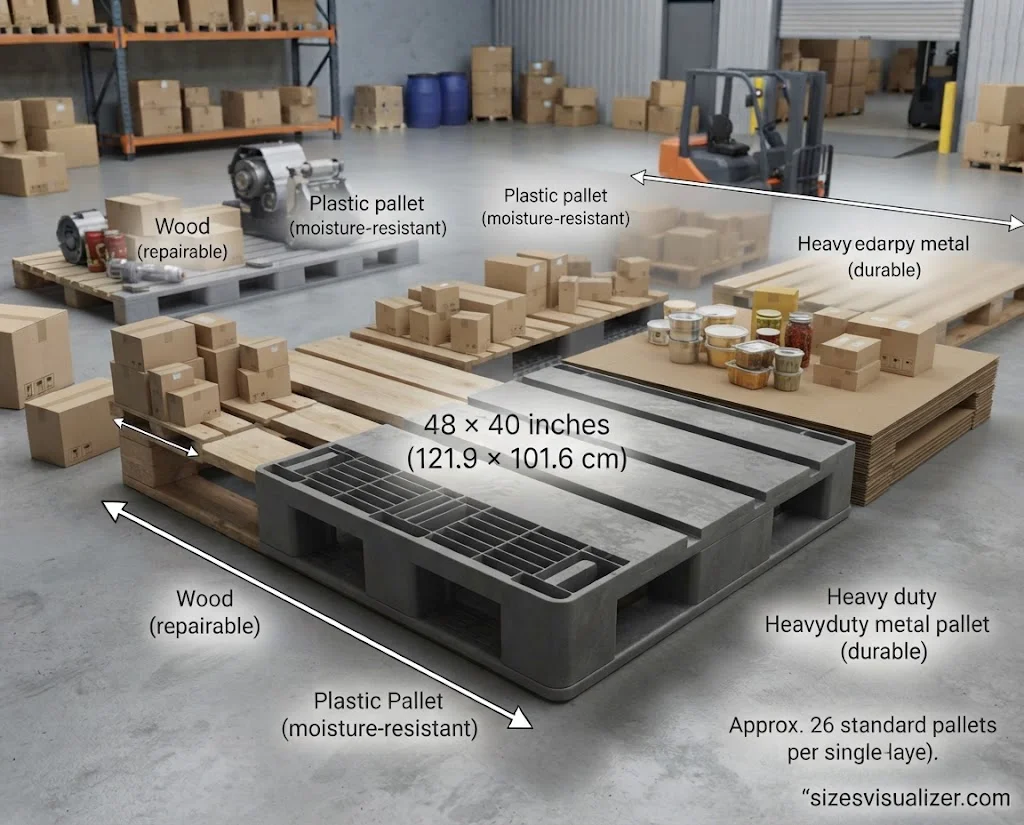
- Wood: It is cheap, strong, and easy to repair. It comes new, recycled, or heat-treated.
- Plastic: It resists moisture and bacteria. It suits food and drug work. Heavy-duty models can carry very large loads.
- Metal: It handles extreme weight and harsh use.
- Corrugated: It is light and works for one-way shipping.
Two-way vs. four-way entry
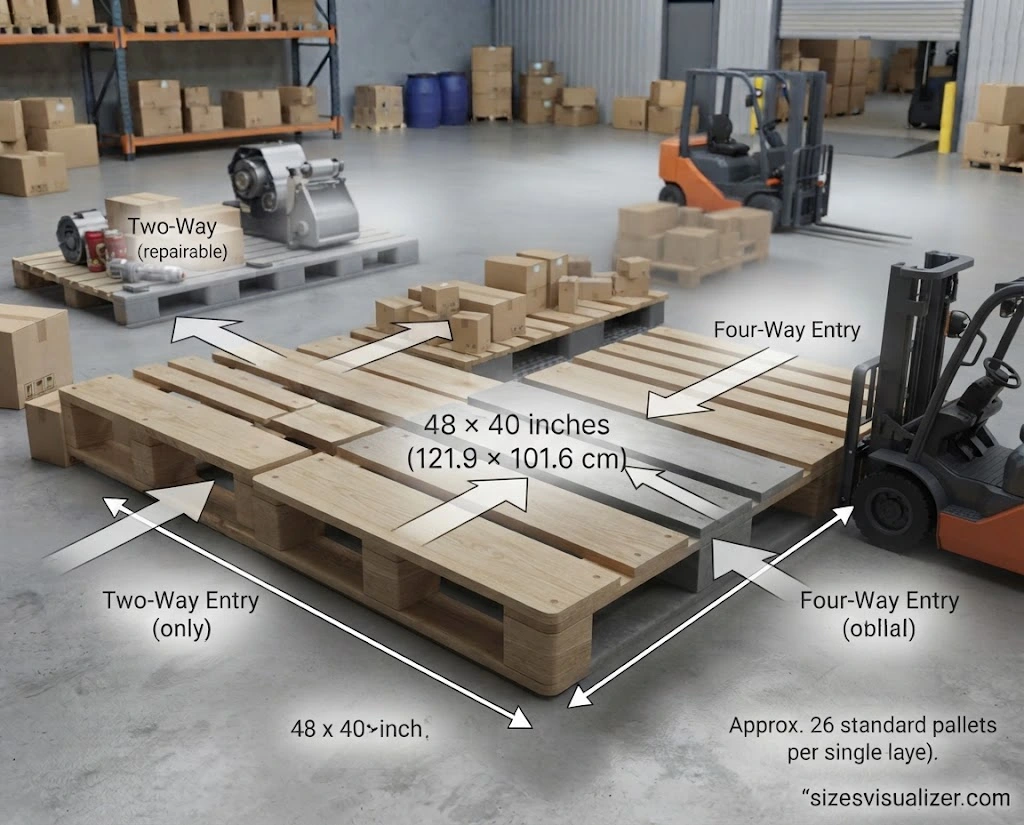
A two-way pallet accepts forks from two sides. A four-way pallet accepts them from all four. Four-way is faster at busy docks.
Export rules
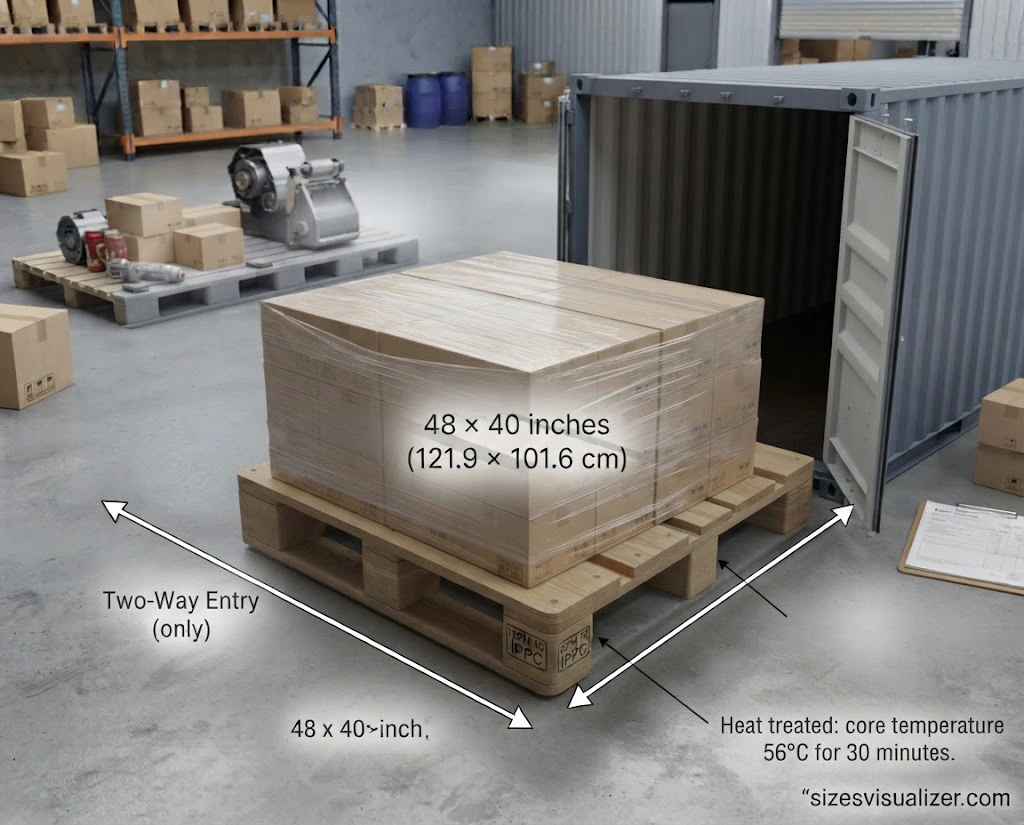
Wood pallets shipped abroad must follow ISPM 15. This means heat treatment (a core temperature of 56°C for 30 minutes) and an IPPC stamp.
Grades
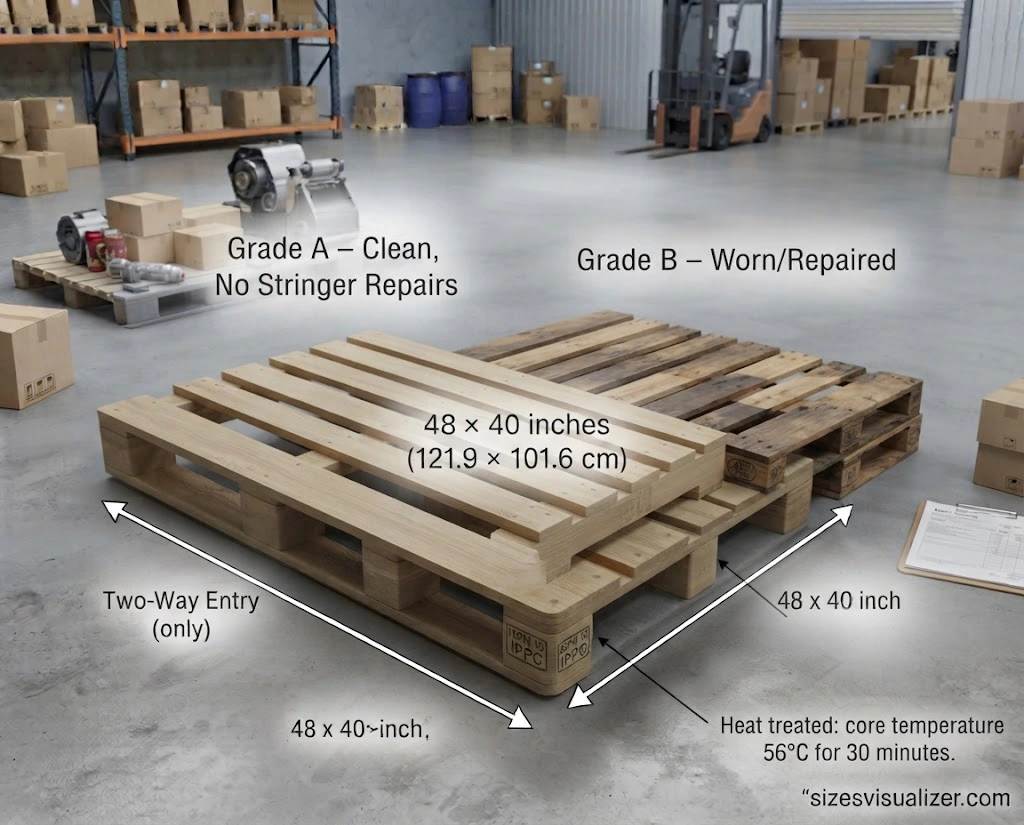
Grade A recycled pallets are the cleanest, with no stringer repairs. Grade B pallets show wear and repairs but cost less. The NWPCA offers wood pallet guidelines.
How to Choose the Right Pallet Size for Shipping
Start with your load. Then match the pallet to your rack, forklift, and carrier.
- Standard freight: Use 48×40.
- Heavy or drum loads: Use 48×48.
- Light or fragile goods: Use 40×40 or 36×36.
- International freight: Check for Euro or ISO sizes.
How to measure a pallet
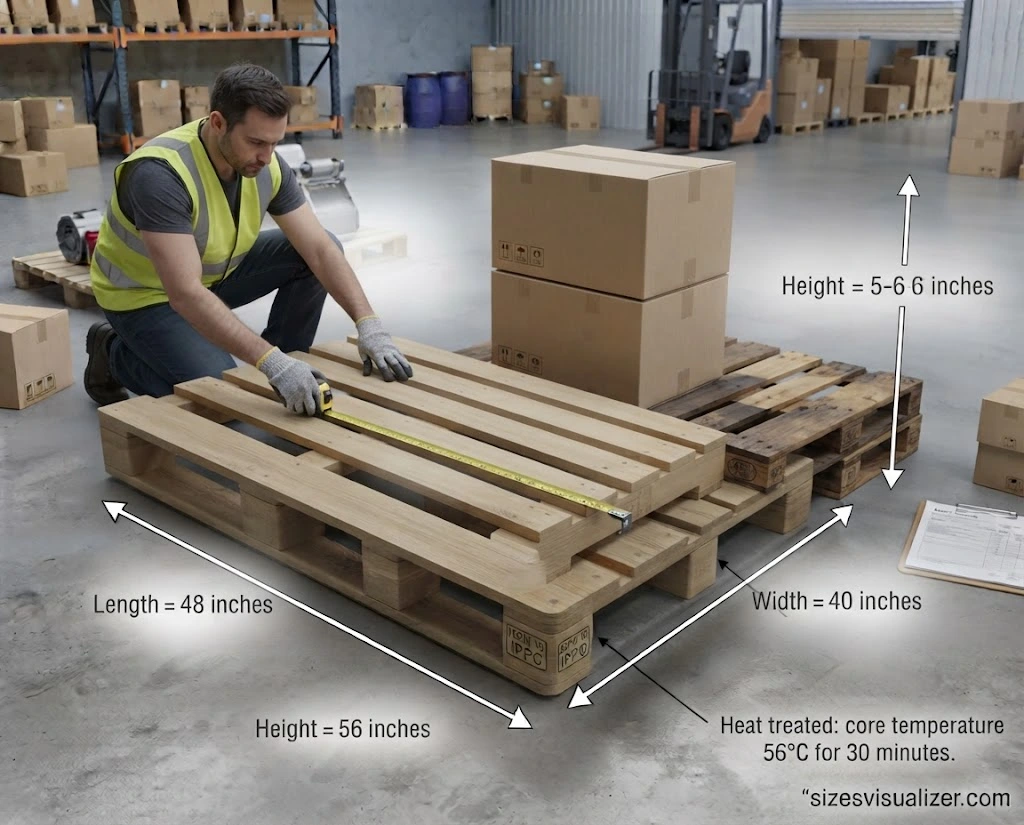
Record length, width, and height. Add the load height too. Measure any overhang, since it can add freight charges.
Keep the load inside the pallet edges
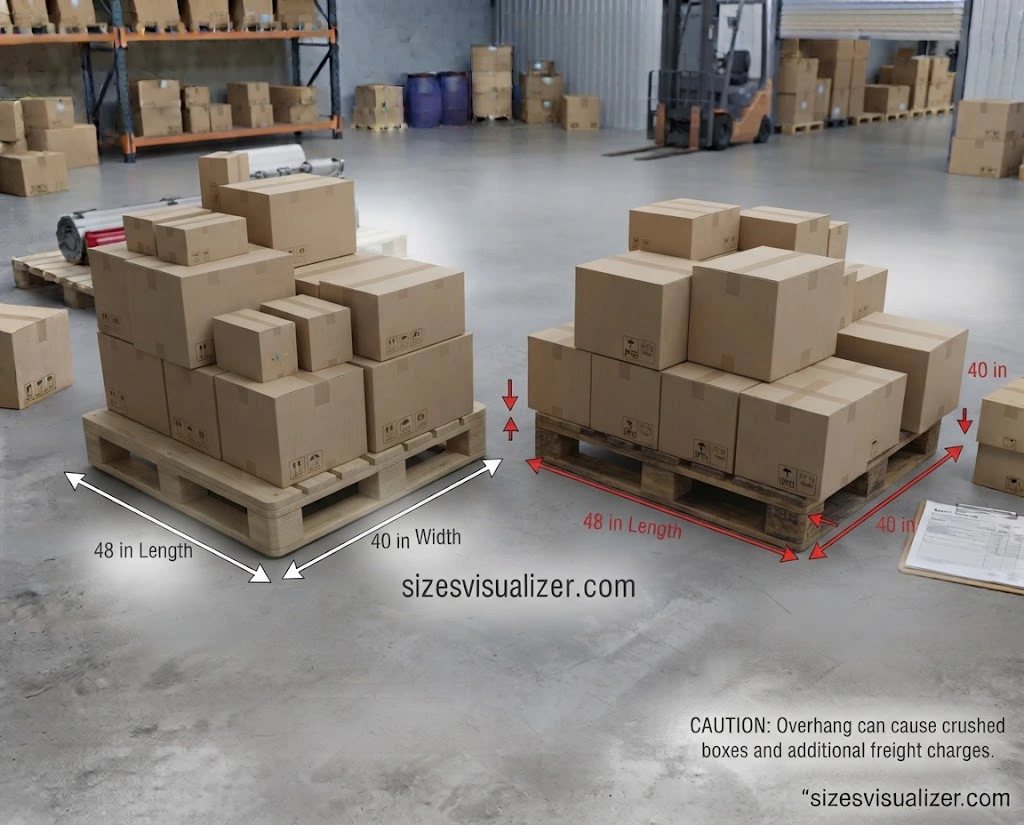
Overhang can cause crushed boxes and carrier fees. Remember that the pallet’s own weight counts toward shipment weight.
Four mistakes to avoid:
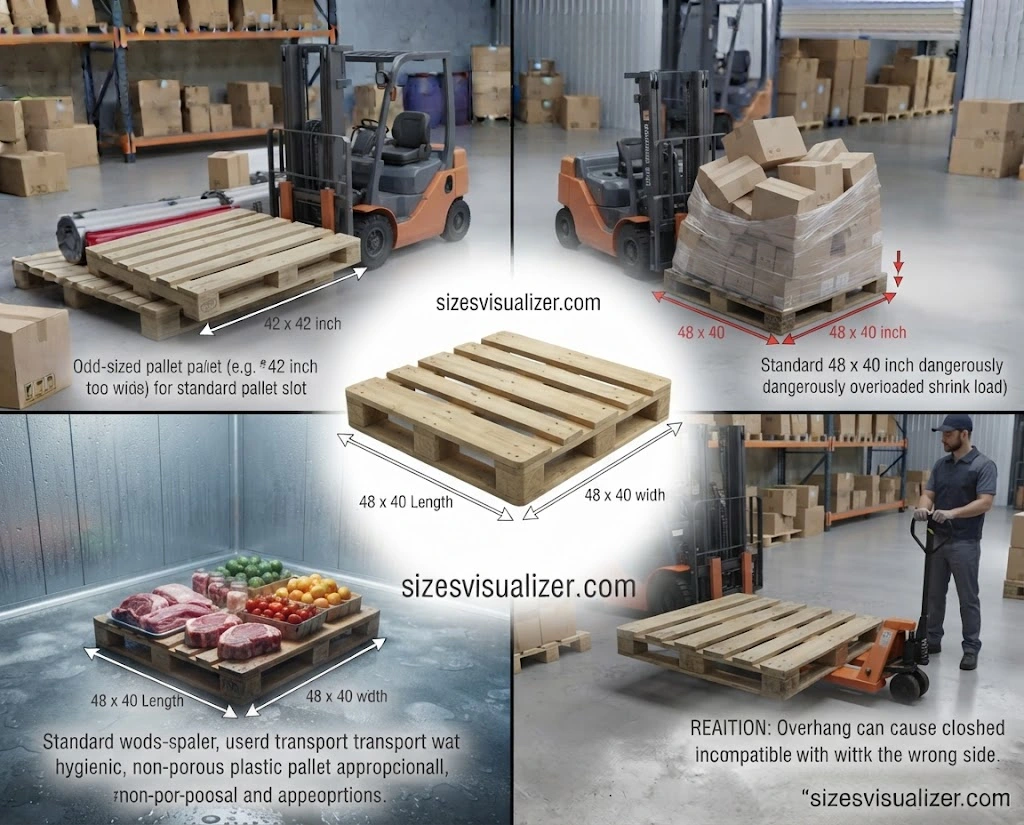
- Using odd sizes that don’t fit racks or trailers.
- Ignoring the load capacity.
- Choosing wood where hygiene rules call for plastic.
- Forgetting the entry type.
Must Visit: Pool Table Dimensions & Room Size Guide: Find the Perfect Fit for Your Space
FAQs
What is a standard pallet size L x W x H?
It is 48″ x 40″ x about 5 to 6″. Height varies by build.
What is the standard pallet size in cm?
It is 121.9 cm x 101.6 cm. The Euro pallet is 120 cm x 80 cm.
Why are pallets 40×48?
The grocery industry created this size to fit trucks, rail cars, and racks. One shared size cut wasted space and sped up handling.
What is a good pallet size?
For most US freight, 48×40 works best. Use 48×48 for drums and 40×40 for light goods.
What are standard pallet sizes?
Common sizes are 48×40, 42×42, 48×48, 48×42, 48×36, 40×40, and 36×36. Global shippers also use 1200 x 800 mm.
What are the three types of pallets?
They are stringer, block, and skid pallets.
Conclusion
The right pallet size saves space, time, and money. For most US freight, 48×40 is the safe pick. Check your load weight, entry type, and carrier rules before you order. If you ship abroad, confirm ISPM 15 compliance too.

Measurement Researcher, Size Comparison Writer & Content Specialist
Timmy Ahad is a dedicated content writer and research specialist at SizesVisualizer.com, where he focuses on creating accurate, easy-to-understand content about measurements, dimensions, size comparisons, and real-world object visualization.