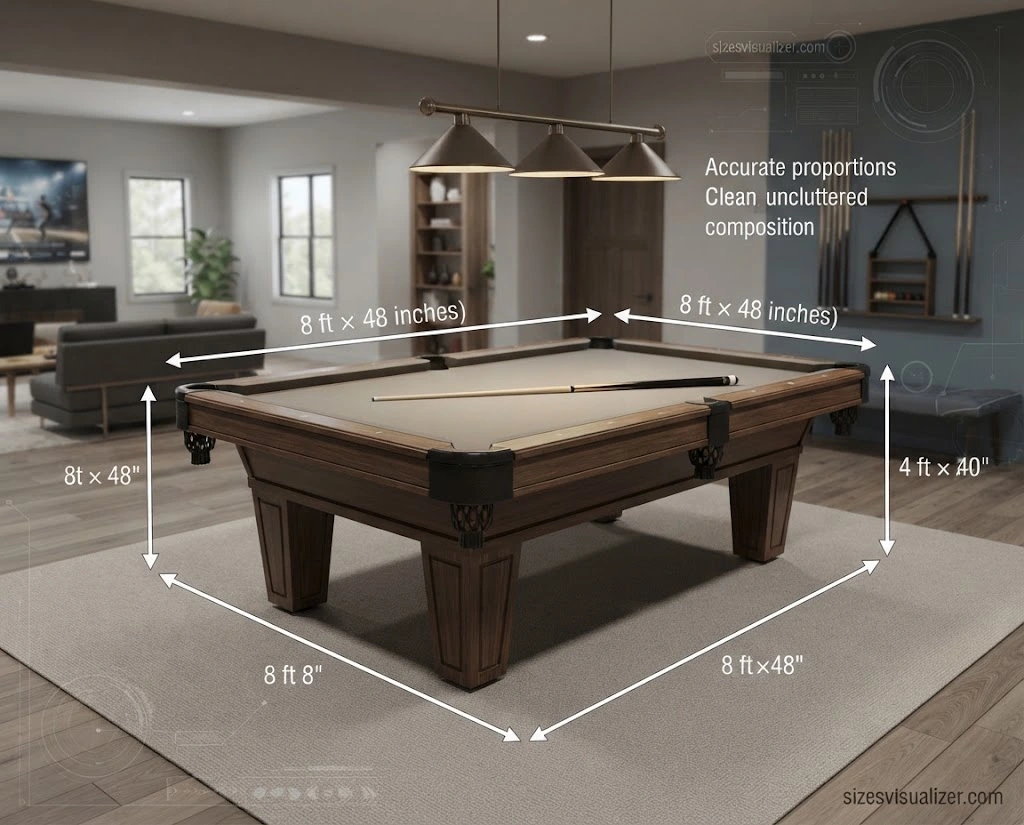
Buying a table before measuring the room is the most common mistake. This pool table dimensions and room size guide helps you avoid it.
The short answer: most American pool tables are 7ft, 8ft or 9ft. An 8ft table needs a room of about 14’4″ × 18′ to play with a full-length cue.
Table of Contents
Standard Pool Table Dimensions by Size
A standard pool table size is named by its length in feet, but the number is a label. It is not an exact measure. The figures below are the playing surface, measured between the cushion noses.
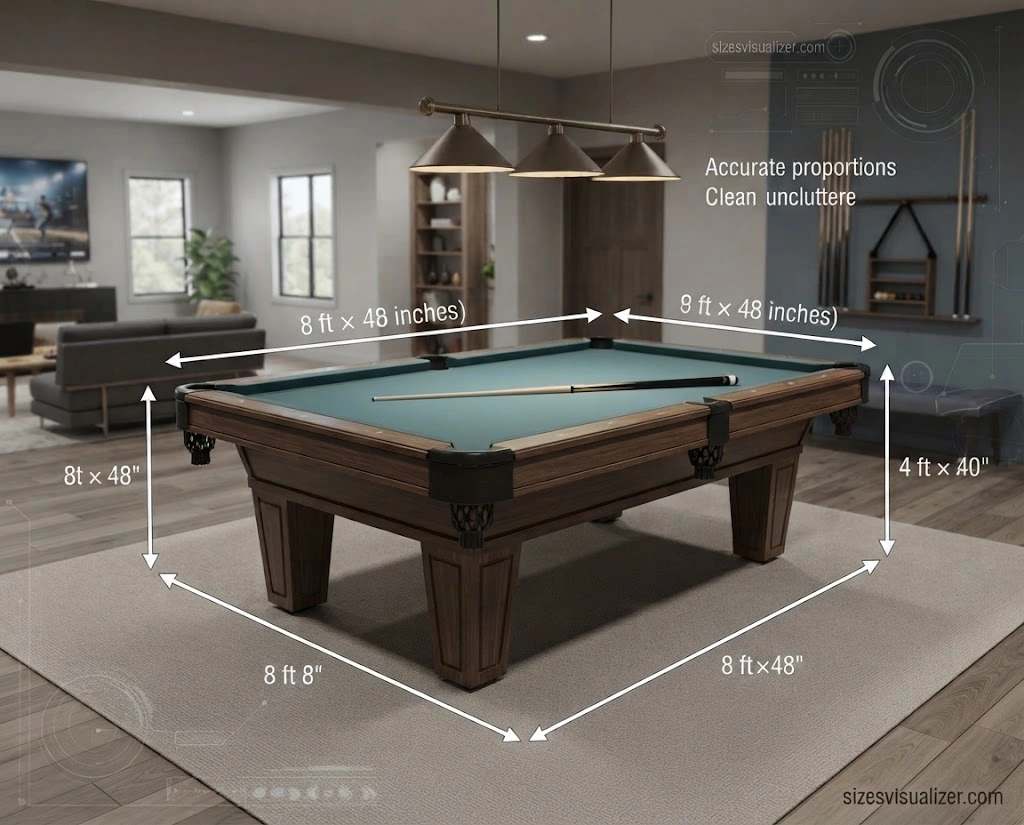
| Table size | Playing surface (inches) | Typical use |
|---|---|---|
| 6ft (small bar box) | about 72″ × 36″ | Apartments, small game rooms |
| 7ft (bar box) | 74–78″ × 37–39″ | Pubs, bars, family rooms |
| 8ft (home table) | 88″ × 44″ | Most home game rooms |
| 8ft+ (pro 8) | 92″ × 46″ | Serious home players |
| 9ft (regulation) | 100″ × 50″ | Tournaments, pro play |
| 10ft (oversized) | 112″ × 56″ | Large rooms, challenge play |
A 12ft snooker table is far bigger, at 140″ × 70″. It is a different game with smaller pockets and balls.
A few more pool table specifications are worth knowing:
- A regulation table is twice as long as it is wide (a 2:1 ratio).
- The playing bed height is about 29¼” to 31″ from the floor.
- A standard pool ball is 2¼” wide.
- The diamonds (the sight markers on the rails) are spaced by dividing the playing length by 8.
British and English tables are smaller, with tighter pockets. American tables have wider cloth, and their pockets are cut for bigger balls. You can read more on the billiard table dimensions page.
Playing Surface vs. Overall Pool Table Size
What is the true size of a pool table? It is the playing surface. That is the cloth area inside the cushions, where the balls roll.
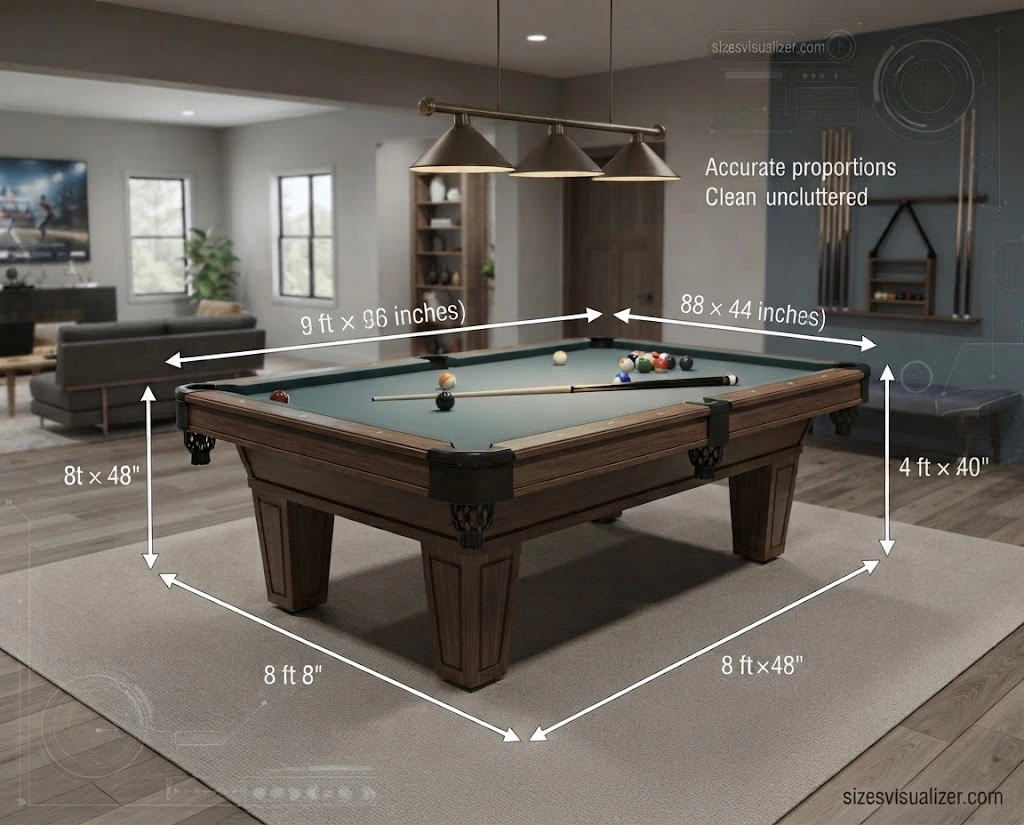
The overall table size is larger. It adds the rails, the cushions, the wooden frame and the cabinet.
Here is an example. A 9ft table has a 100″ × 50″ playing surface. Its outer footprint is about 9 feet by 4½ feet, measured rail to rail.
The overall size also depends on the model. An 8.5ft pro table has a 92″ × 46″ playing surface, yet its overall size is about 107″ × 61″.
This is why sizes seem to disagree. One source lists the playing field. Another lists the whole frame. Always check the manufacturer’s spec sheet before you buy.
Pool Table Room Size Requirements
The room size for a pool table depends on two things: the table and the cue.
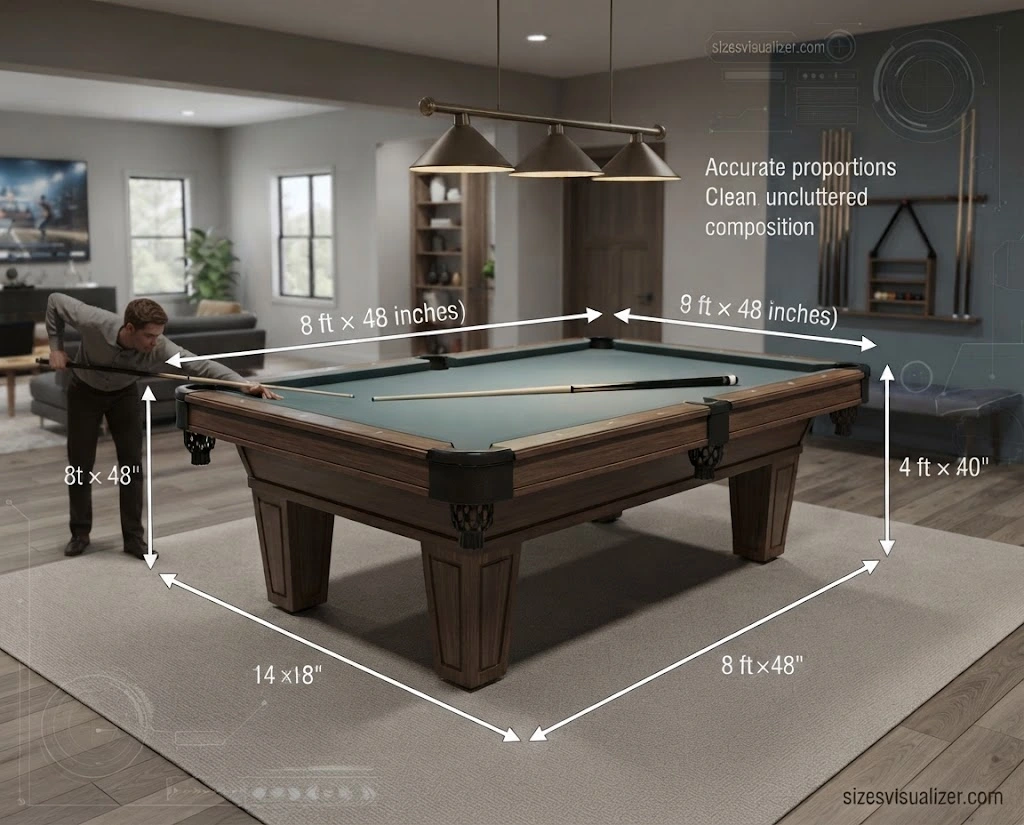
Use this pool table room size formula:
Playing surface + (cue length + 6″ backswing) on each side
The standard cue is 58″ long. The extra 6″ gives you room to draw the cue back.
Here is a quick pool table size chart for room planning:
| Table size | With a 58″ cue | With a 48″ cue |
|---|---|---|
| 7ft | 13’11” × 17’2″ | 12’3″ × 15’6″ |
| 8ft | 14’4″ × 18′ | 12’8″ × 16’4″ |
| 9ft | 14’10” × 19′ | 13’2″ × 17’4″ |
| 10ft | 15’4″ × 20′ | 13’8″ × 18’4″ |
A simple rule of thumb also works. Leave about 5 feet of clear space around every side of the table.
Short cues help in tight rooms. But they change your stroke and can feel cramped. If you need a short cue for most shots, the table is probably too big.
Must Visit: Cornhole Board Dimensions & Distance: Official Size, Measurements & Drawings
How to Choose the Right Pool Table Size for Your Room
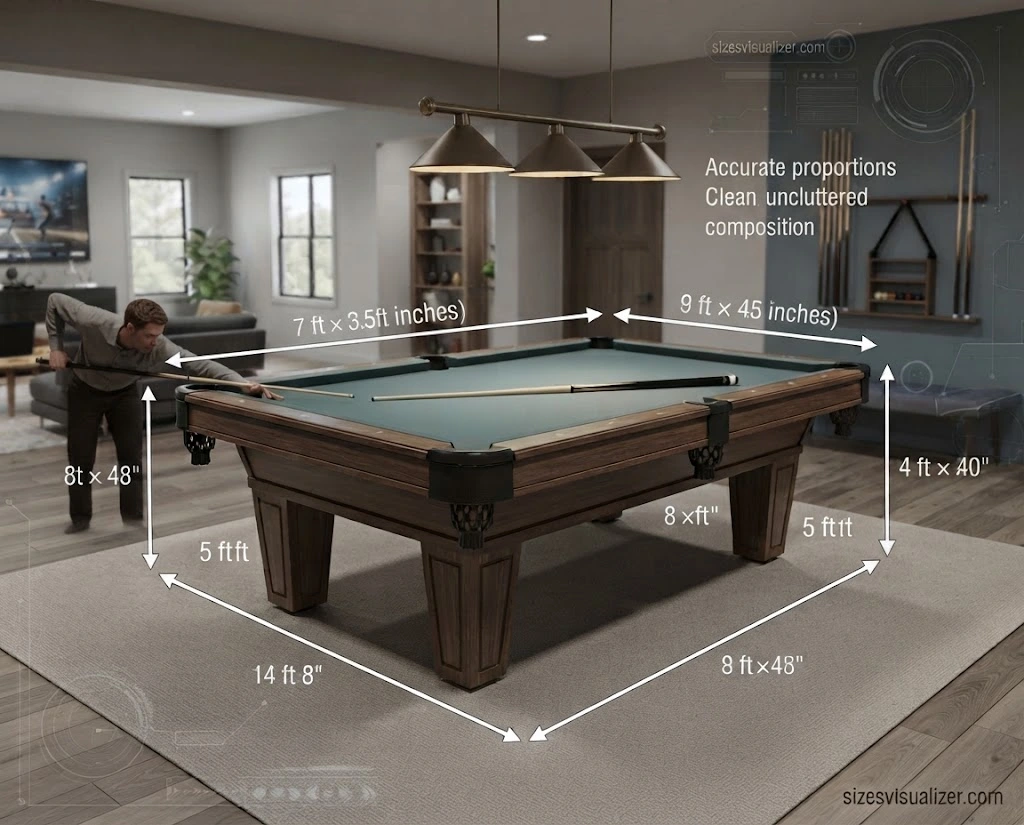
Follow these steps to find the right pool table size:
- Measure the room’s length and width in inches.
- Subtract the cueing space (cue length plus backswing, on both sides).
- Match what is left to a playing surface in the chart above.
- Test the result with a 58″ cue if you can.
Then check the things that shrink your usable space:
- Furniture: Anything taller than your hip can block the back of the cue.
- Doors: Make sure they can swing fully open.
- Stairs, fireplaces and columns: They cut into shot angles.
- Ceiling height: Leave room for a hanging pool table light, usually about 32″ to 36″ above the bed.
- Floor: A slate bed table is heavy. It needs a solid, level floor. MDF tables are lighter but less durable.
- Delivery path: Check hallways, corners and stairs. Tables ship in pieces, but the slate slabs are still big.
Think about how you will play as well. A 7ft table suits family fun. An 8ft table balances space and skill. A 9ft table rewards serious players who want tournament feel.
Short on space? A dining-convertible pool table does two jobs. Many models also take a table tennis top. Outdoor tables use weatherproof, powder-coated aluminium frames.
FAQs
What is the size of a standard pool table?
Most standard pool tables are 7ft, 8ft or 9ft. The 9ft table is the regulation size, with a 100″ × 50″ playing surface.
Are pool tables 6ft or 7ft?
Both exist. Six-foot tables are small bar boxes for tight rooms. Seven-foot tables are the most common in bars and family homes.
Should I buy a 7 or 8 foot pool table?
Buy an 8ft table if your room fits it. It plays closer to a real table. Choose 7ft if your room is under about 14 feet wide.
How much room do you need for a 7ft pool table?
You need about 13’11” × 17’2″ with a 58″ cue. With a 48″ cue, you need about 12’3″ × 15’6″.
What is the true size of a pool table?
It is the playing surface between the cushions. A 9ft table plays on 100″ × 50″. Its outer frame is larger.
Is a 6 foot pool table too small?
Not for casual play. It is great for kids, apartments and small rooms. Serious players will find the shots too tight.
Conclusion
Measure first, then match the table to your room. A right-sized table gives you clean shots from every angle, and no bumped walls.

Measurement Researcher, Size Comparison Writer & Content Specialist
Timmy Ahad is a dedicated content writer and research specialist at SizesVisualizer.com, where he focuses on creating accurate, easy-to-understand content about measurements, dimensions, size comparisons, and real-world object visualization.