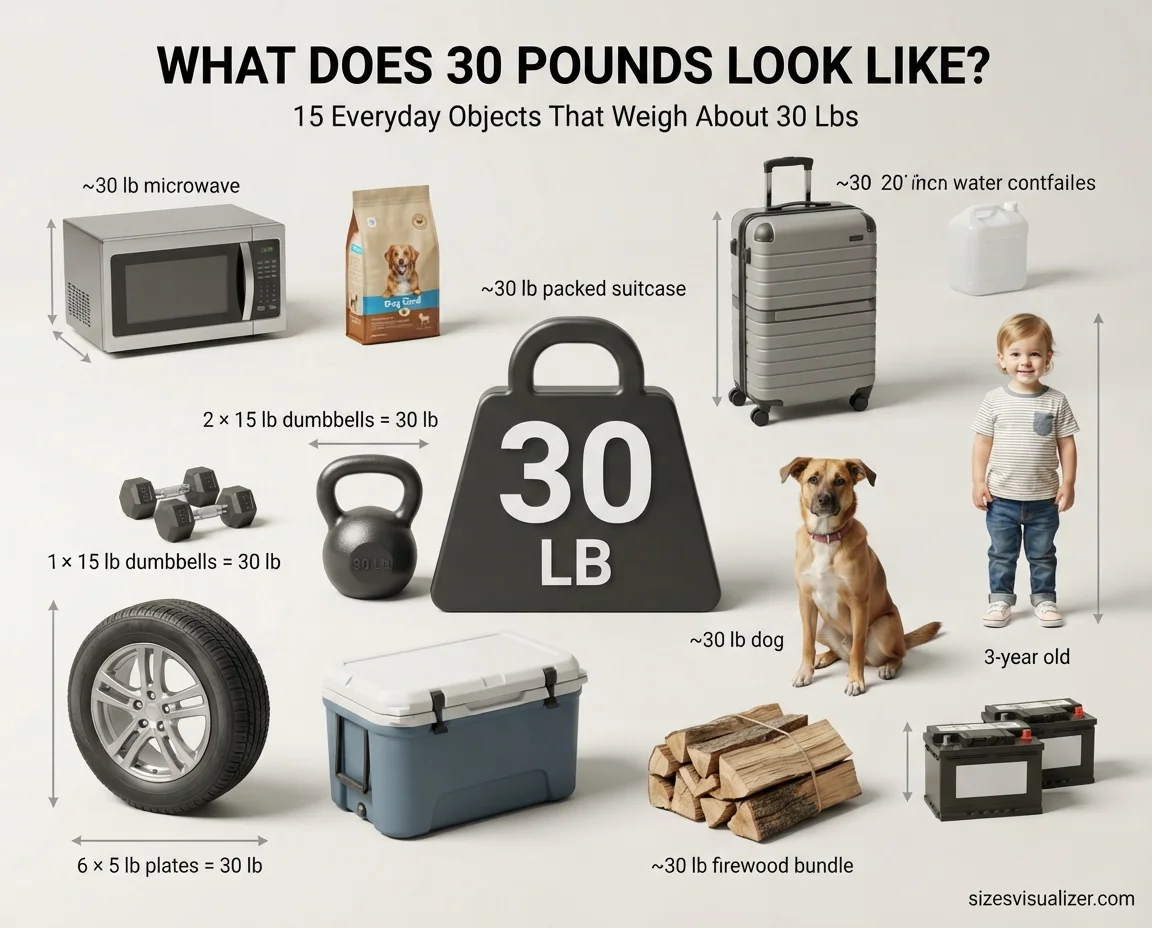
Thirty pounds is a number most people can say without ever picturing it. It shows up in weight-loss goals, muscle-gain plans, and everyday curiosity — yet it stays abstract until it’s tied to something real.
This guide fixes that. Below, you’ll find 15 everyday objects that weigh about 30 pounds, explained individually, along with what that same number looks like on the human body.
Table of Contents
How Heavy Is 30 Pounds, Really?
Thirty pounds occupies an awkward middle ground. It isn’t light enough to toss around casually, but it isn’t heavy enough to seem alarming on paper.
For context, most major U.S. airlines cap checked luggage at 50 pounds before charging an overweight fee, so 30 pounds sits comfortably under that limit. Still, professional movers generally treat anything above 25 to 30 pounds as a two-handed lift, since sustained carrying at that weight puts real strain on the lower back and shoulders.
Carried for any distance, it’s noticeably taxing. The clearest way to understand it is through direct comparison, which is exactly what the next section provides.
Take the guesswork out of measurements with our Size Visualizer & Comparison Tool and discover how different sizes compare in real life.
15 Everyday Objects That Weigh About 30 Pounds
Here is what 30 lbs of weight looks like, broken down object by object.
A standard microwave oven

Most countertop microwaves used in American kitchens weigh close to 30 pounds, largely due to the internal magnetron and turntable mechanism. It’s a weight most people have already lifted without thinking twice about it.
A medium bag of dog food
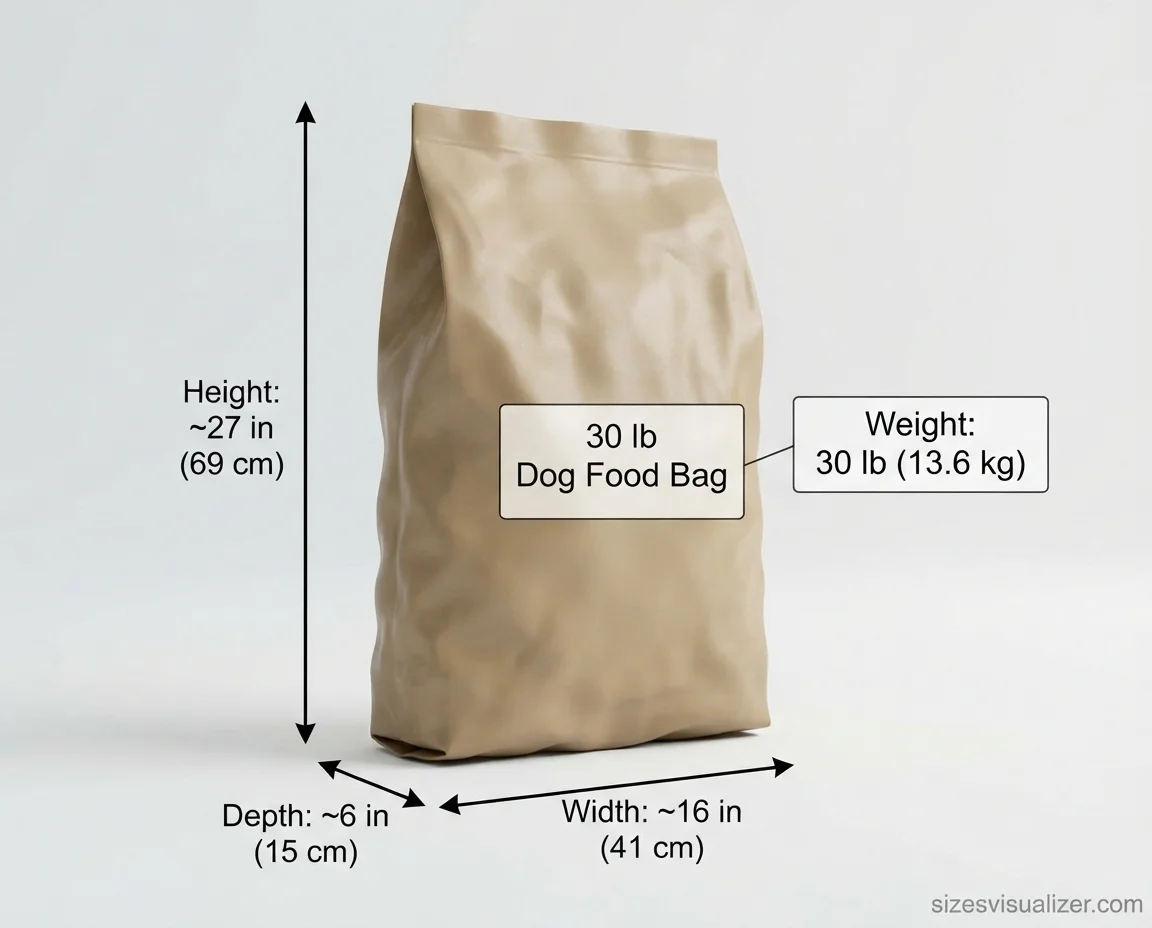
Pet food manufacturers commonly package dry dog food in 30-pound bags, making this one of the most literal, ready-made comparisons available. Anyone who owns a medium or large dog has likely carried this exact weight from a car to a pantry.
A packed 20-inch carry-on suitcase
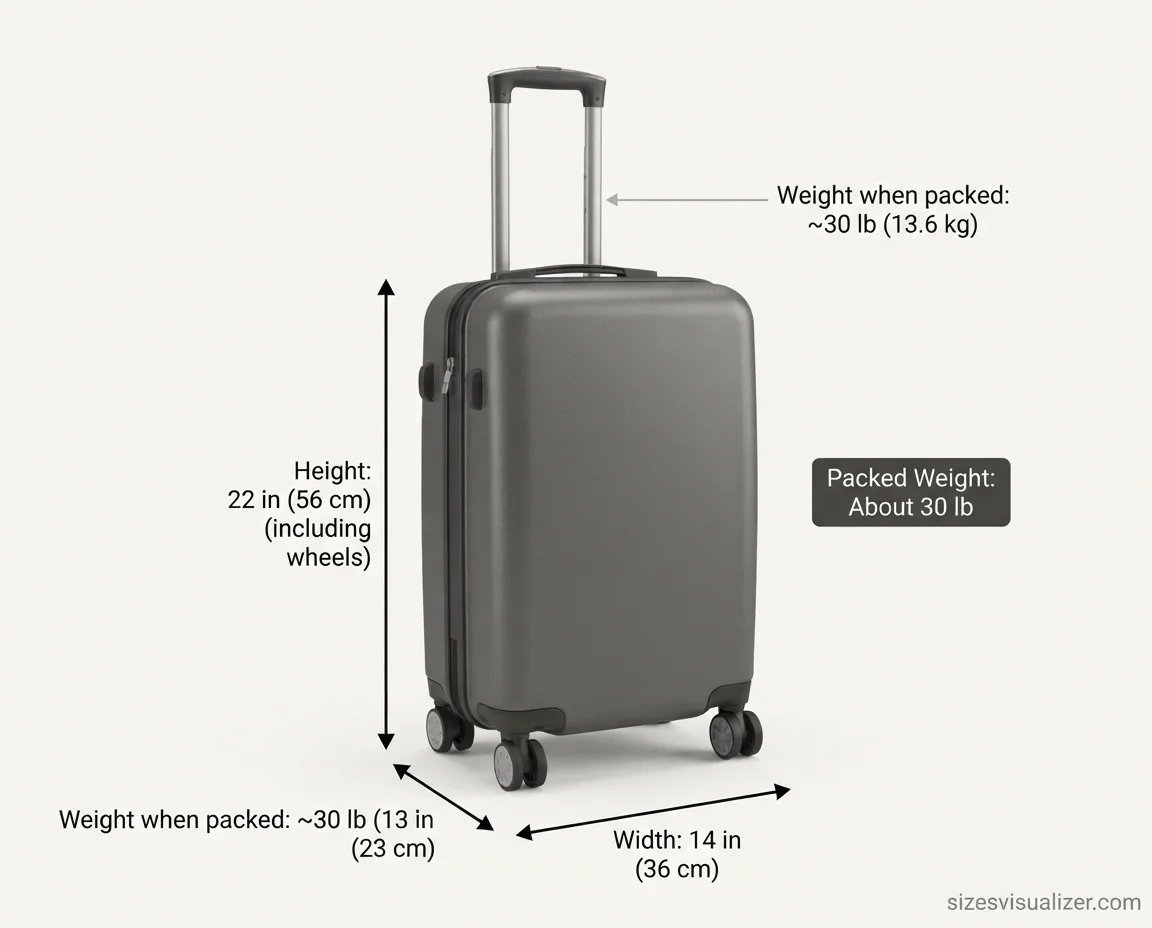
Once filled with clothing, shoes, and toiletries for a short trip, a carry-on suitcase routinely approaches 30 pounds — which is part of why airlines enforce separate carry-on weight limits, often set near 22 pounds internationally.
A five-gallon jug of water, with a bit more
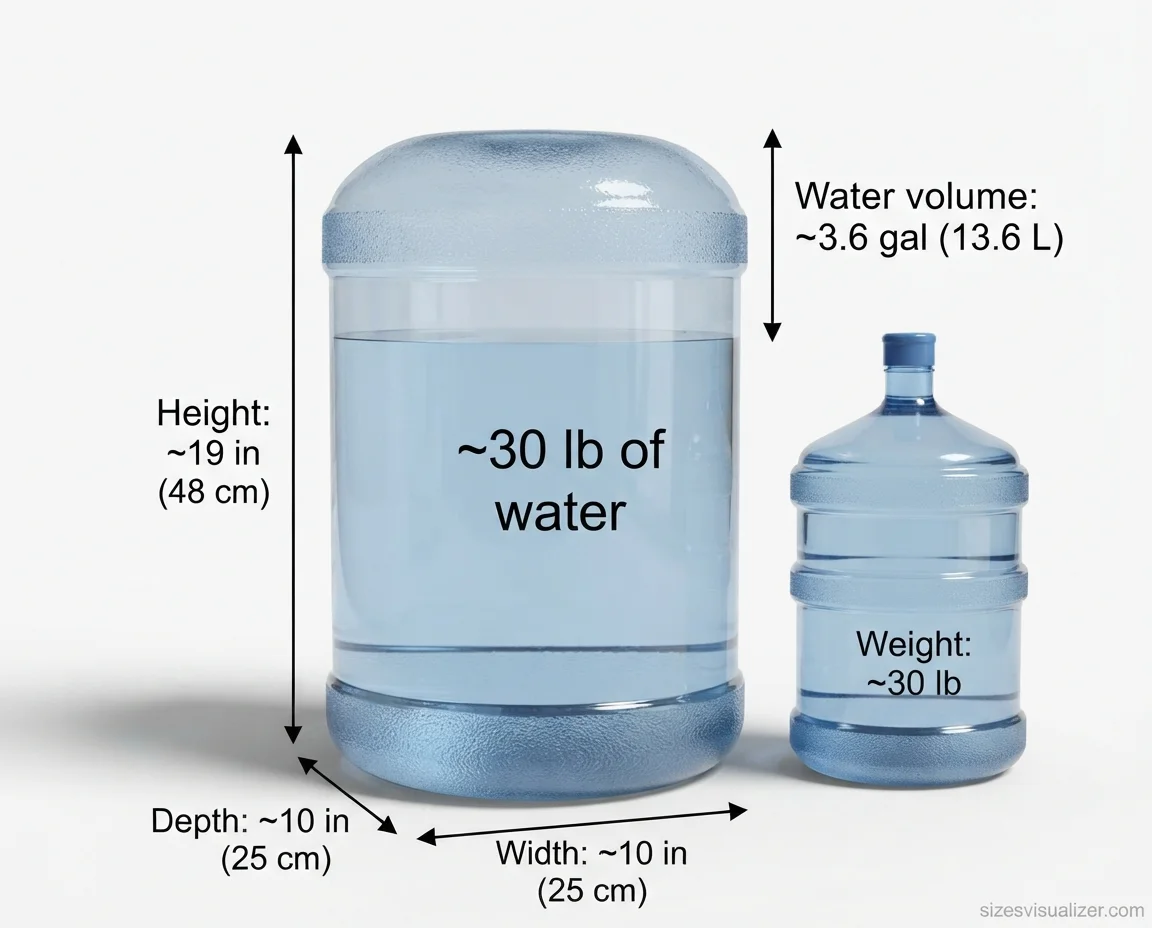
Water weighs roughly 8.3 pounds per gallon, so a full five-gallon jug alone comes in around 41 pounds — meaning roughly 3.5 gallons of water lands precisely at the 30-pound mark, a useful volume-based way to visualize the number.
A pair of stacked car batteries
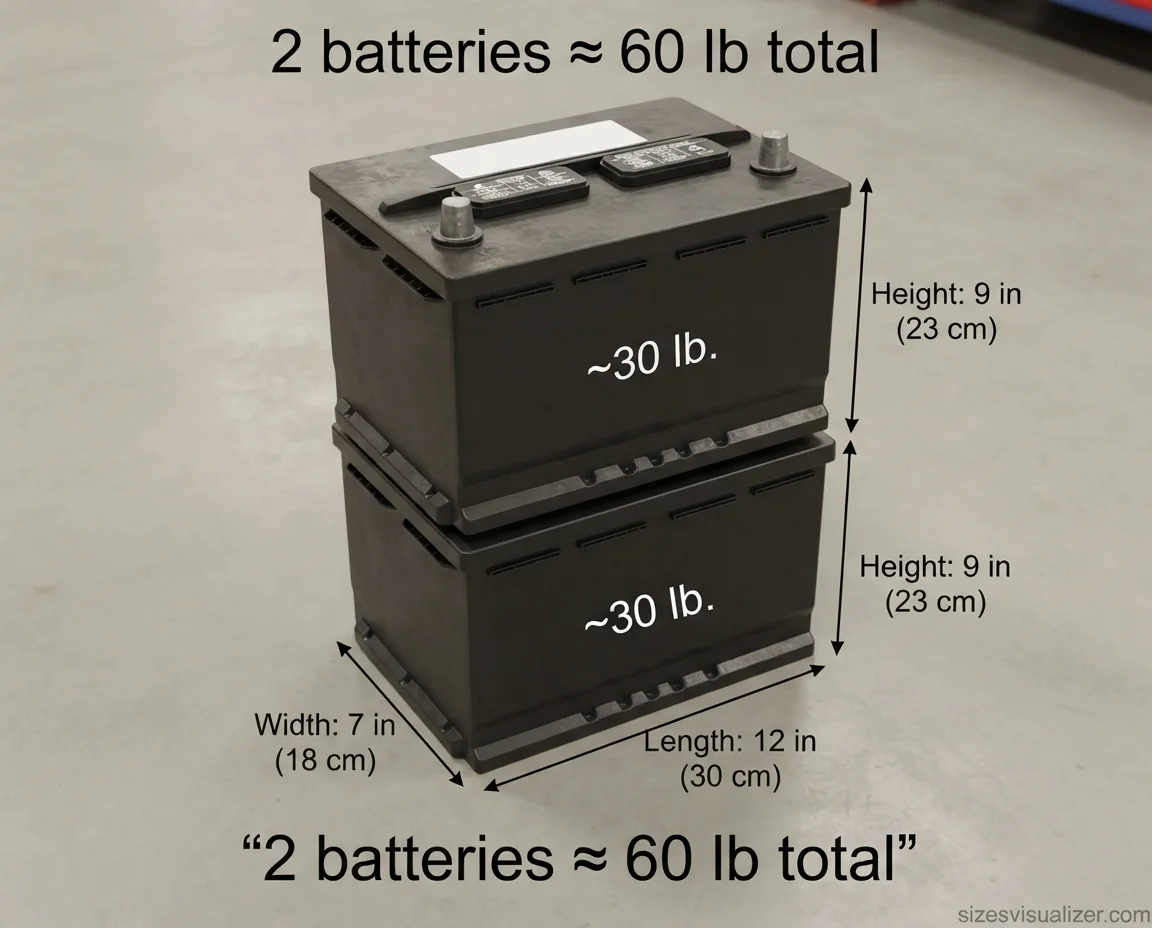
Standard automotive batteries typically weigh between 30 and 50 pounds individually, depending on size and chemistry. A smaller battery on its own frequently sits right around 30 pounds.
Two 15-pound dumbbells held together
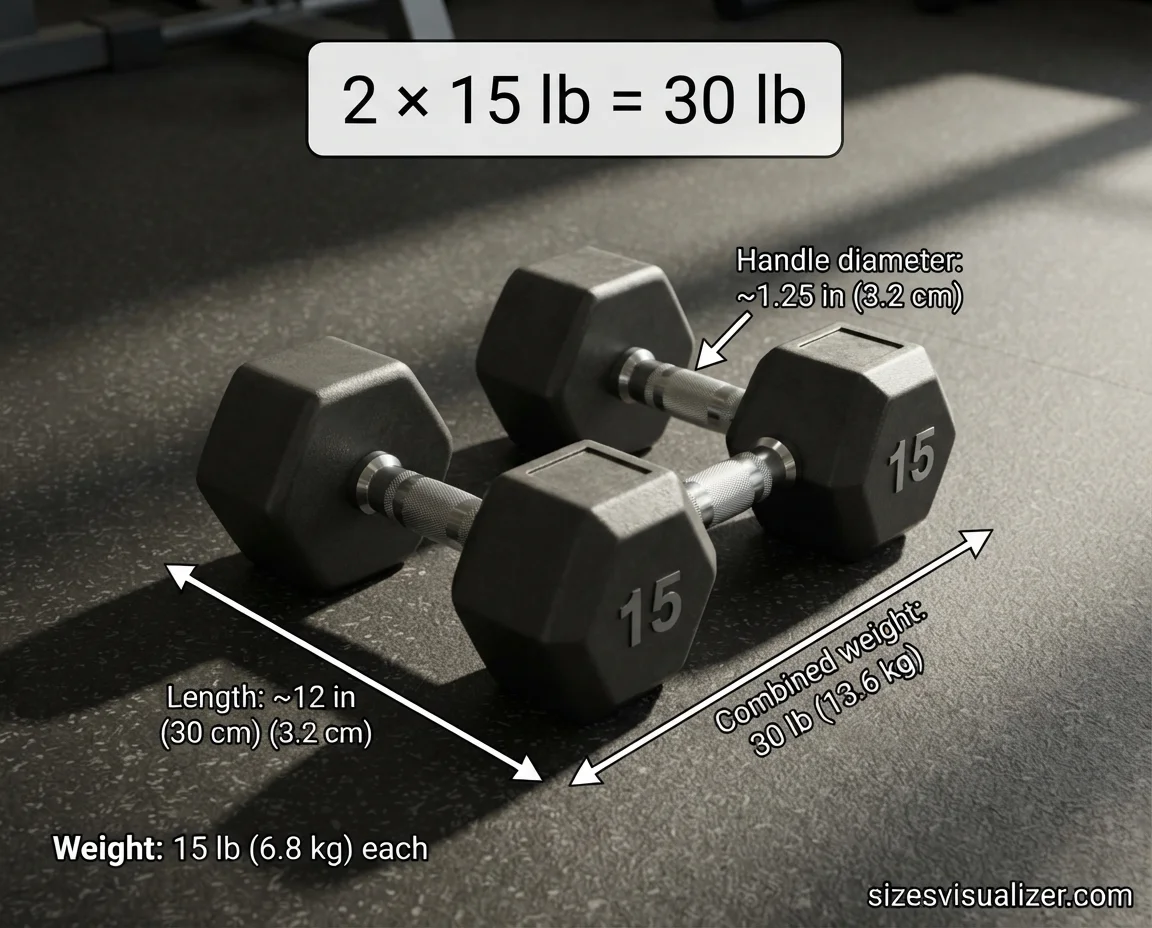
This is one of the most direct gym-based comparisons, since combining a matched pair of dumbbells commonly used for strength training adds up to exactly 30 pounds.
A 30-pound kettlebell

Kettlebells are manufactured in standardized weight increments, and 30 pounds is one of the most widely used sizes in both home and commercial gyms, making it a familiar physical reference point for anyone who trains.
Six 5-pound weight plates stacked together

Olympic-style weight plates are often loaded onto a barbell in this exact combination, giving lifters a hands-on sense of the total weight before it’s distributed across a bar.
A full 20-pound propane tank

The propane itself weighs about 20 pounds, but the steel tank that holds it adds significant additional weight, bringing a completely full tank to roughly 37 pounds — meaning a partially used tank, still mostly full, typically weighs close to 30 pounds.
A standard car tire and rim
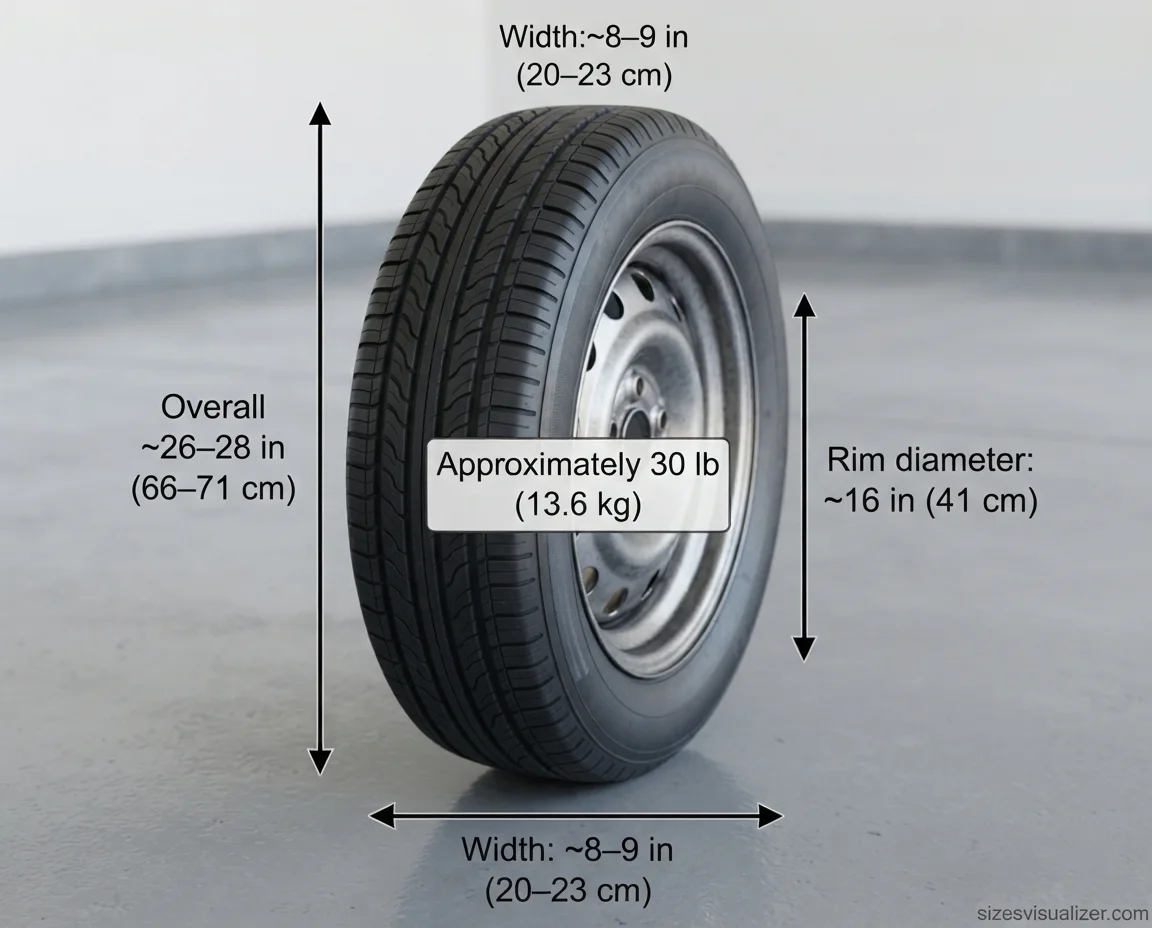
For a mid-size sedan, a mounted tire and wheel assembly generally falls in the 25 to 35 pound range, making this a weight most drivers have handled directly during a tire change.
A large, fully packed cooler
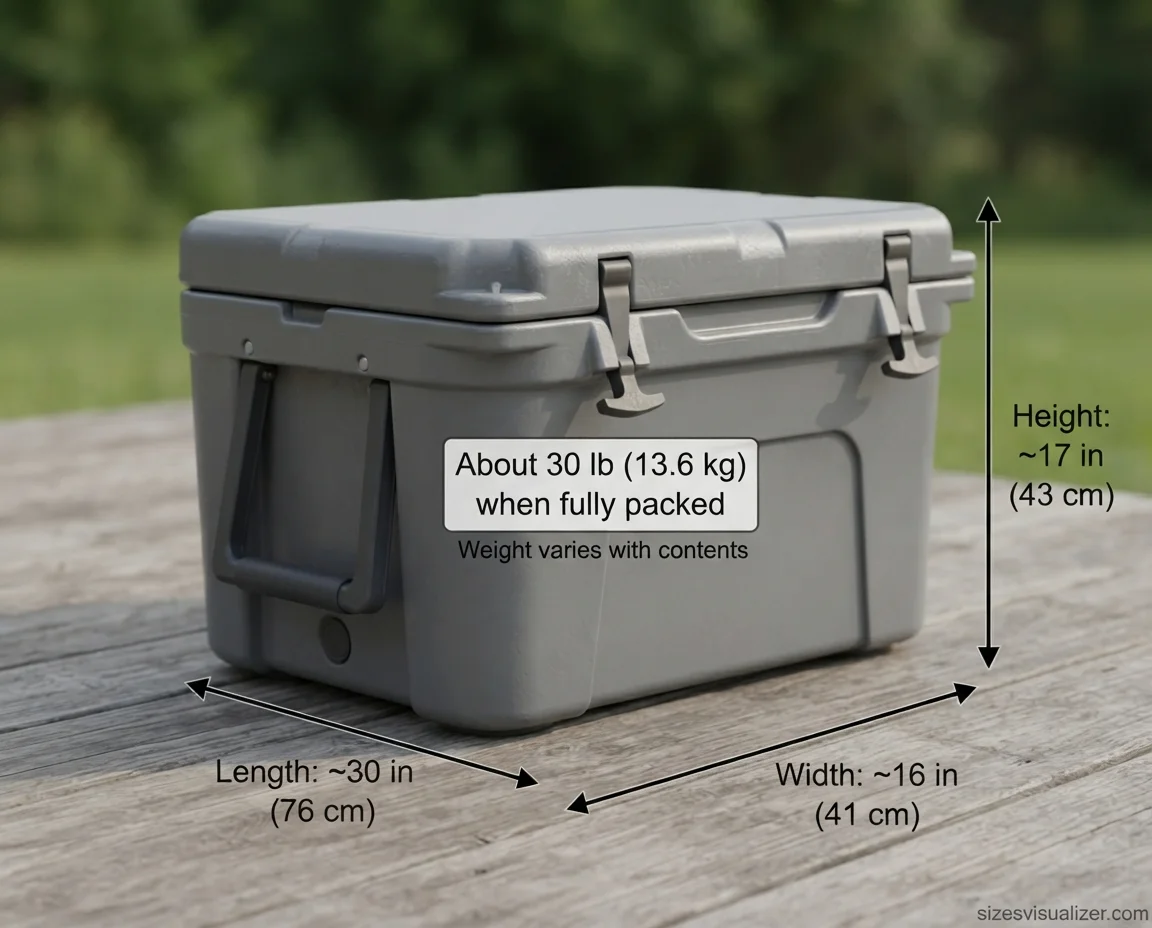
A cooler loaded with ice, canned drinks, and food for a weekend outing easily reaches 30 pounds, which explains why coolers of this size are usually built with reinforced handles or wheels.
The average 3-year-old child

According to U.S. pediatric growth data, many toddlers around age three weigh close to 30 pounds, making this one of the most intuitive comparisons for parents and caregivers.
A medium-breed dog
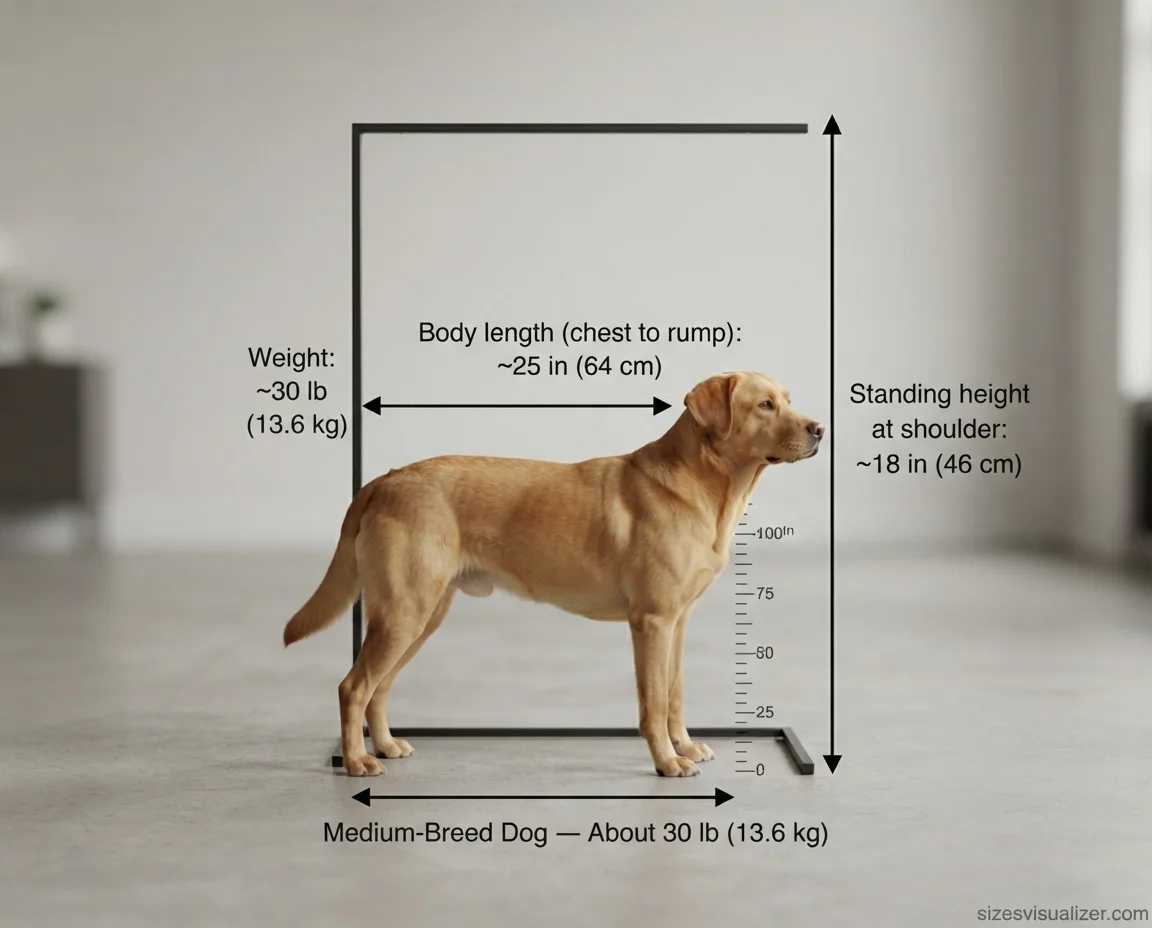
Breeds such as the Border Collie, Cocker Spaniel, or Australian Shepherd commonly weigh in the high 20s to low 30s, giving pet owners a familiar living reference point.
A newborn calf

At birth, calves typically weigh between 25 and 45 pounds depending on breed, placing many newborn calves squarely at the 30-pound mark.
A stack of firewood, bundled for transport
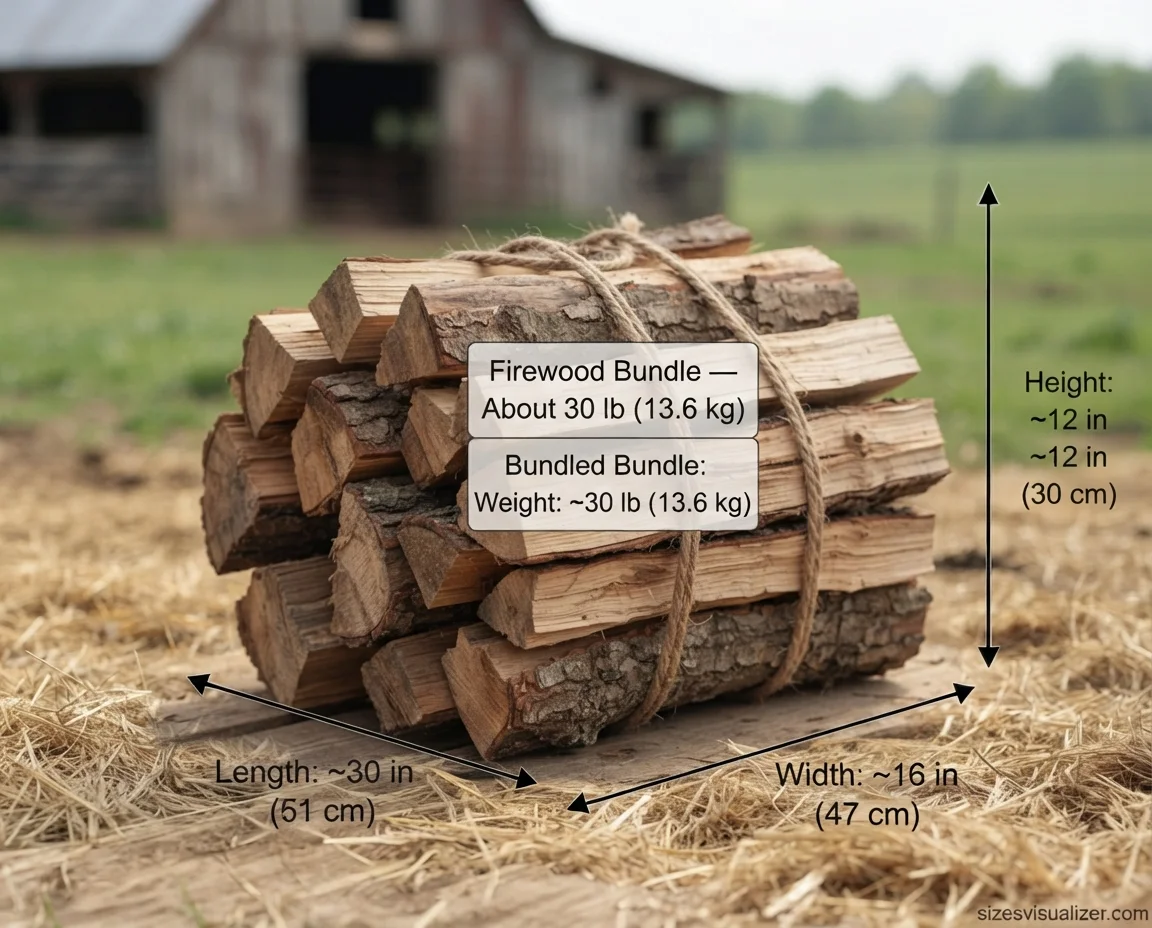
A single armful bundle of split firewood, the kind commonly sold at grocery stores or gas stations for home use, is often packaged specifically to weigh around 30 pounds for easier handling.
Together, these examples turn an abstract number into something your body can actually recall — because muscle memory communicates weight far more effectively than a figure on a page.
Must Visit: Standard Ceiling Height: Average, Minimum & Ideal Ceiling Dimensions
What Does Losing or Gaining 30 Pounds Look Like on Your Body?
Applying that same number to the human body produces a different, but equally tangible, transformation.
Weight loss tends to follow a predictable visual sequence. The face changes first — cheeks slim down, the jawline becomes more defined, and a double chin often reduces. This happens early because facial tissue carries comparatively little fat relative to the rest of the body, so even modest loss becomes visible there quickly.
The midsection follows next. The waistline narrows, and clothing begins fitting more loosely through the stomach, frequently before the number on the scale reflects a dramatic shift.
Finally, overall body proportions adjust. The shoulders, arms, and legs appear leaner, changing the entire silhouette rather than just its size.
For most adults, that’s the equivalent of removing six stacked 5-pound weight plates from the body. It commonly shows up as a full clothing size change, sometimes two, along with a visibly different face shape in photographs.
Muscle gain behaves differently. Because muscle tissue is denser than fat, 30 pounds of added muscle occupies less volume but adds noticeable size to the arms, chest, and shoulders — producing a distinctly different visual result than fat loss of the same amount.
Is 30 Pounds a Lot? Height, Weight, and Healthy Range
Whether 30 pounds qualifies as significant depends heavily on an individual’s height and starting weight.
Based on the standard healthy body mass index (BMI) range of 18.5 to 24.9, a woman standing 5’2″ (62 inches) generally falls into a healthy weight range of approximately 104 to 131 pounds. This range is intentionally broad, since factors like muscle mass, bone density, and frame size all influence where a healthy individual sits within it.
There is no official medical definition for the term “chubby.” The closest measurable equivalent is the “overweight” BMI classification, which begins at a BMI of 25. For someone at 5’4″, for example, that threshold starts around 145 pounds. However, BMI does not account for muscle mass or fat distribution, so it functions only as a general screening tool rather than a diagnostic measure.
On a shorter frame, 30 pounds represents a substantially larger visual and physical change than the same 30 pounds on someone six feet tall — which is why identical numbers can look dramatically different from person to person.
How Long Does It Take to Lose or Gain 30 Pounds Safely?
The CDC recommends a gradual weight-loss pace of 1 to 2 pounds per week, noting that people who lose weight steadily are more likely to keep it off long-term. At that pace, losing 30 pounds takes roughly four to seven months.
Faster weight loss frequently reflects water and muscle loss rather than fat loss alone, which is one reason crash diets can produce a depleted or “deflated” appearance rather than a toned one.
Gaining 30 pounds of lean muscle follows a slower, more gradual timeline. Most individuals engaged in structured strength training and a calorie surplus gain approximately 0.5 to 1 pound of true muscle per month, meaning a 30-pound muscle gain realistically spans two years or more, particularly for those newer to resistance training.
FAQs
Is a 30 lb weight loss noticeable?
Yes. Most people first notice changes in the face, followed by the waistline and overall body shape. A 30-pound loss commonly shifts clothing size by one to two full sizes.
What does 30 lbs of weight look like?
It compares closely to a standard microwave, a 30-pound bag of dog food, a full propane tank, or the average weight of a three-year-old child. On the body, it typically appears as a visibly slimmer face, waistline, and limbs.
What object weighs 30 lbs?
Common examples include a kettlebell, a pair of stacked car batteries, a medium-breed dog, a fully packed carry-on suitcase, and a large cooler filled with ice and drinks.
Is 30 lbs heavy?
As a single object to lift or carry, yes — it’s heavy enough that professional movers classify it as a two-handed lift. On the body, whether it “feels” heavy depends on an individual’s height and frame.
How much should a 5’2″ female weigh?
Using standard BMI guidelines, a healthy weight range for a 5’2″ woman is approximately 104 to 131 pounds, though individual factors such as muscle mass and frame size affect where a person falls within that range.
How many lbs is considered chubby?
There is no official medical definition for “chubby.” The nearest clinical marker is the overweight BMI classification, which begins at a BMI of 25 — though BMI alone doesn’t account for muscle mass or body composition.
Conclusion
Thirty pounds becomes far easier to grasp once it’s attached to something tangible — a suitcase, a kettlebell, a toddler, or a change in the mirror. Whether the goal is losing it, gaining it, or simply understanding it, the number stops being abstract the moment it’s tied to something real.

Measurement Researcher, Size Comparison Writer & Content Specialist
Timmy Ahad is a dedicated content writer and research specialist at SizesVisualizer.com, where he focuses on creating accurate, easy-to-understand content about measurements, dimensions, size comparisons, and real-world object visualization.