Picking the right can size affects more than looks. It changes how your drink fills, ships, and sells.
This guide breaks down every common aluminum can dimension — diameter, height, and capacity — so you can choose the right fit fast.
Table of Contents
What Are Aluminum Can Dimensions? (Diameter, Height & Capacity Explained)
Aluminum can dimensions
Aluminum can dimensions describe three things: body diameter, height, and liquid capacity. Together, these numbers decide how a can looks, how much it holds, and whether it fits your production line.
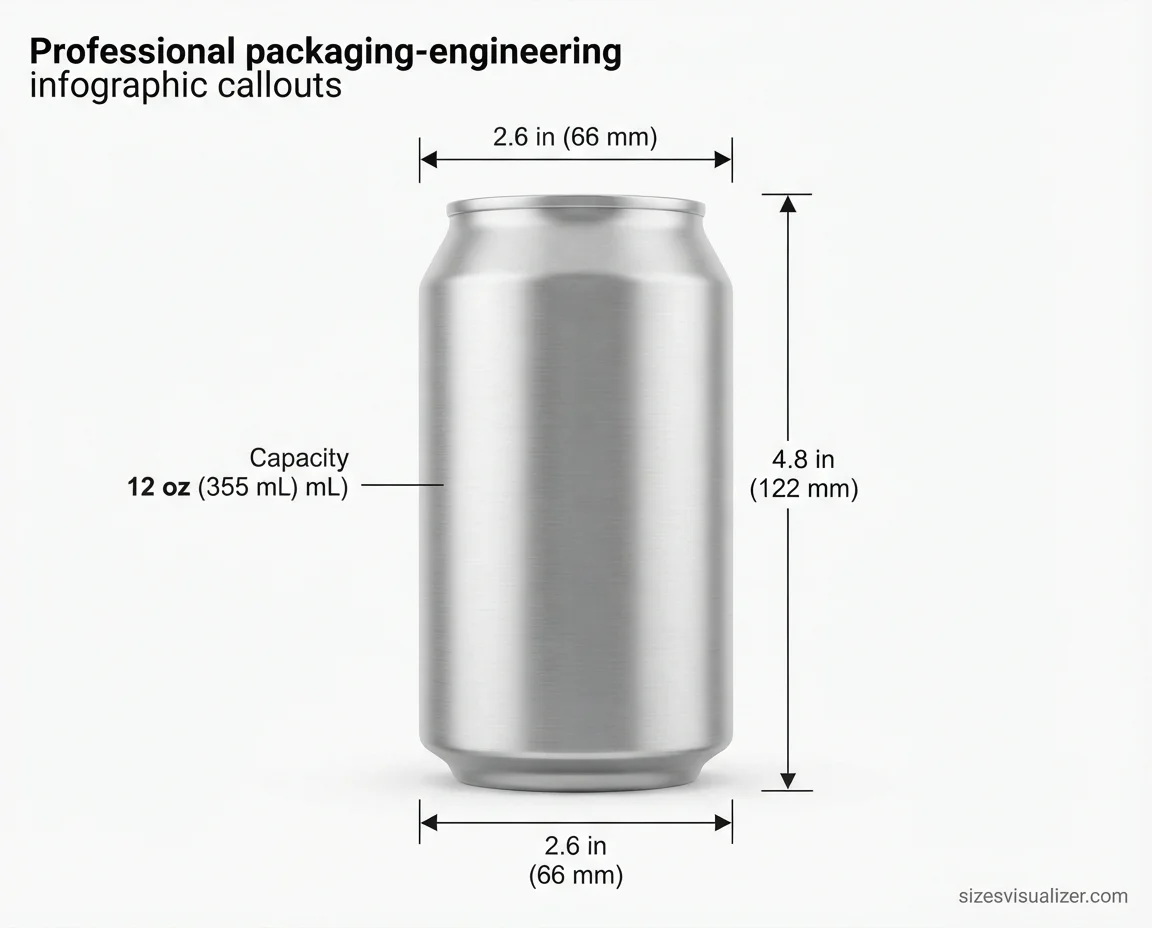
Manufacturers use a three-digit code to label can sizes. The first digit is whole inches. The next two digits are sixteenths of an inch. So a 211 can measures 2 and 11/16 inches across, or about 2.69 inches.
This code applies to both the body diameter and the end diameter (the lid). A standard 12 oz can uses a 211 body paired with a 202 end. That means the lid is smaller than the can body — a design called neck-in.
Neck-in
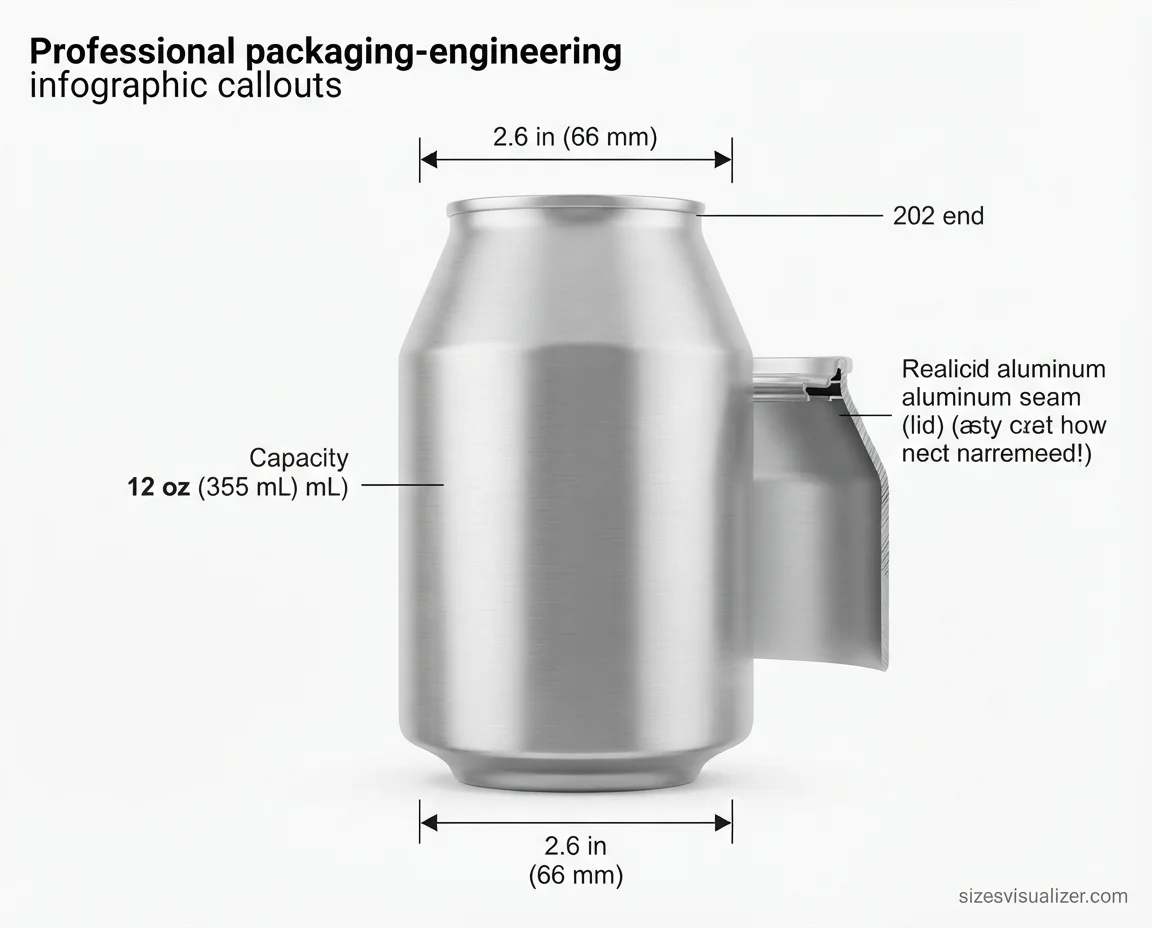
Neck-in matters because it lets manufacturers use less metal at the top of the can while keeping the seam strong. It also keeps cans stackable, since the narrower top fits neatly under the wider base of the can above it.
Body diameter and end diameter
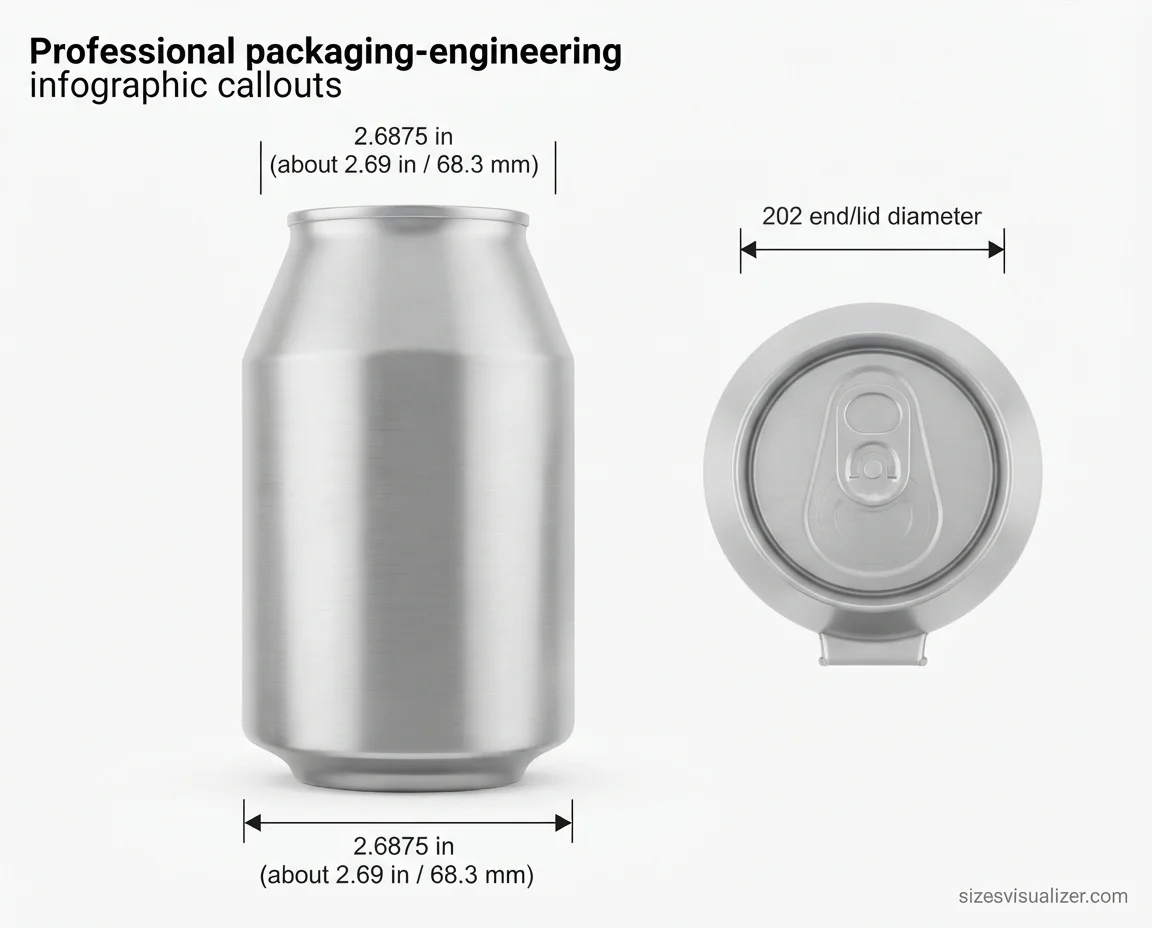
Body diameter and end diameter are easy to confuse, but mixing them up causes ordering errors. Always double-check both numbers before placing a production order.
Standard Aluminum Can Dimensions Chart (Size, Diameter, Height & Weight)
Here’s a quick-reference aluminum can size chart covering the most common US formats.
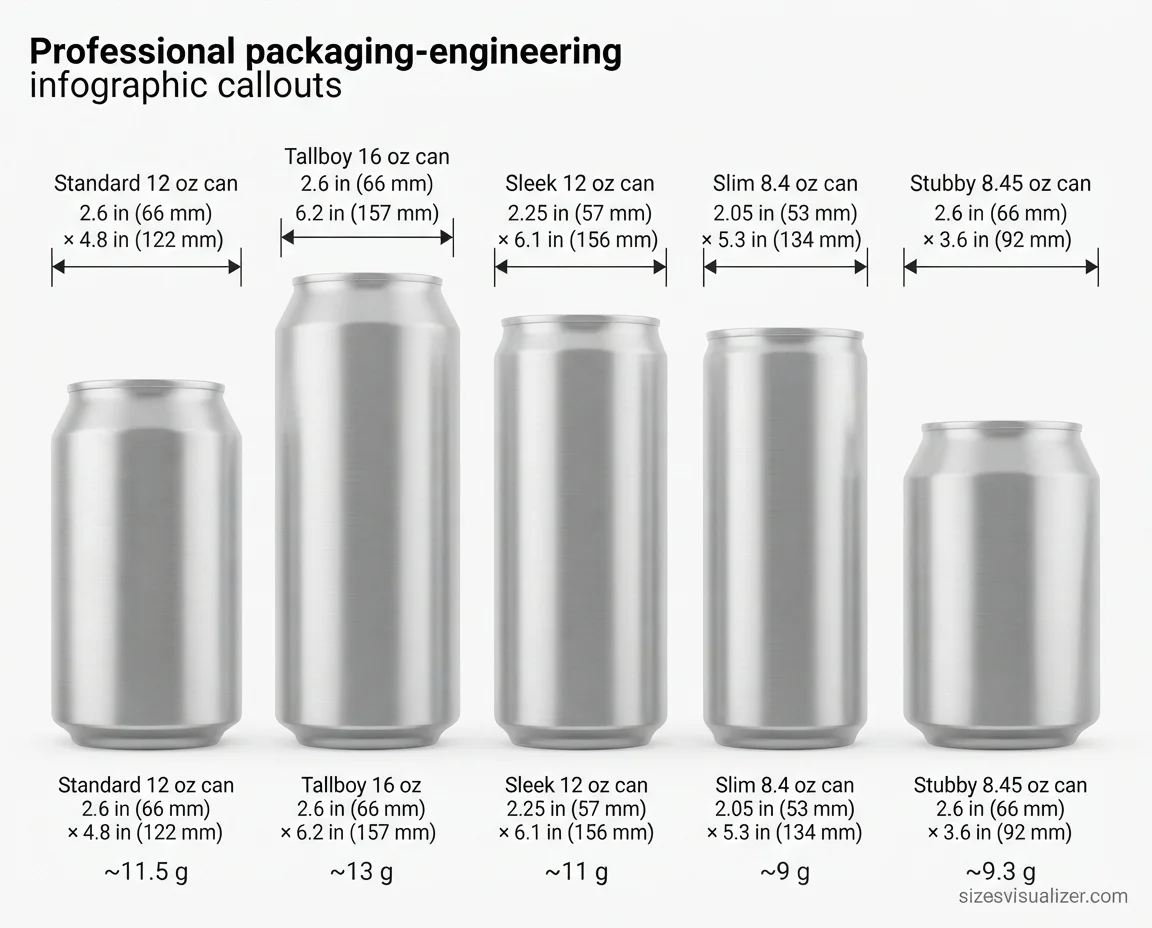
| Can Type | Volume | Diameter | Height | End Size | Approx. Weight |
|---|---|---|---|---|---|
| Standard | 12 oz (355 mL) | 2.6 in (66 mm) | 4.8 in (122 mm) | 202 | ~11.5 g |
| Tallboy | 16 oz (473 mL) | 2.6 in (66 mm) | 6.2 in (157 mm) | 202 | ~13 g |
| Sleek | 12 oz (355 mL) | 2.25 in (57 mm) | 6.1 in (156 mm) | 202 | ~11 g |
| Slim | 8.4 oz (250 mL) | 2.05 in (53 mm) | 5.3 in (134 mm) | 200 | ~9 g |
| Stubby | 8.45 oz (250 mL) | 2.6 in (66 mm) | 3.6 in (92 mm) | 202 | ~9.3 g |
The standard 12 oz can remains the backbone of American beverage packaging. It’s been the industry default since aluminum cans replaced steel in the 1960s, according to the Aluminum Association. Soda, beer, and sparkling water brands lean on this size because filling lines, vending machines, and store shelving are all built around it.
Beyond weight and size, can gauge (the thickness of the aluminum sheet) also affects cost and strength, though it rarely changes the outer dimensions shoppers see.
Aluminum Can Sizes by Type: Standard vs. Sleek vs. Slim vs. Stubby
Not every can with the same capacity looks the same. Shape sends a signal, and brands use that on purpose.
Standard cans
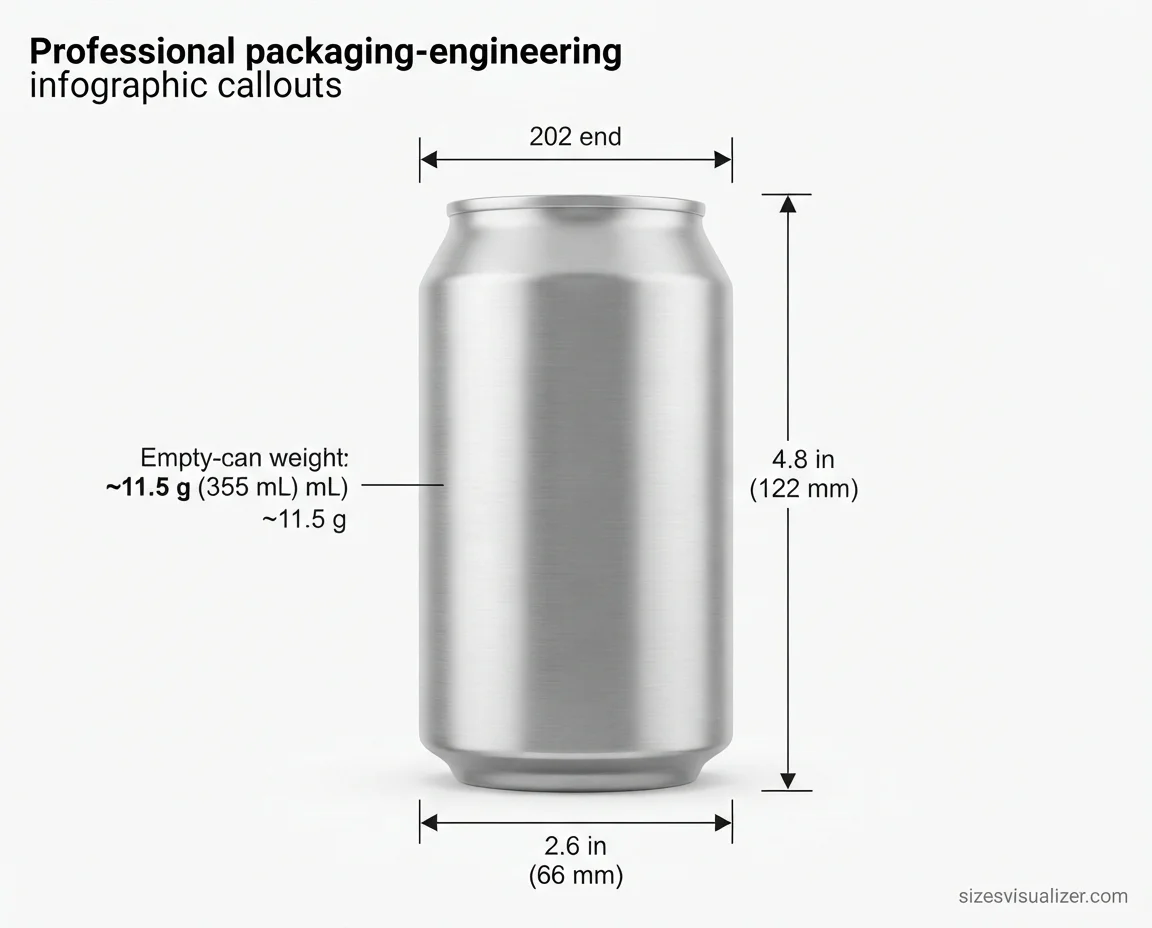
Standard cans hold 12 oz and measure 66 mm across. They’re the safest, most compatible choice for mass-market drinks like soda and beer, since almost every filling line and vending machine is built to fit them.
Sleek cans
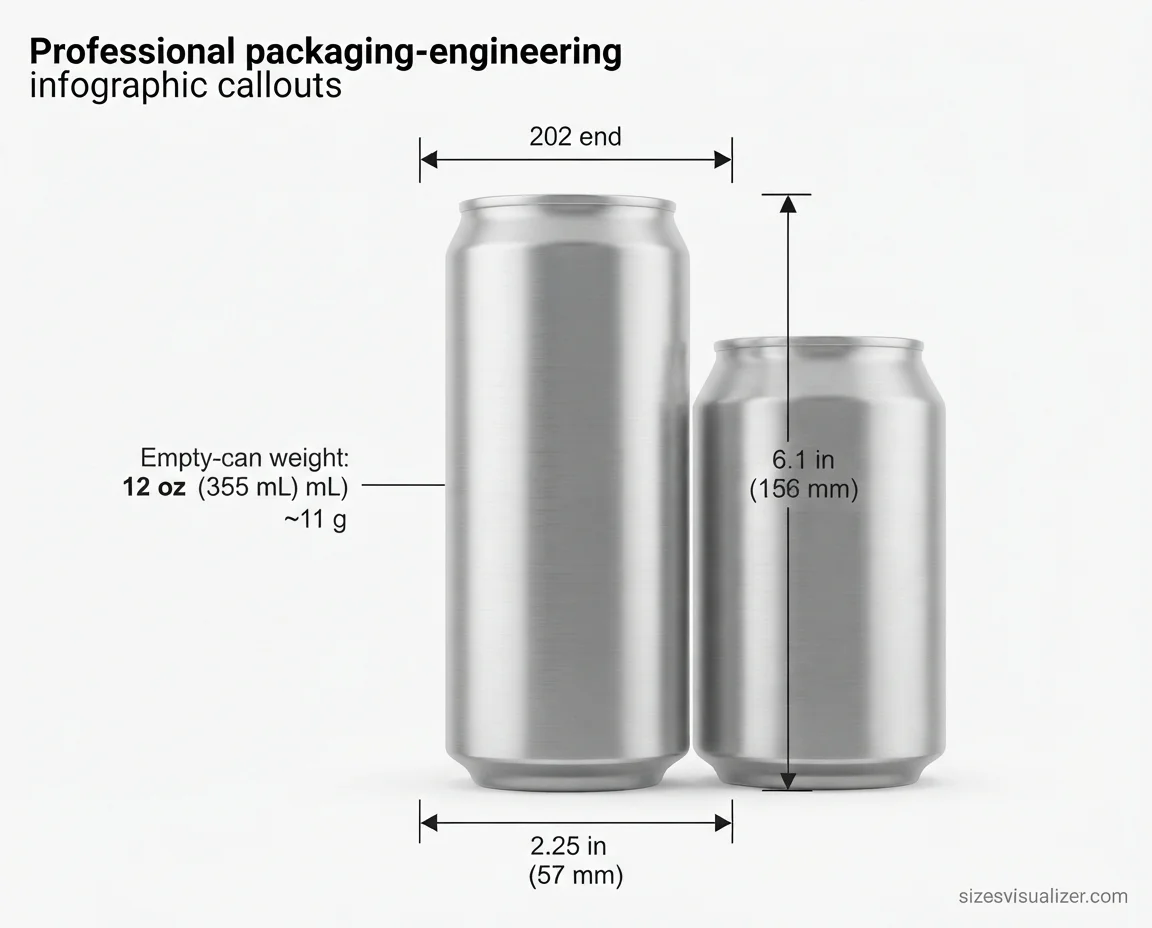
Sleek cans hold the same 12 oz but narrow the diameter to 57 mm while stretching the height to 156 mm. This taller, thinner shape reads as premium. Craft beer, hard seltzer, and kombucha brands favor it because it stands out without needing custom tooling — sleek cans typically use the same 202 end as standard cans.
Slim cans
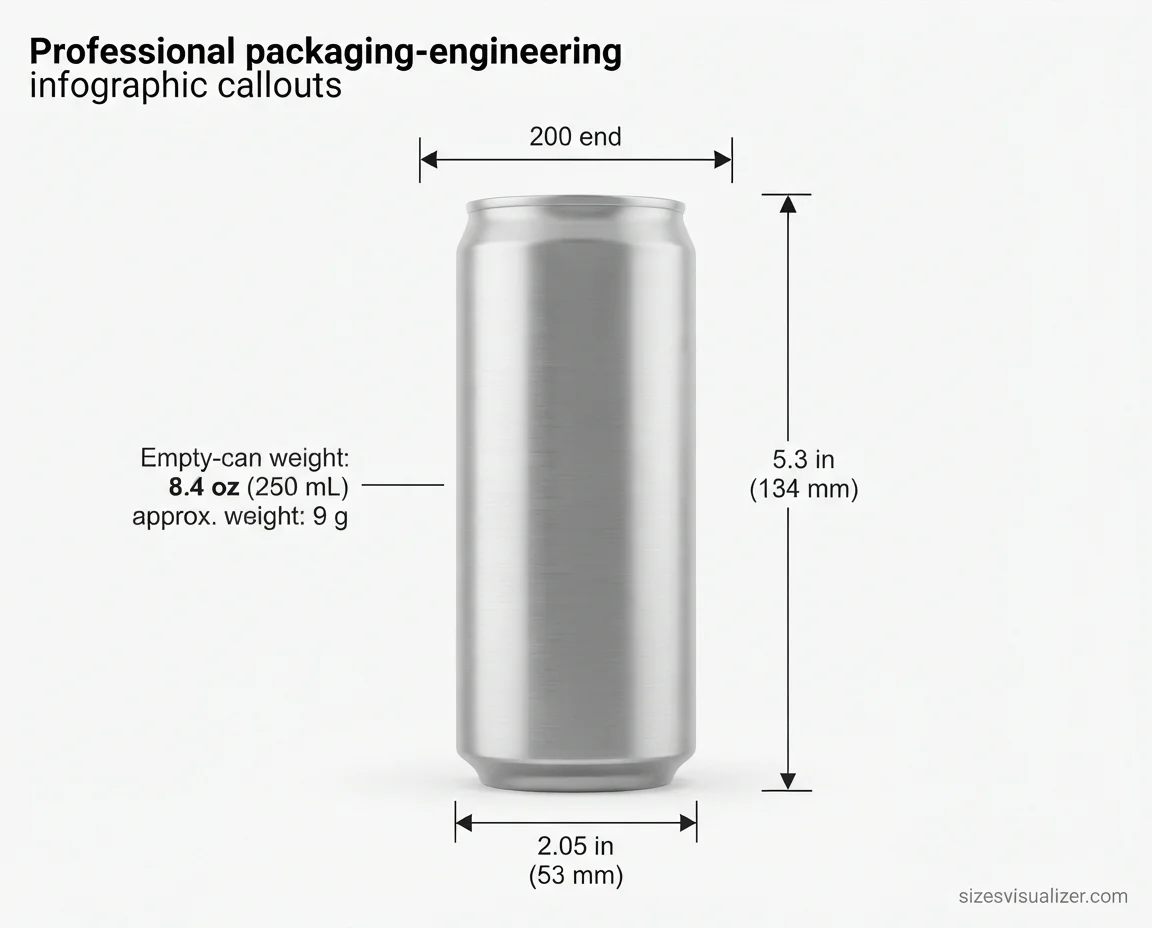
Slim cans go narrower still, down to about 53 mm, usually paired with smaller volumes like 250 mL. Energy drink brands popularized this shape because it fits comfortably in one hand. Slim cans require a smaller 200 end, which is less common in North America and can mean higher minimum order quantities.
Stubby cans
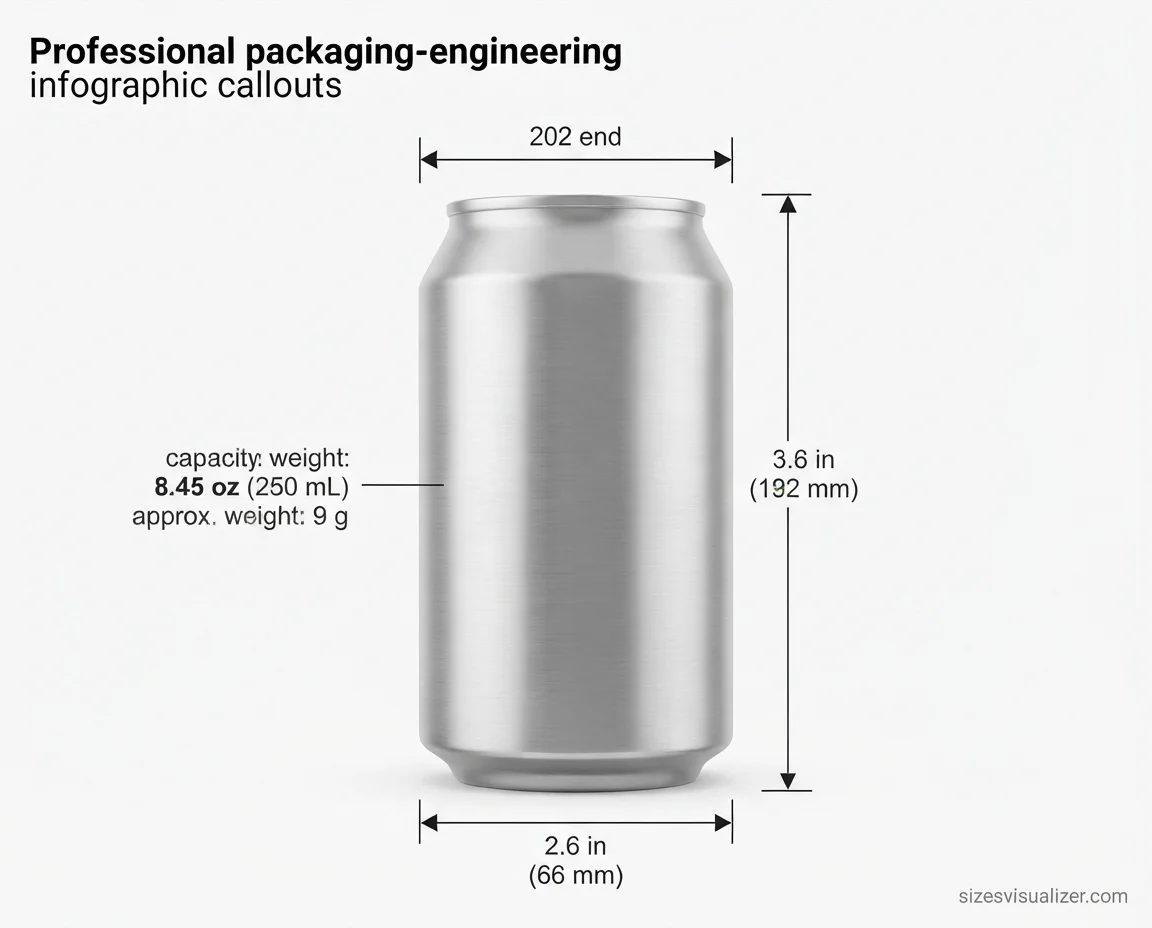
Stubby cans flip the formula: short and wide, often at 66 mm diameter but only 92 mm tall. Imported beers use this shape to evoke a retro, old-world feel.
Height and diameter
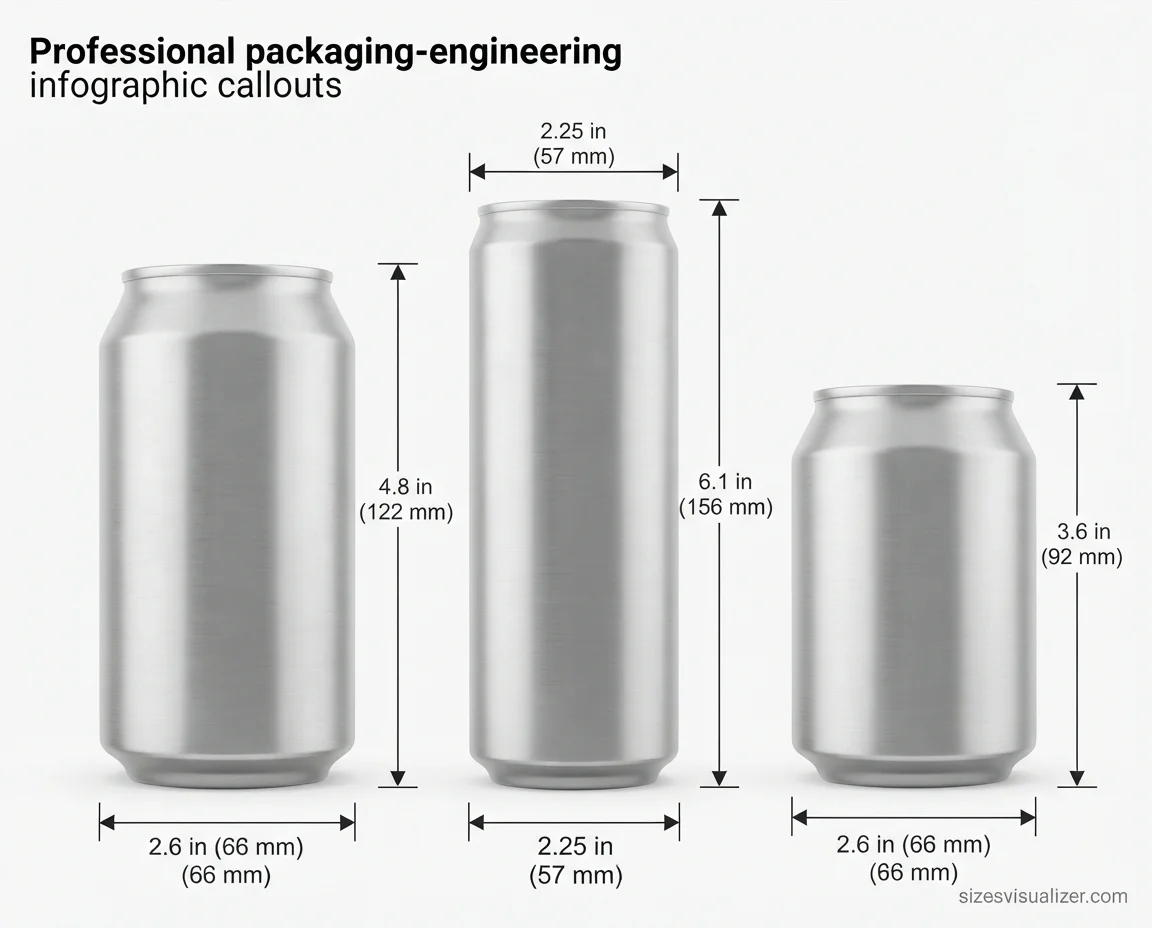
Height and diameter don’t just change appearance — they also change how a can feels in your hand and how much shelf space it takes up. A taller can often creates the illusion of more product, even when the volume is identical to a shorter one.
Aluminum Can Dimensions by Volume (200mL, 250mL, 330mL & 500mL)
Metric-labeled cans are becoming more common in the US, thanks to imported beers, energy drinks, and global brands. Here’s how each size breaks down.
Most metric sizes reuse the same 66 mm diameter as the US standard can. That’s a deliberate engineering shortcut — it lets manufacturers switch between volumes just by changing height, without retooling the entire filling line.
Must Visit: Beer Can Label Dimensions & Sizes: Complete Guide for 12, 16 & 19.2 oz Cans
Why Aluminum Can Dimensions Matter for Production, Shipping & Shelf Fit
Getting the size right isn’t only about branding. It shapes labeling, manufacturing, and logistics too.
Label sizing
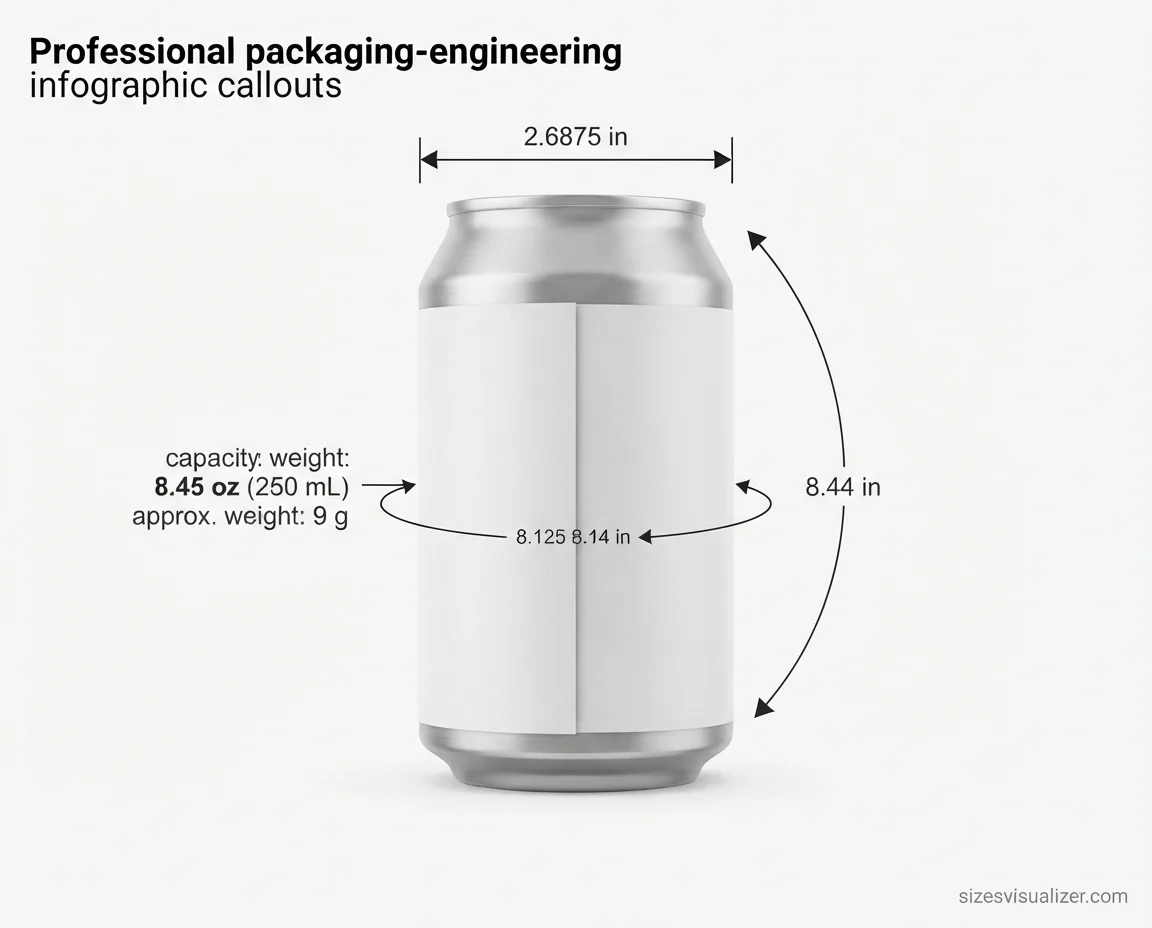
Label sizing depends on can circumference, which you calculate by multiplying diameter by pi (3.1416). A standard 211 can, at 2.6875 inches wide, has a circumference of about 8.44 inches. Most label printers trim that slightly, often to around 8.125 inches, to leave a clean overlap seam.
Filling and seaming equipment

Filling and seaming equipment uses parts machined to one specific diameter — star wheels, guide rails, and seaming chucks. Switching from a 211 standard body to a narrower sleek or slim body means swapping physical tooling, not flipping a setting. Height changes are usually much easier to manage, since most machines handle a range of heights with the same diameter-based parts.
For US buyers, fit matters at the point of sale too. Vending machines, cup holders, and standard coolers are engineered around the 66 mm standard diameter. A can that’s too wide or too tall can jam a vending slot or refuse to fit a cup holder — a real problem for road-trip and gas-station sales channels.
Shipping efficiency
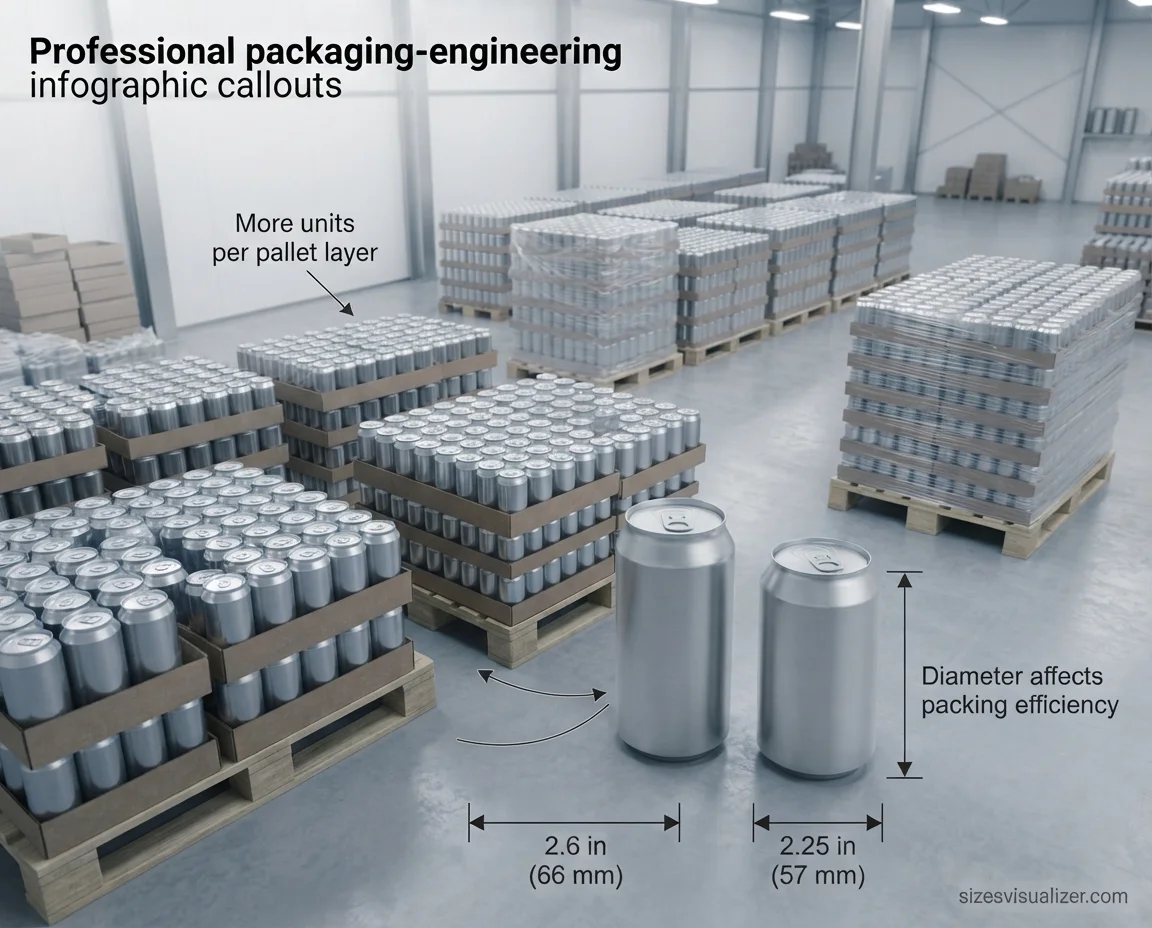
Shipping efficiency ties directly into diameter and height. Narrower cans, like slim and sleek formats, often fit more units per pallet layer, which can lower per-unit freight costs even though the cans themselves may cost slightly more to produce. According to the Environmental Protection Agency, aluminum cans are also among the most recycled beverage containers in the US, which adds a sustainability angle brands increasingly highlight on packaging.
FAQs
What are the dimensions of a 500ml can?
A 500 mL can measures about 5.9 inches (150 mm) tall and 2.6 inches (66 mm) in diameter.
What are the dimensions of a 250ml can?
A 250 mL slim can is about 5.3 inches (134 mm) tall and 2.05 inches (53 mm) wide. A 250 mL stubby can is shorter, at 3.6 inches (92 mm) tall, but wider at 2.6 inches (66 mm).
What are the dimensions of a 200ml can?
A 200 mL can typically stands around 3.7–3.9 inches (94–99 mm) tall with a diameter near 2.09 inches (53 mm).
What are the dimensions of a 330ml can?
A 330 mL can usually measures about 2.6 inches (66 mm) in diameter and 4.5 inches (115 mm) in height.
How tall is a 500 mL can?
About 5.9 inches (150 mm) from base to lid.
What are the dimensions of a 500ml container?
For an aluminum can, that’s roughly 5.9 inches (150 mm) tall and 2.6 inches (66 mm) wide — the same as a standard 500 mL can.
Conclusion
Aluminum can dimensions aren’t just technical trivia — they shape how a drink looks, ships, and sells. Whether you’re comparing a 250 mL slim can to a 500 mL standard can, or checking if a size will fit your filling line, the numbers above give you a reliable starting point. When in doubt, match your diameter to your existing tooling first, then adjust height to hit your target volume.

Measurement Researcher, Size Comparison Writer & Content Specialist
Timmy Ahad is a dedicated content writer and research specialist at SizesVisualizer.com, where he focuses on creating accurate, easy-to-understand content about measurements, dimensions, size comparisons, and real-world object visualization.