A stop sign at the wrong height is more than a paperwork problem. It can hide behind a parked truck, sit above a driver’s sightline, or simply look “off” to anyone who has driven past a thousand normal ones. Stop sign dimensions are not arbitrary. They come from the Manual on Uniform Traffic Control Devices (MUTCD), the federal rulebook every state, county, and HOA leans on. This guide covers the exact stop sign size, mounting height, and placement numbers you need, plus the details most guides skip, like sign weight and bolt hardware.
Table of Contents
Standard Stop Sign Dimensions and Sizes
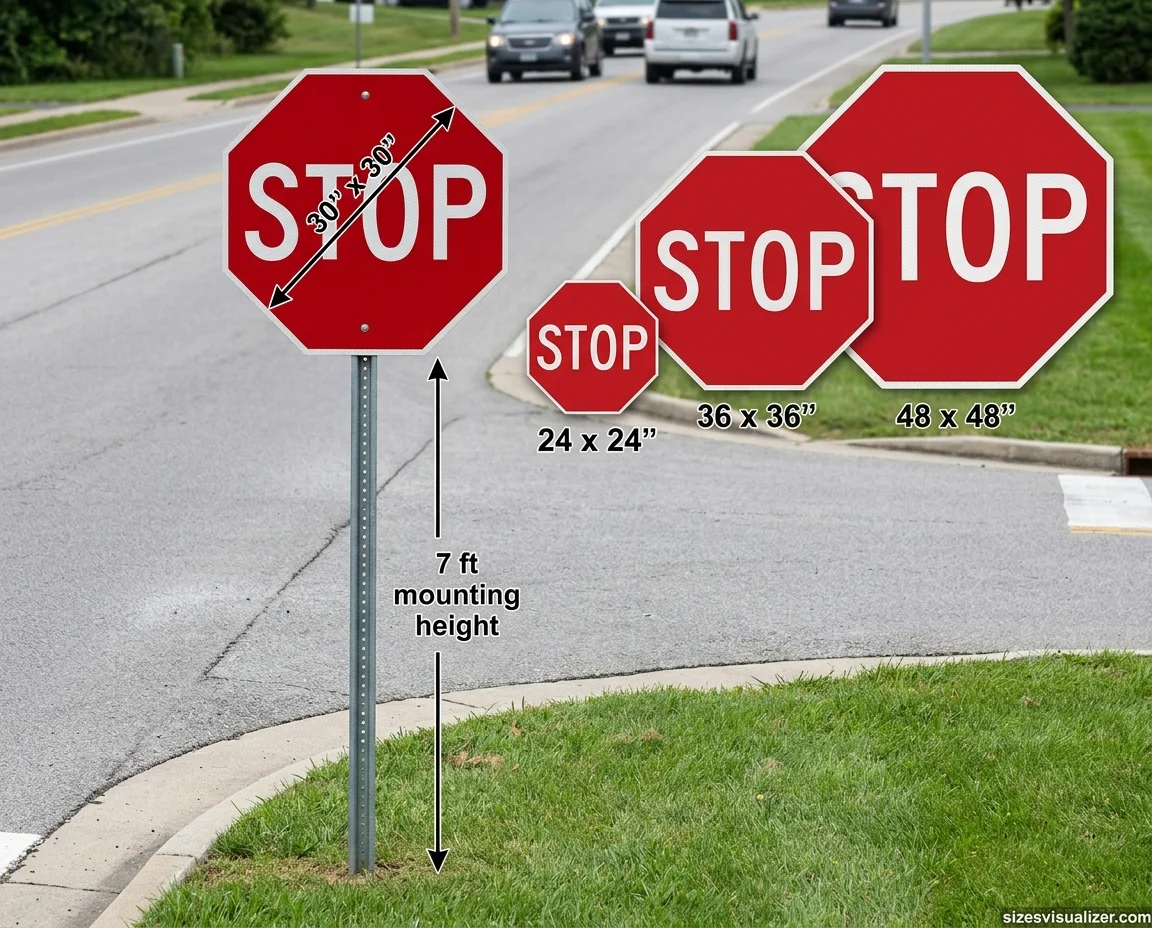
The most common stop sign dimensions are 30 x 30 inches, but the correct size depends on the road it sits on. Bigger roads need bigger signs, because higher speeds shrink the time a driver has to spot and read one.
| Road Type | Stop Sign Size (inches) |
|---|---|
| Private roads, low-traffic areas | 24 x 24 |
| Single-lane / minimum-sized road | 30 x 30 |
| Multi-lane roads | 36 x 36 |
| Expressways and freeways | 36 x 36 |
| Oversized or high-speed approach | 48 x 48 |
When a minor road feeds into a multi-lane road posted at 45 mph or higher, engineers usually size the sign up, since the approaching driver has less time to react.
Our Size Visualizer & Comparison Tool helps you visualize measurements and understand exactly how large or small something is.
Stop Sign Letter Size and Border Width
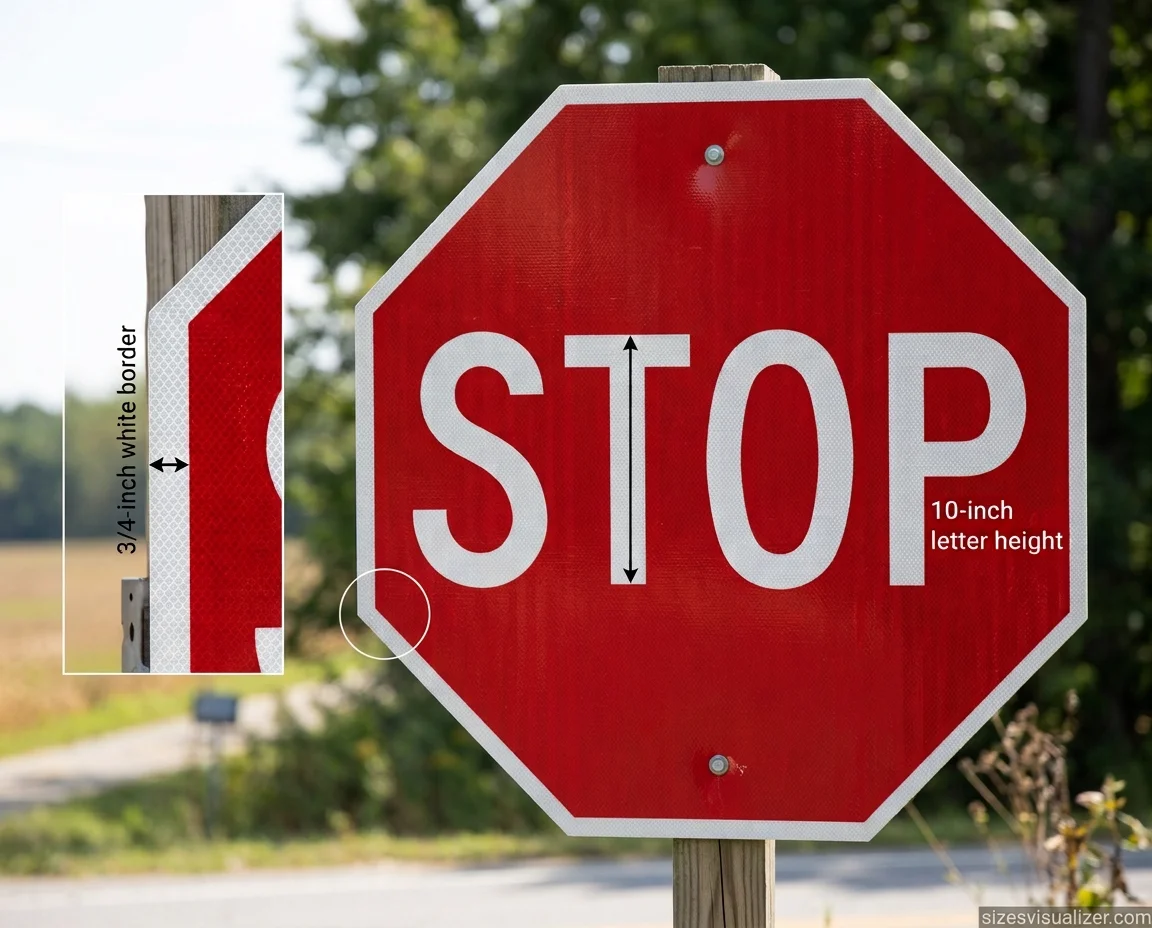
Letter height scales directly with sign size. A 30 inch sign carries 10 inch letters, while a 36 inch sign steps up to 12 inch letters. Every stop sign also carries a 3/4 inch white border running along all eight edges of the octagon, a detail the MUTCD has required since the design was standardized.
Stop Sign Weight and Material
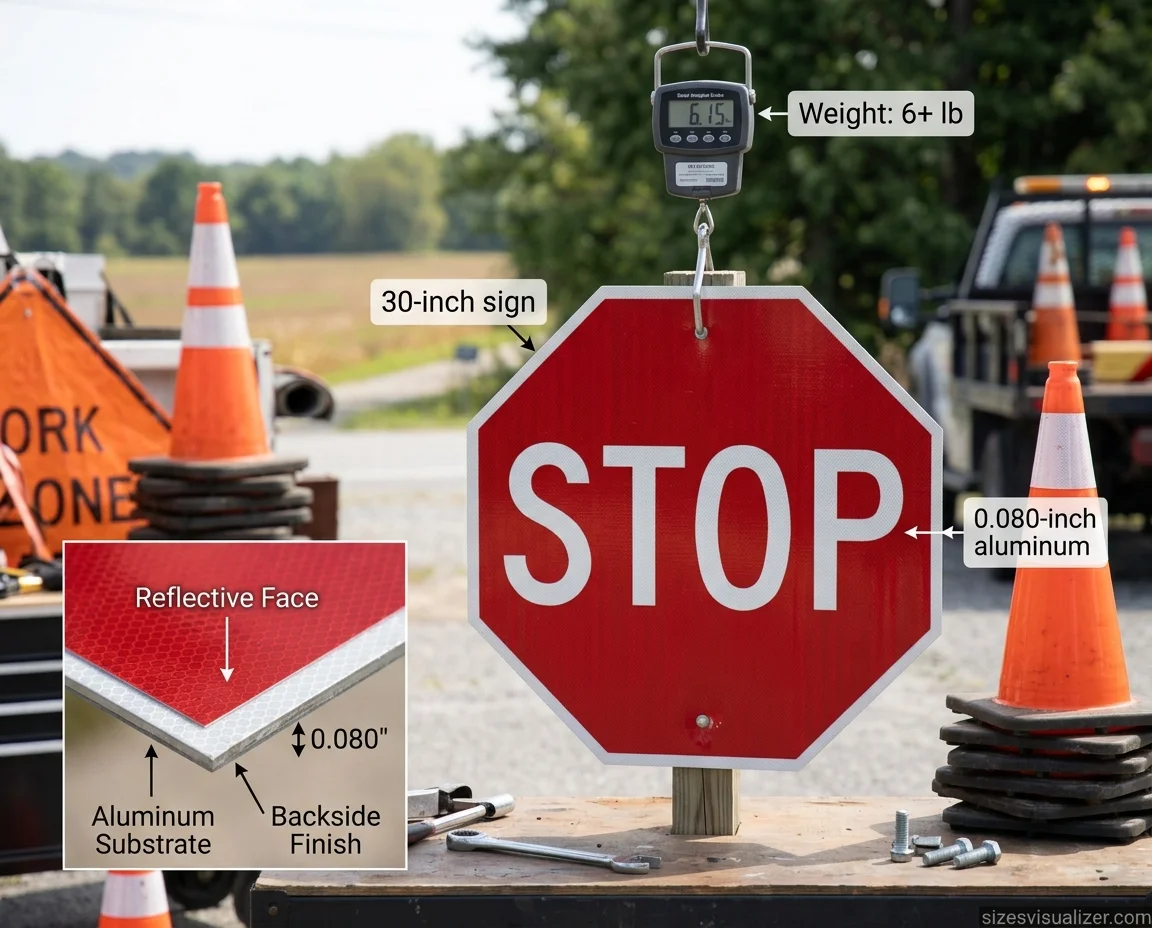
A 30 inch stop sign weighs a little over 6 pounds. Most stop signs are stamped from 0.080 inch aluminum, which resists rust and stays light enough for a single installer to mount without extra equipment. The face is covered in retroreflective sheeting, either high-intensity prismatic or full cube prismatic, so headlights bounce the red and white pattern straight back at a driver after dark. Full cube sheeting reflects the most light and is now required in many jurisdictions.
Stop Sign Height: How High Should a STOP Sign Be Mounted
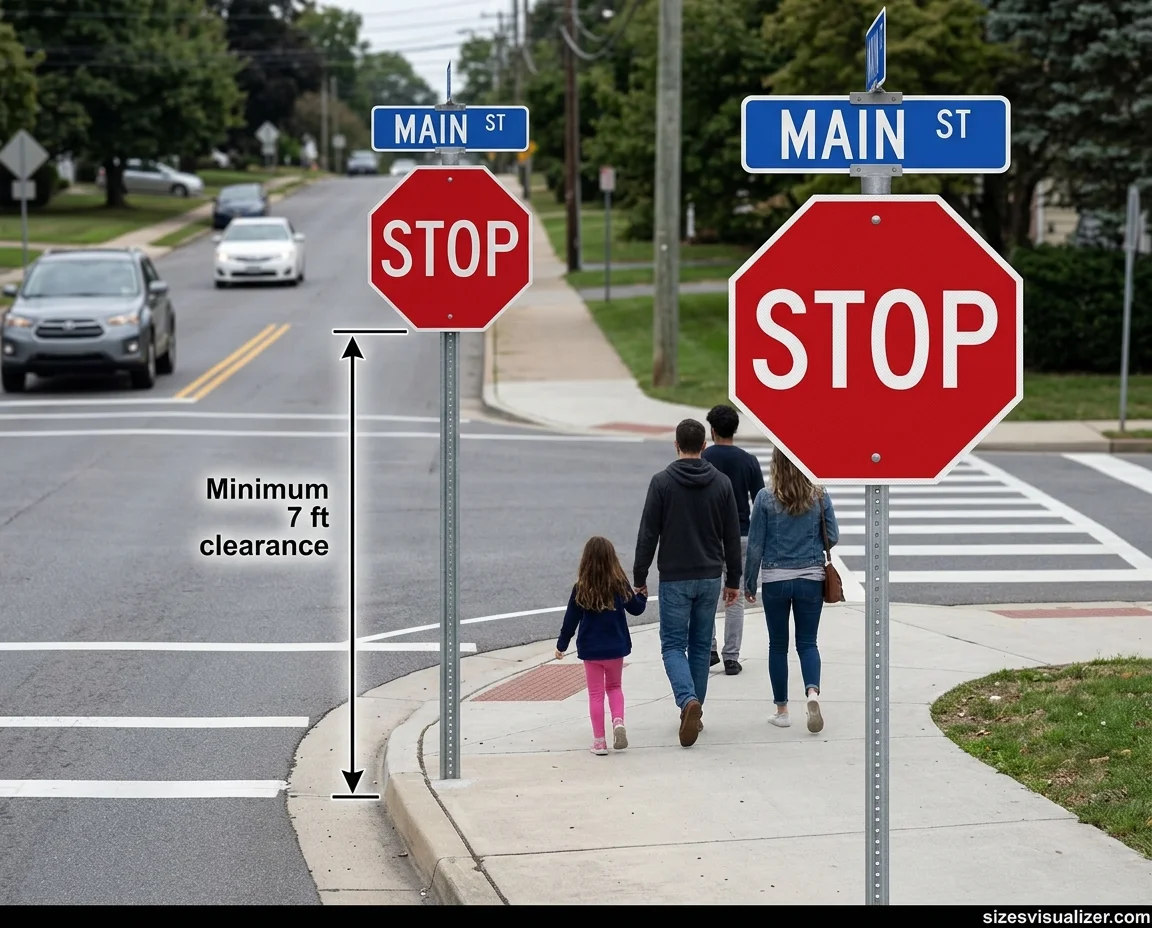
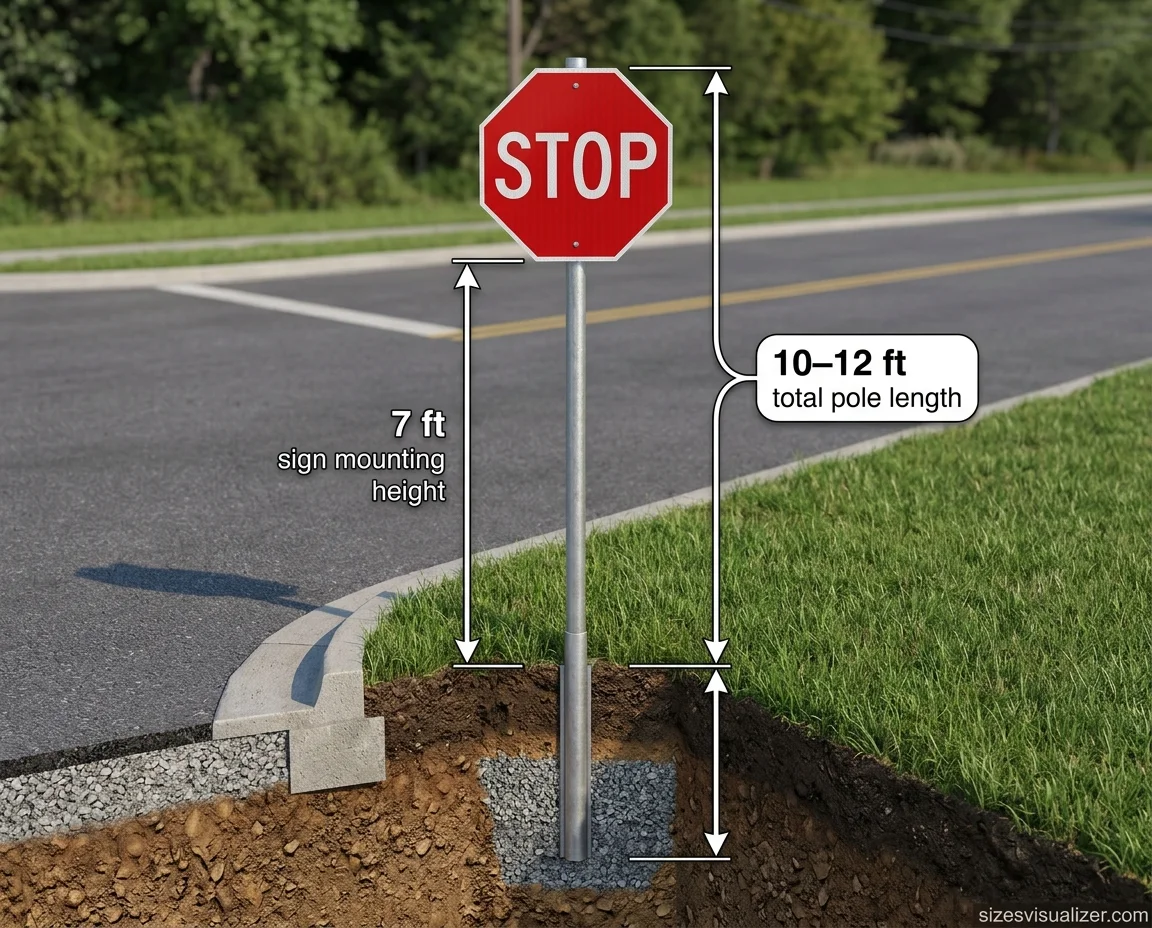
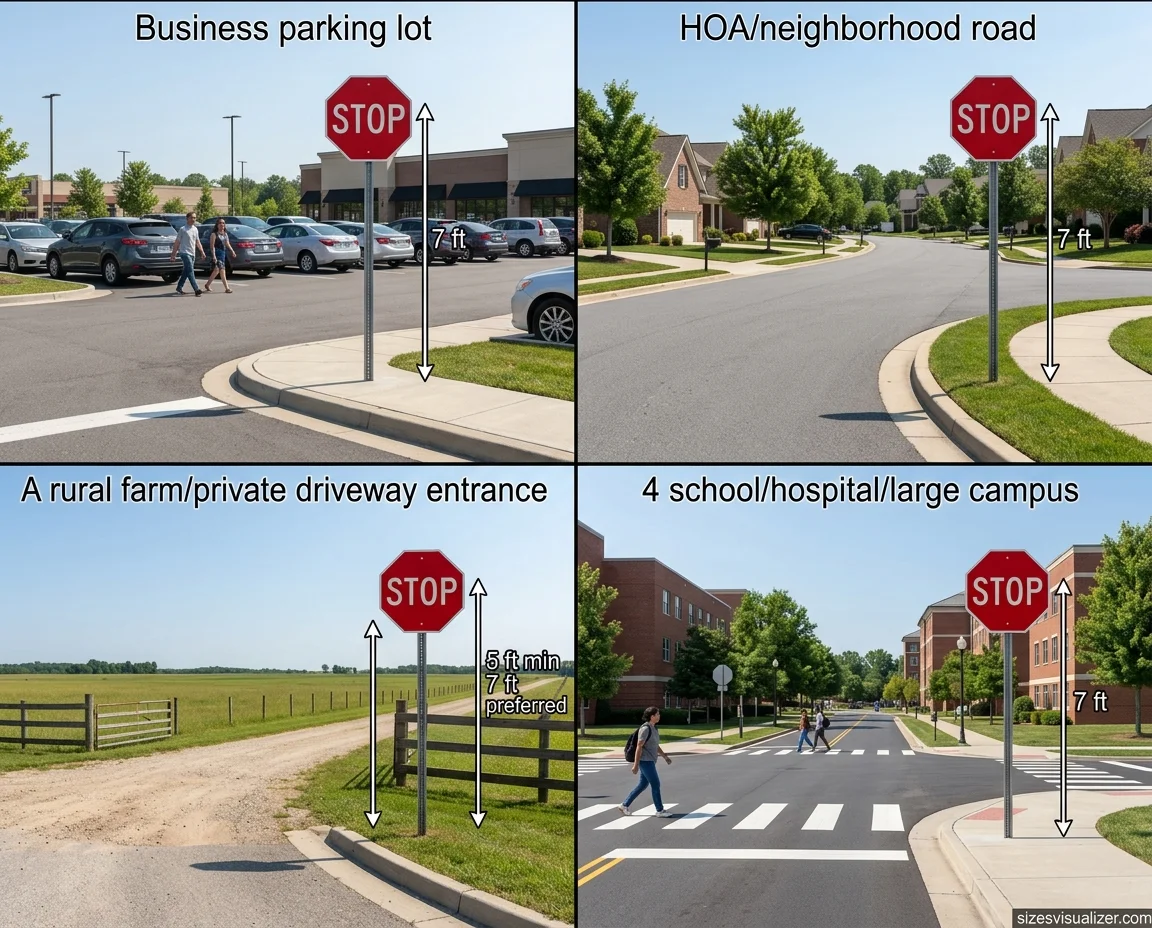
The standard mounting height for a stop sign is 7 feet, measured from the ground to the bottom edge of the sign panel. This is the number used for city streets, residential neighborhoods, business parking lots, schools, and anywhere pedestrians or parked cars might be nearby.
Standard Mounting Height: 7 Feet vs. 5 Feet
A 5 foot mounting height is allowed under MUTCD guidance, but only in low-risk, rural settings: no sidewalks, no pedestrian activity, no parked cars, and open sight lines in every direction. Even where 5 feet is technically legal, many counties still install at 7 feet anyway, because it keeps the sign clear above tall grass, snow drifts, and roadside brush.
Why does the extra 2 feet matter? At 7 feet, the sign sits above head height, so it stays visible even when someone is walking, biking, or standing near the post. At 5 feet, a stop sign can disappear behind a pickup truck or a snowbank in the time it takes a driver to blink.
How to Measure Stop Sign Height Correctly

Always measure to the bottom edge of the sign panel, not the top.
- With a curb or sidewalk: measure straight up from the top of the curb or sidewalk.
- Without a sidewalk: measure from the ground at the edge of the roadway.
If new asphalt or concrete is going in later, add an inch or two of buffer now. Repaving can quietly eat into your clearance and drop a compliant sign below the 7 foot mark.
Mounting Height Examples

- Business parking lots: 7 feet. Insurers and municipal inspectors expect MUTCD-standard height even on private property.
- HOA and neighborhood roads: 7 feet. Mailboxes, parked cars, and pedestrians all demand the taller mount.
- Rural farms and private driveways: 5 feet minimum, 7 feet preferred, since tall grass and winter snow bury a low sign fast.
- Schools, hospitals, and large campuses: always 7 feet, because foot traffic runs high and signs need to clear head level.
Stop Sign Placement and Setback Rules
Placement is just as regulated as height. A stop sign has to sit where an approaching driver can see it in time to actually stop, not after they’ve already entered the intersection.
Distance from Pavement Edge and Curb
The roadside edge of a stop sign should sit at least 6 to 12 feet from the edge of the pavement, with a 2 foot minimum on curbed roadways. In rural areas with no shoulder, that setback commonly stretches to 12 feet from the pavement edge to give the post extra clearance from traffic.
Placement at Stop Lines and Crosswalks
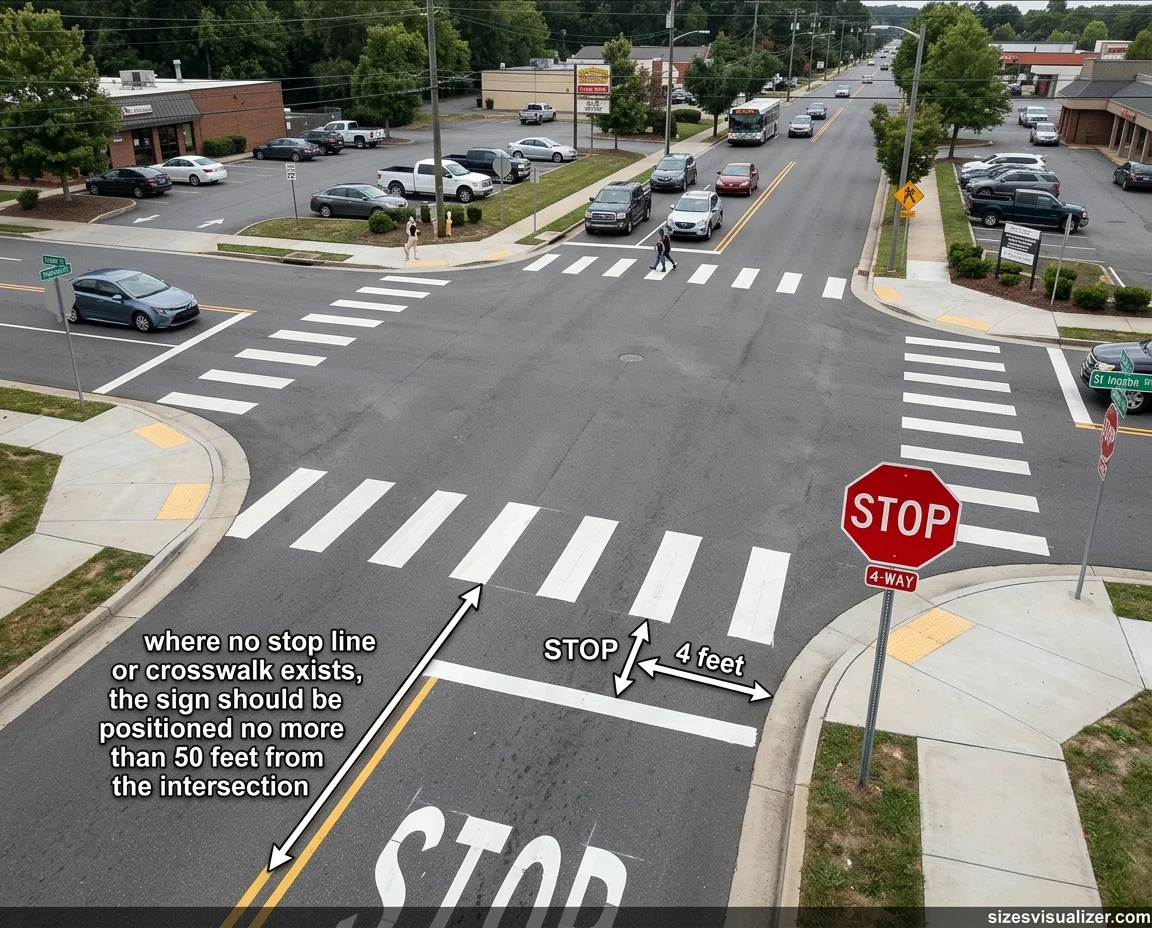
A stop sign belongs on the right side of the roadway, positioned at the stop line or 4 feet in advance of a crosswalk. If neither a stop line nor a crosswalk exists, the sign goes wherever a stopped driver can clearly see traffic in both directions, and it should never sit more than 50 feet from the intersection itself.
Combined Stop Sign and Street Name Sign Placement

A street name sign is often mounted on the same post, directly above the stop sign, and this shared-post rule catches a lot of installers off guard. The street sign has to stay high enough that it does not distract drivers from the stop sign underneath, and it must remain visible from the approaching road. According to Cornell’s NYS LTAP local roads program, sign height rules exist specifically to let pedestrians pass beneath without interference, which is part of why minimum heights step up in urban settings.
Must Visit: How Big Is a Tennis Court? Dimensions, Size & Complete Guide
Stop Sign Post and Pole Specifications
Stop Sign Pole Height and Length
The pole has to run longer than the sign’s mounting height, because part of it sits below grade for stability. If a sign needs to sit at 8 feet, the pole itself typically runs 10 to 12 feet long, with the buried portion anchoring it against wind load and impact.
Post Width and Material

MUTCD guidance points to 4×4 inch or 6×8 inch posts for standard installations. Galvanized steel U-channel posts are the industry default because they resist rust and hold up under repeated impact, but treated wood posts also show up on rural and private roads. Whatever the material, the post has to be rigid enough that wind and minor vehicle contact don’t tilt the sign out of a driver’s line of sight.
Stop Sign Bolt Size and Mounting Hardware

Most stop signs mount with 5/16 inch hex-head bolts, matched to the 3/8 inch pre-drilled holes on the sign face. On a standard 30 inch stop sign, those holes sit about 3 inches in from the top and bottom edges. Bolt length changes with the post: 2 inch bolts for lightweight U-channel posts, 2.5 inch bolts for 1.75 inch square posts, and 3 inch bolts for 2 inch square posts. Many municipalities upgrade to tamper-resistant one-way bolts or breakaway nuts to cut down on sign theft.
How Tall Are Street Sign Poles
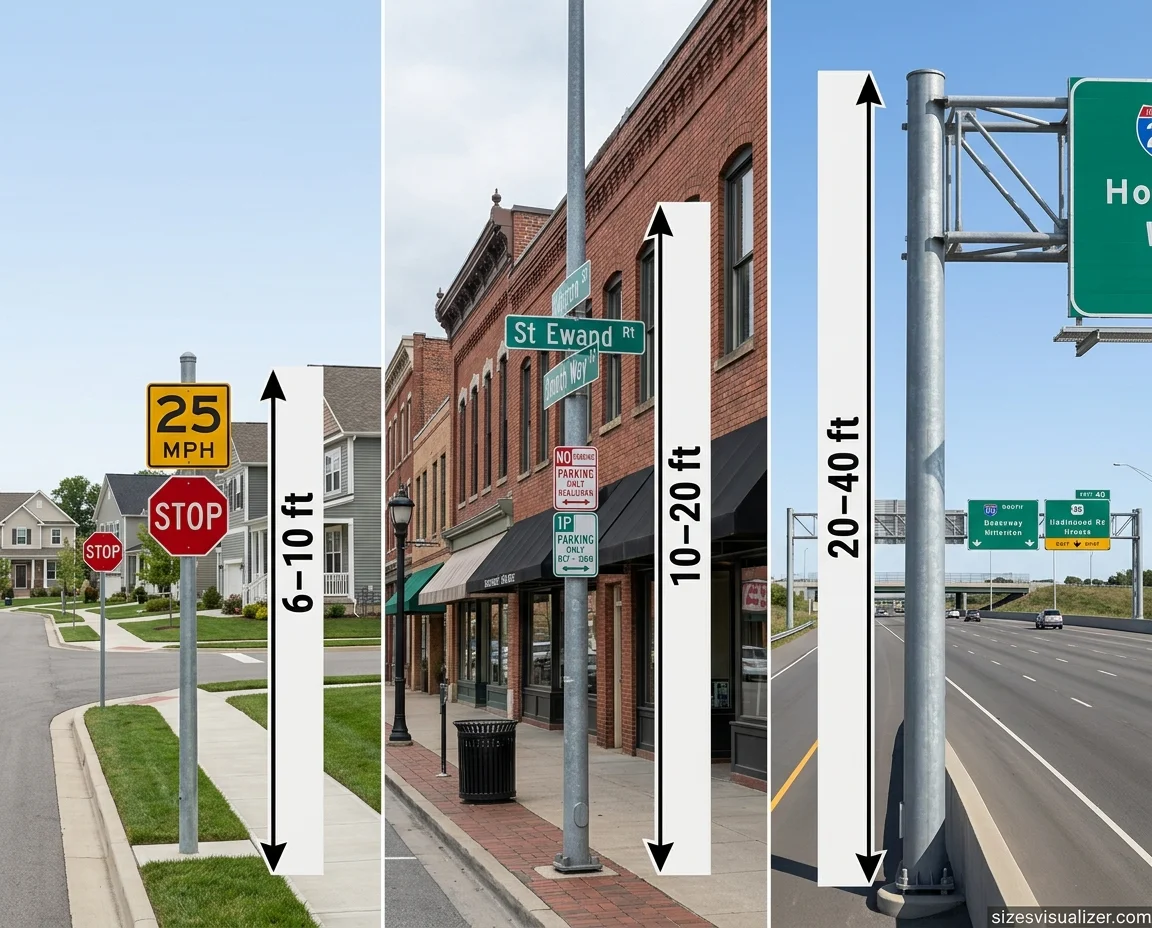
Street sign pole height depends entirely on setting. Residential street sign poles typically run 6 to 10 feet tall, commercial and downtown poles stretch to 10 to 20 feet, and large overhead highway guide signs can sit on poles 20 to 40 feet tall. For a standard two-blade street name assembly sharing a post with a stop sign, the bottom of the lowest blade still has to clear 7 feet above the road surface, matching the stop sign height requirement below it.
Stop Sign Dimensions Around the World
Stop sign dimensions are not identical everywhere, even though the octagon shape has spread far beyond the United States.
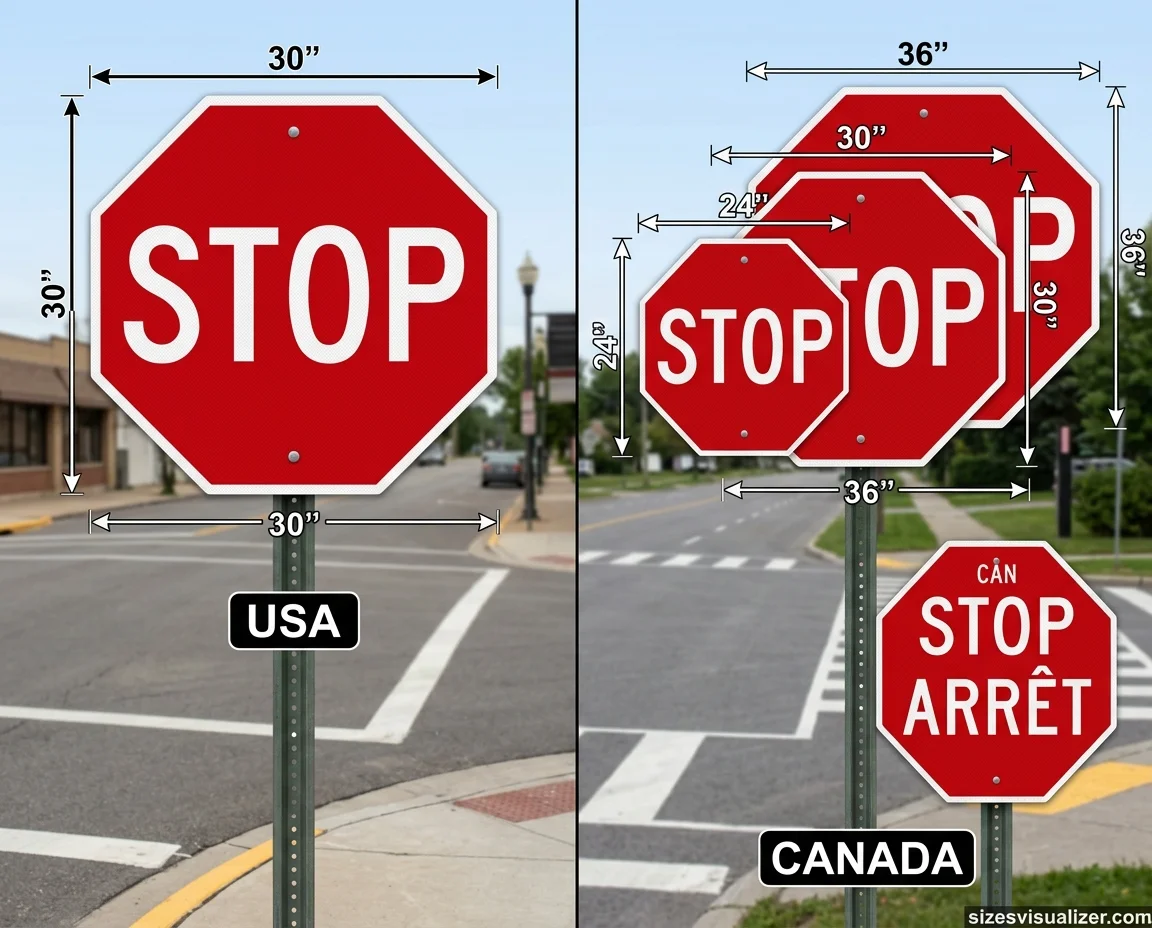
USA vs. Canada Stop Sign Sizes
In the United States, MUTCD standards keep urban stop signs at 30 inches edge to edge, red background, white border, with “STOP” printed in bold uppercase letters. Canada follows a near-identical system under the MUTCDC, with common sizes of 24, 30, and 36 inches. In Quebec, French-speaking regions post “ARRET” instead of “STOP,” since Canada is the only major region using the French word on standard signage.
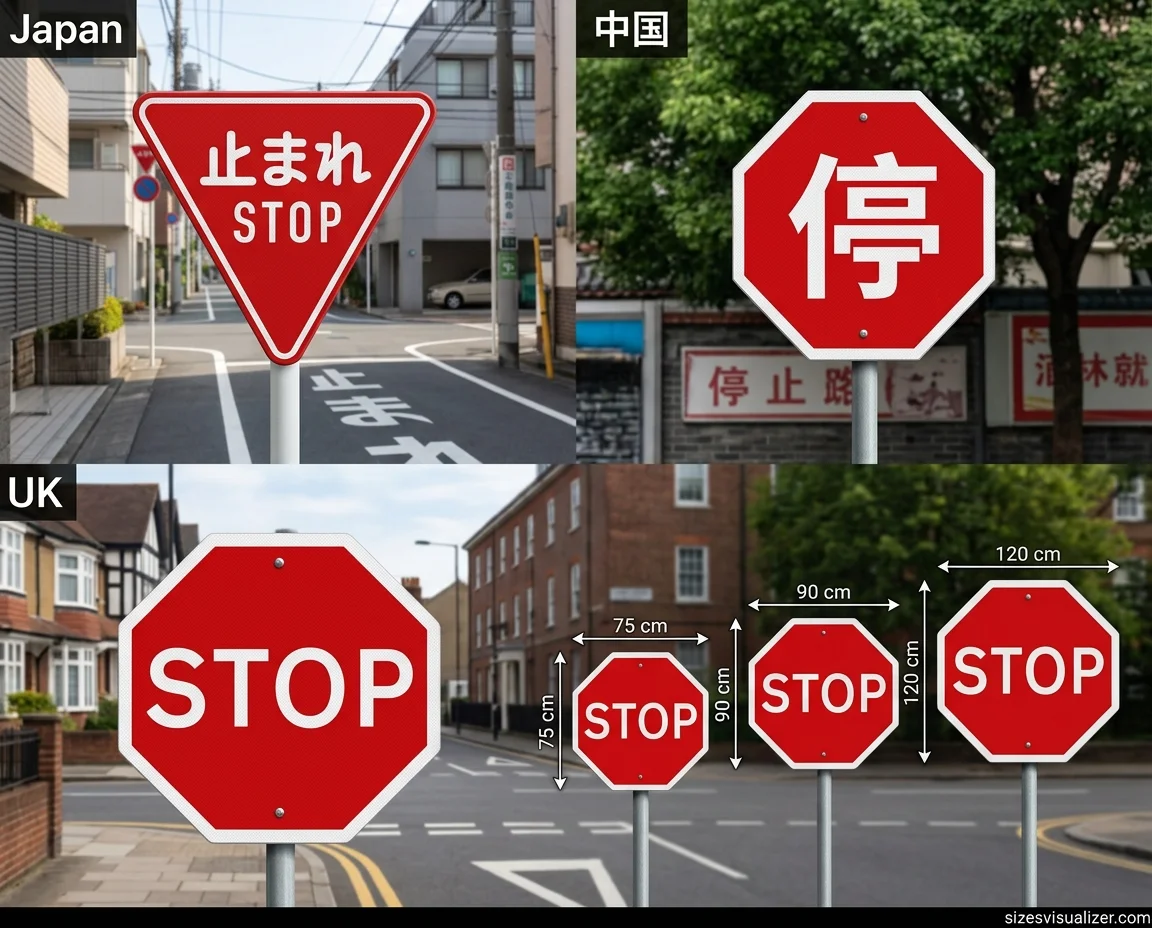
Stop Signs in Japan, China, and the UK
Japan breaks from the octagon entirely. Its stop sign is a downward-pointing red triangle, regulated by the National Police Agency, and has displayed both Japanese (“Tomare”) and English “STOP” text since 2017. China uses the familiar red octagon with white border, printed with the character for “stop,” though Hong Kong and Macau signage differs slightly in text. The UK, governed by the TSRGD, keeps the US-style shape and color but offers signs in 75 cm, 90 cm, or 120 cm heights, scaling up with posted vehicle speed.
FAQs
How much does a 30 inch stop sign weigh?
A standard 30 inch stop sign weighs a little over 6 pounds. It is stamped from lightweight aluminum, usually around 0.080 inches thick, which keeps it easy to mount while standing up to weather and impact over years of outdoor use.
How big is a 4×8 sign?
A 4×8 sign measures 4 feet tall by 8 feet wide, or 48 by 96 inches. This large format is common for roadside, construction, and site signage that needs to be read from a long distance at higher speeds, not for a standard stop sign.
How tall are street sign poles?
Street sign poles typically run 6 to 10 feet in residential areas, 10 to 20 feet in commercial or downtown zones, and 20 to 40 feet for large overhead highway signage. On a shared post with a stop sign, the lowest sign blade still needs to clear 7 feet above the road.
What size bolt is on a stop sign?
Stop signs mount with 5/16 inch hex-head bolts through 3/8 inch pre-drilled holes. Bolt length varies by post type, running from 2 inches for lightweight U-channel posts up to 3 inches for 2 inch square posts.
How tall should a sign post be?
A sign post should run 10 to 12 feet long for a stop sign mounted at 7 to 8 feet high, since part of the post has to sit below grade for stability. The exact length depends on soil conditions and local wind load requirements.
Conclusion
Stop sign dimensions, height, and placement all trace back to the same MUTCD standards, whether you’re installing on a city street, an HOA road, or a private driveway. Get the size right for the road type, mount at 7 feet in populated areas, and keep the setback and post specs within range, and the sign will do its job: stop drivers before they need to react to something worse.

Measurement Researcher, Size Comparison Writer & Content Specialist
Timmy Ahad is a dedicated content writer and research specialist at SizesVisualizer.com, where he focuses on creating accurate, easy-to-understand content about measurements, dimensions, size comparisons, and real-world object visualization.